SoraNews24 —Japan News—
Bringing you yesterday's news from Japan and Asia, today.
-
TOP
» Japan
-
» Is this 1,300-year-old dish found in Nara actually cursed?
Featured
- Weird
- Studio Ghibli
- Jobs
Is this 1,300-year-old dish found in Nara actually cursed?
 Preston Phro Oct 14, 2014
- Tweet
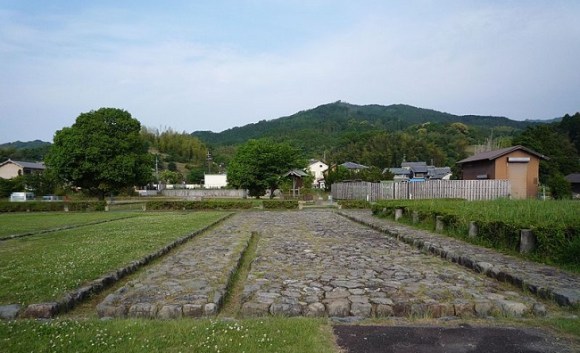
Though the current capital of Japan is Tokyo, many would argue that its traditional capital, Kyoto, is the real heart of Japan–at least culturally speaking. That said, if you you’re looking for the original capital of Japan, you’d probably be better heading south from Kyoto to Nara Prefecture. But while you should definitely stop and see Heijo-kyo in Nara City, you’ll have to keep heading south to Asuka Village to find the “real” original capital of Japan: Asuka-kyo. Of course, in the 1,300 years since the end of the Asuka Period, the capital has essentially been lost to time–all that’s left are stony remnants like those pictured above.
But that’s not the only patch of old ruins to be found in Asuka area–there are so many, they can actually get in the way of building a house! But with the news of the discovery of a piece of “cursed” earthenware, we have to wonder if maybe it’s just time for everyone to pack up and head for a slightly less historically significant area!
▼An aerial view of the excavation site where the dish was found.
While some might argue about where the “original capital” was–ask any group of Japanese history scholars where Queen Himiko resided (or if she were real) and get out the popcorn–Asuka Village is often considered one of the most important locations in the early history of Japan due to the ancient Asuka capital and the large number of ancient structures and kofun (tumults) like Ishibutai Kofun. As such, it should come as little surprise that extensive historical research is carried out in the area, largely headed by researchers at The Museum, Archaeological Institute of Kashihara, which is located in the Asuka Village’s neighbor Kashihara City.
The Institute opened its special fall exhibition last week and garnered quite a bit of national attention thanks to a rather unique piece of earthenware: One with what could only be described as “with a curse engraved on it”!
▼It’s more impressive than it looks, we promise…
https://twitter.com/lofylucyn/status/521601236064149505
According to the researchers who have translated the text from the man’yōgana to something more readable in contemporary Japanese, the 3.1-centimeter-tall (1.2 inches) dish bears a message that boils down to: “If this is taken, a catastrophe will occur.” Umm…we can’t help wondering if this explains Typhoon Vongfong...
Nevertheless, researchers don’t seem to intimidated. In fact, the Institute has left the seriousness of the inscription open to interpretation. “It might have been written to demonstrate a temple’s (political) power, or it might have just been written as a joke.” Sure, it’s all fun and games until Prince Shotoku comes back as a zombie and attacks everyone.
However, they may not be worried since the dish was found during excavation of Japan’s oldest park/garden, Asuka-kyo’s Enchi, which probably looked something like this…
飛鳥京跡苑池遺構から松の木が植えられていた中島や苑池を見下ろす高台の建物跡が発掘され、そのイメージ図が橿原考古学兼研究所から公開され、今日の朝刊に掲載されていた。24日に現地説明会が行われるが、すでに予定があるため断念せざるを得ない。 pic.twitter.com/TAvZkiN1T9
— 河内太古 (@taiko3) November 21, 2013
It’s not exactly the most intimidating landscape we’ve seen, though the garden certainly looked a lot prettier 1,300 years ago than it does now…
▼Yep, it’s a real fixer-upper.
https://twitter.com/NH139/status/404126793134661632
While the seriousness of the message is clearly debatable, it does, apparently, make the earthenware a bit of an oddity. Researchers have told media that it’s rather rare to find inscriptions on dishes like this. In fact, the earthenware could actually be of serious historical significance. While not all of the characters were legible, the inscription makes mention that dish was property of Kawara Temple, a Buddhist temple in the area that was of considerable political importance at the time. Though Kawara Temple is now little more than ruins, this inscription could hint at a very close connection between the temple and the political center of the Asuka Period.
Or it might have just been someone trying to troll his or her very distant descendants. Which gives us an idea…
If you’re in the Kansai area, be sure to stop by the The Museum, Archaeological Institute of Kashihara to see their autumn exhibition. The special exhibit will run until November 30 and entrance costs 800 yen (US$7.46). And if you have time, we highly recommend taking a stroll around Asuka Village, too. In this humble writer’s opinion, it’s one of the most beautiful places in Japan!
Sources: Japaaan, 47 News, Mainichi News
Images: Wikipedia (Osakaosaka)
Like this:
Like Loading…
- Japan
- (Asuka Mura • Asuka Village • history • Kofun • Nara)
Related Stories
 Places you simply must visit: Nara edition

- Korean activists upset over plans to sew the anuses of river rats shut, make them eat each other
- Rare Catbus-esque worm takes its name after Ghibli’s Totoro
- Trackbacks (0)
Trackbacks
- There are no trackbacks yet.
- Trackback URL
Trending Today
- Tokyo’s Shibuya Sakurazaka cherry blossom street to be decommissioned, number of trees to increase
- Starbucks Japan reveals new Christmas advent calendar and holiday drinkware collection
- Japan’s JR East reveals new train company mascot character, online comments aren’t kind
- Join Suica’s penguin on its graduation trip to outer space at Hotel Metropolitan Tokyo Ikebukuro
- Life-size Gundam statue’s head returning to Tokyo neighborhood this month
- FamilyMart’s “physical AI” robot workers getting chilly reception in Japan
- Studio Ghibli adds new Princess Mononoke sukajan jacket to its anime streetwear range in Japan
- Foreign tourist missing after off-season Mt. Fuji hike, father reportedly offering reward to find him/his body
- Nara deer send record number of people to hospital, over 70 percent of patients are foreigners
- Foreign hiker on Mt. Fuji loses consciousness and dies, becoming climbing season’s second fatality
- Korean activists upset over plans to sew the anuses of river rats shut, make them eat each other
- Rare Catbus-esque worm takes its name after Ghibli’s Totoro
-
Recent Posts
- Gozasoro’s amazingly cheap Imagawayaki are one of Japan’s sweetest sweets deals
- Japan’s beautiful new Pokémon hotel room gives you and Dragonite a place to take a break
- Life-size Gundam statue’s head returning to Tokyo neighborhood this month
- Join Suica’s penguin on its graduation trip to outer space at Hotel Metropolitan Tokyo Ikebukuro
- Starbucks Japan reveals new Christmas advent calendar and holiday drinkware collection
-
MOST POPULAR
- Today
- Weekly
- Monthly
- Yearly
Today
 Tokyo’s Shibuya Sakurazaka cherry blossom street to be decommissioned, number of trees to increase
 Starbucks Japan reveals new Christmas advent calendar and holiday drinkware collection
 Japan’s JR East reveals new train company mascot character, online comments aren’t kind
 Join Suica’s penguin on its graduation trip to outer space at Hotel Metropolitan Tokyo Ikebukuro
 Life-size Gundam statue’s head returning to Tokyo neighborhood this month
 FamilyMart’s “physical AI” robot workers getting chilly reception in Japan
 Studio Ghibli adds new Princess Mononoke sukajan jacket to its anime streetwear range in Japan
 Foreign tourist missing after off-season Mt. Fuji hike, father reportedly offering reward to find him/his body
 Nara deer send record number of people to hospital, over 70 percent of patients are foreigners
 Foreign hiker on Mt. Fuji loses consciousness and dies, becoming climbing season’s second fatality
Weekly
- Nara deer send record number of people to hospital, over 70 percent of patients are foreigners
 Studio Ghibli and Uniqlo reveal brand-new T-shirt collaboration [Pics]
- Tokyo’s Shibuya Sakurazaka cherry blossom street to be decommissioned, number of trees to increase
 Ichiran releases an at-home counter kit that turns your desk into a ramen restaurant
 Starbucks Japan releases new Bearista glass tumbler that changes character with every drink
 Starbucks Japan reveals new Joyful Capsule gacha toy release date
 Akihabara restaurant with 1.7 million sushi bowl options will have us coming back again and again
 Tokyo cracks down on Airbnb-style rentals with new laws limiting operator days and more
 Tokyo neighborhood adds new “smart trash cans” to deal with increasing amounts of tourist litter
 America’s first-ever permanent One Piece store is now open [Photos]
Monthly
- Nara deer send record number of people to hospital, over 70 percent of patients are foreigners
 Pokémon Company announces first-ever permanent Pokémon store to open outside Asia
 Japan ends tax-free shopping system for foreign tourists, new refund request system now in effect
- Studio Ghibli and Uniqlo reveal brand-new T-shirt collaboration [Pics]
- Tokyo’s Shibuya Sakurazaka cherry blossom street to be decommissioned, number of trees to increase
 Japan’s TeamLab digital art group is opening a permanent museum in America
- Ichiran releases an at-home counter kit that turns your desk into a ramen restaurant
 Beautiful Ghibli diorama kits lets you build anime characters’ homes inside yours [Photos]
 Family Mart releases 47 convenience store socks and stickers, one for every prefecture in Japan
 Chainsaw robots helping keep trains running safely in east Japan [Video]
Yearly
 Japan announces sudden 400-percent increase in visa fees for foreigners entering the country
 Japan’s human washing machines will go on sale to general public, demos to be held in Tokyo
 Studio Ghibli has a new anime out, and there’s only one place in the world where you can see it
- Nara deer send record number of people to hospital, over 70 percent of patients are foreigners
 Starbucks Japan releases new drinkware and goods for Valentine’s Day
 Starbucks Japan releases new sakura goods and drinkware for cherry blossom season 2026
 Japan’s newest Shinkansen has no seats…or passengers [Video]
 Tokyo subway installing new ticket gates that don’t accept payment through Suica or other IC cards
 Japanese ninja certification exam attracts 131 candidates from Japan and abroad
 Salomon releases Japan-exclusive Mt. Fuji hiking gear that doubles as an amazing souvenir
-
RECOMMENDED STORIES
-
-
Categories
Categories Select Category Africa (33) Anime & Manga (193) Art (64) Australia (42) C America (9) C Asia (17) Canada (59) Cats (72) China (847) Culture (180) Cute (187) Entertainment (248) Europe (345) FN24 (1) Food & Drink (314) Games & Tech (167) Global (1,073) India (11) Internet (2,198) Italy (13) Japan (34,619) Korea (375) Lifestyle (76) Mexico (6) Music (12) N Asia (4) New Zealand (11) News (61) North Korea (72) Oceania (10) Russia (56) S America (33) S Asia (66) SE Asia (378) Space (2) Taiwan (203) UK (18) Uncategorized (19) USA (979) W Asia (25)
-
Archives
Archives Select Month November 2026 (88) October 2026 (144) September 2026 (156) August 2026 (174) July 2026 (197) June 2026 (174) May 2026 (138) April 2026 (142) March 2026 (150) February 2026 (124) January 2026 (138) December 2025 (136) November 2025 (136) October 2025 (151) September 2025 (154) August 2025 (143) July 2025 (158) June 2025 (165) May 2025 (162) April 2025 (181) March 2025 (157) February 2025 (127) January 2025 (139) December 2024 (148) November 2024 (149) October 2024 (153) September 2024 (154) August 2024 (158) July 2024 (156) June 2024 (150) May 2024 (166) April 2024 (150) March 2024 (157) February 2024 (169) January 2024 (159) December 2023 (165) November 2023 (166) October 2023 (166) September 2023 (173) August 2023 (183) July 2023 (171) June 2023 (180) May 2023 (158) April 2023 (152) March 2023 (167) February 2023 (160) January 2023 (171) December 2022 (175) November 2022 (176) October 2022 (179) September 2022 (191) August 2022 (202) July 2022 (193) June 2022 (178) May 2022 (178) April 2022 (181) March 2022 (212) February 2022 (199) January 2022 (224) December 2021 (230) November 2021 (214) October 2021 (215) September 2021 (238) August 2021 (225) July 2021 (207) June 2021 (218) May 2021 (209) April 2021 (206) March 2021 (225) February 2021 (209) January 2021 (224) December 2020 (225) November 2020 (224) October 2020 (231) September 2020 (238) August 2020 (227) July 2020 (220) June 2020 (209) May 2020 (215) April 2020 (238) March 2020 (235) February 2020 (222) January 2020 (233) December 2019 (187) November 2019 (214) October 2019 (237) September 2019 (195) August 2019 (205) July 2019 (183) June 2019 (201) May 2019 (231) April 2019 (192) March 2019 (242) February 2019 (211) January 2019 (238) December 2018 (212) November 2018 (217) October 2018 (214) September 2018 (203) August 2018 (217) July 2018 (218) June 2018 (208) May 2018 (204) April 2018 (193) March 2018 (216) February 2018 (192) January 2018 (223) December 2017 (204) November 2017 (209) October 2017 (218) September 2017 (209) August 2017 (228) July 2017 (222) June 2017 (245) May 2017 (229) April 2017 (197) March 2017 (165) February 2017 (151) January 2017 (180) December 2016 (260) November 2016 (267) October 2016 (302) September 2016 (387) August 2016 (351) July 2016 (379) June 2016 (379) May 2016 (312) April 2016 (347) March 2016 (414) February 2016 (379) January 2016 (359) December 2015 (359) November 2015 (378) October 2015 (435) September 2015 (419) August 2015 (152) July 2015 (218) June 2015 (179) May 2015 (237) April 2015 (223) March 2015 (119) February 2015 (121) January 2015 (394) December 2014 (376) November 2014 (376) October 2014 (414) September 2014 (349) August 2014 (379) July 2014 (316) June 2014 (375) May 2014 (384) April 2014 (354) March 2014 (318) February 2014 (284) January 2014 (270) December 2013 (224) November 2013 (242) October 2013 (244) September 2013 (226) August 2013 (241) July 2013 (214) June 2013 (222) May 2013 (191) April 2013 (173) March 2013 (149) February 2013 (85) January 2013 (106) December 2012 (111) November 2012 (149) October 2012 (151) September 2012 (118) August 2012 (99) July 2012 (56) June 2012 (57) May 2012 (54) April 2012 (62) March 2012 (40) February 2012 (27) January 2012 (24) December 2011 (18) November 2011 (12) October 2011 (1) September 2011 (9) August 2011 (11) March 2011 (1)
-
- About Us | Jobs | Contact | Contribution | Partner with Us
© SoraNews24 —Japan News— / SOCIO CORPORATION
- Advertise |
- About Us |
- Work with us |
- Contact |
- Contribution |

%d