SoraNews24 —Japan News—
Bringing you yesterday's news from Japan and Asia, today.
-
TOP
» Japan
-
» Two Japanese arrested, suspected of importing forged money, sharing with friends
Featured
- Weird
- Studio Ghibli
- Jobs
Two Japanese arrested, suspected of importing forged money, sharing with friends
 Meg Murphy Jan 20, 2015
- Tweet
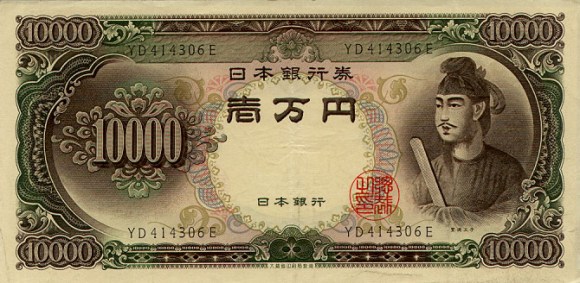
I’m sure I’m not the first to admit that life would be so much easier if money grew on trees, or even if earning more money were as simple as just printing it off your computer. But alas, the world does work that way, and anyone caught trying to spend counterfeit money is bound to end up in hot water, as these two Japanese suspects are sure to tell you.
Joint investigation headquarters of Osaka, Hyogo, and Niigata prefectural police announced this January 14 that company executives Takeshi Aoyama from Toyohashi City, and Masahiko Ito from Niigata City, were arrested under suspicion of importing forged money from China.
Just how much money, you ask? According to the reports, there were 108 10,000-yen bills. A 10,000-yen bill is the equivalent of a US hundred-dollar bill, so that’s about a cool US$10,800 in (fake) cash right there. And what was particularly interesting about these bills is that they were forgeries of the old-style 10,000-yen note.
The Bank of Japan’s homepage states that the old bills, first issued in 1958, featured Prince Shōtoku, a legendary regent and politician in late 6th century Japan. Prince Shōtoku was then replaced on the bills in 1984 by Yukichi Fukuzawa, famous philosopher and founder of Keio University.
▼The prince in all his glory…
▼…before Mr. Yukichi took over
Images: Wikipedia
Seventy-eight-year-old Aoyama and 44-year-old Ito are suspected of smuggling the old bills from Shanghai into Chubu Airport in Aichi Prefecture in June 2013. Investigations continued that July after old bills brought in to be exchanged at a bank in Niigata were found to be fake, and another fake bill was found listed on an online auction website.
When questioned, Aoyama claimed that he received over 200 of the bills from a Chinese man after paying him, and Ito adds that they didn’t know whether or not the bills were fake.
The two still took the money in to banks within the country to be exchanged, and also gave them to friends and acquaintances, persuading them that there were still many of the old bills in use in China, and encouraging them to invest the money.
Coincidentally enough, back in 2012, Aoyama and Ito established the “Nicchuu Rekishi Kouryuu Kyoukai“, with roughly translates as “Sino-Japanese Historical Exchange Association”. Aoyama states he was urged to establish the association by the same man who gave him the fake bills. Guess there was a bit more than just history being exchanged there?
Image: Adventure to Fitness
If you don’t want to get in trouble with the big guys, it might be a good idea to keep the fake money for playtime!
Source: The Asahi Shimbun
Featured image: Wikipedia
Like this:
Like Loading…
- Japan
- (counterfeit money • crimes • yen)
Related Stories
 Two Japanese high school kids arrested in “really bad” attempt at cash fraud
 Japanese Man Arrested for Using Novelty Cash, Clerk Tipped off by Laughing Yukichi
 Yamanashi man arrested for making fake money and tricking people into picking it up
 Man counterfeits 50,000 yen using only a 100-yen shop, a convenience store, and a Japanese custom
 Let this be a reminder to everyone: There’s no such thing as easy money!
- Product lets you build your own Rube Goldberg device – Just add tons of needlessly complex parts!
- ‘Momoiro Clover Z vs. KISS’ full musicvideo features Sushio’s animation
- Trackbacks (0)
Trackbacks
- There are no trackbacks yet.
- Trackback URL
Trending Today
- Umamusume is officially collaborating with the Denver Broncos football team [Video]
- Final Fantasy/Dragon Quest Christmas trees go up as Chocobo and Slime celebrate holidays in Japan
- 4-cheese-pizza-flavored soda unleashed on Japan [Taste Test]
- Has a Shibuya restaurant solved the problem of one of Japan’s most divisive soba noodle toppings?
- Make Gifu’s famous autumn chestnut sweet at home with just two Japanese supermarket snacks
- Studio Ghibli releases new Howl’s Moving Castle merchandise, complete with spinning clock and talking Calcifer
- Yoshinoya’s 2027 lucky box is already here and brings the newest piece of mini Yoshinoya-ware
- Instant curry blessed by priests at shrine of god of learning go on sale in Japan
- Is Starbucks Japan’s new Matcha Tiramisu Frappuccino really like a Christmas tree?
- East Japan Railway Company says it will use all three of its mascot replacement characters
- Product lets you build your own Rube Goldberg device – Just add tons of needlessly complex parts!
- ‘Momoiro Clover Z vs. KISS’ full musicvideo features Sushio’s animation
-
Recent Posts
- Hello Kitty would like to be squeezed between your thighs in her new plushie form [Pics]
- Has a Shibuya restaurant solved the problem of one of Japan’s most divisive soba noodle toppings?
- Make Gifu’s famous autumn chestnut sweet at home with just two Japanese supermarket snacks
- 4-cheese-pizza-flavored soda unleashed on Japan [Taste Test]
- Instant curry blessed by priests at shrine of god of learning go on sale in Japan
-
MOST POPULAR
- Today
- Weekly
- Monthly
- Yearly
Today
 Umamusume is officially collaborating with the Denver Broncos football team [Video]
 Final Fantasy/Dragon Quest Christmas trees go up as Chocobo and Slime celebrate holidays in Japan
 4-cheese-pizza-flavored soda unleashed on Japan [Taste Test]
 Has a Shibuya restaurant solved the problem of one of Japan’s most divisive soba noodle toppings?
 Make Gifu’s famous autumn chestnut sweet at home with just two Japanese supermarket snacks
 Studio Ghibli releases new Howl’s Moving Castle merchandise, complete with spinning clock and talking Calcifer
 Yoshinoya’s 2027 lucky box is already here and brings the newest piece of mini Yoshinoya-ware
 Instant curry blessed by priests at shrine of god of learning go on sale in Japan
 Is Starbucks Japan’s new Matcha Tiramisu Frappuccino really like a Christmas tree?
 East Japan Railway Company says it will use all three of its mascot replacement characters
Weekly
 Nara deer send record number of people to hospital, over 70 percent of patients are foreigners
 Tokyo’s Shibuya Sakurazaka cherry blossom street to be decommissioned, number of trees to increase
 Studio Ghibli and Uniqlo reveal brand-new T-shirt collaboration [Pics]
- Studio Ghibli releases new Howl’s Moving Castle merchandise, complete with spinning clock and talking Calcifer
 Life-size Gundam statue’s head returning to Tokyo neighborhood this month
 Starbucks Japan reveals new Christmas advent calendar and holiday drinkware collection
 Japan’s beautiful new Pokémon hotel room gives you and Dragonite a place to take a break
 Japan’s JR East reveals new train company mascot character, online comments aren’t kind
- Umamusume is officially collaborating with the Denver Broncos football team [Video]
 Starbucks Japan unveils new Christmas Matcha Tiramisu Frappuccino
Monthly
- Nara deer send record number of people to hospital, over 70 percent of patients are foreigners
 Japan ends tax-free shopping system for foreign tourists, new refund request system now in effect
- Tokyo’s Shibuya Sakurazaka cherry blossom street to be decommissioned, number of trees to increase
- Studio Ghibli and Uniqlo reveal brand-new T-shirt collaboration [Pics]
 Ichiran releases an at-home counter kit that turns your desk into a ramen restaurant
 Japan’s TeamLab digital art group is opening a permanent museum in America
- Studio Ghibli releases new Howl’s Moving Castle merchandise, complete with spinning clock and talking Calcifer
 Beautiful Ghibli diorama kits lets you build anime characters’ homes inside yours [Photos]
 Chainsaw robots helping keep trains running safely in east Japan [Video]
 Family Mart releases 47 convenience store socks and stickers, one for every prefecture in Japan
Yearly
 Japan announces sudden 400-percent increase in visa fees for foreigners entering the country
 Japan’s human washing machines will go on sale to general public, demos to be held in Tokyo
 Studio Ghibli has a new anime out, and there’s only one place in the world where you can see it
- Nara deer send record number of people to hospital, over 70 percent of patients are foreigners
 Starbucks Japan releases new drinkware and goods for Valentine’s Day
 Starbucks Japan releases new sakura goods and drinkware for cherry blossom season 2026
 Japan’s newest Shinkansen has no seats…or passengers [Video]
 Tokyo subway installing new ticket gates that don’t accept payment through Suica or other IC cards
 Japanese ninja certification exam attracts 131 candidates from Japan and abroad
 Salomon releases Japan-exclusive Mt. Fuji hiking gear that doubles as an amazing souvenir
-
RECOMMENDED STORIES
 How to spot the new sophisticated counterfeit bills circulating in Japan
- Counterfeit cash: Chinese ATMs distributing bootleg bucks?
 A fun and cheap souvenir for kids: 100-yen shop play money featuring Japan’s brand-new yen bills!
 What should you do if you have Japanese money that’s been destroyed like this?
 Aichi man arrested for stealing 70,000 yen in toy money from safe
 Japanese woman seeks justice after buying four million-dollar bills from counterfeiters
 Osaka woman gives foreigner Uber Eats worker fake money, thought he wouldn’t know difference
 Can you use the fluctuating exchange rate and Japan’s weak yen to make some money? We find out
 The Bank of Japan is really jazzed up about the new 10,000 yen bill
 Okinawan man arrested for buying cigarettes with currency of the dead
 Japan is changing its yen bills soon, so beware of scam artists, government warns
 Pretty money – Poll reveals Japan’s “coolest” cash
 Mysterious Japanese woman gives one million yen in cash to man she’s never met, then disappears
 Japanese city abolishes 88th birthday celebratory money gift because people are living longer
 Nike Air Mo’ Money sneakers with Japanese text and yen symbols are the coolest kicks around
-
-
Categories
Categories Select Category Africa (33) Anime & Manga (193) Art (64) Australia (42) C America (9) C Asia (17) Canada (59) Cats (72) China (847) Culture (180) Cute (187) Entertainment (248) Europe (345) FN24 (1) Food & Drink (314) Games & Tech (167) Global (1,073) India (11) Internet (2,199) Italy (13) Japan (34,633) Korea (375) Lifestyle (76) Mexico (6) Music (12) N Asia (4) New Zealand (11) News (61) North Korea (72) Oceania (10) Russia (56) S America (33) S Asia (66) SE Asia (378) Space (2) Taiwan (203) UK (18) Uncategorized (19) USA (980) W Asia (25)
-
Archives
Archives Select Month November 2026 (102) October 2026 (144) September 2026 (156) August 2026 (174) July 2026 (197) June 2026 (174) May 2026 (138) April 2026 (142) March 2026 (150) February 2026 (124) January 2026 (138) December 2025 (136) November 2025 (136) October 2025 (151) September 2025 (154) August 2025 (143) July 2025 (158) June 2025 (165) May 2025 (162) April 2025 (181) March 2025 (157) February 2025 (127) January 2025 (139) December 2024 (148) November 2024 (149) October 2024 (153) September 2024 (154) August 2024 (158) July 2024 (156) June 2024 (150) May 2024 (166) April 2024 (150) March 2024 (157) February 2024 (169) January 2024 (159) December 2023 (165) November 2023 (166) October 2023 (166) September 2023 (173) August 2023 (183) July 2023 (171) June 2023 (180) May 2023 (158) April 2023 (152) March 2023 (167) February 2023 (160) January 2023 (171) December 2022 (175) November 2022 (176) October 2022 (179) September 2022 (191) August 2022 (202) July 2022 (193) June 2022 (178) May 2022 (178) April 2022 (181) March 2022 (212) February 2022 (199) January 2022 (224) December 2021 (230) November 2021 (214) October 2021 (215) September 2021 (238) August 2021 (225) July 2021 (207) June 2021 (218) May 2021 (209) April 2021 (206) March 2021 (225) February 2021 (209) January 2021 (224) December 2020 (225) November 2020 (224) October 2020 (231) September 2020 (238) August 2020 (227) July 2020 (220) June 2020 (209) May 2020 (215) April 2020 (238) March 2020 (235) February 2020 (222) January 2020 (233) December 2019 (187) November 2019 (214) October 2019 (237) September 2019 (195) August 2019 (205) July 2019 (183) June 2019 (201) May 2019 (231) April 2019 (192) March 2019 (242) February 2019 (211) January 2019 (238) December 2018 (212) November 2018 (217) October 2018 (214) September 2018 (203) August 2018 (217) July 2018 (218) June 2018 (208) May 2018 (204) April 2018 (193) March 2018 (216) February 2018 (192) January 2018 (223) December 2017 (204) November 2017 (209) October 2017 (218) September 2017 (209) August 2017 (228) July 2017 (222) June 2017 (245) May 2017 (229) April 2017 (197) March 2017 (165) February 2017 (151) January 2017 (180) December 2016 (260) November 2016 (267) October 2016 (302) September 2016 (387) August 2016 (351) July 2016 (379) June 2016 (379) May 2016 (312) April 2016 (347) March 2016 (414) February 2016 (379) January 2016 (359) December 2015 (359) November 2015 (378) October 2015 (435) September 2015 (419) August 2015 (152) July 2015 (218) June 2015 (179) May 2015 (237) April 2015 (223) March 2015 (119) February 2015 (121) January 2015 (394) December 2014 (376) November 2014 (376) October 2014 (414) September 2014 (349) August 2014 (379) July 2014 (316) June 2014 (375) May 2014 (384) April 2014 (354) March 2014 (318) February 2014 (284) January 2014 (270) December 2013 (224) November 2013 (242) October 2013 (244) September 2013 (226) August 2013 (241) July 2013 (214) June 2013 (222) May 2013 (191) April 2013 (173) March 2013 (149) February 2013 (85) January 2013 (106) December 2012 (111) November 2012 (149) October 2012 (151) September 2012 (118) August 2012 (99) July 2012 (56) June 2012 (57) May 2012 (54) April 2012 (62) March 2012 (40) February 2012 (27) January 2012 (24) December 2011 (18) November 2011 (12) October 2011 (1) September 2011 (9) August 2011 (11) March 2011 (1)
-
- About Us | Jobs | Contact | Contribution | Partner with Us
© SoraNews24 —Japan News— / SOCIO CORPORATION
- Advertise |
- About Us |
- Work with us |
- Contact |
- Contribution |

%d