SoraNews24 —Japan News—
Bringing you yesterday's news from Japan and Asia, today.
-
TOP
» Global
-
» No good at saving money? You may have your mother tongue to blame for that
Featured
- Weird
- Studio Ghibli
- Jobs
No good at saving money? You may have your mother tongue to blame for that
 Meg Murphy Feb 25, 2015
- Tweet
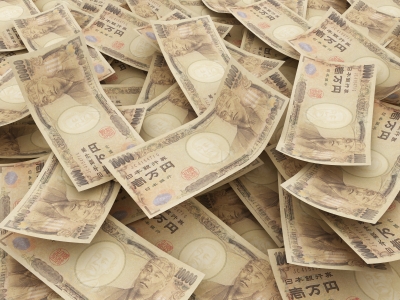
Do you find yourself living in the now, enjoying the time and money you have presently without worrying so much about putting away for the future? According to one economist, the language you speak may play a role in how well you’re able to save money. Speakers of Norwegian or Japanese, for example, are more likely to save more money per year, and have more money saved up by the time they retire, than are speakers of, say, English or Greek.
But what is it exactly that differs between these languages, and most importantly, what relation does that have to money?
As it turns out, our language has an effect on the way we see the world. To give a simple example, in English, we can refer to a specific sibling as either “my brother” or “my sister” without consideration for their age in relation to ourselves. But in Japanese, there is no singular word for “brother” or “sister”, so speakers must convey whether the sibling they are referring to is an older brother or sister (ani or ane, respectively) or a younger brother or sister (otouto or imouto), even in the case of twins. Then there are the words used for other people’s siblings, but that’s another story…
While English speakers might not see the necessity of always indicating whether a sibling is older or younger, in a society like Japan that places more emphasis on age and hierarchy, it’s only natural to make that distinction.
▼I may be only four minutes older, but I’m still your elder!
Image: artur84 at FreeDigitalPhotos
In this same way, economist Keith Chen believes that whether or not a language differentiates between present and future tense has an effect on how we view time and, in turn, how likely we are to put money aside for the future.
In English, we have different verbs to help us distinguish between past, present, and future. Using Chen’s example, we would say, “It rained yesterday”, “It’s raining today”, or “It will rain tomorrow”, to indicate when exactly the rain has happened, or will happen. But in futureless languages such as German or Japanese, there is no future tense. To say in Japanese, “Ame ga furu” translates simply as “It rains”. In order to indicate the future tense, you need to attach a time-related word like “tomorrow” (ashita) to indicate when the rain will happen, thus making the sentence, “Tomorrow it rains” (Ashita ame ga furu).
Chen theorizes that the lack of a future tense makes the speaker feel like the future is closer to the present, while the presence of a future tense does the opposite, making the speaker more aware and concerned about the now, as opposed to the later. He claims in his research to have found a correlation between speakers of futureless languages and their likelihood to be better savers.
▼Futureless languages display higher average savings overall when compared to futured languages
Image: DigitalCast
Even after controlling for various cultural, economical, and religious factors, Chen still found that futureless language speakers are 30 percent more likely to save in any given year, and are going to retire with about 25 percent more in savings.
He admits his theory that there is a relation between language and one’s inclination to save is a fanciful one, but claims he has yet to find anything to disprove it. If you’re starting to think it might be in your best interest to begin studying a futureless language, we won’t stop you – being multilingual is awesome, and does have many other benefits, whether this includes Chen’s theory or not. But if you are mostly just concerned about your future savings, it might be easier to change your attitude and thoughts about time instead.
Source: TED Talks (DigitalCast) via NAVER Matome
Featured image: David Castillo Dominici at FreeDigitalPhotos
Like this:
Like Loading…
- Global
- (languages • linguistics • money)
Related Stories
 Hatch dinosaurs by saving your money in new line of Japanese toy coin banks
 We prepared our own delicious amberjack sashimi and realized how much money it saved us【Pics】
 If you have an apartment in Japan, your “fire disaster insurance” may also be toilet insurance
- Fantastic fujoshi just wanna have fun, Japanese netizens say, “No!”
- Butter-flavored Kit Kats come to Japan as new specialty store opens in Hokkaido
- Trackbacks (0)
Trackbacks
- There are no trackbacks yet.
- Trackback URL
Trending Today
- Japanese viewers of Godzilla Minus Zero angered by unusual number of restroom goers
- America’s first-ever permanent One Piece store is now open [Photos]
- Tokyo cracks down on Airbnb-style rentals with new laws limiting operator days and more
- Pokémon card game’s expansion features art from Fist of the North Star creator
- New Era celebrates three decades of Pokémon with new 30th anniversary cap line [Photos]
- Amazing Japanese yogurt spoon scoops up every last drop of dairy effortlessly
- Japanese convenience store offering chance to have your shopping be effectively free for one day
- Japanese hoodie for cat-loving gamers will keep you and your feline friend warm and fuzzy [Pics]
- Starbucks Japan unveils new Potato Soupuccino that’s said to be more than just soup
- Katsuya takes perhaps a little too much liberty with its take on a Niigata soul food
- Fantastic fujoshi just wanna have fun, Japanese netizens say, “No!”
- Butter-flavored Kit Kats come to Japan as new specialty store opens in Hokkaido
-
Recent Posts
- Tokyo cracks down on Airbnb-style rentals with new laws limiting operator days and more
- Japanese viewers of Godzilla Minus Zero angered by unusual number of restroom goers
- America’s first-ever permanent One Piece store is now open [Photos]
- Japanese convenience store offering chance to have your shopping be effectively free for one day
- Starbucks Japan unveils new Potato Soupuccino that’s said to be more than just soup
-
MOST POPULAR
- Today
- Weekly
- Monthly
- Yearly
Today
 Japanese viewers of Godzilla Minus Zero angered by unusual number of restroom goers
 America’s first-ever permanent One Piece store is now open [Photos]
 Tokyo cracks down on Airbnb-style rentals with new laws limiting operator days and more
 Pokémon card game’s expansion features art from Fist of the North Star creator
 New Era celebrates three decades of Pokémon with new 30th anniversary cap line [Photos]
 Amazing Japanese yogurt spoon scoops up every last drop of dairy effortlessly
 Japanese convenience store offering chance to have your shopping be effectively free for one day
 Japanese hoodie for cat-loving gamers will keep you and your feline friend warm and fuzzy [Pics]
 Starbucks Japan unveils new Potato Soupuccino that’s said to be more than just soup
 Katsuya takes perhaps a little too much liberty with its take on a Niigata soul food
Weekly
 Japan ends tax-free shopping system for foreign tourists, new refund request system now in effect
 Starbucks Japan unveils new winter drinkware collection with limited-edition Stanley cups
 Pachinko parlor operator arrested for not obscuring the act of gambling well enough
 Beautiful Ghibli diorama kits lets you build anime characters’ homes inside yours [Photos]
 Two Tokyo neighborhoods to gather on bridge and shift their recognized border through tug-of-war
 Liquid croissant coffee is coming to Japanese stores this month
 Pokémon doughnuts pop up at Mister Donut, with a new gathering that’s bigger than ever
 Japan’s new matcha vending machines serve freshly prepared matcha in five different strengths
 Get the taste of the U.K. in Tokyo with 99 Flakes, meat pies, and Jaffa Cakes
- New Era celebrates three decades of Pokémon with new 30th anniversary cap line [Photos]
Monthly
 Pokémon Company announces first-ever permanent Pokémon store to open outside Asia
- Japan ends tax-free shopping system for foreign tourists, new refund request system now in effect
 Japan’s TeamLab digital art group is opening a permanent museum in America
 Family Mart releases 47 convenience store socks and stickers, one for every prefecture in Japan
 What’s it like to stay in a Japanese container hotel?
- Beautiful Ghibli diorama kits lets you build anime characters’ homes inside yours [Photos]
 Chainsaw robots helping keep trains running safely in east Japan [Video]
 New Studio Ghibli anime gets extended run at the only cinema in Japan where it’s being shown
 Osaka’s famous Glico Running Man will be removed and replaced with a new-look sign
 Studio Ghibli creates illustrated Kyoto sightseeing map, available at any 7-Eleven Japan store
Yearly
 Japan announces sudden 400-percent increase in visa fees for foreigners entering the country
 Japan’s human washing machines will go on sale to general public, demos to be held in Tokyo
 Studio Ghibli has a new anime out, and there’s only one place in the world where you can see it
 Starbucks Japan releases new drinkware and goods for Valentine’s Day
 Starbucks Japan releases new sakura goods and drinkware for cherry blossom season 2026
 Japan’s newest Shinkansen has no seats…or passengers [Video]
 Tokyo subway installing new ticket gates that don’t accept payment through Suica or other IC cards
 Japanese ninja certification exam attracts 131 candidates from Japan and abroad
 Salomon releases Japan-exclusive Mt. Fuji hiking gear that doubles as an amazing souvenir
 Japan reportedly adding Japanese language skill requirement to most common foreigner work visa
-
RECOMMENDED STORIES
-
-
Categories
Categories Select Category Africa (33) Anime & Manga (193) Art (64) Australia (42) C America (9) C Asia (17) Canada (59) Cats (72) China (847) Culture (180) Cute (187) Entertainment (248) Europe (345) FN24 (1) Food & Drink (314) Games & Tech (167) Global (1,073) India (11) Internet (2,198) Italy (13) Japan (34,576) Korea (375) Lifestyle (76) Mexico (6) Music (12) N Asia (4) New Zealand (11) News (61) North Korea (72) Oceania (10) Russia (56) S America (33) S Asia (66) SE Asia (378) Space (2) Taiwan (203) UK (18) Uncategorized (19) USA (979) W Asia (25)
-
Archives
Archives Select Month November 2026 (45) October 2026 (144) September 2026 (156) August 2026 (174) July 2026 (197) June 2026 (174) May 2026 (138) April 2026 (142) March 2026 (150) February 2026 (124) January 2026 (138) December 2025 (136) November 2025 (136) October 2025 (151) September 2025 (154) August 2025 (143) July 2025 (158) June 2025 (165) May 2025 (162) April 2025 (181) March 2025 (157) February 2025 (127) January 2025 (139) December 2024 (148) November 2024 (149) October 2024 (153) September 2024 (154) August 2024 (158) July 2024 (156) June 2024 (150) May 2024 (166) April 2024 (150) March 2024 (157) February 2024 (169) January 2024 (159) December 2023 (165) November 2023 (166) October 2023 (166) September 2023 (173) August 2023 (183) July 2023 (171) June 2023 (180) May 2023 (158) April 2023 (152) March 2023 (167) February 2023 (160) January 2023 (171) December 2022 (175) November 2022 (176) October 2022 (179) September 2022 (191) August 2022 (202) July 2022 (193) June 2022 (178) May 2022 (178) April 2022 (181) March 2022 (212) February 2022 (199) January 2022 (224) December 2021 (230) November 2021 (214) October 2021 (215) September 2021 (238) August 2021 (225) July 2021 (207) June 2021 (218) May 2021 (209) April 2021 (206) March 2021 (225) February 2021 (209) January 2021 (224) December 2020 (225) November 2020 (224) October 2020 (231) September 2020 (238) August 2020 (227) July 2020 (220) June 2020 (209) May 2020 (215) April 2020 (238) March 2020 (235) February 2020 (222) January 2020 (233) December 2019 (187) November 2019 (214) October 2019 (237) September 2019 (195) August 2019 (205) July 2019 (183) June 2019 (201) May 2019 (231) April 2019 (192) March 2019 (242) February 2019 (211) January 2019 (238) December 2018 (212) November 2018 (217) October 2018 (214) September 2018 (203) August 2018 (217) July 2018 (218) June 2018 (208) May 2018 (204) April 2018 (193) March 2018 (216) February 2018 (192) January 2018 (223) December 2017 (204) November 2017 (209) October 2017 (218) September 2017 (209) August 2017 (228) July 2017 (222) June 2017 (245) May 2017 (229) April 2017 (197) March 2017 (165) February 2017 (151) January 2017 (180) December 2016 (260) November 2016 (267) October 2016 (302) September 2016 (387) August 2016 (351) July 2016 (379) June 2016 (379) May 2016 (312) April 2016 (347) March 2016 (414) February 2016 (379) January 2016 (359) December 2015 (359) November 2015 (378) October 2015 (435) September 2015 (419) August 2015 (152) July 2015 (218) June 2015 (179) May 2015 (237) April 2015 (223) March 2015 (119) February 2015 (121) January 2015 (394) December 2014 (376) November 2014 (376) October 2014 (414) September 2014 (349) August 2014 (379) July 2014 (316) June 2014 (375) May 2014 (384) April 2014 (354) March 2014 (318) February 2014 (284) January 2014 (270) December 2013 (224) November 2013 (242) October 2013 (244) September 2013 (226) August 2013 (241) July 2013 (214) June 2013 (222) May 2013 (191) April 2013 (173) March 2013 (149) February 2013 (85) January 2013 (106) December 2012 (111) November 2012 (149) October 2012 (151) September 2012 (118) August 2012 (99) July 2012 (56) June 2012 (57) May 2012 (54) April 2012 (62) March 2012 (40) February 2012 (27) January 2012 (24) December 2011 (18) November 2011 (12) October 2011 (1) September 2011 (9) August 2011 (11) March 2011 (1)
-
- About Us | Jobs | Contact | Contribution | Partner with Us
© SoraNews24 —Japan News— / SOCIO CORPORATION
- Advertise |
- About Us |
- Work with us |
- Contact |
- Contribution |

%d