SoraNews24 —Japan News—
Bringing you yesterday's news from Japan and Asia, today.
-
TOP
» Japan
-
» Pronunciation anxiety: many Japanese people don’t want to speak English unless it’s “perfect”
Featured
- Weird
- Studio Ghibli
- Jobs
Pronunciation anxiety: many Japanese people don’t want to speak English unless it’s “perfect”

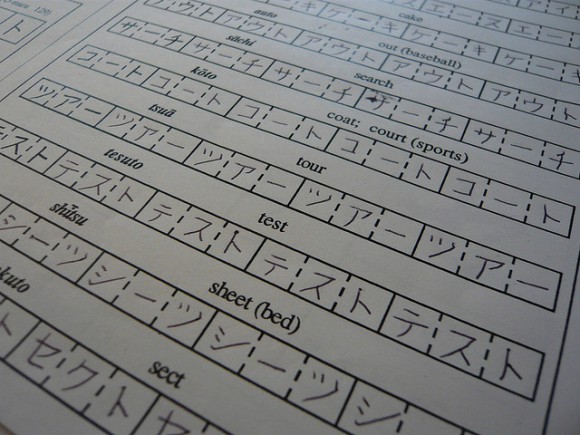
With the 26 letters of the alphabet, we can make pretty much any sound present in the majority of languages. But Japanese just doesn’t contain certain sounds present in English, like “th” or “v”, and their “r” is somewhere right between our “r” and “l”, making them sound almost exactly the same to Japanese ears.
Since most Japanese people grow up only speaking Japanese, it means that when they start learning English at school, they either have to learn entirely new sounds (difficult) or else try to render English in Japanese sounds (which isn’t accurate). As a result, many Japanese English learners feel a lot of anxiety over the accuracy of their pronunciation. But should that really be holding them back?
Japanese syllables generally consist of the vowels a, i, u, e, o, and consonant-vowel compounds such as ka, shi, tsu, etc. Therefore, rendering English into Japanese pronunciation results in extraneous sounds. Take, for example, the anime buzzword “waifu“, from the English word “wife”. In Japanese, this can only be rendered into three syllables: WA, I, and FU. The extra “u” sound at the end sounds odd to native English-speaking ears, but is perfectly natural in Japanese. In fact, our cut-off consonants probably sound pretty weird to them, like we’re only pronouncing half of the letter.
Rather than learning English the way a native-speaking child would, through memorising phonics, many Japanese students rely on pronunciation guides which provide that word in a Japanese pronunciation. Known as “Katakana English”, rendering English into Japanese script actually impedes learning, and is an almost impossible habit to break. Sometimes, however, it’s just too difficult for an ear untrained to English to discern a word without the “crutch” of a Japanese pronunciation. Just the other day, I was talking to a Japanese friend about RocketNews24, and I lazily pronounced it “Rocket News”. After a puzzled silence, I tried “Roketto Nyuusu” and was finally met with a smile of recognition.
As we’ve previously lamented, much of the English education in Japanese schools revolves around standardised test-taking and memorising written grammar over learning pronunciation. So it’s probably not much of a surprise that Japanese people who learn English as a second language tend to have a Japanese accent to some degree. But is this really a Japan-specific thing? Personally, I’ve known many people from a variety of countries who speak excellent English as their second language, yet still retain a distinctive accent. It doesn’t mean that their English is any less accurate.
So why is it that Japanese people are so paranoid about their accent?
▼ Recently, English education in Japan is increasingly leaning towards emphasising spoken English.
Paradoxically, Japanese English learners can sometimes feel more comfortable speaking English with other English speakers rather than in front of their fellow Japanese. The other day I went to a nail salon in Tokyo, and was assigned a nail technician who had recently returned from a working holiday in the US. She was so nervous about the prospect of speaking English to me in front of her Japanese colleagues she was practically trembling, but once the novelty wore off and the others stopped paying attention, she relaxed. “I don’t mind speaking English with English-speaking people,” she explained, “But I can’t do it in front of other Japanese people.”
Recently, a TV interview in English with New York Yankees’ pitcher Masahiro Tanaka caught the attention of Japanese netizens because they didn’t feel his English was accurate enough. “He said ‘My name is’;” complained one Japanese commenter, “nobody actually says that in English, it sounds old-fashioned!” Others, thankfully, were quick to respond with comments along the lines of “Who cares? It’s still English!” and another commenter stated: “Now I know why Japanese people are so scared to be seen speaking English in front of other Japanese people. It seems native English speakers are more understanding! What’s that about?”
▼ Masahiro Tanaka. Skilled pitcher, budding bilingual.
It may be too late now for many Japanese English speakers to go back and undo years of standardised tests and “Katakana English” lessons, but it seems that the more immediate issue is overcoming that pronunciation anxiety and just relaxing into it. Of course, there’s nothing wrong with being a perfectionist, but it’s important not to sweat the small stuff. And as far as problems rank, having a bit of an accent when you speak really isn’t such a big deal after all, is it?
Source: Togetter, Japan Times, Naver Matome
Main Image: Flickr © Jessica Spengler
Inset Images: Flickr © Official US Navy, Flickr © Arturo Pardavila III
Like this:
Like Loading…
- Japan
- (accent • English • Engrish • Japanese • Katakana • language learning • pronunciation • second language)
Related Stories
 The reason why Japanese students don’t pronounce English properly
 The science behind why English speakers can’t pronounce the Japanese “fu”
 Things Japanese people believe about British vs. American English
 NTT showcases technology which can “correct” Japanese people’s English pronunciation
 Japanese elementary school student teaches us all how to pronounce English like a native speaker
- Japanese netizens rewrite fairy tales in modern corporate situations so real they make us weep
- Cat/dog beds shaped like fruits and vegetables satisfy your recommended daily amount of cuteness
- Trackbacks (0)
Trackbacks
- There are no trackbacks yet.
- Trackback URL
Trending Today
- Japan ends tax-free shopping system for foreign tourists, new refund request system now in effect
- Beautiful Ghibli diorama kits lets you build anime characters’ homes inside yours [Photos]
- Japan’s TeamLab digital art group is opening a permanent museum in America
- Japan’s mini Shikoku Pilgrimage walking tour left us feeling immensely satisfied
- This hot spring near Osaka’s Kansai Airport resolves the pick-two-out-of-three bathhouse dilemma
- Starbucks Japan invites us to par-tea with its new Earl Gray Frappuccino [Taste test]
- Tokyo Skytree set to offer breathtaking Diamond Fuji natural phenomenon view this month
- Family Mart releases 47 convenience store socks and stickers, one for every prefecture in Japan
- Shoplifting prevention guard arrested for shoplifting boot from store he was guarding
- This semi-secret, totally free footbath in downtown Tokyo is completely awesome
- Japanese netizens rewrite fairy tales in modern corporate situations so real they make us weep
- Cat/dog beds shaped like fruits and vegetables satisfy your recommended daily amount of cuteness
-
Recent Posts
- This hot spring near Osaka’s Kansai Airport resolves the pick-two-out-of-three bathhouse dilemma
- Starbucks Japan invites us to par-tea with its new Earl Gray Frappuccino [Taste test]
- Tokyo Skytree set to offer breathtaking Diamond Fuji natural phenomenon view this month
- Japan ends tax-free shopping system for foreign tourists, new refund request system now in effect
- Japan’s mini Shikoku Pilgrimage walking tour left us feeling immensely satisfied
-
MOST POPULAR
- Today
- Weekly
- Monthly
- Yearly
Today
 Japan ends tax-free shopping system for foreign tourists, new refund request system now in effect
 Beautiful Ghibli diorama kits lets you build anime characters’ homes inside yours [Photos]
 Japan’s TeamLab digital art group is opening a permanent museum in America
 Japan’s mini Shikoku Pilgrimage walking tour left us feeling immensely satisfied
 This hot spring near Osaka’s Kansai Airport resolves the pick-two-out-of-three bathhouse dilemma
 Starbucks Japan invites us to par-tea with its new Earl Gray Frappuccino [Taste test]
 Tokyo Skytree set to offer breathtaking Diamond Fuji natural phenomenon view this month
 Family Mart releases 47 convenience store socks and stickers, one for every prefecture in Japan
 Shoplifting prevention guard arrested for shoplifting boot from store he was guarding
 This semi-secret, totally free footbath in downtown Tokyo is completely awesome
Weekly
- Japan’s TeamLab digital art group is opening a permanent museum in America
- Japan ends tax-free shopping system for foreign tourists, new refund request system now in effect
 Starbucks Japan unveils new Christmas goods for 2026, with exclusive holiday surprises
- Beautiful Ghibli diorama kits lets you build anime characters’ homes inside yours [Photos]
 Life-size Monster Hunter dragon statues to be built at Japanese shopping mall
 Studio Ghibli homeware brand’s faux oil lamp brings light, smiles, and Kiki’s Jiji to your home
 Modern exosuits are opening up ancient Japanese castle climbs to everyone
 Evangelion announces collaboration with Hard Rock Cafe
 Starbucks Japan releases “Let’s Par-TEA!” Frappuccino and drinks for the holiday season
 Cold Stone is closing its final branch in all of east Japan, but it’s going down singing
Monthly
 Pokémon Company announces first-ever permanent Pokémon store to open outside Asia
- Family Mart releases 47 convenience store socks and stickers, one for every prefecture in Japan
 What’s it like to stay in a Japanese container hotel?
- Japan’s TeamLab digital art group is opening a permanent museum in America
 Chainsaw robots helping keep trains running safely in east Japan [Video]
 New Studio Ghibli anime gets extended run at the only cinema in Japan where it’s being shown
 Tokyo train station will play Godzilla theme song as new departure melody
 Osaka’s famous Glico Running Man will be removed and replaced with a new-look sign
 Studio Ghibli creates illustrated Kyoto sightseeing map, available at any 7-Eleven Japan store
- Japan ends tax-free shopping system for foreign tourists, new refund request system now in effect
Yearly
 Japan announces sudden 400-percent increase in visa fees for foreigners entering the country
 Japan’s human washing machines will go on sale to general public, demos to be held in Tokyo
 Studio Ghibli has a new anime out, and there’s only one place in the world where you can see it
 Starbucks Japan releases new drinkware and goods for Valentine’s Day
 Starbucks Japan releases new sakura goods and drinkware for cherry blossom season 2026
 Japan’s newest Shinkansen has no seats…or passengers [Video]
 Tokyo subway installing new ticket gates that don’t accept payment through Suica or other IC cards
 Japanese ninja certification exam attracts 131 candidates from Japan and abroad
 Salomon releases Japan-exclusive Mt. Fuji hiking gear that doubles as an amazing souvenir
 Japan reportedly adding Japanese language skill requirement to most common foreigner work visa
-
RECOMMENDED STORIES
 Testing English “loan words” on people who don’t speak Japanese (Spoiler: they don’t make sense)
 “Don’t touch my moustache!” Japanese that sounds like English but isn’t, and vice versa!
 English-speaking-only bar opens in Osaka and Tokyo, yellow cards for those who don’t follow rules
 How to respond to Japanese people saying “I don’t speak English” when you’re speaking Japanese?
 “Don’t worry, he is a docile pervert” and other useful phrases in Japanese and English
 10 cringeworthy habits of English-speaking Japanese
 Counting sheep to get to sleep may work after all, unless you speak Japanese
 Japanese student teased for American pronunciation gets sweet revenge on classmates
 English conversation school in Japan has clever reminder that students don’t have to be perfect
 Keisuke Honda apologises for English mistake at press conference 【Video】
 Nihon-no: Is an entirely English-speaking village coming to Tokyo?
 Ridiculous Japanese TV program says English pronunciation is to blame for coronavirus spread【Vid】
 Clever font sneaks pronunciation guide for English speakers into Japanese katakana characters
 The top 10 hardest Japanese words to pronounce – which ones trip you up?【Video】
 RocketNews24’s six top tips for learning Japanese
-
-
Categories
Categories Select Category Africa (33) Anime & Manga (193) Art (64) Australia (42) C America (9) C Asia (17) Canada (59) Cats (72) China (847) Culture (180) Cute (187) Entertainment (248) Europe (345) FN24 (1) Food & Drink (314) Games & Tech (167) Global (1,073) India (11) Internet (2,198) Italy (13) Japan (34,541) Korea (375) Lifestyle (76) Mexico (6) Music (12) N Asia (4) New Zealand (11) News (61) North Korea (72) Oceania (10) Russia (56) S America (33) S Asia (66) SE Asia (378) Space (2) Taiwan (203) UK (18) Uncategorized (19) USA (978) W Asia (25)
-
Archives
Archives Select Month November 2026 (10) October 2026 (144) September 2026 (156) August 2026 (174) July 2026 (197) June 2026 (174) May 2026 (138) April 2026 (142) March 2026 (150) February 2026 (124) January 2026 (138) December 2025 (136) November 2025 (136) October 2025 (151) September 2025 (154) August 2025 (143) July 2025 (158) June 2025 (165) May 2025 (162) April 2025 (181) March 2025 (157) February 2025 (127) January 2025 (139) December 2024 (148) November 2024 (149) October 2024 (153) September 2024 (154) August 2024 (158) July 2024 (156) June 2024 (150) May 2024 (166) April 2024 (150) March 2024 (157) February 2024 (169) January 2024 (159) December 2023 (165) November 2023 (166) October 2023 (166) September 2023 (173) August 2023 (183) July 2023 (171) June 2023 (180) May 2023 (158) April 2023 (152) March 2023 (167) February 2023 (160) January 2023 (171) December 2022 (175) November 2022 (176) October 2022 (179) September 2022 (191) August 2022 (202) July 2022 (193) June 2022 (178) May 2022 (178) April 2022 (181) March 2022 (212) February 2022 (199) January 2022 (224) December 2021 (230) November 2021 (214) October 2021 (215) September 2021 (238) August 2021 (225) July 2021 (207) June 2021 (218) May 2021 (209) April 2021 (206) March 2021 (225) February 2021 (209) January 2021 (224) December 2020 (225) November 2020 (224) October 2020 (231) September 2020 (238) August 2020 (227) July 2020 (220) June 2020 (209) May 2020 (215) April 2020 (238) March 2020 (235) February 2020 (222) January 2020 (233) December 2019 (187) November 2019 (214) October 2019 (237) September 2019 (195) August 2019 (205) July 2019 (183) June 2019 (201) May 2019 (231) April 2019 (192) March 2019 (242) February 2019 (211) January 2019 (238) December 2018 (212) November 2018 (217) October 2018 (214) September 2018 (203) August 2018 (217) July 2018 (218) June 2018 (208) May 2018 (204) April 2018 (193) March 2018 (216) February 2018 (192) January 2018 (223) December 2017 (204) November 2017 (209) October 2017 (218) September 2017 (209) August 2017 (228) July 2017 (222) June 2017 (245) May 2017 (229) April 2017 (197) March 2017 (165) February 2017 (151) January 2017 (180) December 2016 (260) November 2016 (267) October 2016 (302) September 2016 (387) August 2016 (351) July 2016 (379) June 2016 (379) May 2016 (312) April 2016 (347) March 2016 (414) February 2016 (379) January 2016 (359) December 2015 (359) November 2015 (378) October 2015 (435) September 2015 (419) August 2015 (152) July 2015 (218) June 2015 (179) May 2015 (237) April 2015 (223) March 2015 (119) February 2015 (121) January 2015 (394) December 2014 (376) November 2014 (376) October 2014 (414) September 2014 (349) August 2014 (379) July 2014 (316) June 2014 (375) May 2014 (384) April 2014 (354) March 2014 (318) February 2014 (284) January 2014 (270) December 2013 (224) November 2013 (242) October 2013 (244) September 2013 (226) August 2013 (241) July 2013 (214) June 2013 (222) May 2013 (191) April 2013 (173) March 2013 (149) February 2013 (85) January 2013 (106) December 2012 (111) November 2012 (149) October 2012 (151) September 2012 (118) August 2012 (99) July 2012 (56) June 2012 (57) May 2012 (54) April 2012 (62) March 2012 (40) February 2012 (27) January 2012 (24) December 2011 (18) November 2011 (12) October 2011 (1) September 2011 (9) August 2011 (11) March 2011 (1)
-
- About Us | Jobs | Contact | Contribution | Partner with Us
© SoraNews24 —Japan News— / SOCIO CORPORATION
- Advertise |
- About Us |
- Work with us |
- Contact |
- Contribution |

%d