SoraNews24 —Japan News—
Bringing you yesterday's news from Japan and Asia, today.
-
TOP
» China
-
TOP
• Japan
-
» Are Japanese rice cookers really better than Chinese ones? We test it out and get some surprises
Featured
- Weird
- Studio Ghibli
- Jobs
Are Japanese rice cookers really better than Chinese ones? We test it out and get some surprises
 Scott Wilson Sep 22, 2015
- Tweet
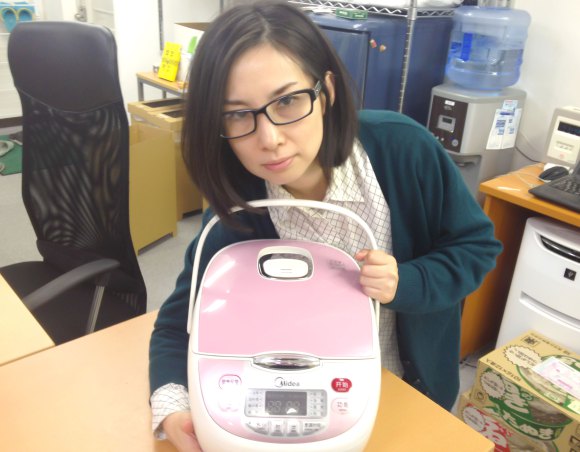
Whether rightfully or not, Chinese products are much maligned for their supposed lack of quality. Even the Chinese people themselves are often critical of their own country’s products, criticizing everything from Chinese news to rice cookers.
But are they really that bad? Our Japanese reporter Meg recently went on a trip to China and brought back a Chinese rice cooker to test it out. She had a couple of surprises along the way, involving everything from getting the rice cooker to even work, to the taste of the final product, so read on to see how it all turned out!
The Chinese rice cooker that Meg purchased is a Midea eight-cup model. She got it in Shanghai for 399 yuan (US$63) and hauled it back to Japan on her return trip. The Midea rice cooker was rated the best Chinese cooker in the world for 12 years straight, so we had high hopes for it here.
▼ “Midea” being a slight rearranging of the romanization of the characters next to it (meide meaning “beautiful”).
▼ D’aww, it’s all pink and round and kind of cute. So far it’s living up to its name.
When Meg bought the rice cooker and told the elderly female store clerk that she intended on using it in Japan, she was laughed at. Apparently it’s very common for Chinese people to import Japanese rice cookers because of their perceived higher quality, so Meg doing the complete opposite kind of blew the woman’s mind.
Still, the clerk was kind enough to remind Meg that she needed to buy a voltage converter if she was going to use the Chinese product in Japan. Japanese and Chinese electric outlet voltages are different, so the rice cooker wouldn’t even work without one. Meg decided she’d cross that bridge back in Japan though, mostly because just carrying the rice cooker already took both her hands so she didn’t have one to spare for a converter.
▼ “So are you gonna help me carry this? No, you’re just gonna keep taking pictures?
Okay then….”
Once back in Japan, Meg called a voltage converter company to see what kind of converter she’d need to buy. The rice cooker’s instructions said it needed 900 watts to work, but the company representative said that rice cookers and other electrical items that get heated up usually require two or three times their printed number.
So just to get the Chinese rice cooker to work, Meg had to buy the strongest converter she could find: a 3000-watt-producing, 24-pound, 34,000 yen ($284) monstrosity. That’s more than four times the price of just the rice cooker itself!
▼ “Hey baby. Is my voltage high enough to turn you on?”
But once everything was plugged in and ready, it was all worth it when the rice cooker actually worked.
▼ Hooray! So, does anyone else have any Chinese goods they need to plug in? Because I really hope I didn’t waste all that money on a converter just for this….
Now came time for the real test: how would it cook the rice? Would it be burnt on the bottom and uncooked on the top? Would it turn to mush? Or would it put Japanese rice cookers to shame and shatter all of our deep-held beliefs?
You can watch a video of the process here, or if you’re impatient/can’t watch videos, then scroll down for spoilers:
.
.
.
.
.
So how did it taste? Well, in the wise words of Meg:
▼ “It tastes just like normal.”
It was a success! …kind of. Nothing incredibly horrible or horribly incredible happened. The rice was just… fine. You can take a look at the final product here:
▼ Yup. It’s rice.
So if the rice from the Chinese cooker turned out just as tasty as a Japanese rice cooker’s, then why do Chinese people still prefer Japanese ones? And why is there such a perceived difference between the two all around the world?
One answer could possibly be that the difference has nothing to do with the rice, but instead is because of the difference in the durability of the rice cookers. Japanese rice cookers are considered to be a long-term investment, lasting for years and years like a piece of furniture.
Chinese rice cookers, even if they produce perfectly delectable rice, have a reputation for not lasting as long as Japanese ones. While we’re not completely sure if this is true or not, if you check out the video above you can see toward the end that the lid of the rice cooker flies up really fast, so much so that it can launch a projectile off it a good distance away. With such intensity being put on the hinge, it’s not hard to imagine that it would snap after not so many uses.
So what do you think? Is the difference between Japanese and Chinese rice cookers purely psychological? Or have you had a bad experience with one or the other and sworn it off forever? Let us know in the comments!
Images ©RocketNews24
[ Read in Japanese ]
Like this:
Like Loading…
- China, Japan
- (cooking • food • Meg • rice • rice cookers • taste test)
Related Stories
 Japan’s double-decker portable rice cooker/bento maker is better than ever with new version
 A faster, easier way to make cake: Use a rice cooker【SoraKitchen】
 Is a 60,000-yen (US$400) rice cooker worth the price? We rented one to find out
 Testing out a Japanese rice cooker bag from a 100-yen store
 Ultimate lazy sukiyaki – Can you make the king of Japanese hot pots in a rice cooker?【Taste test】
- Kennin-ji Temple Masters Project: craftsmen make ornate watch inspired by Kyoto temple
- New citrus-yuzu-salt-flavored Jagariko potato sticks are delicious, cheap, and ultra-limited
- Trackbacks (0)
Trackbacks
- There are no trackbacks yet.
- Trackback URL
Trending Today
- Studio Ghibli releases new Howl’s Moving Castle merchandise, complete with spinning clock and talking Calcifer
- Umamusume is officially collaborating with the Denver Broncos football team [Video]
- Final Fantasy/Dragon Quest Christmas trees go up as Chocobo and Slime celebrate holidays in Japan
- Life-size Gundam statue’s head returning to Tokyo neighborhood this month
- Yoshinoya’s 2027 lucky box is already here and brings the newest piece of mini Yoshinoya-ware
- Japan’s beautiful new Pokémon hotel room gives you and Dragonite a place to take a break
- Instant curry blessed by priests at shrine of god of learning go on sale in Japan
- Is Starbucks Japan’s new Matcha Tiramisu Frappuccino really like a Christmas tree?
- KFC Japan releases new Desire-Filled Immoral Burgers with Mac & Cheese… but are they as sinful as they look?
- East Japan Railway Company says it will use all three of its mascot replacement characters
- Kennin-ji Temple Masters Project: craftsmen make ornate watch inspired by Kyoto temple
- New citrus-yuzu-salt-flavored Jagariko potato sticks are delicious, cheap, and ultra-limited
-
Recent Posts
- 4-cheese-pizza-flavored soda unleashed on Japan [Taste Test]
- Instant curry blessed by priests at shrine of god of learning go on sale in Japan
- Yoshinoya’s 2027 lucky box is already here and brings the newest piece of mini Yoshinoya-ware
- Is Starbucks Japan’s new Matcha Tiramisu Frappuccino really like a Christmas tree?
- Final Fantasy/Dragon Quest Christmas trees go up as Chocobo and Slime celebrate holidays in Japan
-
MOST POPULAR
- Today
- Weekly
- Monthly
- Yearly
Today
 Studio Ghibli releases new Howl’s Moving Castle merchandise, complete with spinning clock and talking Calcifer
 Umamusume is officially collaborating with the Denver Broncos football team [Video]
 Final Fantasy/Dragon Quest Christmas trees go up as Chocobo and Slime celebrate holidays in Japan
 Life-size Gundam statue’s head returning to Tokyo neighborhood this month
 Yoshinoya’s 2027 lucky box is already here and brings the newest piece of mini Yoshinoya-ware
 Japan’s beautiful new Pokémon hotel room gives you and Dragonite a place to take a break
 Instant curry blessed by priests at shrine of god of learning go on sale in Japan
 Is Starbucks Japan’s new Matcha Tiramisu Frappuccino really like a Christmas tree?
 KFC Japan releases new Desire-Filled Immoral Burgers with Mac & Cheese… but are they as sinful as they look?
 East Japan Railway Company says it will use all three of its mascot replacement characters
Weekly
 Nara deer send record number of people to hospital, over 70 percent of patients are foreigners
 Tokyo’s Shibuya Sakurazaka cherry blossom street to be decommissioned, number of trees to increase
 Studio Ghibli and Uniqlo reveal brand-new T-shirt collaboration [Pics]
- Studio Ghibli releases new Howl’s Moving Castle merchandise, complete with spinning clock and talking Calcifer
- Life-size Gundam statue’s head returning to Tokyo neighborhood this month
 Ichiran releases an at-home counter kit that turns your desk into a ramen restaurant
 Starbucks Japan reveals new Christmas advent calendar and holiday drinkware collection
 Akihabara restaurant with 1.7 million sushi bowl options will have us coming back again and again
- Japan’s beautiful new Pokémon hotel room gives you and Dragonite a place to take a break
 Japan’s JR East reveals new train company mascot character, online comments aren’t kind
Monthly
- Nara deer send record number of people to hospital, over 70 percent of patients are foreigners
 Japan ends tax-free shopping system for foreign tourists, new refund request system now in effect
- Tokyo’s Shibuya Sakurazaka cherry blossom street to be decommissioned, number of trees to increase
- Studio Ghibli and Uniqlo reveal brand-new T-shirt collaboration [Pics]
- Ichiran releases an at-home counter kit that turns your desk into a ramen restaurant
 Japan’s TeamLab digital art group is opening a permanent museum in America
- Studio Ghibli releases new Howl’s Moving Castle merchandise, complete with spinning clock and talking Calcifer
 Beautiful Ghibli diorama kits lets you build anime characters’ homes inside yours [Photos]
 Chainsaw robots helping keep trains running safely in east Japan [Video]
 Family Mart releases 47 convenience store socks and stickers, one for every prefecture in Japan
Yearly
 Japan announces sudden 400-percent increase in visa fees for foreigners entering the country
 Japan’s human washing machines will go on sale to general public, demos to be held in Tokyo
 Studio Ghibli has a new anime out, and there’s only one place in the world where you can see it
- Nara deer send record number of people to hospital, over 70 percent of patients are foreigners
 Starbucks Japan releases new drinkware and goods for Valentine’s Day
 Starbucks Japan releases new sakura goods and drinkware for cherry blossom season 2026
 Japan’s newest Shinkansen has no seats…or passengers [Video]
 Tokyo subway installing new ticket gates that don’t accept payment through Suica or other IC cards
 Japanese ninja certification exam attracts 131 candidates from Japan and abroad
 Salomon releases Japan-exclusive Mt. Fuji hiking gear that doubles as an amazing souvenir
-
RECOMMENDED STORIES
 Chicken McNugget rice cooker rice — Can it beat KFC rice cooker rice?【SoraKitchen】
 New Japanese bowl-shaped donburi rice cooker cooks rice and toppings at the same time
 Rice cooker oden: Quick, cheap, and delicious
 We test the new two-in-one curry rice cooker from Japan that’s got everyone talking【Video】
 Make matcha ice cream rice in your rice cooker with this easy recipe from Meiji
 To stir, or not to stir – A Japanese rice cooker debate
 Don’t throw out leftover rice! Testing to find the best rice freezing/microwaving container
 Can you make KFC takikomi gohan in a rice cooker, and is it something worth eating?【SoraKitchen】
 Did you know your rice cooker is also a ramen rice cooker?【SoraKitchen】
 How to make amazing sweet apple pancakes using a rice cooker 【RocketKitchen】
 This is what happens when you cook rice with coffee in your rice cooker 【Rocket Kitchen】
 Japan has an awesome one-person bento box rice cooker, and here’s what we made with ours
 New Japanese rice cooker cuts carbohydrates at the push of a button
 Check out how this huge chunk of U.S. beef looks after using our rice cooker roasting technique!
 Japan’s one-person bento box-sized rice cooker can give you freshly cooked rice at the office
-
-
Categories
Categories Select Category Africa (33) Anime & Manga (193) Art (64) Australia (42) C America (9) C Asia (17) Canada (59) Cats (72) China (847) Culture (180) Cute (187) Entertainment (248) Europe (345) FN24 (1) Food & Drink (314) Games & Tech (167) Global (1,073) India (11) Internet (2,199) Italy (13) Japan (34,630) Korea (375) Lifestyle (76) Mexico (6) Music (12) N Asia (4) New Zealand (11) News (61) North Korea (72) Oceania (10) Russia (56) S America (33) S Asia (66) SE Asia (378) Space (2) Taiwan (203) UK (18) Uncategorized (19) USA (980) W Asia (25)
-
Archives
Archives Select Month November 2026 (99) October 2026 (144) September 2026 (156) August 2026 (174) July 2026 (197) June 2026 (174) May 2026 (138) April 2026 (142) March 2026 (150) February 2026 (124) January 2026 (138) December 2025 (136) November 2025 (136) October 2025 (151) September 2025 (154) August 2025 (143) July 2025 (158) June 2025 (165) May 2025 (162) April 2025 (181) March 2025 (157) February 2025 (127) January 2025 (139) December 2024 (148) November 2024 (149) October 2024 (153) September 2024 (154) August 2024 (158) July 2024 (156) June 2024 (150) May 2024 (166) April 2024 (150) March 2024 (157) February 2024 (169) January 2024 (159) December 2023 (165) November 2023 (166) October 2023 (166) September 2023 (173) August 2023 (183) July 2023 (171) June 2023 (180) May 2023 (158) April 2023 (152) March 2023 (167) February 2023 (160) January 2023 (171) December 2022 (175) November 2022 (176) October 2022 (179) September 2022 (191) August 2022 (202) July 2022 (193) June 2022 (178) May 2022 (178) April 2022 (181) March 2022 (212) February 2022 (199) January 2022 (224) December 2021 (230) November 2021 (214) October 2021 (215) September 2021 (238) August 2021 (225) July 2021 (207) June 2021 (218) May 2021 (209) April 2021 (206) March 2021 (225) February 2021 (209) January 2021 (224) December 2020 (225) November 2020 (224) October 2020 (231) September 2020 (238) August 2020 (227) July 2020 (220) June 2020 (209) May 2020 (215) April 2020 (238) March 2020 (235) February 2020 (222) January 2020 (233) December 2019 (187) November 2019 (214) October 2019 (237) September 2019 (195) August 2019 (205) July 2019 (183) June 2019 (201) May 2019 (231) April 2019 (192) March 2019 (242) February 2019 (211) January 2019 (238) December 2018 (212) November 2018 (217) October 2018 (214) September 2018 (203) August 2018 (217) July 2018 (218) June 2018 (208) May 2018 (204) April 2018 (193) March 2018 (216) February 2018 (192) January 2018 (223) December 2017 (204) November 2017 (209) October 2017 (218) September 2017 (209) August 2017 (228) July 2017 (222) June 2017 (245) May 2017 (229) April 2017 (197) March 2017 (165) February 2017 (151) January 2017 (180) December 2016 (260) November 2016 (267) October 2016 (302) September 2016 (387) August 2016 (351) July 2016 (379) June 2016 (379) May 2016 (312) April 2016 (347) March 2016 (414) February 2016 (379) January 2016 (359) December 2015 (359) November 2015 (378) October 2015 (435) September 2015 (419) August 2015 (152) July 2015 (218) June 2015 (179) May 2015 (237) April 2015 (223) March 2015 (119) February 2015 (121) January 2015 (394) December 2014 (376) November 2014 (376) October 2014 (414) September 2014 (349) August 2014 (379) July 2014 (316) June 2014 (375) May 2014 (384) April 2014 (354) March 2014 (318) February 2014 (284) January 2014 (270) December 2013 (224) November 2013 (242) October 2013 (244) September 2013 (226) August 2013 (241) July 2013 (214) June 2013 (222) May 2013 (191) April 2013 (173) March 2013 (149) February 2013 (85) January 2013 (106) December 2012 (111) November 2012 (149) October 2012 (151) September 2012 (118) August 2012 (99) July 2012 (56) June 2012 (57) May 2012 (54) April 2012 (62) March 2012 (40) February 2012 (27) January 2012 (24) December 2011 (18) November 2011 (12) October 2011 (1) September 2011 (9) August 2011 (11) March 2011 (1)
-
- About Us | Jobs | Contact | Contribution | Partner with Us
© SoraNews24 —Japan News— / SOCIO CORPORATION
- Advertise |
- About Us |
- Work with us |
- Contact |
- Contribution |

%d