SoraNews24 —Japan News—
Bringing you yesterday's news from Japan and Asia, today.
-
TOP
» Japan
-
» Japanese netizens discuss the ulterior meaning of “kawaisou” (how sad/pitiable)
Featured
- Weird
- Studio Ghibli
- Jobs
Japanese netizens discuss the ulterior meaning of “kawaisou” (how sad/pitiable)
- Jamie Koide Aug 30, 2016
- Tweet
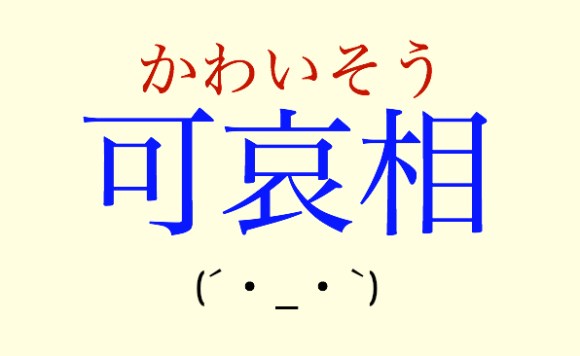
Be careful when breaking out this one; sometimes the person you’re pitying doesn’t want your pity.
Many people interested in Japanese culture, whether they have much background in the language or not, will instantly recognize the Japanese word kawaii, which means “cute”. What you may not know is that this word originally evolved from an older word, kaohayushi, used to express an unbearable feeling of pity.
This expression, however, shifted in meaning and became one used to describe a feeling towards young children, who were considered helpless, yet adorable. Later, in the Edo Period, when female roles became more restricted, girls were also included in this description. In the later half of the 20th century, the word began to include animals and anyone else considered helpless. Following this, in the 70s and 80s, this “helpless”, or naïve and innocent, period became admired in girls, and Japan’s kawaii (cute) boom was born.
At some point, however, kaohayushi transformed into kawaii, and then kawaisou became the standard phrase spoken to express pity. It is important to note, though, that this pity has always been something felt by someone of a higher standing toward someone/something of a lower standing and is still, even if not consciously implied, a part of the word’s etymology today.
This is why, spurred by one Twitter user’s comments and a snapshot of a certain newspaper article written by a Japanese mom, netizens have been hotly debating the use of the word kawaisou.
The column in question was written by a mother who was hurt from some of the “kawaisou” remarks other women had made in passing about her son as he was walking home from school by himself and then again as he helped her carry a large pack of diapers. Although the son had volunteered for both tasks on his own, these women had hastily commented about how pitiable (kawaisou) his situation was, automatically assuming the mother had forced her son to do these things.
By misreading the situation, this common sympathetic remark quickly turned into one of judgment, implying a negative opinion of her parenting skills. She also worried that it could discourage her son from asserting his own independence out of fear of his helpful behavior being labeled “abnormal”.
▼ “I can really relate to this. Please give this a read.”
これは本当によく分かる。
みんなに読んで欲しい。 pic.twitter.com/Pg9DCV8ezL— うたさん (@joker_budou) August 24, 2016
Many netizens rushed to the mother’s support, with comments like:
“This! When I was in the second grade and on a shopping trip with my mom, someone took a look at my brother in his stroller and said this. It felt like they were bad-mouthing my mom, and it made me feel sad.”
“Sometimes I wonder if, whatever someone is saying ‘kawaisou’ to, really warrants any pity or not…”
“This is true. When you say ‘kawaisou’, it’s from a position above that person.”
“I’ll try my best to not use this phrase from now on.”
Even a few English speakers, possibly learning Japanese, took the time to respond in agreement. Others, however, don’t see an issue with the phrase, saying that the real problem is more or less the way people say kawaisou, or citing the lack of an alternative phrase to use when trying to sound sympathetic.
For Japanese language beginners, it’s often enough of a problem to remember that kawaii (cute) is an exception to the sou (“It looks”) adjective form. Many non-native speakers make the faux pas of saying “Kawaisou” (“How pitable!”) at least once, instead of “It looks cute!” as intended. Now they may need to also consider whether or not it’s socially acceptable to use the phrase at all, even in situations, that until, now were considered appropriate.
Source: Twitter/@joker_budou via Naver Matome, Tokyo Girls’ Update
Featured image by RocketNews24
Like this:
Like Loading…
- Japan
- (debate • expressions • Japanese grammar • Japanese language • kawaisou • netizens • twitter)
Related Stories
 10 Japanese expressions that sound delightfully strange and funny when translated
 Language fail: 22 funny and embarrassing tales of Japanese language missteps
- Japan’s lazy, free-wheeling youth can’t even be bothered to join biker gangs anymore
- Adorable cats look like catbus from My Neighbour Totoro in real life, become massive hit online
- Trackbacks (0)
Trackbacks
- There are no trackbacks yet.
- Trackback URL
Trending Today
- Ichiran releases an at-home counter kit that turns your desk into a ramen restaurant
- Starbucks Japan releases new Bearista glass tumbler that changes character with every drink
- Tokyo police arrest the Ame-zing Spider-Man
- Life-size Gundam head going on display in Osaka, hopefully will find permanent home
- Yesterday’s cooking oil powers 410,000 pink winter sakura lights along Tokyo’s Meguro River
- Starbucks Japan reveals new Joyful Capsule gacha toy release date
- Move aside, Asahi Super Dry – Asahi Spice Beer is in town, and it’s hotter than you think
- Japanese drivers reminded to look out for drunk people passed out on the road this holiday season
- Historical-themed illumination display returns to Osaka Castle this winter
- KFC now sells takikomi gohan rice boxes in Japan, if you know where to look for them [Taste test]
- Japan’s lazy, free-wheeling youth can’t even be bothered to join biker gangs anymore
- Adorable cats look like catbus from My Neighbour Totoro in real life, become massive hit online
-
Recent Posts
- Yesterday’s cooking oil powers 410,000 pink winter sakura lights along Tokyo’s Meguro River
- Life-size Gundam head going on display in Osaka, hopefully will find permanent home
- Tokyo police arrest the Ame-zing Spider-Man
- Ichiran releases an at-home counter kit that turns your desk into a ramen restaurant
- Starbucks Japan releases new Bearista glass tumbler that changes character with every drink
-
MOST POPULAR
- Today
- Weekly
- Monthly
- Yearly
Today
 Ichiran releases an at-home counter kit that turns your desk into a ramen restaurant
 Starbucks Japan releases new Bearista glass tumbler that changes character with every drink
 Tokyo police arrest the Ame-zing Spider-Man
 Life-size Gundam head going on display in Osaka, hopefully will find permanent home
 Yesterday’s cooking oil powers 410,000 pink winter sakura lights along Tokyo’s Meguro River
 Starbucks Japan reveals new Joyful Capsule gacha toy release date
 Move aside, Asahi Super Dry – Asahi Spice Beer is in town, and it’s hotter than you think
 Japanese drivers reminded to look out for drunk people passed out on the road this holiday season
 Historical-themed illumination display returns to Osaka Castle this winter
 KFC now sells takikomi gohan rice boxes in Japan, if you know where to look for them [Taste test]
Weekly
 Tokyo cracks down on Airbnb-style rentals with new laws limiting operator days and more
- Ichiran releases an at-home counter kit that turns your desk into a ramen restaurant
 America’s first-ever permanent One Piece store is now open [Photos]
 Tokyo neighborhood adds new “smart trash cans” to deal with increasing amounts of tourist litter
 Two Tokyo neighborhoods to gather on bridge and shift their recognized border through tug-of-war
 Starbucks Japan unveils new winter drinkware collection with limited-edition Stanley cups
 New Era celebrates three decades of Pokémon with new 30th anniversary cap line [Photos]
 Pokémon card game’s expansion features art from Fist of the North Star creator
- Starbucks Japan reveals new Joyful Capsule gacha toy release date
 Japanese hoodie for cat-loving gamers will keep you and your feline friend warm and fuzzy [Pics]
Monthly
 Pokémon Company announces first-ever permanent Pokémon store to open outside Asia
 Japan ends tax-free shopping system for foreign tourists, new refund request system now in effect
 Japan’s TeamLab digital art group is opening a permanent museum in America
 Beautiful Ghibli diorama kits lets you build anime characters’ homes inside yours [Photos]
 Family Mart releases 47 convenience store socks and stickers, one for every prefecture in Japan
 Chainsaw robots helping keep trains running safely in east Japan [Video]
 New Studio Ghibli anime gets extended run at the only cinema in Japan where it’s being shown
 Osaka’s famous Glico Running Man will be removed and replaced with a new-look sign
- Tokyo cracks down on Airbnb-style rentals with new laws limiting operator days and more
 Studio Ghibli creates illustrated Kyoto sightseeing map, available at any 7-Eleven Japan store
Yearly
 Japan announces sudden 400-percent increase in visa fees for foreigners entering the country
 Japan’s human washing machines will go on sale to general public, demos to be held in Tokyo
 Studio Ghibli has a new anime out, and there’s only one place in the world where you can see it
 Starbucks Japan releases new drinkware and goods for Valentine’s Day
 Starbucks Japan releases new sakura goods and drinkware for cherry blossom season 2026
 Japan’s newest Shinkansen has no seats…or passengers [Video]
 Tokyo subway installing new ticket gates that don’t accept payment through Suica or other IC cards
 Japanese ninja certification exam attracts 131 candidates from Japan and abroad
 Salomon releases Japan-exclusive Mt. Fuji hiking gear that doubles as an amazing souvenir
 Japan reportedly adding Japanese language skill requirement to most common foreigner work visa
-
RECOMMENDED STORIES
-
-
Categories
Categories Select Category Africa (33) Anime & Manga (193) Art (64) Australia (42) C America (9) C Asia (17) Canada (59) Cats (72) China (847) Culture (180) Cute (187) Entertainment (248) Europe (345) FN24 (1) Food & Drink (314) Games & Tech (167) Global (1,073) India (11) Internet (2,198) Italy (13) Japan (34,594) Korea (375) Lifestyle (76) Mexico (6) Music (12) N Asia (4) New Zealand (11) News (61) North Korea (72) Oceania (10) Russia (56) S America (33) S Asia (66) SE Asia (378) Space (2) Taiwan (203) UK (18) Uncategorized (19) USA (979) W Asia (25)
-
Archives
Archives Select Month November 2026 (63) October 2026 (144) September 2026 (156) August 2026 (174) July 2026 (197) June 2026 (174) May 2026 (138) April 2026 (142) March 2026 (150) February 2026 (124) January 2026 (138) December 2025 (136) November 2025 (136) October 2025 (151) September 2025 (154) August 2025 (143) July 2025 (158) June 2025 (165) May 2025 (162) April 2025 (181) March 2025 (157) February 2025 (127) January 2025 (139) December 2024 (148) November 2024 (149) October 2024 (153) September 2024 (154) August 2024 (158) July 2024 (156) June 2024 (150) May 2024 (166) April 2024 (150) March 2024 (157) February 2024 (169) January 2024 (159) December 2023 (165) November 2023 (166) October 2023 (166) September 2023 (173) August 2023 (183) July 2023 (171) June 2023 (180) May 2023 (158) April 2023 (152) March 2023 (167) February 2023 (160) January 2023 (171) December 2022 (175) November 2022 (176) October 2022 (179) September 2022 (191) August 2022 (202) July 2022 (193) June 2022 (178) May 2022 (178) April 2022 (181) March 2022 (212) February 2022 (199) January 2022 (224) December 2021 (230) November 2021 (214) October 2021 (215) September 2021 (238) August 2021 (225) July 2021 (207) June 2021 (218) May 2021 (209) April 2021 (206) March 2021 (225) February 2021 (209) January 2021 (224) December 2020 (225) November 2020 (224) October 2020 (231) September 2020 (238) August 2020 (227) July 2020 (220) June 2020 (209) May 2020 (215) April 2020 (238) March 2020 (235) February 2020 (222) January 2020 (233) December 2019 (187) November 2019 (214) October 2019 (237) September 2019 (195) August 2019 (205) July 2019 (183) June 2019 (201) May 2019 (231) April 2019 (192) March 2019 (242) February 2019 (211) January 2019 (238) December 2018 (212) November 2018 (217) October 2018 (214) September 2018 (203) August 2018 (217) July 2018 (218) June 2018 (208) May 2018 (204) April 2018 (193) March 2018 (216) February 2018 (192) January 2018 (223) December 2017 (204) November 2017 (209) October 2017 (218) September 2017 (209) August 2017 (228) July 2017 (222) June 2017 (245) May 2017 (229) April 2017 (197) March 2017 (165) February 2017 (151) January 2017 (180) December 2016 (260) November 2016 (267) October 2016 (302) September 2016 (387) August 2016 (351) July 2016 (379) June 2016 (379) May 2016 (312) April 2016 (347) March 2016 (414) February 2016 (379) January 2016 (359) December 2015 (359) November 2015 (378) October 2015 (435) September 2015 (419) August 2015 (152) July 2015 (218) June 2015 (179) May 2015 (237) April 2015 (223) March 2015 (119) February 2015 (121) January 2015 (394) December 2014 (376) November 2014 (376) October 2014 (414) September 2014 (349) August 2014 (379) July 2014 (316) June 2014 (375) May 2014 (384) April 2014 (354) March 2014 (318) February 2014 (284) January 2014 (270) December 2013 (224) November 2013 (242) October 2013 (244) September 2013 (226) August 2013 (241) July 2013 (214) June 2013 (222) May 2013 (191) April 2013 (173) March 2013 (149) February 2013 (85) January 2013 (106) December 2012 (111) November 2012 (149) October 2012 (151) September 2012 (118) August 2012 (99) July 2012 (56) June 2012 (57) May 2012 (54) April 2012 (62) March 2012 (40) February 2012 (27) January 2012 (24) December 2011 (18) November 2011 (12) October 2011 (1) September 2011 (9) August 2011 (11) March 2011 (1)
-
- About Us | Jobs | Contact | Contribution | Partner with Us
© SoraNews24 —Japan News— / SOCIO CORPORATION
- Advertise |
- About Us |
- Work with us |
- Contact |
- Contribution |

%d