SoraNews24 —Japan News—
Bringing you yesterday's news from Japan and Asia, today.
-
TOP
» Japan
-
» A talk with the man who helped bring Studio Ghibli to the west, Steve Alpert【Interview】
Featured
- Weird
- Studio Ghibli
- Jobs
A talk with the man who helped bring Studio Ghibli to the west, Steve Alpert【Interview】
 Master Blaster Apr 25, 2020
- Tweet
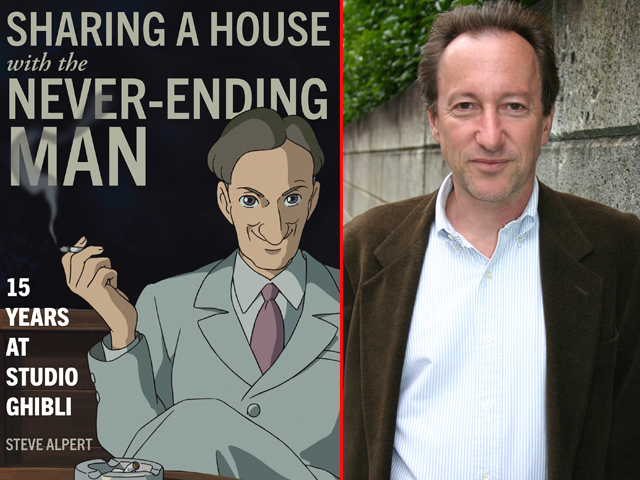
An inside look at Studio Ghibli at a crucial time in its history.
Hayao Miyazaki and Studio Ghibli can now be considered household names around the world, but it wasn’t always that way. Even after quickly finding success in Japan with its hits Nausicaä of the Valley of the Wind and My Neighbor Totoro, it wasn’t until 1997’s Princess Mononoke that they become heavily involved in creating an international presence and started earning widespread critical acclaim abroad.
To accomplish this, in 1996 American Steve Alpert was brought on as the head of the international division for Studio Ghibli and its parent company at the time, Tokuma Shoten. Given Ghibli’s current success this might seem like an easy task, but at the time Alpert had to constantly juggle the unbending integrity of Miyazaki and reluctance of major companies like Disney and Miramax to take risks on a then-largely unknown animation studio.
As a result, Alpert was sent to work around the globe, meeting various larger-than-life personalities that matched Ghibli’s own characters in terms of outlandishness.
All of this has been captured in his upcoming book Sharing a House with the Never-Ending Man. Not only is it an amazing look at the inner-workings of Studio Ghibli but a great example of life and business in Japan as a whole. So, it’s a real pleasure to be able to speak with Steve Alpert and learn a little more about it all.
– Thanks for taking the time to talk with us today. I really enjoyed your upcoming book Sharing a House with the Never-Ending Man*, and I got to say… Show business is pretty wacky isn’t it?*
Steve Alpert: Hi, thanks for asking. Yes, “wacky” is exactly the right word.
– You mentioned in the book that while dubbing the English version of Princess Mononoke the “Ugh” from Claire Danes’ famous line “Ugh, I smell like a human” was accidentally cut off. So, you had to have a tape with the “ugh” shipped from LA to New York to re-insert it. How much did that “ugh” end up costing?
Alpert: I actually never found out. More than it should have, is what I can say.
– On the cover of your book is a drawing of the character Hans Castorp from the film The Wind Rises*. There’s clearly more than a passing resemblance to you, and you were also the voice of Castorp in the Japanese version.*
Alpert: Yes the physical appearance of the character and the way Castorp moves is based on me. I also did the voice in the Japanese version. My understanding however is that the character in the film was based on Richard Sorge, an historical character, a spy with connections to Germany and Russia.
– How much of Castorp did Miyazaki base on you?
Alpert: As far as the physical resemblance goes, I’ve been telling people that Miyazaki, with his superb eye for personality, got my movements, and essentially me, physically, spot on. My one complaint however is that the nose is far too big. A nose that big and I would not have been able to get food into my mouth, and I would not have been able to look down and see my feet (okay two more things: maybe I don’t look that old, and I don’t smoke). I think that Miyazaki felt that with my ethnic background (Russian/Polish), foreign language abilities, and tendency to sit quietly, listen and unobtrusively absorb information, had I lived in that time period, I could have been that spy (although sitting in a Ghibli meeting taking notes would have been less dangerous than surreptitiously reporting on the pre-War Japanese military).
– The “never-ending man” in the title of the book refers to Hayao Miyazaki, and the book is full of insights about him of course, but I thought the real star of the story was Yasuyoshi Tokuma, the head of Ghibli’s former parent company.
Alpert: I really, really have to thank you for that. Yes Yasuyoshi Tokuma was an extremely fascinating man and I felt privileged to know him a little and witness him in action. You just couldn’t help but like him.
– He’s like an agent of pure chaos through the whole thing.
Alpert: He was a personage from another era. No matter what your rational brain was telling you, it was hard to resist his charm. But at the same time liking him was easier if you were in a position to be safe from him. Toshio Suzuki protected me from Mr. Tokuma’s dark side.
▼ Toshio Suzuki (left) and Steve Alpert (right)
Alpert: The creative people under his umbrella loved him because he never interfered with their work or pressured them creatively to do things just for the sake of commerce.
– And in doing that he built an empire purely on his own kinetic energy to the point that it seemed to collapse the moment he died.
Alpert: True, the decline in the Tokuma businesses was in part due to the absence of its charismatic head. But it was also the result of the way the entertainment/publishing business was changing then. The Tokuma businesses were mostly old-school, and either slow to adapt to the change from analog to digital, or not agile enough to do it, or just built on a business model that had changed.
– And yet, Tokuma had, albeit accidentally, made the amazingly fortunate decision to keep Disney’s hands off the digital rights to all Ghibli works, which probably saved a lot of the back catalog from getting buried in the West.
Alpert: Mr. Tokuma got the advice to hold on to the digital rights from the chairmen of some of Japan’s most famous companies. He may not have understood the meaning of the word “digital”, but the idea of holding on to something that might be valuable would have appealed to him. For me, the big surprise was that Disney didn’t think digital rights were a big deal. Of course you have to think back to those bygone days when engineers were doing their best to get 90 minutes into a single one-sided disk and failing. No one knew if they would ever succeed.
– In many ways Tokuma seemed the polar opposite of the somewhat reclusive and modest Miyazaki and yet Miyazaki said he respected Tokuma greatly, even being the key speaker at his funeral. Why do you think that was?
Alpert: Mr. Tokuma’s personality was that of a public person. He had a larger than life persona that he actively cultivated. As far as I can tell, even in private he was performing. He loved an audience, big or small (preferably big). I guess you can think of it as performance art. He was very good at it. Artists respect other artists who are very good at what they do.
– How did a typical Tokuma ice cream meeting go?
Alpert: As I hope I described it in the book. A call from his secretary to come upstairs. No specific agenda. Sitting in his office and watching him make phone calls. Absorbing the art on his walls and the spectacular view of Tokyo Harbor. Looking at the partly unwrapped gifts (to him and from him) scattered around. Him sitting down and making small talk. Maybe he’d tell a story or give life advice. Eating ice cream. Silence. He thanked me/us for coming. Go back downstairs and wonder what that was about. From what I know of the late Mr. Tokuma, for all I know he just wanted to look me over and see how comfortable I was just sitting with him and eating ice cream. The theory being that if I was doing something illegitimate on the side, cheating the company in some way or doing something unauthorized in the (Disney) contracts I was negotiating, he would be able to tell by sitting there and looking me in the eye, mano-a-mano. Maybe.
Once when I was in his office he had just been given a four-foot tall plastic model of Gamera (Guardian of the Universe – a Daiei Studios property). I couldn’t contain my enthusiasm. He couldn’t wait to get it out of his office. He gave it to me and it sat next to my desk when our office was still in Shinbashi.
– I wish people gave me ice cream and Gamera figures during business meetings.
Alpert: Of course, there were times when he did have an actual agenda. Like asking me to arrange for him to meet President Clinton or Michael Eisner.
▼ Cover for the Japanese version of Alpert’s memoirs. The title loosely translates to I am a Gaijin. The Guy who Sold Ghibli to the World
– Considering how weirdly the Eisner meeting went, how disappointed were you that the Clinton meeting at the US premiere of Princess Mononoke fell through?
Alpert: Now that you mention it, I should have been disappointed. I never really thought about it because I didn’t think it would really happen. Then again, but for Monica Lewinsky…who knows?
– You were brought over to help Ghibli and other Tokuma interests overseas but originally worked with Disney and continued to work closely with them afterward. What would you say is the biggest difference between Ghibli and Disney?
Alpert: Wow. Do I have 200 pages to answer that question? So many differences.
I guess you mean the difference between Ghibli and Disney Feature Animation, not the entire Walt Disney Company which is gigantic and very diverse (Ghibli owns no cruise ships).
Size is of course the biggest difference. Ghibli makes and distributes one film every two years or so. Disney overall makes and distributes hundreds. And it’s part of a large corporation.
– True, you write about frequent interactions with Miyazaki, Suzuki, and Tokuma and yet you were never in the same room with Eisner until, ironically, you were working with Ghibli.
Alpert: Creatively, I suppose the main difference is that at Ghibli the filmmakers run the studio. At Disney there is corporate involvement, which is to say that profit motive is part of the mix. Now that’s not to say that Disney Feature Animation or Pixar is/was entirely controlled by businessmen putting commerce over art. But on the other hand, a studio run by the filmmakers can take riskier artistic decisions than one run by businessmen. At Ghibli the artists looking to push the envelope of their art in terms of style and content are the final decision makers. Not to push the analogy too far, but maybe have a look, for example, at Pixar films before and after it became a part of Disney. Businessmen like sequels. Artists like new works. If a special effect is too subtle and also expensive, a businessman decision-maker might nix it. A filmmaker might not.
– While working with Ghibli, it seems you were often thrust into the role of translator and interpreter, and in the book I though you hit the nail on the head about what a thankless job it can be, along with some great advice for other translators.
Alpert: Thank you again for noticing the thankless job of translating. However well you do it, someone will find fault with it (and they won’t necessarily be wrong).
– And even if you do an amazing job, then your success is simply measured by no one noticing. In one instance during the translation of Princess Mononoke*, Miyazaki instructed you specifically to not refer to those cannons used by the soldiers as “rifles” but in the end you relented to the other sound editors and called them that anyway. Did Miyazaki ever find out about that?*
Alpert: Oddly, this is not the first time I have been asked specifically about the “rifles”. Miyazaki says, and as far as I know it’s completely true, that once he’s finished with a film he does not want to watch it again. Why? He says because he always finds things that he wished he had done better (part of why Suzuki-san called him the “Never-Ending Man” – in Japanese it also means the man who never finishes).
I think if there were or had been a way not to call them rifles I would have been thrilled to discover it. It was about doing the right thing for the English version of the film. I think Miyazaki would have understood.
Did he ever find out? My book was first published in Japan in Japanese and I was told Miyazaki read it. If he came across that part, he never said anything to me about it.
– You submitted Spirited Away for a Golden Bear and personally attended the ceremony because the others didn’t want to go. By the way, I found a video of your acceptance on YouTube.
Alpert: Thanks for the clip but I don’t like watching myself on TV.
– You wrote that – although you thought he was joking at the time – Toshio Suzuki said he was going to fire you if it didn’t win. Why?
Alpert: I’m actually not sure why Suzuki-san said that. Since I didn’t actually believe it at the time I never went into it. From my perspective it was a pretty easy decision. Going to Berlin in competition was just clearly the right thing to do. I’d like to be able to claim that even though I risked being fired I did the right thing. But since I didn’t really believe I would be fired, I can’t claim that. Just being invited to be in competition in Berlin was already a win. It would be the first animated film to be accepted. Our European distributor, Vincent Maraval of Wild Bunch, said it would be huge for the film to be invited, even if it didn’t win, and I respected his expertise.
Could I actually have been fired if the film didn’t win the Golden Bear? I hate to over-use it, but I’ll sum up the situation with a haiku:
Takotsubo ya
Hakanaki yume wo
Natsu no tsuki(An octopus makes its home in an octopus trap
Evanescent dreams
Under a hazy summer moon)Berlin Film Festival. What could go wrong?
– Quite a bit as you describe in the book, but luckily it all paid off in the end and then some. Speaking of octopi living in traps, bringing Princess Mononoke to western audiences was a huge undertaking that required a great deal of work and luck to pull off properly. And as the person responsible for it all, your neck was constantly on the line.
Alpert: As I said in the book, Suzuki told me in getting Ghibli’s films distributed outside of Japan he wanted to achieve critical success and commercial success, but if not both, at least one of them. Critical success was a no-brainer (I thought) because the films are great. Really.
I was never satisfied that we achieved the kind of commercial success I thought the films deserved, although in theory we had the full power and weight of the Disney machine behind us. We got them screened and translated and seen, and that certainly was something.
▼ Alpert, Miyazaki, Suzuki and others touring Vienna
– I think it took a little time, but Princess Mononoke found its full global audience, and probably even financially continues to be a steady earner on home video and streaming and whatnot. I imagine it’s longevity was probably helped by keeping it intact, whereas Disney appeared more interested in a fast return.
Alpert: I am not a marketing expert, and having lived in Japan for 30 years, not an expert in the US market for motion pictures. But it’s my personal belief that if you try to position something not as what it is, but what you want it to be, you will not succeed. You have to let the film you’re marketing be what it is. It’s a risk sometimes. But the best results are never achieved without some risk. The Disney machine is not about taking risks.
If you compare the artwork for the US releases of Ghibli films to the Japanese artwork I think you can see how Disney tried hard to make the Ghibli films look less Japanese. Was that a good thing? In my opinion, definitely no. The people at Disney (some of the people at Disney) thought it would help. I don’t agree.
– I think there are a lot of parallels to the more recent hit film Your Name. However, despite having a similar momentum behind it, Your Name didn’t seem to make quite the same impact outside of Japan. Why do you think that is?
Alpert: I’m not familiar with how Your Name was marketed in the US. So all I can say about it is that I think the difference with Princess Mononoke might have to do with the fact that the momentum behind Princess Mononoke included the back catalogue of Ghibli films from Nausicaa of the Valley of the Wind to Pom Poko and Whisper of the Heart. Even though the Ghibli films hadn’t been released abroad, a lot of people knew about them, even if only by reputation.
– Among all the craziness of Princess Mononoke*‘s release in North America you also met with the notorious Harvey Weinstein, who was heading Miramax at the time, on several occasions.*
Alpert: Yes, but he was notorious for a completely different reason back then.
– In one instance he really went off on you for a bizarre reason in front of Miyazaki and Suzuki. I won’t spoil the details, but it seemed very abrupt. Did he really just go off like that or was there more of a build-up?
Alpert: Nope, there was no real build-up. We were sitting at a table in the restaurant drinking mojitos and chatting amiably and he just suddenly went off. Though Miramax was our distributor, our contract and relationship was with Disney. Miramax had just become a part of Disney and I think Harvey was told not to even mention the idea of cutting the film.
– So, I guess he didn’t like the sword. He even gave you the old, “YOU’LL NEVER WORK IN THIS TOWN AGAIN” cliché, despite the fact that you worked in Japan.
Alpert: My guess is that he was frustrated. Cutting foreign films to get them to work for an American audience was famously his thing. He probably believed that cutting would make Princess Mononoke more commercially successful in the US. He and his team may also have believed some cutting would make it a “better” film. Also from the perspective of an American audience. The build-up I guess was his frustration at not being able to even talk about cutting the film.
▼ Miyazaki, Alpert and PR rep Fukuyama in Vienna
– I thought the book as a whole was a very balanced look at how business is done in Japan both at Ghibli and in general. While pointing out a lot of its idiosyncrasies that many foreigners who work in Japan struggle with and can relate to, you never seem to look down on it.
Alpert: So yes, I find the idiosyncrasies and a lot of the way business is traditionally done in Japan interesting and sometimes, to me at least, amusing. However, when a Japanese business sets its collective mind on something, it gets it done reliably and properly, if not necessarily efficiently. For the most part if a Japanese worker does something, you can count on it being done right. My wife, who is Japanese, never tires of pointing this out to me.
– So, I’m curious to know if you think Japan’s unique way of operating is reflecting now in its status as a relative COVID-19 outlier (for now at least…)?
Alpert: I think there are certain common Japanese behaviors in an office environment that would prove helpful in dealing with COVID-19. Being used to wearing masks and not shaking hands, obviously. Being good at reliably following instructions. And paradoxically, refusing to leave the office even when there is no more work to do to avoid looking bad to your co-workers. In the years I worked in Japan I often saw people sleeping at their desks, not because they had any work to do, but because some people were still working and the ones that weren’t wouldn’t leave until everyone left (or at some reasonably late hour). This could be good for fighting COVID-19. Why? Because those people who don’t actually have to be there can be told to go home. And other people who don’t need to be in the office to do their jobs but do so just to be seen working hard can also work from home.
Even animators can work remotely, at least part of the time. That’s how it was done before Ghibli became a studio. So much easier to do that now with digital assistance and smartphones and tablets.
– I know, right! Check out this drawing I made in 2013 of Kiki catching Tombo. Can you believe it was all done on a smartphone?
Alpert: There is a story I can tell you that may or may not be related to your previous question. When I first joined Tokuma Shoten I was in my first week on the job when I learned that my salary had been cut. I don’t remember the exact circumstances but I think the Tokuma group of companies had its first really bad year and Mr. Tokuma (or his bankers) had decided that all the group’s executives and members of the board of directors were taking a 15% salary cut (I think that’s how much it was). I was both an executive and a director and was not exactly pleased that the salary I had negotiated (I’m still an American remember) had been summarily cut. I was not pleased, but I was impressed that the top tier of management was taking responsibility for the decisions that caused the company to lose money. In the American companies with which I am familiar, the order would have come down from above to cut staff, cut expenses and fire people. At Tokuma Shoten that did not happen.
– I think I could talk all day about all the stuff in the book. I didn’t even get to the mind-blowing Direct TV story you shared in it. But I should probably let you go now. Thanks again for talking with us!
Alpert: My pleasure.
Well, my attempt to slyly audition to become a Ghibli artist didn’t pan out in the end, but I wasn’t just blowing smoke about that Direct TV story I mentioned. I can’t give away the details but basically Yasuyoshi Tokuma and Toshio Suzuki were involved in the satellite TV service’s seemingly disastrous debut in Japan. All I can say is that it’s probably the best example I’ve ever read of how Japanese businesses operate in more ways than meets the eye.
Be sure to check it out and all the other juicy details when Sharing a House with the Never-Ending Man hits selves and online retailers on 16 June from Stone Bridge Press.
Book information
Sharing a House with the Never-Ending Man: 15 Years at Studio Ghibli
Steve Alpert
Stone Bridge Press
Release date: 16 June, 2020
Indie Bound
Amazon
Barnes & Noble
Photos: © Stone Bridge Press
Like this:
Like Loading…
- Japan
- (animation • anime • books • Disney • Hayao Miyazaki • interview • movies • Princess Mononoke • SNO • Steve Alpert • Studio Ghibli • Tokuma Shoten)
Related Stories
 Princess Mononoke was going to look totally different, new Studio Ghibli artbook shows
 Tattoos, murder, and a Totoro connection? Studio Ghibli reveals secrets of Princess Mononoke
 New Studio Ghibli anime coming this winter is first CG feature planned by Hayao Miyazaki
 New Studio Ghibli exhibition opens in Tokyo, features giant talking Yubaba from Spirited Away
 Ghibli co-founder Toshio Suzuki retires as producer
- Handjob: The Japanese seitai body therapy studio that relieves built-up tension
- 50 centimetres (20 inches) of unbridled beefy joy! Eating Tokyo’s extra-lengthy yukhoe sushi
- Trackbacks (0)
Trackbacks
- There are no trackbacks yet.
- Trackback URL
Trending Today
- Beautiful Ghibli diorama kits lets you build anime characters’ homes inside yours [Photos]
- Liquid croissant coffee is coming to Japanese stores this month
- Continuing cyberattacks hit Japanese arcade hard [Photos]
- Pachinko parlor operator arrested for not obscuring the act of gambling well enough
- Japan ends tax-free shopping system for foreign tourists, new refund request system now in effect
- Starbucks Japan reveals this year’s lucky bag, but you’ll have to act fast to get one
- Princess Mononoke was going to look totally different, new Studio Ghibli artbook shows
- First-ever cafe on Tokyo Imperial Palace Garden grounds is now open
- Godzilla becomes a Japanese randoseru backpack, as do two of his greatest rivals [Photos]
- Japan’s free stock image site of muscular men doing whimsical and mundane things reveals rankings
- Handjob: The Japanese seitai body therapy studio that relieves built-up tension
- 50 centimetres (20 inches) of unbridled beefy joy! Eating Tokyo’s extra-lengthy yukhoe sushi
-
Recent Posts
- Tokyo to build new crematoriums to meet surging demand
- Pachinko parlor operator arrested for not obscuring the act of gambling well enough
- Continuing cyberattacks hit Japanese arcade hard [Photos]
- Starbucks Japan reveals this year’s lucky bag, but you’ll have to act fast to get one
- Princess Mononoke was going to look totally different, new Studio Ghibli artbook shows
-
MOST POPULAR
- Today
- Weekly
- Monthly
- Yearly
Today
 Beautiful Ghibli diorama kits lets you build anime characters’ homes inside yours [Photos]
 Liquid croissant coffee is coming to Japanese stores this month
 Continuing cyberattacks hit Japanese arcade hard [Photos]
 Pachinko parlor operator arrested for not obscuring the act of gambling well enough
 Japan ends tax-free shopping system for foreign tourists, new refund request system now in effect
 Starbucks Japan reveals this year’s lucky bag, but you’ll have to act fast to get one
 Princess Mononoke was going to look totally different, new Studio Ghibli artbook shows
 First-ever cafe on Tokyo Imperial Palace Garden grounds is now open
 Godzilla becomes a Japanese randoseru backpack, as do two of his greatest rivals [Photos]
 Japan’s free stock image site of muscular men doing whimsical and mundane things reveals rankings
Weekly
- Japan ends tax-free shopping system for foreign tourists, new refund request system now in effect
 Japan’s TeamLab digital art group is opening a permanent museum in America
- Beautiful Ghibli diorama kits lets you build anime characters’ homes inside yours [Photos]
 Life-size Monster Hunter dragon statues to be built at Japanese shopping mall
 Modern exosuits are opening up ancient Japanese castle climbs to everyone
 Evangelion announces collaboration with Hard Rock Cafe
 Studio Ghibli homeware brand’s faux oil lamp brings light, smiles, and Kiki’s Jiji to your home
 Cold Stone is closing its final branch in all of east Japan, but it’s going down singing
 Starbucks Japan unveils new Christmas goods for 2026, with exclusive holiday surprises
 Family Mart releases 47 convenience store socks and stickers, one for every prefecture in Japan
Monthly
 Pokémon Company announces first-ever permanent Pokémon store to open outside Asia
- Japan ends tax-free shopping system for foreign tourists, new refund request system now in effect
- Family Mart releases 47 convenience store socks and stickers, one for every prefecture in Japan
- Japan’s TeamLab digital art group is opening a permanent museum in America
 What’s it like to stay in a Japanese container hotel?
- Beautiful Ghibli diorama kits lets you build anime characters’ homes inside yours [Photos]
 Chainsaw robots helping keep trains running safely in east Japan [Video]
 New Studio Ghibli anime gets extended run at the only cinema in Japan where it’s being shown
 Tokyo train station will play Godzilla theme song as new departure melody
 Osaka’s famous Glico Running Man will be removed and replaced with a new-look sign
Yearly
 Japan announces sudden 400-percent increase in visa fees for foreigners entering the country
 Japan’s human washing machines will go on sale to general public, demos to be held in Tokyo
 Studio Ghibli has a new anime out, and there’s only one place in the world where you can see it
 Starbucks Japan releases new drinkware and goods for Valentine’s Day
 Starbucks Japan releases new sakura goods and drinkware for cherry blossom season 2026
 Japan’s newest Shinkansen has no seats…or passengers [Video]
 Tokyo subway installing new ticket gates that don’t accept payment through Suica or other IC cards
 Japanese ninja certification exam attracts 131 candidates from Japan and abroad
 Salomon releases Japan-exclusive Mt. Fuji hiking gear that doubles as an amazing souvenir
 Japan reportedly adding Japanese language skill requirement to most common foreigner work visa
-
RECOMMENDED STORIES
 Studio Ghibli producer dishes the dirt on Hayao Miyazaki, Your Name, and their next big project
 A summary of the plot of Studio Ghibli’s Princess Mononoke (by someone who’s never seen it)
 Why did Hayao Miyazaki agree to release Studio Ghibli anime films on Netflix?
 Lego models of Ghibli characters pay tribute to Hayao Miyazaki
 No Miyazaki, no magic? Studio Ghibli co-founder considering closing production division
 Now’s your chance to ask Studio Ghibli ANYTHING you want about Princess Mononoke
 Miyazaki’s next project and reaction to latest Ghibli film revealed in interview with Toshio Suzuki
 The Ghibli that no one knows: former animator’s book offers inside look into famed anime studio
 Studio Ghibli says no to trailers and commercials for Hayao Miyazaki’s new anime movie
 The Hayao Miyazaki anime we never got – New art book reveals Ghibli legend’s unrealized concepts
 Studio Ghibli’s Princess Mononoke getting live-action kabuki adaptation, main cast announced
 Studio Ghibli producer makes bombshell anime revelations during online Q&A
- “Love Pixar” tweets Studio Ghibli’s official Twitter account
 Love Ghibli? Meet Kurosuke, the man who just might have the most amazing Ghibli collection in the world!
 Ghibli reveals genre of Hayao Miyazaki’s next anime, and that it’s also working on new CG film
-
-
Categories
Categories Select Category Africa (33) Anime & Manga (193) Art (64) Australia (42) C America (9) C Asia (17) Canada (59) Cats (72) China (847) Culture (180) Cute (187) Entertainment (248) Europe (345) FN24 (1) Food & Drink (314) Games & Tech (167) Global (1,073) India (11) Internet (2,198) Italy (13) Japan (34,555) Korea (375) Lifestyle (76) Mexico (6) Music (12) N Asia (4) New Zealand (11) News (61) North Korea (72) Oceania (10) Russia (56) S America (33) S Asia (66) SE Asia (378) Space (2) Taiwan (203) UK (18) Uncategorized (19) USA (978) W Asia (25)
-
Archives
Archives Select Month November 2026 (24) October 2026 (144) September 2026 (156) August 2026 (174) July 2026 (197) June 2026 (174) May 2026 (138) April 2026 (142) March 2026 (150) February 2026 (124) January 2026 (138) December 2025 (136) November 2025 (136) October 2025 (151) September 2025 (154) August 2025 (143) July 2025 (158) June 2025 (165) May 2025 (162) April 2025 (181) March 2025 (157) February 2025 (127) January 2025 (139) December 2024 (148) November 2024 (149) October 2024 (153) September 2024 (154) August 2024 (158) July 2024 (156) June 2024 (150) May 2024 (166) April 2024 (150) March 2024 (157) February 2024 (169) January 2024 (159) December 2023 (165) November 2023 (166) October 2023 (166) September 2023 (173) August 2023 (183) July 2023 (171) June 2023 (180) May 2023 (158) April 2023 (152) March 2023 (167) February 2023 (160) January 2023 (171) December 2022 (175) November 2022 (176) October 2022 (179) September 2022 (191) August 2022 (202) July 2022 (193) June 2022 (178) May 2022 (178) April 2022 (181) March 2022 (212) February 2022 (199) January 2022 (224) December 2021 (230) November 2021 (214) October 2021 (215) September 2021 (238) August 2021 (225) July 2021 (207) June 2021 (218) May 2021 (209) April 2021 (206) March 2021 (225) February 2021 (209) January 2021 (224) December 2020 (225) November 2020 (224) October 2020 (231) September 2020 (238) August 2020 (227) July 2020 (220) June 2020 (209) May 2020 (215) April 2020 (238) March 2020 (235) February 2020 (222) January 2020 (233) December 2019 (187) November 2019 (214) October 2019 (237) September 2019 (195) August 2019 (205) July 2019 (183) June 2019 (201) May 2019 (231) April 2019 (192) March 2019 (242) February 2019 (211) January 2019 (238) December 2018 (212) November 2018 (217) October 2018 (214) September 2018 (203) August 2018 (217) July 2018 (218) June 2018 (208) May 2018 (204) April 2018 (193) March 2018 (216) February 2018 (192) January 2018 (223) December 2017 (204) November 2017 (209) October 2017 (218) September 2017 (209) August 2017 (228) July 2017 (222) June 2017 (245) May 2017 (229) April 2017 (197) March 2017 (165) February 2017 (151) January 2017 (180) December 2016 (260) November 2016 (267) October 2016 (302) September 2016 (387) August 2016 (351) July 2016 (379) June 2016 (379) May 2016 (312) April 2016 (347) March 2016 (414) February 2016 (379) January 2016 (359) December 2015 (359) November 2015 (378) October 2015 (435) September 2015 (419) August 2015 (152) July 2015 (218) June 2015 (179) May 2015 (237) April 2015 (223) March 2015 (119) February 2015 (121) January 2015 (394) December 2014 (376) November 2014 (376) October 2014 (414) September 2014 (349) August 2014 (379) July 2014 (316) June 2014 (375) May 2014 (384) April 2014 (354) March 2014 (318) February 2014 (284) January 2014 (270) December 2013 (224) November 2013 (242) October 2013 (244) September 2013 (226) August 2013 (241) July 2013 (214) June 2013 (222) May 2013 (191) April 2013 (173) March 2013 (149) February 2013 (85) January 2013 (106) December 2012 (111) November 2012 (149) October 2012 (151) September 2012 (118) August 2012 (99) July 2012 (56) June 2012 (57) May 2012 (54) April 2012 (62) March 2012 (40) February 2012 (27) January 2012 (24) December 2011 (18) November 2011 (12) October 2011 (1) September 2011 (9) August 2011 (11) March 2011 (1)
-
- About Us | Jobs | Contact | Contribution | Partner with Us
© SoraNews24 —Japan News— / SOCIO CORPORATION
- Advertise |
- About Us |
- Work with us |
- Contact |
- Contribution |

%d