SoraNews24 —Japan News—
Bringing you yesterday's news from Japan and Asia, today.
-
TOP
» Japan
-
» Faster! Japan’s Shinkansen to get speed boost along Tohoku route
Featured
- Weird
- Studio Ghibli
- Jobs
Faster! Japan’s Shinkansen to get speed boost along Tohoku route
 Casey Baseel Oct 8, 2020
- Tweet
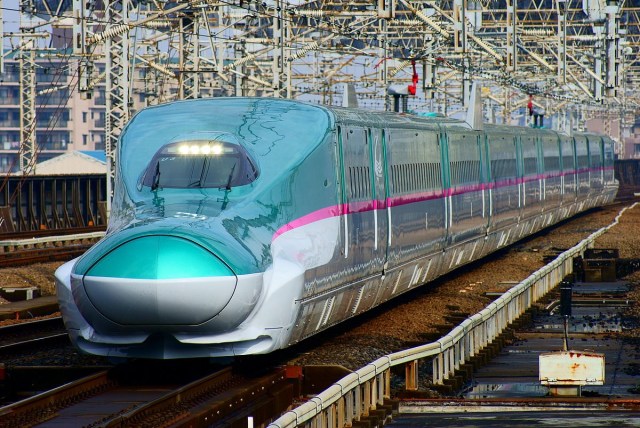
Good news if you want to get there even faster than a speeding bullet train can right now.
Japan’s Shinkansen are all fast, which is how they earned their English-language nickname “bullet trains.” But with no numerical limit on speed, there’s always the possibility of getting from point A to point B even more quickly, and that’s what East Japan Railways (a.k.a. JR East) wants to do with a newly announced upgrade to its Tohoku Shinkansen route, which runs from Tokyo to Aomori Prefecture, the northeastern tip of Japan’s main island of Hokkaido.
Shinkansen travel at different speeds depending on which section of the track they’re passing through, and JR East wants to boost that speed by 23 percent, raising it to 320 kilometers (198.8 miles) per hour from 260, for the section between Morioka Station, in Iwate Prefecture, and Shin Aomori Station, in Aomori Prefecture. This would cut the travel time between the two stations by 10 percent, shortening it to 43 minutes.
The change will extend the Tohoku Shinkansen’s 320-kilometer-per-hour section, which currently consists of only the area between Tochigi Prefecture’s Utsunomiya Station and Morioka, by an additional 178.4 kilometers, encompassing the entire line north of Utsunomiya.
▼ A map showing the planned new 320-kilometer-per-hour area, and also a shift from 110 kilometers per hour to 130 which is being implemented this month on the Shinkansen between Tokyo’s Ueno and Saitama Prefecture’s Omiya stations.
However, raising the Shinkansen’s speed isn’t as simple as just telling the conductor to open up the throttle. Along with safety upgrades to the track, JR East also has to beef up its sound-absorption infrastructure, since a 320-kilometer-an-hour train can make a lot of noise as it whistles by. Starting this month, the company will be installing additional sound-absorbing materials, raising the height of sound-blocking walls, and extending the buffering canopies on tunnels between Morioka and Shin-Aomori.
The entire project is expected to be finished in 2027.
Source: JR East via IT Media
Top image: Wikipedia/Nanashinodensyaku
Insert images: JR East
● Want to hear about SoraNews24’s latest articles as soon as they’re published? Follow us on Facebook and Twitter!

Like this:
Like Loading…
- Japan
- (bullet train • East Japan Railways • Japan Railways • JR East • shinkansen • Tohoku • Tohoku Shinkansen • trains • travel)
Related Stories
 Japan’s newest Shinkansen has no seats…or passengers [Video]
 JR East announces awesomely cheap one-day all-you can ride pass, Shinkansen included
 Brand new Shinkansen bullet train unveiled in Japan… but it won’t carry passengers
 Here’s your chance to ride Japan’s maglev Shinkansen in spring, nine years before service starts
 New Shinkansen design unveiled, bullet train exterior includes cherry blossom Easter egg
- Japanese musician violently attacked in New York for being “Chinese”
- Capsule toy machines in Japan have taken to selling face masks too
- Trackbacks (0)
Trackbacks
- There are no trackbacks yet.
- Trackback URL
Trending Today
- Japan ends tax-free shopping system for foreign tourists, new refund request system now in effect
- Beautiful Ghibli diorama kits lets you build anime characters’ homes inside yours [Photos]
- Japan’s TeamLab digital art group is opening a permanent museum in America
- Japan’s mini Shikoku Pilgrimage walking tour left us feeling immensely satisfied
- This hot spring near Osaka’s Kansai Airport resolves the pick-two-out-of-three bathhouse dilemma
- Starbucks Japan invites us to par-tea with its new Earl Gray Frappuccino [Taste test]
- Tokyo Skytree set to offer breathtaking Diamond Fuji natural phenomenon view this month
- Family Mart releases 47 convenience store socks and stickers, one for every prefecture in Japan
- Shoplifting prevention guard arrested for shoplifting boot from store he was guarding
- This semi-secret, totally free footbath in downtown Tokyo is completely awesome
- Japanese musician violently attacked in New York for being “Chinese”
- Capsule toy machines in Japan have taken to selling face masks too
-
Recent Posts
- This hot spring near Osaka’s Kansai Airport resolves the pick-two-out-of-three bathhouse dilemma
- Starbucks Japan invites us to par-tea with its new Earl Gray Frappuccino [Taste test]
- Tokyo Skytree set to offer breathtaking Diamond Fuji natural phenomenon view this month
- Japan ends tax-free shopping system for foreign tourists, new refund request system now in effect
- Japan’s mini Shikoku Pilgrimage walking tour left us feeling immensely satisfied
-
MOST POPULAR
- Today
- Weekly
- Monthly
- Yearly
Today
 Japan ends tax-free shopping system for foreign tourists, new refund request system now in effect
 Beautiful Ghibli diorama kits lets you build anime characters’ homes inside yours [Photos]
 Japan’s TeamLab digital art group is opening a permanent museum in America
 Japan’s mini Shikoku Pilgrimage walking tour left us feeling immensely satisfied
 This hot spring near Osaka’s Kansai Airport resolves the pick-two-out-of-three bathhouse dilemma
 Starbucks Japan invites us to par-tea with its new Earl Gray Frappuccino [Taste test]
 Tokyo Skytree set to offer breathtaking Diamond Fuji natural phenomenon view this month
 Family Mart releases 47 convenience store socks and stickers, one for every prefecture in Japan
 Shoplifting prevention guard arrested for shoplifting boot from store he was guarding
 This semi-secret, totally free footbath in downtown Tokyo is completely awesome
Weekly
- Japan’s TeamLab digital art group is opening a permanent museum in America
- Japan ends tax-free shopping system for foreign tourists, new refund request system now in effect
 Starbucks Japan unveils new Christmas goods for 2026, with exclusive holiday surprises
- Beautiful Ghibli diorama kits lets you build anime characters’ homes inside yours [Photos]
 Life-size Monster Hunter dragon statues to be built at Japanese shopping mall
 Studio Ghibli homeware brand’s faux oil lamp brings light, smiles, and Kiki’s Jiji to your home
 Modern exosuits are opening up ancient Japanese castle climbs to everyone
 Evangelion announces collaboration with Hard Rock Cafe
 Starbucks Japan releases “Let’s Par-TEA!” Frappuccino and drinks for the holiday season
 Cold Stone is closing its final branch in all of east Japan, but it’s going down singing
Monthly
 Pokémon Company announces first-ever permanent Pokémon store to open outside Asia
- Family Mart releases 47 convenience store socks and stickers, one for every prefecture in Japan
 What’s it like to stay in a Japanese container hotel?
- Japan’s TeamLab digital art group is opening a permanent museum in America
 Chainsaw robots helping keep trains running safely in east Japan [Video]
 New Studio Ghibli anime gets extended run at the only cinema in Japan where it’s being shown
 Tokyo train station will play Godzilla theme song as new departure melody
 Osaka’s famous Glico Running Man will be removed and replaced with a new-look sign
 Studio Ghibli creates illustrated Kyoto sightseeing map, available at any 7-Eleven Japan store
- Japan ends tax-free shopping system for foreign tourists, new refund request system now in effect
Yearly
 Japan announces sudden 400-percent increase in visa fees for foreigners entering the country
 Japan’s human washing machines will go on sale to general public, demos to be held in Tokyo
 Studio Ghibli has a new anime out, and there’s only one place in the world where you can see it
 Starbucks Japan releases new drinkware and goods for Valentine’s Day
 Starbucks Japan releases new sakura goods and drinkware for cherry blossom season 2026
 Japan’s newest Shinkansen has no seats…or passengers [Video]
 Tokyo subway installing new ticket gates that don’t accept payment through Suica or other IC cards
 Japanese ninja certification exam attracts 131 candidates from Japan and abroad
 Salomon releases Japan-exclusive Mt. Fuji hiking gear that doubles as an amazing souvenir
 Japan reportedly adding Japanese language skill requirement to most common foreigner work visa
-
RECOMMENDED STORIES
 Japan’s bullet train-upholstery chairs bring Shinkansen style to your living room【Photos】
 Disney Shinkansen coming to Japan’s rails, starts service this month
 Japanese Shinkansen welcomes overnight guests for one night during summer festival
 Shinkansen bullet trains adding semi-private booths on most popular travel route【Pics】
 Hot coffee finally returns to Tohoku, Hokuriku Shinkansen bullet trains
 All-you-can-ride Shinkansen deal coming to Japan for a limited time
 Not so fast! Japan’s super-high-speed maglev Shinkansen line opening has been officially delayed
 Kodama Shinkansen trains on popular Japan route get a whole new look this winter
 Shinkansen Explosion from Netflix may look like Speed rip-off, but its roots go farther back【Vid】
 Japanese Shinkansen becomes an overnight hotel for three nights this summer
 Private booths are coming to Japan’s Shinkansen bullet trains even sooner than we’d thought【Video】
 Shinkansen bullet train tickets go half-off until spring of next year in east Japan travel push
 Hokkaido Shinkansen apologizes for driver “spacing out” while operating bullet train
 New Japanese overnight train coming to connect Tokyo with Tohoku in sleep-travel style
 New way to buy Shinkansen tickets, through messaging app, coming this fall
-
-
Categories
Categories Select Category Africa (33) Anime & Manga (193) Art (64) Australia (42) C America (9) C Asia (17) Canada (59) Cats (72) China (847) Culture (180) Cute (187) Entertainment (248) Europe (345) FN24 (1) Food & Drink (314) Games & Tech (167) Global (1,073) India (11) Internet (2,198) Italy (13) Japan (34,541) Korea (375) Lifestyle (76) Mexico (6) Music (12) N Asia (4) New Zealand (11) News (61) North Korea (72) Oceania (10) Russia (56) S America (33) S Asia (66) SE Asia (378) Space (2) Taiwan (203) UK (18) Uncategorized (19) USA (978) W Asia (25)
-
Archives
Archives Select Month November 2026 (10) October 2026 (144) September 2026 (156) August 2026 (174) July 2026 (197) June 2026 (174) May 2026 (138) April 2026 (142) March 2026 (150) February 2026 (124) January 2026 (138) December 2025 (136) November 2025 (136) October 2025 (151) September 2025 (154) August 2025 (143) July 2025 (158) June 2025 (165) May 2025 (162) April 2025 (181) March 2025 (157) February 2025 (127) January 2025 (139) December 2024 (148) November 2024 (149) October 2024 (153) September 2024 (154) August 2024 (158) July 2024 (156) June 2024 (150) May 2024 (166) April 2024 (150) March 2024 (157) February 2024 (169) January 2024 (159) December 2023 (165) November 2023 (166) October 2023 (166) September 2023 (173) August 2023 (183) July 2023 (171) June 2023 (180) May 2023 (158) April 2023 (152) March 2023 (167) February 2023 (160) January 2023 (171) December 2022 (175) November 2022 (176) October 2022 (179) September 2022 (191) August 2022 (202) July 2022 (193) June 2022 (178) May 2022 (178) April 2022 (181) March 2022 (212) February 2022 (199) January 2022 (224) December 2021 (230) November 2021 (214) October 2021 (215) September 2021 (238) August 2021 (225) July 2021 (207) June 2021 (218) May 2021 (209) April 2021 (206) March 2021 (225) February 2021 (209) January 2021 (224) December 2020 (225) November 2020 (224) October 2020 (231) September 2020 (238) August 2020 (227) July 2020 (220) June 2020 (209) May 2020 (215) April 2020 (238) March 2020 (235) February 2020 (222) January 2020 (233) December 2019 (187) November 2019 (214) October 2019 (237) September 2019 (195) August 2019 (205) July 2019 (183) June 2019 (201) May 2019 (231) April 2019 (192) March 2019 (242) February 2019 (211) January 2019 (238) December 2018 (212) November 2018 (217) October 2018 (214) September 2018 (203) August 2018 (217) July 2018 (218) June 2018 (208) May 2018 (204) April 2018 (193) March 2018 (216) February 2018 (192) January 2018 (223) December 2017 (204) November 2017 (209) October 2017 (218) September 2017 (209) August 2017 (228) July 2017 (222) June 2017 (245) May 2017 (229) April 2017 (197) March 2017 (165) February 2017 (151) January 2017 (180) December 2016 (260) November 2016 (267) October 2016 (302) September 2016 (387) August 2016 (351) July 2016 (379) June 2016 (379) May 2016 (312) April 2016 (347) March 2016 (414) February 2016 (379) January 2016 (359) December 2015 (359) November 2015 (378) October 2015 (435) September 2015 (419) August 2015 (152) July 2015 (218) June 2015 (179) May 2015 (237) April 2015 (223) March 2015 (119) February 2015 (121) January 2015 (394) December 2014 (376) November 2014 (376) October 2014 (414) September 2014 (349) August 2014 (379) July 2014 (316) June 2014 (375) May 2014 (384) April 2014 (354) March 2014 (318) February 2014 (284) January 2014 (270) December 2013 (224) November 2013 (242) October 2013 (244) September 2013 (226) August 2013 (241) July 2013 (214) June 2013 (222) May 2013 (191) April 2013 (173) March 2013 (149) February 2013 (85) January 2013 (106) December 2012 (111) November 2012 (149) October 2012 (151) September 2012 (118) August 2012 (99) July 2012 (56) June 2012 (57) May 2012 (54) April 2012 (62) March 2012 (40) February 2012 (27) January 2012 (24) December 2011 (18) November 2011 (12) October 2011 (1) September 2011 (9) August 2011 (11) March 2011 (1)
-
- About Us | Jobs | Contact | Contribution | Partner with Us
© SoraNews24 —Japan News— / SOCIO CORPORATION
- Advertise |
- About Us |
- Work with us |
- Contact |
- Contribution |

%d