SoraNews24 —Japan News—
Bringing you yesterday's news from Japan and Asia, today.
-
TOP
» Japan
-
» Ultimate lazy chanko – Can you make Japan’s sumo wrestler hot pot stew in a rice cooker?
Featured
- Weird
- Studio Ghibli
- Jobs
Ultimate lazy chanko – Can you make Japan’s sumo wrestler hot pot stew in a rice cooker?
 Casey Baseel Oct 10, 2024
- Tweet
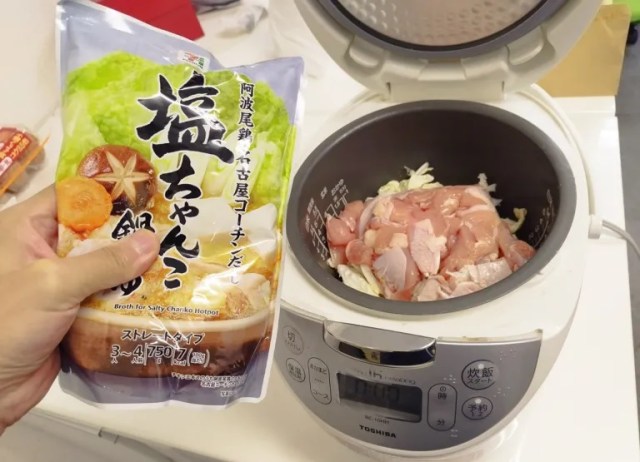
If you don’t have a team of sumo wrestlers to cook chanko nabe for you, will a rice cooker do the job for a one-person hot pot meal?
Given their girth, you might expect sumo wrestlers’ diet to consist of delicious, high-calorie foods. You’d actually be only half right, though. Yes, in order to build body weight sumo wrestlers need to eat a lot, which is definitely easier to do if the food you’re eating tastes great, but sumo wrestlers are also professional athletes, so they need to build muscle too, not just fat.
Because of that, the staple food in the sumo wrestler diet is a hot pot dish called chanko nabe, a stew with a chicken and/or bonito-stock broth and a mixture of meat (primarily chicken) and vegetables. It’s actually a healthy, balanced meal, with the reason sumo wrestlers put on weight having much more to do with how much of it they eat as opposed to the calorific density of the ingredients themselves.
Chanko nabe is such a part of sumo culture that chanko-making duty is part of the daily list of responsibilities at sumo training dormitories (called “stables”), with designated wrestlers for each day tasked with preparing and serving the stew. But what about those of us who find ourselves craving chanko but don’t have an institutionalized hot pot-producing protocol as part of our lifestyles? What about, say, our Japanese-language reporter Seiji Nakazawa, who doesn’t even own a regular cooking pot, and who, after a long day at work, sometimes is feeling too lazy to make even a single cut with a kitchen knife?
No problem! Because even if you don’t have a junior sumo wrestler to make chanko for you, you can delegate the majority of the work to your rice cooker!
At least, that was Seiji’s theory after the successful results of his attempt to cook sukiyaki in a rice cooker while expending the least amount of effort possible. However, there’s an important difference between sukiyaki and chanko, as you might notice when you look at the ingredients Seiji used.
● Pre-cut chicken (385 grams [13.6 ounces])
● Pre-sliced vegetable pack (Chinese cabbage, green onion, carrots, bean sprouts)
● Chanko nabe broth (750 grams [26.5 ounces])
● Udon noodles
● Eggs (optional)
See, while sukiyaki uses thin-sliced beef, chanko instead calls for chunks of chicken. Seiji wasn’t sure if these larger, thicker pieces of meat would cook properly in the rice cooker. He was sure, though, that he didn’t want to go to the hassle of actually sitting there and stirring the stew as it cooked, so he kept his fingers figuratively crossed as he went through the bare-minimum steps he was willing to do. First, he tossed the vegetables into the rice cooker pot…
…then he added the chicken…
…and poured in the broth.
Now it was time to turn things over to the rice cooker, so Seiji closed the lid, hit the start button, and let everything cook for the standard 45-minute rice-cooking cycle.
And when that time was up…
…Seiji had chanko nabe!
OK, so maybe we should have cleaned up the sides of the pot a little before snapping a photo, but we were pretty excited to see how it tasted, and it did not disappoint! Everything, including the chicken, was cooked all the way through, with all of the ingredients’ respective juices blending together with the initial broth for a rich combination of flavors. By leaving the rice cooker plugged in as Seiji ate, everything stayed nice and warm too.
It’s customary to finish off a chanko nabe meal by pouring some of the leftover broth over white rice or udon noodles. Seiji opted for the latter, and once again decided to cook them in the rice cooker, tossing in a pack of noodles and letting them cook for five minutes.
▼ Like many rice cookers, ours doesn’t allow you to set the timer in such small increments, so Seiji timed five minutes on his phone and then hit the stop button.
Once again, the rice cooker adeptly adapted its role, rewarding Seiji with nicely cooked udon to which he then added a raw egg, as is often the style in Japan, though not an absolute necessity.
So yes, if you don’t have a team of junior sumo wrestlers making chanko nabe for you, a rice cooker is a viable substitute if you don’t want to do any actual cooking yourself.
Photos ©SoraNews24
● Want to hear about SoraNews24’s latest articles as soon as they’re published? Follow us on Facebook and Twitter!
[ Read in Japanese ]
Like this:
Like Loading…
- Japan
- (chanko • chanko nabe • COK • cooking • food • hot pot • nabe • rice cooker • rice cooker cooking • rice cooking recipe • SNJO • SoraKitchen • Sumo • sumo stew • sumo wrestlers)
Related Stories
 Ultimate lazy sukiyaki – Can you make the king of Japanese hot pots in a rice cooker?【Taste test】
 Can you make KFC takikomi gohan in a rice cooker, and is it something worth eating?【SoraKitchen】
 Sumo training hall chef shares a secret cream stew ingredient his wrestlers love【Taste test】
 Chicken McNugget rice cooker rice — Can it beat KFC rice cooker rice?【SoraKitchen】
 Japanese chanko ramen restaurant contains a moving relic from the World Trade Center
- Japanese convenience store releases a new bento sandwich, but is it better than a bento rice ball?
- Make miniatures of your miniatures with this kit from Mozu
- Trackbacks (0)
Trackbacks
- There are no trackbacks yet.
- Trackback URL
Trending Today
- Tokyo’s Shibuya Sakurazaka cherry blossom street to be decommissioned, number of trees to increase
- Studio Ghibli and Uniqlo reveal brand-new T-shirt collaboration [Pics]
- Nara deer send record number of people to hospital, over 70 percent of patients are foreigners
- Studio Ghibli adds new Princess Mononoke sukajan jacket to its anime streetwear range in Japan
- Foreign tourist missing after off-season Mt. Fuji hike, father reportedly offering reward to find him/his body
- KFC Japan creates contract with Dr. Doom for Marvel supervillainy fried chicken
- Starbucks Japan unveils new Christmas Matcha Tiramisu Frappuccino
- Tommy Lee Jones becomes Pikachu in Japan for Suntory
- What is Japan’s Yamagata soba, and do you have to go to Yamagata to eat it?
- Complaints of bar scams from foreign tourists in Tokyo’s Shinjuku triple compared to last year
- Japanese convenience store releases a new bento sandwich, but is it better than a bento rice ball?
- Make miniatures of your miniatures with this kit from Mozu
-
Recent Posts
- Foreign tourist missing after off-season Mt. Fuji hike, father reportedly offering reward to find him/his body
- Studio Ghibli adds new Princess Mononoke sukajan jacket to its anime streetwear range in Japan
- Tokyo’s Shibuya Sakurazaka cherry blossom street to be decommissioned, number of trees to increase
- KFC Japan creates contract with Dr. Doom for Marvel supervillainy fried chicken
- Tommy Lee Jones becomes Pikachu in Japan for Suntory
-
MOST POPULAR
- Today
- Weekly
- Monthly
- Yearly
Today
 Tokyo’s Shibuya Sakurazaka cherry blossom street to be decommissioned, number of trees to increase
 Studio Ghibli and Uniqlo reveal brand-new T-shirt collaboration [Pics]
 Nara deer send record number of people to hospital, over 70 percent of patients are foreigners
 Studio Ghibli adds new Princess Mononoke sukajan jacket to its anime streetwear range in Japan
 Foreign tourist missing after off-season Mt. Fuji hike, father reportedly offering reward to find him/his body
 KFC Japan creates contract with Dr. Doom for Marvel supervillainy fried chicken
 Starbucks Japan unveils new Christmas Matcha Tiramisu Frappuccino
 Tommy Lee Jones becomes Pikachu in Japan for Suntory
 What is Japan’s Yamagata soba, and do you have to go to Yamagata to eat it?
 Complaints of bar scams from foreign tourists in Tokyo’s Shinjuku triple compared to last year
Weekly
- Nara deer send record number of people to hospital, over 70 percent of patients are foreigners
 Ichiran releases an at-home counter kit that turns your desk into a ramen restaurant
- Studio Ghibli and Uniqlo reveal brand-new T-shirt collaboration [Pics]
 Tokyo cracks down on Airbnb-style rentals with new laws limiting operator days and more
 America’s first-ever permanent One Piece store is now open [Photos]
 Tokyo neighborhood adds new “smart trash cans” to deal with increasing amounts of tourist litter
 Starbucks Japan releases new Bearista glass tumbler that changes character with every drink
 Starbucks Japan reveals new Joyful Capsule gacha toy release date
 Akihabara restaurant with 1.7 million sushi bowl options will have us coming back again and again
 Japanese viewers of Godzilla Minus Zero angered by unusual number of restroom goers
Monthly
- Nara deer send record number of people to hospital, over 70 percent of patients are foreigners
 Pokémon Company announces first-ever permanent Pokémon store to open outside Asia
 Japan ends tax-free shopping system for foreign tourists, new refund request system now in effect
 Japan’s TeamLab digital art group is opening a permanent museum in America
- Ichiran releases an at-home counter kit that turns your desk into a ramen restaurant
 Beautiful Ghibli diorama kits lets you build anime characters’ homes inside yours [Photos]
- Studio Ghibli and Uniqlo reveal brand-new T-shirt collaboration [Pics]
 Family Mart releases 47 convenience store socks and stickers, one for every prefecture in Japan
 Chainsaw robots helping keep trains running safely in east Japan [Video]
 New Studio Ghibli anime gets extended run at the only cinema in Japan where it’s being shown
Yearly
 Japan announces sudden 400-percent increase in visa fees for foreigners entering the country
 Japan’s human washing machines will go on sale to general public, demos to be held in Tokyo
 Studio Ghibli has a new anime out, and there’s only one place in the world where you can see it
- Nara deer send record number of people to hospital, over 70 percent of patients are foreigners
 Starbucks Japan releases new drinkware and goods for Valentine’s Day
 Starbucks Japan releases new sakura goods and drinkware for cherry blossom season 2026
 Japan’s newest Shinkansen has no seats…or passengers [Video]
 Tokyo subway installing new ticket gates that don’t accept payment through Suica or other IC cards
 Japanese ninja certification exam attracts 131 candidates from Japan and abroad
 Salomon releases Japan-exclusive Mt. Fuji hiking gear that doubles as an amazing souvenir
-
RECOMMENDED STORIES
 Did you know your rice cooker is also a ramen rice cooker?【SoraKitchen】
 Tokyo Comic-Con wasn’t just fun, it was delicious, and here’re our top picks from its food booths
 You can take on sumo wrestlers and drink all the whiskey you want at Tokyo’s new sumo restaurant
 Apparently Calpis is good in soup? We try mixing it in with hot pot【SoraKitchen】
 A Japanese hot pot with an elevator inside is just what we need to make it through winter【Video】
 Grand Sumo Tournament pop-up cafe pushes its way into Fukuoka
 Japan’s new carriable one-person hot pot maker is our newest cooking gadget obsession
 Rice cooker recipe: 7-Eleven Japan’s Miso Mackerel Butter Rice is as tasty as it is easy
 How to make curry in a rice cooker with zero prep work and no water[Recipe]
 A faster, easier way to make cake: Use a rice cooker【SoraKitchen】
 Rice cooker kuri gohan and two more super-easy chestnut recipes to make this fall【SoraKitchen】
 Kaki gohan – A super-easy, super-tasty rice cooker treat to make this autumn【Recipe】
 Why throw away your leftover ramen broth when you can use it to make awesome ramen rice instead?
 Let’s cook this jet-black chicken in the rice cooker and see what happens【SoraKitchen】
 Rice cooker cooking: Bacon onion rice is amazingly easy, awesomely delicious
-
-
Categories
Categories Select Category Africa (33) Anime & Manga (193) Art (64) Australia (42) C America (9) C Asia (17) Canada (59) Cats (72) China (847) Culture (180) Cute (187) Entertainment (248) Europe (345) FN24 (1) Food & Drink (314) Games & Tech (167) Global (1,073) India (11) Internet (2,198) Italy (13) Japan (34,610) Korea (375) Lifestyle (76) Mexico (6) Music (12) N Asia (4) New Zealand (11) News (61) North Korea (72) Oceania (10) Russia (56) S America (33) S Asia (66) SE Asia (378) Space (2) Taiwan (203) UK (18) Uncategorized (19) USA (979) W Asia (25)
-
Archives
Archives Select Month November 2026 (79) October 2026 (144) September 2026 (156) August 2026 (174) July 2026 (197) June 2026 (174) May 2026 (138) April 2026 (142) March 2026 (150) February 2026 (124) January 2026 (138) December 2025 (136) November 2025 (136) October 2025 (151) September 2025 (154) August 2025 (143) July 2025 (158) June 2025 (165) May 2025 (162) April 2025 (181) March 2025 (157) February 2025 (127) January 2025 (139) December 2024 (148) November 2024 (149) October 2024 (153) September 2024 (154) August 2024 (158) July 2024 (156) June 2024 (150) May 2024 (166) April 2024 (150) March 2024 (157) February 2024 (169) January 2024 (159) December 2023 (165) November 2023 (166) October 2023 (166) September 2023 (173) August 2023 (183) July 2023 (171) June 2023 (180) May 2023 (158) April 2023 (152) March 2023 (167) February 2023 (160) January 2023 (171) December 2022 (175) November 2022 (176) October 2022 (179) September 2022 (191) August 2022 (202) July 2022 (193) June 2022 (178) May 2022 (178) April 2022 (181) March 2022 (212) February 2022 (199) January 2022 (224) December 2021 (230) November 2021 (214) October 2021 (215) September 2021 (238) August 2021 (225) July 2021 (207) June 2021 (218) May 2021 (209) April 2021 (206) March 2021 (225) February 2021 (209) January 2021 (224) December 2020 (225) November 2020 (224) October 2020 (231) September 2020 (238) August 2020 (227) July 2020 (220) June 2020 (209) May 2020 (215) April 2020 (238) March 2020 (235) February 2020 (222) January 2020 (233) December 2019 (187) November 2019 (214) October 2019 (237) September 2019 (195) August 2019 (205) July 2019 (183) June 2019 (201) May 2019 (231) April 2019 (192) March 2019 (242) February 2019 (211) January 2019 (238) December 2018 (212) November 2018 (217) October 2018 (214) September 2018 (203) August 2018 (217) July 2018 (218) June 2018 (208) May 2018 (204) April 2018 (193) March 2018 (216) February 2018 (192) January 2018 (223) December 2017 (204) November 2017 (209) October 2017 (218) September 2017 (209) August 2017 (228) July 2017 (222) June 2017 (245) May 2017 (229) April 2017 (197) March 2017 (165) February 2017 (151) January 2017 (180) December 2016 (260) November 2016 (267) October 2016 (302) September 2016 (387) August 2016 (351) July 2016 (379) June 2016 (379) May 2016 (312) April 2016 (347) March 2016 (414) February 2016 (379) January 2016 (359) December 2015 (359) November 2015 (378) October 2015 (435) September 2015 (419) August 2015 (152) July 2015 (218) June 2015 (179) May 2015 (237) April 2015 (223) March 2015 (119) February 2015 (121) January 2015 (394) December 2014 (376) November 2014 (376) October 2014 (414) September 2014 (349) August 2014 (379) July 2014 (316) June 2014 (375) May 2014 (384) April 2014 (354) March 2014 (318) February 2014 (284) January 2014 (270) December 2013 (224) November 2013 (242) October 2013 (244) September 2013 (226) August 2013 (241) July 2013 (214) June 2013 (222) May 2013 (191) April 2013 (173) March 2013 (149) February 2013 (85) January 2013 (106) December 2012 (111) November 2012 (149) October 2012 (151) September 2012 (118) August 2012 (99) July 2012 (56) June 2012 (57) May 2012 (54) April 2012 (62) March 2012 (40) February 2012 (27) January 2012 (24) December 2011 (18) November 2011 (12) October 2011 (1) September 2011 (9) August 2011 (11) March 2011 (1)
-
- About Us | Jobs | Contact | Contribution | Partner with Us
 How to make a massive five-layer lasagna…in your rice cooker【SoraKitchen】
© SoraNews24 —Japan News— / SOCIO CORPORATION
- Advertise |
- About Us |
- Work with us |
- Contact |
- Contribution |

%d