Elliot Hale – SoraNews24 —Japan News— https://soranews24.com Bringing you yesterday's news from Japan and Asia, today. Sat, 07 Nov 2026 01:00:58 +0000 en-US hourly 1 https://wordpress.org/?v=7.1.4 https://soranews24.com/wp-content/uploads/sites/3/2020/05/en_rocket_1024.png?w=32 Elliot Hale – SoraNews24 —Japan News— https://soranews24.com 32 32 176746664 Get the taste of the U.K. in Tokyo with 99 Flakes, meat pies, and Jaffa Cakes https://soranews24.com/2026/11/07/get-the-taste-of-the-u-k-in-tokyo-with-99-flakes-meat-pies-and-jaffa-cakes/ https://soranews24.com/2026/11/07/get-the-taste-of-the-u-k-in-tokyo-with-99-flakes-meat-pies-and-jaffa-cakes/#comments Sat, 07 Nov 2026 01:00:47 +0000 https://soranews24.com/?p=749135 
This tiny Shibuya spot brings quintessential UK snacks straight to central Tokyo.
Whether you have moved to a different country and pining for the foodstuffs of the motherland or you are interested in foreign cuisine without the hefty price tag of the airfare, specialty import stores are a treat to walk around. Tucked away amid the towering buildings of Shibuya, you’ll find The British Shop, a grocery store specializing in British ingredients with its own eat-in area.
Located just outside exit B3 of the Shibuya subway station, The British Shop’s footprint is even smaller than a convenience store, but the shelves are lined with British foods and a table is set up in the center from which you can enjoy a variety of foods.

One of the highlights for a nostalgic Brit would be the ice cream van staple of a 99 Flake, essentially a soft-serve ice cream cone with a Cadbury’s Flake chocolate bar inserted into it.

Unfortunately, sales were suspended on the day we visited, but we still got to enjoy some chocolatey goodness with our ice cream.
To satisfy our ice cream cravings, we opted for a double scoop (750 yen [US$4.74]) along with a Flake (100 yen): the first scoop was vanilla and clotted cream, and the second blackcurrant and double cream.

While clotted cream is an indispensable accompaniment to scones, it has to be said that seeing it as an ice cream flavor is pretty unusual. The taste was unexpectedly light with a gentle sweetness, reproducing the lightness of actual clotted cream. Combining a subtly milky taste with the rich aroma of vanilla made for an addictive, delicious flavor.

Blackcurrant is known as ‘cassis’ in Japan, where it is arguably seen most as a part of alcoholic drinks, but in the UK it is much more widely enjoyed in squashes (fruit cordials) or as a component to desserts. The tartness of the ice cream wasn’t too strong, and had a taste that made us keep coming back in for another scoop.

After spending any amount of time in Japan, you come to realize that ‘pies’ are almost always of the dessert variety, often containing fruits, but at this little shop you can purchase the Chunky Beef Pie for 600 yen, which is made with huge chunks of diced beef and has a very rich taste.

After coming all the way to the store, it would be unthinkable if you left without picking up some snacks as a souvenir, and what better way to do that than to take home the subject of Britain’s biggest snack debate: the Jaffa Cake (520 yen).

Delectable treats made by layering a soft sponge cake with a sweet-and-sour orange filling and coating it with chocolate, these once featured as the main focus in a legal case to determine whether they were actually biscuits (cookies) or, indeed as the name would suggest, cakes. Spoiler: they’re cakes. Since Jaffa Cakes are hard to find in Japan, these are a must-grab item if you visit the shop, and being sweet they make a perfect accompaniment to a cup of tea.

Next up were the Somerset Cheddar and Shallot flavor Savoursmiths crisps.

A high-end crisp brand from the UK comes at a price of 220 yen for a bag, which is definitely on the higher side when comparing other potato chips in a Japanese supermarket. The crunchy texture was exquisite, and we ended up finishing them before we had even realized it.

Sometimes a trip to Tokyo is not easy, so there’s also the option of ordering from the shop online, where shipping is free on orders over 12,000 yen.

The British Shop offers everything from classic snacks to slightly niche ingredients, with items such as bacon, bread, seasonings, and Yorkshire Tea Gold all available to purchase. If you’re not as unlucky as us when visiting the store, you’ll also get to try the quintessential British summertime treat of a 99 Flake all the way on the other side of the globe.
Store information
The British Shop
Address: Tokyo-to, Shibuya-ku, Shibuya 1-14-9 Towa Miyamasuzaka Biru 1F
東京都渋谷区渋谷1-14-9 藤和宮益坂ビル1F
Open: 11:00 a.m.–8:00 p.m.
Website
Related: Instagram
Photos ©SoraNews24
● Want to hear about SoraNews24’s latest articles as soon as they’re published? Follow us on Facebook and Twitter!
]]> https://soranews24.com/2026/11/07/get-the-taste-of-the-u-k-in-tokyo-with-99-flakes-meat-pies-and-jaffa-cakes/feed/ 0 749135 imgi_340_b1_e80dcf Liquid croissant coffee is coming to Japanese stores this month https://soranews24.com/2026/11/05/liquid-croissant-coffee-is-coming-to-japanese-stores-this-month/ https://soranews24.com/2026/11/05/liquid-croissant-coffee-is-coming-to-japanese-stores-this-month/#comments Thu, 05 Nov 2026 01:00:06 +0000 https://soranews24.com/?p=749037 
Suntory’s newest Craft Boss release promises the taste of freshly dunked buttery pastry in a single bottle.
One of the things I’ve enjoyed since coming to Japan has been stopping at vending machines I walk past to check out what new and unusual drinks they have on offer and scouring different supermarket and convenience store shelves for limited-edition flavors that could potentially blow my mind with their outlandishness—I’m looking at you, caramel popcorn soda. Now, the latest limited-time release coming from beverage maker Suntory seems to suggest they’ve been attempting to liquidize a bakery item.
In collaboration with the popular bakery chain Bread, Espresso & and hitting shelves on November 10 for a limited time, Craft Boss Croissant Latte is an attempt to capture the exact flavor you get after dunking a croissant into a warm caffe latte.

As far as I’m aware, the French can be quite vocal about proper etiquette when it comes to their bread and coffee on the best of days, but turning the breakfast habit into a drinkable liquid in a plastic bottle might have them sharpening their baguettes for the sheer audacity.
According to the breakdown of the recipe, the drink blends light-roasted coffee beans with espresso to create a sophisticated bitterness, plus sugar, a touch of salt, and the custom croissant flavor, with a result that aims to form a buttery aroma and a multi-layered balance of sweet, bitter, and salty notes in every sip.
As with all Suntory Boss coffee varieties, we can expect to see the Croissant Latte in Japanese convenience stores and supermarkets, and it’s scheduled to go on sale November 10. Starting that same day, select 19 Bread, Espresso & stores nationwide will also be selling a special 900-yen (US$5.70) Croissant Latte menu item featuring a honey-butter caramelized croissant designed specifically for dipping into foamy latte cream.

The first 100 people at each store who order from the collaboration menu will also receive a bottle of Craft Boss Croissant Latte (limited to one per person).
● Tokyo
Bread, Espresso & (Omotesando)
Bread, Espresso & Shibaura Gallery
Bread, Espresso & Machiawase
● Kanagawa
Bread, Espresso & Shonan to
Bread, Espresso & Yuigahama Shoten
Bread, Espresso & Hantaba wo
● Chiba
Bread, Espresso & Kojitsutei
● Fukushima
Bread, Espresso & Komine Castle
● Miyagi
Bread, Espresso & Hitoyasumi
● Mie
Bread, Espresso & Kuwana Kobo
● Shiga
Bread, Espresso & Sekitoan
● Kyoto
Bread, Espresso & Kyo to
● Osaka
Bread, Espresso & Minamimorimachi-kosaten
Bread, Espresso & Coffee Seisakusho
● Hyogo
Bread, Espresso & Ijinkan
Bread, Espresso & Himeji Castle
● Oita
Bread, Espresso & Beppu-kan
● Kochi
Bread, Espresso & Tosa Kissa
● Okinawa
Bread, Espresso & Omoromachi
As a final added bonus, by purchasing target products between November 10 and November 24, you could be one of five lucky people who have the chance of winning a Bakery and Boss Jumbo Jacket, emblazoned with the Boss logo, and an assorted-bread design on the inner lining.

Whether liquid croissant coffee turns out to be a brilliant morning hack or just another entry in Japan’s history of experimental beverages, it’ll no doubt turn a few heads when it hits the shelves in a few days. If you happen to be near one of the stores, why not forgo your traditional breakfast snack and pick another up in one convenient bottle.
Related: Suntory, Bread, Espresso &
Source, images: PR Times
● Want to hear about SoraNews24’s latest articles as soon as they’re published? Follow us on Facebook and Twitter!
]]> https://soranews24.com/2026/11/05/liquid-croissant-coffee-is-coming-to-japanese-stores-this-month/feed/ 0 749037 260901_su_B4_omo Modern exosuits are opening up ancient Japanese castle climbs to everyone https://soranews24.com/2026/10/29/modern-exosuits-are-opening-up-ancient-japanese-castle-climbs-to-everyone/ https://soranews24.com/2026/10/29/modern-exosuits-are-opening-up-ancient-japanese-castle-climbs-to-everyone/#comments Thu, 29 Oct 2026 14:00:17 +0000 https://soranews24.com/?p=748599 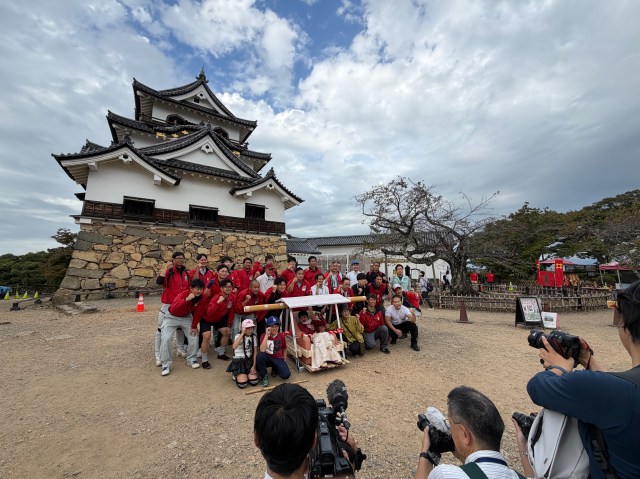
Combining palanquins and muscle suits to make historic sites accessible for all.
Along the eastern shores of Lake Biwa, Japan’s largest freshwater lake, in Shiga is the city of Hikone, home to one of only twelve castles in Japan with its original main keep still standing.
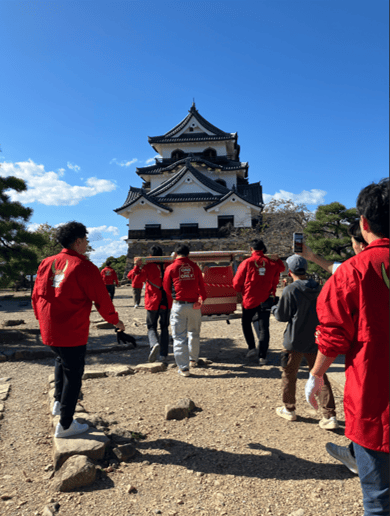
However, reaching the top is not a casual stroll, being guarded by 140 steep, irregular stone steps explicitly designed to exhaust invading samurai, and now those same steps present a modern dilemma.
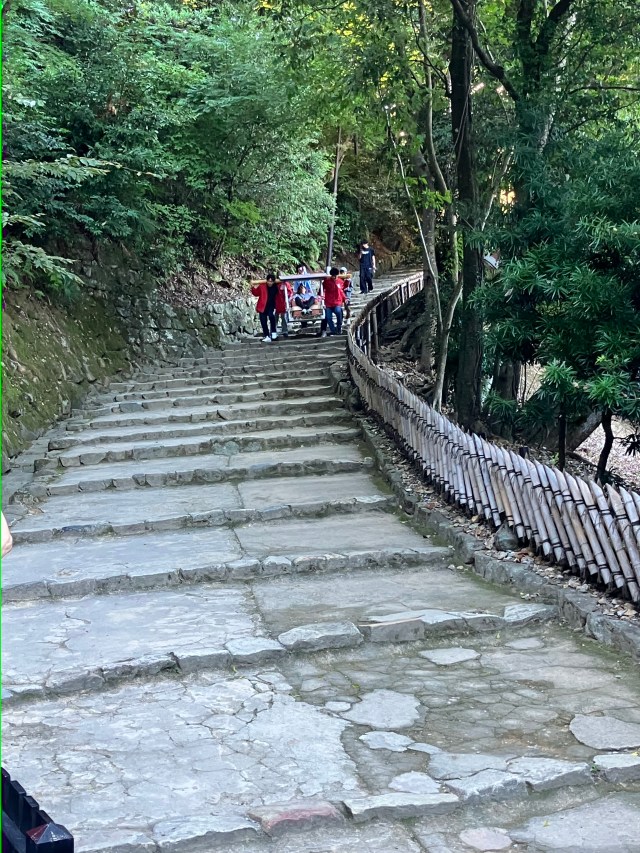
Being a National Special Historic Site, and a possible candidate for UNESCO World Cultural Heritage status in 2028, how can the site be made more accessible for visitors who use wheelchairs or have mobility impairments, especially when pouring concrete ramps over 17th-century masonry isn’t exactly an option that would be enthusiastically received?
On October 19, Hikone City staff and volunteers conducted a trial, where they took turns acting as carriers, carrying wheelchair users up to the main enclosure (honmaru) using a traditional wooden mountain palanquin (yamakago). The trek covered a 285-meter (935-foot) round-trip with a 50-meter (165-foot) vertical rise and an average 18-percent incline, which is not an easy feat for two people to do.
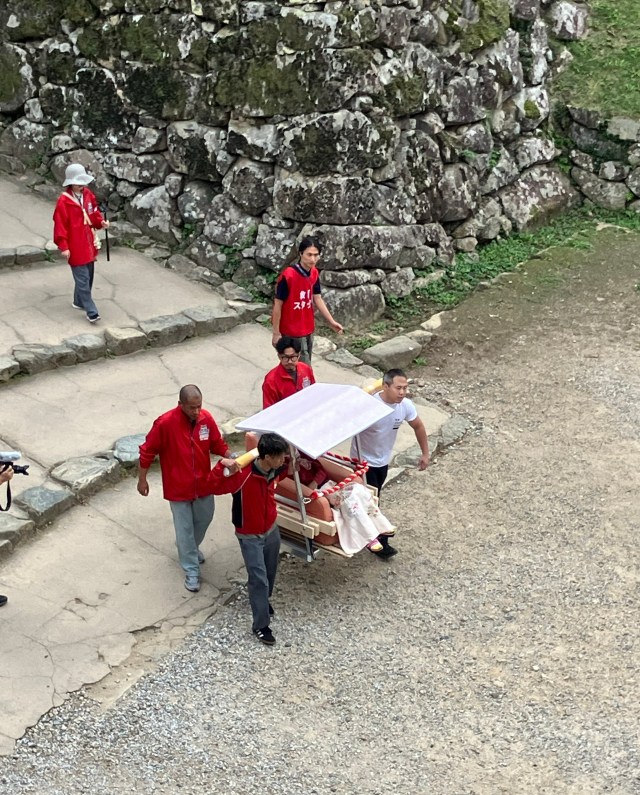
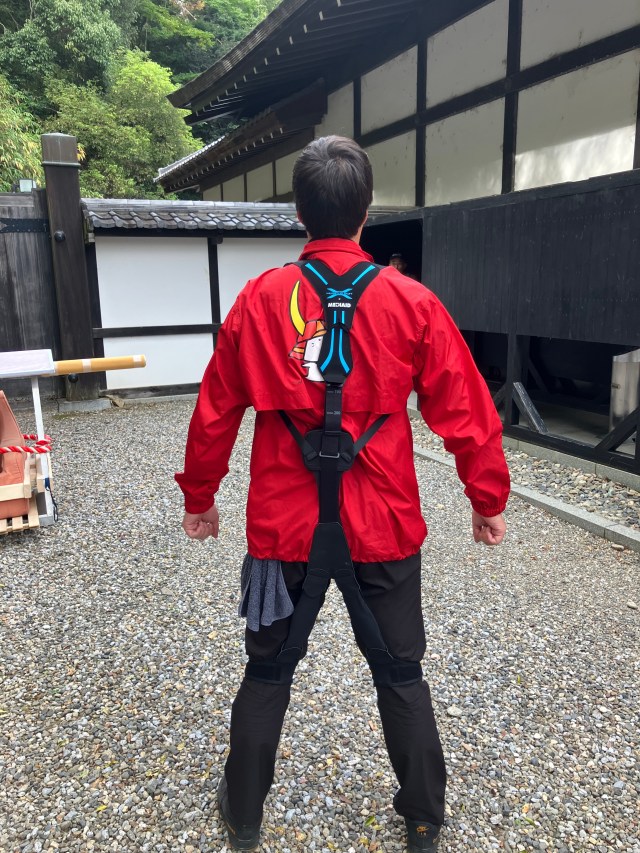
So, to lighten the load for the team of six carriers, trial participants strapped on state-of-the-art, non-motorized wearable assist suits, with two wearing the Muscle Suit Soft-Power Easy-Lift and four equipping the Mediaid Firm Guard Waist EX Hard.
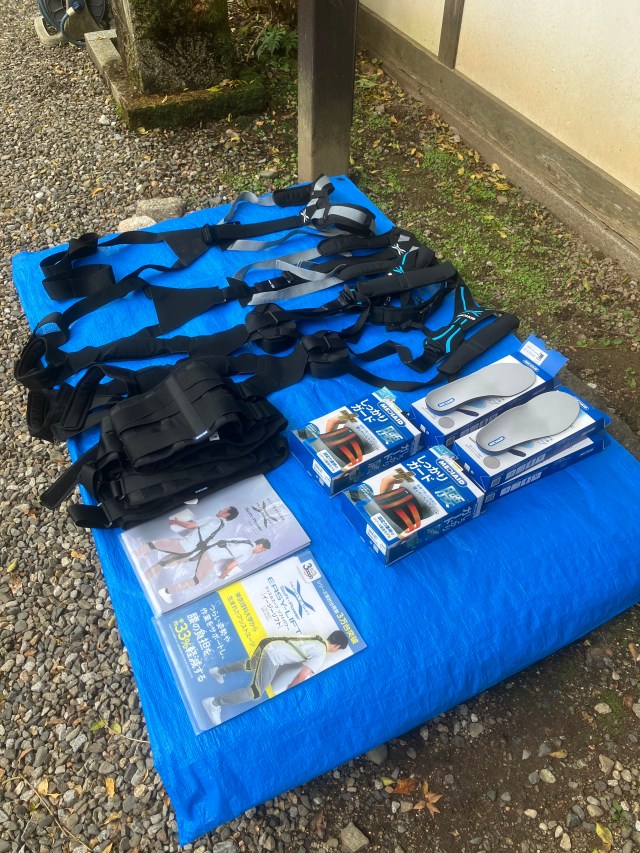
▼Muscle Suit Soft-Power Easy-Lift
▼Mediaid Firm Guard Waist EX Hard
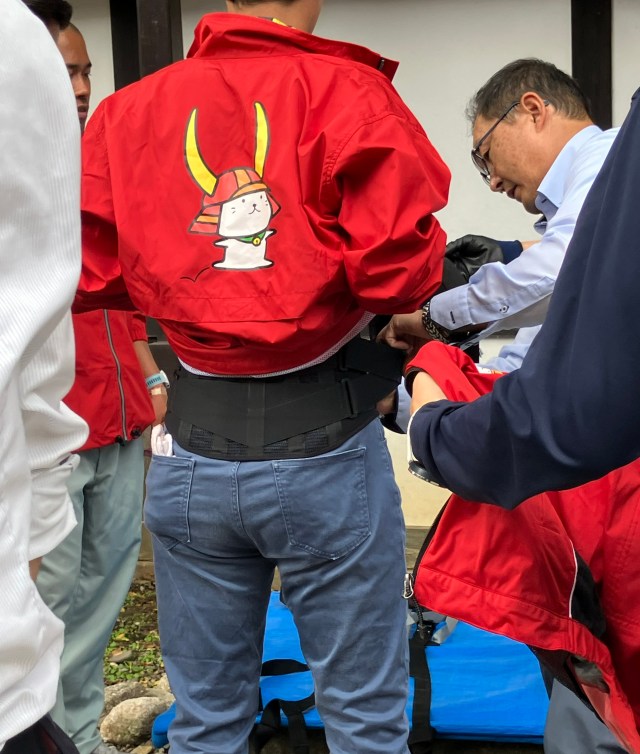
The reaction from the carriers was enthusiastic, receiving comments like:
“Because I injured my lower back in the past, wearing it gave me a real sense of security.”
“It is attached at the base of the knees, but when standing upright it is loose, so it does not get in the way of going up and down the stairs.”
“The moment I took it off, I realized just how much it had been helping me.”
Standing up while balancing a palanquin on your shoulders normally feels like tipping backward, causing some difficulty in maintaining balance, but the back-and-leg support makes rising smooth and stable.

Beyond opening up easier physical access to a historic tourist site, the trial offered a glimpse into an exciting future for Japanese tourism, with accompanying curators explaining the history and scenery of the location, creating an opportunity for visitors to get a taste of what it would be like to travel around the mountain like nobility in the time of the samurai.
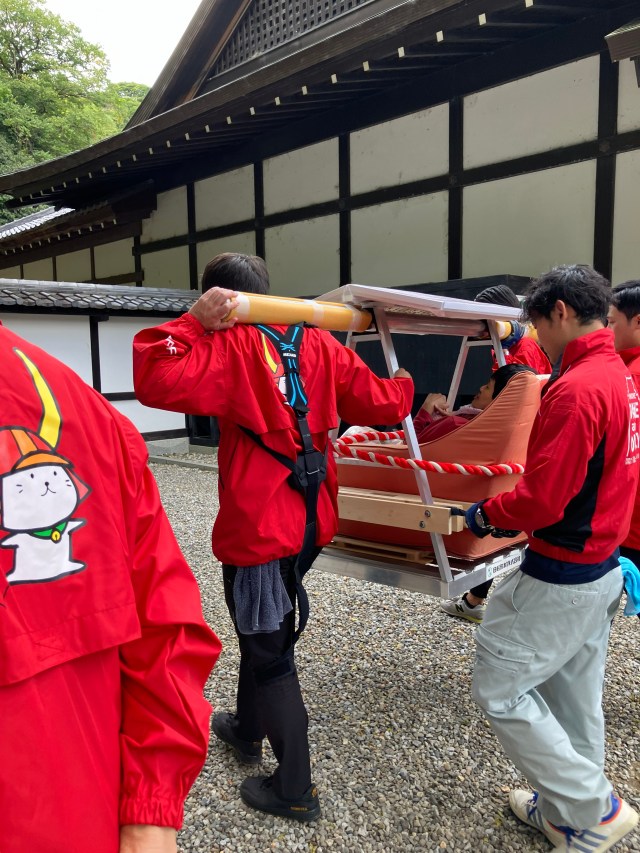
Similarly, it could also open up another bucket-list item for many travelers along with sitting on the back of a human-powered rickshaw, being chauffeured around Japan’s historical districts. If wearable assist suits can help bridge the gap between 17th-century architecture and 21st-century accessibility, it opens up countless possibilities for historic castles, mountain temples, and heritage sites all across Japan.
Source and images: PR Times
● Want to hear about SoraNews24’s latest articles as soon as they’re published? Follow us on Facebook and Twitter!
]]> https://soranews24.com/2026/10/29/modern-exosuits-are-opening-up-ancient-japanese-castle-climbs-to-everyone/feed/ 0 748599 sub4_165b25 Japanese snack lovers may soon be spore-ting the latest crowdfunded confectionery tech https://soranews24.com/2026/10/28/japanese-snack-lovers-may-soon-be-spore-ting-the-latest-crowdfunded-confectionery-tech/ https://soranews24.com/2026/10/28/japanese-snack-lovers-may-soon-be-spore-ting-the-latest-crowdfunded-confectionery-tech/#comments Wed, 28 Oct 2026 03:00:10 +0000 https://soranews24.com/?p=748559 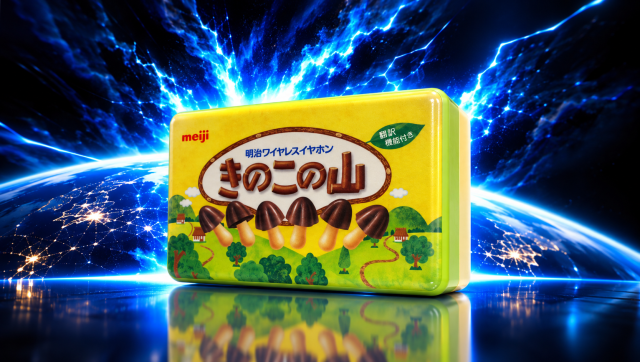
Play that fung-ky music.
From creepy penguins hatching from eggs to flying balls of chaos, Japan likes to jump on the latest quirky trends, and if history is anything to go by, people will soon be putting fungi in their ears. If you have ever browsed the snack aisle of a Japanese convenience store, there’s a chance that you might have encountered Kinoko no Yama, bite-sized treats consisting of a crunchy biscuit stem topped with a chocolate mushroom cap. Now, imagine putting one in your ear.
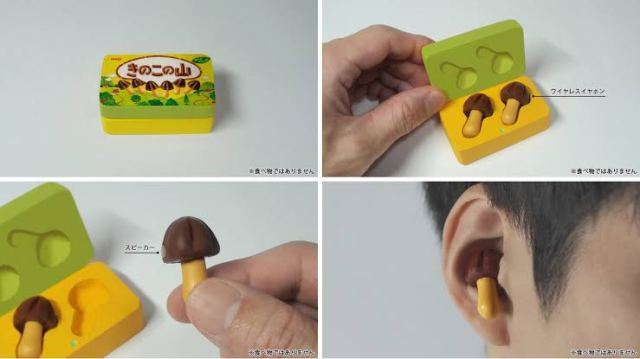
Rather than being the latest dietary trend, or attempting to commune deeper with nature through the chocolate mycelia, what appears to be the start of a fungal colony growing out of your head is in fact the second-generation Kinoko no Yama Wireless Earphones Pro, a tech accessory that looks like you’re using actual confectionery as audio equipment.

The concept originally started as a playful visual joke on social media, but after an overwhelming response from netizens demanding to know where they could buy a pair, Kagomedia collaborated with Kinoko no Yama’s maker Meiji to turn them into a reality. The first batch of 3,500 units launched on the Japanese crowdfunding platform Makuake in early 2024 and famously sold out in a shocking ten minutes.
▼ Achieving 9,836 percent of its one million yen goal.
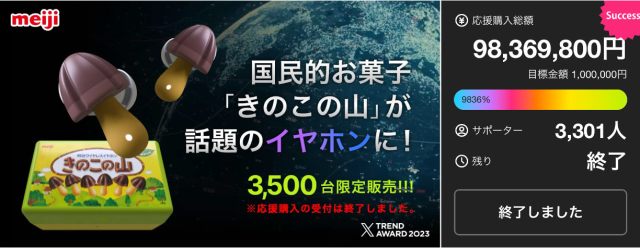
Two and a half years later, these chocolate earbuds are making a comeback from November 1, with a new revival project for the updated 2027 Pro model. If the campaign sees at least 1,000 people pledge that they want a pair, the second generation will officially go into production, but this time they will be made-to-order without a strict limit on quantities, so all those who want will be able to get their hands and ears on them.
Despite looking like a novelty gimmick, these earbuds pack some serious tech, with upgraded audio tuning and gold-plated touch sensors. The most ambitious feature though is the built-in AI simultaneous translation covering 144 global languages and dialects. So while you might look like you’re trying to store your snacks in your ears for later to onlookers, you could be able to understand nearly 150 languages in real time.
The case itself is designed to mirror the original snack box, complete with a pop-up tray where the two little mushrooms rest inside.
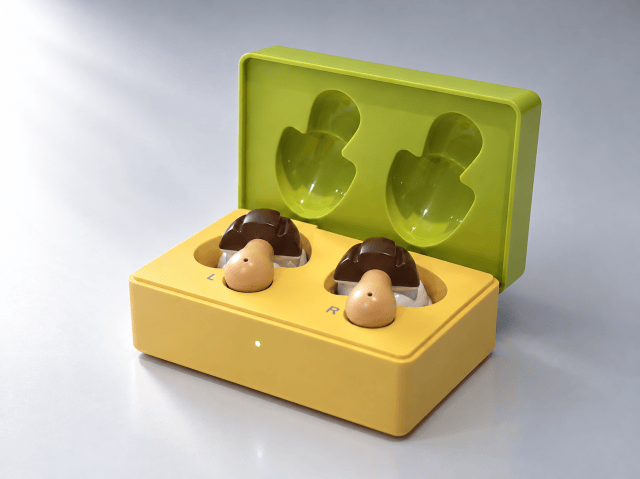
If you, like your 3,500 predecessors, want some fungi in your head, you’ll need to check out Makuake on November 1 at 12:00 p.m., where for the first 24 hours, the first 1,000 pairs of earphones will be sold at the same price as the first-generation (29,800 yen [US$188.96]). The next 2,000 pairs can be bought for 31,800 yen, and the following 2,000 for 33,000 yen. The last possible discount is for 3,000 pairs at 34,800 yen before each unit is sold for its regular price of 36,300 yen with no quantity limits as long as the order is placed before December 13, 2026, after which you will not be able to purchase these any more.
Whether you find the design quirky or strange, it’s a high-quality blend of everyday Japanese pop culture with high-tech innovation, so there’s no need to panic the next time you spot someone on the train with mushrooms sprouting from their ears.
Related: Crowdfunding Campain
Source and images: PR Times
● Want to hear about SoraNews24’s latest articles as soon as they’re published? Follow us on Facebook and Twitter!
]]> https://soranews24.com/2026/10/28/japanese-snack-lovers-may-soon-be-spore-ting-the-latest-crowdfunded-confectionery-tech/feed/ 0 748559 sub1_9fa00e Zombies serve cocktails and Pochita turns into parfait at Universal Studios Japan this Halloween https://soranews24.com/2026/10/23/zombies-serve-cocktails-and-pochita-turns-into-parfait-at-universal-studios-japan-this-halloween/ https://soranews24.com/2026/10/23/zombies-serve-cocktails-and-pochita-turns-into-parfait-at-universal-studios-japan-this-halloween/#comments Thu, 22 Oct 2026 16:00:46 +0000 https://soranews24.com/?p=748031 
Are you ready for a taste of terror?
As Universal Studios Japan marks its 25th anniversary, the park is bursting with thrills with its milestone 15th edition of Halloween Horror Nights. Running from September 11 to November 8, this year’s event pairs the classic street scares with an array of spook-filled food and drink offerings that make it well worth a visit.
The headliner for 2026’s new additions is the park’s first-ever Zombie Bar. Occupying Wharf Cafe in the San Francisco area of the park and operating nightly from 6:00 p.m., it features zombified crew members serving eerie signature drinks themed around past park monsters. Highlights include a strawberry-milk Cutie Zombie drink, a non-alcoholic lychee sour for circus zombie fans, and a blood orange and lemon sour inspired by chainsaw zombies.
▼ Cutie Zombie’s Sweet Temptation — Strawberry Milk

▼ Circus Zombie’s Madness: Lychee Non-Alcoholic Sour

▼ Chainsaw Zombie’s Rampage — Blood Orange & Lemon Sour

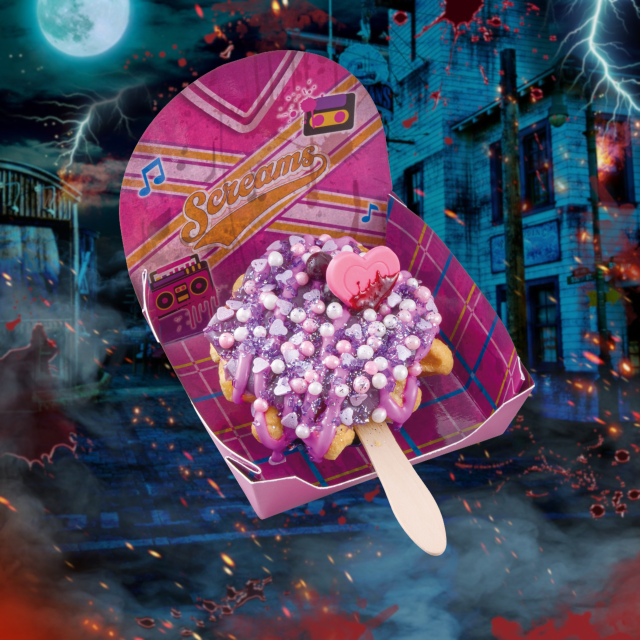
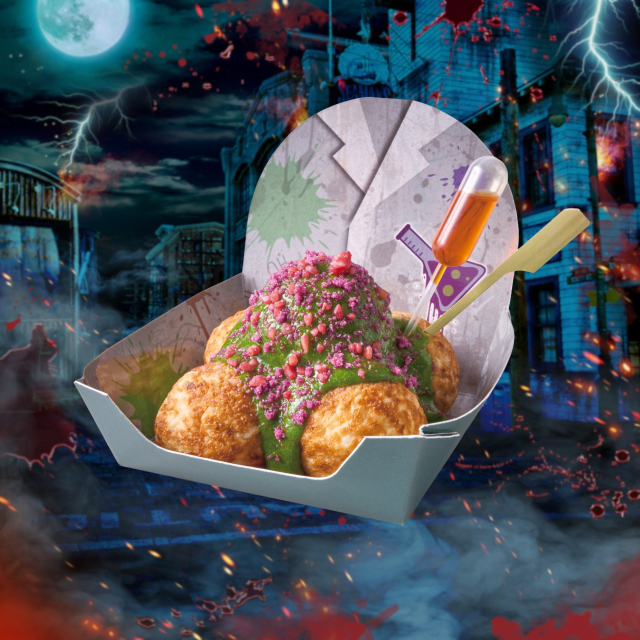
Over at Universal Market, high school zombies take the center stage with a creepy school festival theme. Visitors can enjoy blackcurrant waffles from the Zombie Cheerleading Club, garlic-oil experimental takoyaki from the Science Club, or a cheese and onion kalbi (Korean marinated beef ribs) rice dog designed by the ravenous American Football Club, with a night-exclusive banana ice cream to indulge in for dessert.
▼ #Deco Champion Zombie Cheer Squad Cassis Waffle
▼ Burst! Zombie Science Club Experimental Takoyaki — with Umami Garlic Oil
▼ Muscle Rampage! Zombie American Football Club’s Cheese Beef Kalbi Rice Sandwich

▼ Zombie Banana Ice — Does a Banana Count as a Snack?

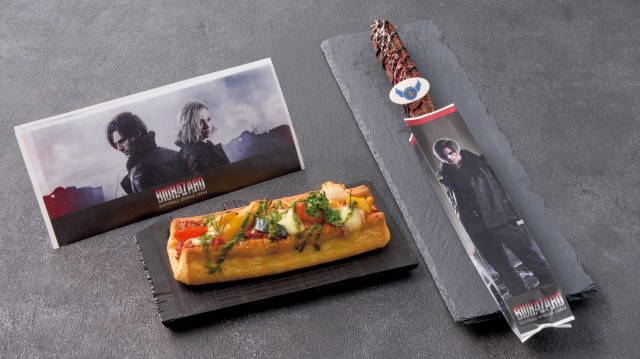
Anime and gaming enthusiasts have a ton to look forward to as well, thanks to collaborations with Resident Evil and Chainsaw Man. Coinciding with the 30th anniversary of Resident Evil, known as “Biohazard” in Japan, a croissant sandwich filled with chicken, vegetables, and a green-herb basil sauce is offered to honor the new Resident Evil Requiem: The Dive maze, along with a bitter chocolate churro to pay homage to agent Leon S. Kennedy, both being sold at the food cart in front of Space Fantasy – The Ride and accompanied by some original merchandise.
▼ Green Herb Recovery Croissant Bun — Basil Sauce & Chicken and Leon S. Kennedy’s Dark Chocolate Churritos
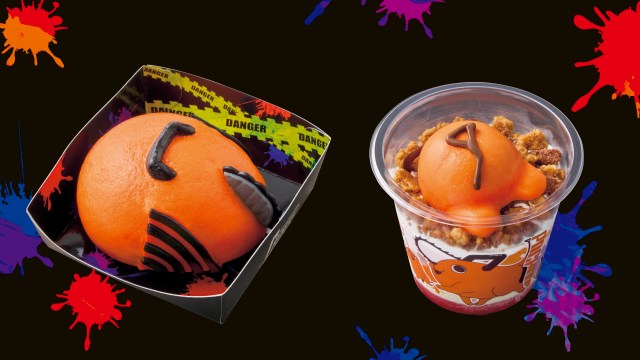
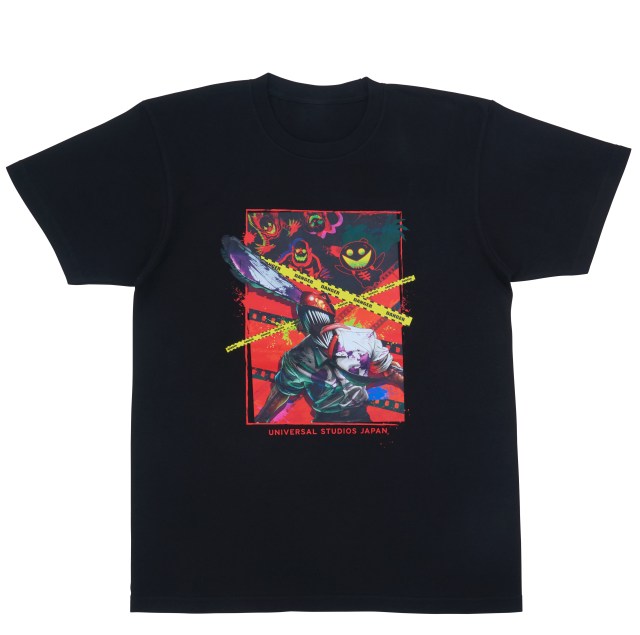
Chainsaw Man fans should swing by the food cart near Cinema 4-D to pick up a keema curry Chainsaw Man Bun, expressing the transformed Denji, alongside an orange-vanilla Pochita frozen parfait, with Pochita’s posterior on full display as he digs into the dessert. Additionally, a full lineup of original goods will be unveiled in the Cinema 4-D store, such as T-shirts featuring Chainsaw Man fighting the Halloween Horror Nights Devil, and cute keychains of Pochita in a mummy costume.
▼ Chainsaw Bun with Keema Curry Filling and Pochita’s Frozen Parfait ― Orange & Vanilla

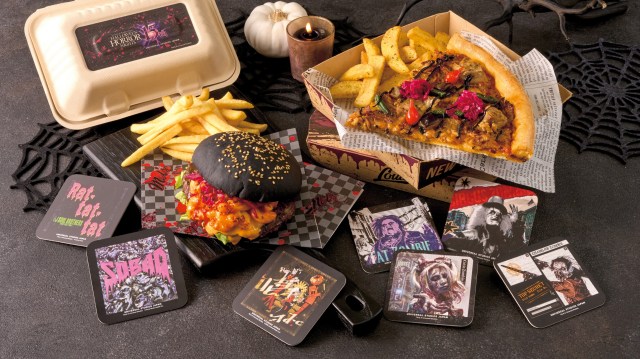
Original design coasters feature cover photos of songs used in past Zombie de Dance performances, as well as popular zombies that have made countless guests scream until now, but only one will be handed out at random for every single set menu order. Sink your teeth into a burger full of horror vibes with scarlet sauce dripping from pitch-black buns at Mel’s Drive-In, or a pizza drizzled with sinister black mayonnaise sauce from Louie’s N.Y. Pizza Parlor to start your zombie coaster collection.
▼ Warning! Macaroni and Cheese Burger: Horror Nights 15th Anniversary Meal with Coaster and Caution! Cajun Chicken Pizza: Horror Nights 15th Anniversary Meal with Coaster
Whether you are sipping on an unholy cocktail served by an undead crew member, grabbing a collectible coaster, or digging into a parfait featuring a dog’s buttocks after surviving a haunted maze, this year’s limited-run lineup of food embraces the terrifying nature of the Halloween season for an immersion-packed reason to stay in the park long after the sunset.
Related: Event page
Source and images: PR Times
● Want to hear about SoraNews24’s latest articles as soon as they’re published? Follow us on Facebook and Twitter!
]]> https://soranews24.com/2026/10/23/zombies-serve-cocktails-and-pochita-turns-into-parfait-at-universal-studios-japan-this-halloween/feed/ 0 748031 main_40a52e The cheapest bento at this Osaka shop is only 200 yen, but is it actually any good? https://soranews24.com/2026/10/19/the-cheapest-bento-at-this-osaka-shop-is-only-200-yen-but-is-it-actually-any-good/ https://soranews24.com/2026/10/19/the-cheapest-bento-at-this-osaka-shop-is-only-200-yen-but-is-it-actually-any-good/#comments Sun, 18 Oct 2026 16:00:40 +0000 https://soranews24.com/?p=747730 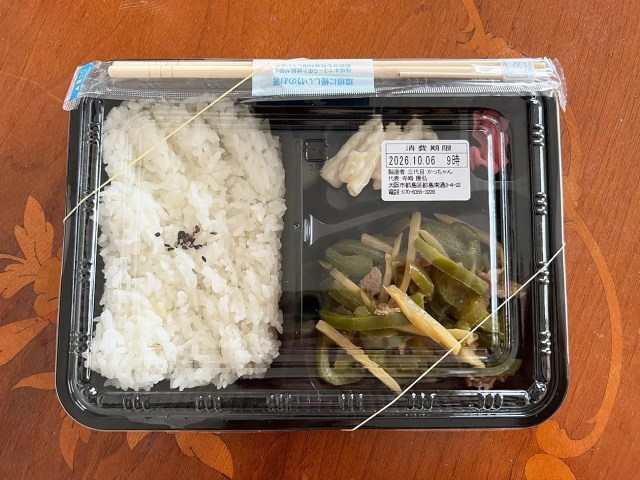
Does the taste match its simple appearance?
Being too busy, lacking energy, the store having a fantastic campaign going on, or having the last time you set foot in the kitchen being known as “the day the frying pan begged for mercy”…there are a multitude of reasons why you would pick up a meal to-go from a nearby store. For students in particular, these ready-to-eat meals can be a lifesaver, so when there’s also an option that comes in at a low price point, it could very well be anointed as a divine blessing.
Our Japanese-language reporter Seiji Nakazawa has long been a fan of takeout bento, but prices have risen considerably since his days as a sprightly young lad. He used to be able to regularly find simple, no-frills boxed lunches for as little as 300 yen (US$1.89), but now even the cheapest options at many major chains start above 500. So when Seiji heard there exists a store selling a 200-yen bento, off he went to pay a visit to the ultra-budget bento shop known as Sandaime Kacchan in Osaka.
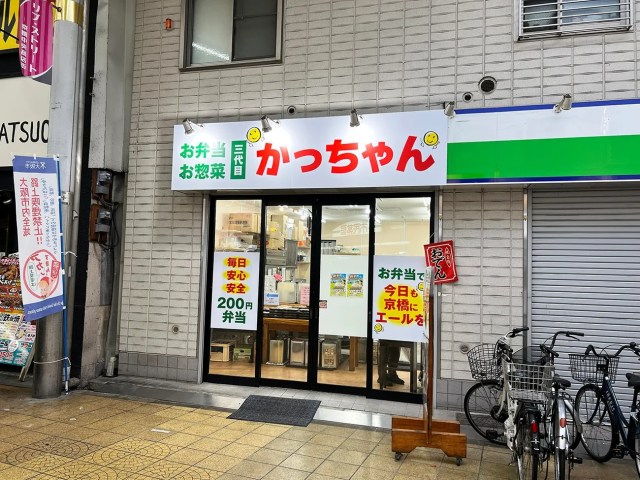
Seiji strolled through the Kyobashi Chuo Shopping District, also known as Rib Street, and about a five-minute walk north of both JR and Keihan Kyobashi Stations (and a couple more minutes from Kyobashi Station on the Nagahoritsurumiryokuchi Subway Line) he soon spotted the store front’s sign with a menu of its products displayed outside.
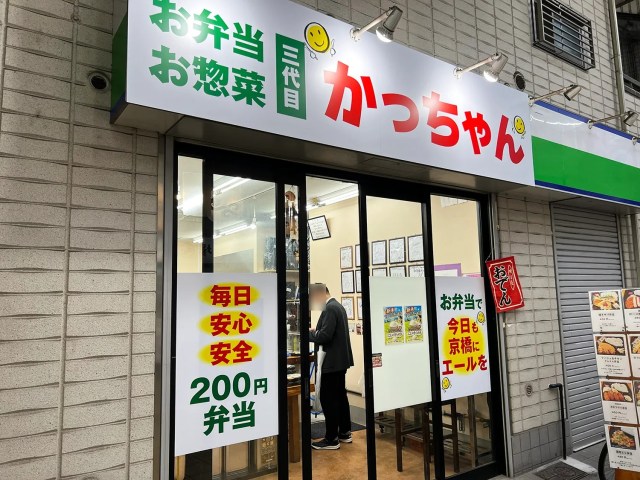
Perusing the bento for sale, Seiji was impressed with how many different varieties come in under the cheapest boxed lunches available at major chains. Seiji noticed that Sandaime Kacchan’s menu also includes a statement about how the store has been featured on television as “Osaka’s cheapest bento shop,” so now he was really keen to try it out.
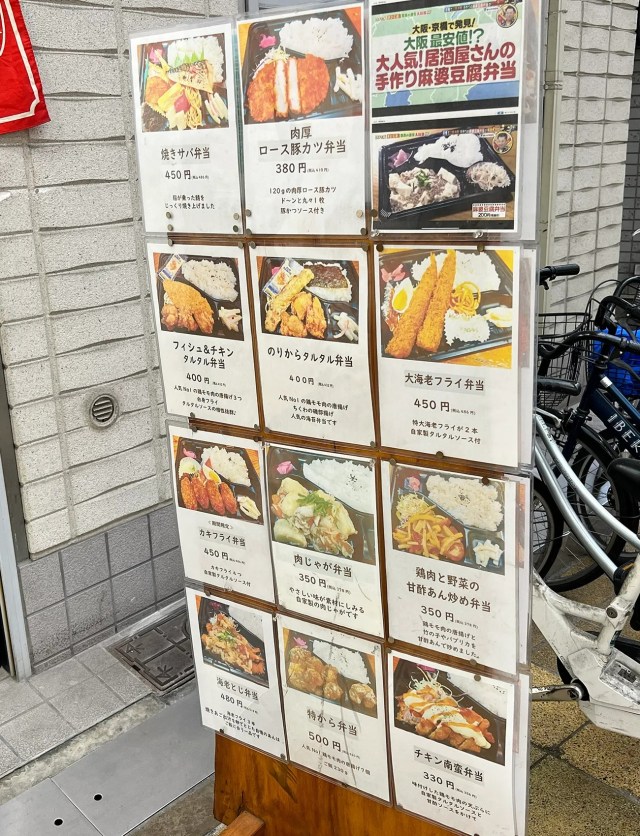
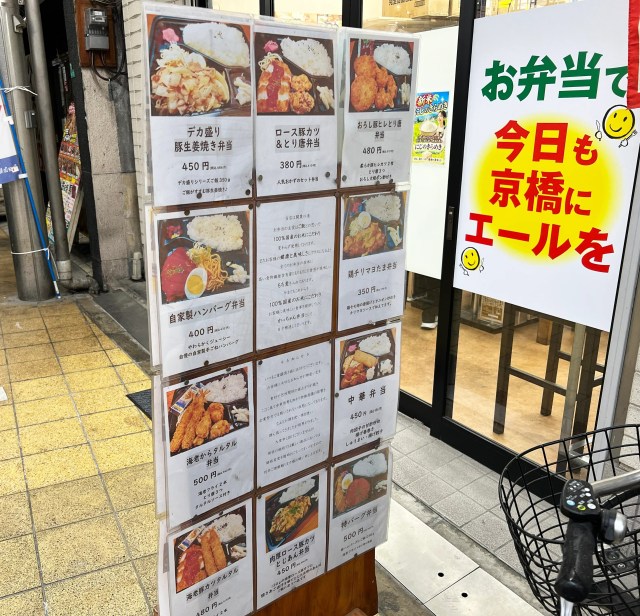
As if the menu wasn’t indication enough of Sandaime Kacchan’s low prices, they have also pasted an announcement of the rumored “200-yen bento” on the glass next to the entrance, so any visitor will know they have come to the right place.
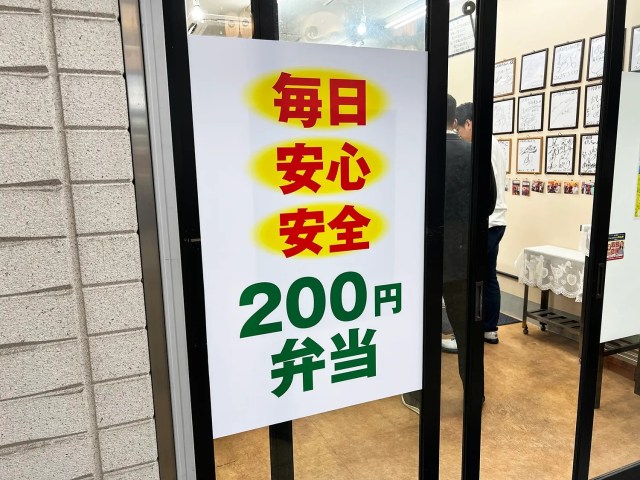
Entering inside, Seiji took in the scene of various bento lined up before him, with his 200-yen bento goal on the far left, and the options increasing in price the further right they’re placed. Seiji picked up on the fact that the “200 yen” claim was accurate, although it indicates the pre-tax price, so a customer would actually be handing over 216 yen to dine on the store’s offerings.
Scanning over the rest of the bento, they all looked pretty appetizing, such as the pork fillet cutlet bento (432 yen), grilled fish bento (486 yen), and special hamburger steak bento (540 yen). The most expensive item in the store was the Mega Serving DX Hamburger Steak Set for 842 yen, containing a hamburger steak and two fried shrimp, which looked like it would be a great deal.
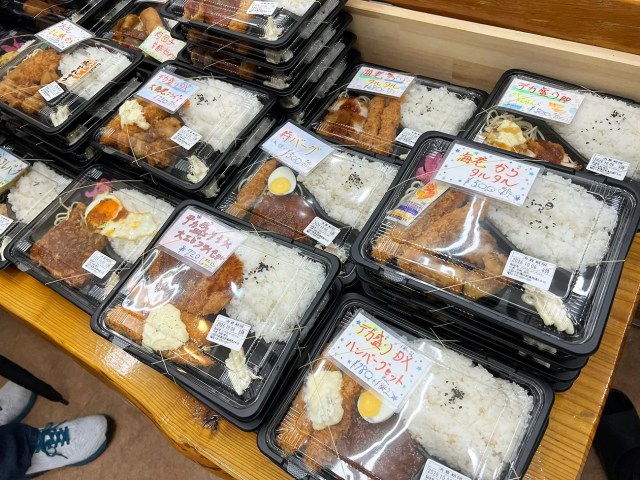
The other customers in the store came in, picked up various bento, and appeared to leave happily, but Seiji was here for one reason: the 200-yen bento, so, here it is.
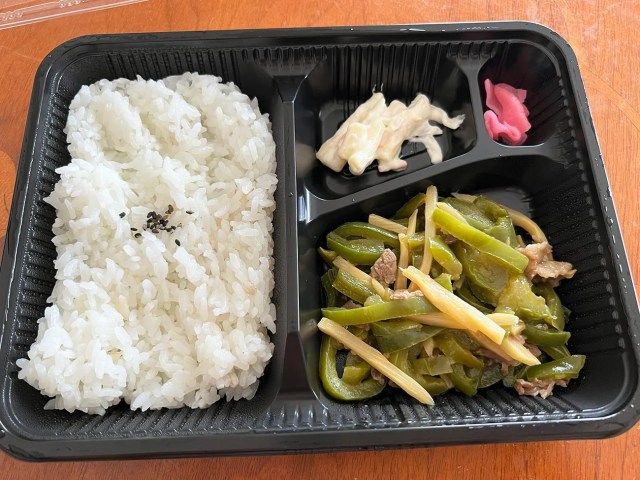
Rice with chinjao rosu (Japanese-style pepper steak made with pork and green peppers), macaroni salad, and pink pickled radish. The lack of volume and color in the ensemble was very much evocative of its price of 216 yen, especially when compared to its more impressive-looking siblings being sold alongside it.
However, when Seiji took a bite, he was struck by how delicious it was. A sweet and savory taste with a sharp, spicy kick that went well with the peppers and meat. Considering that the bento cost 216 yen to begin with, Seiji was simply impressed by the fact that the chinjao rosu actually contained meat to begin with.
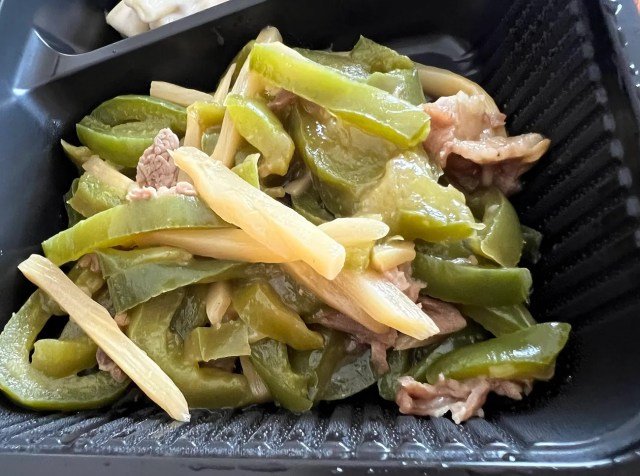
Despite its lackluster looks, the bento did not taste like a 216-yen meal. It tasted far beyond that. In fact, there were some among the customers that Seiji saw that bought it as an add-on item for something like the pork fillet cutlet bento, and seeing as how the two items together costs 648 yen, it now seemed like a really smart option to get a delicious and filling meal for a low cost. Combining this with the atmosphere of the shopping district where Sandaime Kacchan is located, which Seiji thought felt like a run-down back alley, he feels that just from this little outing alone he got a taste of whole other side of Osaka’s food culture.
Store information
Sandaime Kacchan / 三代目かっちゃん
Address: Osaka-fu, Osaka-shi, Miyakojima-ku, Miyakojimaminamidori 2-4-22
大阪府大阪市都島区都島南通2-4-22
Open 24 hours
Photos ©SoraNews24
● Want to hear about SoraNews24’s latest articles as soon as they’re published? Follow us on Facebook and Twitter!
]]> https://soranews24.com/2026/10/19/the-cheapest-bento-at-this-osaka-shop-is-only-200-yen-but-is-it-actually-any-good/feed/ 0 747730 imgi_318_kachan5 We hunt for treasure at an all-you-can-stuff Kanagawa secondhand shop for just 1,000 yen https://soranews24.com/2026/10/15/we-hunt-for-treasure-at-an-all-you-can-stuff-kanagawa-secondhand-shop-for-just-1000-yen/ https://soranews24.com/2026/10/15/we-hunt-for-treasure-at-an-all-you-can-stuff-kanagawa-secondhand-shop-for-just-1000-yen/#comments Thu, 15 Oct 2026 14:00:32 +0000 https://soranews24.com/?p=747556 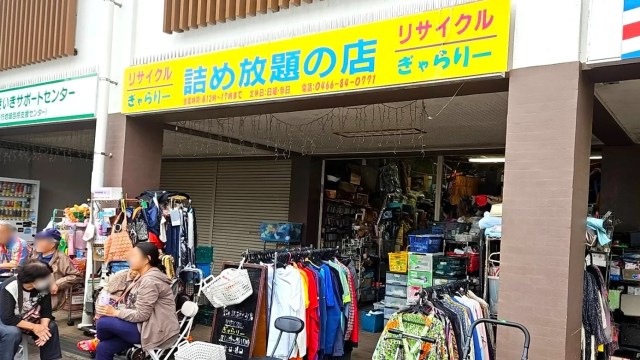
From kimono to kitchenware, character goods to cleaning sponges, can we fill a basket and get our money’s worth?
Secondhand shops can sometimes appear to look like mounds of junk, but to the intrepid explorer, a careful perusal can occasionally turn up some hidden gems. For our Japanese-language reporter Takuya Inaba, secondhand shops have become something of a hobby, such that whenever he has free time, he enjoys meandering down to a store and combing through their inventory, almost as if he is on a little treasure hunt. He loves the rush of dopamine that floods his brain whenever he finds something remarkable. So, when Takuya heard about a shop in Fujisawa, Kanagawa Prfecture, where you can buy almost everything in the store using a tsumehodai (“stuff-in-as-much-as-you-can”) system, he caught the whiff of a good deal, and decided to head out immediately.
About a 15-minute walk from Zengyo Station on the Odakyu Enoshima Line, the shop is located in a section of a shopping facility called Zengyo Danchi Market.
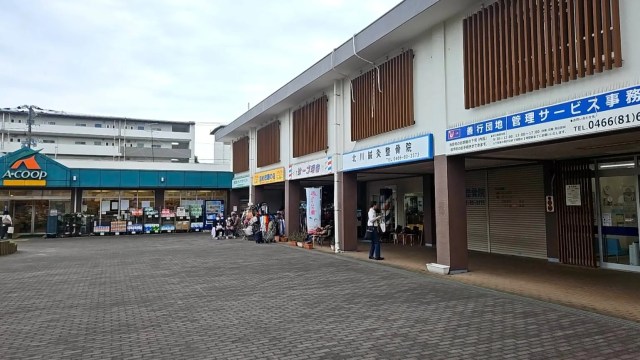
Its name is Tsumehodai no Mise Recycle Gallery (Stuff-Filling Shop: Recycle Gallery).
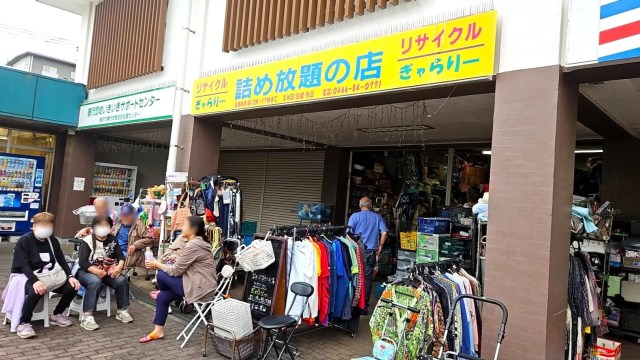
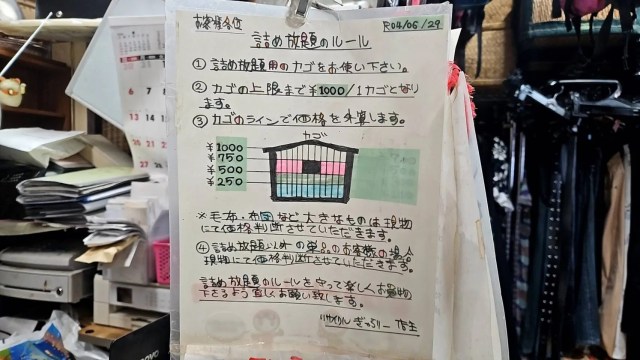
According to the explanation written inside, the price varies depending on the volume of items you put into the basket, and even if you pack the basket to the brim, it still only costs 1,000 yen (US$6.30), so it’s reasonably cheap.
▼ Up to the blue level it’s 250 yen, the gray 500 yen, and the pink 750 yen.
According to the clerk, any items with price tags are excluded, but everything else is up for grabs. Plus, the basket is quite large, so you’ll be looking at taking home a fair few items.
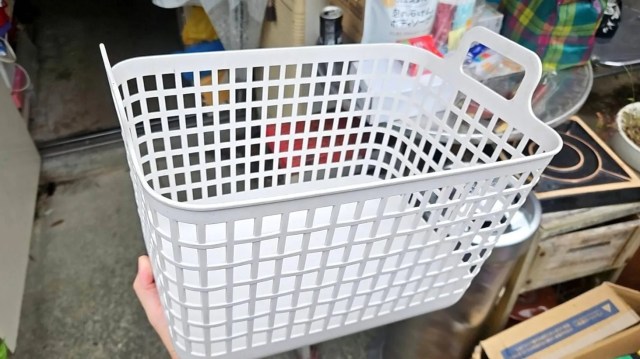
▼ Takuya’s adventure begins!
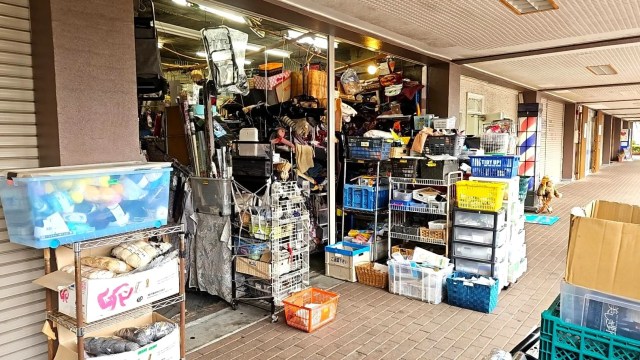
▼ “No way… the sheer amount of things is insane!”
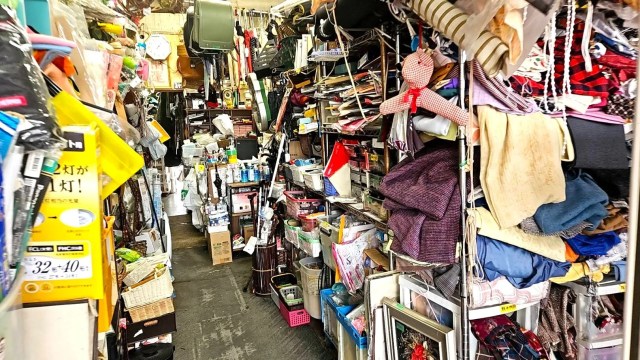
Doing a quick visual check, only a very small fraction of the items have price tags, so Takuya reckoned that about 90 percent of the store was eligible for stuffing in baskets, and he couldn’t wait to dig through everything to see what he unearthed.
The first thing that caught Takuya’s eye was the massive amount of tableware. A little unexpectedly, there was a good selection of items in beautiful condition that, if washed, should be usable without any problems.
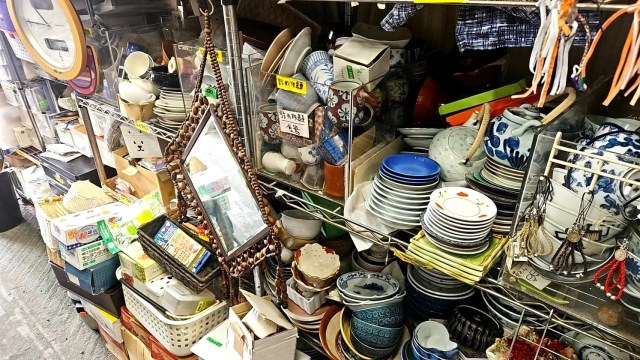
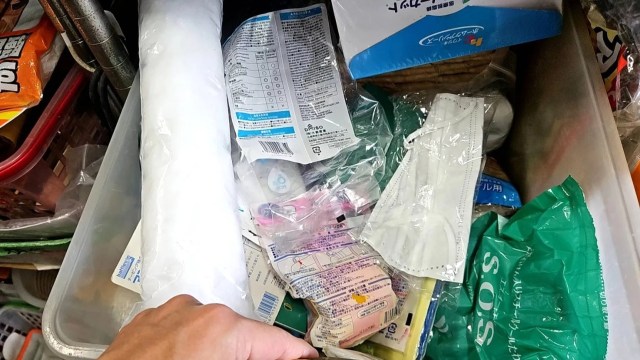
On the opposite side to them, there was a wide variety of handy items like notebooks, envelopes, cleaning supplies, and various electronics and charging cords.
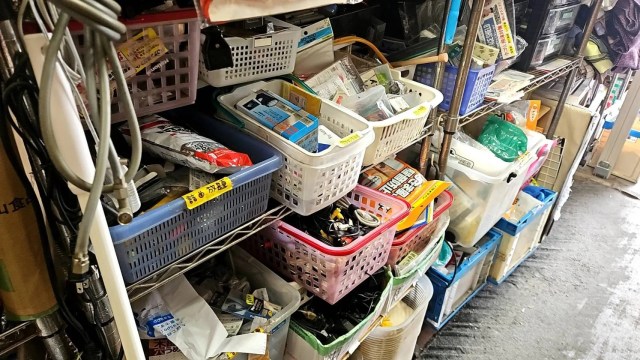
He stumbled across some unused sponges and tawashi (traditional Japanese scrubbing brushes), which seemed like they could genuinely be useful too.
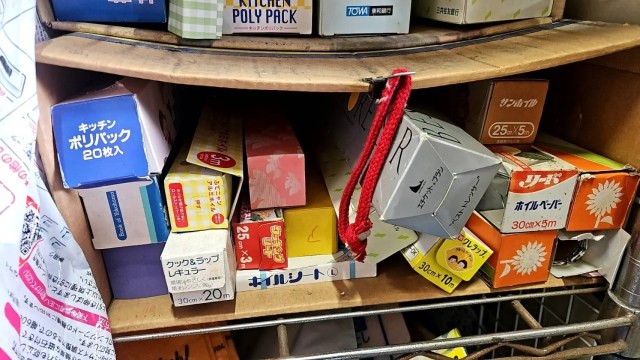
There was even unopened aluminum foil and cooking paper. Thinking that these could be a pretty good deal, Takuya popped them in his basket.
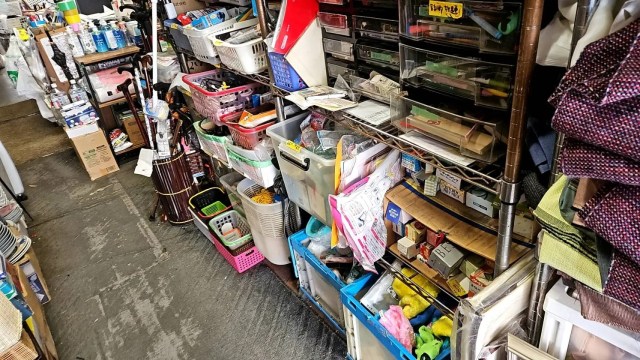
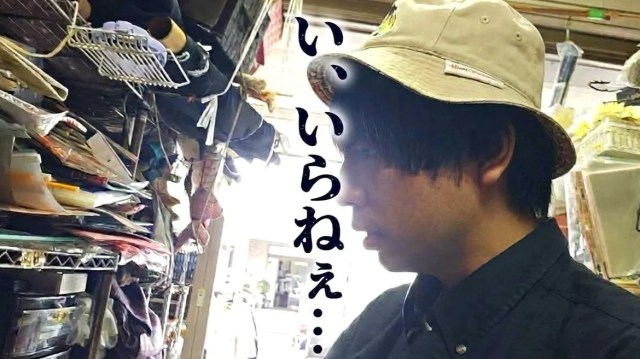
Exploring further, Takuya found a large drawer labeled as tsumehodai, which was giving off some treasure vibes, so he opened it and…
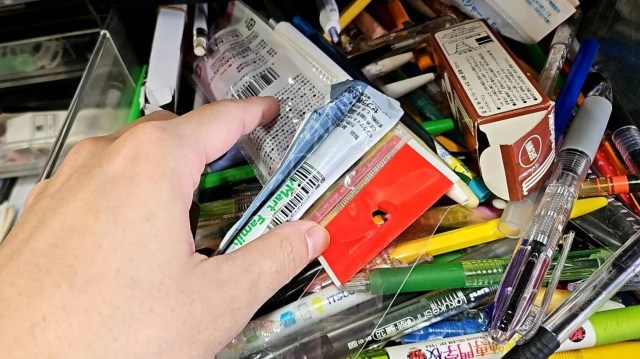
▼“Used… pens?”
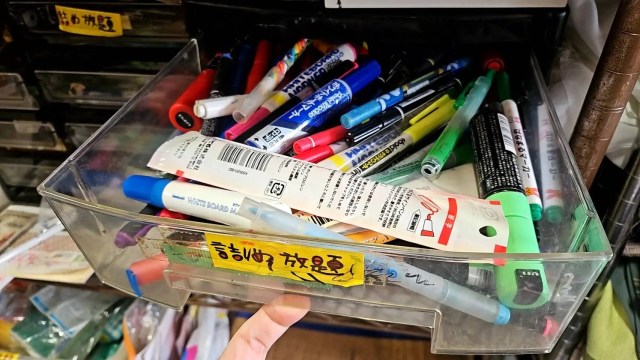
▼“Who would even want them?”
However, thinking that “a deal is a deal,” Takuya took some just for the fun of it.
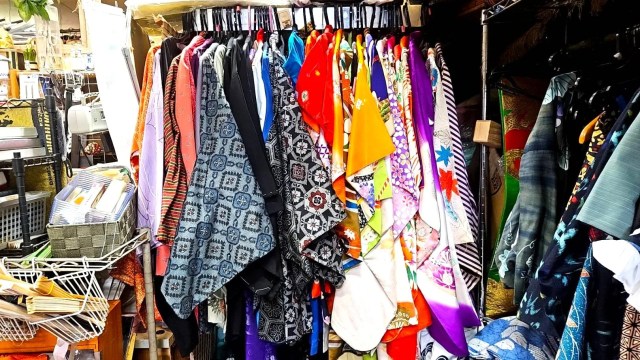
Heading over to the space on the other side of the store, Takuya came across a ridiculously well-stocked area filled with clothing.
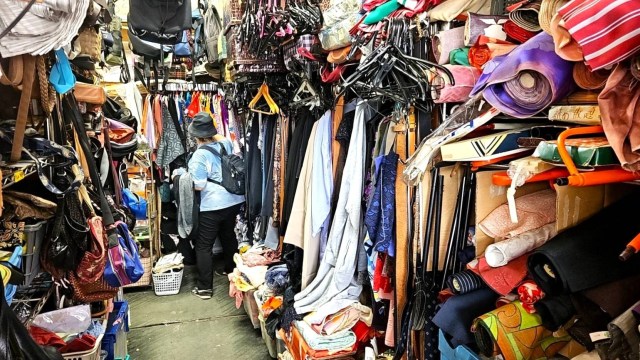
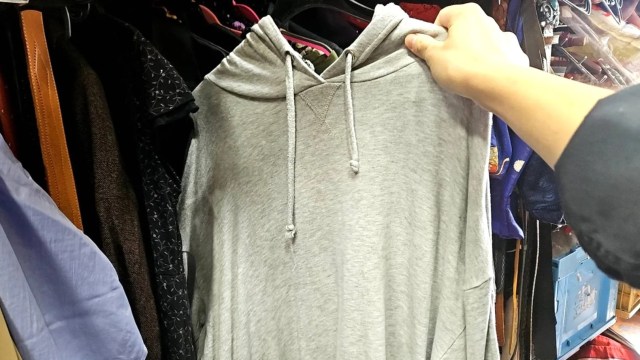
Being mostly women’s clothes, Takuya declined to make a purchase, but the condition of them looked pretty good.
Takuya even discovered some kimono, which are items that can get pretty expensive, so there might be some really valuable items mixed in there, too.
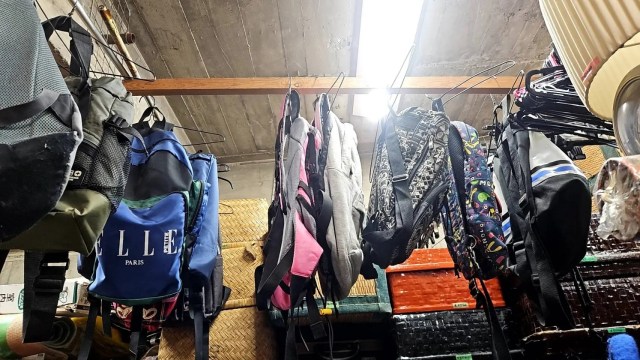
There were also many nice-looking shoulder bags.
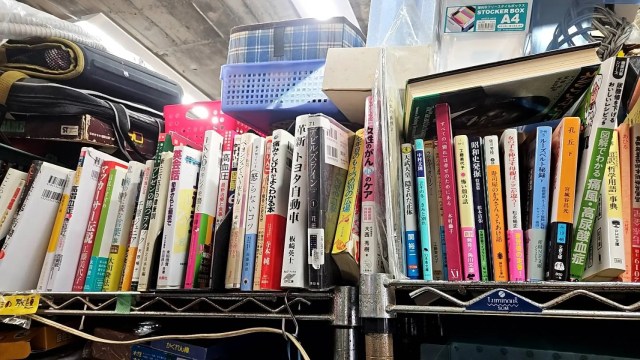
Further back, Takuya also discovered some books.
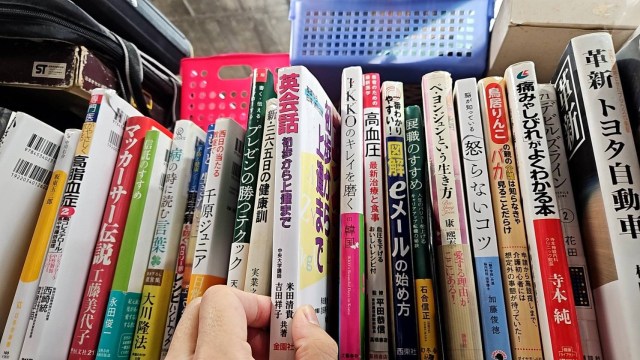
Takuya decided that he’ll throw a book into the basket that looks like it’ll improve his English conversation skills.
What really got Takuya hyped up, though, were the DVDs. Despite there being a sign saying that they were 100 yen each, the shop staff said that it was fine to include them in the tsumehodai deal, and so Takuyha did.

It was with this mindset that Takuya got overly absorbed in the treasure hunting and had soon filled up his basket.
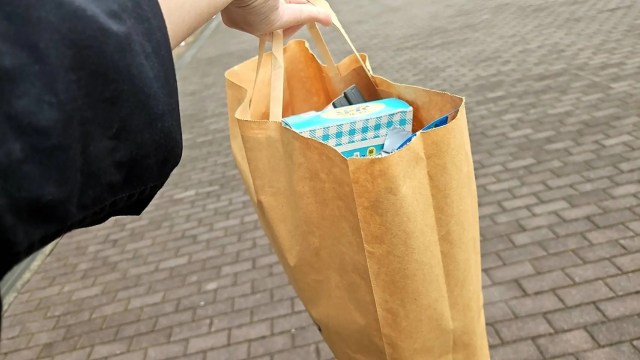
So, now it’s time to review all the great finds Takuya came across, and to figure out whether it was worth the money or not.
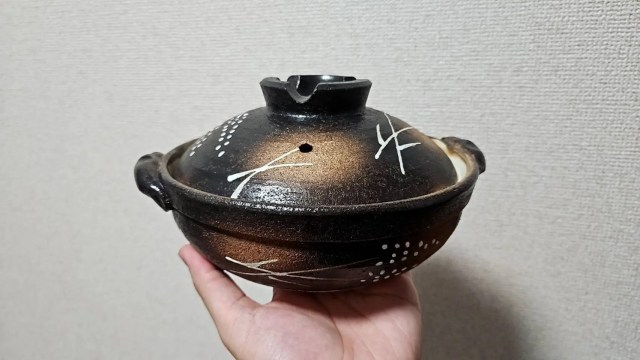
First, an unused donabe (clay cooking pot) measuring 18 centimeters (7.1 inches) across. With these pots probably costing close to 1,000 yen if bought normally, Takuya already felt like he had got his money’s worth just from this.
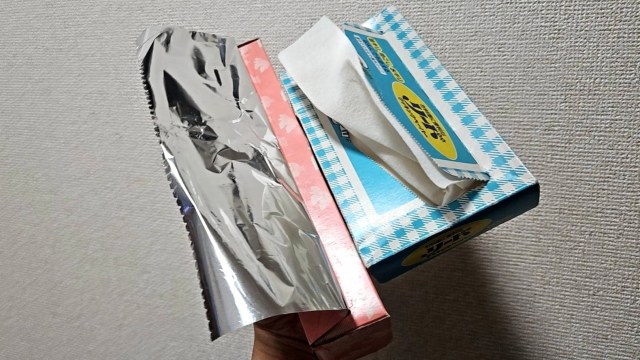
Next, the aluminum foil and cooking sheets, which are always handy to have.
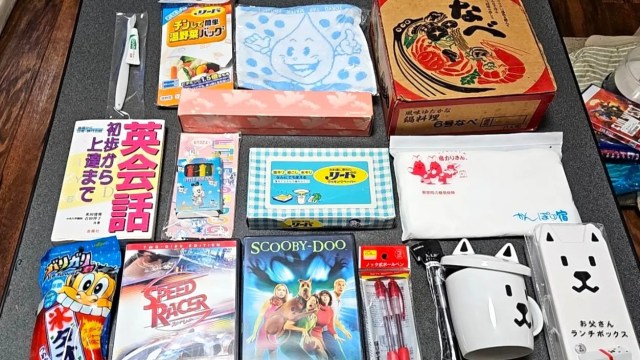
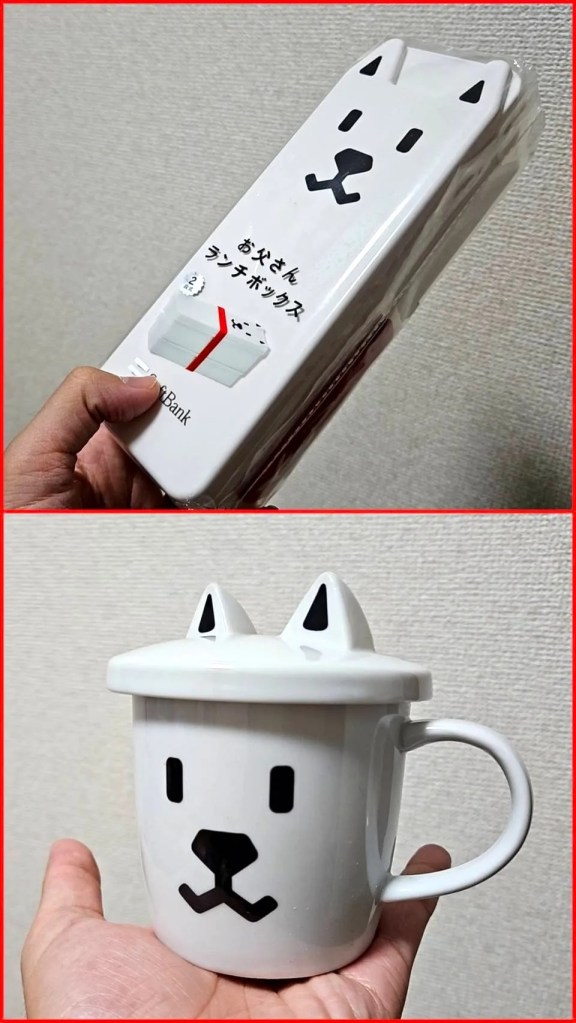
Takuya also grabbed a mug and bento box set, completely unused, featuring SoftBank’s popular mascot character, “Oto-san” (Dad).
Then, a handkerchief with a picture of Suiteki-kun, the mascot for Tokyo Waterworks that even has its own song. Takuya found it quite cute, so he’s pretty happy he picked it up.
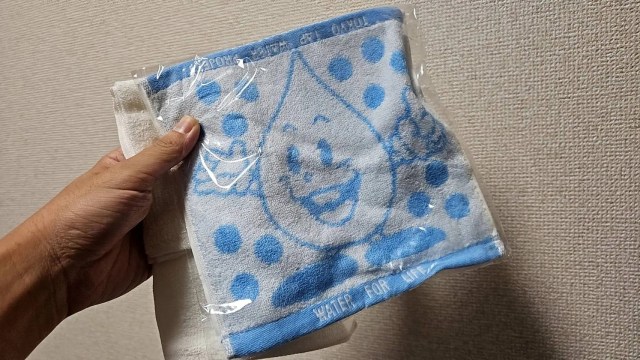
▼ Suiteki-kun’s theme song
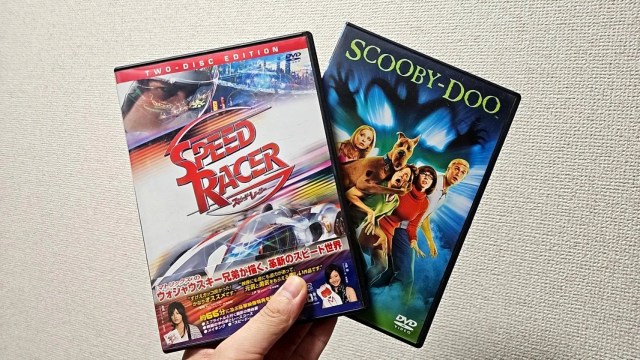
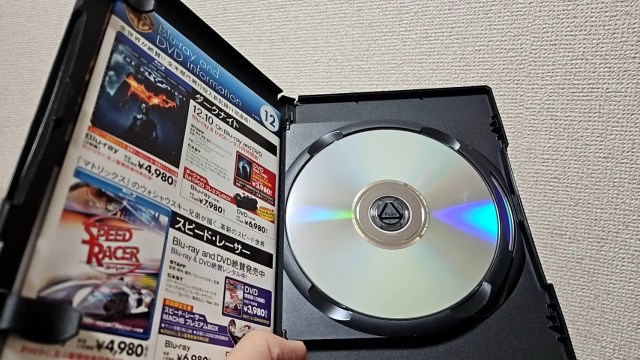
After that, there were two DVDs: Speed Racer and Scooby-Doo, both of which were without scratches and played without a hitch.
Takuya also found a Little Bobdog coloring book and brought it home. Little Bobdog was a character originally created in 1988 for the confectionery company Orion.
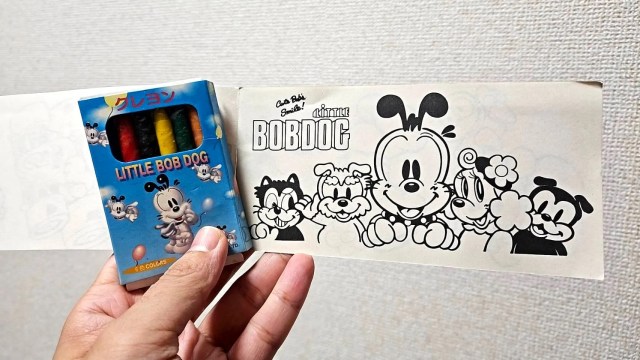
Seeing his happy little face again brought back some nostalgic feelings for Takuya. It’s these types of items that make him fall in love with secondhand shops all over again.
Adding on to that, there were also some small items like pens and toothbrushes for cleaning, making for a total of 16 items acquired. For Takuya, he felt that getting all of this for just 1,000 yen was a fantastic deal.
▼ The pens actually worked… surprisingly well.
One thing to remember though, is that all goods purchased are non-refundable, so double-check your chosen items before making your payment.
However, Takuya is convinced that if he were to explore the inside of the store even more thoroughly, he might discover some insanely rare gems hidden away, so another visit may well be on the cards in the future.
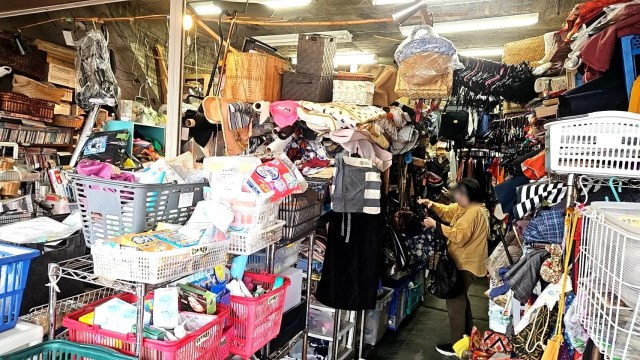
Searching through items for ones that genuinely catch your interest from among the enormously piled-up goods was a thrilling experience for him, so why not pull out a 1,000 yen bill and go and try it out for yourself?
Store information
Tsumehodai no Mise Recycle Gallery / 詰め放題の店 リサイクル ぎゃらりー
Address: Kanagawa-ken, Fujisawa-shi, Zengyodanchi 3-15-3
神奈川県藤沢市善行団地3-15-3
Open noon-5 p.m. (Monday, Tuesday, Thursday, and Saturday)
Closed Wednesday, Friday, Sunday, and holidays
Photos ©SoraNews24
● Want to hear about SoraNews24’s latest articles as soon as they’re published? Follow us on Facebook and Twitter!
]]> https://soranews24.com/2026/10/15/we-hunt-for-treasure-at-an-all-you-can-stuff-kanagawa-secondhand-shop-for-just-1000-yen/feed/ 0 747556 imgi_327_42034_0 Free-flowing cocktails, natural onsen water, and custom pillows make this Osaka hotel a steal https://soranews24.com/2026/10/11/free-flowing-cocktails-natural-onsen-water-and-custom-pillows-make-this-osaka-hotel-a-steal/ https://soranews24.com/2026/10/11/free-flowing-cocktails-natural-onsen-water-and-custom-pillows-make-this-osaka-hotel-a-steal/#comments Sun, 11 Oct 2026 05:00:03 +0000 https://soranews24.com/?p=747182 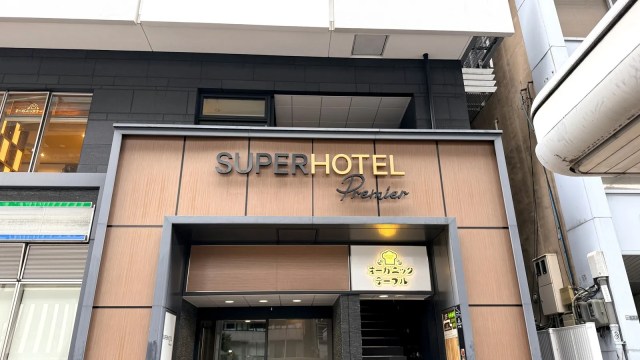
Room-only stays usually mean no perks, but this hotel throws them at you, all in the name of having a good sleep.
There is a type of accommodation for all kinds of traveler, be it a gorgeous mountain retreat or a city-based hub for neighborhood exploration. For some people, accommodation means just having a comfortable place to pass the night, spending the rest of the time out and about, so they tend to go for places that offer room-only stays instead of hunting for one that has a decent breakfast menu. However, we were recently invited to a trial stay at Super Hotel Premier Osaka Hommachi Ekimae, where even with a room-only stay, alcohol, a hot spring, and amenities are all included completely free of charge.
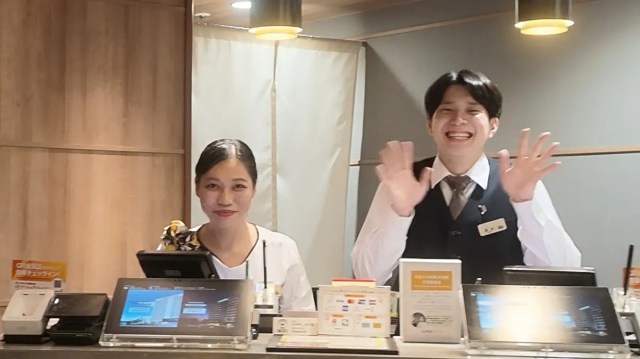
Being located right next to Osaka’s Hommachi Station, served by the Osaka Metro Midosuji Line, Yotsubashi Line, and Chuo Line, means that it is incredibly convenient for any exploring you want to do while spending time in the city. Additionally, the popular shopping district of Shinsaibashi is well within walking distance, and the area around Hommachi Station is full of places to eat and drink.
Going up to the second floor, we were met with the front desk located inside a clean lobby, and a faint aroma drifted through the air.
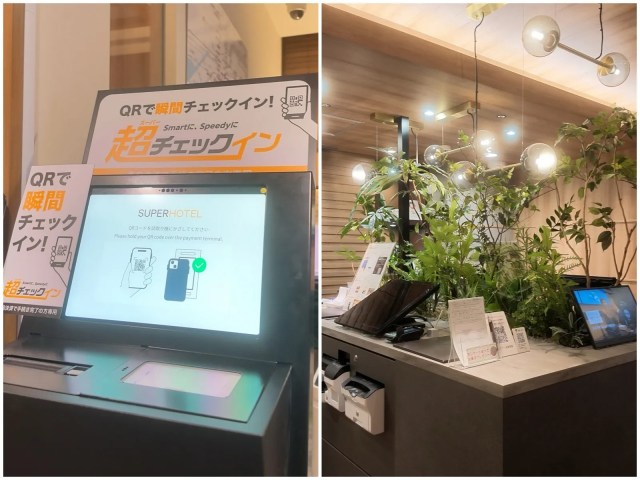
Check-in is possible using a QR code for the tech-savvy, but it’s just as possible to complete the procedures at the counter, where the receptionist explains various things about the hotel:
- You can choose the softness and height of your pillow.
- Lobby coffee and tea are available to drink 24 hours a day.
- You can enjoy a welcome bar starting in the evening.
- There is a hot spring.
- You can borrow nightwear developed in-house.
- Women receive five skincare amenities.
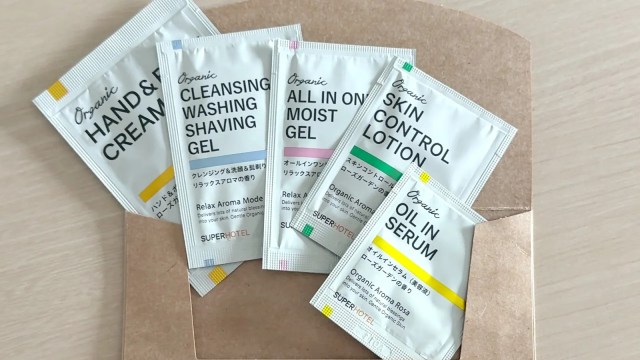
All of this for just a room-only stay? It’s truly hard to believe, so we couldn’t wait to experience it for ourselves.
First, we meandered over to the coffee and tea provisions, which you are apparently allowed to bring into your room too.
▼ The tea bags were from TEARTH, with an extensive lineup.
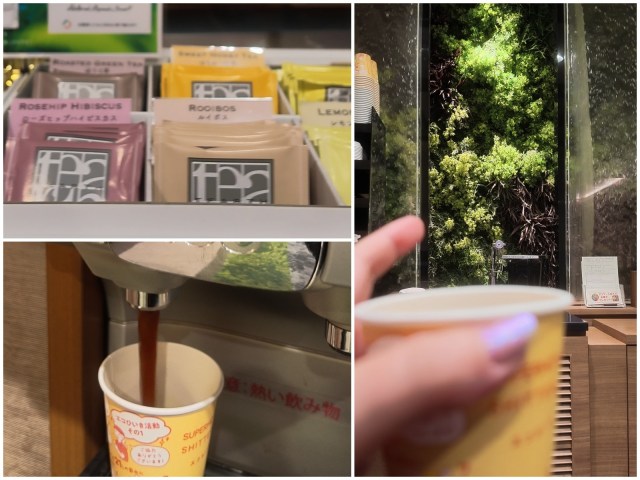
However, the highlight is the welcome bar opening in the evening, where various types of alcohol are set out, and you can freely make and enjoy your own cocktails.
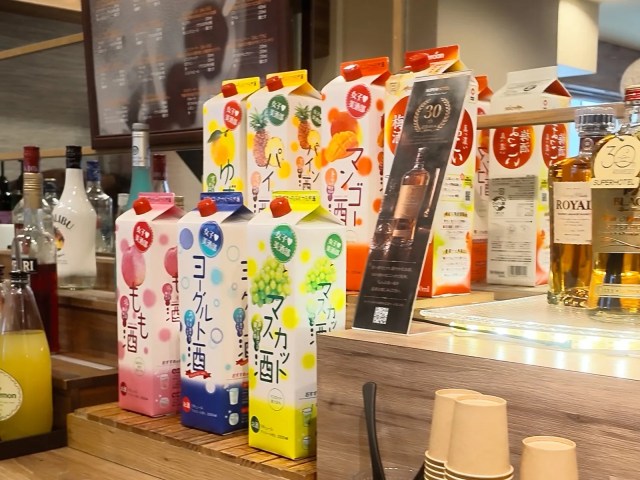
In the case you want to avoid alcohol, soft drinks are also well-stocked, and even small snacks like nuts and dried fruits are provided. It was even mentioned that it was possible to bring in food from the outside to enjoy with your drinks.
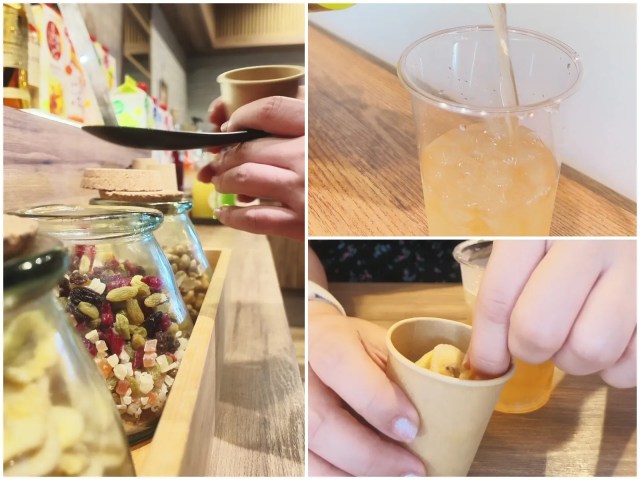
A drink in hand while idly gazing at the cityscape and flowing lights of cars… it was utter bliss.
There is a shower in the room, but since we were told about it, we had to check out the natural hot spring, which you can check the crowdedness of from the television in your room.
▼ Photograph taken with permission.
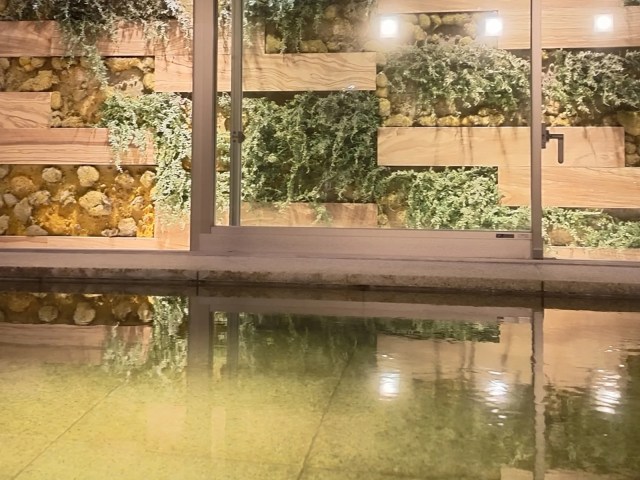
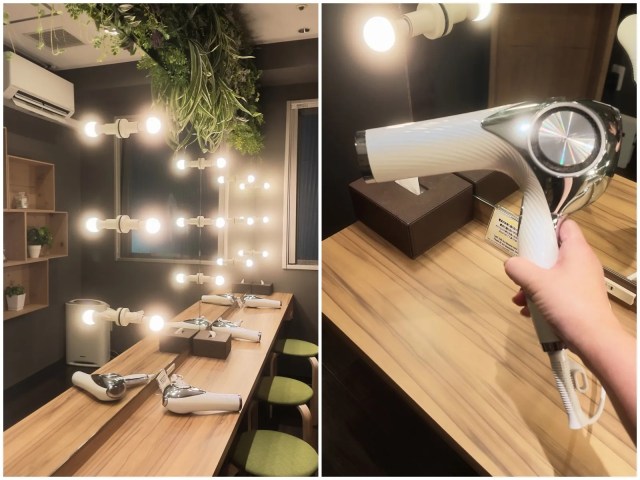
The hot water is brought in from the source spring Naniwa Onsen, and felt like a simple hot spring, but explanations in the bathing area introduced it as having beautifying and rejuvenating effects. Being able to stretch out your legs and thoroughly warm up your body, tired from traveling, is something to be extremely grateful for. After getting out of the bath, you’ll have the opportunity to enjoy the amenities on offer and ReFa hairdryers.
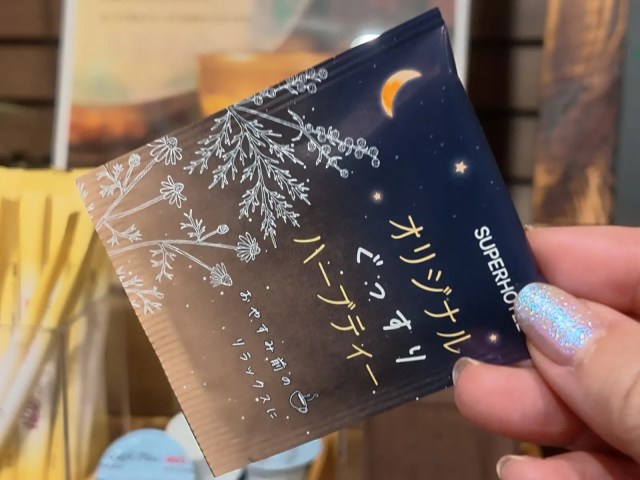
Of course, on the way back to your room you should also stop off at the lobby for some herbal tea.
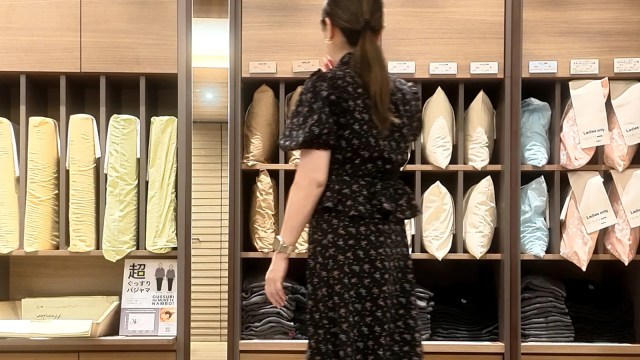
To truly make your night special, you need to select your own custom pillow from the selection of various firmnesses and heights lined up in the lobby. We went for the Mochi-Fuwa Ladies Pillow, a collaboration with custom-made pillow maker Jibun Makura, and true to its name is apparently exclusively for women.
Furthermore, the mattress and pajamas are also Super Hotel originals, which have come about as a result of their exploration of good sleep in their partnership with universities under the name Good Sleep Research Institute (Gussuri Kenkyujo).
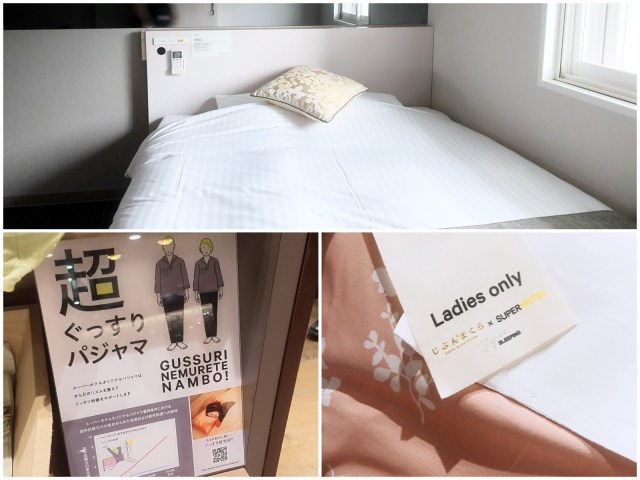
From the aroma in the lobby, the hot spring, the water, the duvet, to the room lighting, everything is specifically designed to help guests get a good sleep. Thanks to that, we fell sound asleep right through until morning.
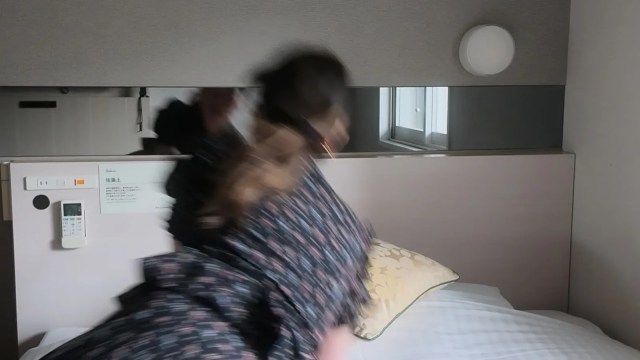
▼ We couldn’t wait to test out our custom pillow.
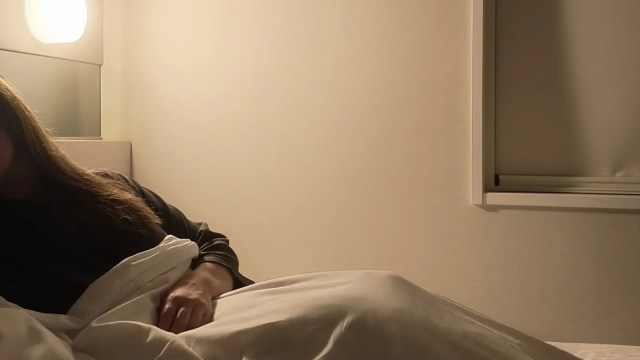
Breakfast was at the Organic Table restaurant on the second floor for an extra fee of 1,500 yen (US$9.49), although there are also breakfast (and dinner) plans available. The buffet menu had plenty of vegetables and side dishes, making for a grand display of variety. There were even popular Osaka items like takoyaki and nikusui (beef soup), which are sure to please tourists.

Perhaps because we woke up feeling completely refreshed, our appetites were strong, and we thoroughly enjoyed the meal. We highly recommend this breakfast for anyone who wants a substantial meal to start the day.
Check-out was at 11:00 a.m., and with the room key being a passcode, there was nothing special to return; the procedure was completed simply by dropping the receipt with your room number, received at check-in, into the box inside the elevator. A comfortable hotel, packed with free services, and a comparatively late check-out to some other hotels… it feels almost criminal that we didn’t find out about this hotel earlier.
If a hotel is just a place to return to sleep at the end of the day, Super Hotel Premier Osaka Hommachi Ekimae is undoubtedly a hotel that will make you want to return to sleep, even after your holiday is over.
Hotel information
Super Hotel Premier Osaka Hommachi Ekimae / スーパーホテルPremier大阪本町駅前
Address: Osaka-fu, Osaka-shi, Nishi-ku, Nishihonmachi 1-5-10
大阪府大阪市西区西本町1-5-10
Check-in: 3:00 p.m.
Check-out: 11:00 a.m.
Website
Photos ©SoraNews24
● Want to hear about SoraNews24’s latest articles as soon as they’re published? Follow us on Facebook and Twitter!
]]> https://soranews24.com/2026/10/11/free-flowing-cocktails-natural-onsen-water-and-custom-pillows-make-this-osaka-hotel-a-steal/feed/ 0 747182 imgi_4_2609spht_0222 Experimenting with making hot sandwiches in the microwave with a device from Japan’s 3COINS https://soranews24.com/2026/10/08/experimenting-with-making-hot-sandwiches-in-the-microwave-with-a-device-from-japans-3coins/ https://soranews24.com/2026/10/08/experimenting-with-making-hot-sandwiches-in-the-microwave-with-a-device-from-japans-3coins/#comments Thu, 08 Oct 2026 01:00:32 +0000 https://soranews24.com/?p=746967 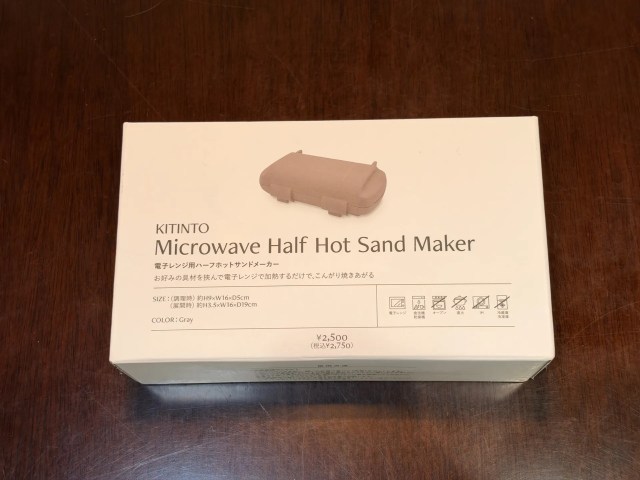
Can you really get crispy grill-marked sandwiches without the grill?
It seems that everyone in the SoraNews24 editorial office is getting the bug for hot sandwiches, especially since they’re made easy just by using a microwave. This time around it’s our Japanese-language reporter Go Hatori who has got some wheaten cravings to satisfy, and so he swung by 3COINS, Japan’s affordable lifestyle brand, and picked up the Kitinto Microwave Half Hot Sand Maker for 2,750 yen (US$17.40).
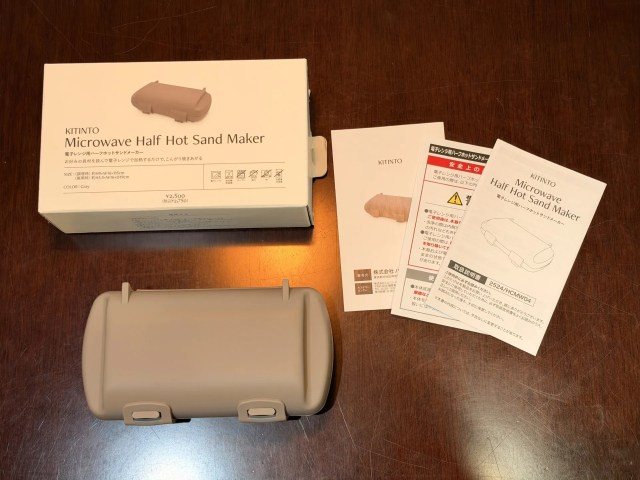
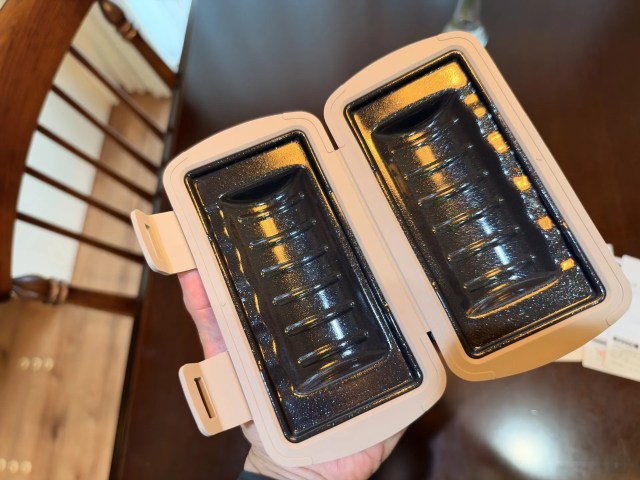
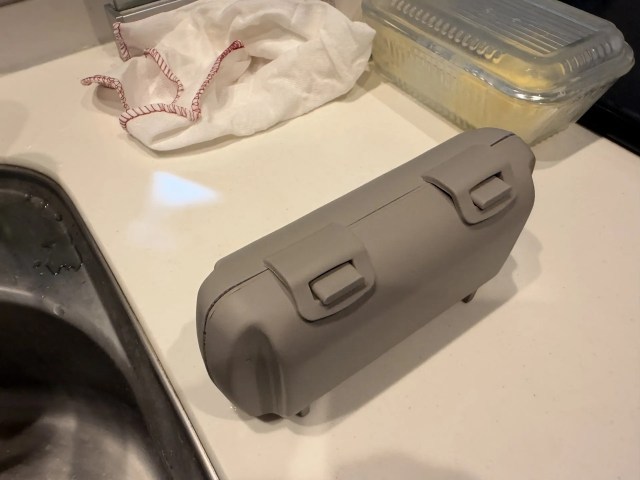
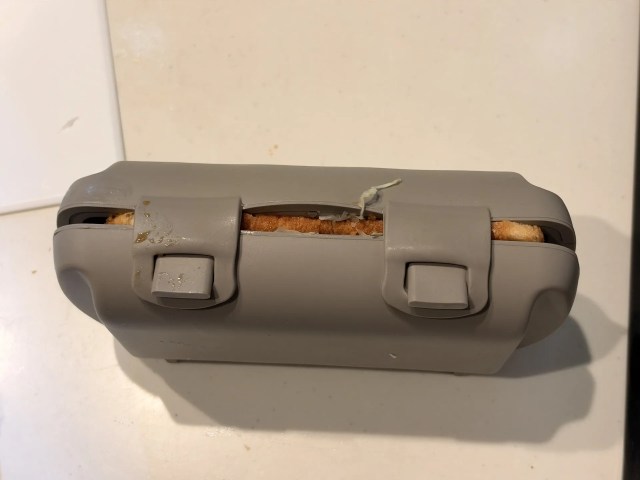
The main body resembles a glasses case, and though it is made of silicone, it feels surprisingly sturdy when picked up.
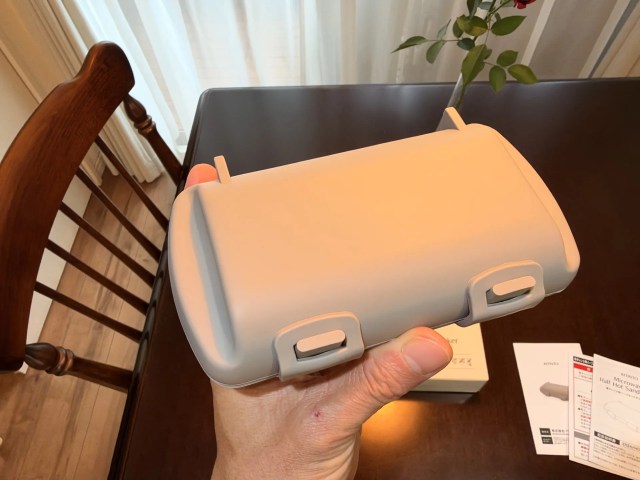
Opening it up, there were metal plates inside.
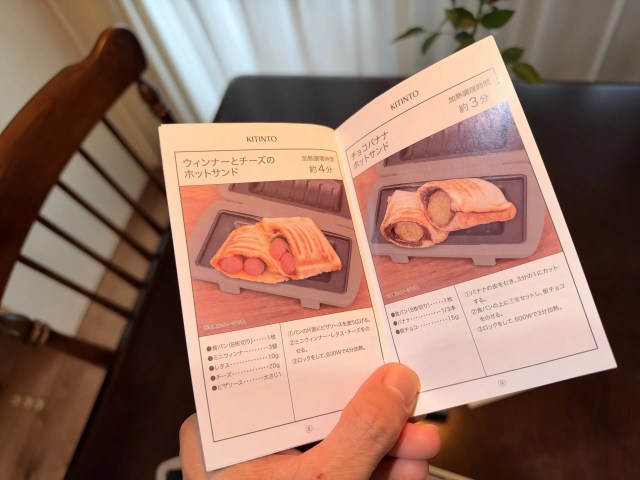
Perusing the recipes in the included booklet, all of which take about three to four minutes to cook, Go skipped past offerings like the chocolate and banana sandwich. In the end, he instead opted for a simple and classic sandwich: ham and cheese.
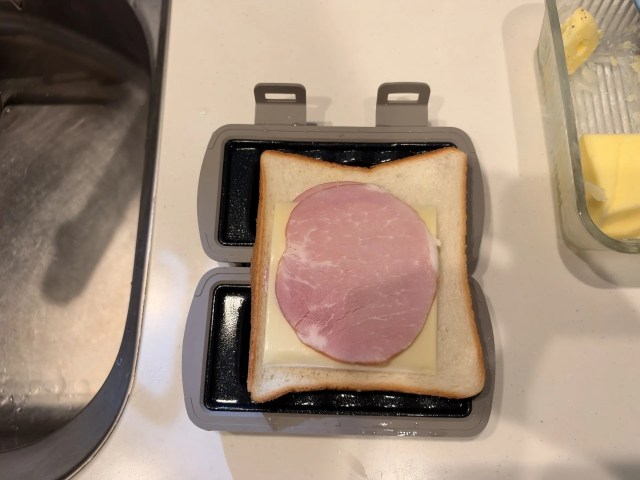
Go opened the body, laid down a slice of bread, and placed butter, ham, and cheese on it.
He folded it over, and closed it with the latch. The instructions say that it supports Japan’s eight-sliced loaves, but the thicker six-sliced loaves also seem to work just fine.
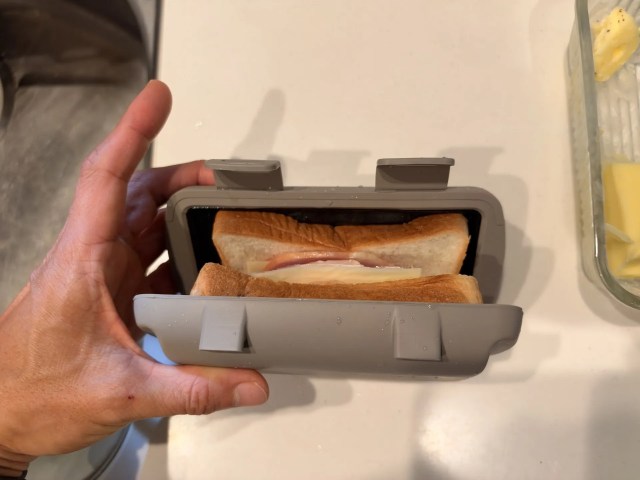
All that was left to do was to stand it upright and place it in the microwave for three and a half minutes at 600 watts.
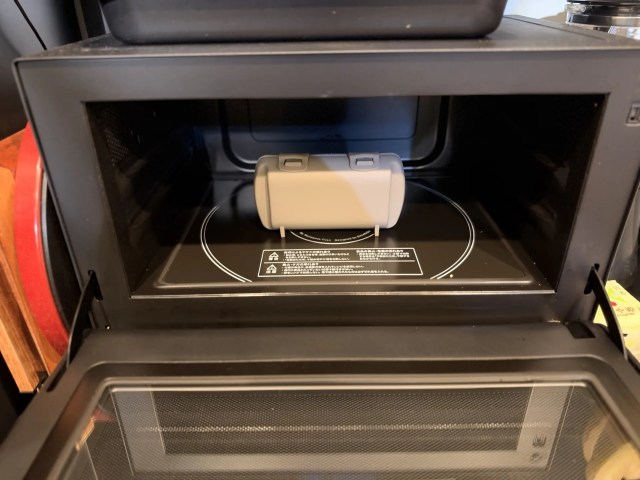
The body gets ridiculously hot, so Go was extra careful when taking it out of the microwave, and when opening it.
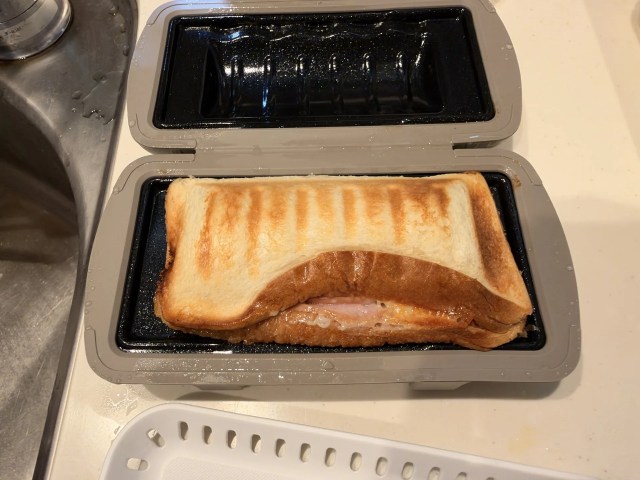
When he did open it, what appeared before him was a magnificent hot sandwich, with the cheese still bubbling furiously in the places where it was exposed.
Go’s expectations soared, and when he took a bite…
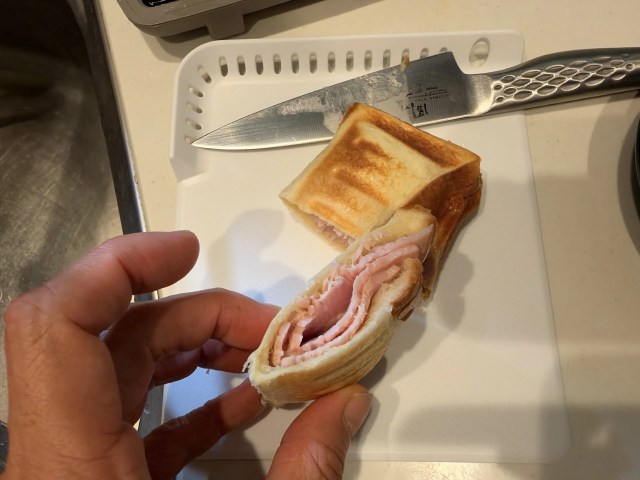
So delicious! The surface of the bread was crispy, and the insides piping hot. Go felt that if someone were not told that it was made in a microwave they never would have expected it.
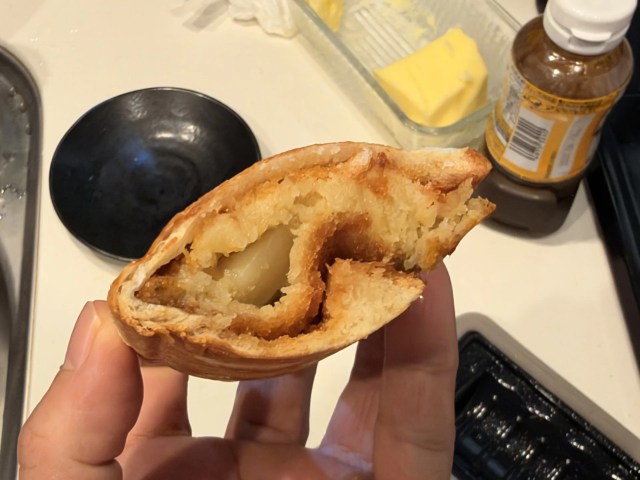
Of course, it wouldn’t be SoraNews24 without a little experimentation, so Go sandwiched a croquette bought from the supermarket into some bread and put it in the microwave at the same settings.
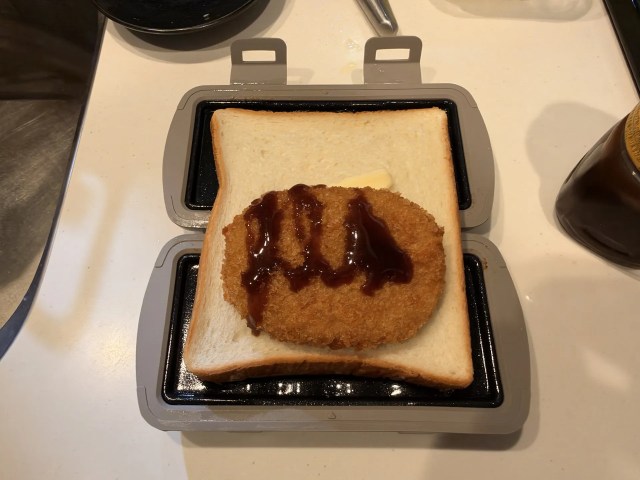
Once again, a truly exquisite sandwich.
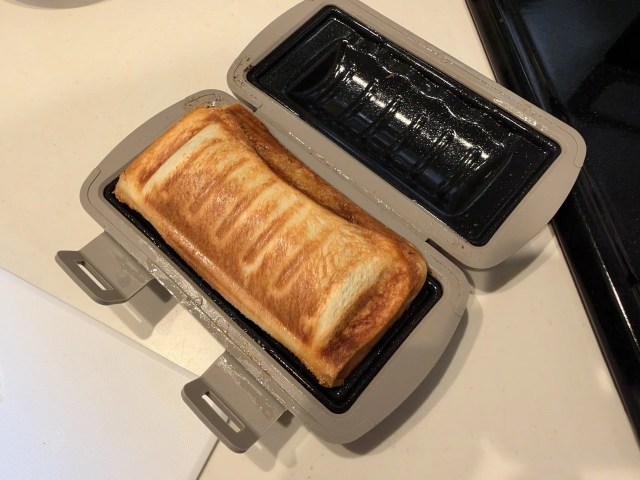
The croquette was piping hot and fluffy, and the bread was crispy. To think he could get a hot croquette sandwich in a little over three minutes! Go felt like he was living in a dream.
Finally, Go tried a bite-sized pork fillet cutlet, also bought from the supermarket.
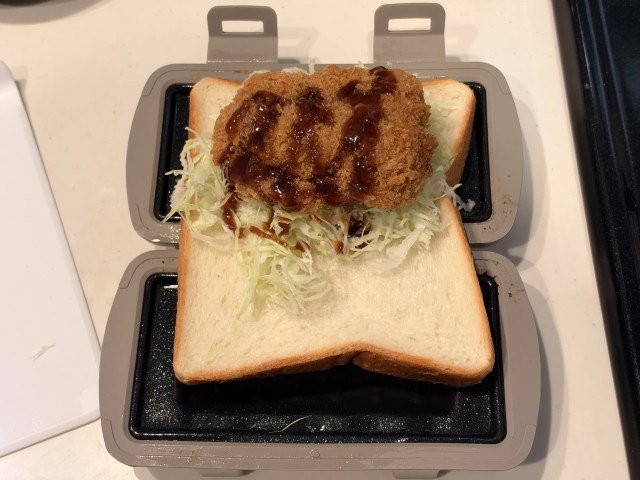
Sandwiching it with some cabbage in the bread, he put it in exactly the same way, and the result was…
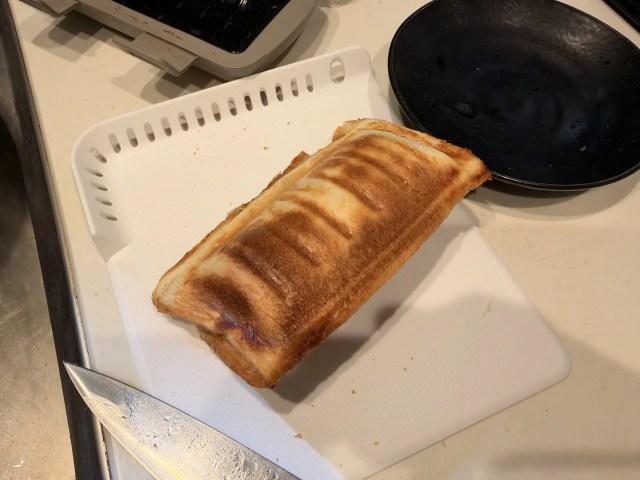
▼ Perfect!
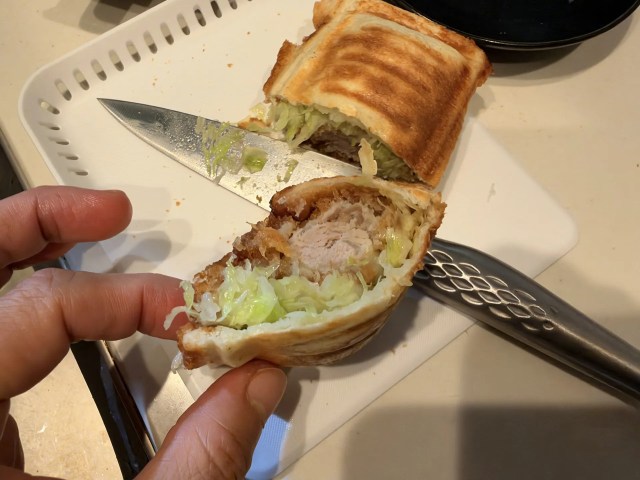
Go played with making three different types of sandwiches, and they all turned into something wonderful. He found it amazing how this hot sandwich maker could create grill marks even though it uses a microwave.
Sure, the price tag is not exactly cheap, and similar microwave hot sandwich makers are sold at other places in Japan (like Nitori), but now that he has actually used it, Go doesn’t feel like he’s wasted any money at all. In fact, he couldn’t be happier that he bought it.
All you need to do is just fill it up with your favorite ingredients and put it in the microwave. A short wait time results in a crispy hot sandwich and very little mess, as washing it was a lot easier than a frying pan or conventional hot sandwich maker. This little gadget has officially secured a spot in Go’s household, and will surely end up being used for a long time to come.
Related: 3Coins online store
Photos ©SoraNews24
● Want to hear about SoraNews24’s latest articles as soon as they’re published? Follow us on Facebook and Twitter!
]]> https://soranews24.com/2026/10/08/experimenting-with-making-hot-sandwiches-in-the-microwave-with-a-device-from-japans-3coins/feed/ 0 746967 imgi_322_IMG_1556_1920 Casio collaborates with a Kyoto foil master for a luxurious one million yen G-SHOCK https://soranews24.com/2026/10/03/casio-collaborates-with-a-kyoto-foil-master-for-a-luxurious-one-million-yen-g-shock/ https://soranews24.com/2026/10/03/casio-collaborates-with-a-kyoto-foil-master-for-a-luxurious-one-million-yen-g-shock/#comments Sat, 03 Oct 2026 01:00:44 +0000 https://soranews24.com/?p=746627 
Featuring inspirations from kigumi wood joinery design and hand-dusted platinum, each of these limited edition watches are a unique work of art.
Bringing a fusion of ancient Japanese artistry and modern engineering to the wrists of elite collectors and timepiece connoisseurs, Casio will introduce a new member on November 13 to its flagship MR-G line in celebration of three decades since its inception in 1996. Priced at 1.1 million yen (around US$7,350), and limited to only 800 pieces worldwide, MRG-B2100HR-1A has its design centered around the theme of haruka, a Japanese concept conveying timeless strength and boundless duration.
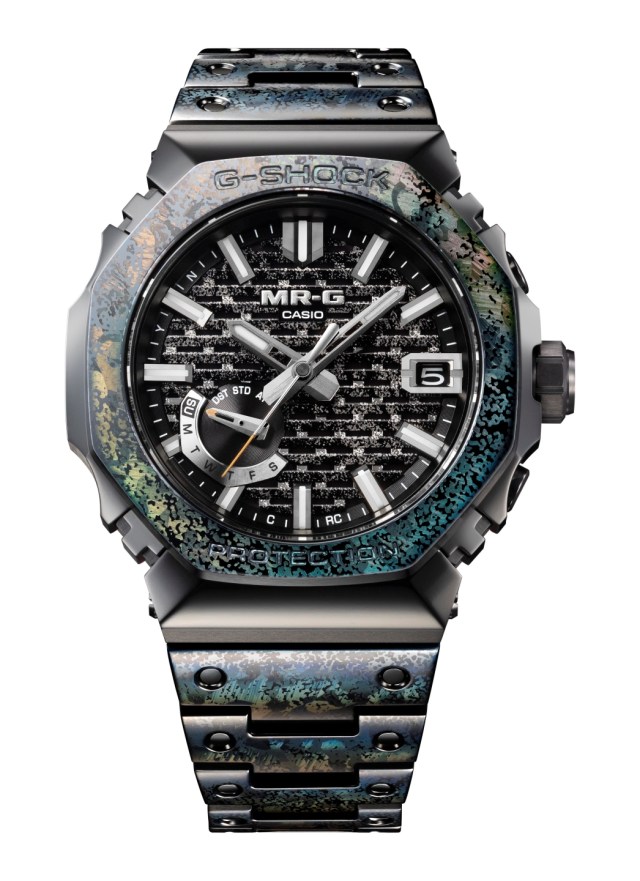
At the heart of the watch’s artistry is kigumi, a traditional Japanese woodworking and architectural technique where timber is joined without nails, other metal fasteners, or adhesives. The woodworkers intricately carve joints that connect seamlessly and have no possibility of corrosion. Reinterpreting this into watchmaking, the dial forms an intricate, three dimensional lattice.
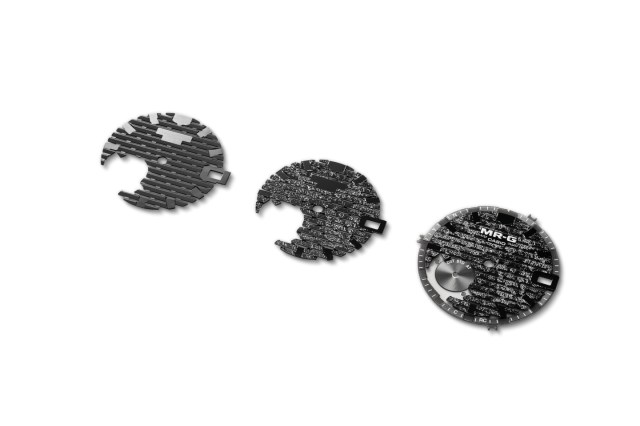
Above this marvel of construction, renowned metal leaf artist Hiroto Rakusho applied his craft by hand. Born in Kyoto’s Nishijin district, Rakusho is an officially designated Traditional Craftsman known for expanding Nishijin foil art onto global stages and contributing to digital archiving for cultural preservation.
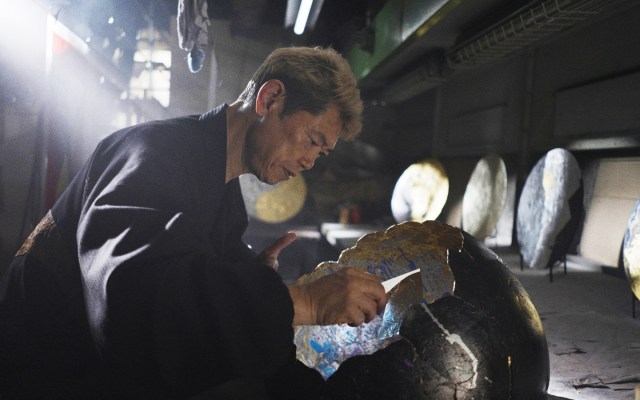
Rakusho personally decorated each 3-D dial using sunago, a technique originating in the creation of picture scrolls and Buddhist texts, where platinum leaf is ground into a powder before being dusted over a surface. The delicate, uneven distribution of platinum creates a brilliance and deep gradation that exhibits itself uniquely on every single piece, guaranteeing that each watch has its own artistic fingerprint.
To mirror Rakusho’s artwork on the exterior, Casio applied structural color technology via ultra-short pulse lasers across the bezel and watchstrap. The micron-level laser texturing mimics the natural iridescence seen on butterfly wings and mineral crystals, producing a colorful beauty that changes depending on the viewing angle.
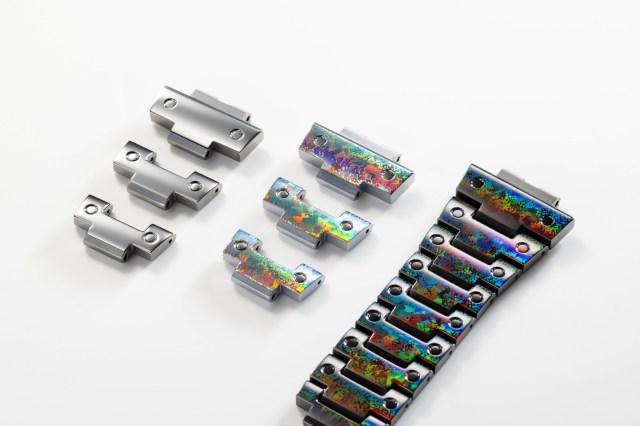
Complementing this is Casio’s advanced metal construction: an octagonal bezel, based on the popular MRG-B2100, crafted from 27 individually polished components, alongside premium COBARION (a cobalt-chromium-molybdenum alloy about two times as hard as stainless steel, and which has a platinum shine) and DAT55G (a high-performance titanium alloy, around three times that of pure titanium) alloys that provide structural resilience.
By capturing the spirit of haruka, the MRG-B2100HR-1A unites Kyoto craftsmanship with modern engineering into an enduring piece of wearable art.
Related: Casio Online Store
Source, images: PR Times
● Want to hear about SoraNews24’s latest articles as soon as they’re published? Follow us on Facebook and Twitter!
]]> https://soranews24.com/2026/10/03/casio-collaborates-with-a-kyoto-foil-master-for-a-luxurious-one-million-yen-g-shock/feed/ 0 746627 main Japanese Shinto ceremonial sand-digging in London celebrates start of British Library expansion https://soranews24.com/2026/10/02/japanese-shinto-ceremony-held-in-london-to-celebrate-start-of-british-library-expansion/ https://soranews24.com/2026/10/02/japanese-shinto-ceremony-held-in-london-to-celebrate-start-of-british-library-expansion/#comments Fri, 02 Oct 2026 04:00:17 +0000 https://soranews24.com/?p=746556 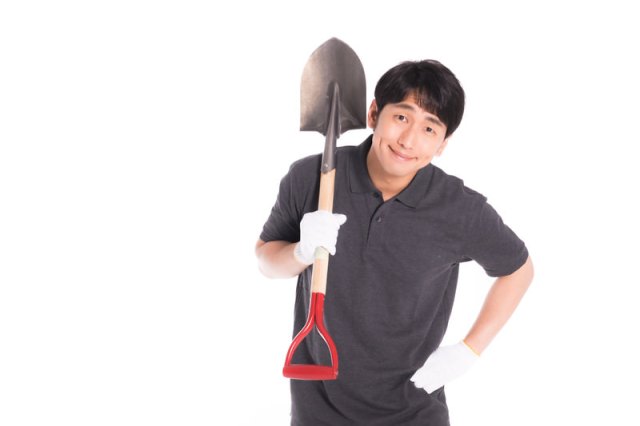
Swapping out scissors and ribbons for sand and farm tools.
Japanese property developer Mitsui Fudosan recently held a groundbreaking ceremony for its historic £1.1 billion (approximately 230 billion yen [US$1.46 billion]) expansion of the British Library in London, and in doing so also brought a long-standing Japanese tradition to the other side of the world. As an institution boasting one of the largest book collections on earth, the British Library is expanding its footprint near its main building across the street from London’s St. Pancras International Station. As part of Japan’s largest scale real estate development to date in the UK, Mitsui Fudosan and the British Library are looking to construct a multi-story complex housing commercial offices, rental laboratories, and expanded library facilities.

To mark the start of work, UK government officials, library leadership, and Mitsui Fudosan executives gathered for a chakko-shiki (“groundbreaking ceremony”), more formally known as a kiko-shiki. Major property developments in Western countries often center around a simple ribbon-cutting, but construction in Japan traditionally has an entire sequence of ceremonies designed to ensure safety, prosperity, and community goodwill.
These Japanese construction customs traditionally start with a jichinsai, a sacred Shinto purifying ritual led by a Shinto priest. This religious ceremony uses offerings of rice wine, salt, and rice to pacify the local tochi-no-kami (earth deities), asking permission to alter the land and praying for protection against construction accidents or natural disasters, as well as for the prosperity of those who will use the land. In modern times, not all chakko-shiki begin with a jichinsai, with some people favoring to simply recognize the secular business side of the ceremonies, but the British Library event included this splash of tradition, featuring a non-Japanese Shinto priest who participated in the ceremony.
There are of course talks by the key people involved in the construction project, but the highlight and prime photo opportunity of the event is the ugachi-zome (literally “first pierce”), the symbolic first dig, where these important people grab a hoe or shovel and stab them into a small mound of sand.
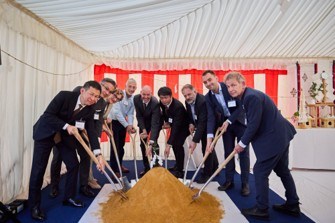
Historically, preparing for building a house in Japan was a three-step process: clear the area of weeds, dig up the soil, and level the ground, and it is said that a house cannot be built without this process. Therefore, the full Shinto groundbreaking ceremony has evolved into three parts, starting with kari-some (“the first cut”), where the designer cuts grass with a sickle.
▼ The “ey, ey, ey” is very much an intergral part of all three parts.
This is followed by the kuwaire-no-gi (“hoe entry ceremony”), where the client lightly chips out a section of sand from the mound with a hoe.
Then comes the sukiire-no-gi (“shovel entry ceremony”), where person in charge of construction flattens the mound with a shovel (suki, 鋤), or at least makes more of a dent than with the hoe.
The other aspects of the jichinsai are also embedded with history and religious meaning and culminate in the naorai, the closing feast in which participants share the sake and food that were offered to the deities in order to receive their blessings, before then returning to daily life (naoru means “to return”).
Other ceremonial rituals continue through the stages of a building’s construction lifecycle, such as the joto-shiki, or raising-the-ridgepole ceremony, when the main structure is complete. Historically, carpenters placed symbolic items on the highest beam meant to ward off disaster and pray for good fortune, but nowadays it has been streamlined to just a sacred wooden wand or wooden plaque containing the names of the master carpenter, the homeowner, and the deities invoked in protecting the house, which is permanently sealed away within the roof cavity.
The four corners of the building site are splashed with ceremonial sake and salt to purify the land, and ensure the safety of both the workers and future residents.
In some instances of residential development, the whole neighborhood gets together for a mochi-throwing event, sometimes substituted with coins or sweets, in a bid to foster goodwill with the neighbors who will live alongside the development.
At the end of larger-scale construction projects, when the entire building is finished, stakeholders assemble for a shunko-shiki (construction completion ceremony), which announces the completion to the public, conveys gratitude to those physically and financially involved in the construction, and prays for safety and prosperity.
With the jichinsai and chakko-shiki being performed at such a large-scale overseas investment project, we’ll have to wait and see if they complete the entire trio of construction ceremonies at the British Library’s expansion, and find out whether or not they’ll climb to the top floor and start lobbing down tea bags in place of mochi, in an attempt to build goodwill with the locals.
Source: Jiji, Embassy of Japan in the UK, PR Times, YouTube/@ntv_news, YouTube/@大原美香-q3f, YouTube/@macs-kurashi, YouTube/@大勝建設-d3i, YouTube/@likes_home, YouTube/@harry_no_yukkurilife
Top image: Pakutaso
Insert images: PR Times
● Want to hear about SoraNews24’s latest articles as soon as they’re published? Follow us on Facebook and Twitter!
]]> https://soranews24.com/2026/10/02/japanese-shinto-ceremony-held-in-london-to-celebrate-start-of-british-library-expansion/feed/ 0 746556 TS1301_TP_V4 Osaka’s amazing budget-luxury hotel has free takoyaki, craft beer, and comedy shows https://soranews24.com/2026/09/25/osakas-amazing-budget-luxury-hotel-has-free-takoyaki-craft-beer-and-comedy-shows/ https://soranews24.com/2026/09/25/osakas-amazing-budget-luxury-hotel-has-free-takoyaki-craft-beer-and-comedy-shows/#comments Thu, 24 Sep 2026 15:00:53 +0000 https://soranews24.com/?p=745806 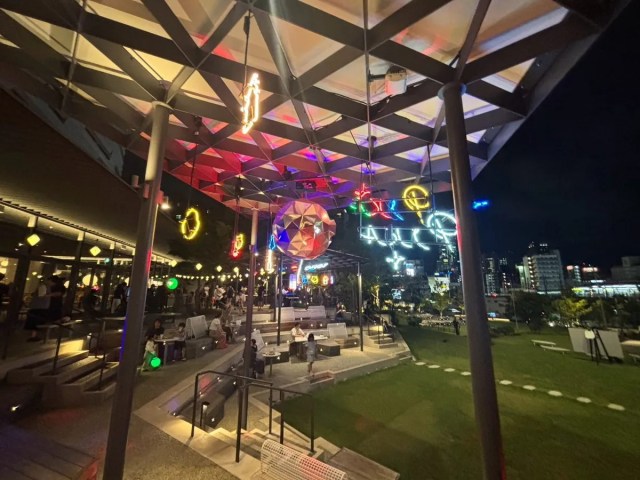
To truly experience the city, OMO7 Osaka is a dream stay for any traveler.
When you go traveling in Japan, there are a variety of options from which to choose from, be it hot spring inns or oversized Poké Balls. For our Japanese-language reporter Natsuno Futon, just having a bed and a roof over her head is enough to keep her happy, but several of her friends continued to sing the praises of the OMO brand of hotels run by Hoshino Resorts (operator of unique Japanese hotels like Nara Prison and Tomamu Ice Village), with one friend in particular passionately recommending OMO7 Osaka, and since Natsuno had some plans to visit Osaka, she took this opportunity to try it out.
OMO is based on the concept of an “exciting city center hotel” that is more than simply a place to spend time, but is packed with information and activities to enjoy the city. In fact, Natsuno’s friend has even been on a trip where its entire purpose was to stay at the hotel. The brand has a current total of 18 properties nationwide that are sub-divided into five different categories: OMO1, OMO3, OMO5, OMO7, and Airport, with each type offering different services. The former OMO1 hotels were capsule hotels for minimalistic travelers and provided local guide activities, a neighborhood map, and a comfortable common space for relaxation, but as of September 2026, there are no OMO1 hotels in operation.
The OMO3 basic hotels build on OMO1, although transitioning into individual guest rooms rather than capsules, by also including a grab-and-go breakfast, being good for casual and solo travel, and OMO5 boutique hotels feature a cafe with breakfast options, great for couples:
- OMO3 Asakusa
- OMO3 Tokyo Akasaka
- OMO3 Kyoto Toji
- OMO5 Otaru
- OMO5 Hakodate
- OMO5 Tokyo Otsuka
- OMO5 Tokyo Gotanda
- OMO5 Yokohama Bashamichi
- OMO5 Kanazawa Katamachi
- OMO5 Kyoto Gion
- OMO5 Kyoto Sanjo
- OMO5 Kumamoto
- OMO5 Okinawa Naha
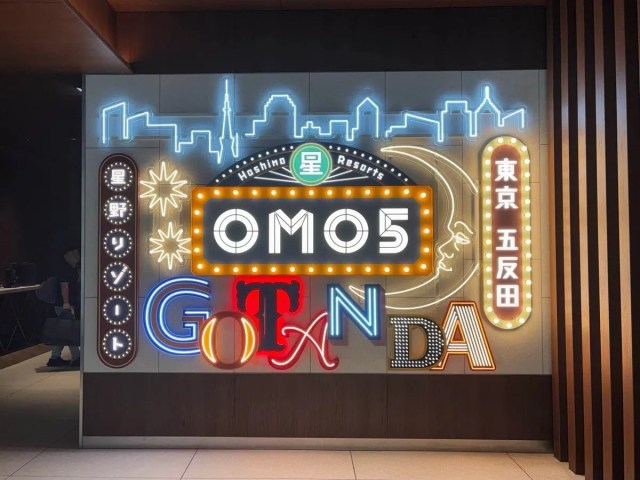
▼ The sign in front of OMO5 Gotanda in Tokyo
OMO7 is the brand’s full-service hotels, offering extensive in-house facilities, such as breakfast buffets, and a cafe, restaurant, or banquet hall:
- OMO7 Asahikawa
- OMO7 Yokohama
- OMO7 Osaka
- OMO7 Kochi
Finally, there’s the sole OMO Airport, located right next to Kansai International Airport, with an express buffet, and spa and fitness options.
As Natsuno was looking at the options available to her, she was initially planning on a room-only plan without meals, but there were also family plans with half-price for elementary school students and below, and early bird prices, so it came to about 25,000 yen (US$158.41) for a family of two adults and two children for a single night.
According to Natsuno’s friend, it’s a complete waste if you don’t take advantage of the various activities and enjoy it to the fullest from check-in to check-out, so with that in mind, Natsuno reserved the free guided tour of the nearby Shinsekai area in advance.
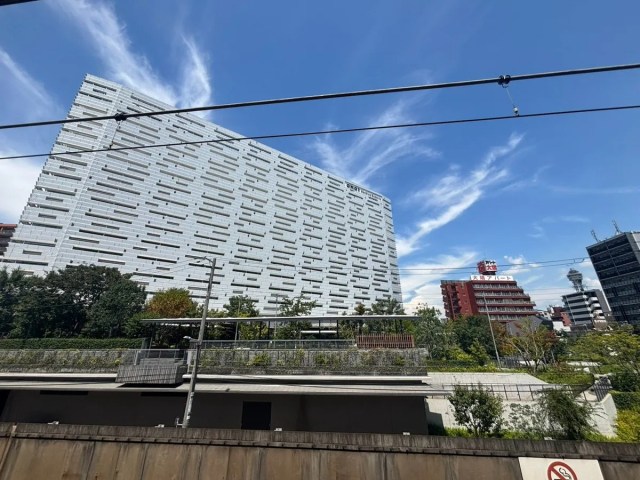
The nearest station is Shin-Imamiya Station on the JR and Nankai Railway lines, or the Dobutsuen-mae Station on the Osaka Metro, but this time Natsuno went by JR, and the hotel turned out to be so close that you could see it right from the station platform.
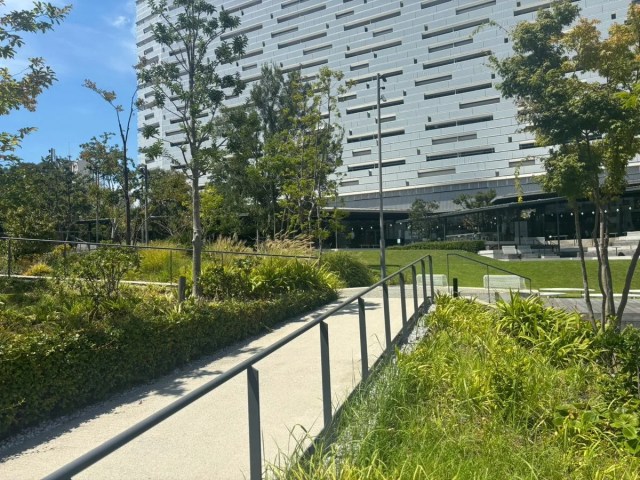
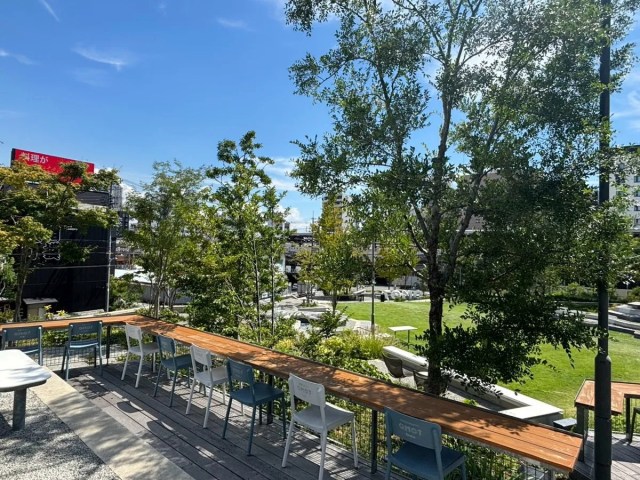
Spreading out in front of the hotel is Miyagurin, a massive green space of about 7,600 square meters (about 1.88 acres) with deck terraces and walking paths surrounding the lawn area, which gives it a sense of openness that makes it hard to believe it’s right next to the station in one of Japan’s biggest cities.
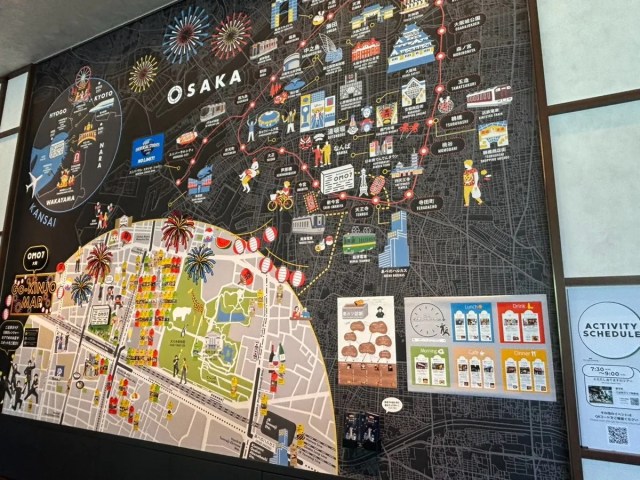
In the common space OMO Base inside the building, there is a gigantic board displaying a map of the surrounding neighborhood.
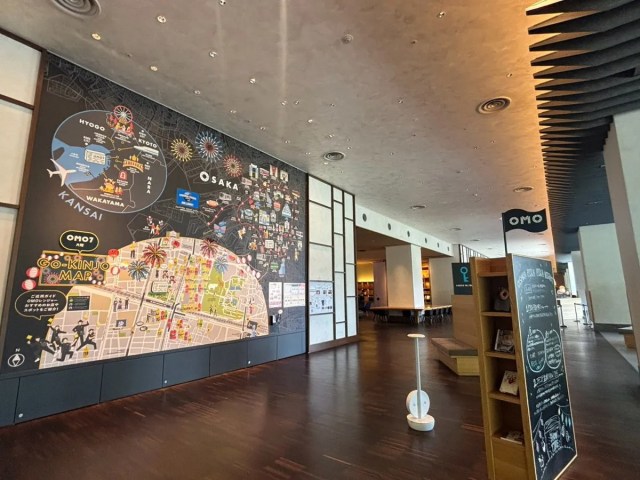
It introduces spots and shops not often found in guidebooks, gathered by staff who have actually walked around the city, so it serves as a base for exploring the city in a way that you might not have found otherwise.
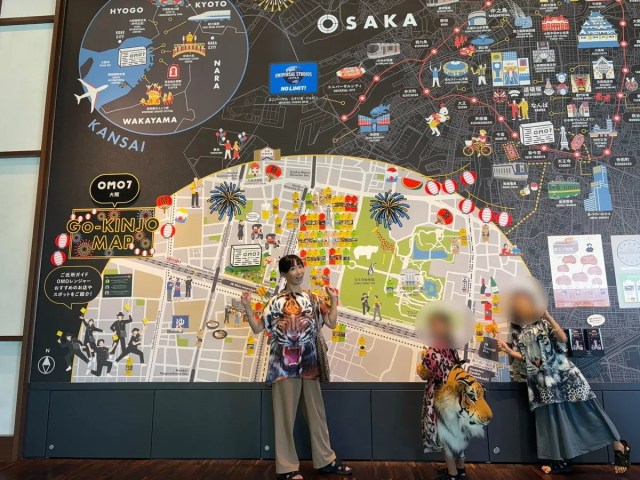
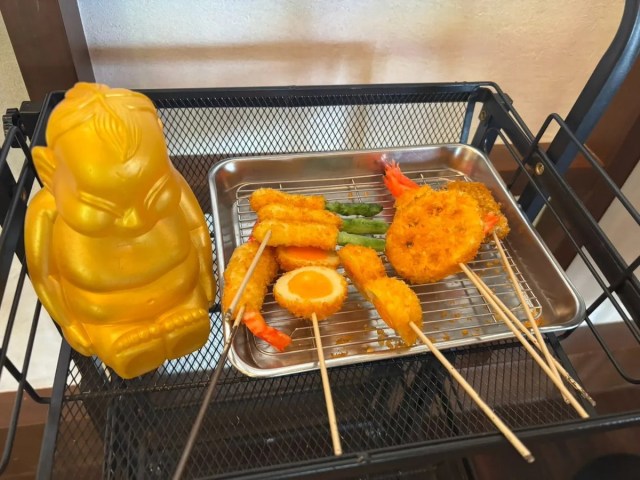
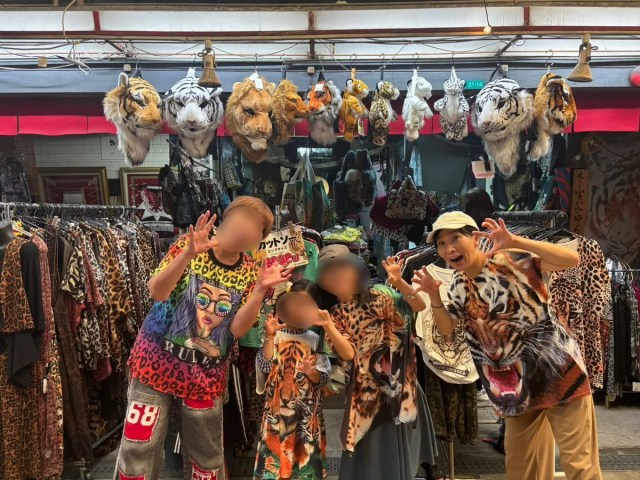
There are also unique photo items, such as leopard print outfits of the infamous Osaka Obachan aunties, and food samples of kushikatsu (deep-fried skewers).
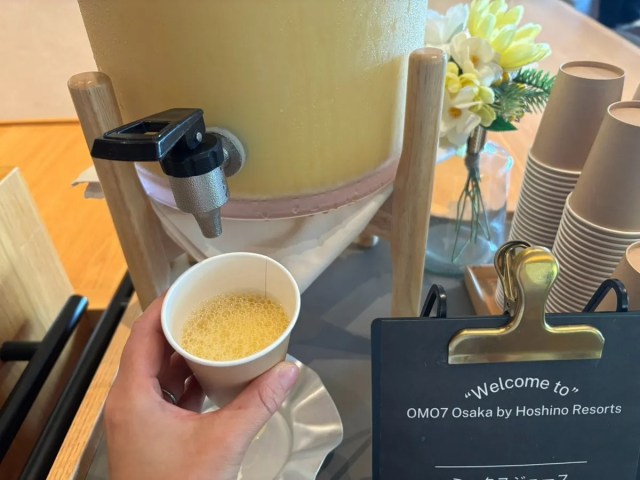
Also, the quintessential Osaka beverage mixed juice was prepared as a welcome drink. Originating in Shinsekai, the exact same neighborhood as the hotel, classic Osaka mixed juice incorporates milk, crushed ice, and fruits, giving it a thick and rich milkshake-like texture.
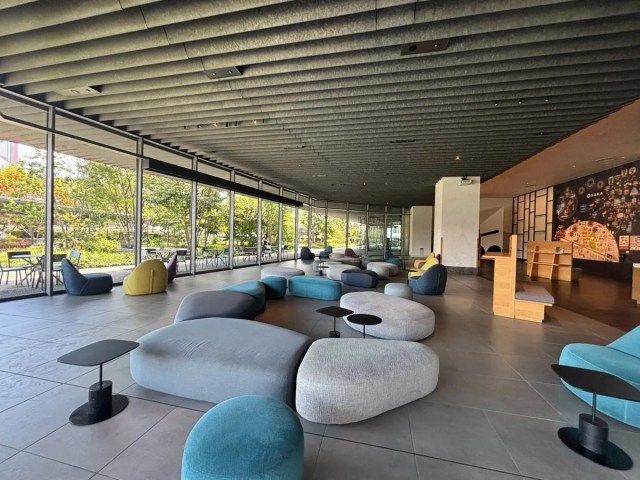
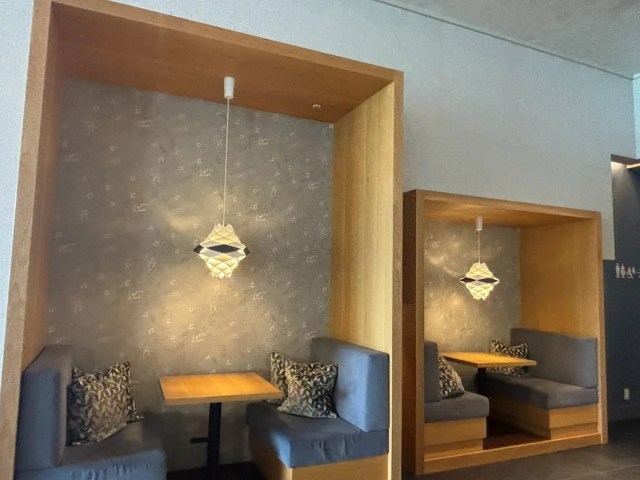
Even though the Osakan vibe was embedded throughout, the overall atmosphere didn’t feel cluttered, but rather refined, making for a truly exquisite balance.
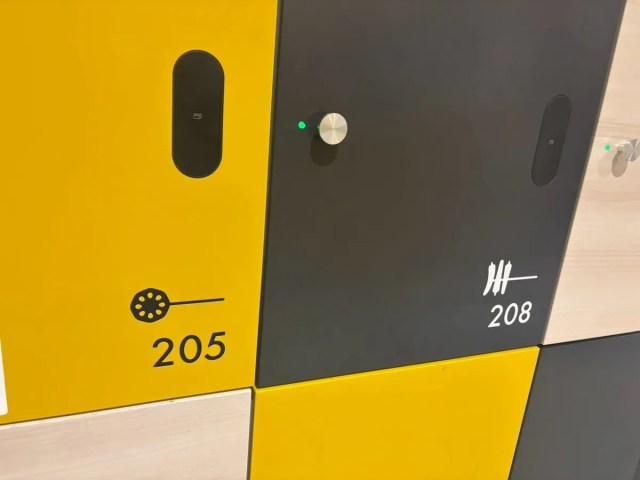
Before check-in, it’s possible to leave your luggage in one of the free self-service lockers, decorated by various types of kushikatsu.
There are many wonderful rooms within the hotel, but…
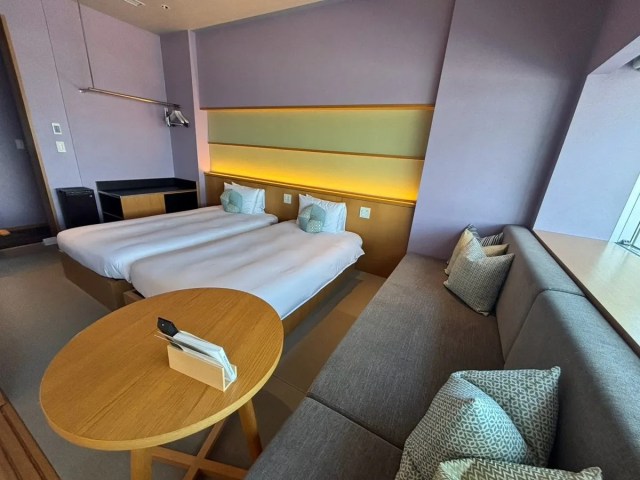
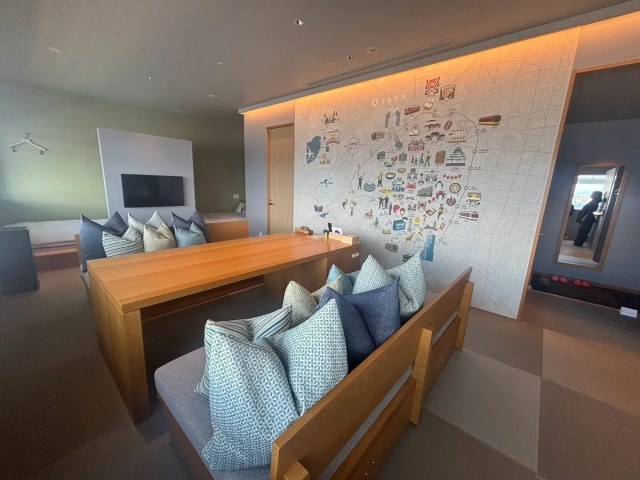
… the room that Natsuno stayed in was the Dandan Room, and she stepped through the door with excitement and nervous anticipation.
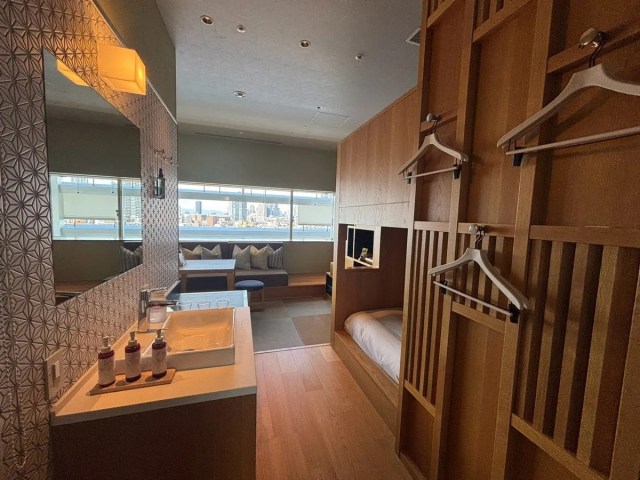
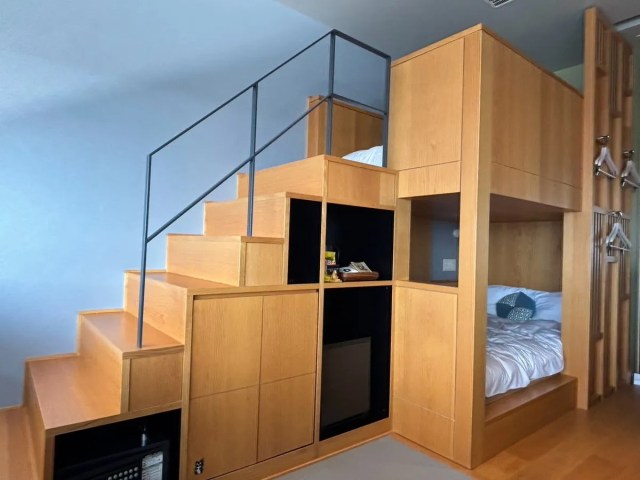
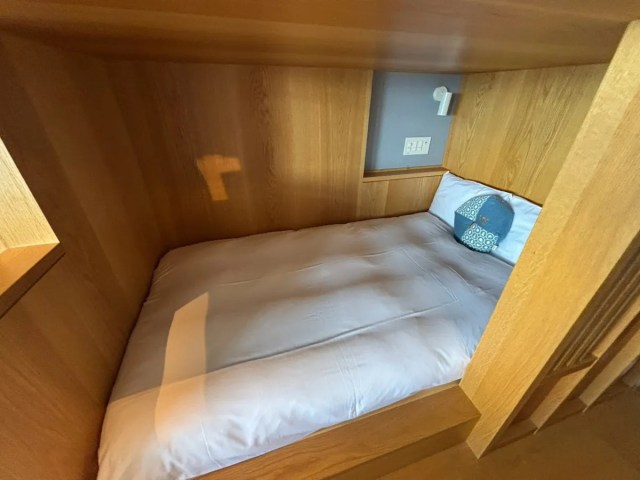
Natsuno was greeted with a space resembling a secret base, with beds arranged in two levels, both upper and lower, like a fancy bunk bed.
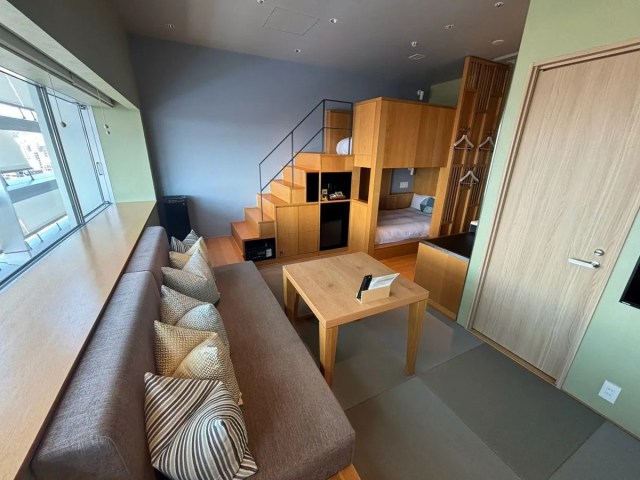
While certainly looking like a room that kids would instantly fall in love with, Natsuno couldn’t help but admit that she also loved the room a lot.
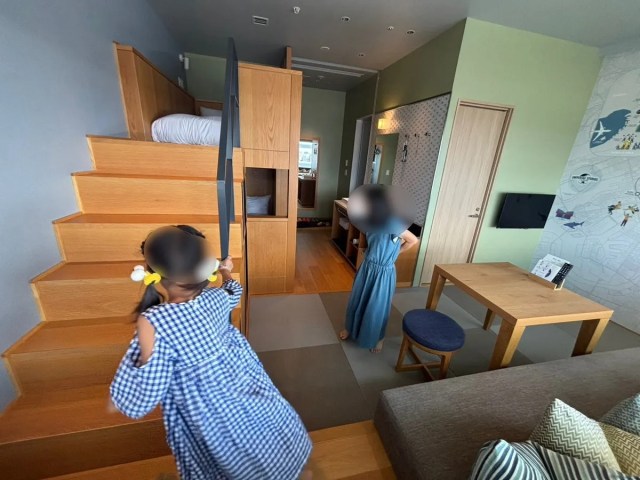
Despite how large the furniture was, it didn’t feel cramped, and by the window was a spacious sofa that could be unfolded and used as a bed. Natsuno remarked on how stylish it was, and how it was the kind of space that would make you think, “I want to live in a house like this.”
From a parent’s perspective, the fact that the upper bunk is securely enclosed gave Natsuno peace of mind for when her children were sleeping there, and having a large space for luggage was also fantastic.
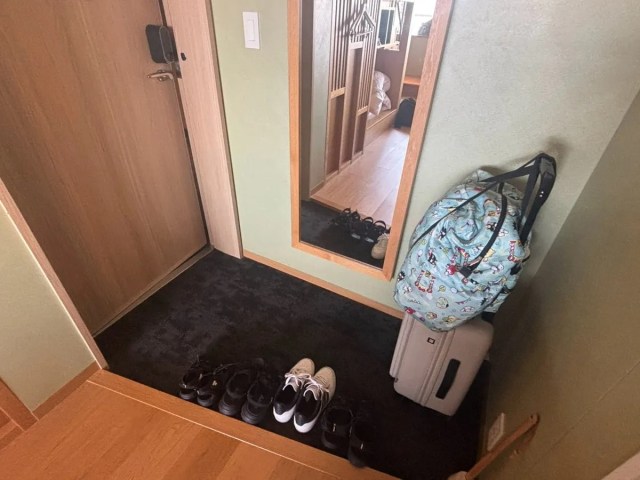
With a family, the entryway easily gets cluttered with the assortment of shoes being left there, but in this room, the entryway was spacious enough that this wouldn’t become a problem, and having separate bathroom and toilet facilities was a welcome addition.
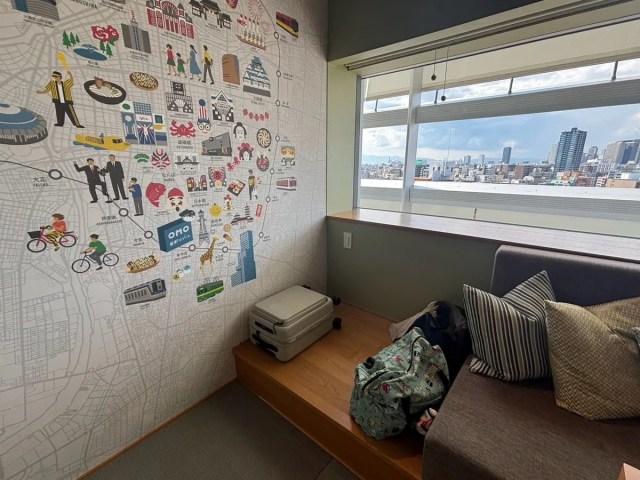
Plus, the room came stocked with Osaka-style coffee and candies.
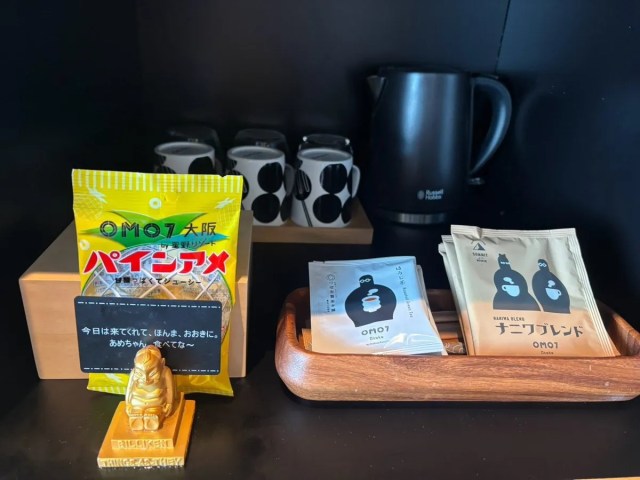
Stylish yet easy to use, and on top of that, it brings a sense of excitement. Natsuno soon felt completely comfortable relaxing in her room.
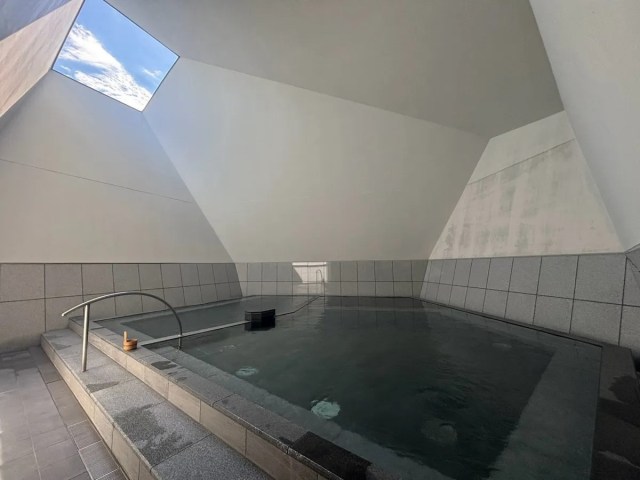
Usually costing an additional 1,000 yen, Natsuno got a glimpse of the public bath area that almost felt like it was an art museum. Even better was that the hotel does not discriminate based on tattoos, allowing tattooed customers use of the bathing facilities, unless the hotel feels the tattoos might cause discomfort to other guests.
However, the true potential of OMO7 Osaka is not limited to just this.
Natsuno had signed up for the free tour exploring Shinsekai, including the Tsutenkaku Tower and Janjan Yokocho, an alley crowded with little eateries and wonders of the past.
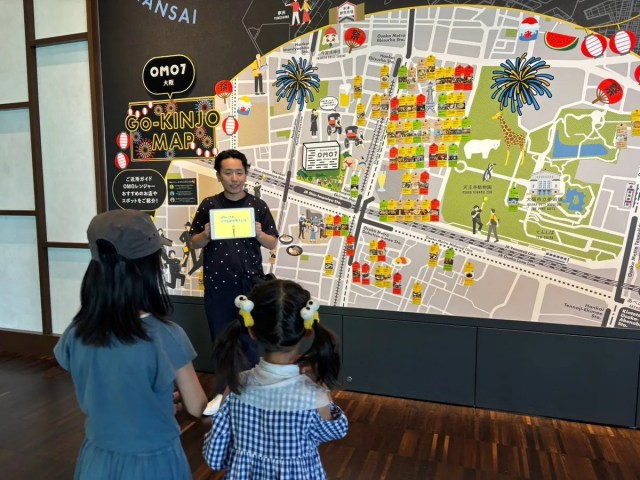
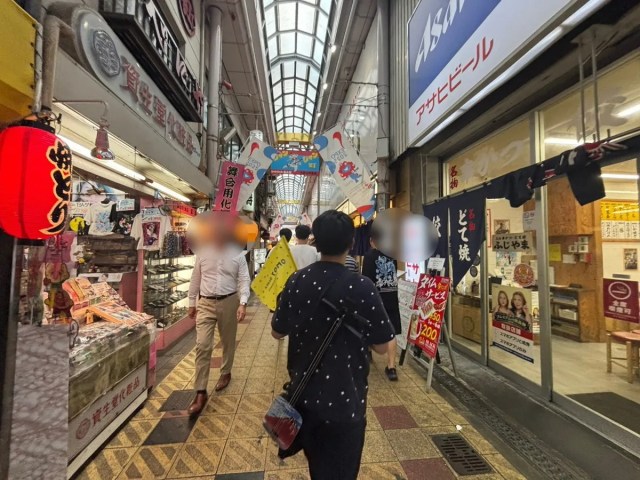
The tour was led by a Go-Kinjo (“Neighborhood”) Guide OMO Ranger who knows the area inside out.
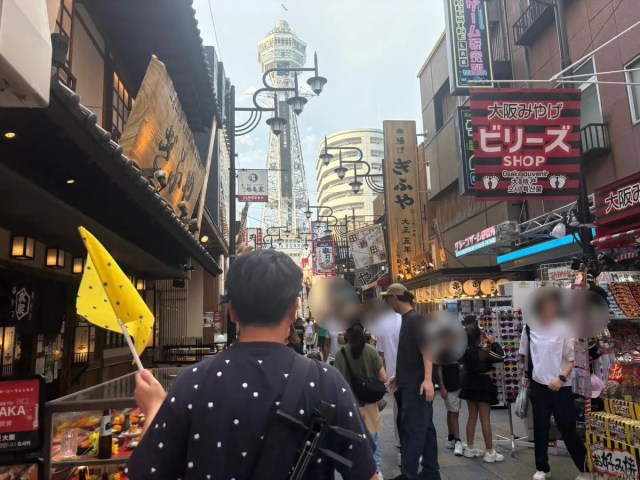
The Ranger pointed out details you would miss if you walked by yourselves, recommended shops, and even places that might look a bit intimidating to enter.
Along the way, there was even an experience where you wear clothing typical of an Osaka Obachan to take photos and receive ame-chan (“candies”) at the end. The tour was a wonderfully fun experience and Natsuno highly recommends everyone try it out if they have the time.
There are other activities you can join without reservations, as well as ones that require bookings or have a fee. Natsuno’s friend apparently joined a tour to enjoy kushikatsu and a morning tour themed around dashi (soup stock), which they claimed was “awesome.” Rather than just staying overnight, the hotel creates an opportunity to step out into the town.
At night, Natsuno headed to the guests-only event Osaka Pikapika Night.
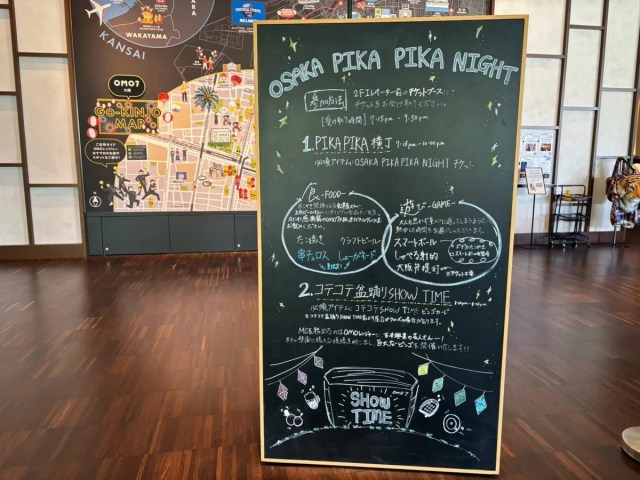
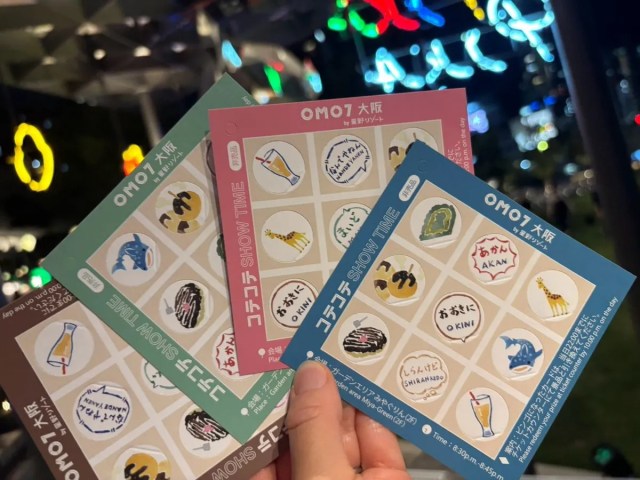
When night falls, lantern lights illuminate Miyagurin and Pikapika Yokocho appears, where in addition to delicacies like takoyaki and craft beer, you can also enjoy nostalgic games like target shooting and smart ball, a simpler pinball variant that is also similar to pachinko.
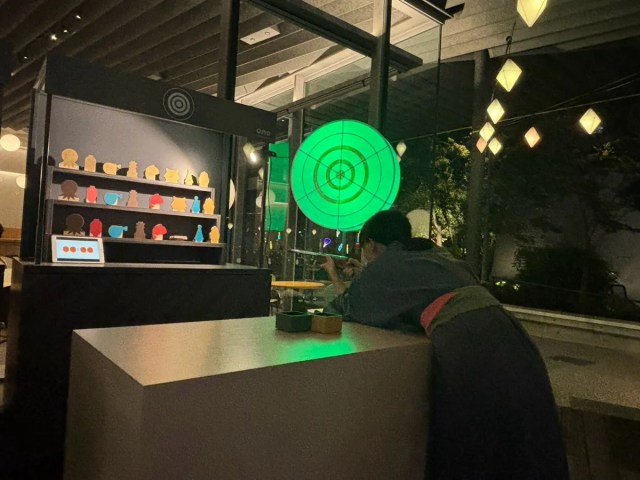
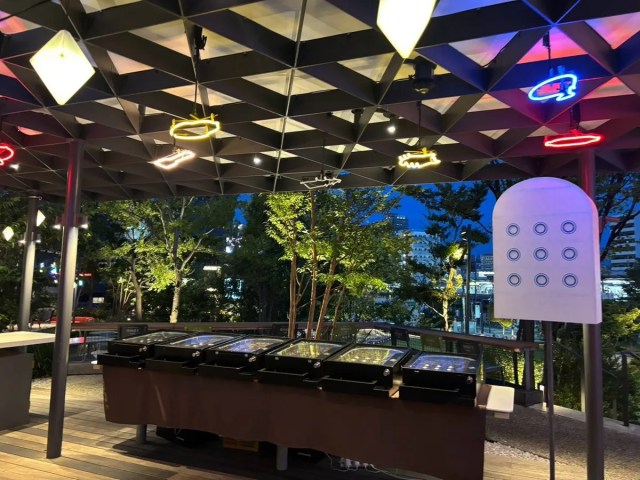
Even for room-only stays, guests elementary school age and above are handed three tickets each, structured so you can choose two items you like from options such as takoyaki, seasonal sweets, or craft beer, and choose one of the games.
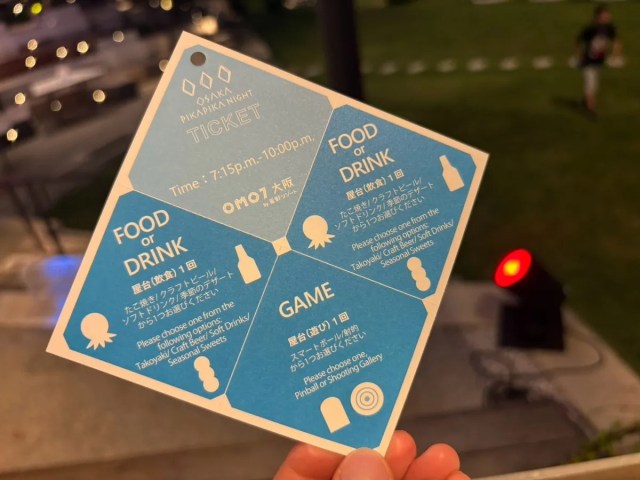
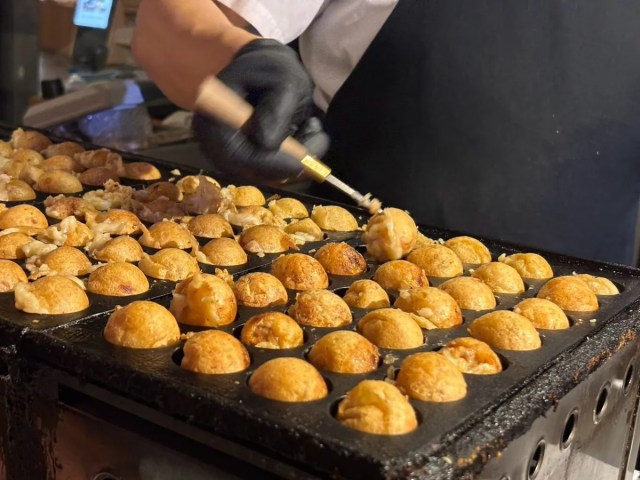

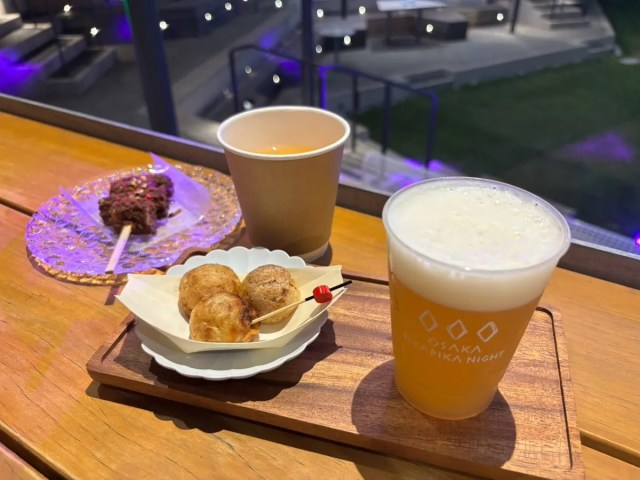
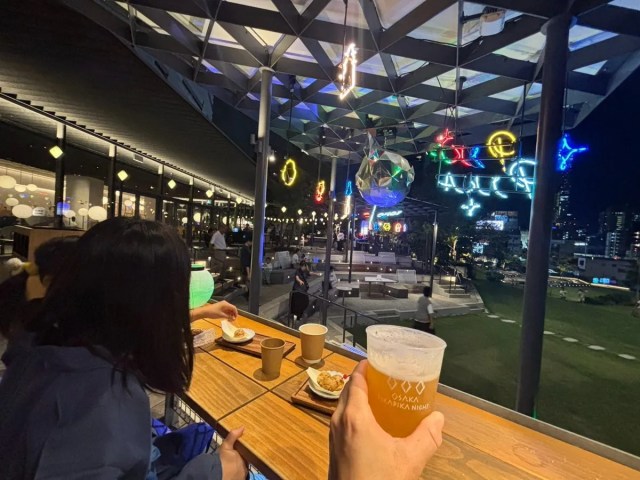
To Natsuno, it did not have the atmosphere of a mere cheap service added on as a tacky marketing ploy. The space itself was special: the lawn, the hotel’s giant exterior wall, and the lantern lights all seemed to become one, making it enjoyable just being there.
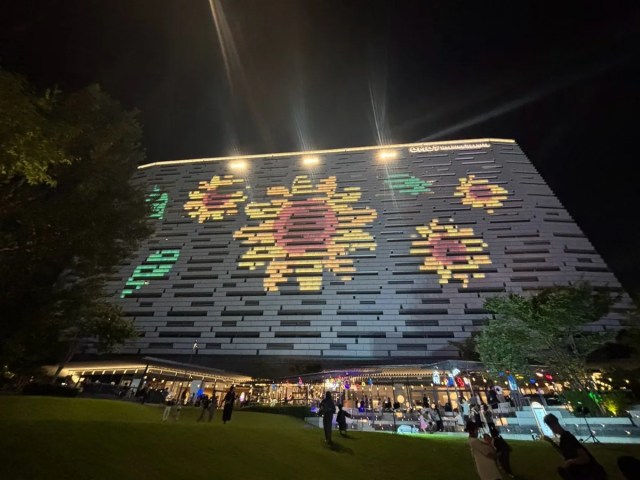
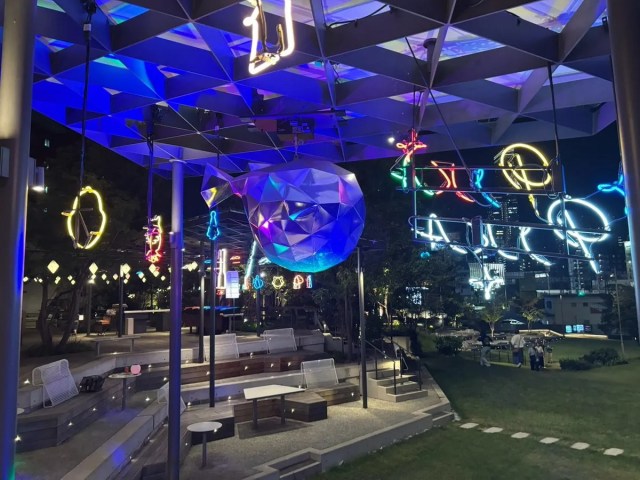
On top of that, what Natsuno personally loved the most was the main event: Kotekote Show Time.
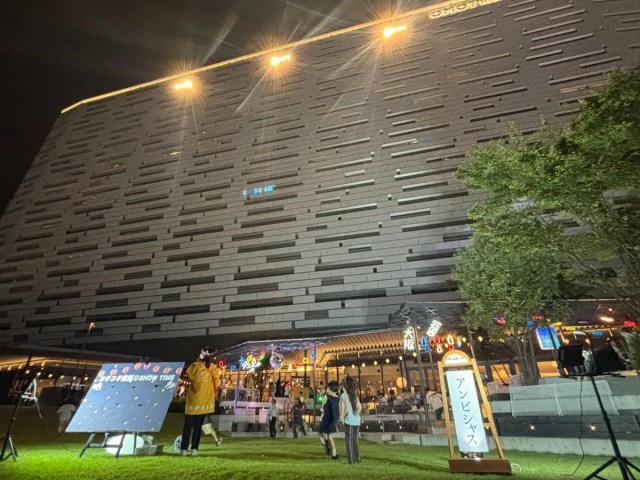
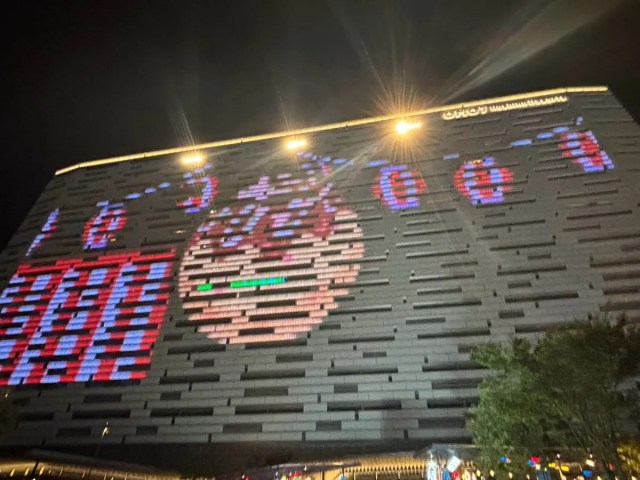
Comedians from the entertainment company Yoshimoto Kogyo (home to groups like Downtown, Kamaitachi, Chidori, and even All Hanshin Kyojin) and OMO Rangers appear, putting on comedy live shows and a giant bingo utilizing the exterior surface of the hotel wall, which of course hotel guests can enjoy for free as well.
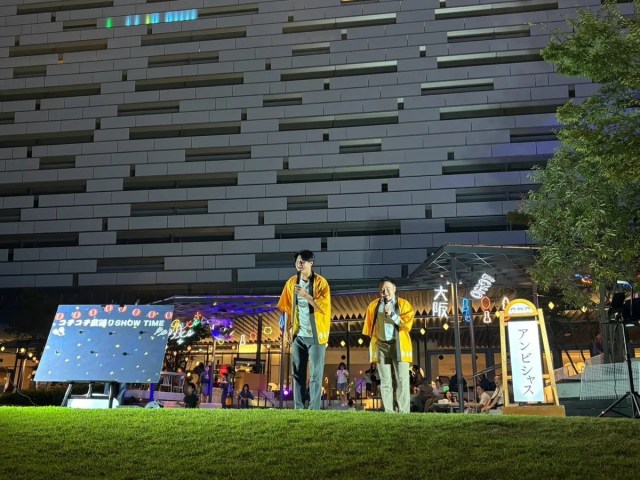
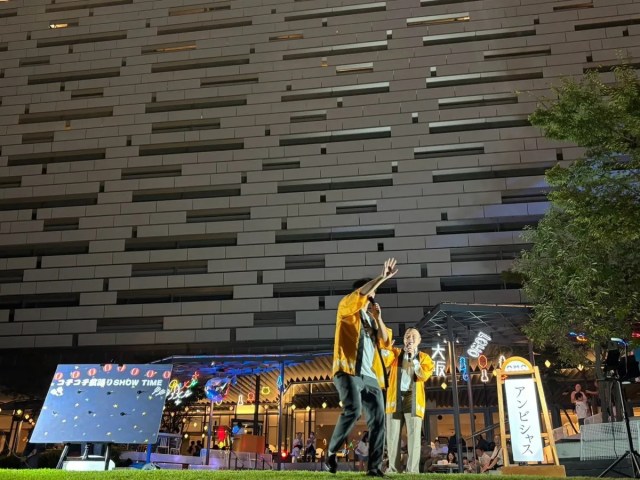
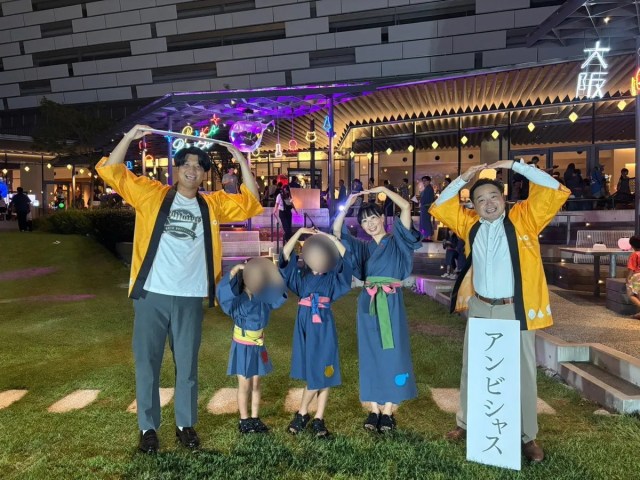
Children and adults alike get excited together, and you can even participate in a simple Osaka-style bon dance. At the end, Natsuno even got a commemorative photo taken with the comedian group Ambitious. It was all too much fun.
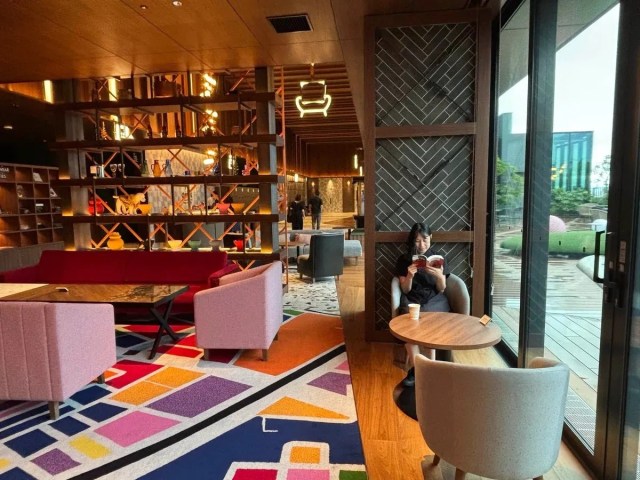
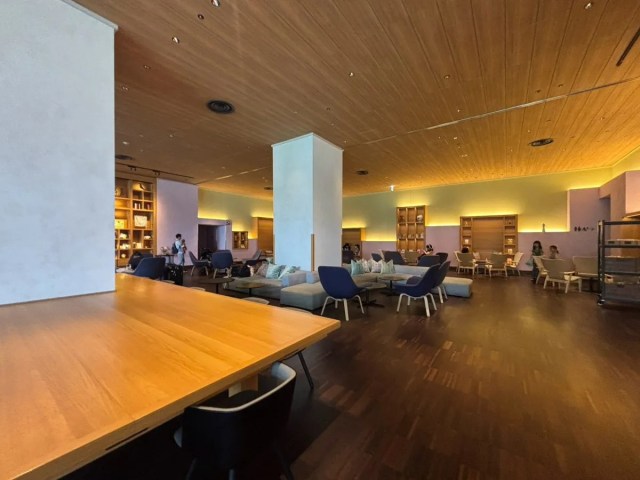
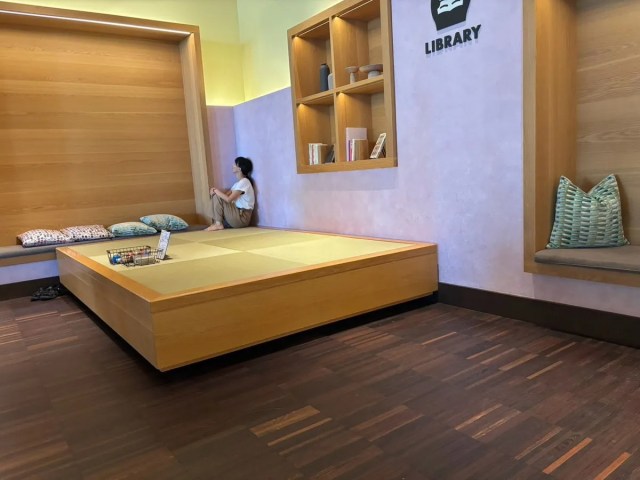
Check-out the following day was at 11:00 a.m., so Natsuno spent the morning relaxing, reading books in the facility’s Library Lounge and trying out different stylish chairs to compare them.
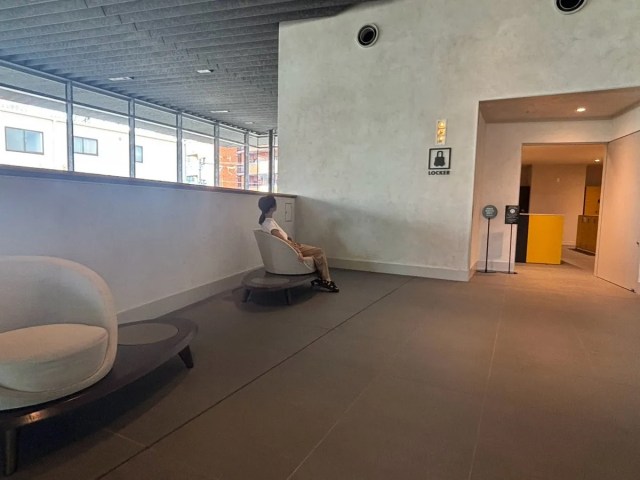
Even though she was just relaxing inside the hotel, Natsuno felt like she was spending time a little more mindfully than usual, and experiencing the essence of Osaka at the same time.
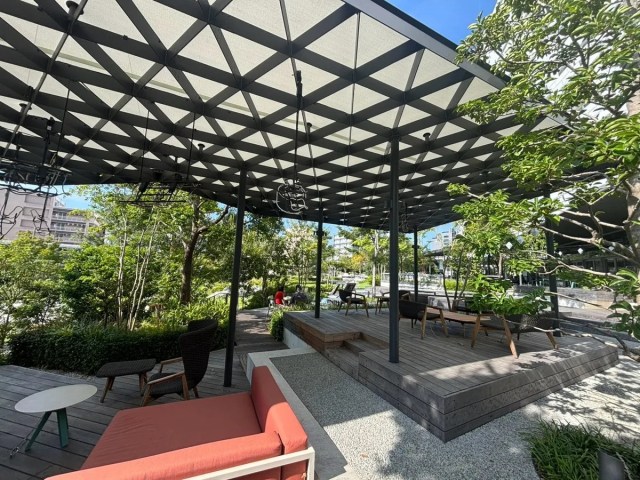
In the end, Natsuno stayed right up until the check-out deadline, leaving the hotel while thinking, “I don’t want to go home at all.”
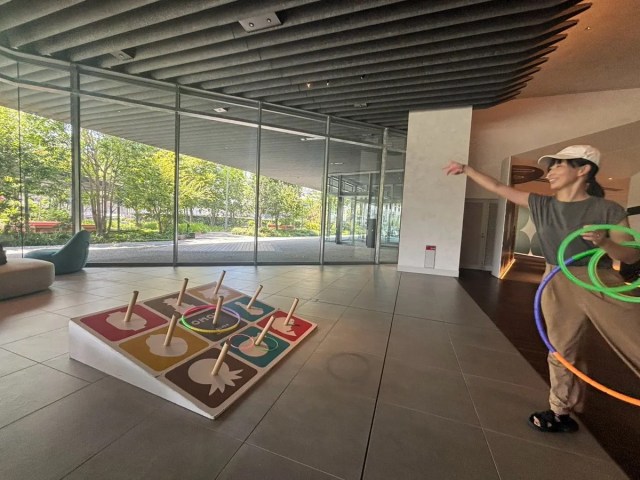
After checking out, soap bubbles and a ring toss game appeared, to which Natsuno really couldn’t say no to having a go at.
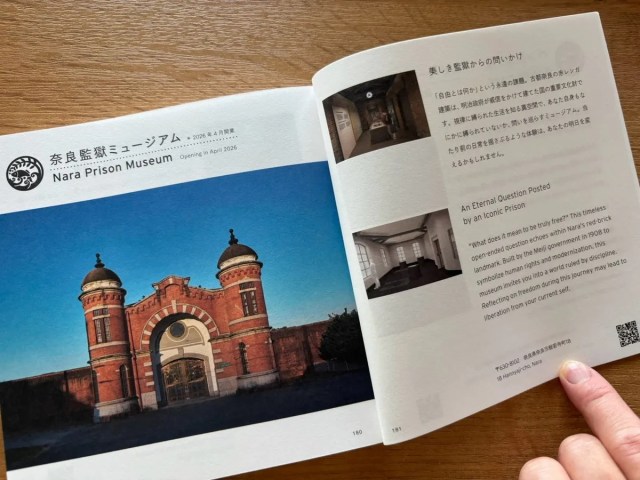
On her way out, Natsuno made sure to take a copy of the free booklet that introduces OMO locations nationwide.
Now, Natsuno feels like she can completely understand why her friend stays at one OMO after another. It seems that her friend is now targeting OMO5 Kanazawa Katamachi, but Natsuno has yet to decide where she will end up going, now having become a total fan of OMO.
Hotel information
OMO7 Osaka by Hoshino Resort / OMO7大阪 by 星野リゾート
Address: Osaka-fu, Osaka-shi, Naniwa-ku, Ebisunishim 3-chome, 16-ban, 30-go
大阪府大阪市浪速区恵美須西3丁目16番30号
Website
● Want to hear about SoraNews24’s latest articles as soon as they’re published? Follow us on Facebook and Twitter!
]]> https://soranews24.com/2026/09/25/osakas-amazing-budget-luxury-hotel-has-free-takoyaki-craft-beer-and-comedy-shows/feed/ 0 745806 imgi_506_omo7osaka-426 Fukushima’s popular dialect T-shirt vending machine gets its first sibling in Iwaki https://soranews24.com/2026/09/24/fukushimas-popular-dialect-t-shirt-vending-machine-gets-its-first-sibling-in-iwaki/ https://soranews24.com/2026/09/24/fukushimas-popular-dialect-t-shirt-vending-machine-gets-its-first-sibling-in-iwaki/#comments Thu, 24 Sep 2026 05:00:01 +0000 https://soranews24.com/?p=745765 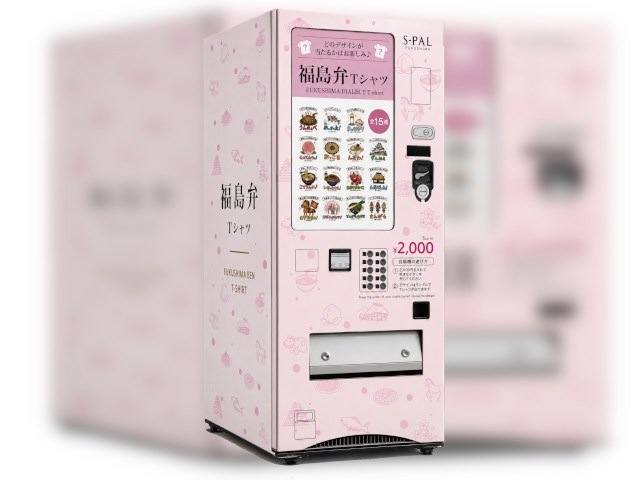
Pick up a wearable Japanese lesson featuring dinosaurs, hot springs, and deep sea fish.
Following the 2011 disaster, Fukushima Prefecture has steadily worked to rebuild its tourism appeal, offering a region filled with natural beauty and history to travelers who seek to venture beyond Japan’s Golden Route of Tokyo, Kyoto, Osaka, and sometimes Hiroshima. In the coastal city of Iwaki, known for its Aquamarine Fukushima aquarium and the tropical Spa Resort Hawaiians, a new attraction at JR Iwaki Station’s S-Pal shopping center offers a fun way to connect with the area, and return with a unique souvenir.
Building on the popularity of the original Fukushima dialect t-shirt vending machine at JR Fukushima Station, this latest Iwaki installment brings the wearable local culture directly to coastal visitors.
▼ The Fukushima Station designs: five for each of the three regions of the prefecture
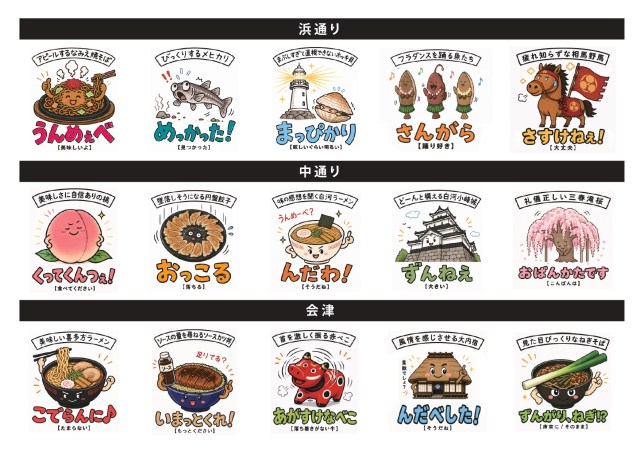
When people think of Japanese dialects, Kansai-ben from the Kansai region centered around Osaka usually comes to mind. However, Japan features a rich array of regional dialects (hogen, 方言), each reflecting distinct local history and geography. Fukushima itself is divided into three cultural and linguistic zones: Hamadori (the coast, where Iwaki is located), Nakadori (the central valley, home to Fukushima and Koriyama cities), and Aizu (the western mountains, famed for Tsuruga Castle, Kitakata-style ramen, and Higashiyama Hot Spring). Each region boasts its own endearing vocabulary and idioms that sound remarkably different from standard Tokyo Japanese.
These local expressions have become the focus of the Fukushima Dialect T-shirts. Priced at 2,000 yen (US$12.69), each shirt pairs regional phrases with charming illustrations, and the Iwaki vending machine offers a selection of 12 designs that are inspired by local icons and differ from the 15 found in Fukushima’s vending machine.
These coastal Hamadori designs highlight phrases like appatoppa (あっぱとっぱ, “confused” or “flustered”), which features the locally discovered Futabasaurus, and koderanni (こでらんに, “the best” or “can’t get enough of [it]”), depicting Shiramizu Amidado, one of the oldest and most important temples in the Tohoku region.
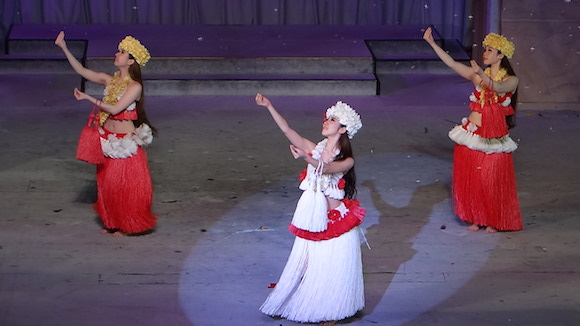
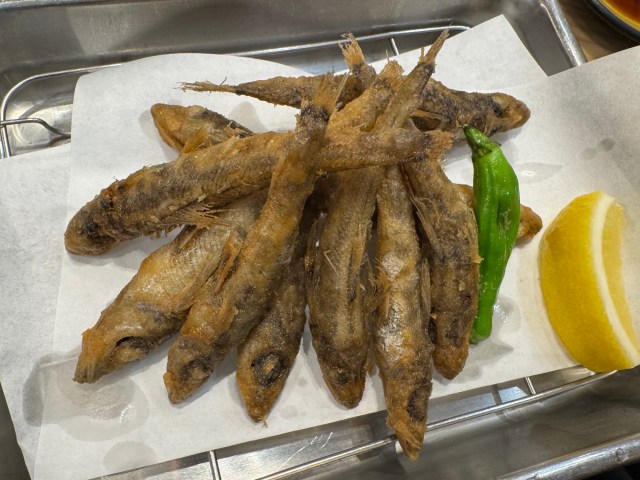
There are also four designs that showcase beloved Iwaki icons: the mehikari (bigeyed greeneye fish), anko (anglerfish that is used in the traditional hot pot dish anko nabe), hula dance, and Iwaki Yumoto hot spring.
▼ Hula dance helped save the town in the mid-1960s after the local mines closed.
Adding to the excitement, the vending machine operates like a mystery capsule, so after selecting your size of medium, large, or extra large, a random design from the collection is dispensed.
▼ Mehikari are delicious both eaten raw and deep-fried
For both domestic and international visitors, these local dialect mystery T-shirts will serve as warm reminders of your time spent in this region, and be a great conversation starter with Japanese locals wherever you travel. So, whether you are playing to delve into samurai heritage at Tsuraga Castle, walk through the thatched roof village of Ouchijuku, explore the beautiful highlands of Bandai, or enjoy Iwaki’s Pacific coast, consider making a little detour and grabbing one of these T-shirts from the station vending machine, so you can carry it home and wear a slice of Fukushima’s charm.
Location information
Iwaki Vending Machine
Fukushima-ben T-shatsu Jidouhanbaiki / 福島弁Tシャツ自動販売機
Address: Fukushima-ken, Iwaki-shi, Taira, Tamachi 1 Esuparu Iwaki 2F
福島県いわき市平田町1 エスパルいわき2F
Open: 10:00 a.m.–7:00 p.m.
Price: 2,000 yen for a random one of 12 designs
S-Pal Iwaki Website
Fukushima Vending Machine
Fukushima-ben T-shatsu Jidouhanbaiki / 福島弁Tシャツ自動販売機
Address: Fukushima-ken, Fukushima-shi, Sakae-cho 1-1 Esuparu Fukushima 1F
福島県福島市栄町1-1 エスパル福島1F
Open: 10:00 a.m.–8:00 p.m.
Price: 2,000 yen for a random one of 15 designs
S-Pal Fukushima Website
Source: Fukushima Minpo via Yahoo News, PR Times, Go Guy Net
Images: PR Times, Photos ©SoraNews24
● Want to hear about SoraNews24’s latest articles as soon as they’re published? Follow us on Facebook and Twitter!
]]> https://soranews24.com/2026/09/24/fukushimas-popular-dialect-t-shirt-vending-machine-gets-its-first-sibling-in-iwaki/feed/ 0 745765 sub3top My night trapped in Nagoya’s flood: what do you do when Japan’s trains shut down? https://soranews24.com/2026/09/22/my-night-trapped-in-nagoyas-flood-what-do-you-do-when-japans-trains-shut-down/ https://soranews24.com/2026/09/22/my-night-trapped-in-nagoyas-flood-what-do-you-do-when-japans-trains-shut-down/#comments Mon, 21 Sep 2026 15:00:04 +0000 https://soranews24.com/?p=745534 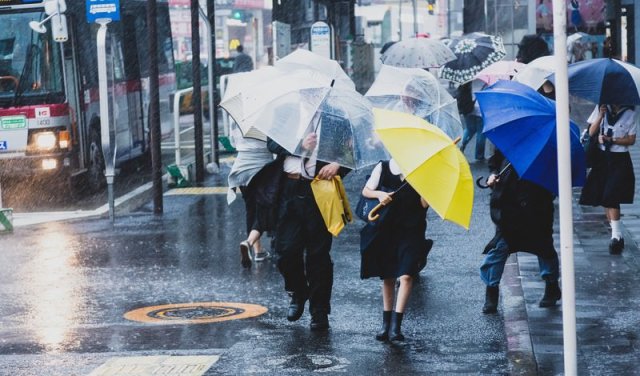
Here is essential advice for surviving sudden disaster in Japan.
On September 8, 2026, the regions of Chubu, the center of Japan, were struck by an aggressive autumn front that unleashed a sudden and immense downpour, resulting in one of the highest levels of rain the area has seen since records began. The streets of Nagoya and railways became rivers, and the subway stations became pools, halting any and all public transport, leaving commuters and travelers stranded with no way to return home. Thankfully, there were only minimal injuries and no fatalities.
Now, for those that may not have already guessed from my love of red miso, this is where I live and work, so I was personally affected by this upheaval. When I am not sequestering myself with my computer to write articles about dancing on noodles and crabs being used for burglaries, I engage in more traditional work and commuting. At 4:13 p.m., my phone started beeping at me, which in Japan is usually a sign of impending earthquakes, so preparing myself to take protective measures, I glanced at the alert to find that it was for a landslide (dosha saigai, 土砂詐害). “A peculiar alert for an urban city,” I thought, as I moved to the window, only to be surprised at how heavy the rain was.
▼ My phone’s alert history from September 8
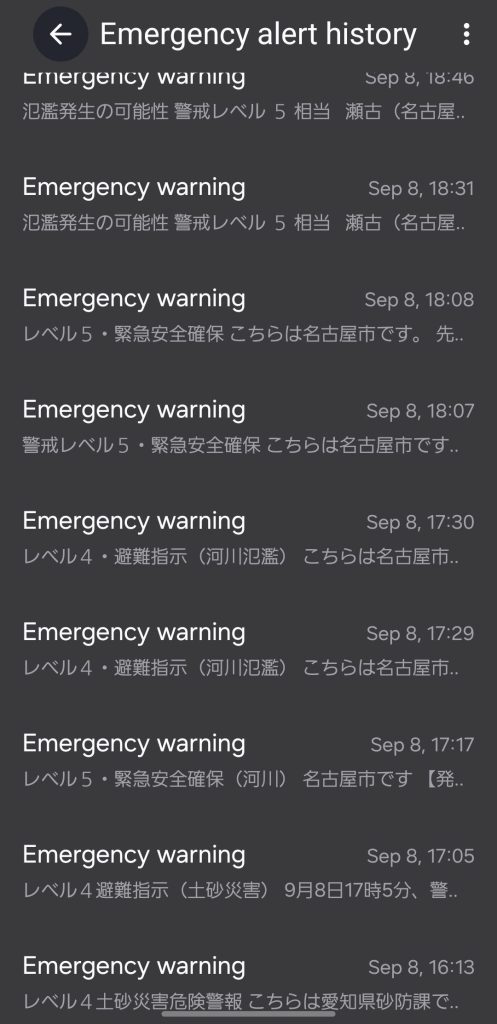
Soon, alerts bombarded my phone, updating me on the situation, and I soon saw something that I had never seen before: the highest “Level Five” warning (tokubetsu keiho, 特別警報). Level Five indicates that somewhere within the region a disaster is imminent or has already occurred, so evacuation is too late and people should take immediate life-saving action on site, such as evacuating to a higher floor. In the case of the Nagoya flooding, it was the Shonai River and Yada River that run through the city that were at risk of breaching their banks (hanran, 氾濫), as well as other smaller rivers.
▼ Shonai River
I checked the public transport, through the train line’s website, only to find that no trains were running for the rest of the day, meaning I could not get home. On the bright side, my workplace is fairly high up in the building, so I was pretty safe from my vantage point, where I could no longer see the streets I normally walked for the rivers flowing through them (submerged, kansui, 冠水).
However, that left me with a little conundrum of how to spend the night. There was still the option of getting a hotel near my company, but the prices had shot up and the company would not cover it (cheapskates). So, I could either go to an emergency shelter or hunker down at my workplace. Considering the possible crowdedness of the shelters, I opted for my workplace, so I procured some materials to make a temporary bed, spent the night, and was ready for work bright and early the next morning. Fortunately, by the time it was ready to clock off, the train lines had reopened, so I could finally get back home for a shower and decent sleep.
Considering my situation, I felt I was pretty lucky with how everything turned out, but it got me thinking about all the people who might have been traveling through Nagoya and suddenly found themselves without a home, hotel, or way to get to their destination, and how they fared.
If you find yourself in a situation like mine, the experience can be deeply disorienting for people not used to Japan’s sudden disasters, and even though the country routinely deals with natural crises, events such as this can instantly disrupt the status quo. It is necessary to understand local warning protocols and how to react when public transportation grounds to a halt, leaving you stranded and unable to go anywhere (kitaku konnan, 帰宅困難). Even if there are no impending typhoons or inclement weather, it is still useful to be aware of this information for any eventuality.
Remember that Level Five notification I received? Well, Japan’s Meteorological Agency uses a five-level disaster alert system that serves as the baseline for all official guidance. One and Two are just your routine news and weather checks, but once Level Three hits, seniors and vulnerable individuals are advised to evacuate, and Level Four commands an immediate evacuation for everyone in designated hazard zones. If your route to the official shelter is impeded due to rising floodwaters (kozui, 洪水), like how it was around my building, it is actually recommended to evacuate vertically, going to the second floor or higher of a concrete building rather than venturing outside.
▼ No matter how good you are at swimming, stay inside.

Earthquake evacuations are slightly different, in that you should try to avoid going to a building until it is confirmed safe. In the event you are already inside of a building, take cover under a sturdy desk, and only move outside if there is an active threat of building collapse, gas leaks or fire. If you are outside, instead make your way carefully to a large, open space, like a park or school grounds.
I was pretty fortunate to be stuck at my workplace, but had I been out exploring an unfamiliar neighborhood, the strategy I took would have been pretty different. If you find yourself caught out in the open during a storm, head toward a major train station, municipal building, or large shopping mall. These structures serve as community hubs and designated shelters during emergencies. If you are not sure where to go, asking “Hinanjo wa doko desu ka?” (“Where is the shelter?”) will direct you to the nearest shelter, and stating “Tasukete kudasai” (“Please help me”) in an urgent situation will clearly communicate that you require immediate assistance. Other helpful phrases can be printed off and made into cards from the Japan National Tourism Organization’s (JNTO) Safety Tips website here.
▼ “Don’t panic. The shelter is over here.”
My initial instinct when I saw the train suspensions (unten miawase, 運転見合わせ), was to figure out a way home anyway. Perhaps I could walk or rent a bicycle? But stepping out into flooded streets carries risks, be it from hidden manholes or blocking emergency vehicles. If you’re stuck at a station, look out for announcements of refuge shelters (taihi shisetsu, 退避施設) or temporary waiting facilities (ichiji taiki basho, 一時待機場所), which are safe indoor spaces in stations and commercial centers where staff distribute supplies and updates.
▼ Supplies can include: water, a blanket, a biscuit, and a portable toilet.
These temporary waiting facilities usually get announced once they are opened, so looking at a live map (like this one for Nagoya) is a great way to check the location and level of crowdedness of each facility, just search for information from the city or ward you are in. However, if you’re stranded in Tokyo, a service called Kitakon DX has recently started, allowing people to easily register for temporary accommodation and provide directions to that location.
Had I not been at work with its free but annoyingly intermittent Wi-Fi connection, I might have not had the ability to contact my family to let them know I was safe. However, Japan is no stranger to natural disasters, so the country activates a free emergency Wi-Fi network under the universal SSID “00000JAPAN”. Connecting to this network does not require a password, allowing stranded travelers to access emergency apps and let your loved ones know that you are safe. There is also the 24/7 multi-lingual tourist hotline operated by the JNTO (050-3816-2787), which is specifically designed for international travelers in accidents or emergencies, or you can contact the police emergency number 110, or the fire rescue and ambulance service on 119, both of which should have English-speaking staff available, just start the conversation with “English, please.”
If I met with a heavy storm in a foreign country, it would be a lie to say that I wouldn’t be panicking, so preparation is essential. Every resident and traveler should install key apps, such as the JNTO’s Safety Tips app, NERV Disaster Prevention, and NHK World-Japan, for multi-lingual real-time alerts. Additionally, carrying a lightweight emergency kit, containing a portable power bank, paper copies of your passport and other travel documents inside a sealed plastic bag, and physical cash in 1,000 yen bills and coins, ensures you remain less panicked even during a complete infrastructure shutdown and power outage.
Having extreme weather, or other natural disasters, pouncing on you unawares can feel daunting. They are an unpredictable reality of living in or visiting in Japan, but the country’s disaster response framework is well-oiled and designed to keep everyone safe, even if you do not speak the language. With a bit of awareness, a few apps, and a basic understanding of protocols, you can navigate even the stormiest of nights safely and calmly.
App Downloads: Safety Tips (Google Play/Apple), NERV Disaster Prevention (Google Play/Apple), NHK World-Japan (Google Play/Apple)
Related: JNTO Safety Tips, Japan Meteorological Agency Weather Warnings, Japan Safe Travel, Kitakon DX Tokyo Temporary Accommodation
Video Sources: YouTube/@Storm-HQ, YouTube/@cbctv_news, YouTube/@ntv_news
Top image: Pakutaso
Insert images: Pakutaso (1, 2), Android Phone Screenshot ©SoraNews24
● Want to hear about SoraNews24’s latest articles as soon as they’re published? Follow us on Facebook and Twitter!
]]> https://soranews24.com/2026/09/22/my-night-trapped-in-nagoyas-flood-what-do-you-do-when-japans-trains-shut-down/feed/ 0 745534 150909085567_TP_V4 Naked illuminates Kyoto’s cultural traditions in Nijo Castle’s latest digital art spectacular https://soranews24.com/2026/09/19/naked-illuminates-kyotos-cultural-traditions-in-nijo-castles-latest-digital-art-spectacular/ https://soranews24.com/2026/09/19/naked-illuminates-kyotos-cultural-traditions-in-nijo-castles-latest-digital-art-spectacular/#comments Sat, 19 Sep 2026 01:00:28 +0000 https://soranews24.com/?p=745189 
Featuring night-lit gardens, imperial poetry, and custom digital garments.
Kyoto is home to an abundance of heritage fused with modernity: a place where you could espy a traditional building from afar only to discover a familiar mermaid emblazoned on the sign when you draw closer. Tokyo-based creative collective Naked, Inc., known for combining cinematic storytelling with cutting-edge technology, embraces this dichotomy wholeheartedly, having run several digital art exhibitions over the years in some of Japan’s most iconic landmarks, including Himeji Castle and Matsushima. Running from October 23 through December 5, the immersive art exhibition Naked Meets Nijo Castle 2026 once again transforms the castle grounds into a glowing canvas of light, sound, and interactive digital art.
Originally built in 1603 as the Kyoto residence of the Tokugawa shogun, Nijo Castle is today a UNESCO World Heritage Site famed for its stunning traditional architecture and spacious gardens. The 2026 exhibition celebrates the 400th anniversary of the 1626 Kanei Gyoko (Imperial Visit), a momentous five-day event when Emperor Go-Mizunoo visited the castle, sparking a cultural exchange between the imperial court and the samurai elite, with cultural aspects like tea ceremony and flower arrangement blossoming. The shogunate used the event as a chance to legitimize their de facto rule over the now-unified country, whereas the emperor took the opportunity to show the country that the imperial family was still relevant in the current period.
To bring this historic era to life, Naked, Inc. draws inspiration from Tokugawa Masako, the daughter of the shogun and empress consort to Emperor Go-Mizunoo. A central figure of the Kanei era (1624-1645), Masako bridged courtly elegance and samurai culture, leaving a lasting influence on Japanese aesthetic traditions, including the delicate art of the kimono.
As a collaboration with the larger Kanei Gyoko 400th Anniversary Festival, with events being held both within Kyoto and nationwide, visitors to Naked meets Nijo Castle 2026 will encounter a total of three curated zones to enjoy. The journey begins at the grand Karamon Gate (a grand Chinese-style gate featuring intricate wood carvings), illuminated with vivid digital projections displaying class Kanei-era patterns and colors.
As you wander past the Ninomaru Palace, inner moat, and Seiryuen Garden, light and sound installations weave together waka poetry composed by Masako, traditional gosho-zome (imperial court dyeing techniques), and illuminated garden scenery.
In the kitchen forecourt, guests can participate in interactive art, selecting classic design patterns to project directly onto a white kosode (a traditional short-sleeved garment that served as the predecessor to the modern kimono) to wear as digital fashion. Guests can also enjoy Masako’s Night Tea Party, combining art, atmosphere, and traditional tea culture.
The exhibition takes place daily from 6:00 p.m. to 10:00 p.m., with admission nightly until 9:00 p.m. Advance tickets are available at major Japanese convenience stores and travel companies Jalan and Rakuten Travel (all links below), until October 22 starting at 1,600 yen for weekdays and 2,000 yen for weekends, but standard tickets are 2,000 yen for Mondays to Thursdays and 2,400 yen for weekends and holidays. If you are fortunate to be a student or Kyoto resident, a cashback of 500 yen is offered at the on-site booth with a valid ID.
For anyone eager to experience Kyoto’s cultural heritage through a modern lens, this event promises an unforgettable autumn evening, but for those looking to get more hands on, Naked also recently opened a traditional craft workshop at Kyoto Station.
Event information
Naked meets Nijojo / NAKED meets 二条城 2026
Address: Kyoto-fu, Kyoto-shi, Nakagyo-ku, Nijojocho 541
京都府京都市中京区二条城町541
Dates: October 23, 2026–December 5, 2026
Open 6:00 p.m.–10:00 p.m. (last entry at 9:00 p.m.)
Website
Related: Kanei Gyoko 400th Anniversary Festival
Online Tickets: Family Mart/7-Eleven, Lawson, Eplus, Jalan, Rakuten Travel
Source and images: PR Times
● Want to hear about SoraNews24’s latest articles as soon as they’re published? Follow us on Facebook and Twitter!
]]> https://soranews24.com/2026/09/19/naked-illuminates-kyotos-cultural-traditions-in-nijo-castles-latest-digital-art-spectacular/feed/ 0 745189 main_15f649 Visiting Kagawa’s popular cooking class where you make noodles with your feet https://soranews24.com/2026/09/16/visiting-kagawas-popular-cooking-class-where-you-make-noodles-with-your-feet/ https://soranews24.com/2026/09/16/visiting-kagawas-popular-cooking-class-where-you-make-noodles-with-your-feet/#comments Tue, 15 Sep 2026 15:00:23 +0000 https://soranews24.com/?p=744949 
Rock out as you dance your way to handmade sanuki udon.
Having a meal out is a great experience now and again, but cooking for yourself not only allows you to customize your meal to your liking, it also provides you with a warming sense of accomplishment. However, having a professional by your side to gently guide you along the steps to making a famous local food is on a level of its own—particularly when it involves dancing on top of your dough.
▼ Don’t worry, it doesn’t smell like feet.
Kagawa, located on Shikoku, the smallest of Japan’s four main islands, is not one of the nation’s main tourist hubs, and even our Japanese-language reporter Kouhey has only been there a scant two times in the past. It is a well-known home to sanuki udon noodles, which are thick, chewy, and have been proven to calm crying babies, and yet Kouhey has hardly ever eaten the food in this land of noodles, so for his most recent trip there, he sought to remedy this travesty.
The town of Kotohira is a popular tourist destination within Kagawa, famous for Kotohira Shrine (affectionately known as Kompirasan) and its climb with over 700 steps. At the foot of the shrine is Nakano Udon School, a company that is over a century old and has been offering sanuki udon experiences for tourists for over 40 years. It also featured in the post credits scene of Episode 452 of Detective Conan, “The Phantom of Konpira.” Surely such a well-established company would be able to show Kouhey the way to the most delicious noodles.
Of course, being a person with strong impulsive tendencies, Kouhey hadn’t actually planned on delving into the kitchen himself, but he figured “why not?” and waltzed up to the door where the class schedule for the day was posted. There were three columns for the three different classrooms in Building A, Building B, and the West Building. On the day that he was there, only the column for Building B had time plates hung up for 9:30 a.m. and 1:00 p.m., indicating available classes on that day.
Going up to the reception to ask, Kouhey was told the class would take about 50 minutes, and he was in luck as there happened to still be space available to participate. The staff also mentioned that on some days the classes get completely booked, so if you want to make sure you get to experience it, booking in advance on the website is the way to go.
If you participate alone and take the noodles home, like Kouhey, it costs 1,980 yen (US$13), but if you eat them on-site, it’s 2,530 yen. For groups of up to 14 people, it’s 1,760 yen per person, and for 15 or more, it’s 1,650 yen, so be sure to drag all of your friends along for an experience you’re unlikely to forget. Note that for groups, the price doesn’t change whether you take them home or eat them on the spot, so it’s pretty reasonable.
After registering, Kouhey was given the option of what souvenir to take home: a Secret Recipe Scroll that doubles as a rolling pin, or two servings of udon. Without much hesitation, he opted for the scroll.
▼ We’d show you the inside, but… it’s a secret.
As he turned around to wait for the time of the class to start, Kouhey spotted the Nakano Udon School Graduate Signatures from celebrities hanging on the wall, remarking how school-like it felt to have them be called “graduates”.
When he finally entered the venue, Kouhey came to find that the class would be held in a school classroom-esque setting.
Looking around, there were over 20 people, including families with children, with almost all of the seats filled. A male instructor with a dark blue hand towel wrapped around his head stood in front holding a microphone when…
♪Ding Dong Dang Dong♪
…Japan’s iconic school chime rang out, and the class began.
First up, Kouhey was handed a lump of dough shaped like a rectangle with rounded corners, which he needed to roll out.
Roll it out, wind it around the rolling pin, and roll it out again.
After that, Kouhey just had to cut it with a knife.
Looking at his completed work closer, Kouhey spotted thick and thin cuts of different sizes, but overall he was pretty pleased with how his first-ever noodles came out.
These noodles could either be boiled and eaten in the cafeteria on the floor below after the class ended, or taken home to cook, which was what Kouhey had chosen to do.
Now, it was time for the main event: making the dough from scratch. First was the process of mixing flour with salted water. The flour goes into the kneading bowl (called a “konebachi”) and the salted water is added from the red cup.
Stirring with fingers held upright, the flour gradually turns into a crumbly texture.
Put this into a plastic bag and flatten it out. Next up was “foot-kneading”.
Place the dough inside a bag on top of a tatami mat, and step on it with just your socks on. While a novel experience, it’s made countless times more fun thanks to the upbeat background music played in the classroom for this part of the lesson, causing you to dance on top of your dough.
It’s hard to tell only by looking at Kouhey’s feet, but dough was being stomped on everywhere around him while the other students also danced along to exciting tracks, bringing out the inner kids in all of the adults. Back in 2016, when I visited the school myself, I rocked out to Gangnam Style and PPAP, with my fellow “classmates” playing the tambourines—ten out of ten, the most fun cooking experience I’ve had to date.
Fold the flattened dough into layers, form it into a rough baumkuchen/roll cake shape, where it will then enter the aging process, which can vary depending on the season. This brings the class to a close.
Under the graduation commemoration sign at the back of the classroom, families and groups of friends lined up to take their photos.
After returning home, Kouhey finally had a chance to compare and eat the udon he had bought at the Nakano Udon School gift shop against the noodles he had rolled and cut himself.
▼ Kouhey’s noodles are on the right.
The moment Kouhey boiled them and arranged them on a plate, they were already clearly different. The noodles from the gift shop had a round cross-section and were neatly uniform in thickness. On the other hand, his noodles were flat, wide, and uneven in thickness.
He had lost in terms of appearance, but it being his first time trying to cut noodles, he had kind of been expecting it.
As for the taste, the gift shop noodles were naturally chewy and delicious.
In contrast, Kouhey’s noodles were missing that ideal firm-on-the-outside, chewy-on-the-inside texture, perhaps because he boiled them too long.
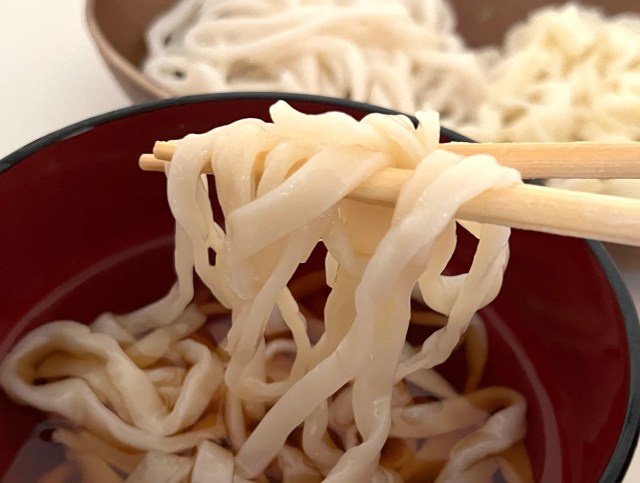
Even so, the emotional impact of eating his own noodles was exceptional. Kouhey may eat oodles of noodles in the future, but he has a newfound respect for the time and effort used to make such delicious food from nothing more than flour, salt, and water, all thanks to this single class he attended. If ever you are in the area, making your own noodles is an experience that you shouldn’t pass on by.
Location information
Nakano Udon Gakko Kotohira-ko / 中野うどん学校 琴平校
Address: Kagawa-ken, Nakatada-gun, Kotohira-cho 796
香川県仲多度郡琴平町796番地
Open 9:00 a.m.–5:30 p.m. (Building A), 9:30 a.m.–4:30 p.m. (Building B)
Udon school operating hours are 9:00 a.m.–3:00 p.m.
Website
Photos ©SoraNews24
● Want to hear about SoraNews24’s latest articles as soon as they’re published? Follow us on Facebook and Twitter!
]]> https://soranews24.com/2026/09/16/visiting-kagawas-popular-cooking-class-where-you-make-noodles-with-your-feet/feed/ 0 744949 P_20161122_092751 Japan’s 20-year Ig Nobel winning streak continues thanks to people blowing their noses https://soranews24.com/2026/09/09/japans-20-year-ig-nobel-winning-streak-continues-thanks-to-people-blowing-their-noses/ https://soranews24.com/2026/09/09/japans-20-year-ig-nobel-winning-streak-continues-thanks-to-people-blowing-their-noses/#comments Wed, 09 Sep 2026 03:00:14 +0000 https://soranews24.com/?p=744603 
Learn the scientifically proven technique for blowing your nose efficiently.
Science has tackled many a mystery for the advancement of human knowledge and understanding, from black holes to gene editing, but there are some researchers out there who turn their focus to the more mundane and humorous things in life and ask themselves, “What is going on here?” To laud the value of the efforts of those people, the Ig Nobel Prizes came into being, celebrating achievements that first make you laugh, and then make you think.
This year, in the 36th installment, and the first time being held in Switzerland, the Ig Nobel Prize in Medicine went to the late Dr. Tokuji Unno, Professor Emeritus at Asahikawa Medical University, and Dr. Hiroshi Yajima for their 1977 study: How to Blow the Nose. This marks the 20th consecutive year that a Japanese researcher has won one of the Ig Nobel Prizes.
▼ Here Dr. Miki Takahara of Asahikawa Medical University accepts the award on behalf of Dr. Unno who passed away in 2022, but you can also enjoy the entire award ceremony itself.
While nose blowing seems like an everyday occurrence, Unno and Yajima wondered whether people were actually blowing their noses properly. So, with pneumotachometers (airflow meters) and eardrum pressure transducers, they hooked up 15 volunteers to dissect the aerodynamics of the common honk.
Their mechanical breakdown of the human nose blow revealed crucial data for nasal hygiene enthusiasts everywhere:
● The One-Side Policy
Nasal passages are rarely created equal, and blowing both barrels at once causes airflow to take the path of least resistance. To clear the clogged side, you must block the clear side to build up a high-velocity airstream.
● The Power Blow
A commonly held thought was that blowing hard is bad for the ears, but the airflow inside the nose and middle ear infections are separate issues. Higher flow velocity increases the discharge efficiency of built-up mucus.
● The Long Blow
The average blow lasts 1.23 seconds and ejects 1.34 liters of air, which is about a third of your vital lung capacity. To maximize clearance right down into the bronchia, take a moderate breath in and execute a sustained, steady blow rather than a short, hyper-pressurized burst.
▼ Modest blows are not going to clear those sinuses efficiently.
The Ig Nobels are a humorous reminder that even the most mundane of daily habits are governed by fascinating physics. The next time you reach for a tissue, you can press one nostril, and blow long and proud with scientific confidence.
Sources: Asahikawa Medical University, YouTube/Nitere News, YouTube/Niconico News, J-Stage
Top image: Pakutaso
Insert image: Pakutaso
● Want to hear about SoraNews24’s latest articles as soon as they’re published? Follow us on Facebook and Twitter!
]]> https://soranews24.com/2026/09/09/japans-20-year-ig-nobel-winning-streak-continues-thanks-to-people-blowing-their-noses/feed/ 0 744603 OOK85_kahunkitu20150314132420_TP_V4 Tokyo’s red-light district cafe lets you dine inside a real 1960s cabaret https://soranews24.com/2026/09/08/tokyos-red-light-district-cafe-lets-you-dine-inside-a-real-1960s-cabaret/ https://soranews24.com/2026/09/08/tokyos-red-light-district-cafe-lets-you-dine-inside-a-real-1960s-cabaret/#comments Mon, 07 Sep 2026 17:30:40 +0000 https://soranews24.com/?p=744202 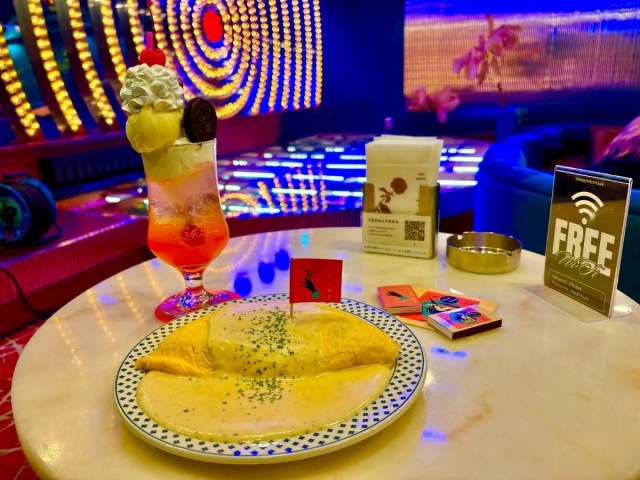
Used as a Netflix crime drama set, this safe, solo-female-friendly venue offers up black omurice and colorful retro sodas.
Kabukicho, in Tokyo, is Japan’s most recognizable red-light district, packed to the brim with adult entertainment and touts for venues that charge exorbitant and unexpected fees. It’s not the sort of place where most travelers, women in particular, would probably feel comfortable heading into an establishment alone and for the first time. However, we came across a Kabukicho cafe that even many solo women are keen to dine at, and it’s like stepping through a portal into a world set half a century prior.
Our Japanese-language reporter Natsuki Gojo is a lover of all things cute, with her life goal being to live surrounded by cute things, spread the charm of cuteness and become a cute grandmother. One of her less grandiose dreams, though, was to visit a Showa-era (1926–1989) cabaret, so when she found out about Niinana Kissa, a cafe that operates inside what used to be the famous Hinomaru Cabaret, she knew she had to be brave and venture forth into Kabukicho.
Walking through the district, just north of Shinjuku’s iconic Godzilla Head installation, Natsuki soon came across the cute retro sign…
…but the building itself was another mental hurdle for her to overcome, being less than warm and welcoming.
Pushing aside her trepidation, Natsuki plucked up her courage to walk up the stairs and open the door.
Unfolding before her was a glamorous Showa cabaret, with neon lights shaped like the Japanese flag (colloquially called the Hinomaru) dazzlingly brightly at the end of the room.
Looking up at the ceiling, it was covered in mirrors, and the disco ball was sparkling like a massive gemstone.
The entrance had, to put it bluntly, an intimidating vibe, but take a step inside, and it’s truly another world. Natsuki’s excitement couldn’t help but shoot through the roof, this was exactly the type of cabaret she had been longing to visit at least once.
Since Niinana Kissa was used as a filming location for the Netflix crime drama series Tokyo Swindlers, Natsuki was a little worried about what to do if there were scary customers inside, so just in case, she prepared some high-pressure fashionable sunglasses to adopt a don’t-mess-with-me vibe.
▼ They turned out to be completely unnecessary.

Looking around the interior, it was clear that the main customer base was groups of women, who all seemed to be enjoying oshikatsu (activities centered on supporting their favorite idol or character) by savoring colorful drinks, but there were also couples and women by themselves too. In fact, the typical Kabukicho-like clientele that Natsuki had been expecting wasn’t there, being mostly women and younger generations. Taking off her unneeded sunglasses, she settled in her seat and got ready to enjoy herself.

During peak hours, there is a 60-minute limit (or an additional order required), and after 10:00 p.m., a cover charge of 500 yen (US$3) applies, but during other time slots, you can use the cafe without a cover charge.
Having come all this way, Natsuki opted for the most popular drink and food to see the best the cafe had to offer.
▼ Although there were numerous tantalizing options to choose from.
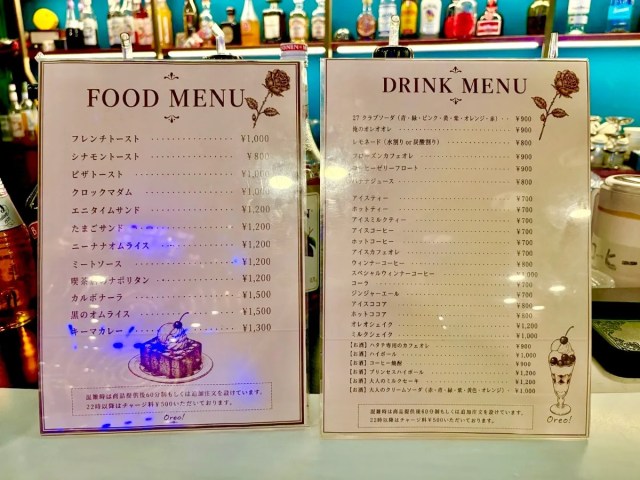
The 27 Club Soda (900 yen) is just so photogenic, with a rich variety of versions available. Natsuki selected orange, which is said to be one of the most popular among customers because of its great taste.
On top of the refreshing orange soda, there’s whipped cream, ice cream, an Oreo, and a cherry, and while the menu says it’s a drink, it feels more like a dessert. Natsuki loved how voluminous it was, but she had to wrap up her photos quickly as the ice cream soon started melting.
Sipping on her drink, Natsuki admired the cuteness of both the coasters and the matchboxes.
The overwhelming favorite food is said to be the Black Omurice (1,500 yen), but with the amount of cheese sauce, it’s definitely more white than black.
▼ Oh… wait…. there it is.
The inside is pitch black. Unlike some other instances of black food being a result of including squid ink, this blackness comes from bamboo charcoal, and the lightly-seasoned rice goes exceptionally well with the rich cheese sauce. Due to how black it was Natsuki wasn’t quite sure what to expect as they took a bite, but the vegetables and meat still turned out to have a thoroughly enjoyable texture and flavor.
While there is a trend for photogenic items at places where you go to enjoy the space to not be particularly delicious, the menu at Niinana Kissa is genuinely tasty. In fact, whenever Natsuki feels like having something to drink or eating a meal around Kabukicho, she’s considering using it as a regular coffee shop.
▼ Even the sofas on the side look comfortable enough to enjoy some refreshments on.
For some, there is one thing that might put people off, and that is that smoking is allowed, though Natsuki could see that as adding to the sense of having traveled back in time to the Showa era.
Contrary to its somewhat intimidating exterior, Niinana Kissa is a charming space where, once inside, you can enjoy it in various ways, from reflecting on a bygone era to using it as an everyday cafe.
Cafe information
Niinana Kissa / ニーナナ喫茶
Address: Tokyo-to, Shinjuku-ku, Kabukicho 2-36-3, Shinjuku Acb Kaikan 3F
東京都新宿区歌舞伎町2-36-3 新宿Acb会館 3F
Open 11:00 a.m.–6:00 a.m.
May suddenly close due to filming or event operations, so check Instagram stories for confirmation
Instagram
Photos ©SoraNews24
● Want to hear about SoraNews24’s latest articles as soon as they’re published? Follow us on Facebook and Twitter!
]]> https://soranews24.com/2026/09/08/tokyos-red-light-district-cafe-lets-you-dine-inside-a-real-1960s-cabaret/feed/ 0 744202 imgi_36_Photo-7-1 Join Naked in the Niwa garden: Kyoto Station’s newest spot to craft traditional art https://soranews24.com/2026/09/05/join-naked-in-the-niwa-garden-kyoto-stations-newest-spot-to-craft-traditional-art/ https://soranews24.com/2026/09/05/join-naked-in-the-niwa-garden-kyoto-stations-newest-spot-to-craft-traditional-art/#comments Sat, 05 Sep 2026 05:00:50 +0000 https://soranews24.com/?p=743978 
Workshops offer English instruction in making custom gold leaf bags, weaving bamboo baskets, and crafting samurai armor.
Many tourists descend upon the historical capital of Japan each day to appreciate its architectural beauty and cultural charm, but there are fewer who come away from their trip with a tangible traditional souvenir crafted by their own hand. Creative digital arts company Naked is launching interactive cultural workshops starting September 8, held every Tuesday and Thursday at Kyoto Station, that will give you a hands-on experience of a traditional craft.
Naked is a renowned Tokyo-based creative studio famous for blending projection mapping and digital art with historical spaces, like their previous exhibitions at the UNESCO World Heritage Site Nijo Castle, also located in Kyoto. Through their project Naked Garden One Kyoto, they aim to connect the city’s living heritage with global travelers. As part of this initiative Niwa was created in 2025 on the seventh floor of the East Square in Kyoto Station, featuring dynamic bamboo installations, a tranquil rock garden, and a light-filled modern tearoom named Kiwa.
The new rotating workshops showcase Kyoto’s traditional crafts with practical, artistic activities. You can learn the philosophy of bringing out the natural beauty of flowers through ikebana under the guidance of an instructor from Ikenobo, the founding school of Japanese flower arranging. Textile enthusiasts can try yuzen dyeing by hand-painting handkerchiefs or applying surihaku, which involves stenciling elegant gold and silver leaf onto a tote bag using provided patterns or custom images. Alternatively, you can craft a traditional shikai nami (four-seas wave) bamboo basket to take home, or tackle odoshi, the intricate samurai technique of lacing armor plates together using colorful silk cords.
Joining a session is without challenge for any prospective traveler exploring the city, being located at the city’s gateway and main transportation hub. Workshops are held every Tuesday and Thursday between 2:00 p.m. and 5:00 p.m., lasting roughly 40 to 60 minutes per experience. At 4,500 yen (US$28) per person, each ticket includes a complimentary matcha latte or coffee from the Niwa cafe.
Classes hold up to six people (participation is available from just one person), require zero preparation, and offer clear English text guides alongside instruction in Japanese. It is possible to reserve spots online via KKday or Asoview, or simply walk in for same-day booking up until 4:00 p.m.. Whether you have a spare hour before catching the train to your next destination or want to kick off your Kyoto stay with some real artisan crafts, Niwa offers an easily accessible opportunity to learn a skill and walk away with a unique Japanese souvenir.
Related: Niwa Website, KKday, Asoview
Source, images: PR Times
● Want to hear about SoraNews24’s latest articles as soon as they’re published? Follow us on Facebook and Twitter!
]]> https://soranews24.com/2026/09/05/join-naked-in-the-niwa-garden-kyoto-stations-newest-spot-to-craft-traditional-art/feed/ 0 743978 sub3 Flock to Tomarigi, the viral app that lets you perch in over 1,000 spots throughout Japan https://soranews24.com/2026/08/31/flock-to-tomarigi-the-viral-app-that-lets-you-perch-in-over-1000-spots-throughout-japan/ https://soranews24.com/2026/08/31/flock-to-tomarigi-the-viral-app-that-lets-you-perch-in-over-1000-spots-throughout-japan/#comments Mon, 31 Aug 2026 14:00:30 +0000 https://soranews24.com/?p=743585 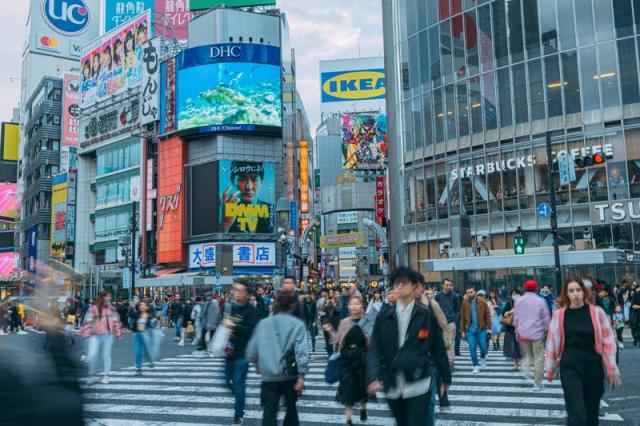
Letting virtual travelers swoop in on live webcams and train views across the country.
“Try before you buy” is a fantastic concept that saves many a headache when shopping, but what if you could test-drive your next dream vacation before ever stepping onto a plane? Tomarigi, a recently viral web app, has helped turn virtual travel into an effortless endeavor.
Hardly a brand-new innovation, freely available webcams have long allowed travelers to check ski slope snow conditions, monitor the weather surrounding a mountain’s peak, or watch wild animals roaming in their natural habitats. However, finding a working feed would mean wading through frustrating search queries, so they never really reach mass appeal. Tomarigi (which translates to “perch”) revolutionizes this experience by aggregating YouTube livestreams into a sleek, interactive map of the Japanese archipelago, letting you drop into over 1,200 locations in an instant.
▼ Let the app do the legwork for you.

Japanese social media users have enthusiastically embraced the platform, praising its fast performance and clean, user-friendly design. Exploring is made easy with intuitive filter buttons at the bottom that allow you to sort feeds by tranquil nature, animal viewing, or a number of other categories. Depending on your filter settings, the site also displays the eight most popular livestreams that are trending right now, but you could also embark on a virtual adventure with the help of the “random” button, taking you to a surprise camera somewhere in the country.
If watching static locations doesn’t quite tickle your fancy, you can hop aboard a virtual train instead. Tomarigi connects users to over 5,600 cab-view railway videos, letting you soak in the country’s varied landscapes, both urban and rural, from a conductor’s perspective as the trains wind along Japan’s rail network. It is genuinely possible for you to travel right across Japan without ever having stepped foot outside your front door.
To top it all off, this virtual wanderlust isn’t just limited to Japan. The platform also offers direct links to over 4,600 livestreams from all around the world, featuring a clever tool tracking the position of the sun relative to the Earth. This makes it simple to locate a webcam positioned specifically to catch a breathtaking, real-time sunset halfway across the globe.
Whether you are actively planning an upcoming trip, scouting local weather conditions, or simply craving an authentic slice of daily life from afar, Tomarigi offers a captivating view of Japan, and the entire planet, right in the palm of your hand.
Related: Tomarigi
Source: Twitter/@tomuisan via Jin
Top image: Pakutaso
Insert image: Pakutaso
● Want to hear about SoraNews24’s latest articles as soon as they’re published? Follow us on Facebook and Twitter!
]]> https://soranews24.com/2026/08/31/flock-to-tomarigi-the-viral-app-that-lets-you-perch-in-over-1000-spots-throughout-japan/feed/ 0 743585 susipakusnIMG_6195_TP_V4