SoraNews24 – SoraNews24 —Japan News— https://soranews24.com Bringing you yesterday's news from Japan and Asia, today. Sat, 24 Oct 2026 05:00:30 +0000 en-US hourly 1 https://wordpress.org/?v=7.1.5 https://soranews24.com/wp-content/uploads/sites/3/2020/05/en_rocket_1024.png?w=32 SoraNews24 – SoraNews24 —Japan News— https://soranews24.com 32 32 176746664 Middle Eastern juice bar B-Fresh lands in Harajuku https://soranews24.com/2026/10/24/middle-eastern-juice-bar-b-fresh-lands-in-harajuku/ https://soranews24.com/2026/10/24/middle-eastern-juice-bar-b-fresh-lands-in-harajuku/#comments Sat, 24 Oct 2026 05:00:22 +0000 https://soranews24.com/?p=748112 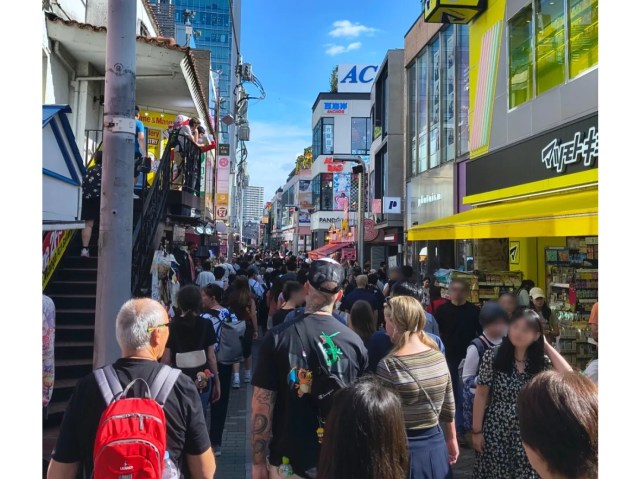
Refresh yourself with fruity sweetness while the crowds have yet to discover the store.
Japan’s cafe culture is a flourishing landscape of specialty roasters, themed cafes, and retro junkisssa coffeehouses. However, the presence of large foreign players, led by companies like Starbucks and Gong Cha, can’t be understated due to their expanding presence in the sector. Recently, a budget, large-capacity coffee brand from South Korea, Fave Coffee, has been opening locations one after another, while the world’s largest food and beverage chain Mixue from China is also steadily increasing its number of stores.
In this environment, B-Fresh, billing itself as “a brand from the Middle East,” has made its first splash into the waters of the Japanese market with opening a store in Tokyo’s Harajuku neighborhood on October 1. Our ace reporter Mr. Sato was slightly worried it would already be bearing the brunt of the throngs of young people that flow through Harajuku’s streets, he still decided to give it a go.
About three weeks after the opening of the store, Mr. Sato stepped foot into Harajuku, and despite it being a weekday, Takeshita Street was crowded as usual, with places like Marion Crepes seeing no drop in customers regardless of day or time, with people lining up endlessly.
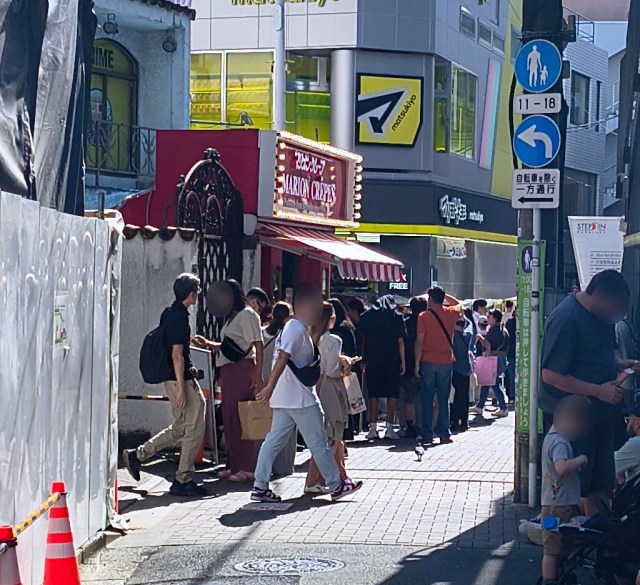
Scouring the streets, Mr. Sato was sure that he was in the right area and was keeping an eye out for one of these telltale lines, indicating a store’s popularity, but it turns out there was no line for B-Fresh at all.
This meant great convenience for Mr. Sato, but he lamented the fact that it had just opened and felt kind of desolate already. It may just be that word of mouth for the store hasn’t spread yet, and business will pick up in the weeks to come. On top of that, it looked as if the building is undergoing exterior wall construction, so if there hadn’t been a sign indicating they were open as usual (tsujodori eigyochu, 通常通り営業中), an uninformed passerby might assume they were not open at all.
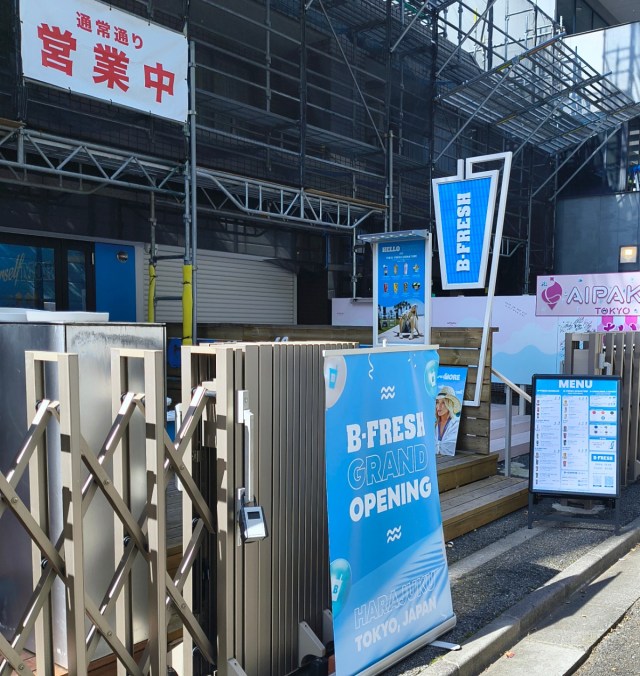
The store itself is a juice bar that serves smoothies using fresh fruit, acai bowls, and yogurt, with a variety of items that Mr. Sato was unfamiliar with or unsure how to choose.
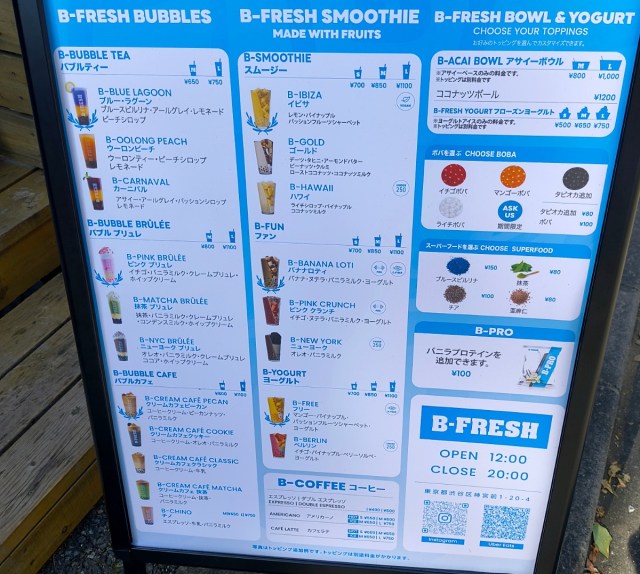
Using the ticket vending machine inside the store, Mr. Sato chose based on appearance and ordered something called B-Pink Brûlée, priced at 1,100 yen (US$7)] for a large (please note that only cashless payments are accepted in the store).
While waiting for his order, Mr. Sato inspected the menu some more. The products seem to be broadly divided into three categories: bubble drinks, smoothies, and acai bowls and frozen yogurt. The main representative of the bubble drinks is the Bubble Tea, and you can also choose fruit juice-filled pearls. For smoothies, there are drinks that blend things like Nutella and Oreos along with fruit, and toppings such as superfoods like chia and flaxseed can be added to any order. The range of customization really is quite wide.
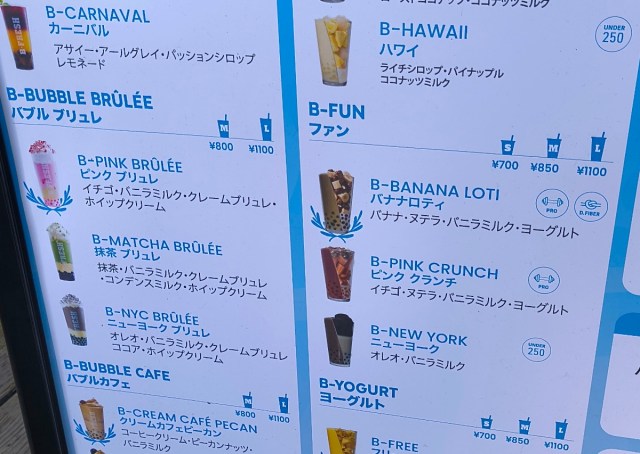
In light of the numerous options and indecisiveness, Mr. Sato focused on which menu photos looked appealing, but seeing the actual drink itself, he was confident that his choice was not wrong as it looked incredibly delicious.
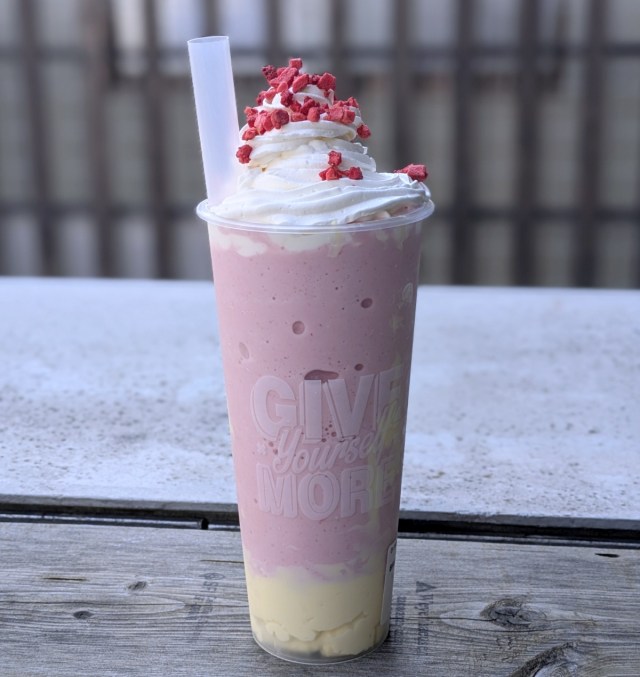
▼ Plenty of whipped cream and strawberry crunch on top
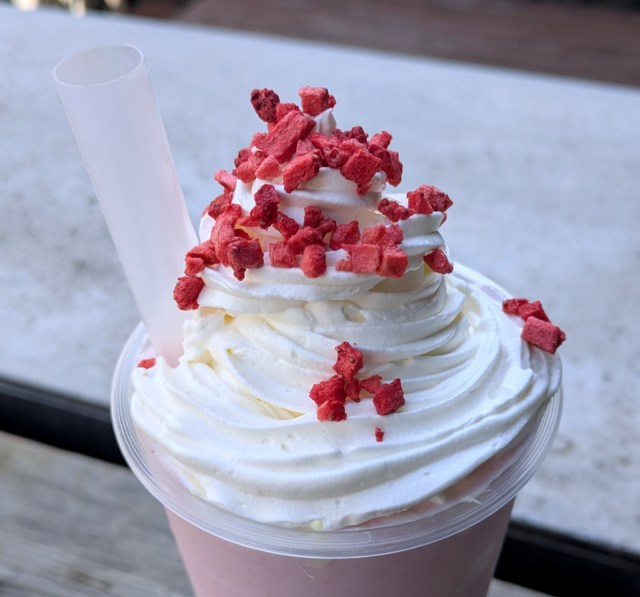
Making up the drink was a mix of strawberries, vanilla milk, and “creme brulee,” but even after drinking it, Mr. Sato wasn’t quite sure what the creme brulee was actually represented by—he believes it might be the custard cream.
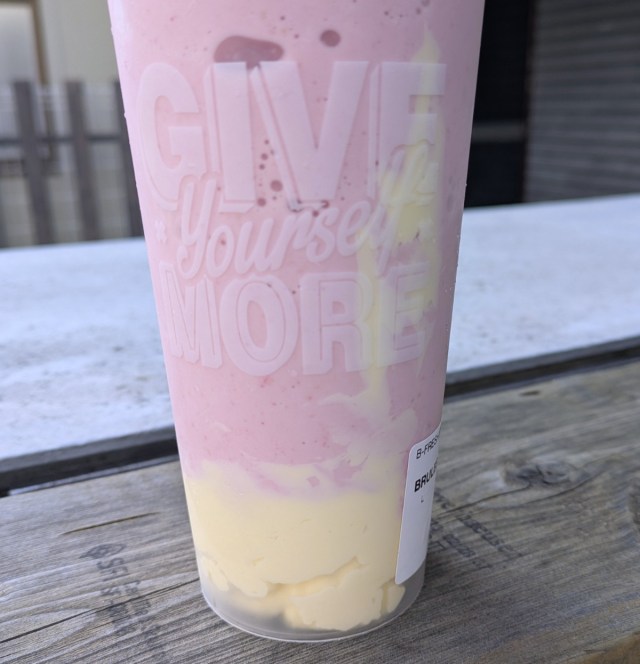
The menu photo also showed strawberry pearls inside of it, but that was an additional topping for 100 yen, so Mr. Sato passed on it this time. Even without the additional pops of fruit, it was deliciously sweet. Amid the unseasonably hot weather and a feeling of fatigue after his morning pole dancing practice, the flavor was very refreshing.
In the end, it remains to be seen whether or not this brand can catch on in Japan, but for now, it appears that crowds are yet to form.
Store information
B-Fresh
Address: Tokyo-to, Shibuya-ku, Jingumae 1-chome 20-4, tenpo kukaku chuo
東京都渋谷区神宮前1丁目20-4 店舗区画中央
Open 12:00 p.m.–8:00 p.m.
Related: Official Website, PR Times
Photos ©SoraNews24
● Want to hear about SoraNews24’s latest articles as soon as they’re published? Follow us on Facebook and Twitter!
]]> https://soranews24.com/2026/10/24/middle-eastern-juice-bar-b-fresh-lands-in-harajuku/feed/ 0 748112 x Eight low-key great places to spend the day (or half a day) in Japan this fall https://soranews24.com/2026/10/19/eight-low-key-great-places-to-spend-the-day-or-half-a-day-in-japan-this-fall/ https://soranews24.com/2026/10/19/eight-low-key-great-places-to-spend-the-day-or-half-a-day-in-japan-this-fall/#comments Mon, 19 Oct 2026 05:00:58 +0000 https://soranews24.com/?p=747834 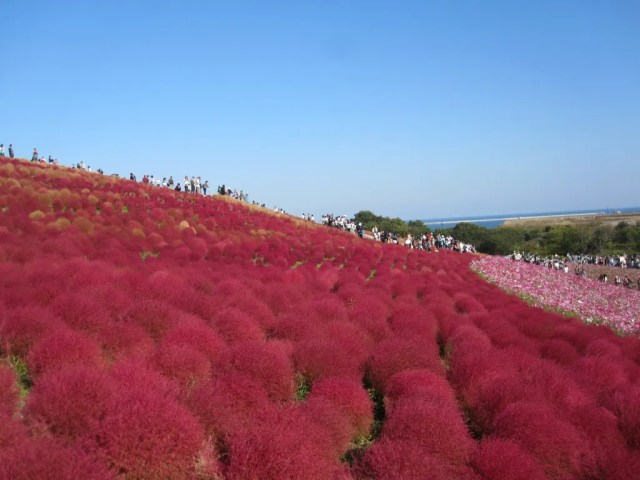
Fall means an abundance of good weather but a shortage of time in Japan, but here are eight spots that are quick to see but you’ll remember for a long, long time.
There’s a strong case to be made that autumn is the most comfortable time of year for going out in Japan. The summer heat, humidity, and thunderstorms are all done, but the cold weather and short daylight hours of winter haven’t set in yet. The cruel irony, though, is that Japan’s three vacation seasons, New Year’s, Golden Week, and Obon, take place in the winter, spring, and summer. Autumn has a few scattered holidays, but extended time off from work or school are hard to come by at this time of year.
So what we need is a selection of great places to spend half a day or so in autumn, and to put a list together we turned to a number of our writers. Let’s take a look at their recommendations of places they’ve visited that turned out to be low-key awesome.
● Hakone Open-Air Museum
Website
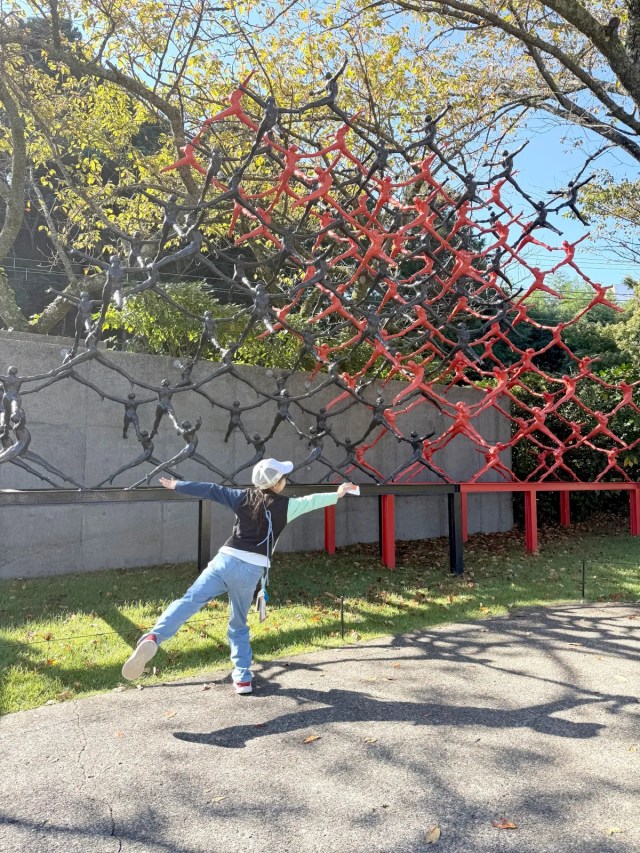
The town of Hakone, in the mountains of Kanagawa Prefecture, is most famous for its hot spring baths and lake cruises with views of Mt. Fuji. But if you can carve out time in your schedule for the Open-Air Museum, which has both indoor and outdoor sculptures on display, including many pieces by Picaso, you won’t be disappointed (and yes, the museum has a hot spring foot bath too).
We just sort of stumbled into the place on a family trip, but we ended up having a great time. It feels more like a park than a museum, and there’s plenty of space for kids to move around. I’m not even that much of an art lover usually, but we were there for three hours, and I never felt bored. – P.K. Sanjun
● Attack on Titan in Hita Museum
Website
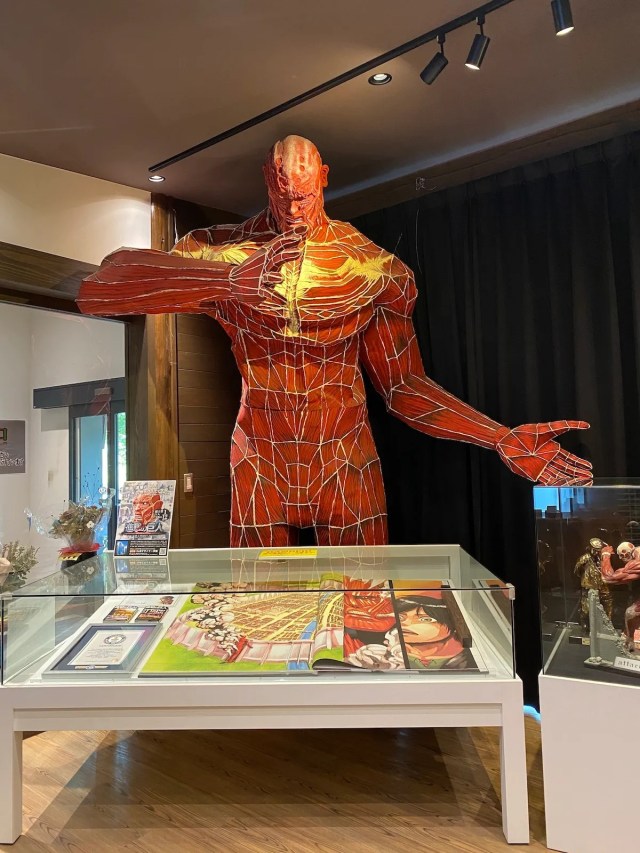
Sort of like Hakone, Oita Prefecture, which the town of Hita is part of, is primarily famous for its hot springs, and once again we’ve got a unique museum experience. Hita is the hometown of Hajime Isayama, the manga artist and creator of the smash-hit series, and the city’s museum houses a collection of original Attack on Titan artwork donated by Isayama, as well as the work desk at which he drew during the series’ serialization.
I was kind of surprised that the museum has a whole exhibit of Attack on Titan stuff, and was really impressed by how extensive it is. Obviously it’s great for hardcore otaku, but it’s cool even for people who are more casual fans, and combining a visit to the museum with seeing some of the fall leaves in the town shows that thee’s more than hot spring to Oita’s appeal. – Takashi Harada
● Dragon Maze
Website
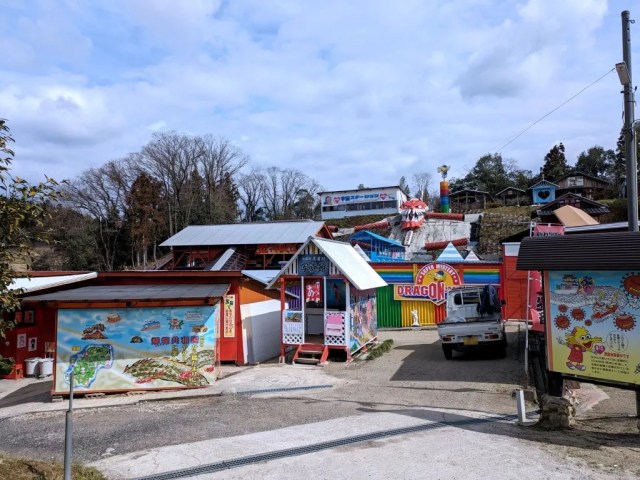
It’s hard to say what the most impressive thing is about this maze in the hills of Unnan, Shimane Prefecture. Its massive size? The fact that it’s built by hand? The way it keeps getting bigger because the owner keeps adding on to it, based on visions he has in his dreams? Really, there’s no other place in Japan quite like the Dragon Maze.
I think almost all of the giant mazes like this that you used to be able to find in Japan are gone now, but this one in Unnan is a survivor. It first opened in 1987 and then closed down in 1999, but it was relocated and reopened in 2007. Every year since then the maze has gotten bigger and more and more people have come to try it, turning it into a beloved local amusement attraction.
The whole thing is hand-built, but it’s so complex that’s it’s a serious challenge even for adults. I’d actually wonder if little kids can find their way all the way through to the goal? When it first reopened, the maze had a total area of about 1,000 hectares, but by 2022 it had grown to seven times that size. At this pace, it’ll be 10,000 hectares before long.
– Mr. Sato
● Tokyo Metropolitan Government Building
Website
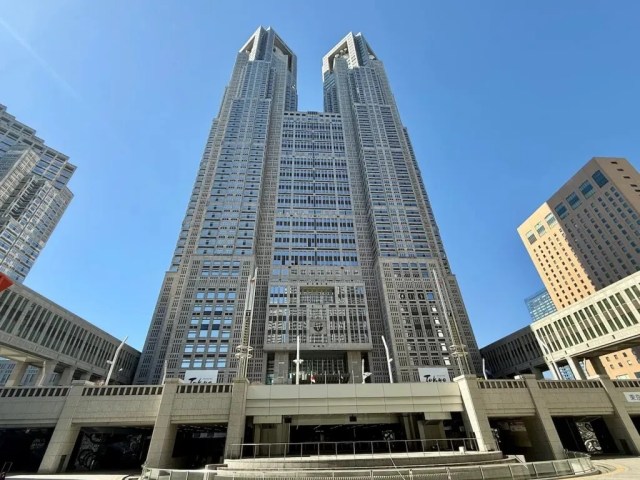
The Tokyo Metropolitan Government Building, a.k.a. Tocho, is essentially Tokyo’s city hall, but there are plenty of reasons to go there besides taking care of local government paperwork. Each of its towers boasts an observation floor at the top with panoramic views of Tokyo and even Mt. Fuji, and it’s even a great place to grab a bite to eat.
For years, I’ve been dropping by here when I’ve got spare time. Both of the observation floors are free to go up to, and the view from each is slightly different. Once you’ve had you fill of that, you can head to the cafeteria. It’s the same one used by workers in the building, so the prices are really reasonable, and there’s a neat inside vibe to it. You can get drinks and snacks in the observation floor too, and I like having something to sip or munch on while watching the sunset. Once it’s nighttime, they also sometimes have projection mapping shows on the outside of the building, so there’s something cool to see even after you come back down to street level. – Go Hatori
● Arakawa Amusement Park
Website
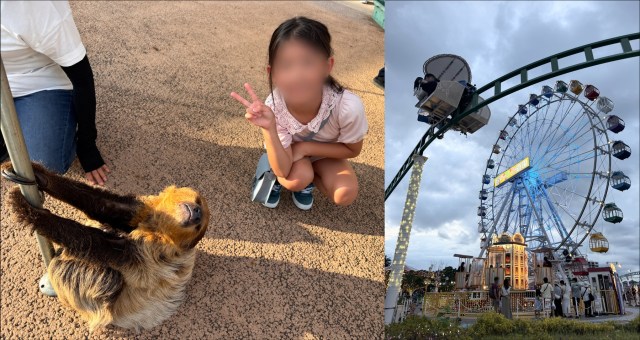
You don’t need to go all the way out to Disneyland for a day at an amusement park in the Tokyo area! Known as Arakawa Yuen in Japanese, this old-school amusement is located in a suburban part of Tokyo’s Arakawa Ward, along the bank of the Sumida River.
This place is a hidden gem, and a lot less crowded and touristy than other amusement parks. The Ferris wheel is really nice, but my personal favorite attraction is the Sky Cycle, where you ride pedal cars on an elevated track that goes around the park. It’s surprisingly fun to feel like you’re biking through the sky! They also have special events, like the zoo event when I went with my kids last summer and we took that picture with the sloth.
The biggest surprise though is how reasonably priced this place is. Admission and unlimited rides is just 1,800 yen (US$11.30) for adults, 1,000 yen for junior high students, and 700 yen for elementary school-age kids! There’s enough stuff to do here to spend the whole day in the park, so it’s a great deal, and they even have discounted tickets for entry after 4 in the afternoon. The place looks really pretty when it’s lit up at night too, so it’s seriously tough to beat. – Yoshio
● Small Worlds
Website
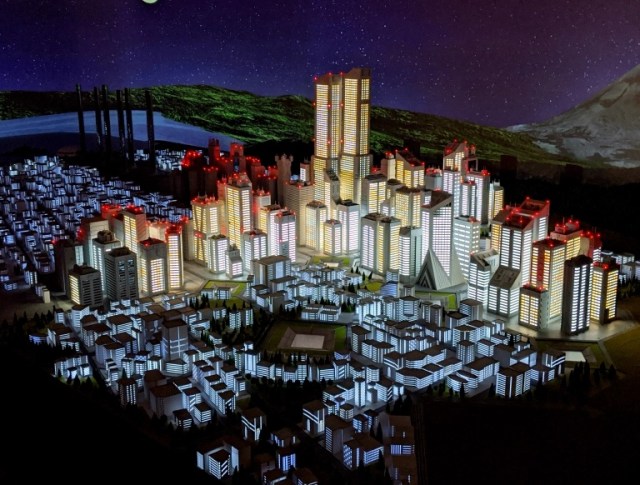
Not to be confused with the Disneyland attraction of a very similar name, Small Worlds is a unique miniature art exhibition facility in Tokyo’s Ariake island neighborhood in Tokyo Bay. Each area has huge, intricately detailed dioramas of cityscapes both real and imagined, including the Tokyo-3 anime metropolis from Evangelion.
I came to this miniatures museum to see the Evangelion exhibits, but the other areas, like the space center, airport, and whimsical European-style village, were all way more detailed than I’d expected and drew me into their little worlds. Each one of them has a massively convincing sense of place.
The adult admission price is pretty high at 3,200 yen, so I wasn’t sure how much I was going to enjoy this place, but there was so much cool stuff to see that I was totally satisfied. Eva fans especially will have a blast here, but I think it’d be a fun visit for anybody.
– Takamichi Furusawa
● Imperial Palace Outer Gardens
Website
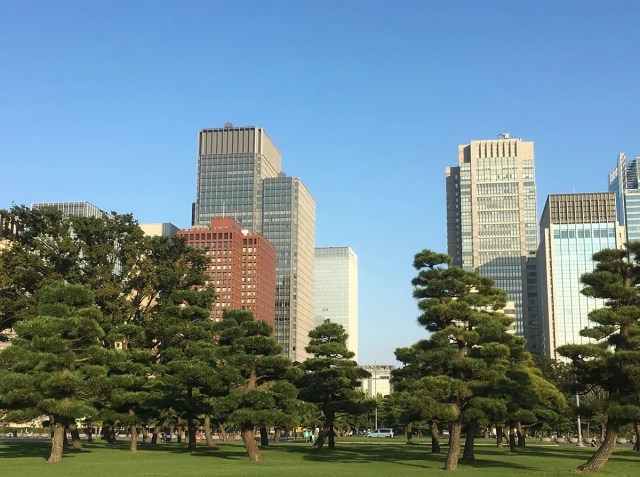
Also known as the Kokyo Gaien National Garden, this outer layer of the grounds of the Imperial Palace in Tokyo requires no ticket to get into, and the park-like atmosphere, but without the crowds of more famous downtown green spaces like Ueno Park, earn it a place on our list.
I don’t think there’s a better “if you know, you know” place in Tokyo than this. It’s located just a couple of blocks from Tokyo Station, but the atmosphere is so laidback and relaxing, a little peaceful oasis so close to one of the busiest places in the city that a lot of people forget it’s there. There’s a lot of historical significance to the place too, and it’s fun just to walk around, and it’s perfect for an autumn afternoon with good weather. – Yuichiro Wasai
● Hitachi Seaside Park
Website
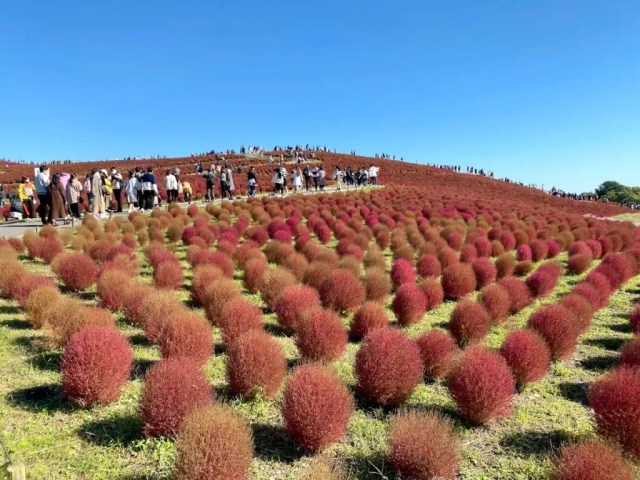
Located in the coastal town of Hitachinaka in Ibaraki Prefecture, this sprawling park is a nice in spring and summer too, but if you can plan for an autumn visit, you’ll be glad you did. That’s when the park’s hills of kochia shrubs turn a dramatic shade of crimson, becoming an utterly unforgettable and unique addition to Japan’s fall-color scenery.
Ibraraki might be two prefecture away from Tokyo, but if you time your train and bus transfers right, you can get from the capital to Hitachi Seaside Park in about an hour and a half. The park is huge, with forested areas, bicycling paths, and reconstructed farm houses, but nothing compares to the surreal impact of seeing the kochia in fall. The hills aren’t very steep, but they’re high enough that once you get to the top you’re rewarded with a view of the sea of red from a different perspective, so make sure to make the walk up. – Casey Baseel
Want even more places to see this fall in Japan? We’ve got a forecast of when the leaves are forecast to change colors across the country right here.
Photos ©SoraNews24
● Want to hear about SoraNews24’s latest articles as soon as they’re published? Follow us on Facebook and Twitter!
]]> https://soranews24.com/2026/10/19/eight-low-key-great-places-to-spend-the-day-or-half-a-day-in-japan-this-fall/feed/ 0 747834 3_0ab0e4 Famous Kyoto shrine has a message for foreign tourists who think it’s okay to dance at sacred sites https://soranews24.com/2026/09/23/famous-kyoto-shrine-has-a-message-for-foreign-tourists-who-think-its-okay-to-dance-at-sacred-sites/ https://soranews24.com/2026/09/23/famous-kyoto-shrine-has-a-message-for-foreign-tourists-who-think-its-okay-to-dance-at-sacred-sites/#comments Tue, 22 Sep 2026 17:30:03 +0000 https://soranews24.com/?p=745582 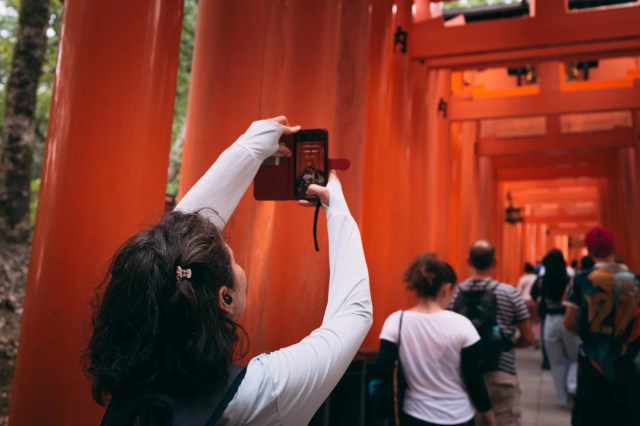
Fushimi Inari Taisha asks visitors to show some respect after dance videos filmed beneath its famous torii gates spark criticism online.
One of the things that draws tourists to Kyoto is its shrines and temples, which have been beautifully preserved for centuries. However, as the world changes around these historic sites, new problems have cropped up, including overtourism and the desire for fame and likes on social media.
As a result, one of Kyoto’s most famous shrines, Fushimi Inari Taisha, has recently become the stage for a number of individuals who think it’s okay to perform dances on its sacred grounds, all in a bid to gain views. After these videos were widely circulated online, they received a fair amount of clapback from viewers who criticised the thoughtless acts, and now the shrine itself has come forward with a message in response to the social media storm.
One of the recent videos, shared on TikTok and Twitter in early September, showed foreign tourists dancing beneath the shrine’s famous torii gates, blocking the path of other visitors who could be seen waiting for the group to finish their routine. Not only were they blocking the path, but members of the group could be seen entering from outside the walkway, interfering with the natural environment, which according to Shinto religion, is considered sacred.
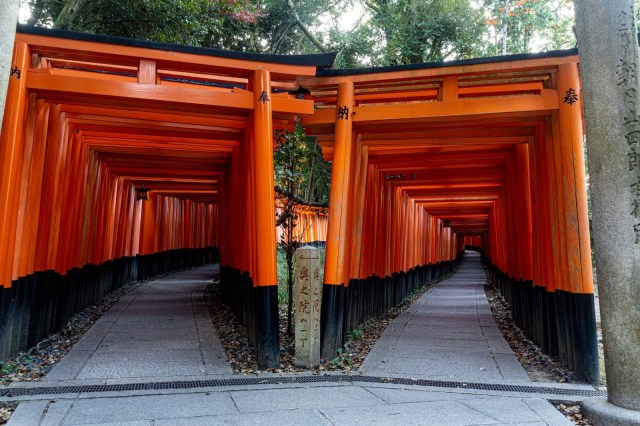
In fact, the entire grounds is considered sacred, including the approach, where a group of Maori women from New Zealand recently filmed themselves while performing a traditional poi dance. This clip was also met with criticism from the wider community, including from New Zealand-born professional wrestler Henare, who is of Maori heritage. He pointed out that dancing in sacred places also goes against Maori customs and apologised for the incident. He said he had tracked down the people involved and asked them to make a substantial donation to Fushimi Inari Taisha as an apology.
▼ The approach is said to be the pathway for the gods, and is so sacred that etiquette dictates visitors should walk on the sides rather than the very middle.
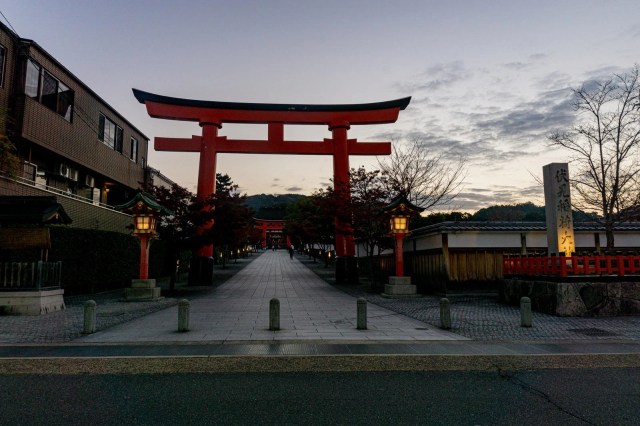
With other dance videos being filmed at the site and shared online, Fushimi Inari Taisha responded on 7 September with a notice in both Japanese and English reminding visitors to observe proper manners. It explained that the shrine grounds are a sacred area and place of prayer with more than 1,300 years of history.
In an interview with Japanese media outlet J-Cast News, the shrine confirmed that videos had indeed been filmed on its grounds and went on to say that staff will approach visitors whenever they spot prohibited or disruptive behaviour.
Although no damage had been reported in connection with the dancing, the shrine said it was disappointed that these visitors failed to understand the cultural significance of the site.
It’s worth remembering that although shrines like Fushimi Inari Taisha are places of beauty, they are not dance studios, and they are not spaces owned by tourists. They are places where spirits reside, gods are worshipped, and people come to pray. And as more people become familiar with temple and shrine etiquette in Japan, the video that you think will go viral might just land you in hot water and leave you being cancelled instead.
Sources: J-Cast News via Jin, Yahoo! Japan News
Featured image: Pakutaso
Insert images: Pakutaso (1, 2)
● Want to hear about SoraNews24’s latest articles as soon as they’re published? Follow us on Facebook and Twitter!
]]> https://soranews24.com/2026/09/23/famous-kyoto-shrine-has-a-message-for-foreign-tourists-who-think-its-okay-to-dance-at-sacred-sites/feed/ 0 745582 Fushimi Inari Taisha Shrine dancing video bad manners tourists tiktok instagram social media travel news Two American women attempt to smuggle US$1 million worth of cannabis into Tokyo for a free trip to Japan https://soranews24.com/2026/09/11/two-american-women-attempt-to-smuggle-us1-million-worth-of-cannabis-into-tokyo-for-a-free-trip-to-japan/ https://soranews24.com/2026/09/11/two-american-women-attempt-to-smuggle-us1-million-worth-of-cannabis-into-tokyo-for-a-free-trip-to-japan/#comments Thu, 10 Sep 2026 17:30:34 +0000 https://soranews24.com/?p=744818 
Suspect says she wanted to see Japan, but this was not the way to go about it.
One of the first things any visitor to Japan should know is that the country takes a hard stance against drugs – so much so that even common prescription drugs from overseas face stricter restrictions on these shores.
So if someone offers you a free trip to Japan on the proviso that you bring cannabis into the country, you’d be best off saying no, because chances are you won’t get in to see the country and you may never be allowed in ever again.
That’s the hard reality now being faced by two U.S. citizens who didn’t say no, and the irony is that the reason given for taking the job was a desire to see Japan. Neither of them made it past Haneda Airport, though, because they were stopped by customs officials after arriving on a flight from New York on 5 September, and after their luggage was inspected, 35 bags of dried cannabis were found hidden inside two suitcases.
The haul weighed in at around 30 kilograms (66 pounds), with an estimated street value of around 150 million yen (about US$1 million).
▼ This news report shows the drugs that were seized.
After their arrest, one of the suspects, a 25-year-old, admitted to the allegations of smuggling and said she had heard that working as a drug courier meant her airfare and accommodation would be covered. She also said she was attracted by the opportunity to visit Japan. The second suspect has denied the allegations.
Despite the desire to see Japan, the only thing the two suspects will now be seeing is the justice system firsthand. Under Japanese law, suspects can be held without charge for up to 23 days, and with a prevailing guilty-until-proven innocent mindset within the justice system, the conviction rate among those charged is incredibly high, at around 99 percent.
▼ Once these are on, there’s a high chance of a conviction.

Importing cannabis carries a maximum sentence of seven years in prison, while importing it for profit carries a maximum of 10 years’ imprisonment and potentially a fine of up to 3 million yen (about $19,500).
Foreign nationals convicted of drug offences can be denied entry to Japan with no specified period of exclusion. That means there isn’t a statutory period after which the prohibition automatically expires, so you could be denied entry for decades afterwards.
You don’t have to be carrying a large haul of drugs either, as Japan’s Ministry of Health, Labour and Welfare explicitly states that importing cannabis and cannabis resin is prohibited.
So if you’ve ever toyed with the idea of bringing cannabis into Japan, don’t. Not only will you face severe penalties, you run the chance of being caught up in Japan’s legal system, which doesn’t play by the same rules as those abroad. Plus, you may not be allowed into the country in future, which is something that even celebrities like Paris Hilton, the Rolling Stones and Paul McCartney have experienced, due to previous drug convictions outside the country.
Sources: Nikkei, NTV News, Yahoo! Japan News
Top image: Pakutaso
Insert image: Pakutaso
● Want to hear about SoraNews24’s latest articles as soon as they’re published? Follow us on Facebook and Twitter!
]]> https://soranews24.com/2026/09/11/two-american-women-attempt-to-smuggle-us1-million-worth-of-cannabis-into-tokyo-for-a-free-trip-to-japan/feed/ 0 744818 American women arrested in Japan cannabis marijuana bust suitcase Haneda Airport international flight terminal Tokyo police news 2 Family Mart reveals new T-shirt uniforms, relaxes hair colour rules for staff… but is it all too casual? https://soranews24.com/2026/08/28/family-mart-reveals-new-t-shirt-uniforms-relaxes-hair-colour-rules-for-staff-but-is-it-all-too-casual/ https://soranews24.com/2026/08/28/family-mart-reveals-new-t-shirt-uniforms-relaxes-hair-colour-rules-for-staff-but-is-it-all-too-casual/#comments Fri, 28 Aug 2026 03:00:07 +0000 https://soranews24.com/?p=743471 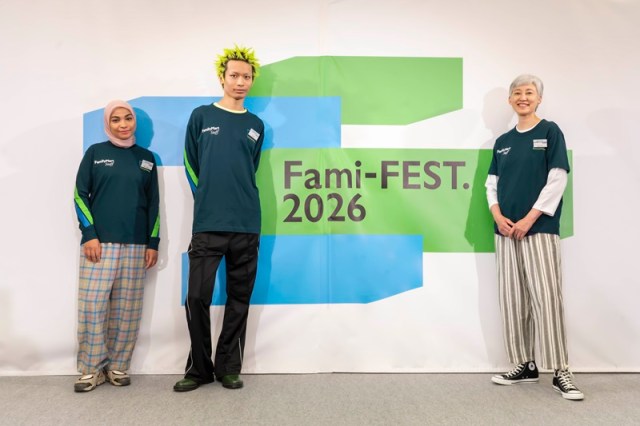
There’s a fine line between casual wear and pyjamas.
Japan is known for its formalities, especially when it comes to customer service, where neat uniforms and conservative appearances are often considered part of the job. However, as some industries face increasing labour shortages, companies are beginning to relax these conventions in the hopes of attracting more workers.
That’s what convenience store chain Family Mart is doing right now, with the introduction of casual uniforms and a new grooming policy that removes restrictions on staff hair colour. The changes are all part of the chain’s goal of becoming “the most desirable place to work” among Japan’s convenience stores.
The new uniforms were unveiled on 26 August, with three models showing some of the looks customers can expect to see on their next Family Mart visit. The new dress and grooming rules, collectively known as “Family Mart Coordinate”, are designed to give staff more freedom to express their individuality.
Family Mart is breaking new ground with the initiative, replacing its traditional jacket-style uniform with a T-shirt design, making it the first convenience store chain in Japan to introduce a T-shirt-style staff uniform.
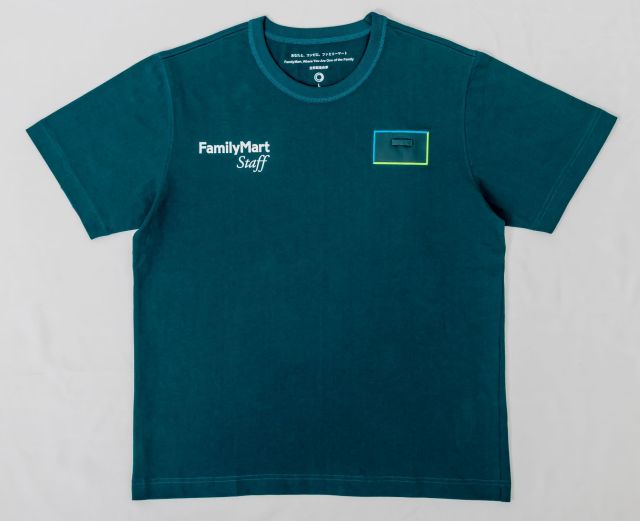
As the first uniform change in 10 years for the chain, the look is markedly more casual, with the top half based on the chain’s popular Convenience Wear “Outer T-shirt”, which has sold more than seven million units. The change was made partly in response to staff requests for something that would be easier to move around in and more casual to wear.

The shirts are made from thick 100-percent cotton fabric and have antibacterial, deodorising properties to help prevent unpleasant smells. The familiar Family Mart colours feature prominently, while the “Staff” lettering uses a more “refined” font intended to retain a sense of professionalism.
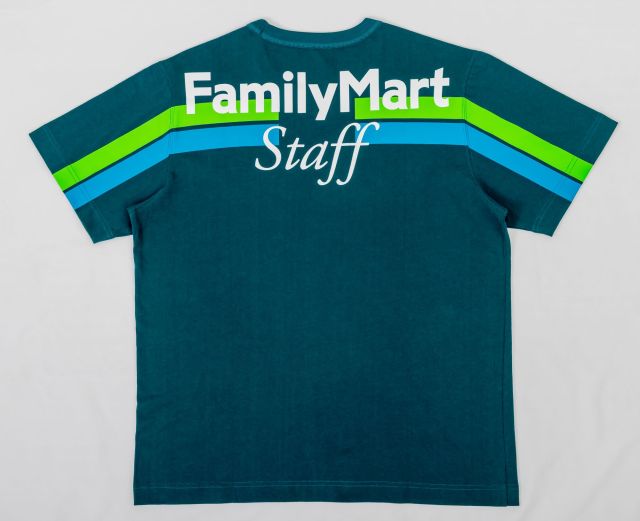
The uniforms were designed by Hiromasa Ochiai, creative director of Family Mart’s Convenience Wear range, and will be available to staff in 14 sizes, ranging from XS to 11L, with long-sleeved versions available up to 7L.
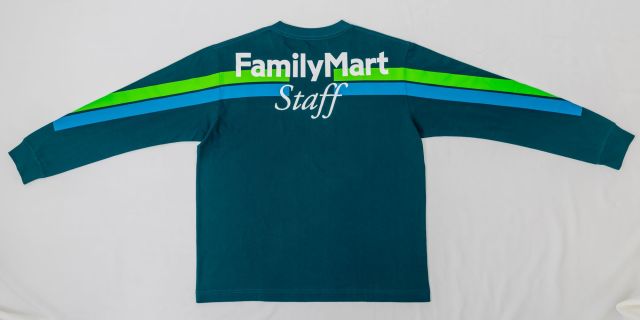
The uniform itself isn’t the only thing getting a makeover, because under the new “Family Mart Coordinate” standards, staff will have more freedom over their appearance, including their hair colour and how they choose to style their uniform. Hopefully there’ll be some guidance on styling, though, because pairing the T-shirts with Convenience Wear Easy Pants runs the risk of making the whole outfit look like pyjamas.
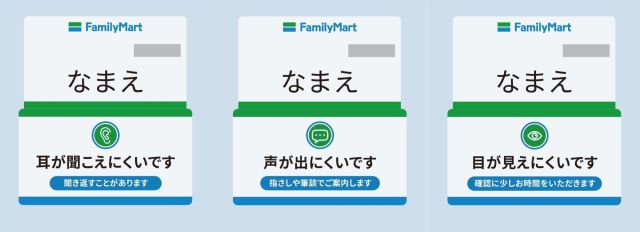
The idea is for staff to feel like they can retain their own identity while at work, with the new standards expanding their clothing choices and allowing them to customise their uniforms through layering. They’ll also be able to use a working name written in hiragana or katakana on their name badge.
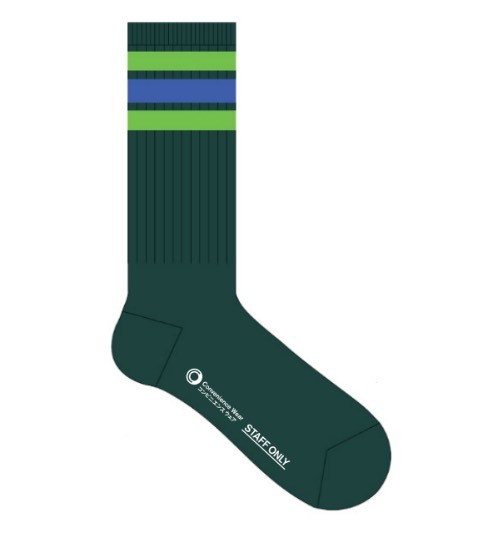
The chain is also planning a staff-only version of its popular Line Socks in a special colour, giving workers another way to customise their look.
While it’s an admirable move for the chain to shake up some of the traditional norms of the convenience store industry, the new looks have divided opinion online, with locals leaving comments like:
“The green punk look is a bit too much.”
“The chain will be flooded with complaints.”
“Isn’t it all a bit too casual?”
“I don’t care about hair colour. I care more about their attitude towards customers.”
“There’s an employee with pink hair at the Family Mart near my house, so I’ve always thought it was a free-spirited place.”
“As long as they do their job and provide good customer service, I don’t mind.”
It can be difficult to please both customers and staff in customer-facing roles, but Family Mart is confident that the new look will be well received. Following the popular response to its Famima flagship, which is also taking the chain in a different direction with its street-cool vibe and uniforms, Family Mart is happy to stand out and do things differently from its competitors.
The changes will take effect on 1 September, when the new uniforms will begin appearing at around 16,500 Family Mart stores across Japan.
Source, images: Press release
● Want to hear about SoraNews24’s latest articles as soon as they’re published? Follow us on Facebook and Twitter!
]]> https://soranews24.com/2026/08/28/family-mart-reveals-new-t-shirt-uniforms-relaxes-hair-colour-rules-for-staff-but-is-it-all-too-casual/feed/ 0 743471 Family Mart uniforms staff shirt hair colour rules work jobs in Japan convenience store clothes wear Famima news 1 Tokyo pub prohibits talking or keeping your phone out, only lets you drink in morning on weekends https://soranews24.com/2026/08/19/tokyo-pub-prohibits-talking-or-keeping-your-phone-out-only-lets-you-drink-in-morning-on-weekends/ https://soranews24.com/2026/08/19/tokyo-pub-prohibits-talking-or-keeping-your-phone-out-only-lets-you-drink-in-morning-on-weekends/#comments Wed, 19 Aug 2026 03:00:05 +0000 https://soranews24.com/?p=742278 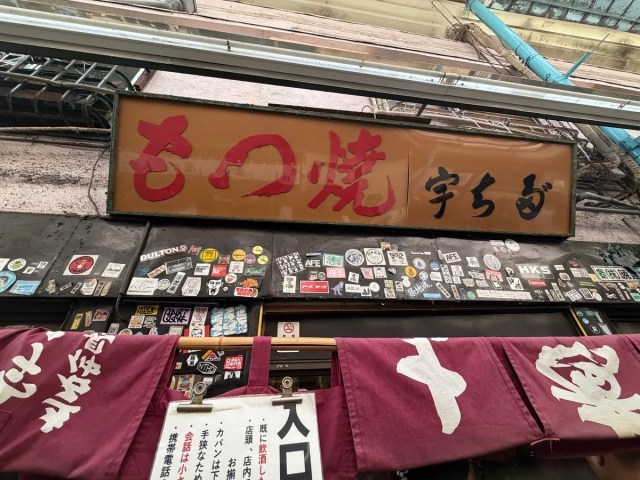
There are a lot of hoops to jump through at Uchida, but is this 80-year-old pub worth the hassle?
When the weekend rolls around, do you like meeting up with a friend and grabbing a drink or two? Hey, what a coincidence! So do we!
And when you and your friends are choosing where to knock back a couple cold ones at, do you find yourself gravitating towards places that have a long, long list of rules for customers to follow? No? How about places that require you to get up vey early in the morning and start drinking before noon? Hmm…not so crazy about that either, huh? Well, in that case the Japanese pub Uchida, in Tokyo’s Tateishi neighborhood, might not be the place for you.
To be honest, we weren’t sure whether or not Uchida would be the place for us either, but despite its strict customer conduct codes and bizarre operating hours, Uchida has been in business since 1946. You don’t last eight decades in the restaurant business by pure luck, especially in a market as competitive as Tokyo, so we figured there must be something that makes it worth it to set an early alarm and navigate Uchida’s byzantine web of etiquette expectations, so that’s what we set out to do.
Let’s start with the schedule. Even on weekdays, Uchida shuts down pretty early, closing at 7 p.m. On weekends, though, the place is only open from 10 a.m. to noon. That doesn’t mean you can just roll up at 10 and expect to get in, though. Because of Uchida’s popularity, customers start showing up to put their names in the queue for seats long before the restaurant opens. Some die-hard fans show up before 6 a.m., and when we arrived at 7, there were already more than 30 people who’d gotten there before us.
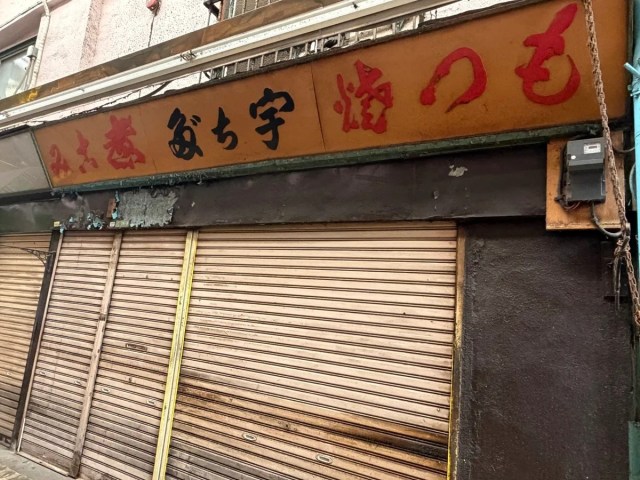
The Uchida (宇ち多゛) shutters are still closed in the early morning, but staff are stationed around the back of the restaurant to give out numbers to aspiring customers so that they don’t have to stand in line for the hours waiting to get in. You don’t get a piece of paper or text message, though. The staff simply tells you your number verbally, and it’s up to you to remember it. They’ll also tell you what time you should come back and wait outside for your number block to be called, which in our case was 9:20 a.m.
So if you’re headed to Uchida on the weekend, you’re going to have some time to kill, which is actually good, because it’ll give you time to review the many rules the restaurant has. What kind of rules? Well…
● All photography other than pictures of food/drink is prohibited.
● Placing your phone on your table or the counter is prohibited.
● Please refrain from using your phone as much as possible.
● Refrain from talking with others as much as possible.
● Do not eat with your elbows on the table/counter.
● Shoulder/backpacks must be removed and carried in the hand/in front of yourself when entering/exiting the restaurant.
● All party members must be present in line in order to be admitted (no lining up and having your friends join later).
● Dining time is limited to one hour.
● Customers who have already been drinking elsewhere will not be admitted.
Granted, that last one shouldn’t be a problem at 10 a.m., but the rest are pretty strict. Then there’s Uchida’s ordering system. Uchida’s specialty is motsu, or pork/beef organ meats, and they offer them both grilled and boiled. There’s a rigid protocol to how customers have to place their orders. If you’re ordering grilled motsu, first, you call out the cut you want…
● reba (liver)
● shiro (intestine)
● abura (fat)
● hatsu (heart)
● nankotsu (cartilage)
● teppo (rectum)
● kobukuro (uterus)
● tan (tongue)
…followed by your desired seasoning…
● tare (sauce)
● shio (salt)
● miso
● suyaki (plain)
…and finally how you want it cooked.
● futsu (standard)
● wakayaki (tender-cooked)
● yokuyaki (well-done)
If you’re ordering boiled motsu, you also start by calling out the cut you want, but next you have to say nama. Ordinarily this is the word for “raw” in Japanese, but at Uchida it’s what they call boiled motsu. Last, you pick your seasoning type, with the options this time being…
● osu (vinegar)
● shio (salt)
● amaino (sauce)
● shoyu (soy sauce)
So, for example, an order for grilled motsu could be “reba miso yokuyaki,” but not “miso reba yokuyaki.” Likewise, “nankotsu nama shio” is a valid boiled motsu order, but “nama shio nanjkotsu” is not.
▼ A plate of tan nama osu
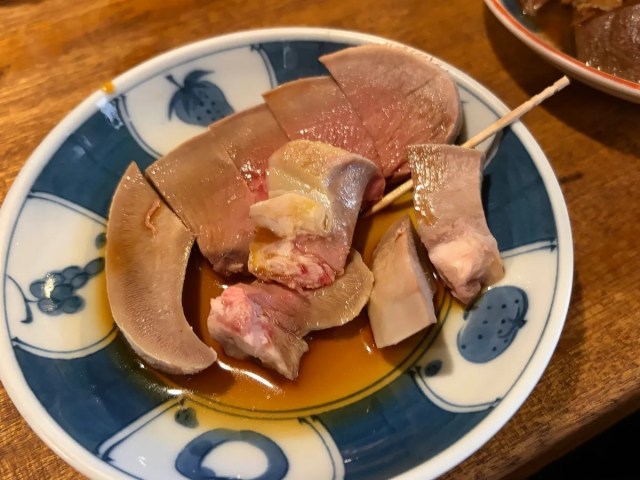
After you enter the restaurant and are shown to your seat, the staff will ask what you’d like for your first order. This is the one and only time they’ll do that. From that point on, if you want to order anything you need to just call out what you want.
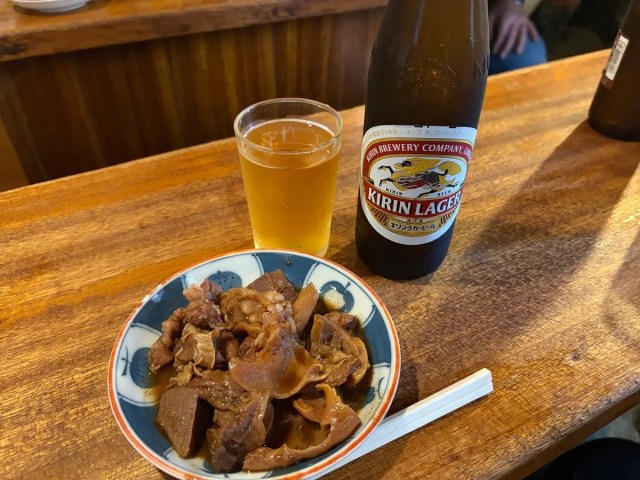
Since photos of anything other than the food and drinks are prohibited, we can’t show you much of the interior, but rest assured that it’s an old-school, down-to-earth environment, the kind of place where the ambiance comes from the weathered counter’s decades of history, rather than trendy furniture or fancy decorations. Uchida’s prices feel like a throwback too, with two-skewer orders of roast motsu or plates of boiled motsu for just 250 yen (US$1.60). A small bottle of Kirin beer is 500 yen, which is a good deal, but for half that price you can get Uchida’s flagship beverage, umewari.
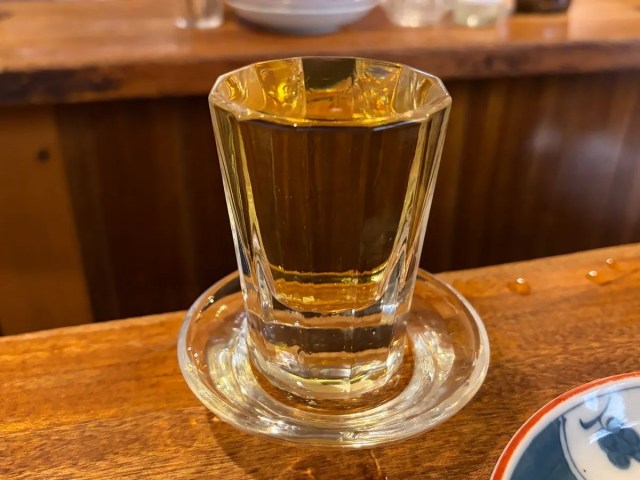
This is a cocktail of Takara-brand shochu and ume (Japanese plum) syrup. It’s very strong and very sweet, and something you’re unlikely to find in other Japanese pubs. Looking around, we saw that almost every other customer ordered at least one glass of umewari during their meal.
▼ Ume syrup being added to the shochu to make umewari
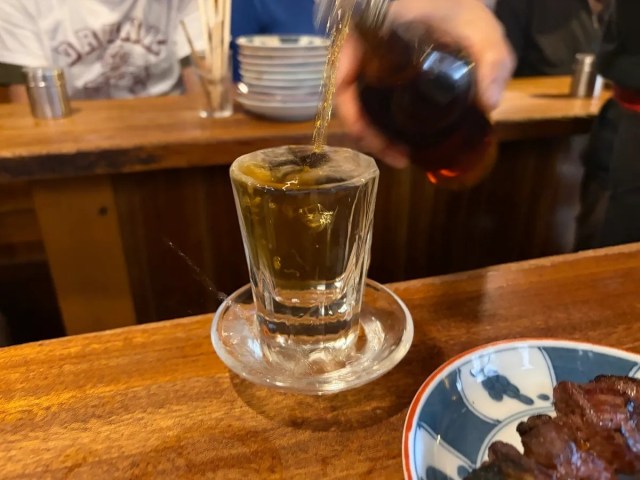
But despite Uchida’s decidedly blue-collar vibe and encouragement of not just day drinking, but morning drinking, this is not a rowdy establishment. Remember, customers are asked to refrain from conversation, and the non-order chatter was at a minimum. Instead, customers were quietly focused on the drinks and food in front of them. That doesn’t that the mood is hostile or oppressive, though, and part-way through our meal, in a quiet voice, the patron seated next to us informed us “If you don’t order the kashira (head) motsu soon, it’ll sell out.” Armed with this insider information, we managed to get in an order of “kashira shiro wakayaki” while it was still available.
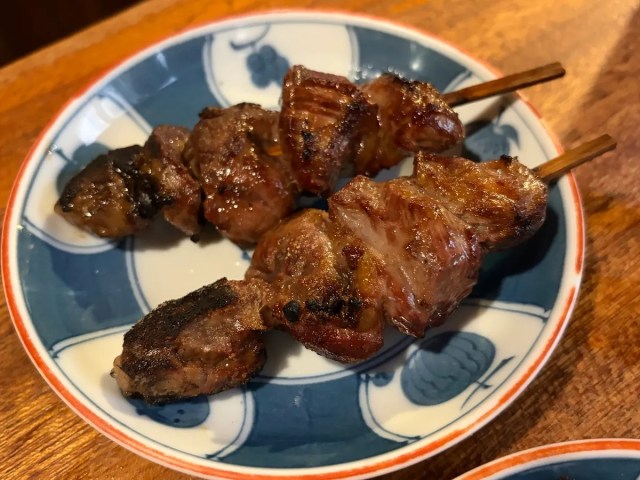
As further proof of Uchida’s lack of desire for booze-filled boisterousness, and of the pub’s penchant for rules, remember how we said the umewari is a strong cocktail? Uchida has a rule that first-time customers are not permitted to order more than three glasses of it, and they might even cut you off before that. When a woman seated near us tried to order a third glass, the staff authoritatively refused, telling her “Keep it at two today,” apparently concerned that the cumulative alcohol content would be more than she could handle.
▼ Shiro tare yokuyaki
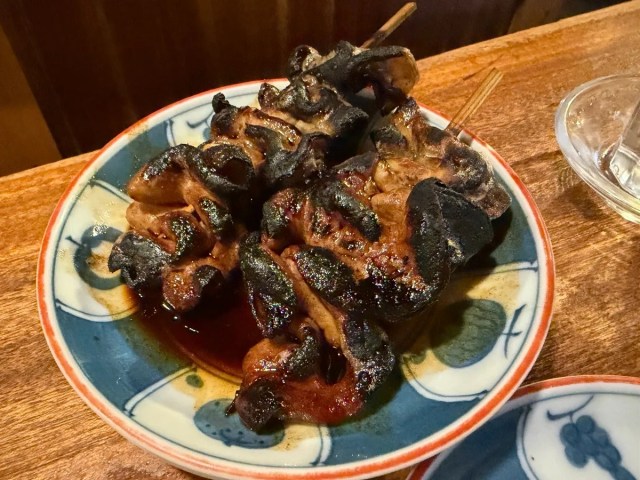
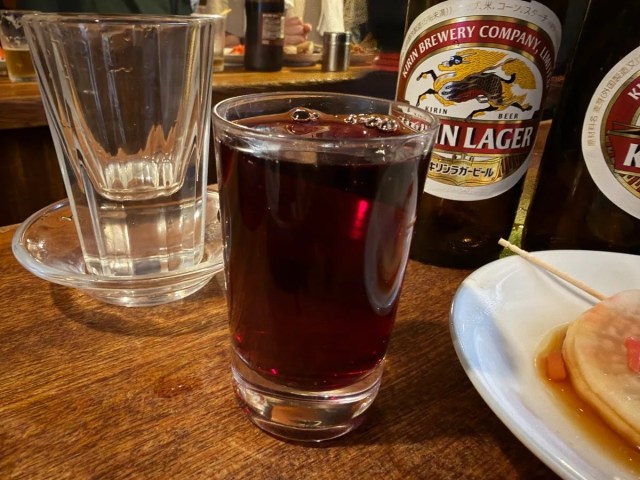
Uchida has one more special drink on its menu, the 300-yen hachi budoshu, a honey-sweetened wine, which we also ordered. It was surprisingly smooth, and we drank it down very happily.
▼ The Uchida storefront during operating hours, and as much of the interior as we can show
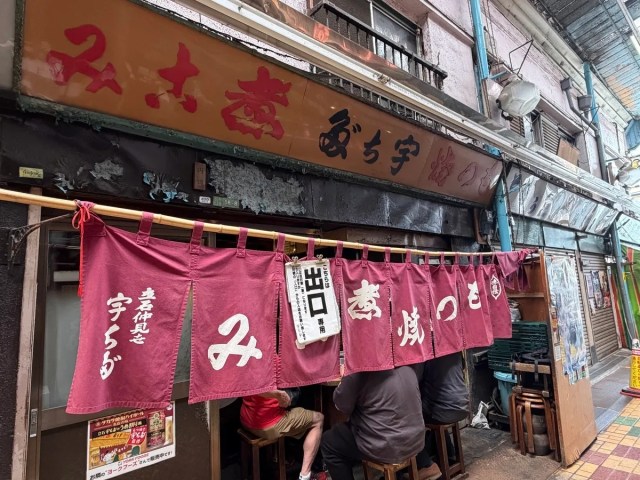
All in all, a morning visit to Uchida makes for a uniquely special experience, one unlike any we’ve ever had before, and there was even an added bonus when it was all done. Because of how each customer’s seating time is limited to one hour, when we left the pub, so too were a number of other customers. Once again able to converse freely, everyone exchanged greetings, and after chatting for a bit, we all went out for an afternoon round at a different nearby pub.
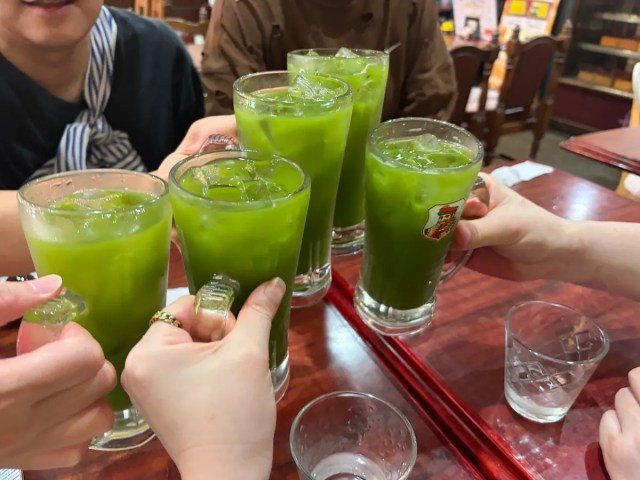
So yes, Uchida is worth getting up early for, and also, after drinking in the morning, probably going to bed early that night too.
Restaurant information
Uchida / 宇ち多゛
Address: Tokyo-to, Katsushika-ku, Tateishi 1-18-8
Open 2 p.m.-7 p.m. (Tuesday-Friday), 10 a.m.-noon (weekends, holidays)[
Closed Mondays
Photos ©SoraNews24
● Want to hear about SoraNews24’s latest articles as soon as they’re published? Follow us on Facebook and Twitter!
]]> https://soranews24.com/2026/08/19/tokyo-pub-prohibits-talking-or-keeping-your-phone-out-only-lets-you-drink-in-morning-on-weekends/feed/ 0 742278 10_45a426 12-year-old British girl who went missing in Tokyo found safe after visiting anime sites around Yokohama https://soranews24.com/2026/08/16/12-year-old-british-girl-who-went-missing-in-tokyo-found-safe-after-visiting-anime-sites-around-yokohama/ https://soranews24.com/2026/08/16/12-year-old-british-girl-who-went-missing-in-tokyo-found-safe-after-visiting-anime-sites-around-yokohama/#comments Sun, 16 Aug 2026 09:03:56 +0000 https://soranews24.com/?p=742049 
Police say she also spent time at an Internet cafe.
Carmelita Lakdesha Paul, a 12-year-old British secondary school student who went missing while travelling in Japan with her family, has been found safe after spending time at an Internet cafe while visiting anime-related locations around Yokohama.
Carmelita had been staying with her family at a private rental property in Minami-Kamata, a neighbourhood in Tokyo’s Ota Ward, after arriving in Japan for sightseeing with her parents and older brother on 21 July. She was reported missing by her mother shortly before 9:30 a.m. on 13 August, after the family awoke at around 8:30 a.m. and realised she was gone.
The Tokyo Metropolitan Police Department issued a public request for information the following day, and officers continued searching for Carmelita, including checking security camera footage. Through surveillance footage, they were able to trace her whereabouts to Yokohama Station in Tokyo’s neighbouring Kanagawa Prefecture on the morning of her disappearance but they were unable to locate her beyond that. Carmelita was said to only have a few thousand yen (less than US$100) on her when she left, and she did not take her passport with her.
▼ The train journey between Keikyu-Kamata, the nearest station to the vacation rental, and Yokohama takes around 12 minutes.
At around 8 p.m. on 15 August, roughly 59 hours after she left the family’s accommodation, Carmelita walked into a police box in Yokohama by herself. She was unharmed and reportedly told officers that she had begun to miss her parents.
Police say Carmelita had gone out to visit anime “pilgrimage sites” (the term used to describe real-world locations associated with an anime or manga) and had also stayed at an Internet cafe.
Although police haven’t released details of how long she stayed at the Internet cafe, this part of the story raises questions about how a 12-year-old was able to stay there. Although entry for people under 18 is generally permitted during daytime hours, there are late-night restrictions for minors, even those accompanied by a parent or guardian, so it remains unclear how long she stayed there and under what conditions.
While police haven’t revealed any other details, except to say they do not believe any crime occurred, additional details about Carmelita’s movements were provided by Tsunehiko Maeda, a former prosecutor, in an online comment.
Maeda said that the day before Carmelita went missing, she had told her parents that she wanted to visit Yokohama to see locations associated with Bungo Stray Dogs, an anime that she likes. He also said investigators found evidence that she had travelled from Keikyu Kamata Station to Yokohama Station using a transport IC card and she was due to return to her home country with her family on the day of her disappearance.
Bungo Stray Dogs, the anime that reportedly inspired Carmelita’s trip to Yokohama, is set largely in Yokohama and follows the members of the Armed Detective Agency, a group of detectives with supernatural abilities. It won’t be lost on fans of the anime that after spending two nights away from her family while visiting locations associated with the series, Carmelita found herself seeking help from the real-life police there.
With police saying there was no criminal involvement in the disappearance, Carmelita has now been safely reunited with her family.
Sources: Yomiuri, Asahi Shimbun, FNN via Yahoo! News Japan
Featured image: Pakutaso
● Want to hear about SoraNews24’s latest articles as soon as they’re published? Follow us on Facebook and Twitter.
]]> https://soranews24.com/2026/08/16/12-year-old-british-girl-who-went-missing-in-tokyo-found-safe-after-visiting-anime-sites-around-yokohama/feed/ 0 742049 12-year-old British girl missing Tokyo tourist found Japan anime sites internet cafe police box Yokohama news Why is Taco Bell failing in Japan, even as the country falls in love with tacos? https://soranews24.com/2026/07/25/why-is-taco-bell-failing-in-japan-even-as-the-country-falls-in-love-with-tacos/ https://soranews24.com/2026/07/25/why-is-taco-bell-failing-in-japan-even-as-the-country-falls-in-love-with-tacos/#comments Sat, 25 Jul 2026 13:00:49 +0000 https://soranews24.com/?p=739930 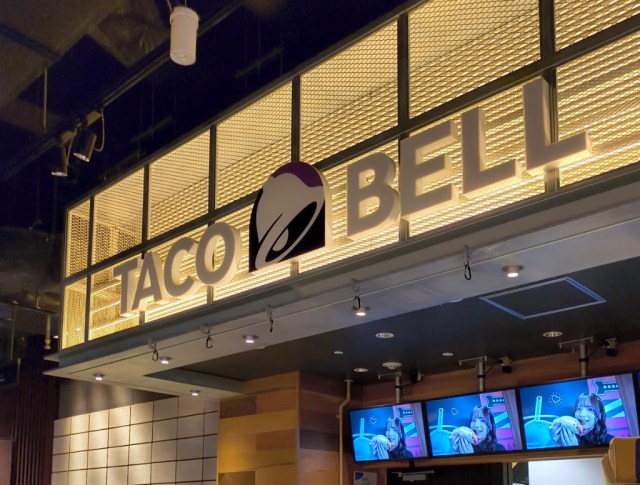
Mr. Sato gets some tacos for his tummy and serves up some food for thought.
Our ace reporter Mr. Sato is a true renaissance man, with a wide range of interests he pursues. Regular readers will already know of his forays into fashion, fitness, and urban exploring, and recently he’s also developed a passion for tacos.
It’s not just Mr. Sato who’s felt his taco cravings intensify, though. He’s says that Japan, and the Tokyo area especially, is in a full-on taco boom these days, and recently we’ve even come across taco sandwiches and taco spaghetti. But Mr. Sato also says that there’s one chain that’s not catching on with foodies in Japan, despite tacos supposedly being their marque specialty. So what’s the problem? We’ll turn it over to Mr. Sato to explain.
I can’t pinpoint exactly when the number of taco specialty restaurants around here started increasing, but it feels like we didn’t have all that many before the pandemic. Once we got out of that crisis, though, more and more taco shops started popping up, and now it I get photo and video posts about taco places in my social feeds all the time. My coworker Inaba even has a list of close to a dozen good ones in Tokyo and Kanagawa Prefecture, and since the start of this year, I keep seeing notices about new taco restaurants opening up too, so it’s safe to say the taco boom isn’t slowing down.
So that got me thinking about Taco Bell, which was already here in Japan before the taco boom got started. How are they doing these days? To get a general idea, I decided to visit the Taco Bell branch in Shibuya’s Miyashita Park entertainment complex.
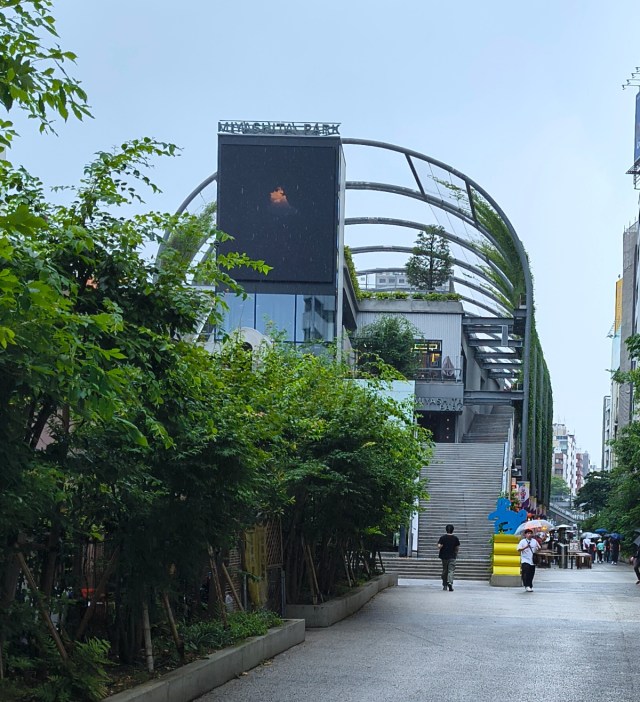
The Taco Bell chain started out in the U.S., in California, in 1962, and today it’s one of the biggest Mexican food restaurant chains in the world, with thousands of branches, most in America. In countries where it’s a hit, Taco Bell is loved by fans as a place to quickly and affordably grab some Mexican food.
The chain first came to Japan in the 1980s, but didn’t last very long before shutting down. Then Taco Bell relaunched its Japanese division in 2015, with their first branch for their second try opening on Dogenzaka Street in Shibuya. I actually went to it on its opening day. There was a line of about 300 people to get in, and they gave out T-shirts to the first 100.
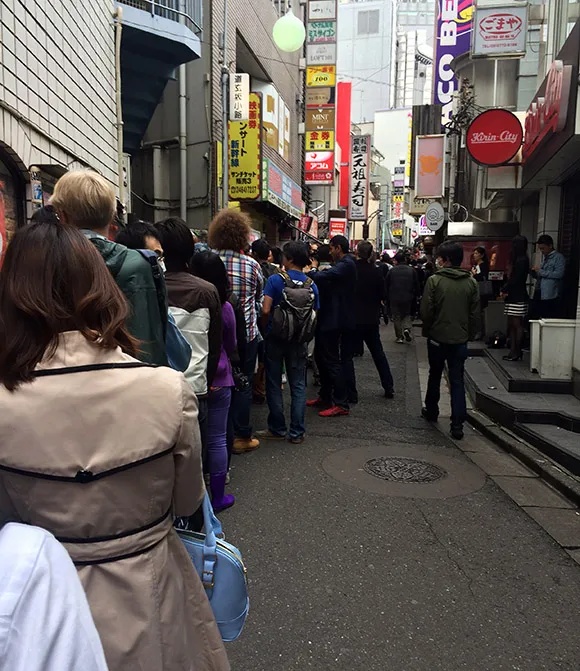
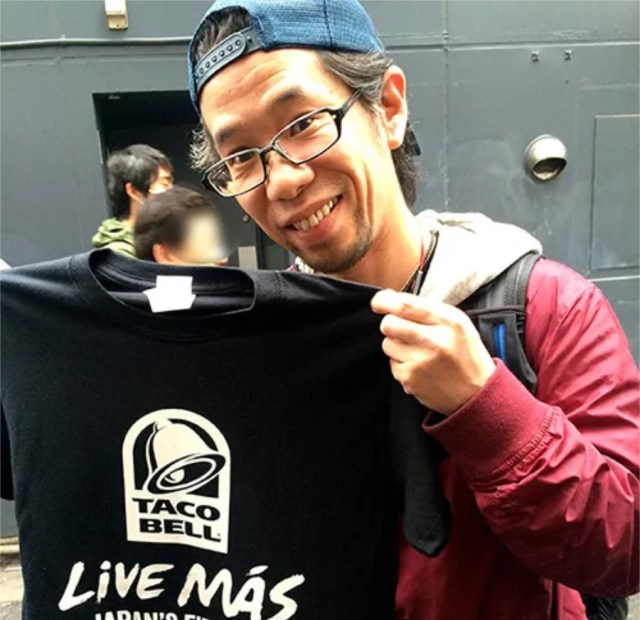
So now, 11 years later, I was wondering how many branches in Japan Taco Bell has expanded to, but according to their official website, there are still only 10 Taco Bell Japan locations. Taking into account how much more popular tacos have become, 10 branches doesn’t seem like very many at all.
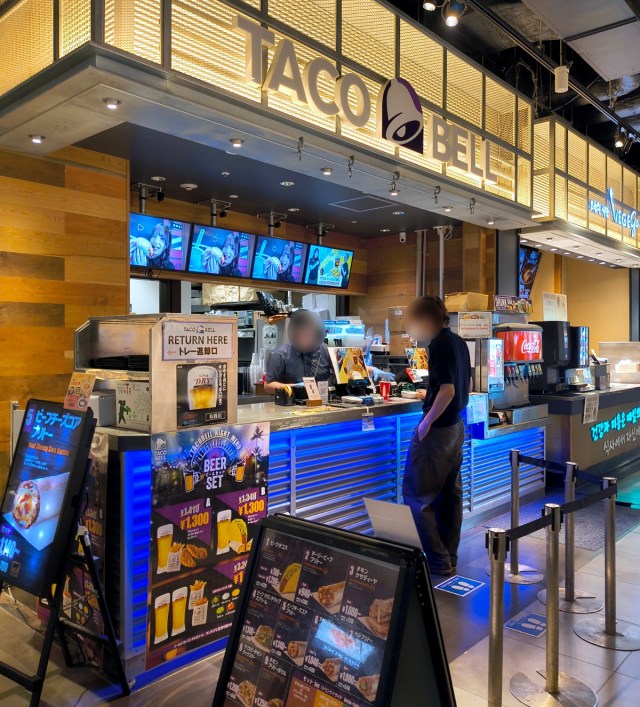
So why aren’t there more Taco Bell Japan restaurants opening up? That was the question running through my mind as I got lunch at the Shibuya Miyashita Park branch.
Looking at the menu, I noticed that their taco selection is actually extremely limited. Really, Taco Bell Japan only serves one kind of taco. You can choose between hard shells or soft tortillas, but as far as what’s inside, you can get their standard beef tacos, and that’s it.
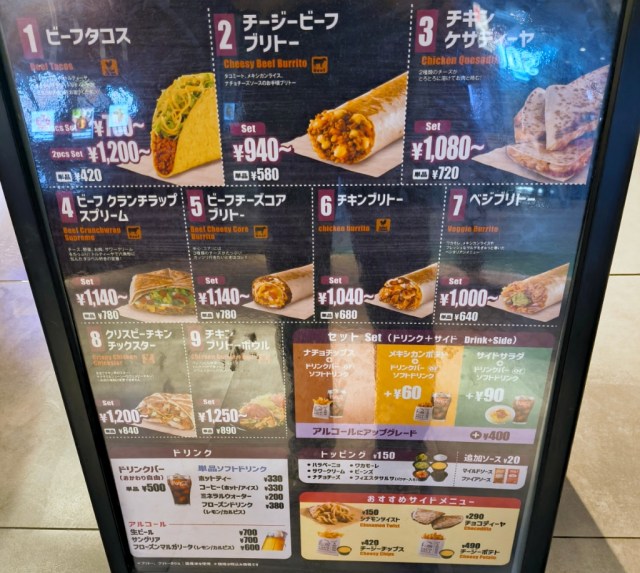
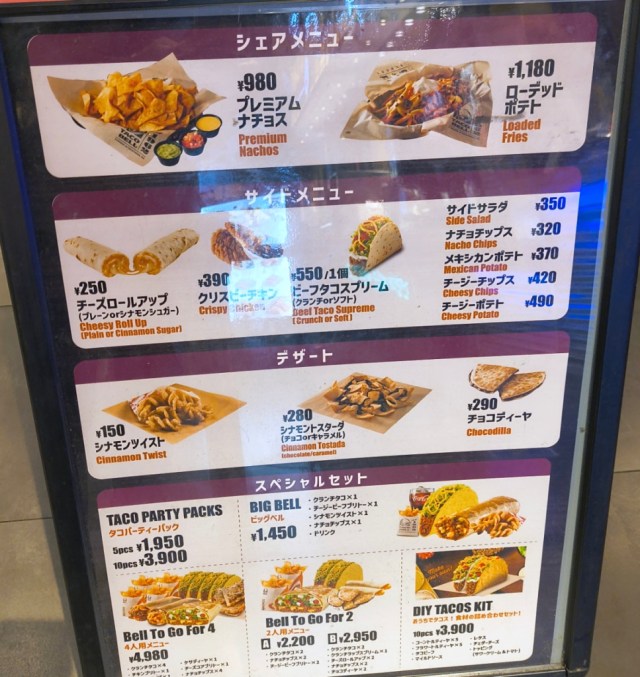
By the way, Taco Bell Japan’s “Lunch Bell” lunch combo isn’t available at all of its branches. For example, at the Dogenzaka branch, until 3 p.m. on weekdays you can get a taco, nachos, and a drink for 690 yen (US$4.25), but the Miyashita Park Taco Bell doesn’t offer it. So instead, I settled for a set with two beef tacos, French fries, and a refillable soft drink for 1,200 yen.
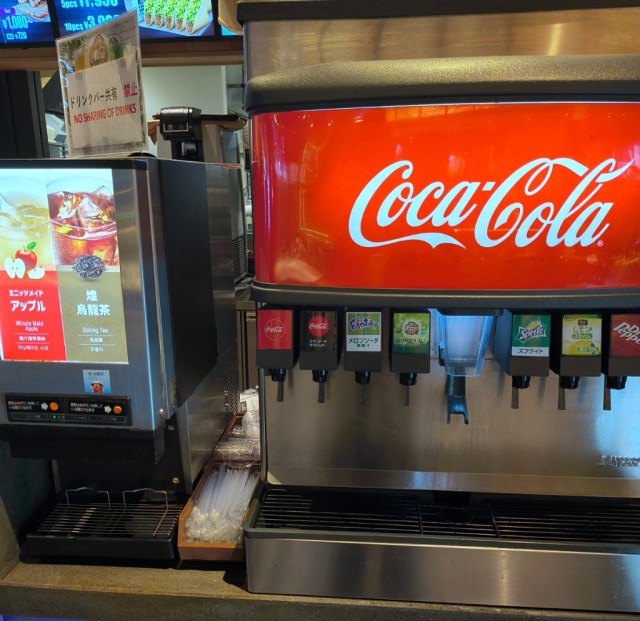
▼ The self-service drink bar had Dr. Pepper, which isn’t always easy to find in Japan.
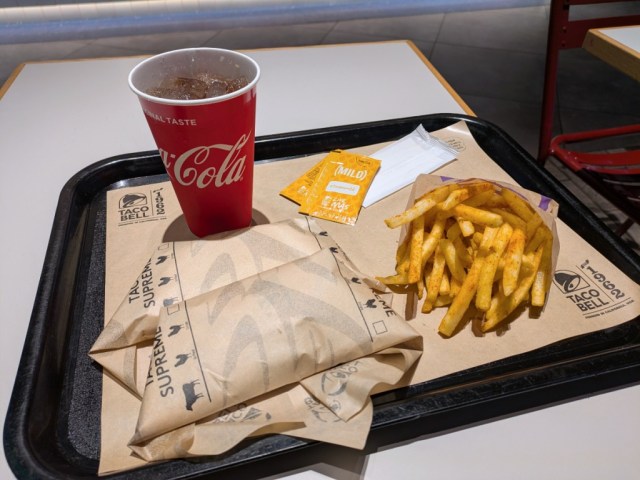
It had been a long time since I’d eaten at Taco Bell…but did the food always look like this? I mean, I knew it wasn’t going to be a big or luxurious spread, but still, it was a little sad-looking.
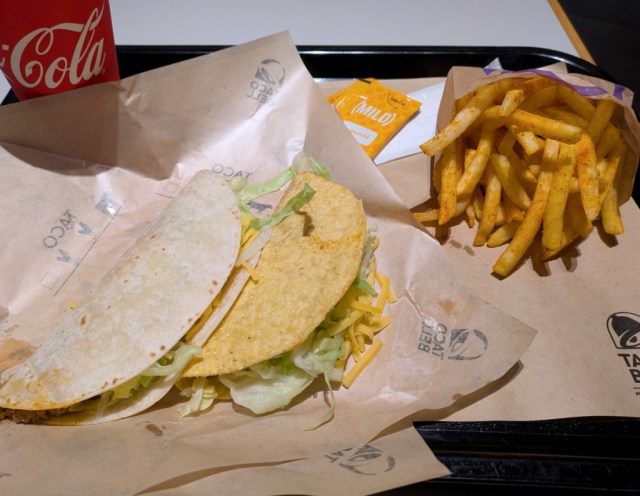
I’d chosen one soft taco and one hard one, and as I unwrapped them, the visuals got even sadder. Come to think of it though, this is the standard way that Taco Bell has always presented its food. Recently, I’ve gotten used to more stylish taco restaurants that serve their soft tacos opened up and flat not he plate, and so Taco Bell’s style has become pretty underwhelming.
Opening up the soft taco’s tortilla, I could see lettuce, cheese, and ground beef.
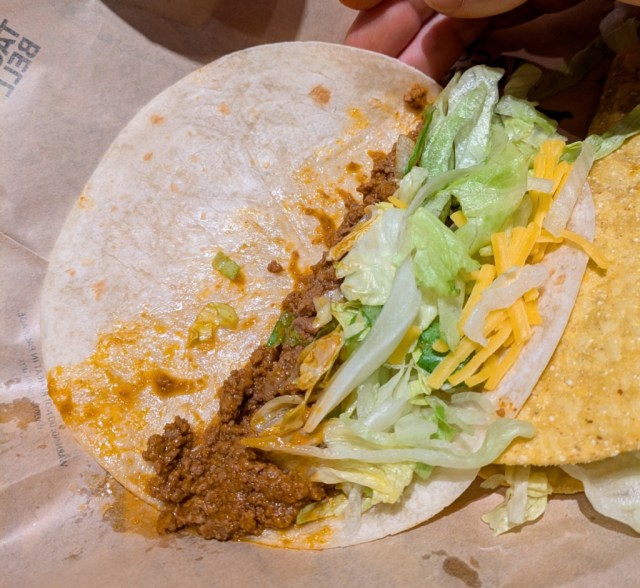
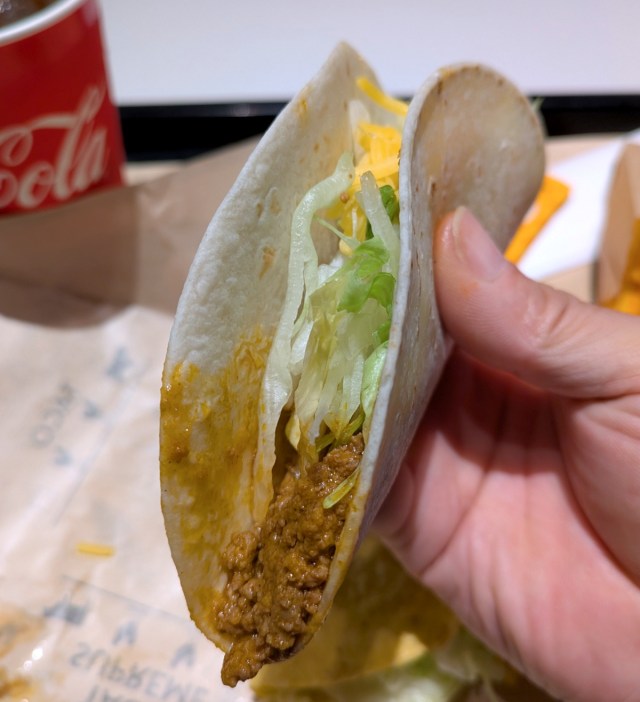
I took a bite, and the taste was plain and unadorned. With no sauce or additional toppings, there was nothing to help draw out more of the ingredients’ flavors or tie them together. If you wanted to phrase things gently, you could call the flavor “simple”…and if you’re not feeling so generous, you could call it “kind of boring.”
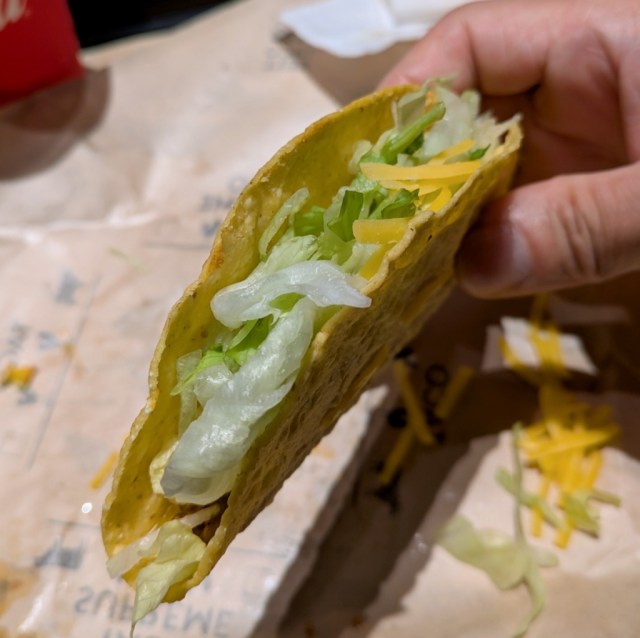
Taco Bell’s hard taco at least gives you some stimulating crunch as you bite into the shell, so it’s more satisfying than the soft version, but it’s not a dramatically more delicious eating experience. It’s still a sparse, simple flavor.
So why isn’t Taco Bell Japan riding the wave of taco popularity in Japan these days? After eating their tacos for the first time in a long while, my takeaway is that the Japanese taco market has changed a lot since Taco Bell came back to Japan in 2015. At that time, there were hardly any places to get tacos, and so it customers were more accepting of how Taco Bell makes theirs, since, after all, it’s a globally famous taco chain.
But now there’s a lot more competition in the Japanese taco scene, including many more taco specialty restaurants than we had when Taco Bell first came back. Tortilla Club Tortilleria, for example, which is also in Shibuya Ward, mills its own corn to make its tortillas in-house every day.
▼ Tortilla Club Tortilleria soft tacos
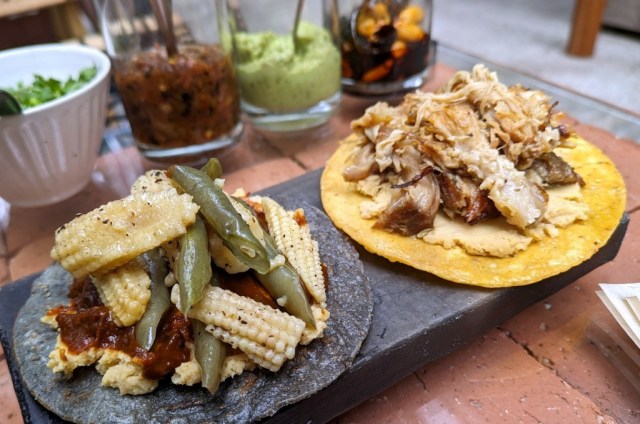
At Tortilleria you can get two tacos for 1,100 yen, pretty much the same price as Taco Bell charges, but they’re beautiful to look at and delicious to eat. So with places like that around, really the only advantage left for Taco Bell is maybe having a more convenient location by being located closer to a major train station.
Taco Bell’s unphotogenic presentation is also a big weakness. At other restaurants, they lay the tacos open and let you see all the different fillings that are going to be inside. With Taco Bell serving their tacos already closed up, customers aren’t as excited about photographing their food and sharing the pictures on social media, but that’s one of the major ways for restaurants to get publicity, so they’re falling behind in that aspect too.
I’ve heard that part of what makes Taco Bell successful in the U.S. is that its prices are cheap, but here in Japan Taco Bell isn’t any more affordable than a bunch of other fast food options we have. When you combine that with an unappealing presentation and plain flavor, people in Japan might even have the impression that Taco Bell is overpriced.
So I think Taco Bell Japan needs to restart by rethinking their pricing and presentation. If they don’t do something, they’re going to be at risk of missing out on the taco boom and their chance to secure long-term customers. They did a great job of raising awareness of taco themselves in Japan, and I hope they can somehow turn things around during the boom so they don’t end up having to leave Japan again.
Photos ©SoraNews24
● Want to hear about SoraNews24’s latest articles as soon as they’re published? Follow us on Facebook and Twitter!
]]> https://soranews24.com/2026/07/25/why-is-taco-bell-failing-in-japan-even-as-the-country-falls-in-love-with-tacos/feed/ 0 739930 1_6497d5 Blind Tokyo commuter explains the easiest place for him to stand while riding the train https://soranews24.com/2026/06/28/blind-tokyo-commuter-explains-the-easiest-place-for-him-to-stand-while-riding-the-train/ https://soranews24.com/2026/06/28/blind-tokyo-commuter-explains-the-easiest-place-for-him-to-stand-while-riding-the-train/#comments Sun, 28 Jun 2026 13:00:10 +0000 https://soranews24.com/?p=735943 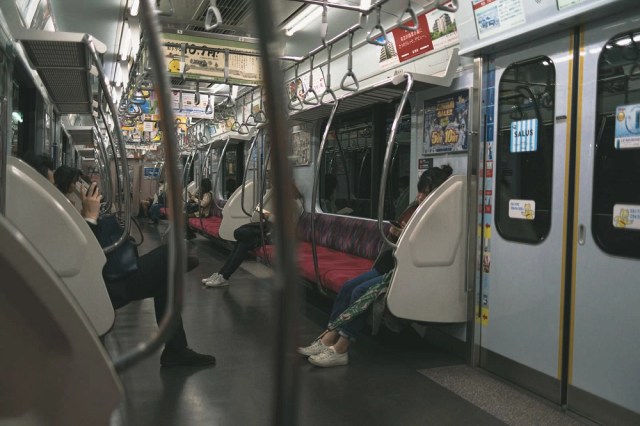
While waiting for the train, there’s always one spot he hopes will be empty when it comes.
Today, we’re featuring the writing of a special guest columnist, Ryoku. Ryoku works as a producer in the TV industry, and his hobbies include singing karaoke and traveling the country in a search for Japan’s tastiest gyoza.
Ryoku also happens to have glaucoma, and has been almost completely blind since about four years ago. In this article, he’d like to talk about his experiences riding the train as someone with impaired vision.
“You can’t see, but you still work in the television industry?”
Sometimes even I ask myself that, but it’s thanks to the support of people around me that I’m able to continue in this line of work. On the other hand, even though I receive help from so many people, I’d like to talk about some of the things I can do on my own and what I’ve noticed while doing them. One of those things, which I want to talk about today, is the best spot for me to be at inside a train.
I use a white cane when taking the train, and each time I do I end up thinking the same thing: It’s a huge help for me if there are empty spaces inside the train right next to the door. Those are the best places for me to ride in. You could even say that after I became unable to see, standing next to the door was one of the first places I found where I could feel secure.
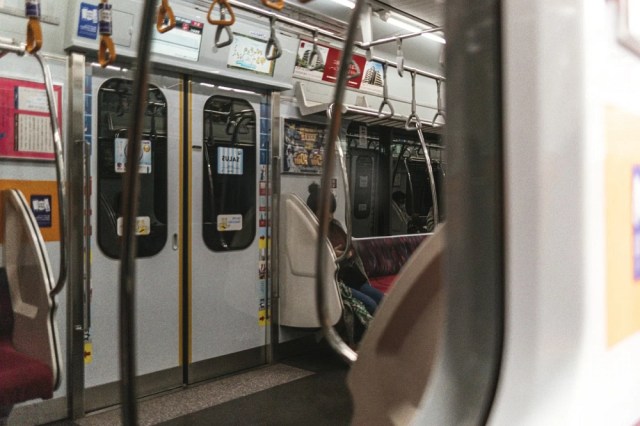
I usually get on the train a little past 9 a.m. Even if there are some days when it’s still crowded, at that time usually it’s not all that packed. I’d say there’s about a 50-percent chance of having an empty spot next to the door where I can stand, so when I’m waiting on the platform for the train to arrive, I’m usually thinking about whether I’m going to be lucky that day.
When the train stops and the doors open, I don’t get on right away. First, I focus all my attention on what I’m hearing. Can I hear footsteps of people getting off? Can I hear voices of people talking inside the train? Can I hear air currents rustling? Usually, though, everyone is pretty quiet.
In movies and manga, there are a lot of stories where someone loses their eyesight and then their other senses become sharpened. Unfortunately, in real life it’s not that simple. I didn’t realize this until after developing vision problems, but you always have to be paying attention. Is my footing safe? Am I going to bump into someone? What was that sound I just heard? And, of course, where exactly am I right now? There’s hardly ever a moment when I can relax and stop asking myself these kinds of questions.
This is all before even getting on the train, At this point, I’m already using about 60 percent of my mental capacity. Once the train does come and it’s time to get onboard, that gets kicked up to 100 percent. When the doors open, I gather my resolve and stretch out my left hand…and if I feel someone else’s hand inside the train, I think “Ah, no luck again today.” If someone is standing inside the train to the left of the door, it’s a pretty sure bet that someone will be standing on the right side too. As everyone knows, the spots right next to the door are popular spaces for commuters. So I end up standing right in front of the door, and that means that at every stop along the way to where I’m going, I have to get off the train, then get on again, so that other people can get on and off too.
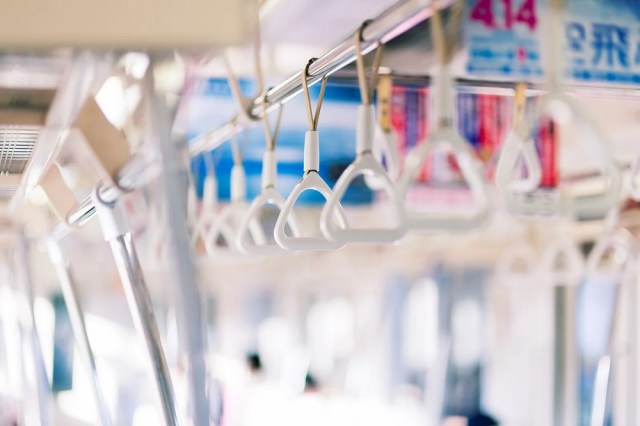
I could solve this by going further into the train, but honestly that’s really frightening for me. The more I move, the more chance there is that I’ll bump into someone, but what I’m even more worried about is making other people do more to accommodate me. There have been many times when someone has helped me find a hand strap or given up their seat so that I can sit in it. I really appreciate their kindness, but having to be in a state of continual reliance on them is tiring. If I move farther into the train’s interior, I have to start saying “Excuse me” and “Thank you.” I bump into people. I apologize. I bump into someone else. Then this terrifying game repeats when the train gets to my destination and I have to get off. To other people, it probably looks like a peaceful scene, but actually, I’m moving around the train constantly appreciating, apologizing, and feeling frightened. I’m in a state of serious panic.
On occasion, a thoughtful person standing by the door will say “You can stand here” and give me the spot. At those times I tell them “Thank you” from the bottom of my heart, and accept their offer. Standing next to the door makes it easier to understand where I’m at inside the train, and I can feel my mental HP quickly refilling. When other people need to get on or off the train, I can just stand up straight so I won’t block their way. I don’t have to concentrate on anything else until I need to get off. It’s one of the few places where I can feel relaxed and secure.
Recently, I’ve also started putting this card on my bag.
▼ 運動不足なので立っています = “I am standing because I don’t get enough exercise,” and the red tag is Japan’s Help Mark badge, indicating that the bearer may be in need of assistance.
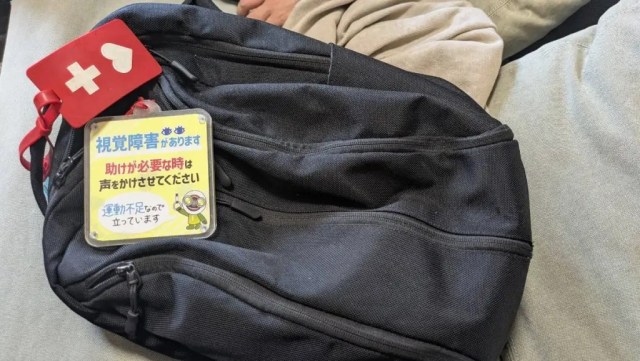
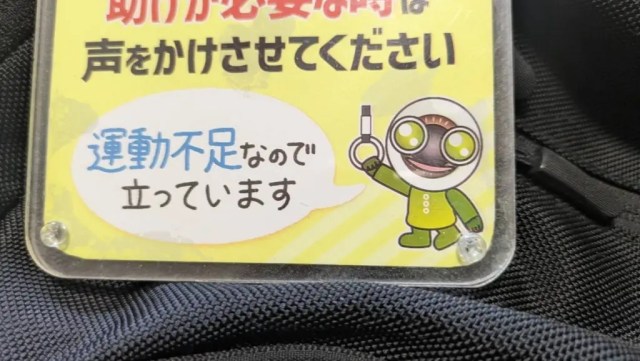
This is my personal reason for standing. The card has turned out to be more effective than I’d expected, though. Seeing the card, people seem to think “Oh, this person doesn’t want to sit,” and that’s made standing by the door even more comfortable for me.
There’s a downside too, though. A few times a month, I go back to visit my parents’ house, and the train ride to get there takes about an hour and a half. Obviously, somewhere in the middle of the ride I start wanting to sit down, but no matter how many empty seats there are on the train, none of the other passengers tell me that there are places to sit. Well, that’s to be expected though, isn’t it? After all, I’m the one who, all on his own, let them know that “I am standing because I don’t get enough exercise.” Plus, having put the card on my bag, it somehow becomes a point of pride, so I can’t say “You know what, I actually do want to sit down.” Sometimes, people end up struggling in the situations they set up for themselves…
In talking about all this, I’m not asking for anyone to change the rules about riding trains. It’s just that, if the space next to the door is empty and I can stand there, it makes it a little easier to get around that day, so the next time I’m waiting on the platform and the train comes, I’ll be listening as the doors open, and stretching out my hand to see if that space is available.
Top image: Pakutaso
Insert images: Pakutaso (1, 2), SoraNews24
● Want to hear about SoraNews24’s latest articles as soon as they’re published? Follow us on Facebook and Twitter!
]]> https://soranews24.com/2026/06/28/blind-tokyo-commuter-explains-the-easiest-place-for-him-to-stand-while-riding-the-train/feed/ 0 735943 1_03760e Another side of Kyoto – The prefecture’s top 10 “road stations” for traveling foodies https://soranews24.com/2026/05/28/another-side-of-kyoto-the-prefectures-top-10-road-stations-for-traveling-foodies/ https://soranews24.com/2026/05/28/another-side-of-kyoto-the-prefectures-top-10-road-stations-for-traveling-foodies/#comments Thu, 28 May 2026 14:00:08 +0000 https://soranews24.com/?p=733995 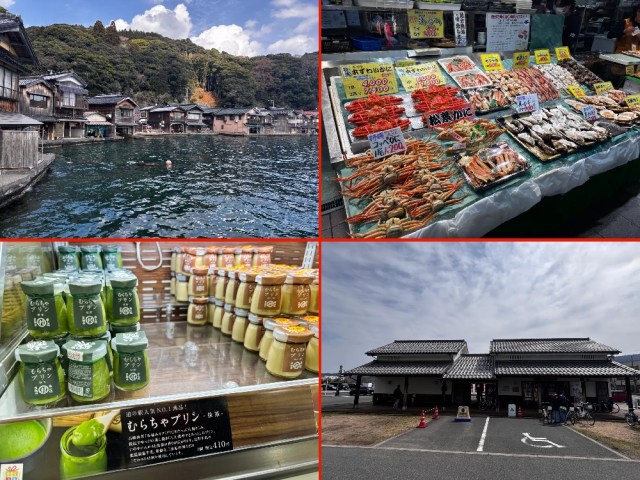
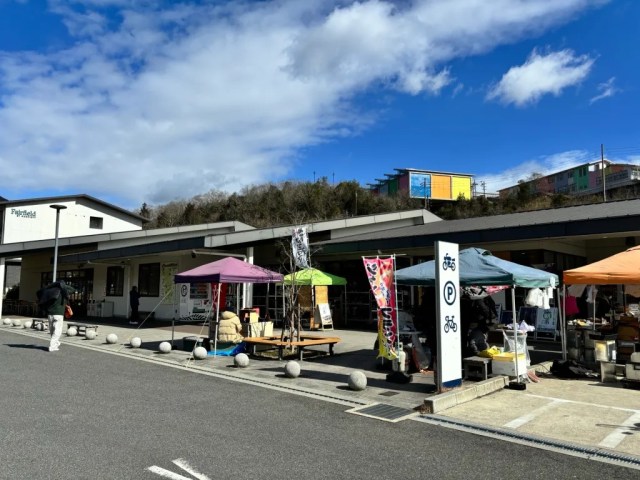
We’re headed to Kyoto today, but not to see the temples or shrines.
Temples and shrines are the first things that come to mind when travelers think of Kyoto, but the prefecture is also a treasure trove of outstanding michi no eki, or “road stations.” These combination roadside shops/rest areas offer a variety of unique local products, from foods and drinks to handicrafts, and with Kyoto Prefecture’s rich culinary legacies, its road stations include ones in famous green tea-growing regions and fishing ports on the coast of the Sea of Japan.
Today we’re asking our Japanese-language correspondent Susan, a native of Chiba Prefecture who’s travelled to 850 michi no eki, including all of the ones in Kyoto, for his list of 10 best Kyoto road stations, presented in no particular order.
1. Ocha no Kyoto Minami Yamashiro-mura (Minami Yamashiro Village)
Website
Minami Yamashiro is the only town in Kyoto Prefecture that’s legally classified as a “village” (mura in Japanese), and that alone brings a lot of travelers to this road station. Locally grown tea is the star attraction here, and in the attached restaurant you can dine on soba noodles with green tea mixed into their buckwheat flour. Looking for something sweeter? The Muracha (“Village Tea”) Pudding is not to be missed, with a deep, direct delivery of green tea flavor in every bite.
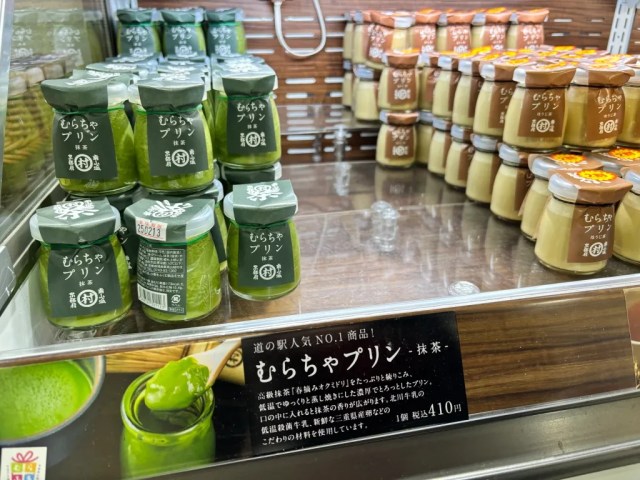
2. Michi no Eki Miyama Fureai Hiroba (Nantan City)
Website
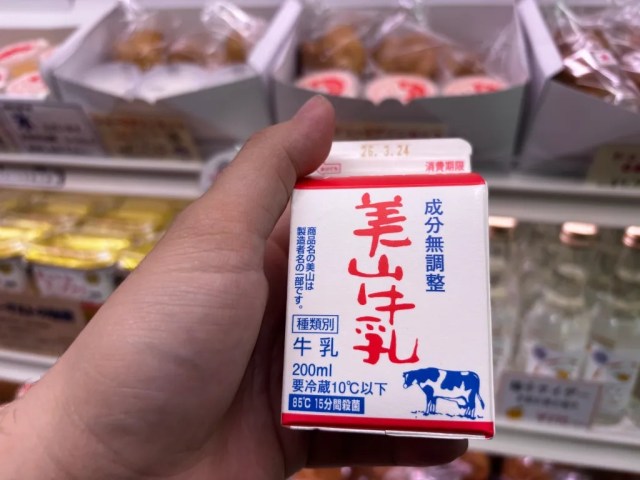
You’ll find this road station on the way to Kayabuki no Sato, a beautifully preserved historic neighborhood with traditional thatched roof Japanese farmhouse architecture. The thing you’ve got to try if you come here is the Miyama Milk from the local dairy, or at least the ice cream, frozen yogurt, or cheese made with it.
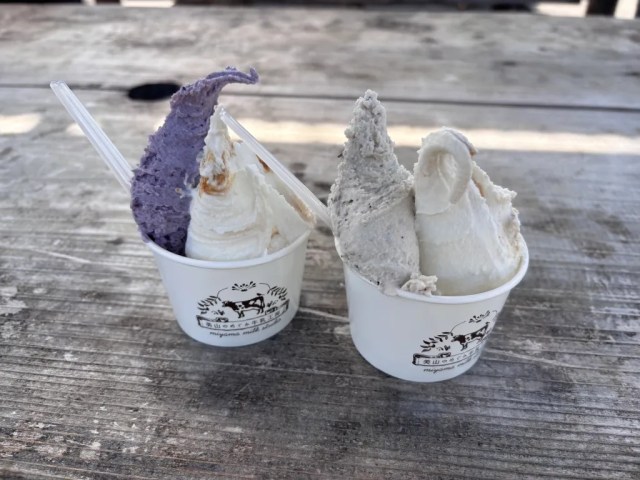
The gelato is Susan’s personal favorite, rich but with a clean finish, and the lines get long for it on the weekends, but it’s worth the wait.
3. Michi no Eki Funaya no Sato Ine (Yosa)
Website
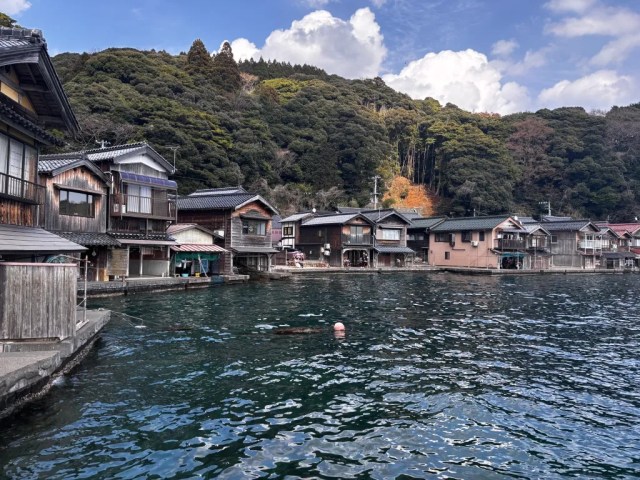
On its north side, Kyoto Prefecture stretches all the way to the coast of the Sea of Japan, and that’s where you’ll find the town of Yosa and Ine, a neighborhood of traditional fishermen boathouse homes built out over the water.
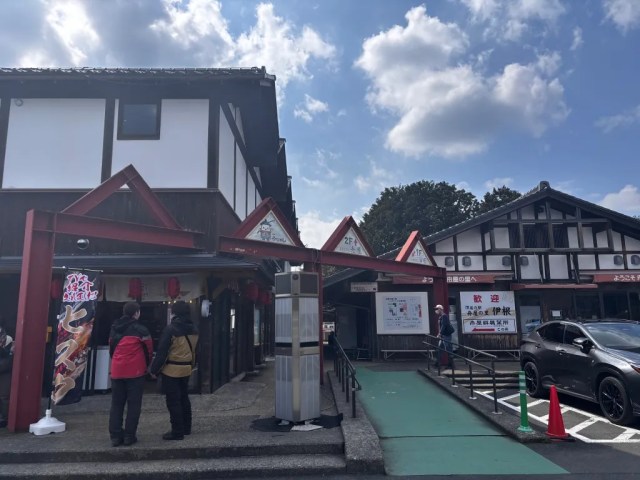
The refreshments on offer here include locally made soba and small-batch sake, but Susan also gives a special mention the hisuku, skewers of dried fish that you can buy from the outdoor Umyado stand to snack on while you admire the scenery.
4. Michi no Eki Nagomi (Funai)
Website
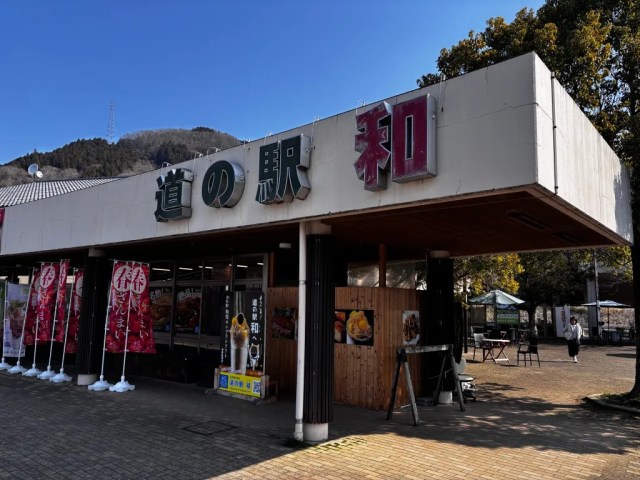
Heading back into the more mountainous inland, we come to this michi no eki in the town of Funai, situated next to the Yuragawa River. This is a tranquil spot befitting its Nagomi name (which means “harmony”), and your heart will feel even more at ease if you’re indulging in a cup of Mont Blanc pudding at the attached Nagomi Cafe.
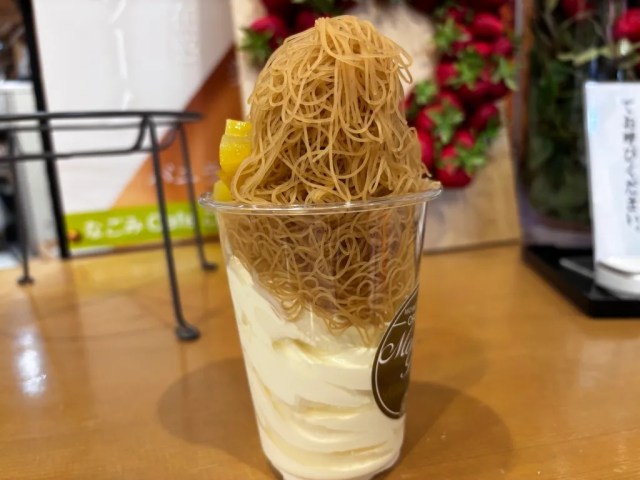
Seasonal highlights include spring strawberries, autumn chestnuts, winter mochi, and in summer, a special “ayu garden” where you can experience catching ayu (a kind of river fish) by hand, then having it grilled up by the staff for you to enjoy at its freshest flavor.
5. Michi no Eki Mizuho no Sato Sarabiki (Funai)
Website
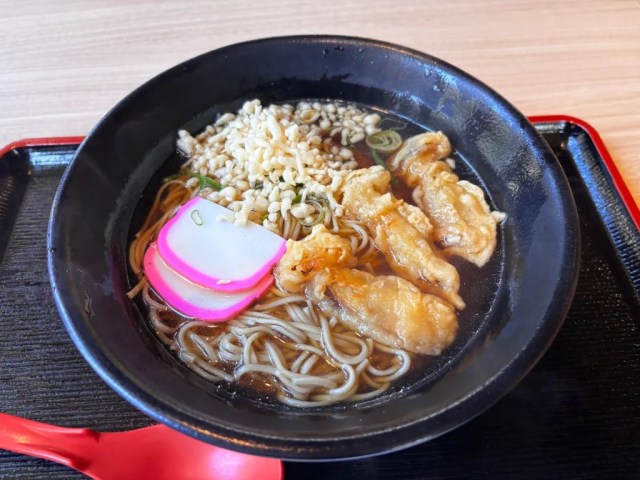
We’re still in Funai for this easy-to-access road station off the the Kyoto Expressway, near where travelers enter the lush countryside of the Tamba Highlands. The Mizuho district is famous for its buckwheat farms, and also for the soba noodles made from the grain, so naturally you can enjoy a bowl of them here, and the hiratake mushrooms, gathered in the local mountains, are delicious too.
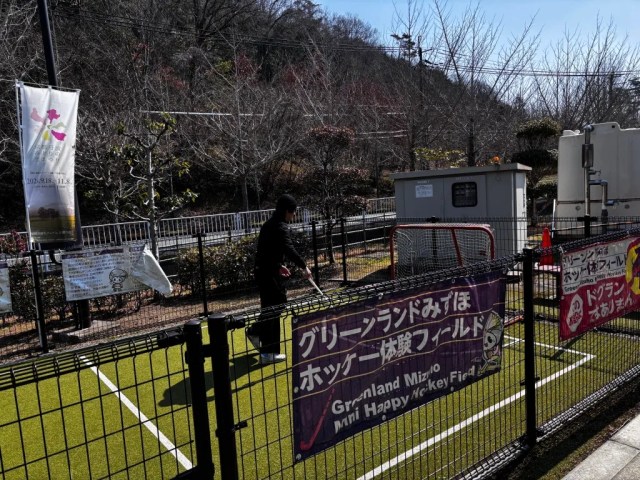
This road station’s most unique feature, though, is its mini field hockey court. The Mizuho district hosted national field hockey championships during a sports event back in 1988, and the game has remained popular in the area ever since.
6. Michi no Eki Umi no Kyoto Miyazu (Miyazu City)
Website
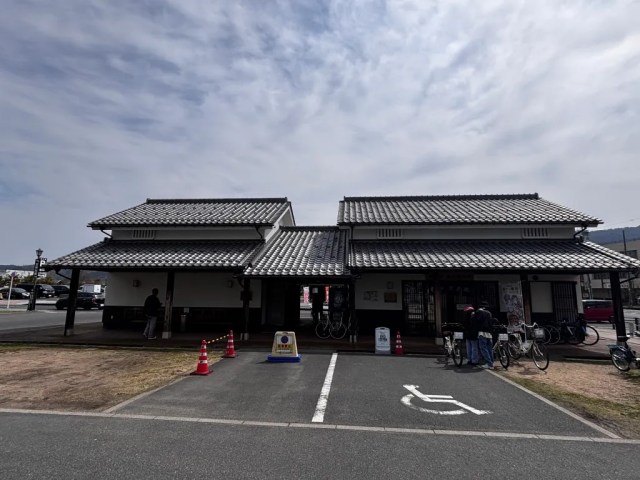
Yes, the building itself looks cool, but this one is primarily on the list because it offers a great vantage point for seeing Amanohashidate. Considered one of the three most beautiful views in Japan, Amanohashidate is pine tree-covered sandbar that stretches across Miyazu Bay and is supposed to look like a bridge climbing into the heavens, especially so if you bend over and view it through your legs so that it’s upside down.
▼ Susan and a friend in front of Amanohashidate
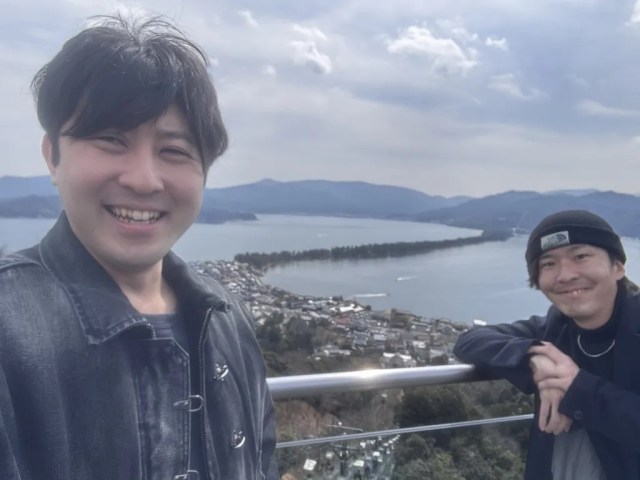
The road station here has an attached shop with local sake and other souvenirs, but the main appeal really is the view, so make this one a daytime visit.
7. Michi no Eki Tango Okoku Shoku no Miyako (Kyotango City)
Website
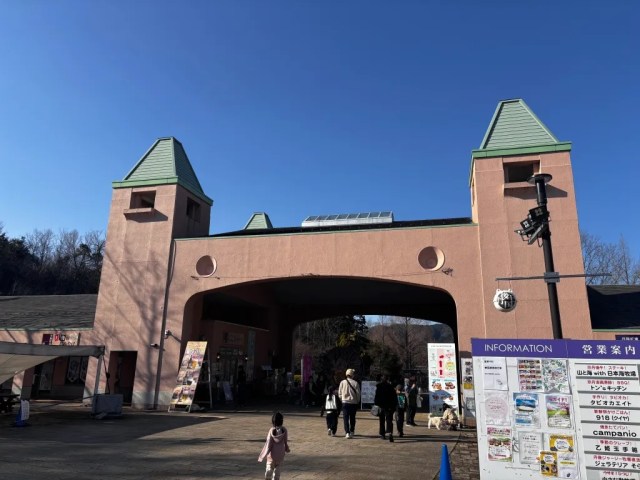
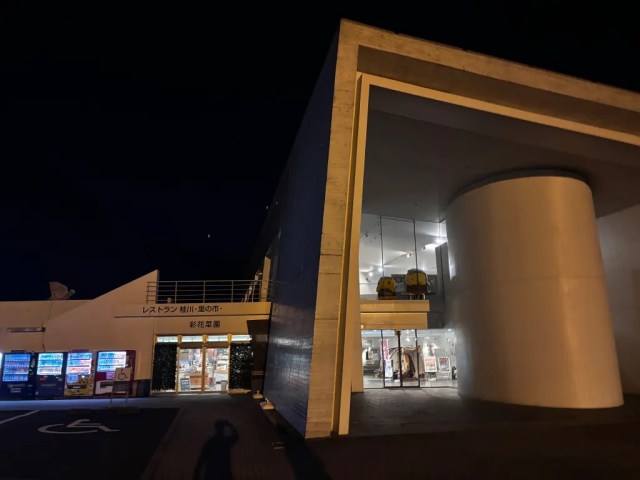
Shoku no Miyako translates to “Capital of Food,” and the scale of this road station certainly warrants that distinction, as its approximately eight times the size of Japan’s famed Koshien baseball stadium. Whether you’re in the mood for Kyoto Tanba Kurowagyu steak or wood-fired pizza, there are restaurants here that are happy to oblige, and big eaters will enjoy the noodle shop with all-you-can-eat udon.
With so much to eat, you might want to have two meals here, and there are go-karts, a petting zoo, and even a hotel if you need something to do or somewhere to relax between chow-down sessions.
8. Michi no Eki Springs Hiyoshi (Nantan City)
Website
Aside from being valuable parts of public infrastructure, many dams in Japan have become tourist attractions in and of themselves. This road station is situated next to the Hiyoshi Dam, and fatures facilities such as an onsen hot spring bath, heated swimming pool, sauna, and outdoor BBQ spaces.
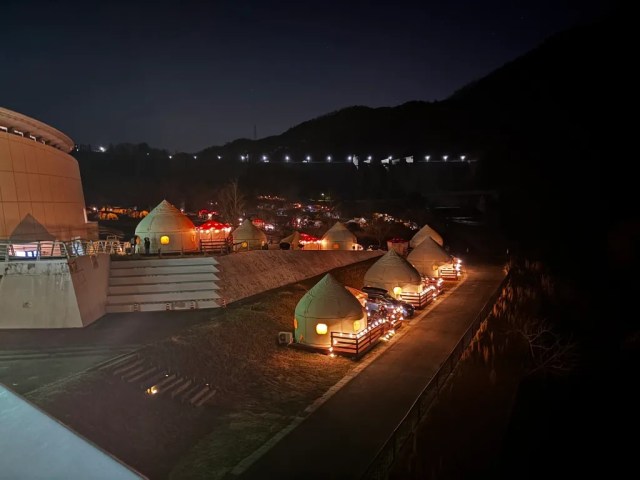
If you need provisions, the souvenir shop sells locally sourced mushrooms and eggs, and there’s even a campground with cottages for overnight guests.
9. Michi no Eki Kyoto Shinkoestumura (Nantan City)
Website
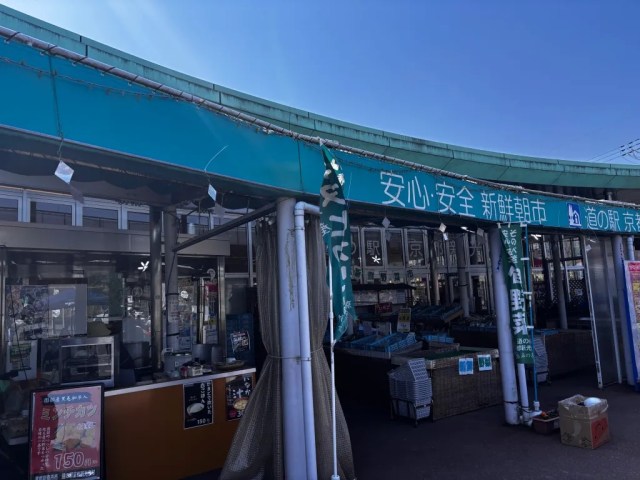
This road station is right off the Kyoto Jukan Expressway’s Sonobe Interchange, making it super-easy to access while driving across or around Kyoto Prefecture. Locally grown Onshin rice is the pride of the place, and aside from sacks of the rice itself you can taste it in the mochi rice cakes and senbei rice crackers sold in the souvenir shop.
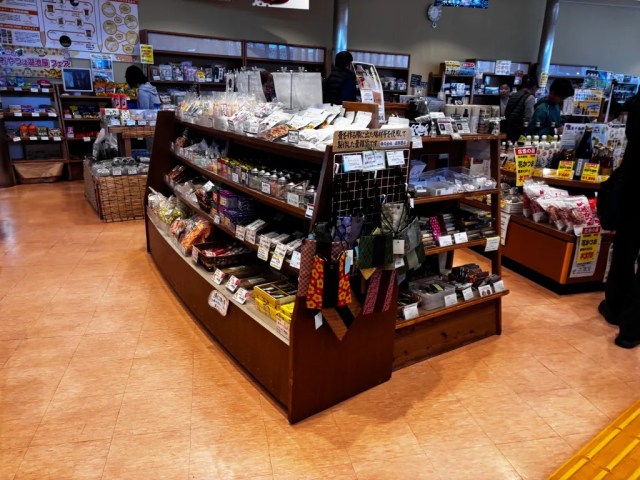
This michi no eki also has a good selection of nama yatsuhashi, Kyoto’s representative sweet treat of a folded triangle of soft mochi with sweet red bean paste inside. Granted, you can find nama yatsuhashi at plenty of other places in Kyoto, but this road station’s easy expressway access makes it a very convenient place to pick up an extra box or two on your way home.
10. Michi no Eki Maizuruko Toretore Center (Maizuru City)
Website
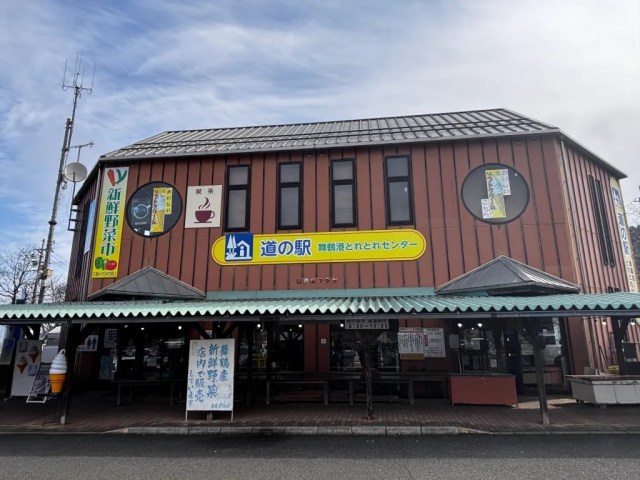
And last, we’re back on the north coast of Kyoto Prefecture to stop at Maizuru Port, one of the largest seafood markets along the Sea of Japan. As soon as you step inside, you’ll be surrounded by the bustling energy of merchants hawking fresh catches of fish, crab, and oysters, among other saltwater delicacies.
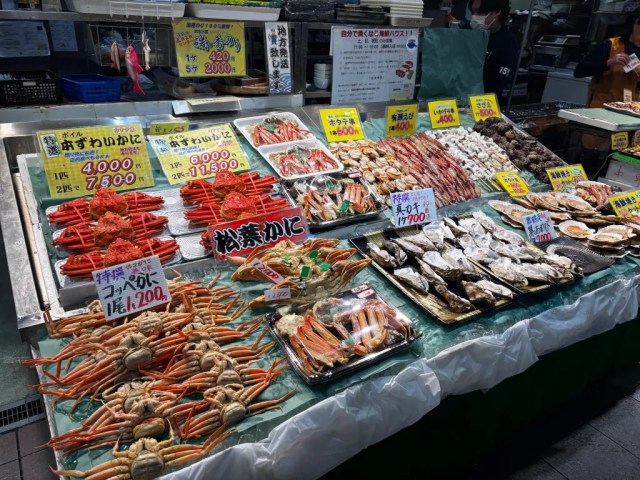
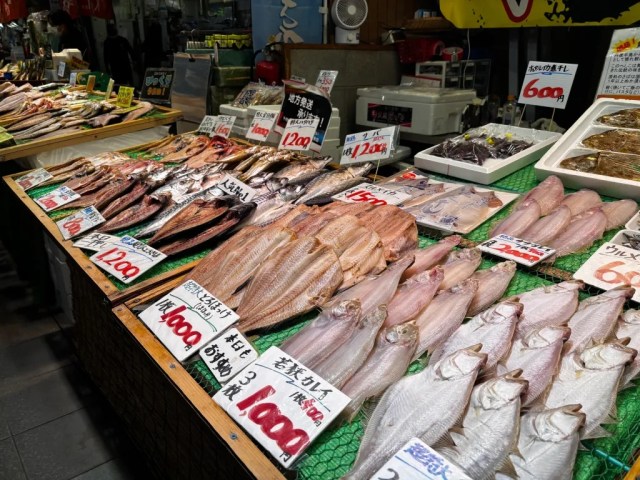
This is basically the Tsukiji of road stations, with delicious snow crab in winter, iwagaki oysters in summer, and buri (yellowtail) in autumn, no matter when you visit, you’ll find something great to eat.
Photos ©SoraNews24
● Want to hear about SoraNews24’s latest articles as soon as they’re published? Follow us on Facebook and Twitter!
]]> https://soranews24.com/2026/05/28/another-side-of-kyoto-the-prefectures-top-10-road-stations-for-traveling-foodies/feed/ 0 733995 0_14a68f Does one of Japan’s favorite chocolate brands work with the Pringles chocolate hack? https://soranews24.com/2026/05/07/does-one-of-japans-favorite-chocolate-brands-work-with-the-pringles-chocolate-hack/ https://soranews24.com/2026/05/07/does-one-of-japans-favorite-chocolate-brands-work-with-the-pringles-chocolate-hack/#comments Thu, 07 May 2026 01:00:51 +0000 https://soranews24.com/?p=732614 
We’ve heard good things about Pringles and chocolate, but what about Pringles and Lotte’s chocolate?
Pringles has been selling potato chips in its distinctive cans for decades, but it wasn’t until recently that foodies realized that the container can also serve as a chocolate mold. Thus was born the viral Pringles chocolate food hack, and so in turn was born our Japanese-language reporter Yui Imai’s desire to see how it would taste using Japan’s popular Ghana brand chocolate from confectioner Lotte.

Though it’s available at affordable prices in every convenience store and supermarket in the country, Ghana is considered one of the best baseline chocolates you can get in Japan, sweet and milky but not overly sugary and never chalky in texture. Though not a premium-priced product, it’d be fair to say that it’s a more elegant and refined chocolate bar than, say, Hershey’s, but would that also make it less suited for something so unabashedly junk food-y as pouring melted chocolate into a can of potato chips until they fuse with each other?
There was only one way to find out. After returning from the store with a short can of Pringles Uma Shio, the brand’s basic salted flavor in Japan, and four bars of Ghana chocolate (with a combined weight of 200 grams [7.1 ounces]), Yui began breaking up the bars and putting the pieces in a bowl.

She then placed the bowl in a bot of hot water, stirring with a spatula to work out any lumps as the chocolate melted.

Once the Ghana was liquified, Yui showed considerable restraint by not just lifting the bowl to her lips and drinking the whole thing down. Instead, she popped the top of the Pringles can and carefully poured the chocolate in.

It didn’t go all the way to the rim, but there was enough chocolate to fill up about 80 percent of the can, once she’d scraped the sides of the bowl.

Yui then spent the next two or three minutes strongly tapping the can’s bottom against a flat surface, pounding the chocolate down to create a thick and uniform distribution.

Then she put the lid back on the can and stuck it in the refrigerator, once again showing admirable willpower by waiting until the next day to check the results.


As the chocolate hardened, it had also stuck to the inside of the can. Sliding the chocolate Pringles out by turning over the can wasn’t going to happen, so instead, Yui grabbed a pair of scissors to cut open the side and remove the contents.

Yui had a hunch that cutting the choco cylinder was going to be difficult, and sure enough, after a few tentative taps with the blade of a kitchen knife, she could see that it was still hard enough that she was going to end up crushing it if she pressed any harder.

So instead, she let the chocolate site for 15 minutes to get closer to room temperature, and then she was finally able to cut a few slices.


Visually, things had turned out quite beautifully, with a ring of chocolate surrounding each slice and ribbons of Ghana stretching towards the center of each cross-section.

And as for the taste? It was fantastic. As we mentioned above, Japanese chocolate tends to be less cloying than what’s often sold in other countries, and this means that while the rich sweetness of the Ghanna is definitely still a major part of the flavor profile, it leaves plenty of space for the salty notes of the Pringles to play on your taste buds too, and the combination is extremely satisfying.

So in the end, Ghana chocolate turned out to be an excellent choice for the Pringles chocolate hack. Yui’s one and only regret is that, as you can see in the photos right before and after the can went into the fridge, there wasn’t quite enough chocolate to completely cover the stack of chips. Because of that, when she makes her next batch, Yui plans to use five bars of Ghanna instead, but having justification for buying extra chocolate is something we’ll never complain about, and if we end up buying too much, we have ideas about how to use the surplus.
Photos © SoraNews24
● Want to hear about SoraNews24’s latest articles as soon as they’re published? Follow us on Facebook and Twitter!
]]> https://soranews24.com/2026/05/07/does-one-of-japans-favorite-chocolate-brands-work-with-the-pringles-chocolate-hack/feed/ 0 732614 2_8dcdc3 Eating cheap sushi in a narrow building in Tokyo is an adventure for bold diners https://soranews24.com/2026/05/04/eating-cheap-sushi-in-a-narrow-building-in-tokyo-is-an-adventure-for-bold-diners/ https://soranews24.com/2026/05/04/eating-cheap-sushi-in-a-narrow-building-in-tokyo-is-an-adventure-for-bold-diners/#comments Mon, 04 May 2026 03:00:21 +0000 https://soranews24.com/?p=732315 
We play culinary roulette at a cheap restaurant in Kabukicho.
When you’re looking for somewhere to eat in the middle of Kabukicho, Tokyo’s notorious red-light district, the choices can be as overwhelming as the bright lights and multi-storey buildings towering over you. What can help in these situations is some advice from a local who’s eaten in the area before, and that’s where our reporter Yuichiro Wasai steps in, with a recent review of an izakaya (Japanese-style tavern) where the price of sushi starts at a super low 100 yen (US$0.63).
Eating at such a cheap place, especially in the middle of a red light district like Kabukicho, can be like playing culinary roulette, so Yuichiro decided to bite the bullet and find out what lay inside the multi-storey building, which attracted his interest with its super slim appearance.
▼ This has got to be one of the narrowest buildings in all of Tokyo.

According to the signs outside the izakaya, the prices are as tiny as the plot of land it stands on, with 120 minutes of all-you-can-drink starting at 980 yen, skewers at 90 yen, and, as we mentioned previously, sushi at 100 yen.

▼ The name of the izakaya is “Umi no Chikara“, which translates as “Power of the Sea“.

Stepping inside a place like this can be intimidating for a first-timer, but Yuichiro is used to visiting these types of under-the-radar spots. After walking in boldly, he headed over to the lady at the reception desk on the ground floor, and as he was dining alone he asked her if they had tables for one. She replied, “Yes, that’s fine. Please go up to the fifth floor.”
Yuichiro thought it was interesting that the izakaya stretched across so many floors, and it was a unique quirk as the slim building design meant the store had to expand vertically instead of horizontally.
▼ When he made his way up to the fifth floor and was shown to his seat, it was a tight space as well.

The passageway beside the table was so narrow that only one person could pass through at a time, and several customers brushed their coats against the edge of Yuichiro’s table as they made their way through.
▼ Checking out his surroundings, Yuichiro found an ashtray at his table, as smoking is allowed at all seats, making it a smoker’s paradise.

In a way, the space was very typical of Kabukicho, as it was casual and unpretentious, and when he browsed the drinks menu, he saw that draft beer was 380 yen, highballs were 150 yen, and lemon sours were an unbelievably low 50 yen.

Looking closer, the prices all excluded tax so that’s something that can crank up prices a little – the sushi, for example, might be listed as 100 yen but it’s actually 110 yen including tax.

With or without tax, these prices are undeniably cheap, so Yuichiro opted for a bottle of beer, placing his order on his smartphone. Shortly after, a waiter appeared with a serving of edamame, which he hadn’t ordered, but he was told it was an otoshi, the appetiser that acts like a seating charge in Japan.

This was a nice surprise for Yuichiro, as it was a large serving for an otoshi, and cheap too, at 380 yen, showing a sense of generosity you don’t usually see at a cheap izakaya.
▼ Then his sushi arrived: lean tuna (110 yen), medium fatty tuna (280 yen), and squid (110 yen).

Yuichiro was relieved to find that the cheap price point didn’t reflect the quality, as every piece was delicious. The texture of the rice beneath the fish toppings was a little on the dry side, but other than that he had no complaints.

Then his next dish arrived – the Mega Fried Chicken (830 yen). Like the edamame, this was another larger-than-expected serving, with 11 chunky pieces of fried chicken, and it left him feeling very satisfied.

Continuing with the meal, the yakitori was the second most satisfying item after the fried chicken, with a platter of five skewers costing 650 yen.

Happy with the skewers, Yuichiro felt emboldened enough to try the eel, which was only 380 yen. It was tasty and good quality, but if he had to choose between this and the fried chicken, he’d probably go with the fried chicken.

▼ Another better-than-expected menu item was oyster gratin in the shell (430 yen).

By this stage, Yuichiro was now feeling full so he didn’t have enough room in his belly to try any of the other options on the menu, and there were many to choose from.

▼ The menu is written in Japanese, Chinese and English, so foreign tourists are welcome here.

The only downside to this izakaya, in Yuichiro’s eyes, was the narrow seating, as this is what the table he sat at looked like.

So is this an izakaya you’ll want to visit next time you’re in Kabukicho? Well, it might not be for everyone, but if you prefer a casual atmosphere over refinement, don’t mind the smoking policy, and can cope with a small space, then this is a very cheap option that’ll leave you with more money in your back pocket to spend elsewhere.
Despite being the narrowest izakaya Yuichiro has ever visited, there’s nothing narrow-minded about the place, with a sense of boldness in its prices and offerings. He likes to think that this boldness, hidden in what can seem like an intimidating building, attracts customers who have a little boldness hidden in them as well.
Restaurant information
Umi no Chikara / 海のちから
Address: Tokyo-to, Shinjuku-ku, Kabukicho 1-18-7, Shinjuku Daiichi Building
東京都新宿区歌舞伎町1-18-7新宿第一ビル
Open 24 hours
Photos ©SoraNews24
● Want to hear about SoraNews24’s latest articles as soon as they’re published? Follow us on Facebook and Twitter!
]]> https://soranews24.com/2026/05/04/eating-cheap-sushi-in-a-narrow-building-in-tokyo-is-an-adventure-for-bold-diners/feed/ 1 732315 Umi no Chikara best Kabukicho sushi restaurant cheap eats Tokyo Japan tourist friendly news Japanese manhole lid raises eyebrows with fertility god symbol that looks like… well, you know https://soranews24.com/2026/04/09/japanese-manhole-lid-raises-eyebrows-with-fertility-god-symbol-that-looks-like-well-you-know/ https://soranews24.com/2026/04/09/japanese-manhole-lid-raises-eyebrows-with-fertility-god-symbol-that-looks-like-well-you-know/#comments Wed, 08 Apr 2026 15:00:19 +0000 https://soranews24.com/?p=730806 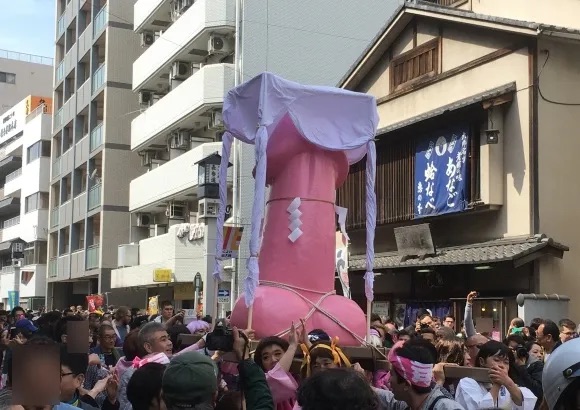
Festival of the Steel Phallus deity gets a steel lid in a rural city.
For all its staid traditions and formal etiquette, Japanese culture can be surprisingly uninhibited in ways that can leave visitors from abroad clutching their pearls.
Take, for example, a new manhole lid that’s just been installed in front of Kobunoki Shrine in Ninohe City, Iwate Prefecture. This sacred place of worship is in full support of the new manhole cover, which features… a colourful and playful phallic design.
While large, glistening penises aren’t something you’re likely to find on a city-endorsed road cover in other parts of the world, here in Japan they don’t shy away from images of male genitalia, seeing them as symbols of the fertility deity Kanamara Daimyojin.
Kanamara Daimyojin, which literally translates as “Great Deity of the Metal Phallus”, is a Shinto deity associated with fertility, safe childbirth, marriage, and protection from sexually transmitted diseases. Commonly represented by a phallus symbol, Kanamara Daimyojin is most famously worshiped at the annual Kanamara Matsuri held at Kanayama Shrine in Tokyo’s neighbouring Kawasaki Prefecture.
▼ The festival, which was held on 5 April this year, features phallic floats, foods and souvenirs.
It was the parishioners’ association at Kobunoki Shrine who donated the manhole cover to the city, in the hopes that it will encourage passersby to stop and take notice of the image, which has been in the hands of a specialist designer since June last year. With its bright, neon-like colours, this manhole lid stands out on the path right in front of the shrine’s vermilion torii gate, and it’s been drawing attention since it was installed on 24 March.
The attention is a welcome draw for the rural city, which is facing economic challenges as younger residents move to big cities. The shrine itself is seen as an important asset for the community, so much so that it received overwhelming support for the crowdfunding campaign held to fund its recent relocation, surpassing its 10 million yen (US$63,085.71) goal.
▼ Despite the recent relocation (the below image shows the pre-construction phase in late 2024), Kobunoki Shrine has a history that can be traced back to 1854.
The shrine is now just a two-minute walk from Ninohe Station, which is a stop on the Tohoku Shinkansen line, making it easy to access from Tokyo. The trip from Japan’s capital takes about three hours, but it’ll make for a memorable destination… and the fertility god will smile on you when you get there.
Shrine Information
Kobunoki Shrine / 枋ノ木神社
Address: Iwate-ken, Ninohe-shi, Ishikiridokoro, Kobunoki 50-7
岩手県二戸市石切所字枋ノ木 50-7
Open 24 hours
Website
Sources: Iwate Nippo, Kobunoki Shrine, Ready For/Ninohe Station Area Neighbourhood Association
Images©SoraNews24
● Want to hear about SoraNews24’s latest articles as soon as they’re published? Follow us on Facebook and Twitter!
]]> https://soranews24.com/2026/04/09/japanese-manhole-lid-raises-eyebrows-with-fertility-god-symbol-that-looks-like-well-you-know/feed/ 0 730806 Kanamara Matsuri unusual festival japan 7-Eleven Japan’s new baked-in-store sweet treat is only available in three parts of the country https://soranews24.com/2026/04/07/7-eleven-japans-new-baked-in-store-sweet-treat-is-only-available-in-three-parts-of-the-country/ https://soranews24.com/2026/04/07/7-eleven-japans-new-baked-in-store-sweet-treat-is-only-available-in-three-parts-of-the-country/#comments Tue, 07 Apr 2026 01:00:54 +0000 https://soranews24.com/?p=730012 
This is one of 7-Eleven Japan’s rarest sweets, but is it worth tracking down?
7-Eleven is an ubiquitous part of Japanese cityscapes, but while you’re never too far from a branch of the convenience store, that doesn’t mean that each location has the exact same snack selection. Some 7-Eleven stores also offer the chain’s 7 Cafe Bakery line of baked goods which are finished off by the staff using the oven in-store, making them extra fresh, warm, and delicious. Even out of the branches with the 7 Cafe Bakery lineup, some are more special than others, and today we’re looking at an incredibly tasty, and even elegant, treat that can only be found at 7-Elevens in Tokyo and two other parts of east Japan.

We don’t usually expect convenience store snack runs to broaden our vocabulary, but that’s what happened with 7-Eleven’s Sugar Palmier, a type of pastry that gets its name from being shaped kind of like the top of a palm tree. Palmier aren’t among the staple breads like melon bread or curry bread that you can always expect to find in Japanese supermarkets or chain bakeries. They’re usually the sort of thing you need to go to fancier specialty food stores for, so finding them at a local 7-Eleven, and with their baking finished right there in the store, is a big surprise.
After ordering one at the counter and paying the 220 yen (US$1.40) 7-Eleven prices them at, the staff finished off our palmier in the oven and placed it in a bag for us. We could feel its enticing warmth through the paper, and even after we’d arrived back home for taste-testing, it was still nice and warm.

Visually, it’s very classy, with its heart-like shape and glisten of light reflecting off the sprinkled sugar giving it an air of refinement despite its humble source, especially after we plated it.
Of course, if we stared admiringly at it for too long, it would eventually get cold, so before that happened we took a bite, and were thrilled to learn that 7-Eleven’s palmier tastes every bit as good as it looks! The rich buttery sensation, which has both a stimulating taste and aroma, melts into the sweetness that comes with a tiny touch of crunch from the sugar, making for a harmonious luxury throughout its flavor profile. The texture of the bread itself is excellent and complex. The stint in the oven right before you receive your palmier imparts a pie-like crispness to its outer surface, with a softer fluffiness, similar to a Danish’s, waiting at the center.

The buttery sweetness comes through with lightning quickness thanks to the in-store baking, and the flavor didn’t just fill us with satisfaction, but with happiness.
As of right now, the Sugar Palmier is available only at 7 Cafe Bakery branches in Tokyo and two of its neighboring prefectures, Chiba and Kanagawa, but if you’re in one of those three places, this is definitely worth tracking down.
Photos © Sora News24
● Want to hear about SoraNews24’s latest articles as soon as they’re published? Follow us on Facebook and Twitter!
]]> https://soranews24.com/2026/04/07/7-eleven-japans-new-baked-in-store-sweet-treat-is-only-available-in-three-parts-of-the-country/feed/ 0 730012 1_219798 Two food hacks take Japan’s convenience store fried chicken to amazing new sandwich heights https://soranews24.com/2026/04/04/two-food-hacks-take-japans-convenience-store-fried-chicken-to-amazing-new-sandwich-heights/ https://soranews24.com/2026/04/04/two-food-hacks-take-japans-convenience-store-fried-chicken-to-amazing-new-sandwich-heights/#comments Sat, 04 Apr 2026 05:00:32 +0000 https://soranews24.com/?p=730031 
Skipping the regular Family Mart buns for these substitutes transforms Famichiki into something even more magical.
Convenience is obviously a big part of why we find ourselves inside of Japan’s convenience stores as often as we do. But while they’re stocked with plenty of things that are perfectly tasty and completely ready to be eaten, sometimes foodies discover a way to put just a little more effort into a convenience store meal to make it even more delicious.
One of the latest trends in the Japanese convenience store fan community involves one Family Mart’s best sellers, the chain’s Famichiki boneless fried chicken. It’s so tasty that Family Mart even sells specialized buns for customers who want to turn their Famichiki into a fried chicken sandwich.

But rumor has it there’s a way to make an even better Family Mart fried chicken sandwich, which is to skip the for-Famichiki bun…

…and instead head over to the sandwich shelf to grab one of Family Mart’s egg sandwiches.

Like most Japanese convenience store sandwiches, Family Mart’s egg sandwich comes cut into two triangle-shaped pieces. Open one of those up, put your Famichiki inside…

…and now you’ve got what fans call an “oyako sandwich,” a sandwich version of oyakodon, the Japanese dish of chicken and egg served on a bowl of rice.

Trying it for ourselves for the first time, we can confirm that it does indeed taste very good. After all, it’s a combination of two things with complementary flavors that already tasted great on their own, so doubling up on the deliciousness your taste buds experience makes them that much better. We did have a surprise here too, though, in that the softness of the sandwich bread and the egg made the slight crispiness of the Famichiki stand out more, giving it a more upscale feel than when the chicken it eaten by itself straight from its paper wrapper.

So yeah, this is a case where the buzz is justified, as this Family Mart food hack is very satisfying…but could we make it even more decadent? Yes we could, and we did.
Returning to Family Mart, we got another piece of Famichiki, but this time we left both the specialized buns and egg sandwiches on the shelf, and instead selected a pack of Family Mart’s ready-to-eat French toast to make our second sandwich with.


Since Family Mart’s French toast is pre-sliced into two pieces, you don’t even need a knife to do this. There was, however, one finishing touch we wanted to add: maple syrup.

Maple syrup and French toast, of course, are an established recipe for deliciousness, and it turns out the condiment is great on fried chicken too. Our French toast maple Famichiki sandwich was sweet, salty, soft, and gooey. Some would say that’s not a very elegant-sounding meal, but we were going for flavor, not status here, and the flavor is incredibly enjoyable.

At 155 yen (US$1), Family Mart’s French toast is about twice the price of the specialized Famichiki bun, which is 88 yen. Still, that’s only a 67-yen difference, and with the Famichiki itself costing 230 yen, the do-it-yourself French toast upgrade is a pretty easy extra expense to absorb, especially when the results taste this good. The only issue is that Family Mart doesn’t provide packs of maple syrup, so you’ll need to procure a bottle separately, but on the plus side, having a whole container on hand means you’ll have plenty of syrup to make many, many more French toast maple fried chicken sandwiches when the craving for another inevitably hits.
Photos © SoraNews24
● Want to hear about SoraNews24’s latest articles as soon as they’re published? Follow us on Facebook and Twitter!
]]> https://soranews24.com/2026/04/04/two-food-hacks-take-japans-convenience-store-fried-chicken-to-amazing-new-sandwich-heights/feed/ 0 730031 1_820e00 This standing sushi bar inside a Tokyo train station blew us away with its speedy deliciousness https://soranews24.com/2026/03/30/this-standing-sushi-bar-inside-a-tokyo-train-station-blew-us-away-with-its-speedy-deliciousness/ https://soranews24.com/2026/03/30/this-standing-sushi-bar-inside-a-tokyo-train-station-blew-us-away-with-its-speedy-deliciousness/#comments Mon, 30 Mar 2026 01:00:18 +0000 https://soranews24.com/?p=729776 
No conveyor belts or chairs here, just excellent sushi at a fair price.
Japan’s rail network is a joy to use. Trains arrive at the exact minute they’re supposed to, carriages are clean, and stations have ample, easy-to-understand signage that makes it a snap to navigate to your necessary transfer or desired exit.
But there’s a special kind of joy waiting for you if you’re passing through Akabane Station in Tokyo, which has an outstanding, speedy, and affordable sushi restaurant inside its ticket gates.

Standing Sushi Bar Yasuke is managed by Choshimaru, whose primary business is a chain of roughly 100 conveyor belt sushi restaurants in east Japan. Because of that, and also the time-is-of-the-essence nature of train station dining, you might expect Yasuke to be a conveyor belt joint too, but it’s actually a traditional sushi bar, with staff behind the counter making your pieces to order.

Prices start at 97 yen (US$0.65) per piece, which is a great deal for non-conveyor belt sushi, so great that we weren’t about to pass up the chance to get some for ourselves.

With no chairs, the interior actually felt more spacious than the restaurant’s modest amount of floor space would otherwise have you expecting. You place your order through a tablet, and we especially liked the clever design of the soy sauce dish, which allows it to do double duty as a chopstick rest.

▼ You also use the tablet to ask for green tea, wasabi, and ginger, which are all free.

Yasuke offers a trio of omakse-style lunchtime sushi sets, ranging from 880 to 1,4330 yen and coming with a bowl of miso soup.

However, rather than leave the selection up to the chef to decide on, we wanted to pick our own kinds of fish, and we started with four pieces from the middle of the menu’s per-piece price range.

● Squid (121 yen)
● Engawa/flounder fin (176 yen)
● Warayaki buri/straw-seared yellowtail (231 yen)
● Aji/horse mackerel (176 yen)
Don’t underestimate the quality of the fish or the presentation on account of this being a standing sushi bar, because they’re were excellent across the board, with the warayaki buri particularly rich and flavorful.

Of course, now that we’d tried some of Yasuke’s mid-tier offerings, next we needed to check the quality of their even more budget-friendly kinds of sushi, so after a few more taps on the ordering tablet we had a second plate in front of us.

● Egg (97 yen)
● Squid tentacles with ginger (97 yen)
● Bay scallop (97 yen)
● Boiled shirasu/whitebait (97 yen)
And for the sake of proper taste-testing, naturally we also needed to explore the other end of the spectrum, with a plate of more premium pieces (though they’re still within the bounds of affordable luxuries).

● Kanpachi/amberjack (231 yen)
● Akagai/ark shell (231 yen)
● Otoro/extra fatty tuna (396 yen)
Once again, there was no room for complaint regarding the flavor, texture, or presentation of any of them, though out of the bunch, we have to heap the most praise on the otoro, which was delectably marbled and every bit as delicious as it looked.

Akabane is a bit outside the center of downtown Tokyo, but with five train lines all running through the station, there’s a chance you’ll need to make use of it if you’re headed to sightseeing destinations in the northern part of the city or other prefectures in that direction from the city, and if you find your sushi cravings hitting en route, now you know where to satisfy them.
Restaurant information
Standing Sushi Bar Yasuke (E-cute Akabane Minami branch) / Standing 鮨 Bar Yasuke(エキュート赤羽みなみ店)
Address: Tokyo-to, Kita-ku, Akabane 1-1-1 (inside JR Akabane Station ticket gates)
東京都北区赤羽1-1-1(JR赤羽駅改札内)
Open 11 a.m.-10 p.m.
Photos © SoraNews24
● Want to hear about SoraNews24’s latest articles as soon as they’re published? Follow us on Facebook and Twitter!
]]> https://soranews24.com/2026/03/30/this-standing-sushi-bar-inside-a-tokyo-train-station-blew-us-away-with-its-speedy-deliciousness/feed/ 0 729776 1_26feaf Fatal stabbing at Pokémon Center in Tokyo reignites concern over rising stalking cases in Japan https://soranews24.com/2026/03/27/fatal-stabbing-at-pokemon-center-in-tokyo-reignites-concern-over-rising-stalking-cases-in-japan/ https://soranews24.com/2026/03/27/fatal-stabbing-at-pokemon-center-in-tokyo-reignites-concern-over-rising-stalking-cases-in-japan/#comments Fri, 27 Mar 2026 03:00:54 +0000 https://soranews24.com/?p=729806 
Assailant had previously been arrested on suspicion of violating the Stalker Regulation Law.
On 26 March, a female employee was stabbed at the Pokémon Center megastore in Tokyo’s Ikebukuro Ward by a male assailant who then stabbed himself. Both were transported to the hospital unconscious but confirmed dead shortly afterwards.
According to reports, the incident occurred at around 7:15 p.m., when a man was seen with a knife at the register. He approached a female store clerk at the counter and stabbed her multiple times before stabbing himself in the neck. Panic ensued as store shelves crashed to the floor, with eyewitnesses saying they heard screams and shouts of “help”, both in Japanese and English, as customers ran from the store, and staff shouted for police.
▼ News report from the scene shortly after the incident.
Police arrived within minutes, securing the scene after staff had ensured all customers had safely left the store. Investigators later confirmed that the assailant had been carrying two knives, and was known to police as he had been arrested in December last year on suspicion of violating the Stalker Regulation Law.
According to police, the victim was 21-year-old part-time worker Moe Harukawa of Hachioji, Tokyo. The assailant, Taiki Hirokawa, 26, was her ex-boyfriend, who had been issued with a restraining order in January, following his arrest on suspicion of stalking Harukawa.
These details bring to light the ongoing problems of stalking in Japan, where cases reached record highs last year and restraining orders topped 3,000 for the first time, with experts saying the problem is far worse than recorded, due to underreporting.
On the 27 March broadcast of Fuji TV’s “Sun! Shine” morning news program, it was revealed that police had advised Harukawa to change jobs, but she continued to work at the Pokémon Center, saying “it was my dream to work here”.
One of the presenters on the program asked why the onus is on the victim to change where they live and work, pointing out that the costs involved make it unfeasible in many cases. They also suggested that there might be some way in future to use technology to alert the victim when the perpetrator is physically within a certain distance.
While the Pokémon Company is yet to release a statement regarding the incident, it has posted a notice of the store’s temporary closure, saying:
Due to the incident that occurred on Thursday, March 26, 2026, at the Pokémon Center Mega Tokyo in Sunshine City, Higashi-Ikebukuro, Toshima-ku, Tokyo, we will be temporarily closed until further notice, prioritizing our full cooperation with the police and the physical and mental well-being of our staff.
We sincerely apologise for the great concern and inconvenience this has caused everyone.
We will inform you again when we will be reopening for business.
We kindly ask for your understanding.
The Pokémon Center at Ikebukuro’s Sunshine City shopping complex was the largest of its kind when it opened in December 2014. It remains a popular spot with families and overseas visitors.
Sources: FNN, DMenu News, TBS, Mainichi Shimbun, The Pokémon Company
Featured image©SoraNews24
● Want to hear about SoraNews24’s latest articles as soon as they’re published? Follow us on Facebook and Twitter!
]]> https://soranews24.com/2026/03/27/fatal-stabbing-at-pokemon-center-in-tokyo-reignites-concern-over-rising-stalking-cases-in-japan/feed/ 0 729806 pokemon store stabbing Tokyo Ikebukuro Japan anime video game shop complex stalker police news Japan’s Mos Burger discontinues old teriyaki burger and rolls out new recipe, but is it as good? https://soranews24.com/2026/03/21/japans-mos-burger-discontinues-old-teriyaki-burger-and-rolls-out-new-recipe-but-is-it-as-good/ https://soranews24.com/2026/03/21/japans-mos-burger-discontinues-old-teriyaki-burger-and-rolls-out-new-recipe-but-is-it-as-good/#comments Sat, 21 Mar 2026 13:00:56 +0000 https://soranews24.com/?p=729024 
Japan’s favorite domestic burger chain, the one that introduced the teriyaki burger to the country, launches seventh-generation sandwich.
Mos Burger is Japan’s favorite domestic hamburger chain, and not only was it the creator of the rice burger, it was also the first chain in Japan to sell teriyaki burgers. Mos’ teriyaki burger made its debut in May of 1973, but while it’s been on the menu ever since, the teriyaki burger it serves today isn’t the same as the one it sold 53 years ago. As a mater of fact, it’s not even the same as the teriyaki burger they sold last week.
That’s because Mos Burger is using a new recipe for its teriyaki burger as of March 18. This is actually the seventh generation of the Mos teriyaki burger, and its first update since four years ago.
▼ A sign announcing the new teriyaki burger, with an excited “Renewal!” (リニューアル), which is used in Japanese to describe renovations and reformulations

With Mos’ reputation for excellent quality, the idea of a new teriyaki burger was both intriguing and worrying. On the one hand, the chain has a strong track record of cooking up tasty chow, but on the other, with their teriyaki burger already being a hit, you could argue this is a case of a company trying to fix something that’s not broken. Still, Mos said that it has “updated the flavor” of its teriyaki sauce “to fit with the current times.” Slightly more specifically, they said that the new teriyaki sauce has “a gentle sweetness within a sauce packed with rich umami flavor that leads to a clean finish.”

Drawing taste-test duties this time around was our Japanese-language reporter P.K. Sanjun. Since there was no overlap between the availability of the new and old sandwiches, P.K. headed to Mos Burger for one last old-teriyaki burger dinner on March 17, then hit the chain up again the next day to try the new version.

Appearance-wise, the new Mos teriyaki burger, which at 470 yen (US$3) us 10 yen more than its predecessor, keeps the same overall look: nice fluffy bun, crisp lettuce with a dollop of mayo mixed with teriyaki sauce, and a teriyaki-slathered patty.
Having securely input the flavor of the old teriyaki burger into the part of his brain for food memories the night before, P.K. took a bite of the new version…and it tasted very good!

However, it didn’t taste very different. He could perceive a little extra sweetness in the sauce, but not so much as to majorly shift the balance of the flavor profile, and he might have only been able to notice it because he was specifically looking for it, since Mos had said that “gentle sweetness” was going to be the biggest difference between the new teriyaki sauce and the old recipe’s. Being the biggest difference, though, doesn’t automatically make something a big difference, and P.K. thinks that many people, unless they’re also armed with prior knowledge that Mos has changed its teriyaki sauce, probably won’t notice that anything has changed.

However, this isn’t a criticism. Like we mentioned earlier, the old Mos Burger teriyaki burger was already awesome, and it’s hard to imagine how they could have strayed from its recipe very far without making the results worse. At the same time, P.K. isn’t upset that Mos Burger has made a subtle shift in its sauce. That kind of incremental evolution may not be the most dramatic way to update your menu, but it’s just the sort of fine-tuning that makes Mos Burger one of the most reliably satisfying burger options Japan has, and with a final verdict of “Yep, new Mos teriyaki burger tastes pretty much like the old one: delicious,” the last part is really what counts.
Photos © SoraNews24
● Want to hear about SoraNews24’s latest articles as soon as they’re published? Follow us on Facebook and Twitter!
]]> https://soranews24.com/2026/03/21/japans-mos-burger-discontinues-old-teriyaki-burger-and-rolls-out-new-recipe-but-is-it-as-good/feed/ 0 729024 1_616092 Japanese convenience store sandwiches get extra protection from new business backpack https://soranews24.com/2026/03/15/japanese-convenience-store-sandwiches-get-extra-protection-from-new-business-backpack/ https://soranews24.com/2026/03/15/japanese-convenience-store-sandwiches-get-extra-protection-from-new-business-backpack/#comments Sun, 15 Mar 2026 05:00:28 +0000 https://soranews24.com/?p=728466 
Work clothing brand makes it its job to keep your lunch out of harm’s way.
Japan’s convenience store sandwiches are one of the simple but lovely pleasures of being in the country. Tasty and convenient, they make a great lunch option for workers, students, and travelers, so if you know you’re going to be hungry later on, stepping into a convenience store to pick up a sandwich is usually a good call.
Unless, that is, you toss your sandwich into your bag, only for it to then get crushed by your phone, laptop, mobile battery, books, or whatever else you’re carrying around with you that day. At the very least, that’s going to make for an extremely messy meal, and you might even have the contents of your sandwich now littering the inside of your bag, if the wrapper got torn or otherwise came undone too.
That’s why Japanese clothing chain Yofuku no Aoyama’s new backpack has a special compartment to keep your sandwich safe.

The bag, which Yofuku no Aoyama calls the “Multi-rucksack,” has a number of useful design elements, like an exterior pocket that’s sized and positioned for fast access to a commuter pass case or packet of wet tissues.

The understated and mature design makes it appropriate for a variety of scenes too.

But the really clever part is the “hammock pocket,” as the company calls it, which hangs down from the top of the interior of the backpack’s main compartment. Its own little enclosed space, the hammock pocket keeps its contents above the fray of anything else sliding around in that part of the bag, meaning that it’ll keep your sandwich, rice balls, or whatever else you need out of harm’s way.
▼ Including both gummy and teddy bears.

Yofuku no Aoyama, also called just Aoyama, for short, is first and foremost a business attire company, and the company is presenting the Multi-rucksack as a business bag for women commuting to big city offices. It’s a pretty gender-neutral design, though, and honestly looks like the sort of thing that would be handy for anyone who often carries food or other things that they don’t want to get squashed while they’re walking around.
The Multi-rucksack is priced at 12,100 yen (US$78) and is on sale now at Yofuku no Aoyama branches across Japan. It can be purchased online through Rakuten here as well, for anyone who doesn’t have an Aoyama branch near them but still needs protection for their Blueberry Sandwich.
Source: PR Times
Top image: PR Times
Insert images: PR Times, Yofuku no Aoyama
● Want to hear about SoraNews24’s latest articles as soon as they’re published? Follow us on Facebook and Twitter!
]]> https://soranews24.com/2026/03/15/japanese-convenience-store-sandwiches-get-extra-protection-from-new-business-backpack/feed/ 0 728466 16_aa8c00 Japan has a cute Pokémon menu you probably don’t know about yet https://soranews24.com/2026/03/10/japan-has-a-cute-pokemon-menu-you-probably-dont-know-about-yet/ https://soranews24.com/2026/03/10/japan-has-a-cute-pokemon-menu-you-probably-dont-know-about-yet/#comments Tue, 10 Mar 2026 04:00:12 +0000 https://soranews24.com/?p=728243 
Under-the-radar Japanese cafe chain serves a delicious salute to Ditto in celebration of Pokémon Pokopia.
When overseas tourists want a relaxed cafe experience in Japan, they tend to flock to familiar chains like Starbucks, but for locals, there’s an iconic Japanese-born chain that some might say is even better.
The name of that chain is Komeda Coffee, and not only does it serve up great coffee in comfortable surroundings, it also has sizeable meals and impressive desserts, and now, for a limited time, a Pokémon collaboration menu.
▼ The collaboration is set to drop in two parts, with the first lot appearing on 5 March.

The new campaign is called “Pokémon to Isshodamon“, which translates as “Together with Pokémon” while incorporating a punny rhyming wordplay on the word “Metamon“, or Ditto, to use the character’s English name.
▼ As you might expect, Ditto is the star of the show here, appearing on three different menu items.

With the Katsu Bread and Shiro Noir dessert being menu mainstays, only with a Ditto makeover for this special collaboration, we were curious to try the Metamon Sweet Potato Balls, which we’d never seen before.
▼ These balls are priced at 1,080 yen (US$6.85).

Served in a cute Metamon-patterned cup, this half-dozen cluster incorporates purple sweet potato in the dough to emulate Ditto’s purple hue.
▼ Kind of like a doughnut, but lighter.

The outside is delightfully crispy and chewy, while the inside is filled with a smooth and creamy sweet potato paste. The dough itself wasn’t particularly sweet, but this allowed the natural sweetness of the paste inside to sing, creating a well-balanced sweet that was incredibly easy to eat.
▼ Despite being delicious, the balls are quite dense so you’ll want to order a drink like the Blueberry Yoghurt frappe (660 yen) to wash them down.

As an added bonus, every customer who purchases a Ditto meal will receive a Pokémon bean snack keychain, which mimics the look of Komeda Coffee’s little bean snacks, which come free with every drink order.
▼ There are four designs available, and we received the one with Bulbasaur and Ditto.

With each meal costing over 1,000 yen, we initially thought this was an expensive collaboration, but after receiving the free keychain, which we figured would be worth at least 300 yen, we walked away happy.
▼ Our plushie companions left happy too.

Another highlight of the campaign is the “Mini Daruma Glass-Style Accessory Holder” (2,000 yen), which takes the chain’s popular rotund container and gives it a Ditto makeover.
▼ This limited-edition product has become so sought after it’s already sold out at a lot of stores.

With Ditto taking centre stage in Nintendo Switch’s new Pokémon Pokopia game released on 5 March, this salute from Komeda is a nice way to tie in with the celebrations. While it’s only a limited-time affair, the good news is the celebrations are set to continue, with Part 2 coming to Komeda stores around Japan from 9 April.
Related: Komeda Coffee
Photos©SoraNews24
● Want to hear about SoraNews24’s latest articles as soon as they’re published? Follow us on Facebook and Twitter!
]]> https://soranews24.com/2026/03/10/japan-has-a-cute-pokemon-menu-you-probably-dont-know-about-yet/feed/ 0 728243 Pokémon Japan exclusive Komeda Coffee collaboration limited edition exclusive menu anime food Tokyo restaurant news (2)