America – SoraNews24 —Japan News— https://soranews24.com Bringing you yesterday's news from Japan and Asia, today. Thu, 05 Jun 2025 15:00:57 +0000 en-US hourly 1 https://wordpress.org/?v=7.1.4 https://soranews24.com/wp-content/uploads/sites/3/2020/05/en_rocket_1024.png?w=32 America – SoraNews24 —Japan News— https://soranews24.com 32 32 176746664 Five tips for hosting a college-age Japanese student in your country https://soranews24.com/2025/06/06/five-tips-for-hosting-a-college-age-japanese-student-in-your-country/ https://soranews24.com/2025/06/06/five-tips-for-hosting-a-college-age-japanese-student-in-your-country/#comments Thu, 05 Jun 2025 15:00:50 +0000 https://soranews24.com/?p=703792 
From planning what to do to supporting their language development, we share some advice for making your student’s stay go as smoothly as possible.
Have you been thinking about hosting an international student, especially one from Japan, at some point? Largely as a result of my experiences teaching English to speakers of other languages (TESOL) as well as teaching Japanese as a foreign language in the U.S., I’ve hosted a dozen students at various times at my home in rural northeastern U.S. Some have been my own former students from teaching in Japan, some have been Japanese students I’ve met in the U.S. at the university where I work, and others have been former students of my Japanese teacher friends, whom I’d never met until they were at my doorstep. They’ve also stayed for various lengths of time, ranging from one night to over a month, but most for the span of 1-2 weeks. While hosting can take lots of time and energy, it’s also a mutually beneficial opportunity for cultural exchange and a chance to make a lifelong, meaningful connection.
The following are five little tricks that I’ve picked up over the years for hosting a successful visit with a particular lens towards Japanese college-age student guests. Of course, it goes without saying that individuals in an even widely uniform country like Japan differ widely from one another, so it’s important to take into account your student’s own unique personality and interests. Also, while the thoughts and examples expressed here are geared towards my own experiences living in the U.S., I certainly hope that you can apply some of these ideas to your local area. Let’s get hosting now!
1. Planning your itinerary
As a resident of a fairly rural area, I like to factor in a mix of both rural and urban experiences as well as on-the-go time and time to rest. If we’re visiting a big city one day (in my case, Boston is the usual choice), I try to stay closer to home the next, then go out a bit farther again on the following day. Closer to home doesn’t mean doing nothing, though. There’s always plenty to do, from walking around town to cooking a meal together. In fact, some of my visitors’ self-proclaimed favorite memories have been the times when I invite them to experience seemingly mundane elements of daily life such as going to the post office to walking my dog at the local park. My family still laughs about how my former Student A always eagerly joined us on trips to the local transfer station during her stay!
▼ Student A also loved checking out the local flora and fauna–here’s one of her squirrel montages.

Another great idea is to factor in any upcoming holidays or cultural festivals in your country that students would not likely be able to experience authentically in Japan. For instance, while Halloween has picked up steam in Japan in terms of decorations and costumes, the concept of trick-or-treating still isn’t really a thing. It’s always fun when I bring a Japanese student with me to go trick-or-treating with my friend’s children for the very first time.
▼ Student T during her first time trick-or-treating

Meanwhile, Easter is even less visible in Japan. When Student M stayed with me in April of this year, coincidentally the week of Easter, I knew I wanted to build some holiday-related activities into her stay. On the day of the actual holiday, she showcased her artistic skills by dyeing some beautiful eggs, experienced an Easter egg hunt with a few more friends (I even threw a small Starbucks gift card into one of the eggs for a special “grown-up” surprise!) and enjoyed dessert at my parents’ house in the evening.
▼ Student M during her first Easter egg hunt

All in all, you’ll definitely want to gauge your student’s energy levels throughout their stay, especially if they’ve just arrived from Japan and may have jet lag. As anyone who’s spent significant time abroad in a non-English-speaking country can attest, once the initial excitement of being in a new and different place wears off, it can be exhausting to navigate new ways of doing things and speaking non-stop in a different language. Keep an open mind and be flexible depending on how they’re feeling.
BONUS TIPS:
- Check with your student if they’re OK riding in a car for long periods of time. Many urban Japanese dwellers don’t need a car to get by in daily life and may not be accustomed to the kinds of long rides that are completely normal for people like me. As a result, I have a couple of Japanese friends who routinely get a little carsick.
- Unlike many Americans I know that prefer to shower early in the morning, my Japanese guests almost always prefer to shower at night, as is the typical Japanese bathing culture. Therefore, I always try to keep that in mind when planning things out.
2. You can(not) decide
Now, I’ve met some very decisive Japanese people (as well as some very indecisive Americans), but in my experience, college-age Japanese adults tend to want to cling more closely to the cultural ideal of harmony and not impose on anyone when it comes to expressing their personal opinions or wishes. In their mind, they might even think that staying at your house is imposing on you enough already. Therefore, whenever opinion questions are involved, I’ve learned that it’s usually much more effective to present them with limited choices rather than to ask wide-open questions such as “What do you want to do today?” or “What would you like to eat for dinner?” In response to the those questions, I might receive a non-committal “Anything is OK” type of response.
Instead, if I ask, “What sounds better this afternoon–going for a short hike, or going shopping?” and “Do you feel like trying some local pizza or burgers tonight?” the question is much less overwhelming and they can usually choose one without problem. As the host, you might even try to find out some of their interests ahead of time in order to brainstorm potential options to present. A good trick may be to ask which club activity they were involved with in high school as an indication if they like a particular sport or prefer artistic endeavors. For some reason, a good number of students I’ve hosted have been part of their schools’ basketball clubs in the past (and love the classic sports manga/anime Slam Dunk), so I’ve often taken them to see American collegiate basketball games.
▼ They often comment on how American spectators are much louder and crazier than their Japanese counterparts!

Another fun option I’ve given to several students is to go ice skating, which they may or may not have tried before depending on where they’re from in Japan. With the mega-celebrity status of figure skaters such as Yuzuru Hanyu and Kaori Sakamoto in Japan, it can be a fun experience for the students and something they can excitedly talk about with family back home.
▼ Student K doing pretty well on her first skate in several years

BONUS TIPS:
- Along the same lines as above, I find that my Japanese student guests will rarely admit when they’re tired. If I notice that their eyelids are drooping but they insist they’re OK, I stop giving them choices and instead say that I need to go take a short rest myself. That often gives them permission to go take a little nap without feeling like they’re disturbing anything.
- If you’re planning to build any museum or tour options into your plans, it may be helpful to ask in advance if there are any Japanese-language pamphlets, audio guides, etc. available. It may be hard for college-age students to comprehend more niche historical or artistic terminology in English.
3. Gastronomic choices
One thing your student will likely already have on their to-do list is to try certain kinds of foods while they’re in your country. As an American, I’ve learned to anticipate that burgers will more than likely be one of those things, and I plan accordingly. While it might be tempting to bring them to every chain restaurant that you can, I find that a balance of eating out and eating in–as time allows–often makes for the best strategy. The longer they’re staying with you, the more important it is to be conscious of building in healthy meals, especially if you’re from a place where restaurant-bought foods tend to be heavy in nature and large in portion sizes like in the U.S.
▼ Student A delighted in seeking out American sweets that were the size of her face, but she certainly couldn’t eat them every day.

My usual rule of thumb is to preemptively stock up on a variety of western-style breakfast foods for the first morning that a student is with me, including a few different kinds of yogurt, breads, cereals (yes, cereal outside of Japan is more than just corn flakes!), and orange juice. Then, on our first day together, we go to one or more supermarkets for them to explore and pick out more things they want to eat for simple meals at home. In fact, Student K I’ve hosted could easily spend over an hour in the supermarket checking out all of the new foods and brands. She also fell in love with Chobani Greek-style yogurt during her stay and sometimes messages me out of the blue saying how much she misses trying a different flavor every day.
▼ American Greek-style yogurt brand Chobani ended up being the unexpected MVP for one of my students.

Another idea, especially if your student will be in the country for an extended period of study, is to potentially stock up on some basic Japanese ingredients such as miso and Japanese-style white rice. As a special treat for any natto lovers I’m hosting, I often buy a few packs of the fermented soy beans at a local Asian grocery store (where they’re often located in a freezer, and not in the refrigerated section like in Japan). It’s not an exaggeration to say that one student almost cried after eating natto over a bed of Japanese rice after living off of American university food for a couple of months–that’s how happy she was for a little authentic taste of home.
To the extent possible, also try to build in regional or seasonal dishes. For instance, when I visit Boston with students, we almost always stop somewhere for New England clam chowder. When I host students in autumn, we seek out ubiquitous pumpkin spice-flavored things, which are much harder to find in Japan. We may even go apple-picking at an orchard and then bake a regional dessert called apple crisp using those very apples, along with mulling apple cider with spices. It also makes the whole house smell heavenly.
▼ Clam chowder in a cup and in a sourdough bread bowl at the Boston Public Market

Finally, it might be intriguing for your student to sample a localized version of Japanese food in your country at some point. According to Student T who’s currently living in the U.S., she’s actually grown to enjoy American “authentic fake sushi.” It tastes much better to her if she doesn’t think of it as Japanese sushi in the first place.
▼ “Authentic fake sushi”

BONUS TIPS:
- While common in many places in the U.S., Mexican food is fairly rare in Japan, and when you do find it, it’s usually not much more than tacos. Consider taking your student to get some authentic Mexican cuisine if you’ve got a good place near you!
- Mint-flavored desserts may be polarizing! I have a few Japanese friends who think that they’re OK but even more that can’t stand the flavor in food (“it tastes like toothpaste”). Proceed with caution if you were thinking of buying a pint of mint chocolate chip ice cream.
4. Fishing for souvenirs
Don’t be surprised if your student arrives and one of the first things they do is present you with a gift from Japan. Omiyage (“souvenir”) culture is so ingrained in Japanese culture that shops selling omiyage are ubiquitous in stations, airports, and cities throughout Japan for everyone’s souvenir needs. However, while I might think of a typical souvenir in the U.S. as some kind of tchotchke like a magnet or a T-shirt, omiyage in Japan are typically boxes of small, individually wrapped foodstuffs that can be easily distributed to family, friends, and coworkers. Those kinds of items may be harder to find abroad.
▼ During my last trip to Japan, I brought an entire suitcase of American omiyage for friends based on their personal preferences.

Your guests may appreciate you building in opportunities to pick up some souvenirs for family and friends back home. In general, snack packs and bags of candy that can be bought in bulk at the supermarket make for cheap and easily shareable options along with a few specialty items. Consider what foodstuffs are decently famous in your city or region and take your student to get a few.
Here are a few of my usual go-to souvenir ideas representative of the northeastern region of the U.S. based on what my Japanese guests have enjoyed in the past:
- Local chocolatery assortments: Munson’s Chocolates, Lake Champlain Chocolates
- Vermont maple syrup in tiny bottles
- Stonewall Kitchen mini-size jams
- Dunkin’ ground coffee
- Cape Cod Potato Chips
- Tea: Bigelow Tea Company, Harney & Sons
In addition, the following are typical American souvenirs that my Japanese friends often stock up on when they visit the U.S.:
- Snacks: Goldfish crackers, Cheez-It crackers, Lay’s potato chips
- Candy/cookies: Unusual flavors of M&M’s, Oreos
- Betty Crocker brownie and cookie mixes
- Microwavable kettle corn packs
- Burt’s Bees lip balm
- Sephora cosmetics
Also, the more limited-edition or seasonal varieties of certain foods that you can find, the better.
BONUS TIPS:
- American university swag is great for an extra special gift for someone. Anything with a university mascot on it is also a big hit since uni mascots aren’t usually a thing in Japan. Plus, many of them are cute (like my local university mascot of a husky)!
- Trader Joe’s reusable shopping bags, especially the standard cloth tote bags, are all the rage in Japan right now (“torejo” is the store’s trendy abbreviated name in Japanese). No, the chain doesn’t exist there, but the bags have become a symbol of “casual American style.” They make for a super cheap souvenir that my Japanese friends continue to request when I visit Japan.
▼ Collecting state-specific versions of Trader Joe’s bags, such as this Massachusetts one, has also been popular among friends.

5. Language development
This final tip is geared towards readers who live in primarily English-speaking countries, but even if you don’t, you can adapt the following advice for your own local tongue. Especially if it’s their first time abroad, your Japanese student may be nervous to use their skills with native English speakers since speaking is generally not emphasized in English language instruction in Japan. Simple, everyday tasks can suddenly become frustrating for them, followed by the strong urge to just give up. Conversely, I remember how nervous I was the first time that I ordered a delivery pizza over the phone in Japan–and subsequently, how relieved I felt when it was done.
I find that providing opportunities to college-age students to practice their English in a safe, supportive environment is key. Especially for their first few one-on-one interactions with locals, stand near them as a friendly support but let them do the talking. Don’t interject unless they specifically ask you. The goal is to slowly build their speaking confidence, and the more they can have a meaningful exchange of information, the more they’ll be motivated to begin conversations on their own.
Another great thing to do with them for a few minutes every day is to anticipate actual situations that they may encounter and practice helpful language forms for navigating them. For example, if you know that your student will be taking a bus on their own, practice some handy phrases like “Does this bus go to XX?” and “How much longer to XX?” before they leave.
▼ “Does the Orange Line go to my stop?”

▼ When I’m in Japan, I frequently rehearse what I’m going to say in Japanese in my head before speaking to someone, like that time when I didn’t know how to use the newly installed smoothie machine at my local 7-Eleven and needed to ask for help.

Finally, assuming that your student is most likely in your country to participate in some kind of short-term or long-term study abroad program, you may want to try creating additional opportunities for them to connect with local university students if those aren’t readily available (especially if the student is enrolled in an intensive English program, they might have less direct contact with locals than you think!). A good starting place could be to see if your local university offers any Japanese-language classes. If so, try to get in touch with the course instructors to ask whether any of their students would be interested in taking your student to an on-campus dining hall, event, or other opportunity. Presumably, both sides will be very invested in the language and cultural exchange. This strategy has worked very well for me in the past, and my students have been able to get a glimpse of many facets of American university student life such as living in a dorm, attending a spring weekend concert, and even a good old-fashioned slumber party with sleeping bags as a result of these newly forged friendships. Even better, the students usually stay in touch with each other, and sometimes reunite in Japan at a later time.
BONUS TIPS:
- When you’re eating out for the first time, show your student how to calculate the tip if that’s customary in your country. Tipping restaurant servers or other kinds of workers is not a common practice in Japan and the concept may be new to them.
- If you have close family or friends nearby, see if you can introduce your student to as many of them as possible to broaden their cultural and linguistic horizons. My former Student A developed a close relationship with my grandparents and still sends them snail mail at holidays from Japan. They always comment on how impressive her written English is.
Thanks for sticking with me to the end. I hope this piece has given you the confidence to successfully host a Japanese college-age student at some point–and forge a lifelong connection in the process.
All images © SoraNews24
● Want to hear about SoraNews24’s latest articles as soon as they’re published? Follow us on Facebook and Twitter!
]]> https://soranews24.com/2025/06/06/five-tips-for-hosting-a-college-age-japanese-student-in-your-country/feed/ 0 703792 harvard McDonald’s releases new Come on Baby New York Burgers in Japan https://soranews24.com/2023/10/19/mcdonalds-releases-new-come-on-baby-new-york-burgers-in-japan/ https://soranews24.com/2023/10/19/mcdonalds-releases-new-come-on-baby-new-york-burgers-in-japan/#comments Wed, 18 Oct 2023 15:00:16 +0000 https://soranews24.com/?p=639523 
Limited-edition collection takes our taste buds on a trip to the Big Apple.
Last year, McDonald’s surprised its customers in Japan with a new series of burgers called “Itta Ki Ni Naru N.Y. Burgers“ (“I Feel Like I Went to N.Y. Burgers“). The unusual square-shaped burgers were designed to take our taste buds on a trip to the Big Apple, at a time when there were still restrictions on international travel, and they proved to be so popular that they’re making a return this year, with a new lineup of fillings.
▼ The new range is called “Come on Baby! N.Y. Burgers“, and there are three varieties to choose from.

Just as the marketing graphics resemble classic American comics, the burgers themselves represent classic American dishes. The N.Y. Buffalo Chicken, for instance, combines juicy, spicy thigh meat, crunchy lettuce, pickles, and a slightly sweet mayo sauce. The crispy battered chicken patty is seasoned with two types of chilli peppers to give it a smoky flavor, and is made from a single thigh for extra juiciness.
▼ A burger inspired by New York’s famous buffalo chicken, this one retails for 460 yen (US$3.07).

The N.Y. Thick Beef and Potato (530 yen) delivers the delicious flavours of an all-American burger and fries in every mouthful. The addition of smoky bacon and rich cheddar cheese helps to complement the big beef patty, while the tomato-based beef gravy sauce, which contains garlic and onions, helps to give this one its own unique addictiveness.

Finally, the N.Y. Deli Shrimp Tartar (490 yen) combines crunchy lettuce and tomato with a plump shrimp cutlet and special tartar sauce. Lemon and three types of herbs — basil, rosemary, and thyme — are added to onions and salted olives to make the refreshingly tart sauce, creating an “exquisite harmony” between the main ingredients.

The new burgers will be accompanied by a new Shaka Shaka Fries seasoning pack, Three Cheese, which contains three kinds of richly flavoured powders, Emmental cheese, Parmesan cheese, and cream cheese to bring out the deliciousness of the potato.
▼ Kinda like cheesy fries, but in powdered form, priced at 40 yen per sachet with a purchase of fries.

As is often the case with new releases, this limited-edition lineup comes with its very own marketing campaign, including this 30-second commercial below.
If you’re like us and have the “Come on Baby! New York Burgers” jingle now stuck in your head, you’ll be grateful to know it’s not too long until the series is released, with the on-sale date set for 25 October.

If the newly evolved New York burgers are as good as the ones we tried last year, we’ll be singing “Come on Baby! New York Burgers” all the way through until the campaign finishes at the end of November.
Source, images: Press release
● Want to hear about SoraNews24’s latest articles as soon as they’re published? Follow us on Facebook and Twitter!
]]> https://soranews24.com/2023/10/19/mcdonalds-releases-new-come-on-baby-new-york-burgers-in-japan/feed/ 0 639523 McDonald's Japan Come on Baby New York Burgers NY limited edition exclusive menu fast food news 12 Edible culture shock: Our Japanese reporter tries American barbecue for first time【Taste test】 https://soranews24.com/2023/09/30/edible-culture-shock-our-japanese-reporter-tries-american-barbecue-for-first-time%e3%80%90taste-test%e3%80%91/ https://soranews24.com/2023/09/30/edible-culture-shock-our-japanese-reporter-tries-american-barbecue-for-first-time%e3%80%90taste-test%e3%80%91/#comments Sat, 30 Sep 2023 03:00:34 +0000 https://soranews24.com/?p=637655 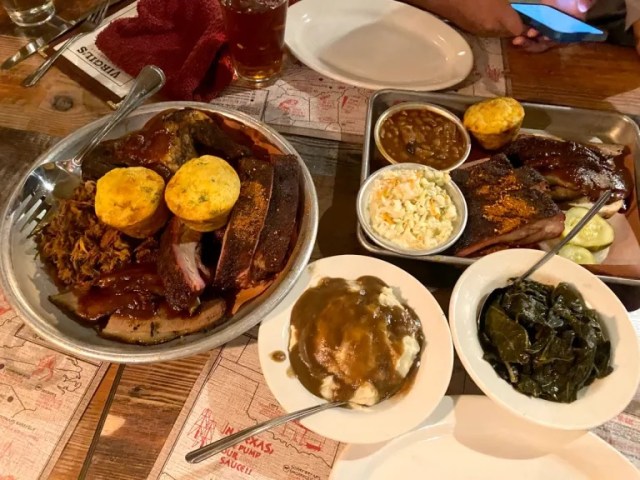
P.K. broadens his palate while filling his stomach.
“So, ‘American food’ is basically hamburgers and pizza, right?”
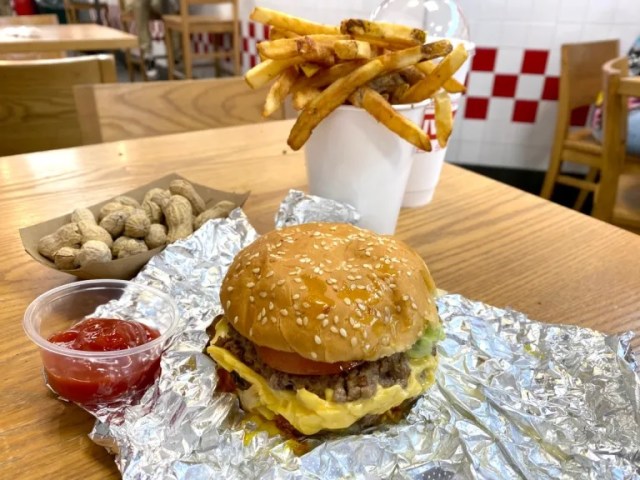
That’s the image our Japanese-language reporter P.K. Sanjun had of the United States’ culinary cultural contributions, with the “pizza” part presumably pointed at the topping-and-cheese-heavy versions popularized by American pizzerias. And to clarify, he’s not complaining. On his trips to the U.S., P.K. has been more than happy to eat a hamburger every single day for an entire week.
▼ A lot of P.K.’s vacation photos look like this
But last month, while visiting New York for the first time, P.K. wondered if there was a way to broaden his appreciation for American food, so he asked his friend who lives in the city for a recommendation. “What should I eat if I want something that screams ‘You’re in America!’?”, he asked, and his friend quickly replied “Barbeque.”

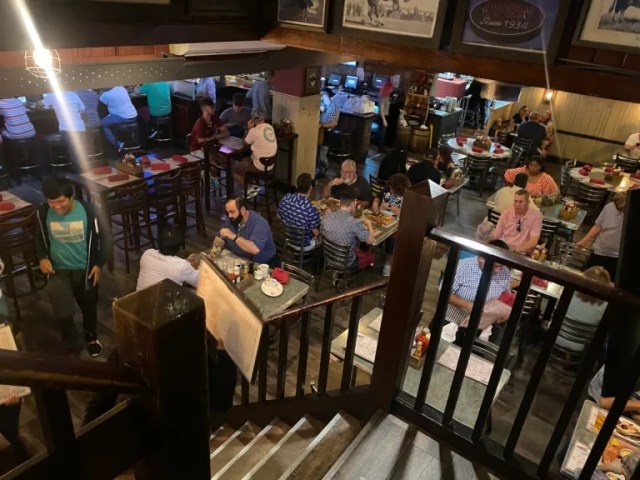
And with that, they were off to Virgil’s, a barbeque restaurant not far from Times Square. As they stepped into the place and down into the dining area, though, P.K. felt like he’d been transported from the Empire State to deep in the heart of Texas, or somewhere else in the American south, thanks to the woody interior and at-home atmosphere.
▼ Note: P.K. has never been to Texas or the South, but Virgil’s interior is what he imagines they’re like.
Since this was P.K.’s first experience with American barbeque, he left the ordering up to his friend. After about a 10-minute wait, the server brought his food, and P.K. was shocked, in the best way possible, by the massive platter of meat placed before him.
▼ All this, just for P.K.!
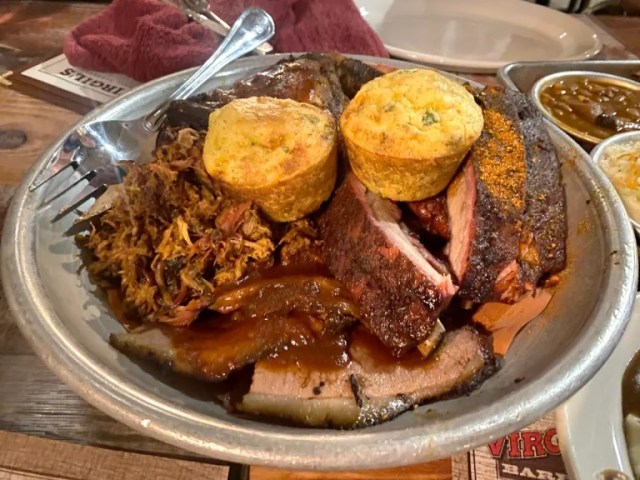
Pork spareribs, grilled beef, pulled pork…it was a feast for the eyes, and it was going to be a feast for his stomach too. This was also, by the way, P.K.’s first time to see cornbread muffins, but of course he started with the meat.
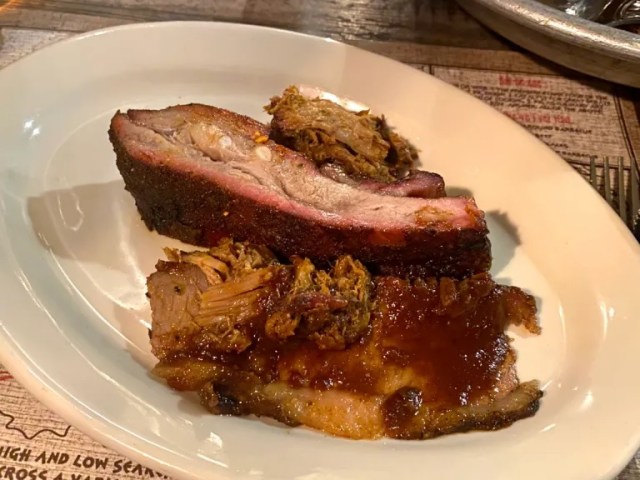
P.K. dug in, and his first impression was…
“This reminds me of the flavor of the barbeque sauce they give you with Chicken McNuggets.”
We should clarify that P.K. means this in the best possible way, and that he also quickly realized that the flavor and texture of the meat itself was clearly a cut above fast-food quality. In terms of the sauce’s flavor, though, the mix of sweet and smoky notes reminded him of McDonald’s McNugget sauce…and he loved it, especially chasing bites of saucy meat with sips of a nice cold beer.
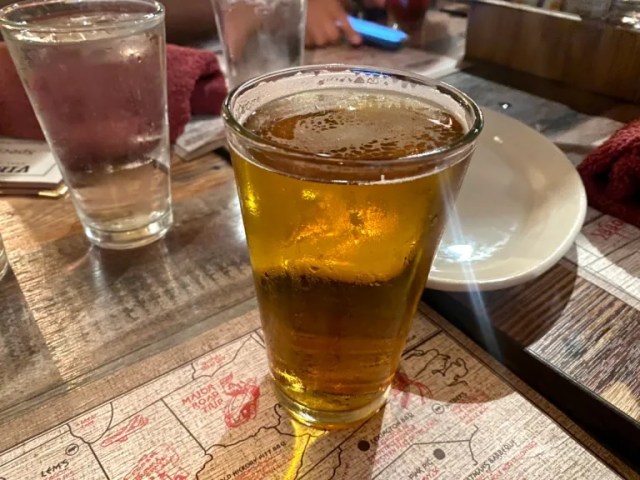
Barbeque aficionados may scoff at the notion of likening a proper sauce to the stuff you’ll find in McDonald’s packets, but it’s worth noting that barbecue sauce itself isn’t very common in Japan. McDonald’s is one of the few places in Japan where you’ll consistently find barbeque sauce, and so it’s not surprising that P.K.’s first taste of American barbecue had him thinking of the Golden Arches, since that’s its closest relative in his personal taste-testing resume.
And again, P.K. was overwhelmed by how tasty it was. This hearty, heavily flavored meal was exactly the sort of “AMERICAN!” chow he’d been hoping for.

The sides all hit their marks too. Collard greens were another first for P.K., and with coleslaw, mashed potatoes, and baked beans too, P.K. was left very happy and very full.
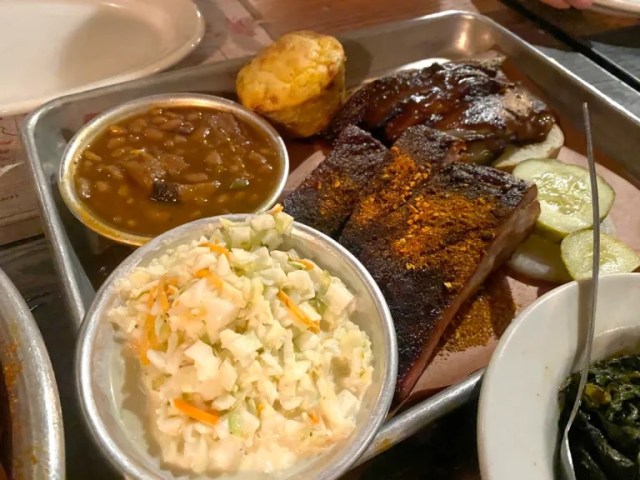
At US$45, this wasn’t a cheap meal, but this was New York, where P.K. has heard you can spend 40 bucks even on a bowl of ramen if you load up the toppings, so he felt like it was a fair price. Compared to Japanese barbecue parties, where the main fare is thin strips of flat-grilled meat, this was a decadent, dynamic-looking dinner, and something that P.K. recommends every Japanese traveler try at least once if they get a chance in the U.S., as it’s a very enjoyable bit of culture shock.
Photos ©SoraNews24
● Want to hear about SoraNews24’s latest articles as soon as they’re published? Follow us on Facebook and Twitter!
]]> https://soranews24.com/2023/09/30/edible-culture-shock-our-japanese-reporter-tries-american-barbecue-for-first-time%e3%80%90taste-test%e3%80%91/feed/ 0 637655 PB 5 Why this American can’t stand Japanese bookstores https://soranews24.com/2019/09/29/why-this-american-cant-stand-japanese-bookstores/ https://soranews24.com/2019/09/29/why-this-american-cant-stand-japanese-bookstores/#comments Sun, 29 Sep 2019 05:00:23 +0000 http://soranews24.com/?p=467584 
There’s something about local bookshops that irks even Japanese people.
When you’ve lived in one country all your life, it’s easy to take things for granted and accept the everyday as “normal”. However, once you travel overseas, your eyes are opened to an entirely different way of life with new rules and systems, and while some may be better and some may be worse, some may have you scratching your head as to why they came about in the first place.
It’s a topic that’s fascinated our Japanese-language reporter Seiji Nakazawa ever since he went to England to find fame with the spirit of Yngwie Malmsteen last month. Over in London he found ramen unlike anything he’d ever tasted before, and an unorthodox sushi joint that opened his eyes to a different kind of “normal”, so when he struck up a conversation with an American in Tokyo recently, he couldn’t wait to ask him if there was anything that he found unusual about Japan.
▼ Seiji’s American friend, who’s been named “Atsugiri Dave” for this story.
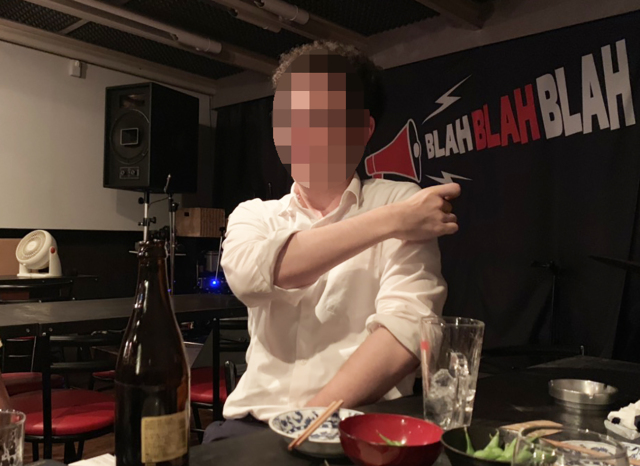
“Atsugiri Dave” — whose name is a play on “Atsugiri Jason“, an American comedian who comments on weird quirks of society on TV with the question “Why Japanese people?” — has been living in Japan for five years, so he’s gotten used to a lot of Japanese quirks by now. However, there’s one thing he still hasn’t gotten used to — in fact, it’s something that’s so annoying and frustrating that it still makes him livid just thinking about it, and it’s got to do with Japanese bookstores.
Atsugiri Dave’s “Why Japanese people?” question:
“How come books by the same author are located on different shelves in Japanese bookstores? I don’t know the meaning of this, yo!”
Tacking the Japanese “yo” particle at the end of the sentence, where it adds extra emphasis, Atsugiri Dave was obviously perturbed by this Japanese quirk. And when Seiji heard this complaint, he could relate immediately. It is, in fact, true that books by the same author are located on separate shelves in Japanese bookshops, and it’s something that gets on Seiji’s nerves as well.
However, there’s a reason why book sellers arrange their paperbacks this way, and it’s because they’re arranged not by the author’s name, but by the name of the publisher.
Atsugiri Dave’s response to this was:
“Even though I can speak Japanese, I don’t know where books by a certain author are. The publisher has nothing to do with the end customer. Foreigners can’t find books in bookstores here.”
Seiji agreed that this is an inconvenient way of arranging books, as there are so many different publishers it’s hard for even Japanese people to find the title they’re looking for. In contrast, there are small bookstores in small towns that do arrange their books by author instead of publisher, and finding a book in those places is super fast and stress-free.
This got Seiji thinking, “Why was it decided that books should be separated by publisher anyway?” After all, it makes it difficult even for Japanese people to find the book they’re after, so who came up with this organisational system in the first place?
He decided to get to the bottom of this conundrum by talking to Kinokuniya, one of the country’s leading bookstore chains. He headed to the chain’s head branch in Shinjuku and asked them, “Why are paperbacks separated by publisher instead of author?”
They replied:
“If the publishers are scattered all over the place searching becomes difficult.”
Seiji couldn’t quite believe what he was hearing.
“Huh? Difficult for who?”
Kinokuniya replied:
“The customer.”
Wow. So bookstores arrange their paperbacks by publisher instead of author so that books are easier for the customer to find. Seriously? Well, it’s a kindhearted gesture that’s certainly backfired.
For some reason, in a land of convenience like Japan, some things are surprisingly inconvenient, like looking for a book by your favourite author at the bookstore. On the bright side, though, we suppose this system does force readers to go one step further and pay more attention to the publishers of books.
And we’re thankful at least that they don’t stock books piled high in massive displays resembling swirling towers. Oh wait, they do…
Photos © SoraNews24
● Want to hear about SoraNews24’s latest articles as soon as they’re published? Follow us on Facebook and Twitter
]]> https://soranews24.com/2019/09/29/why-this-american-cant-stand-japanese-bookstores/feed/ 0 467584 Japanese books bookstores Atsugiri Jason why people novels reading manga Japan publishers authors 2 Japanese junior high schooler worries everyone with attempt to traverse America by hitchhiking https://soranews24.com/2019/02/20/japanese-junior-high-schooler-worries-everyone-with-attempt-to-traverse-america-by-hitchhiking/ https://soranews24.com/2019/02/20/japanese-junior-high-schooler-worries-everyone-with-attempt-to-traverse-america-by-hitchhiking/#comments Wed, 20 Feb 2019 14:00:36 +0000 http://soranews24.com/?p=442398 
Adults worked tirelessly behind the scenes to ensure his safety.
The idea of traveling from one end of a country to another by yourself can be a really appealing adventure for some. With a craving for new experiences and a positive outlook, such memorable trips can often be life-changing.
Wanderlust-filled Japanese junior high school student @REIbahobahoanta’s dream is to travel the world on a boat with his friends. Some people would consider it a child’s fantasy, which was why few people took the 15-year-old seriously when he announced on Twitter that he will be attempting to cross America by hitchhiking. But when Rei (his handle) actually arrived in Los Angeles airport alone on 4 February, alarm bells started ringing in everyone’s heads. Here was a minor, who barely spoke English, who would be relying on random strangers for help.
▼ His parents had actually encouraged him to do so.
(Translation below)
https://twitter.com/REIbahobahoanta/status/1092338920992366592
“I have finally embarked on my journey to traverse America, hoping to inspire countless people and generations with my trip. I’ll do my best. If this message gets 1,000 retweets, I will travel barefoot.”
Traveling alone in a foreign country is by no means unheard of, but this was an unsupervised boy in a foreign land with a vastly different culture. While a few netizens cheered him on, many Japanese people — particularly those living in America — were concerned for his safety.
▼ Like this Japanese mother in Massachusetts.
(Translation below)
頑張って挑戦中なのに水を差すようで申し訳ないけど、同じ中学生の子をもつ母として、そして在米の日本人として、これは本当に危険だと思うのです。どなたかレイくんと会われることがあれば、せめてヒッチハイクはやめて何か別の方法で旅するよう勧めてください。お願いします。 https://t.co/jjnfpkOzOE
— じゅんじゅん (@junjunh0101) February 13, 2019
“I don’t wish to rain on your parade, but as a mother of a junior high school daughter and as a person living in America, what you are doing is extremely dangerous. If anyone encounters Rei, please encourage him to take other means of transportation.”
Rei’s bold plan involved hitchhiking and staying over in strangers’ homes, which could prove fatal if he met the wrong company. News began to spread among the Japanese community, and adults pitched in to ensure Rei was safe.
▼ His naivety may cost him someday.
(Translation below)
https://twitter.com/REIbahobahoanta/status/1093559361568333827
“I stayed over at a Japanese person’s home again. He contacted me through Twitter, invited me over for dinner and even made a bento lunchbox for me. I’ve been relying on Japanese people ever since I got to America, but I’m doing fine now thanks to them!! I’m going to enjoy this!”
▼ Police stopped him at one point.
(Translation below)
https://twitter.com/REIbahobahoanta/status/1094135579778805760
“Police officers actually came and questioned me when I was in a city, and were shocked to find out I was trying to travel across America. They told me to get into the patrol car and contacted my parents, but dropped me off in the middle of nowhere once they got their consent. They cheered me on, and now I’m so excited!!”
But on 15 February, the junior high school student claimed that he was being held at a Youth Protection Center in Las Vegas. The next day, 12 days after Rei first started his journey, he announced that he was cutting the trip short and heading back to Japan immediately.
▼ This was the reason he gave.
(Translation below)
https://twitter.com/REIbahobahoanta/status/1096967104203374593
“I wish to tell you all that I am returning to Japan by my own free will. Concerns from adults did not influence my decision. The reason I was held at a Youth Protection Center was that it was a punishable crime for parents to allow children less than 18 years of age to travel unsupervised. My father safely picked me up, and I do not wish to cause more trouble.”
The Japanese Internet breathed a sigh of relief, glad that Rei has safely returned to Japan. If his actions are anything to go by, however, we are pretty sure he will return to America someday when he is a lot older and wiser. Until that time comes, perhaps he can satisfy his wanderlust in Little America in Japan.
Source: Twitter/@REIbahobahoanta via Hachima Kiko
Top image: Pakutaso
]]> https://soranews24.com/2019/02/20/japanese-junior-high-schooler-worries-everyone-with-attempt-to-traverse-america-by-hitchhiking/feed/ 0 442398 kaigoIMGL7822_TP_V The power of fast food: Supreme Leader Kim Jong-un wants McDonald’s to invest in North Korea https://soranews24.com/2018/05/07/the-power-of-fast-food-supreme-leader-kim-jong-un-wants-mcdonalds-to-invest-in-north-korea/ https://soranews24.com/2018/05/07/the-power-of-fast-food-supreme-leader-kim-jong-un-wants-mcdonalds-to-invest-in-north-korea/#comments Sun, 06 May 2018 15:00:11 +0000 http://soranews24.com/?p=412573 
You know peace has arrived when the Supreme Leader now hungers for burgers instead of the nuclear launch button.
After frightening Japanese residents with nasty ballistic missile launches, a new age seems to have dawned for North Korea as it finally pulls the plug on its controversial nuclear weapons program.
Repairing strained relations with its neighbor has begun in earnest, with Kim Jong-un and South Korean president Moon Jae-in working together at the recent 2018 inter-Korean summit to establish lasting peace between South Korea and North Korea. After the conference, North Korean officials surprised everyone with the following statement:
“The country welcomes investments from America. We wish to attract McDonald’s and President Trump-affiliated companies. We hope America views us as a normal country.”
▼ He sure did a quick 180 on us all.

Despite it being fantastic news that the rogue state now favors diplomatic negotiations, no one really knows why its leader specifically made a not-so-subtle hint to court the fast food giant.
Nevertheless, you can bet McDonald’s won’t let this opportunity slip by to introduce its iconic golden arches to North Korean citizens. Setting up restaurants in a poverty-stricken, tightly-controlled country like North Korea is no walk in the park, however, and only time will tell if its people can one day blissfully enjoy a Big Mac while sipping a McShake.
▼ Ready for some North Korean limited-edition
Nuclear Burger and Missile Fries, anyone?

Japanese netizens breathed a sigh of relief that Kim Jong-un now craves beef patties instead of bloodshed:
“He couldn’t forget the taste of McDonald’s during his time abroad, eh?”
“None of his citizens seem like they can afford it.”
“We’ll give him Mos Burger if he apologizes.”
“He just wants to eat some himself.”
“It won’t be long before Kim Jong-un starts social media.”
It’s going to be some time before McDonald’s makes landfall in North Korea, and though the king of fast foods still has to contend with the country’s surprisingly excellent local burger joints, we’re pretty sure they’re going to do just fine.
Source: Record China via Kinisoku
Top image: Pakutaso
Insert images: Pakutaso (1, 2)
]]> https://soranews24.com/2018/05/07/the-power-of-fast-food-supreme-leader-kim-jong-un-wants-mcdonalds-to-invest-in-north-korea/feed/ 0 412573 TRTM9475_TP_V Japanese partygoer starts dishwashing at American friend’s house, ends up pondering her culture https://soranews24.com/2018/02/19/japanese-partygoer-starts-dishwashing-at-american-friends-house-ends-up-pondering-her-culture/ https://soranews24.com/2018/02/19/japanese-partygoer-starts-dishwashing-at-american-friends-house-ends-up-pondering-her-culture/#comments Mon, 19 Feb 2018 04:00:36 +0000 http://en.rocketnews24.com/?p=405044 
A simple act leads to a deep discussion on important cultural values within Japan vs. outside countries and traditional gender roles.
Who does the dishes in your household? Is it an expectation, or do they volunteer? Would they behave any differently at someone else’s house? As one Japanese net user found out, the answers to these questions may reveal more than they initially seem.
A little over a week ago, a single instance of doing something that was completely natural to her at an American friend’s party and the ensuing reaction prompted Twitter user @montserrat5 to post a series of four tweets in total on her thoughts about the experience. Japanese people from around the country have since chimed in with their opinions and observations as well, leading to a net-wide discussion on the subject.
Let’s take a look at the original tweet and scenario that sparked the debate:
米国人男性友人の家での飲み会で、お開きになり、ついお皿の後片づけを勝手に始めてしまった。彼が飛んできて「何するの?」私「え?片づけ」彼「まさか皿洗いが趣味の人?ちがうよね?やるならまず全員でジャンケンだよ」と笑って止められた。なんかハッとした。
— mon (@montserrat5) February 10, 2018
“I went to a drinking party at my American male friend’s place. As it was wrapping up, I started doing the dishes. He rushed over to me and asked, ‘What are you doing?’ to which I answered, ‘Huh? Cleaning up…’ He continued while laughing, ‘You’re not someone who actually enjoys doing the dishes as a hobby, are you? If someone’s gonna do them then everyone needs to play rock-paper-scissors first,’ which caused me to stop. Somehow I was taken aback.”
It’s important to note for the purposes of this exchange that the writer of the post is a Japanese female, who later clarified that the party took place in Japan and the attendees were almost all non-Japanese people. She continued in a second tweet:
飲み食いの後は女性が自然に片付けはじめ男性は当然のようにそれを見てる。そう染みついてた。日本人だけの飲み会だったら「女子力やね」なんて言われてたかも。でもその発想がない米国人の彼から見て「頼んでいないのに面倒を引き受けるナゾの人」に見えたらしかった。クセってこわい…w
— mon (@montserrat5) February 10, 2018
“Men view women naturally cleaning up after eating and drinking as completely normal. That idea is so deeply ingrained. If it were a party with Japanese people only, they would probably say, ‘It’s a woman’s job.’ But from the standpoint of my American friend who doesn’t harbor such an idea, I probably looked like a strange person to take over something bothersome even though I wasn’t asked to, so he got me to stop. Habits are scary…haha.”
Is she reading too much into this situation, or is she making a valid point? While it’s true that even individuals from the same country of origin and of the same gender have different notions on how to delegate household tasks, @monserrat5 further went on to share another intercultural anecdote:
米国人の叔父がいますが、彼が日本の親戚の集まりに来た時、私がお酌をしようとして「そんなことしなくていいんですよ」と慌てたようにビール瓶を取りあげられたこともあります。20歳頃でしたが、女らしさとして自分に染みついているものは一体なんぞや?という疑念が生まれた瞬間だった気がします。
— mon (@montserrat5) February 11, 2018
“I have an American uncle. When he came to his Japanese relatives’ gathering, he got flustered when I tried to pour him some alcohol and said, ‘You don’t have to do that for me,’ and took the beer bottle. That was when I was in my twenties, and I think it was probably the moment when questions were born about exactly what things are ingrained inside of me regarding femininity.”
She finished the dialogue with one more summary tweet:
慣習・文化・しつけ・マナー・お国柄など、自分が浸かってる風土について「考えたらこれって一体?」と疑問が起こる瞬間があるという主旨のツイートです。疑問の後どう考えていくかは色々なんでしょうけど、ひとつ言えるのは、「疑問を持ってなかった状態には戻れない」という点かな、と思います。
— mon (@montserrat5) February 13, 2018
“This tweet is about my thoughts on those moments when I have questions such as ‘If I stop and think about it, what exactly does this mean?’ regarding the customs, culture, upbringing, manners, national characteristics, and the climate that I’ve been submerged in my whole life. After having those questions, there are various ideas about how to think moving forward, but the one thing I can say is that I can’t return to a time when I didn’t have any questions.”
▼ (NOT part of the discussion agenda: questions about interspecies dishwashing)
Don’t u dare add another plate when I’m almost done
#dontyoudare #funnymemes #funnymeme #funnyasf #funnyashell #washingdishes #dishwasher pic.twitter.com/wd2YbMDuoG
— Angel Bengal
(@angelbengalcat) October 3, 2017

Japanese net users weighed in on her postings with mixed opinions:
“Every country has a different culture and manners. If there are people who are using this tweet to prove that Japan is a little behind the times, I think that’s not quite right.”
“In the case of my relatives’ house, it seems that in more cases than not the women are in charge of managing things inside the house. I have a feeling that it’s most common in Japan for men to be in charge of the house itself. In terms of my relatives, the women do the cleaning up in the kitchen while the men are delegated more manual labor tasks such as cleaning the barbecue grill, yard, and pond maintenance.”
“At private establishments in Japan (especially in the lower parts of town), when a man and women enter a restaurant together, the beer bottle, sake bottle, or cup is left on the woman’s side. There are even some older women who forcefully return a bottle moved near the drinking person back to the woman’s side while saying, ‘You’re not being thoughtful. You should pour it.’ It has nothing to do with culture or the like–I just wish somebody would kick out the older people who force young women to behave this way.”
“I would begin cleaning up any fallen trash, dirty tables, or used plates normally. Just leaving those things as they are is neither virtuous nor immoral. It’s just customary. I prefer the people in countries that take the self-initiative to tidy those things without worrying about differences in how others might view them rather than those from countries who would just let them sit there.”
Truth be told, as an American female, my immediate reaction to @montserrat5’s original anecdote was not related to traditional gender roles at all, as most of the other net users and she herself seemed to interpret it, but to the host vs. guest dynamic. If I were hosting a party at my place, I would never expect my guests to do the dishes for me. Furthermore, if one of them automatically began to clean, I would absolutely intervene just as the American male friend did in this case. From my own time in Japan, I have witnessed Japanese friends trying to stop me from cleaning up as well, so I’m not convinced that it’s necessarily a cultural difference, either. We’d be curious to hear from readers all over the world what your reactions to the tweet series were, and judging by @montserrat5’s interest in the topic, she’d be keen to hear your thoughts too!
Source: Twitter/@montserrat5 via My Games News Flash
Featured image: SoraNews24
]]> https://soranews24.com/2018/02/19/japanese-partygoer-starts-dishwashing-at-american-friends-house-ends-up-pondering-her-culture/feed/ 0 405044 dav Tech journalist predicts Japan’s Pokémon Go release date https://soranews24.com/2016/07/12/tech-journalist-predicts-japans-pokemon-go-release-date/ https://soranews24.com/2016/07/12/tech-journalist-predicts-japans-pokemon-go-release-date/#comments Tue, 12 Jul 2016 05:00:51 +0000 http://en.rocketnews24.com/?p=332405 
Pokémon Go has become the latest app sensation but it’s still not available to download in Japan!
Pokémon Go has shot to the top of the app charts overseas and become so popular that there have been reports of injuries, car crashes, and even people finding actual dead bodies while searching for new Pokémon — but people living in Japan are still waiting.
As you may imagine, there has been constant speculation as to when the game will be available to download in Japan, but Wall Street Journal tech reporter Takashi Mochizuki is telling his Twitter followers he expects Pokémon Go to be released in Japan this week.
Pokémon Goの勢いが止まりません。「クラッシュ・オブ・クラン」のスーパーセルまるまる一個分に匹敵する時価総額をわずか数日で任天堂にもたらしました。株価は40%以上も上昇。日本でのサービス開始は今週中を予定(関係者)とのこと。 https://t.co/HkQ6xqKgFp
— Takashi Mochizuki (@6d6f636869) July 11, 2016
“This Pokemon Go phenomenon isn’t stopping. […] Stocks have increased by 40%. It is scheduled to be released in Japan this week (according to related parties),” Mochizuki posted on Twitter today.
In addition to the possible release of Pokémon Go this week, a new Pokémon movie is opening in cinemas this Saturday, so it could be that there’s some coordination going one with the film’s debut.
▼The Pokémon Go Plus portable device allows you to play without your cell phone.

So, get your cell phones ready, because this weekend there’s a good chance you’ll be able to start catching some Pokémon in Japan! And if not, we can start venting our frustrations on Mochizuki.

In case you’ve been living under a rock (and there’s nothing wrong with that), you may be asking, “What is Pokémon Go anyway?” If so, it’s an augmented reality game, where you travel around your home or outside trying to catch virtual Pokémon that appear on your screen based on the phone’s GPS and clock.
It sounds like a lot of fun — and it’s free! No wonder people are hurting themselves trying to catch ‘em all.
Source: Mobilelaby, Takashi Mochizuki Twitter, Vox
Images: Flickr/Eduardo Woo, Flickr/Darren Mark Domirez, Pokemon Go Homepage
]]> https://soranews24.com/2016/07/12/tech-journalist-predicts-japans-pokemon-go-release-date/feed/ 0 332405 Pokemon Go by Eduardo Woo via flickr Pokemon Go by Eduardo Woo via flickr inline-576x240 Pokemon Go by Darren Mark Domirez via flickr The top five surprising observations of a Japanese student visiting an American university https://soranews24.com/2016/03/22/the-top-five-surprising-observations-of-a-japanese-student-visiting-an-american-university/ https://soranews24.com/2016/03/22/the-top-five-surprising-observations-of-a-japanese-student-visiting-an-american-university/#comments Mon, 21 Mar 2016 19:00:52 +0000 http://en.rocketnews24.com/?p=308976 
A Japanese university student shares her most memorable observations after a short visit to an American university town.
For three weeks between February 14 and March 6, my family and I hosted a special visitor from Japan, whom I’ll call “Natsumi” in this article, and it turned into a truly unforgettable experience. Natsumi is a 19-year-old second-year university student who attends an internationally-focused school in western Tokyo. I originally knew her as a junior high school student while I was working on the JET Program in Yamagata Prefecture, Japan, but we’ve kept in touch over the years and she’s now essentially my Japanese little sister. Always eager to improve her English and meet new people from around the world, Natsumi took a short trip to Australia during her high school years, and ever since had been looking forward to the day when she could study abroad as a university student. But with so many countries to choose from, she wanted to be absolutely certain in her decision. So, what better way to make up her mind than to spend some time at a typical New England public university while visiting her big sister at the same time?
Natsumi arrived at Boston’s Logan International Airport on the coldest night of the year, but was nevertheless ecstatic to have finally made it to America. The next few weeks were a whirl of meeting new people, trying new food, and visiting new places. However, in the interest of not rambling on to much about all of her different cultural experiences, I’d like to focus on the top five differences between American and Japanese universities that she found most surprising.
Natsumi’s observations were made as a short-term visitor to a town called Storrs in the tiny state of Connecticut. She wasn’t actually enrolled in classes, but had plenty of time to explore the campus and joined in certain activities over the span of three weeks. These are, of course, the observations of just one individual, and do not necessarily hold true for every Japanese person, nor every American university.
1. The Campus is huge
Natsumi’s first reaction upon setting foot on an American university campus was that it was absolutely ginormous compared to her own university’s. Of course, this point probably has a lot to do with the fact that the university where this writer works, the University of Connecticut (known locally as “UConn”), is a large public school in a rural setting with an undergraduate enrollment of roughly 19,000 and an additional graduate population of 7,000 at the main campus. During her first few days, Natsumi got lost many times while trying to find her way around the different buildings on campus, and she was floored that it could take 20–30 minutes just to walk from one side of the campus to the other. To top it off, there are no campus gates or curfews like they have many Japanese universities. By the time Natsumi had finally started finding her way around, it was already time to go home…
▼ An example of what it looks like when your university is, for all intents and purposes, basically a town in itself

2. And so is the food
Speaking of ginormous things, one of Natsumi’s personal quests during her time in America was to try a different kind of junk food every day. (Un)luckily for her, her American host family actually eats quite healthily, but she wasn’t too worried about her mission because there were bound to be all kinds of delicious and high-calorie snacks on campus to satisfy ravenous college kids.
That being said, nothing could have prepared Natsumi for her first encounter with some good old American food sizes. On her first day, she innocently ordered a chocolate chip cookie at one of the campus cafes. I then received a message saying, “It’s literally the same size as my face!” along with the following photo:
▼ It took her three days, but she eventually vanquished the beast.

Similarly, here’s what happened when she bought a single slice of pizza at the university’s main food court:

Granted, Natsumi does have a very small head to begin with, but as she told me later, “I’ll never forget the moment when I first saw the sight of that giant cookie!”
3. The mascots, oh, the mascots!
From my own experience as an American who completed both my undergraduate and graduate studies in the U.S., I think that mascots are an integral part of American university life. Each school has its own distinct mascot, which plays a huge role in promoting the university around the country (especially the sports teams) and appears on all sorts of university merchandise. Take UConn’s Husky mascot, for example; UConn students are collectively referred to as “Huskies,” and during a short walk through campus you will inevitably see any number of students wearing shirts, hoodies, pants, and other gear with the husky logo.
▼ Seriously, it pops up everywhere–even on the campus ice rink (circled in red)!

▼ A great spot for a photo op

If, like Natsumi, you’re not from the U.S., perhaps the concept of a university mascot seems a bit puzzling, or even strange, to you. However, despite the lack of any kind of identifying mascot at her own university, Natsumi was immediately smitten with the husky (whose name is Jonathan, by the way), so she set out to buy a husky key chain at the local university goods store. She then proceeded to include the miniature Jonathan in pictures of every meal she ate while in America.
▼ Jonathan for scale

After witnessing the American students’ love for their university mascot and their general school pride expressed in the ubiquity of school merchandise everywhere, Natsumi got to thinking: “It’s too bad Japanese universities don’t have cute or cool mascots…”
4. Cohabiting couples
During her stay in Connecticut, Natsumi volunteered twice per week in two of the Japanese language classes on campus. This experience not only kept her schedule busy but also let her meet many students, who were more than happy to share their experiences of American college life with her. She became particularly close with one female third-year student, who invited her over to her apartment for dinner one night. The day finally came and Natsumi showed up at the apartment…only to be greeted by the girl’s boyfriend, who also lived there!
“What?!” Natsumi thought. “Girlfriend and boyfriend undergraduate students live together in America?? That would be unthinkable in Japan!”
While I personally wouldn’t say that it’s the norm since a great deal of students live in on-campus dormitories at American universities, I also don’t feel that it’s unusual to hear of undergraduate students of opposite sexes, including couples, living together in off-campus housing. When I asked Natsumi to explain more about the situation in Japan, here’s what she had to say:
“In Japan, it’s common for adult couples to live together, but not so much for students. Even adults wait a long time for their relationship to progress before moving in together.
I personally think it’s a good idea if you want to save some money…but at the same time, I’d worry that something could go wrong–everything from breaking up to having a baby by accident…”
5. Animals, animals everywhere!
This last observation is probably less about Japan-U.S. university differences and more about city vs. rural university differences, but it still left a lasting impression in Natsumi’s mind.
When I asked her to tell me the first thing that pops into her head when she thinks of UConn today, it’s the fact that Squirrels. Are. Everywhere. In fact, she even took the time to make a photo compilation of all of her squirrel shots:

As someone who grew up surrounded by the furry critters, I couldn’t help but laugh at her strange fascination with the little guys as they scurried around looking for acorns. When I remarked, “They’re just squirrels!” she replied, “We also have squirrels in Japan, but they’re a bit different looking and are usually only found in the mountains. It’s rare to see them among so many people like this.” Guess I’ll never look at squirrels in the same way again!
Bushy-tailed rodents aside, as a result of having a large College of Agriculture and Natural Resources, UConn also keeps many farm animals, including chickens, pigs, sheep, horses, and cows, on university premises. I feel like keeping animals on campus is fairly typical of a large rural school in America, but Natsumi commented that it’s very rare in Japan, unless the school itself is focused on agriculture. As a result, she had a wonderful time walking around and visiting the different animals–especially the cows.
▼ Posing with a couple of dairy calves, which will one day provide milk to make the university’s famous ice cream

▼ Master of…the bovines??

So what was Natsumi’s ultimate impression after her three-week-long stay in the U.S. came to an end? The visit further increased her desire to be accepted into an American study abroad program, and now she’s extremely motivated to work hard on her academic English. She can’t wait to have a mascot to call her own, and to watch the frolicking squirrels while she eats a giant cookie. Please wish her good luck in her studies, everyone!
All images, unless otherwise noted, © RocketNews24
]]> https://soranews24.com/2016/03/22/the-top-five-surprising-observations-of-a-japanese-student-visiting-an-american-university/feed/ 0 308976 12717232_251177735214141_1314371833198930922_n1 DSC03591 campus 12717232_251177735214141_1314371833198930922_n DSC03533 DSC03283 DSC03623 DSC03528 12799099_262050470793534_3808373562527358400_n DSC03269 DSC03265 America is “the land of the free,” but what does that mean? Japanese commenters weigh in https://soranews24.com/2016/01/22/america-is-the-land-of-the-free-but-what-does-that-mean-japanese-commenters-weigh-in/ https://soranews24.com/2016/01/22/america-is-the-land-of-the-free-but-what-does-that-mean-japanese-commenters-weigh-in/#comments Thu, 21 Jan 2016 22:00:26 +0000 http://en.rocketnews24.com/?p=296059 
The USA is known as “the land of the free,” but what exactly does that mean? Some Japanese commenters recently discussed this online, and their answers were…unique.
Before we get started, let’s put a big old disclaimer right here: These comments do not necessarily reflect the opinion of anyone at RocketNews24 nor are they necessarily the general feeling of people in Japan. It’s clear that quite a few of these commenters only know about the USA in broad, incredibly stereotypical strokes, so let’s take these comments with a pinch of salt and in good humor.
So why, then, are we presenting these comments? Well, for one thing, it’s always fascinating to see how other people view you (a fair number of writers here at RN24 are from the USA) and to see how their vision matches your own. Another thing is that we’re sure there’s a fair number of people in Japan and the rest of the world (and maybe even in the US itself) who might actually agree with these comments.

With all that out of the way, let’s see what a select few commenters on 2channel (the inspiration for 4chan) have to say about freedom in the America. (Also, we apologize to anyone who gets upset when the USA is called “America,” but that’s literally what the country is called by most people in Japan.)
- “America is the land of the free…but what does that mean?'”
- “Liberty stands for freedom.” [This response was written and posted entirely in English.]
- “It’s a country with the freedom to invade other countries.”
- [In response to the above comment] “Yes we can.”
- “I’ve never left Japan, but is it more free than here? I don’t have any complaints…”
- “The country is controlled by Freemasons.”
- “It’s liberty in the sense that anyone can become a millionaire.”
 Wikipedia/Sgt. Michael Selvage
- “Mistaking ‘selfishness’ for ‘liberty.'”
- “It’s odd that Japan doesn’t have freedom, but it does have personal responsibility.”
- “There are lots of regulations, but beyond that, they have freedom.”
- “The Wolf of Wall Street was so fun! That’s what you’d expect from America, land of liberty!”
- “The freedom for anyone to fall into ruin and die on the side of the road.”
- “Maybe the freedom for poor people to at least be able to survive on the bare minimum? Also, it’s amazing that they can sell one-month worth of generic medicine at the supermarket for three dollars.”
▼ “Don’t like the drugs, but the drugs like me…”

- “America: You can do whatever you want, but you have to be responsible for yourself. There’s nothing to be done if you can’t see a doctor or if we can’t control guns.
Japan: You can’t do whatever you want, but you have to be responsible for yourself. We won’t give you much public support and you’ll be relatively responsible for taking care of everything yourself.
America: The country of the American dream where startups have equal chance of succeeding, but society is unfair and unequal due to race and the class you’re born into.
Japan: Only people from great lineage, wealthy families, and large corporations are successful, but in this country even people at the bottom have some chances and opportunities.
I wonder which is better…”
- “I’ve heard they’re pretty loose with the law and filing paperwork.”


- “Liberty means ‘do as you like.’ Freedom means ‘go wild.'”
- If you’re making money, you can do whatever you want with what you’ve made. If you’re not, you just have to take care of yourself. In Japan, even if you’re not making money, if you’re doing your best, we’ll take care of your physical safety.
- “Personal responsibility. They might say Japan doesn’t have any freedom, but we look after the livelihood of our citizens.”
Whew! There were quite a few comments there!
As you can see, even these commenters don’t seem entirely sure what “liberty” and “freedom” mean in the USA. And, as with any anonymous forum, it’s likely much of what they wrote was just trolling — but maybe you’ll see a nugget of truth in there. Best to put on some gloves before you try to dig it out though…
Oh, and while we’re on the subject of America, if you’re curious to know what South Koreans think about Donnie Trumpet’s presidential bid, you’ll want to check out this video!
Sources: Nesoku Quality, 2channel
Featured image: Wikipedia/Eldar Kamalov

]]> https://soranews24.com/2016/01/22/america-is-the-land-of-the-free-but-what-does-that-mean-japanese-commenters-weigh-in/feed/ 1 296059 Statue_of_Liberty Statue_of_Liberty 800px-USA_Flag_1992 800px-Bowl_of_Assorted_Pills Administrative_burden Johnson Town: A little piece of America in Japan… where all the residents are Japanese 【Pics】 https://soranews24.com/2015/07/29/johnson-town-a-little-piece-of-america-in-japan-where-all-the-residents-are-japanese-%e3%80%90pics%e3%80%91/ https://soranews24.com/2015/07/29/johnson-town-a-little-piece-of-america-in-japan-where-all-the-residents-are-japanese-%e3%80%90pics%e3%80%91/#comments Wed, 29 Jul 2015 05:00:12 +0000 http://en.rocketnews24.com/?p=255541 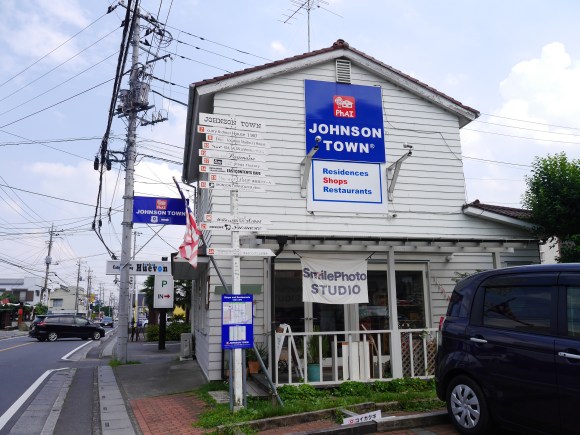
Groups of people moving to a new country often settle in the same area together, creating a little neighborhood reminiscent of their old lives in their new homes. In the U.S., we have a Chinatown or Little Italy in almost every big city, and Japan has the same thing too. They even have something you may have never heard of: Little America towns that used to house U.S. military personnel.
But what happens when the military decides they don’t want to live there anymore? Then you get a place like Johnson Town in Saitama Prefecture, where you’d swear you were walking around rural America, if not for the fact that it’s entirely populated by Japanese people.
What is one of these Little America towns in Japan like? And, most importantly, do they have good American-style food? A reporter from our Japanese sister site went to investigate and bring you all the answers, some of which may surprise you.
Before we get into the details of our reporter’s visit, first you may be wondering why there’s an abandoned U.S. military town in the middle of Saitama anyway. The town actually started out as a residential area for WWII Japanese military officers teaching at the Saitama military academy. In 1945, during the American occupation of Japan, U.S. forces took over the academy and turned it into “Johnson Air Base.”
When the Korean War broke out in 1950, U.S. military personnel were housed in the surrounding area, turning it into what became known as “Johnson Town.” They built American-style houses, and even high-rise apartments, all the way up until 1978 when all military personnel left the area, and Japanese people started to move in.
And that brings us to today, where Johnson Town still stands as a relic of 1950s rural America, tucked away in a corner of modern Japan. When our Japanese reporter first heard of this place, he knew he had to check it out. Could someplace so bizarre really exist? He had to see with his own eyes.
▼ The first step is getting to Iruma City in Saitama, where Johnson Town is located.
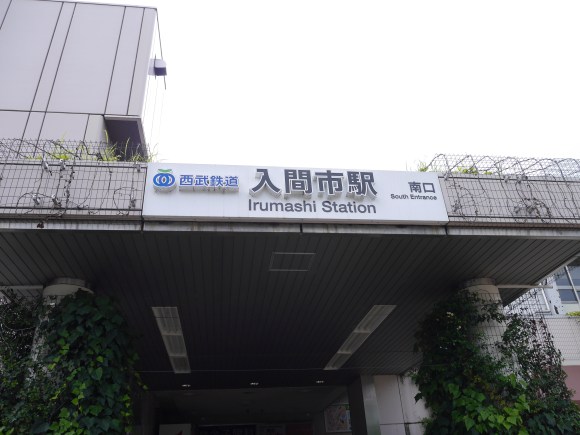
▼ But wait a minute, how will we know we’re near?
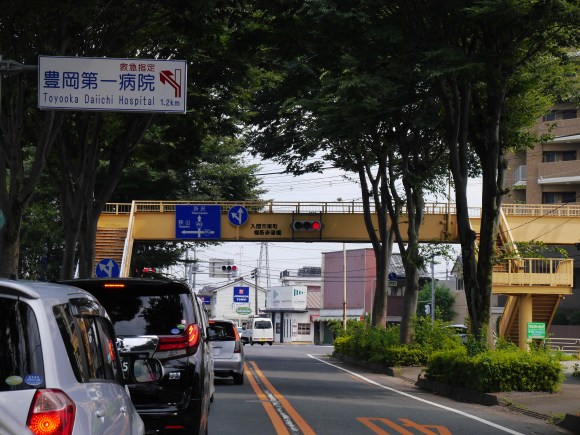
▼ Oh. I, uh… something tells me we’re getting close.
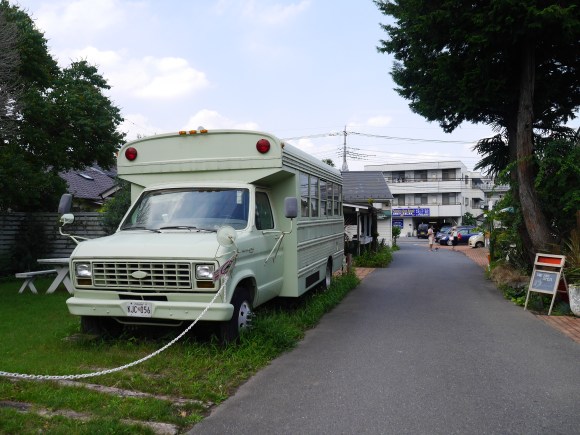
▼ Are we really still in Japan? I’m pretty sure we’re at a Midwestern family diner….
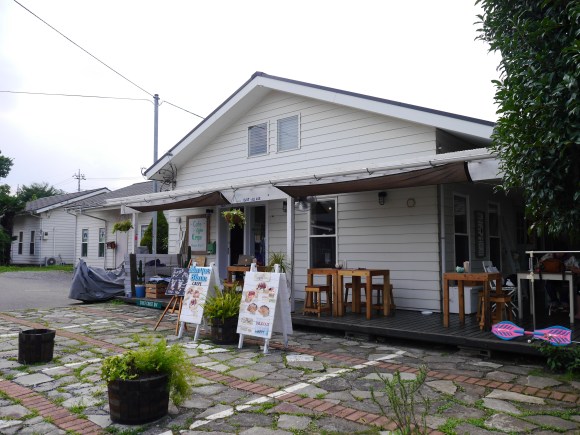
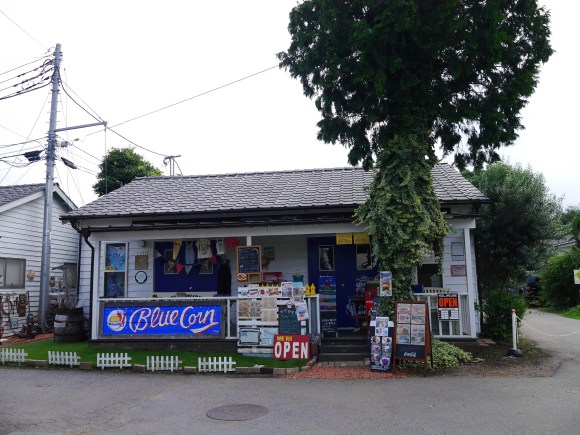
▼ “Blue Corn?” “Yes We’re Open!” signs? Shingled roofs?
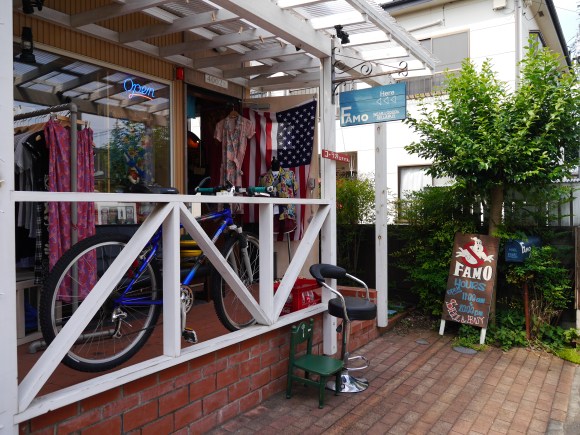
▼ There’s an actual American flag for crying out loud! All right, it’s official, we’re not in Japan anymore!
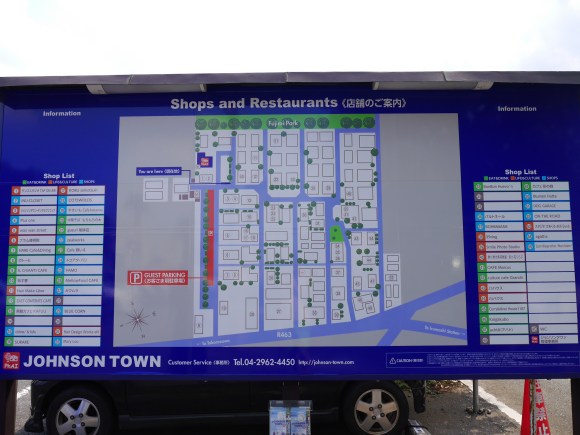
▼ Or, at least, that’s what our reporter thought until he looked at an area map. Aside from a few choice English words, the entire thing is in Japanese. Phew… we were getting worried there for a second.
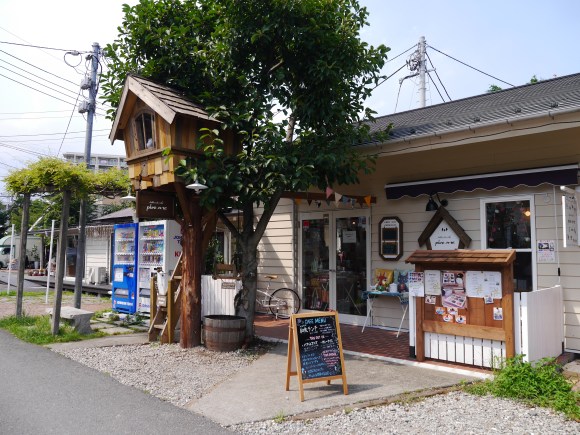
▼ Now it’s time to get down to business: what’s the food like? Maybe this All-American treehouse–er, restaurant will supply us with some answers.
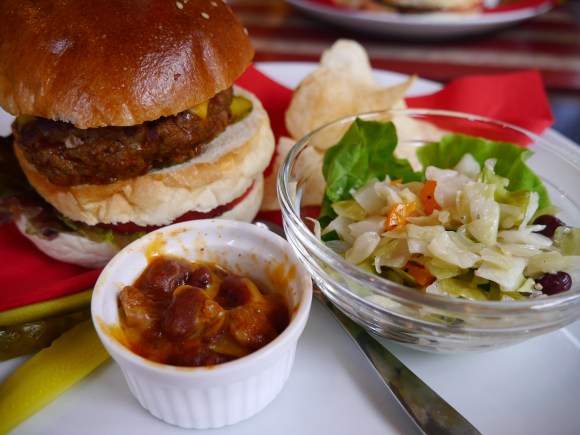
▼ Well the food, while quite delicious, didn’t quite live up to its American surroundings. The “Lucy’s Burger” our man ordered was a little on the small side, and the salad should definitely have been a side of fries. Plus they served “paté” in a little bowl, which looks a whole lot like chili and probably should have just been chili.
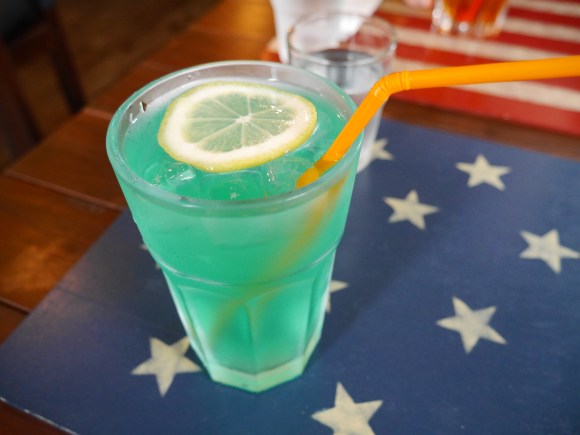
▼ And this was the “Hawaii Drink.” The lemon is a little sad just floating there, but the restaurant does get points for accuracy, perfectly recreating what a typical American restaurant would serve as a “Hawaii Drink.”
▼ Okay, they just went full-out Japanese on us for dessert. No American restaurant would do this… although maybe that’s a reason why living in Japan is pretty sweet sometimes.
▼ After eating, our reporter explored a little bit more. Here’s a shot of former U.S. military personnel dorms, which are now being used as apartments by Japanese people.
▼ You may notice that there are no foreign tourists in any of these pictures. That’s because our reporter didn’t encounter a single non-Japanese person during his entire time at Johnson Town.
▼ Although, if you listen closely, you can still hear the wise-cracks and catcalls the 1950s military personnel made while hanging out around their cars.
▼ And the laughs from everyone enjoying a cold, refreshing sarsaparilla at the local soda fountain.
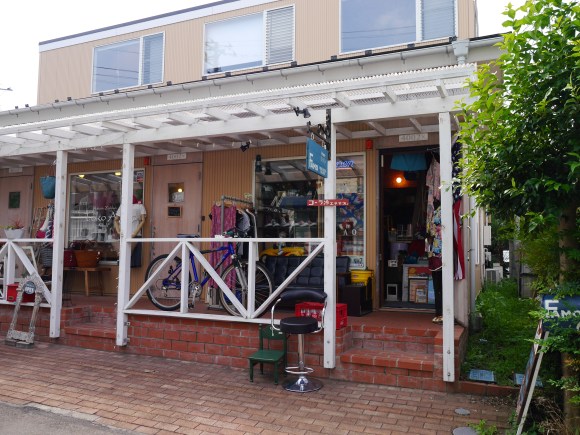
▼ And, uh, the sound of everyone slipping into their jeans from the famous “Jeans Shop on the Road ’10” also known as “Samurai Jeans.”
…okay, maybe this one wasn’t around back then.
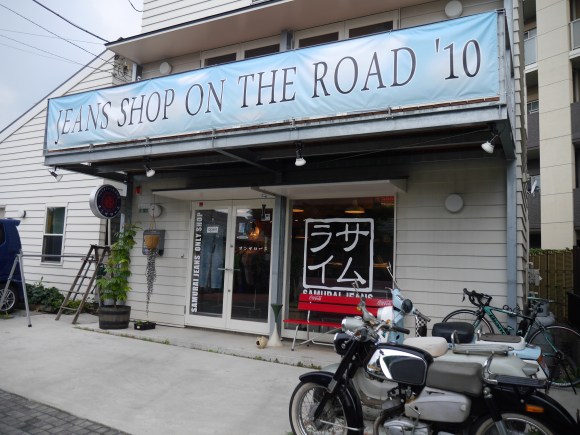
If you’re in Saitama and you want to see this little piece of 1950s America preserved in Japan for yourself, then check out Johnson Town’s Facebook page or visit their official website. Whether you’re looking for classic American cuisine with a Japanese twist, or a pair of “Samurai Jeans” of your own, this place will certainly give you an experience you won’t easily forget.
Source: Facebook (Johnson Town), Wikipedia
Photos © RocketNews24
]]> https://soranews24.com/2015/07/29/johnson-town-a-little-piece-of-america-in-japan-where-all-the-residents-are-japanese-%e3%80%90pics%e3%80%91/feed/ 2 255541 johnson town top P1370245 P1370236 P1370243 P1370251 P1370252 P1370254 P1370285 P1370270 P1370267 P1370317 P1370313 P1370321 P1370302 P1370273 P1370286 P1370288 P1370326 “Where are all the laser beams?” Our reporter heads to Nevada’s Area 51 on a top-secret mission https://soranews24.com/2015/05/26/where-are-all-the-laser-beams-our-reporter-heads-to-nevadas-area-51-on-a-top-secret-mission/ https://soranews24.com/2015/05/26/where-are-all-the-laser-beams-our-reporter-heads-to-nevadas-area-51-on-a-top-secret-mission/#comments Mon, 25 May 2015 23:30:40 +0000 http://en.rocketnews24.com/?p=240769 
For conspiracy theorists, Area 51 is a location of high intrigue. Often called the most secret place on earth (well…the United States, anyway), this government base in Nevada is thought to be used for weapons testing and experimental aircraft – although very little is known about what really goes on there. Some of the more out-there theories include meetings with aliens, development of weather control, and even time travel.
Our Japanese reporter Go Hatori is a seasoned traveller and, when he’s not trolling would-be scammers online for his own amusement, loves nothing more than to take a solo trip somewhere mysterious. So Go headed into the Nevada desert – with a secret mission of his own!
Full of excitement, Go keyed “Area 51” into his rental car’s sat-nav. He was heading for Paradise Ranch! The Home Base! The Field of Dreams!
But, alas, “Area 51” returned zero results on his sat-nav system. “I guess that’s not so surprising;” Go thought to himself, “even Obama won’t say anything about it.” Instead, he set the sat-nav for The Little A’Le’Inn, a motel and restaurant located on the Extraterrestrial Highway (no, really, that’s what it’s called).
Go wasn’t expecting a particularly interesting drive, but he was still surprised by the painful same-ness of the road across the desert.
▼ “NOTHINGNESS”

▼ But I digress. Seven hours of driving later, there he was!

At the Little A’Le’Inn, Go found not only UFO fanatics but also bikers and drivers enjoying the rest stop. What’s more, it seemed like they sold Area 51 souvenirs, as well as more generic alien-themed goods! Go had a good feeling about this place.

Upon entering, though, he found a strange, eerie dinginess about the place. “Even the girl behind the bar looked as though she’d seen some unspeakable things in her time,” our reporter says.

Unperturbed, Go put on his “Japanese tourist’ hat and headed for mecca – the souvenir stands! As he staggered towards the cash register with an armful of T-shirts, stickers and magnets, he saw the staff’s mood improve perceptibly. She gave him a friendly smile and seemed to be feeling a lot happier.

Taking advantage of this sudden change of mood, Go decided to ask the staff member some questions. He explained that his aim was to get to Area 51, but he was having some doubts as to whether it would be possible.
“Oh, sure, you can go there alright!” the staff member assured him. “You just can’t go inside. You’ll see once you get there. Anyway, take care of yourself!” she implored, handing Go a map of the area.
“I wonder if there really are aliens…” Go mused to himself. The girl behind the counter gave him a knowing look, and wished him luck with this quest.
Before leaving, however, Go couldn’t resist telling the shop girl the real reason for his visit:
Go: “Incidentally, do you know Ichiro?
Girl: “The Japanese baseball player? Sure.”
Go: “Did you know his shirt number?”
Girl: “…um?”
Go: “He wears shirt number 51! And Ichiro’s not just a good batsman, he’s a great fielder too. If the ball gets anywhere near him, he’s got it. So when he’s playing, we call the right field…Area 51!“
Girl: “I see.”
Go: “And, it gets even better! Ichiro’s throw is so incredible, we call it a laser beam, right?”
Girl: “Right…”
Go: “So that’s the real reason I’m here in Area 51. I had this idea, you see. I want to go up to one of the guards while wearing my Ichiro 51 shirt, and ask ‘Is there a laser beam around here?’ If they’re a baseball fan, it’ll be really funny! What do you think?”
Girl: “Um, sorry, I don’t really get it…”
Go was a little concerned to hear that his Ichiro gag might not be the rib-tickler he was hoping for. But nevertheless he took his map and headed for Area 51. Continuing his journey on unsealed roads, Go reflected cheerfully that if he ran out of petrol at this point, he’d probably die.

A little farther along though, Go found a friendly family group who were visiting the area. They seemed to want to keep their distance from him, however, so he settled for taking photos by himself using his tripod and timer.

Finally, Go arrived at the gates to (what is probably) Area 51. But there was no one around to try out his joke on! “Come outside and talk to me, baseball fans…” he implored silently, but there was not a soul in sight.
Seeing that a security camera was fixed on him, Go tried waving around his selfie stick. Just like Ichiro might, he thought to himself. But still nobody came. The minutes ticked by… 10, 20, 30 minutes passed, and still no security guard had come out to investigate the lonely Japanese gentleman in the Ichiro shirt.

Then, Go remembered watching a TV show in Japan about Area 51 when he was a kid, in which the UFO-hunter is chased out of Area 51 for taking photos. In a bit to attract the attention of any baseball-loving guards, Go went as close to the gates as he dared, and started snapping away at the signs.

Still nothing. He’d been at the gates for an hour now, and still no one was coming out to hear his joke. Eventually, Go admitted defeat and took some more snapshots on the Extraterrestrial Highway.

Further along the road, a mysterious looking hangar came into view, flanked by a huge grey alien. Approaching it, Go saw a sign reading ‘Alien Research Center’. “At last!” he thought. “Finally, I’ve found something!”

He charged past the giant alien to look inside, where he discovered…a regular souvenir shop. His disappointment increased when he saw the goods on sale: Pokémon and Neon Genesis Evangelion t-shirts!
▼ “I came all this way for a T-shirt with Shinji Ikari on it?!”

The last thing Go had seen in Nevada state was an Evangelion T-shirt. Despondent and dejected, he hit the road home.
▼ Back in Japan, he even took the time to make this neat video of his trip!
Our intrepid reporter’s Ichiro laser beam joke may not have found a receptive audience in the US, and he may have ended up surrounded by anime T-shirts, but we don’t think his trip was a total failure. Look at all those photos he took, for starters!
All photos © RocketNews24
Original article by Go Hatori

]]> https://soranews24.com/2015/05/26/where-are-all-the-laser-beams-our-reporter-heads-to-nevadas-area-51-on-a-top-secret-mission/feed/ 0 240769 area51-13 area51-13 nannimonai area51-4 area51-5 area51-6 area51-9 area51-10 area51-14 area51-12 area51-2 area51-13 area51-15 area51-16 area51-17 area51-8 Import immediately! The top 3 Japanese chain restaurants https://soranews24.com/2014/05/10/import-immediately-the-top-3-japanese-chain-restaurants/ https://soranews24.com/2014/05/10/import-immediately-the-top-3-japanese-chain-restaurants/#comments Fri, 09 May 2014 17:30:00 +0000 http://en.rocketnews24.com/?p=147002 
The first McDonald’s opened in 1940 and since that time it has grown to 35,000+ locations worldwide. Its popularity is international with people craving their “Mackers” or “McDs” or “Maccas”, so it’s no surprise how popular McDonald’s is in Japan. Would it work in reverse? What chain restaurants from Japan would be popular in the States? Our famous friend Ike, from the comedy group Choshinjuku tells us which three chain restaurants he loves the most in Japan.
Japan has numerous chain restaurants including, Sukiya, Yoshinoya, Gusto, Kappa Sushi, Freshness Burger, Saizeriya, MOS Burger, and many more. They all have their delicious dishes and cheap options which make each of them a wonderful substitute for a home cooked meal. Some would likely do quite well in America. Yoshinoya, for example, already has several restaurants in the States and with a slogan like “Putting fast food in a whole new place…a Bowl” it’s no wonder this clever little shop made it across the Pacific ocean.
Ike, our often interviewed celebrity for all things American joined us for his top 3 ranking, so without further adieu.
Number 3: Royal Host (Family Restaurant – Ike orders omurice)

A typical family restaurant (similar to Denny’s in the States), Royal Host serves everything from steaks, and pasta to hamburg and sandwiches. The real treat though is their “omurice”, literally an “omelet with rice”. On Ike’s first visit to Japan, he was treated to Royal Host’s omurice and it’s one dish he has fond memories of. He says, “In America we don’t have omurice, but if anyone tried it, they would definitely come to love this dish! Especially at Royal Host, their eggs are just right!”

Number 2: Shinjuku Negishi (Gyutan Restaurant – Ike’s recommendation, Beef Karubi Burakii set + Juicy Chicken Yaki)

Negishi isn’t normally at the forefront of Japanese chain restaurants, and Japanese people may find it strange too that the recommendation isn’t even for gyutan (cow tongue). But, the dish Ike recommended is extremely tasty and has an amazing flavor. Plus, all sets come with unlimited servings of rice!

Number 1: CoCo Ichibanya (curry shop – Ike’s special – breaded chicken curry with scrambled eggs and cheese)

With restaurants already open in the States, CoCo Ichibanya really is #1! Ike says, “For Americans, the system where you choose the base curry and then add different toppings is really appealing.”
He recommends the Ike special, which is breaded chicken curry (level 3 spiciness) with cheese and scrambled egg toppings. Japanese people might shy away from the richness and heaviness of this combination, but if you want to go for “Western taste”, you should definitely give it a try!
So there you have it, a top 3 ranking from an American in Japan! Which Japanese restaurants would you want to eat at in your home country? Which ones do you randomly crave on a Friday night? Let us know!
**▼**Japanese only
Images: Wikipedia.jp, Flickr, Wikipedia, RocketNews24


]]> https://soranews24.com/2014/05/10/import-immediately-the-top-3-japanese-chain-restaurants/feed/ 1 147002 dsc02384 royal host dsc02371 6931696942_bd6849ee96_b dsc02356 coco ichiban The top five manga that should be published in America https://soranews24.com/2014/02/26/the-top-five-manga-that-should-be-published-in-america/ https://soranews24.com/2014/02/26/the-top-five-manga-that-should-be-published-in-america/#comments Wed, 26 Feb 2014 11:00:02 +0000 http://en.rocketnews24.com/?p=127607 
Japanese manga fans in the US are probably lamenting the relative stagnancy of the market nowadays compared to its heyday about a decade ago. While American bookstores still stock a large selection of manga and The New York Times publishes a manga section on its bestseller list, it’s about time for a new series to take the US by storm again. The staff of niconico news recently asked one Mr. C, an American veteran of both the Japanese manga industry and DC comics who currently resides in New York City, to share his thoughts about some series that could become big hits if English-language versions were released. Read on to find out his top five manga picks that have the potential to become breakthrough hits in the USA. Who knows, maybe one of these works will usher in a new manga boom in the near future!
5. I Am a Hero
Author: Kengo Hanazawa /Publisher: Shogakukan / 2009-ongoing

I Am a Hero follows the story of a mentally-disturbed manga artist who views himself as the protagonist of a manga and begins to see hallucinations. He eventually becomes embroiled in a zombie apocalypse after witnessing a car accident and his girlfriend transforms into a hideous monster (don’t you just hate it when that happens?). The fast-paced story and visuals combine to make for one thrill of a read. Mr. C even calls it “an unparalleled manga of the last five or so years,” and “a zombie work to surpass all others.” If this series were to be brought to America, it would likely amass a large following in the form of legions of Hollywood zombie enthusiasts.
4. Kill la Kill
Manga adaptation: Ryo Akizuki / Publisher: Kadokawa Shoten / 2013-ongoing

This is not your typical story about a high school student council. What started out as an innovative anime series last October has gained enough popularity to spawn its own manga adaptation. Involving a plot with special school uniforms that grant supernatural powers to their wearers and a quest to find a murderer from the past, Kill la Kill boasts a fresh storyline that is reminiscent of action flicks from the 1970s. Furthermore, the anime is currently licensed in North America and is being streamed through online channels, so why not capitalize on this exposure and bring the manga over, too? Mr. C even thinks that it has the potential to turn into another massive hit like last year’s Attack on Titan.
3. I’m in the Beatles (Boku wa Beatles)
Authors: Kaiji Kawaguchi and Tetsuo Fujii / Publisher: Kodansha / 2010-2012

One look at the title should be enough for you to figure out who the target audience of this one would be. Indeed, a manga about The Beatles could appeal to a much larger demographic than the usual manga fans. In fact, it’s kind of a mystery why English publishing companies haven’t already grabbed it up! The story follows two friends in a Beatles tribute band who end up falling back in time to 1961, the year before the Beatles debuted. Instead of wanting to meet the future superstars, they instead decide to actually become The Beatles, giving the original Fab Four a run for their money! Hmm, I wonder if Yoko Ono would approve…
2. Fist of the North Star (Hokuto no Ken)
Authors: Buronson and Tetsuo Hara / Publisher: Shueisha / 1983-1988

You might be surprised to see this one on the list. Yes, this is the same Fist of the North Star which is already very popular on an international scale and has a well-known, long-running anime series. In fact, the manga has even been published in English twice – originally by Viz Communications in 1989, and then by Gutsoon! Entertainment in 2003. However, the original Viz edition was published at a time before the manga boom had taken root in America, and neither version was fully printed in its entirety. Consequently, Mr. C believes that if this post-apocalyptic martial arts series were to be published in a new collector’s edition in the present, its nostalgic value could entice fans of the older generation and without a doubt rise to the top of the New York Times Best Seller List along a similar path as other classics such as Mobile Suit Gundam and Sailor Moon. Wouldn’t it be great if Kenshiro’s epic catchphrase “Omae wa mou shindeiru” (“You are already dead”) became a classic in English, too?
1. Saint Young Men (Seinto Oniisan)
Author: Hikaru Nakamura / Publisher: Kodansha / 2006-ongoing

Manga artist Hikaru Nakamura of Arakawa Under the Bridge fame received the prestigious Tezuka Osamu Cultural Prize in 2009 for this manga in the Short Work category. It’s a bestselling series in Japan, and our Mr. C believes that this is the work most likely to become a breakout hit if it were released in America. Chock-full of humorous situations and gags, it has inspired the creation of two OVA series and an animated film. Oh, and did we mention that the two main characters are none other than Jesus and Buddha, reimagined as modern versions of themselves in 21st century Tokyo?
Take a few minutes to wrap your mind around that story premise. It may seem incredibly far-fetched, but Jesus and Buddha’s attempts to understand modern society without exposing their true identities and occasional opposing personalities lead to lots of giggle-inducing moments. While there’s a chance that some religious Americans may be less than pleased with the light-poking fun at religion within the story, Mr. C feels that the majority of the liberal American youth would be very amused to read this series. But until (or if) this manga makes its way overseas, you can get an idea of how Jesus spends his free time by reading about his entry in the Tokyo Marathon last month.
Well readers, which of the above works do you think has the greatest chance of becoming a breakout hit in the States? Do you have any suggestions of your own?
Source: niconico news
Cover image: So-net
Insert images: Amazon Japan (1, 2, 3, 4), Wikipedia
]]> https://soranews24.com/2014/02/26/the-top-five-manga-that-should-be-published-in-america/feed/ 0 127607 manga 1 2 3 Hokuto_no_Ken_tankobon 5 6 strange laws to take note of before embarking on your worldly travels https://soranews24.com/2014/02/18/6-strange-laws-to-take-note-of-before-embarking-on-your-worldly-travels/ https://soranews24.com/2014/02/18/6-strange-laws-to-take-note-of-before-embarking-on-your-worldly-travels/#comments Mon, 17 Feb 2014 20:00:18 +0000 http://en.rocketnews24.com/?p=125178 
Who doesn’t love a good vacation? Particularly for working adults, it’s the only time we can take a step back from our hectic work lives, unleash the wild-child within us, and perhaps do something silly without worrying about (too many) repercussions since we’ll be jetting off in a couple of days.
But wait, hold your horses! The last thing you would want to do on an overseas vacation is to unknowingly breach the law, right? Some of the things that we normally do in our homeland might be illegal in other parts of the world. Things as normal as ladies wearing pants. Strange, huh? There’s more coming up!
- Women should not wear pants in France
Did you know that it is technically illegal for women to wear pants in France? Or rather, it was, until they officially revoked the law just last year. It had been against the law for women to dress in trousers in the French capital since 1799, and the strange regulation went on for 214 years, seeing through amendments on two occasions after the French Revolution, to allow women to wear pants when engaging in sports such as horseback and bicycle riding. Over time, the law became increasingly less commonly enforced until it more or less died out, though technically it still existed. But the ban has been lifted (at last!), and ladies are now – legally speaking – allowed to wear trousers in France!
- Do not name a pig after a famous military leader
If you thought forbidding women from wearing pants was strange, the French have yet another unusual law, this time regarding the naming of livestock. Pigs, in particular. Naming a pig after French military leader Napoleon is apparently a crime in France. We’re not French law experts so we don’t know if this law is still being enforced, but just to play safe, if you ever get a chance to name a pig while on a vacation in France (!), it’s perhaps best to avoid “Napoleon”.
- Say no to merry-go-round rides (on Sunday)!
Merry-go-rounds are a classic attraction at leisure parks, popular among the young and the young-at-heart. We can’t imagine that anyone would think something as innocent as riding a carousel could be an illegal act, but the authorities in Idaho, America, seem to think otherwise. In Idaho, riding a merry-go-round is forbidden, but only on Sundays!
- Snow is not for fun
In more fun-spoiling American news, it’s against the law to have snowball fights in Missouri! While this unusual law might be effective in preventing accidents or damages to property, it also effectively takes out the fun for most kids and perhaps a few adults. Oh well, guess they’ll just have to make do with building a snowman.
- To sing or not to sing, that is the question
The people of North Carolina in America must be really good singers, as it seems that singing out of tune is technically illegal in their state. Yeah, listening to tone-deaf people singing their hearts out might be a little heart (and ear) wrenching, but to a karaoke fanatic or a rock star wannabe, that’s perhaps the most miserable law ever made. Besides, laughing at the less than pitch-perfect guy singing in the next room is mostly harmless fun.
- Chewing gum is strictly for medical purposes
In Singapore, that is. The country banned the importing of chewing gum in 1992, due to littering and vandalism issues caused by people who stuck their used chewing gum in elevators, mailboxes, and even on public transport. It was only in 2003 that the law was amended to allow the import and sale of gum with health benefits, such as tooth enamel-strengthening sugar-free gum, which must be prescribed by a dentist or pharmacist. So, this may sound silly, but, don’t bring gum on your trip to Singapore, or risk getting fined in the “fine city”.
Are there any strange laws where you come from? Feel free to share them in the comments section below!
Source: Niconico News
Reference: The Daily Beast, Wikipedia
Top image: A Road to English
]]> https://soranews24.com/2014/02/18/6-strange-laws-to-take-note-of-before-embarking-on-your-worldly-travels/feed/ 0 125178 law1 Who would the U.S. back in a Japanese-Korean war? South Korean netizens debate https://soranews24.com/2013/10/22/who-would-the-u-s-back-in-a-japanese-korean-war-south-korean-netizens-debate/ https://soranews24.com/2013/10/22/who-would-the-u-s-back-in-a-japanese-korean-war-south-korean-netizens-debate/#comments Mon, 21 Oct 2013 20:00:18 +0000 http://en.rocketnews24.com/?p=95596 
If Japan and South Korea were on Facebook, there is no doubt that their relationship status would be “it’s complicated.” Between territorial spats, historical disputes and arguing over a pop star’s table manners, these two countries have a lot of uncomfortable diplomatic moments. But they do have one very major thing in common—mutual defense treaties with the United States. Although we doubt (and very much hope) that Tokyo and Seoul never resort to war to solve these issues, some South Korean netizens recently took to the Internet to ponder who Uncle Sam would back in such a fight.
Behind the backdrop of recent trilateral military exercises between Japan, South Korea and the U.S. with a U.S. nuclear-powered aircraft carrier, South Korean netizens on the website eTorrent debated this topic in a thread titled “If South Korea and Japan got into a war or armed conflict, who would the U.S. support?”
Many netizens thought that Japan-U.S. ties were very strong and America would back Japan in any such conflict. It seems like these netizens are not very confident in their own relationship with Uncle Sam.
America would think about their own interests and then probably back Japan.
The U.S. won’t support just one side, but if they do, it would be Japan.
The answer is pretty clear, we don’t even have to talk about this…
Meanwhile, other netizens looked at how the U.S. stayed neutral in the Falklands War, which was fought between two of its allies—the U.K. and Argentina. They thought that this example proved the U.S. would choose to stay out of any hypothetical conflict.
Another opinion was that the country that declared war, or the aggressor, would most likely not have Uncle Sam’s back. Others said that America would stay out of the conflict, but sell weapons to both sides.
One user brought up a particularly unfortunate scenario where a major military power like Russia or China backs one side in this hypothetical war and then the U.S. is forced to intervene, bringing about World War III.
We here at RocketNews24, being the peace-loving types, sincerely hope none of these hypothetical war situations come to pass between our Japanese and South Korean friends. Instead, please just hug it out and give peace a chance.

Source: Searchina
Images: 1, 2

]]> https://soranews24.com/2013/10/22/who-would-the-u-s-back-in-a-japanese-korean-war-south-korean-netizens-debate/feed/ 0 95596 120808-N-VD564-147 US Naval Ships Hugging cats Four solid reasons why America’s In-N-Out Burger deserves to be checked out https://soranews24.com/2013/07/02/four-solid-reasons-why-americas-in-n-out-burger-deserves-to-be-checked-out/ https://soranews24.com/2013/07/02/four-solid-reasons-why-americas-in-n-out-burger-deserves-to-be-checked-out/#comments Mon, 01 Jul 2013 21:00:47 +0000 http://en.rocketnews24.com/?p=67358 
There’s a fast food chain in a small number of the western states in the US that is popular among the locals for its ridiculously tasty burgers. It goes by the name of In-N-Out Burger and is a place that our Japanese reporter Yoshio makes a point of visiting whenever he’s in the US. Join us below as Yoshio lists four solid reasons why, even for a man who grew up on Japanese food, In-N-Out Burger shouldn’t be missed.
1.) The food is cooked after the customer has placed an order
What is great about this burger chain is that all meals are cooked after an order has been placed. This means that the finished product is fresh and packed full of flavor. What’s more, the way the crispy lettuce and onions complement the juicy hamburger meat is second to none!
2.) A price that is easy on the wallet
When you think about how much time and effort the staff put into making your order, you’d be forgiven for expecting a much steeper price. But this establishment’s prices are ridiculously cheap. Just to give you an idea of exactly how low the prices are, a hamburger comes in at US$1.95, and a cheeseburger at US$2.25. There’s also the Double-Double Burger which contains two patties as well as two slices of cheese and costs just $3.30!
3.) Such a price can’t be right can it?
The secret behind keeping the price so low lies in the limited menu. In short, this fast food chain keeps its menu simple by offering only three types of hamburger. Of course, you still get to choose a side order but this too is limited to fries and a drink. By keeping things simple, not only is it possible to cut costs but also to come up with a product that packs a punch in terms of both quality and taste.
Our reporter Yoshio made the analogy of it being like some ramen shops in Japan that are insistent on serving only one particular flavor of ramen. Such ramen shops are proud that the type of ramen they serve is perfected to such a level that you don’t need anything else.
4.) Ordering ‘off the menu’
Although strictly speaking the burgers on offer are limited to just three types, for those customers looking for something that little bit more exotic there’s also an unofficial menu. For example, there’s the ‘protein style’ menu which ditches the burger buns and replaces them with lettuce, which is wrapped around the patties. It’s a simple idea but when our reporter got his jaws around the juicy treat, by no means was he disappointed. There’s also ‘animal style’ which nets diners additional sauce, mustard fried into their patties and grilled onions.
Japanese fast food chain MOS Burger also released a limited time salad wrap burger earlier this year, but in terms of taste it doesn’t even come close to In-N-Out Burger’s offering, Yoshio said. Can you tell he’s converted yet!?
There you have it, folks! Four solid reasons why In-N-Out Burger should make it onto your must-visit list. By the way, In-N-Out Burger can only be found in some parts of California, Nevada, Arizona, Southern Utah and Texas. Therefore, it might be best to check out the official website to confirm the exact location before you head out. One last thing, the burger chain is so popular that its recommended avoiding the lunch time peak as you’ll be in for a long, long wait!


]]> https://soranews24.com/2013/07/02/four-solid-reasons-why-americas-in-n-out-burger-deserves-to-be-checked-out/feed/ 0 67358 hb16 ハンバーガー hb15 hb14 hb13 hb11 hb10 hb9 hb8 hb7 hb6 hb5 hb4 hb3 hb2 ハンバーガー hb17 Yay ‘merica! Bacon Shake! But How’s It Taste? https://soranews24.com/2012/04/09/yay-merica-bacon-shake-but-hows-it-taste/ https://soranews24.com/2012/04/09/yay-merica-bacon-shake-but-hows-it-taste/#comments Mon, 09 Apr 2012 09:16:33 +0000 http://en.rocketnews24.com/?p=7326 
Well, that’s what we’re here for.
So, Americans love bacon. Bacon with eggs. Bacon with burgers. Bacon with waffles, even. We’ve even seen bacon with chocolate and other sweets.
Now, the fast-food chain “Jack in the Box” has put in its menu the Bacon Milkshake. And how does it taste, exactly? This curious reporter flew to the US to try it out. At $3, it’s hard to say if it’s cheap or expensive, and outwardly it looks like a normal vanilla-flavored shake, with whipped cream and a cherry on top. Taking a closer look, thankfully there were no actual chunks of bacon floating around. Actually kind of nice and smooth-looking. Warily, I take my first mouthful…
Really freaking sweet. And salty(?) Hmm. So, there was that level of sweetness that made me think, “Yes, I’m in America!” Following that was this creeping saltiness. But not from real salt. Like from some kind of smoky bacon-flavored syrup they poured in. A bit disappointed I wasn’t shocked out of my head, I was able to get through the whole thing with no problem, pretty much like a normal shake. I tried giving it to some kids without explaining what it was, and they didn’t want more than one or two sips, saying it stunk of meat. Well, that’s what the makers were aiming for, wasn’t it?


]]> https://soranews24.com/2012/04/09/yay-merica-bacon-shake-but-hows-it-taste/feed/ 0 7326 bacon p10308332-e1332247515322 p1030835 p10308601-e1332247712577 baconshake McDonald’s “Broadway Burger” Is More “Off-Broadway” Yet Delicious Nonetheless https://soranews24.com/2012/02/20/mcdonalds-broadway-burger-is-more-off-broadway-yet-delicious-nonetheless/ https://soranews24.com/2012/02/20/mcdonalds-broadway-burger-is-more-off-broadway-yet-delicious-nonetheless/#comments Mon, 20 Feb 2012 05:14:19 +0000 http://en.rocketnews24.com/?p=5147 
The newest in McDonald’s Big America Series of US themed hamburgers, the Broadway Burger has been released amid much confusion over its name. No one can really understand what’s so “Broadway” about this thing.
Anyone who has been to Manhattan knows it’s the home of some of the finest restaurants in the world. Only on Broadway can you see a world-class play and then walk up the street to a plethora of restaurants for your choice of international cuisine.
Since none of this can be found in a Broadway Burger, we turn to McDonald’s for the official explanation:
– Broadway Burger
The Boradway Burger is represented by the almost musical harmony between its thick slices of juicy bacon and creamy cheese sauce. Each with their unique appearance and ability, the colorful vegetables, carefully selected pastrami bacon, and cheese sauce mixed with a zesty mustard sauce all come together to give a breathtakingly delicious performance just like the various talents who converge on Broadway.”
The original concept of the Big America Series was to showcase the local flavors of various American cities. However, they seem to stretching with their choices of location recently.
Take the Grand Canyon Burger. Now think of all the delicious gourmet food the actual Grand Canyon is famous for. McDonald’s explanation is that the toppings remind us of the crooks and crags of the landmark crevice. This same sideways logic is what went into making the Broadway Burger, saying “hey, aren’t all these great toppings exactly like all the great talent that comes together to make a hit musical on Broadway?”
Well, no, not really.
And sure, mustard and pastrami are readily found in delis around Manhattan, but if you spend a few minutes along Broadway you’ll notice that it’s the mecca of chain restaurants.
An authentic Broadway burger would have a combination of toppings from Subway, Burger King and Pizza Hut. Or if they want to go a little more high-end they could sample the tastes of the Hard Rock Café, Planet Hollywood, and the Olive Garden.
I asked someone who stayed over a month on Broadway what they thought of the burger and they said “It’s good but I don’t know why they call it that. It’s kind of a BS name.”
McDonald’s should be ashamed of themselves for appealing to the ignorance of some Japanese people by passing this burger off as a part of American culture.
Now that I got that off my chest, the burger itself is not too salty and has a mellower taste than the rest of the Big American Series. The mustard and pastrami do mix well. And so, despite their total razing of cultural awareness between Japan and New York, you can still enjoy McDonald’s latest offering for what it is – a tasty burger.
Photo: RocketNews24
In Cooperation With: Gourmet Food Critic, Kujo Norisuke
]]> https://soranews24.com/2012/02/20/mcdonalds-broadway-burger-is-more-off-broadway-yet-delicious-nonetheless/feed/ 0 5147 415424425