ancient – SoraNews24 —Japan News— https://soranews24.com Bringing you yesterday's news from Japan and Asia, today. Mon, 14 Dec 2015 10:16:07 +0000 en-US hourly 1 https://wordpress.org/?v=7.1.4 https://soranews24.com/wp-content/uploads/sites/3/2020/05/en_rocket_1024.png?w=32 ancient – SoraNews24 —Japan News— https://soranews24.com 32 32 176746664 Dress like an aristocrat from the Nara period at new costume rental shop in Nara【Photos】 https://soranews24.com/2015/12/14/dress-like-an-aristocrat-from-the-nara-period-at-new-costume-rental-shop-in-nara%e3%80%90photos%e3%80%91/ https://soranews24.com/2015/12/14/dress-like-an-aristocrat-from-the-nara-period-at-new-costume-rental-shop-in-nara%e3%80%90photos%e3%80%91/#comments Mon, 14 Dec 2015 10:03:52 +0000 http://en.rocketnews24.com/?p=288310 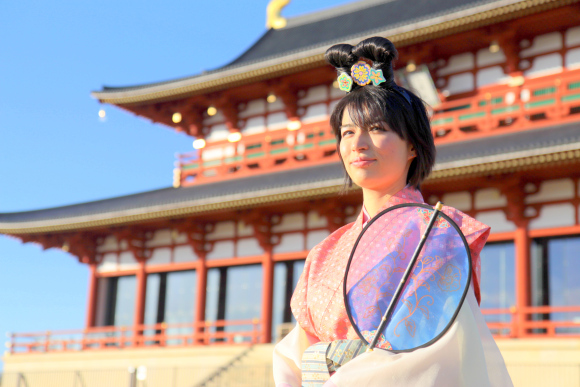
We sent our reporter to a shop in Nara where you can dress as a noble from the Nara period (AD 710-794) and even stroll around town in your costume!
Before Tokyo or Kyoto, Heijo-kyo, otherwise known as modern-day Nara, was the capital of Japanese civilization between approximately AD 710–794. And now, through the newly opened Shozoku Sanpo 710 [“Costume Walk 710”] shop located in the heart of Nara City, you can experience what it would have been like to dress as an aristocrat during those bygone days.
While kimono rental shops are quite common in Japan, it’s rare to find a place offering clothing characteristic of the Nara period of Japanese history, which is also known as Tenpyo clothing [天平衣装]. The term “Tenpyo” denotes the specific years between AD 729–749 under the reign of Emperor Shomu-tenno, which were also the years when the giant Buddha statue of the Todai-ji temple complex was nearing completion. Nowadays, “Tenpyo” can often be used interchangeably with “Nara period,” which is why clothing distinctive to the Nara period is referred to as Tenpyo clothing.
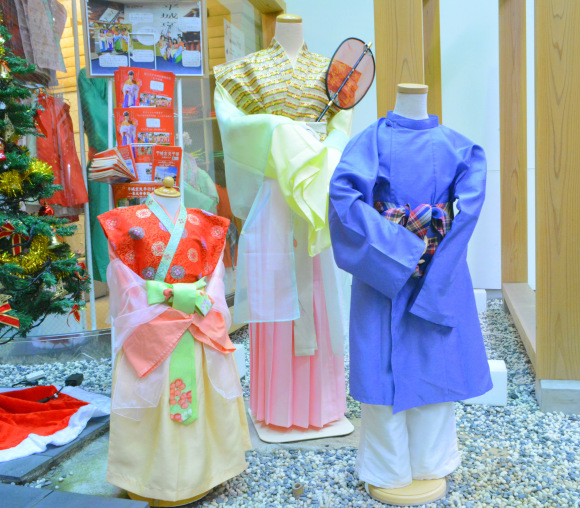
The people running Shozoku Sanpo 710 have thoroughly researched ancient Japanese clothing and faithfully recreated authentic garb based on contemporary literature and art from the Nara period. Our reporter Masami, whom we sent to check out the new store, was incredibly pleased with this particular style of dress as it was very easy to move around in, unlike the 12-layered junihitoe kimono worn by court ladies of the subsequent Heian period (AD 794-1185). Furthermore, as she notes, the shop offers a full line of choices for men, women, and children, so you can enjoy the experience with friends, your significant other, or your entire family to boot!
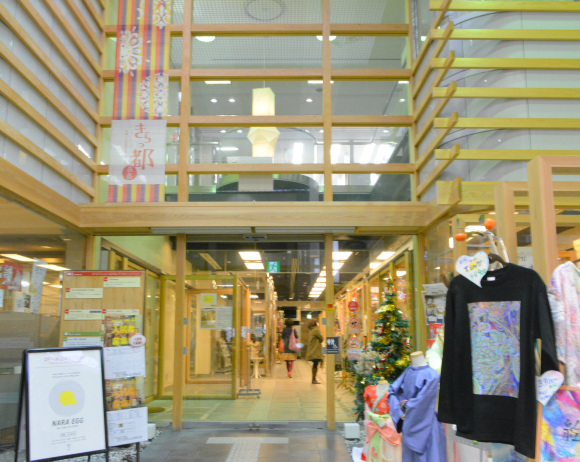
The shop is just a few minutes’ walk from Kintetsu Nara Station and is located on the first floor of the Kiratto Nara shopping center. As a sign of its authenticity, Shozoku Sanpo 710 is even endorsed as an official shop of the Ancient Nara Tenpyo Festival, which recreates the atmosphere of ancient Nara with a procession in period clothing and other traditional events, by the festival’s executive committee.
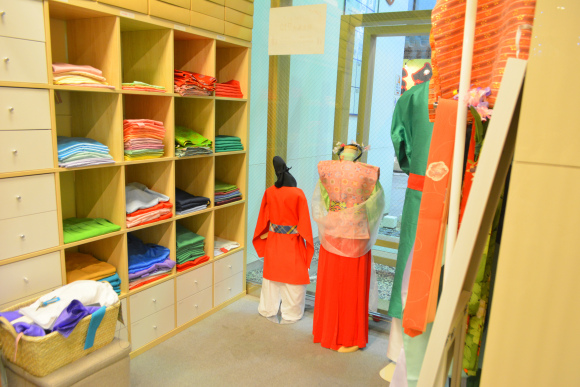
You can mix and match your costume from various pieces of clothing found within the shop. Take some time to choose the perfect colors that suit you from dozens of vivid hues. The staff at hand are also happy to assist you if you’re having trouble deciding on which colors will match you best. In fact, Masami had some trouble narrowing down the choices, but she eventually settled on an outfit composed of a pink top and a blue skirt.

At this point, you may be wondering about the total cost of this experience. The prices actually range depending on which services you want. If you’d like to simply dress up in the shop and take some pictures there, it’s 1,000 yen (US$8.26) for men, women, and children alike. If, however, you’d like to take a one-hour stroll around the city after dressing in your new-ancient garb, the cost is 2,500 yen ($20.65) for men and boys and 3,000 yen ($24.78) for women and girls. These prices are quite reasonable by our reporter’s estimates, so you can be sure to enjoy the experience without worrying about bankrupting your trip.
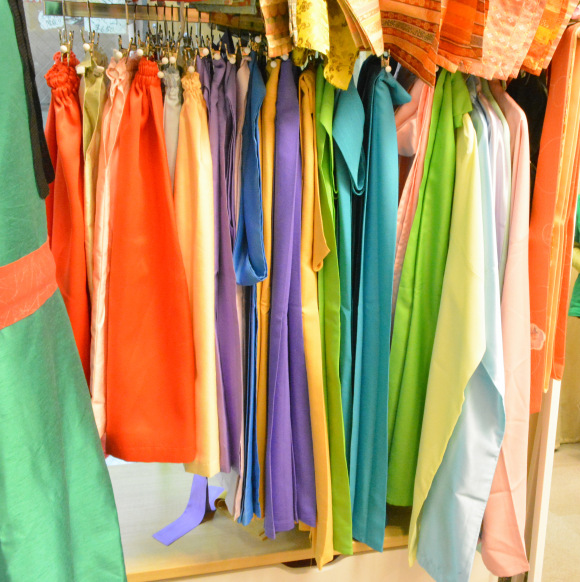
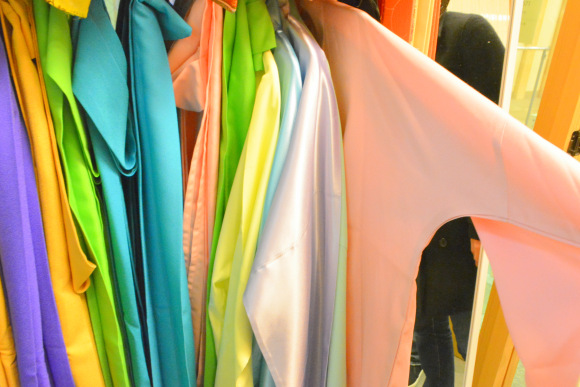
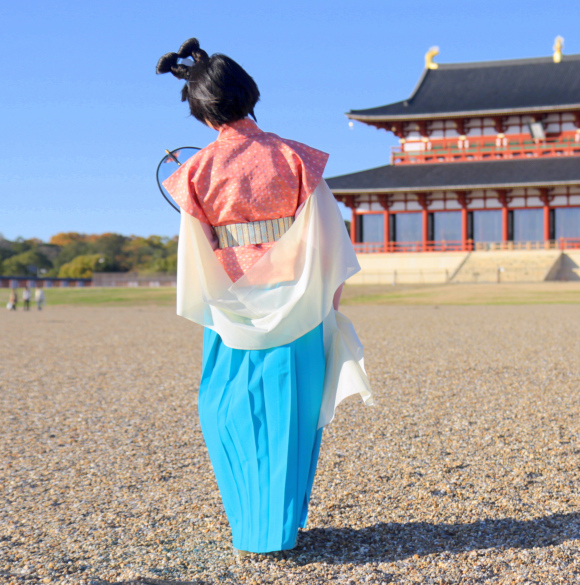
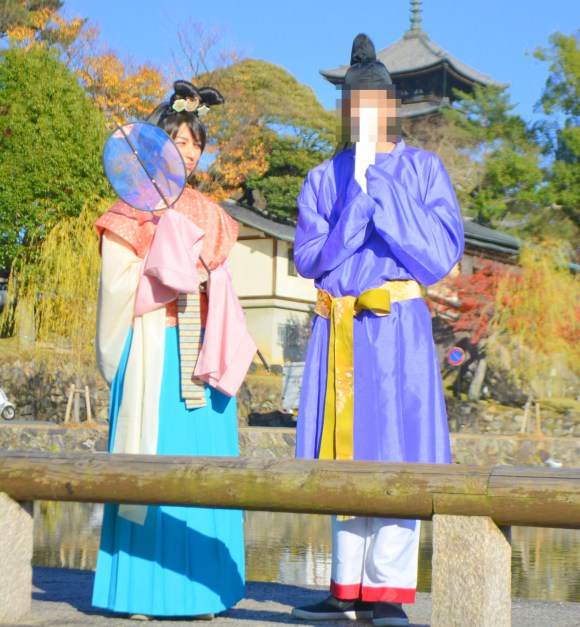
Although putting on a modern kimono can take a painfully long time, it took no more than a few minutes for our reporter to finish dressing in her costume. Even her hair, fashioned using a clip accessory to mimic the style of the Nara period, took only a short time to prepare, so she had plenty of time to enjoy sightseeing around the vicinity. The shop also lent her a sashiha, or a fan-shaped object which was used to conceal the faces of nobles, to take with her on her venture. Men are similarly lent a shaku, which is a type of ritual baton as seen in the photo below.
▼ This mystery male traveler with our reporter also looks quite dapper in his period clothing while posing next to Nara’s mascot Sento-kun.

Once she both looked and felt the part of a Nara period noble, it was time to explore the town. One of the great things about Nara is that pretty much anywhere you go is perfect for taking commemorative photos of your trip. Masami certainly took advantage of this fact by walking only two minutes from the shop to the ancient Kofuku-ji temple complex to get her first portraits of the day. Besides housing several treasures such as a priceless statue of an Asura [a Buddhist demigod/fighting demon], the complex is also the site of Sarusawa Pond, which was made infamous by the Legend of Uneme. This tragic story tells the tale of a court lady who became depressed after the emperor supposedly fell out of love with her and subsequently drowned herself in the pond.

▼ The best picture by the pond that visitors can probably get is to stand with the five-storied pagoda in the background.
If you have access to a car, our reporter also recommends taking an approximately 15-minute drive from the shop to pose in front of several reconstructed structures of Heijo Palace, also known as the Nara Imperial Palace. You can’t get much closer to the past while dressed in ancient clothing than by doing that!
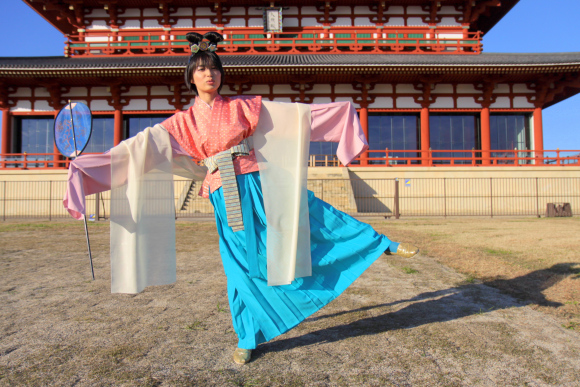
On a final note, Masami cautions that Shozoku Sanpo 710 does NOT lend shoes for you to wear, so please come prepared with some kind of footwear that would be fairly inconspicuous with your outfit.
The opportunity to dress as a Nara period aristocrat is an unforgettable experience that everyone who’s visiting Japan’s ancient capital should take advantage of. Don’t miss this chance during your next trip to Nara!
Shop information
Name: Heijo-kyo Tenpyo-sai Official Shop Shozoku Sanpo 710 / 平城京天平祭Official Shop 装束散歩710
Address: 101 Kiratto Nara, 3-1 Hashimoto-cho, Nara-shi, Nara-ken
奈良県奈良市橋本町3の1 きらっ都奈良101
Hours: 11 a.m.-5 p.m.
Closed: Tuesdays
Official Twitter
All images © RocketNews24
]]> https://soranews24.com/2015/12/14/dress-like-an-aristocrat-from-the-nara-period-at-new-costume-rental-shop-in-nara%e3%80%90photos%e3%80%91/feed/ 0 288310 1 2 7 3 8 9 4 10 11 12 5 6 Get inspired by these 700-year-old words from a Japanese monk https://soranews24.com/2014/10/30/get-inspired-by-these-700-year-old-words-from-a-japanese-monk/ https://soranews24.com/2014/10/30/get-inspired-by-these-700-year-old-words-from-a-japanese-monk/#comments Wed, 29 Oct 2014 19:00:03 +0000 http://en.rocketnews24.com/?p=192244 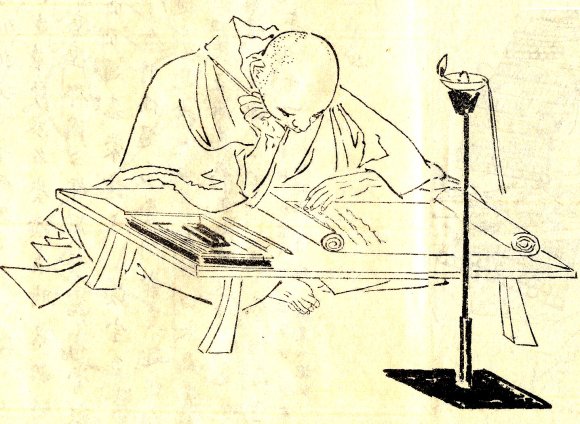
From creating lavish artwork on exquisitely crafted lattes to mastering the art of gender-bending cosplay, perfecting any skill takes a lot of hard work and time. But a Japanese monk who lived about 700 years ago recently reminded the Internet that another key part of success are the failures and embarrassments along the way.
A Twitter user recently found the ancient writings of this monk and his words seemed to resonate with Japanese netizens who found that words very applicable to their modern lives.
Yoshida Kenko, better known as Kenko Hoshi, was a Buddhist monk and author who wrote his most famous work Tsutsuzugusa, or Essays in Idleness, in the 14th century. And in that collection of 243 essays is one very interesting piece that seems to be aimed at anyone struggling to excel at something. Twitter user tarareba72 posted the essay last week, saying, “To anyone who is starting to paint or starting to write, I’d like to share these words from Kenko Hoshi written 700 years ago.”
最近イラストを描き始めた人、文章を書き始めた人に、今から700年ほど前に兼好法師が語ったこの言葉を送りたいと思います。http://t.co/UoRsoBKSKd pic.twitter.com/cn8mNKAvQa
— たられば (@tarareba722) October 21, 2014
Yoshida’s 700-year-old essay starts out addressing people who are working to master a skill and are practicing it in quiet to avoid embarrassing themselves in front of others. He goes on to tell readers that no one can truly become an expert without exposing themselves to criticism and mocking from others. When you are learning a skill, he says that being around experts and having them critique or even ridicule your work is unavoidable if you truly want to perfect that skill.
The author concludes the essay by saying that no person has ever become an expert without being called an idiot, being spat on and humiliated. Only through these difficult experiences did they become pros in their field. Yoshida finishes by saying “it’s the same the world round.”
The original tweet has been retweeted almost 30,000 times with netizens saying the essay inspired them to work harder and not be as afraid to make mistakes around others. Many were surprised how relevant this monk’s words were even after 700 years and others wished they paid more attention in high school Japanese language arts class where the text is typically taught. Makes you wonder what other pieces of very relevant advice were hiding in those old books and essays you struggled through in class!
Feature Image: Wikipedia
Source: Tsutsuregusa, Wikipedia

]]> https://soranews24.com/2014/10/30/get-inspired-by-these-700-year-old-words-from-a-japanese-monk/feed/ 0 192244 2014.10.27 Yoshida Kenko 2014.10.27 Yoshida Kenko