bathhouses – SoraNews24 —Japan News— https://soranews24.com Bringing you yesterday's news from Japan and Asia, today. Sat, 04 Apr 2026 23:30:45 +0000 en-US hourly 1 https://wordpress.org/?v=7.1.4 https://soranews24.com/wp-content/uploads/sites/3/2020/05/en_rocket_1024.png?w=32 bathhouses – SoraNews24 —Japan News— https://soranews24.com 32 32 176746664 Can a downtown Tokyo super sento bathhouse beat a hotel for a one-night stay? https://soranews24.com/2026/04/05/can-a-downtown-tokyo-super-sento-bathhouse-beat-a-hotel-for-a-one-night-stay/ https://soranews24.com/2026/04/05/can-a-downtown-tokyo-super-sento-bathhouse-beat-a-hotel-for-a-one-night-stay/#comments Sat, 04 Apr 2026 23:30:32 +0000 https://soranews24.com/?p=730300 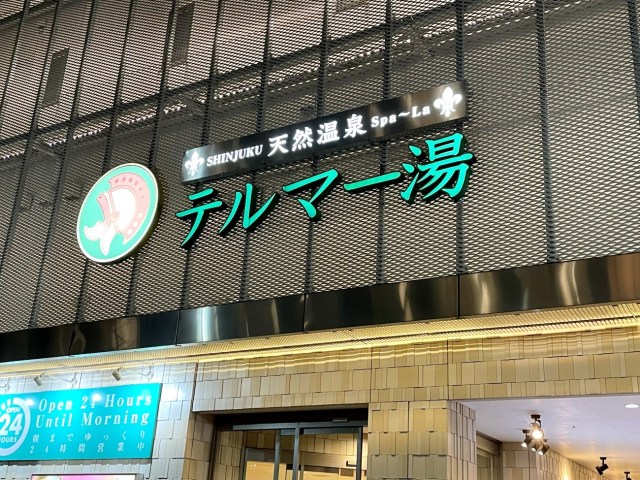
Does the morning sauna make up for a night of communal snoring?
With Tokyo hotel prices increasing due to the tourism boom, both domestic and international travelers are often left on the hunt for budget-friendly alternatives. While capsule hotels and internet cafes are fairly well-known, there is another gem that you can find within the city: the super sento.
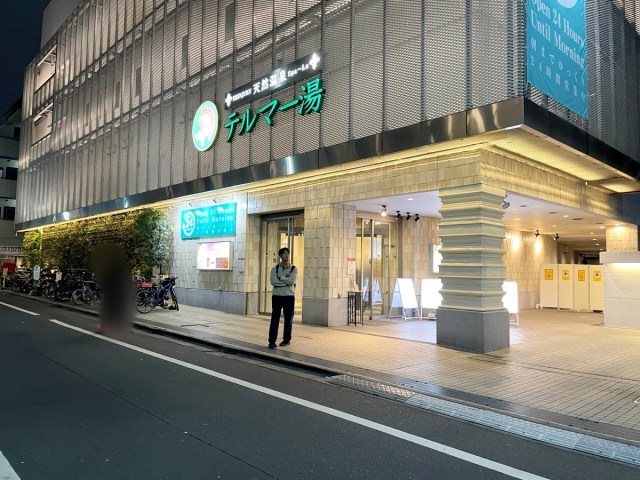
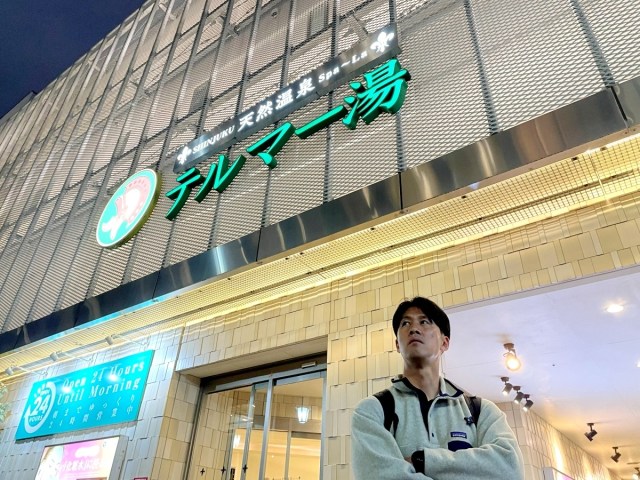
A super sento is essentially a leveled-up Japanese public bathhouse, often being a multi-story wellness theme park featuring diverse hot springs, saunas, restaurants, and relaxation lounges. For those looking to save money without sacrificing the luxury of a hot soak, as is often done with internet cafes, staying overnight at a 24-hour facility like Thermae-Yu in Tokyo’s Shinjuku neighborhood is an option that is hard to beat.
Located on the outskirts of Shinjuku’s neon-covered entertainment district Kabukicho, Thermae-Yu offers a high-end spa experience that doubles as a great place for an overnight stay.
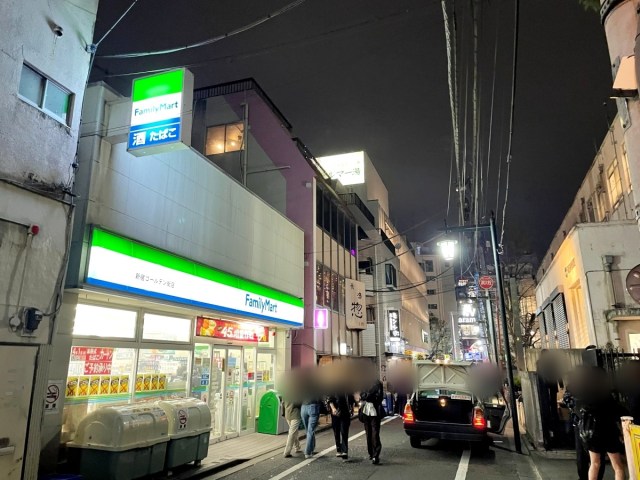
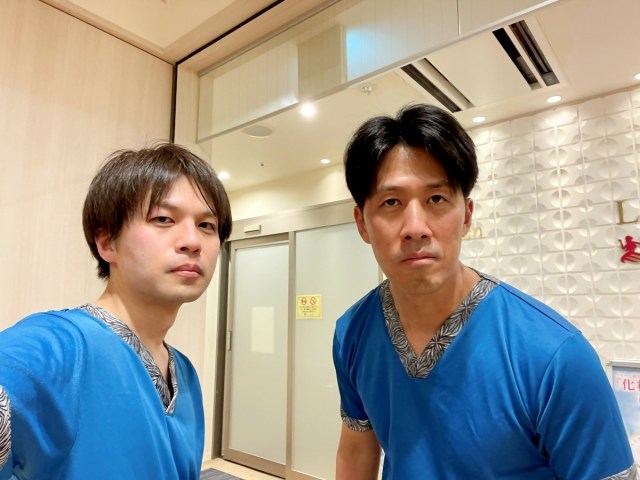
Two of our Japanese-language reporters, Ahiruneko and self-proclaimed “spa expert” Masanuki Sunakoma, recently teamed up to see if a night on a spa lounger could actually beat a hotel room.
▼ The “Spa Expert”
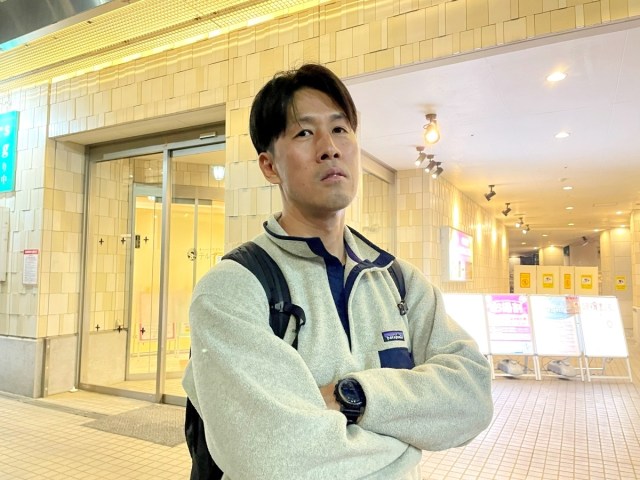
Though Ahiruneko has visited super centos several times, he had never stayed until morning, so he enlisted the help of Masanuki, who claims to have visited almost every super sento that can be stayed at overnight within Tokyo.
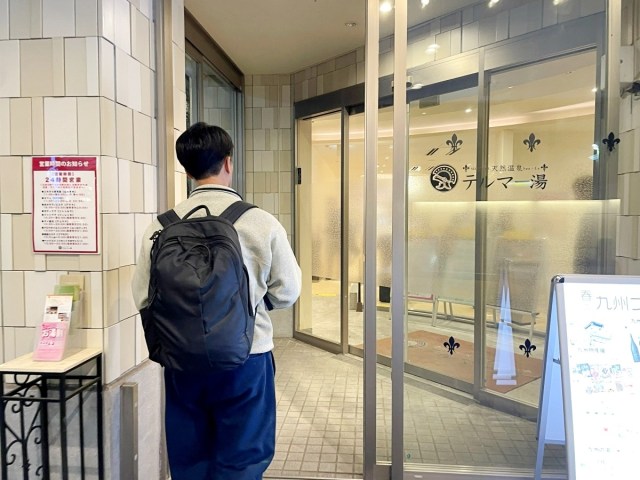
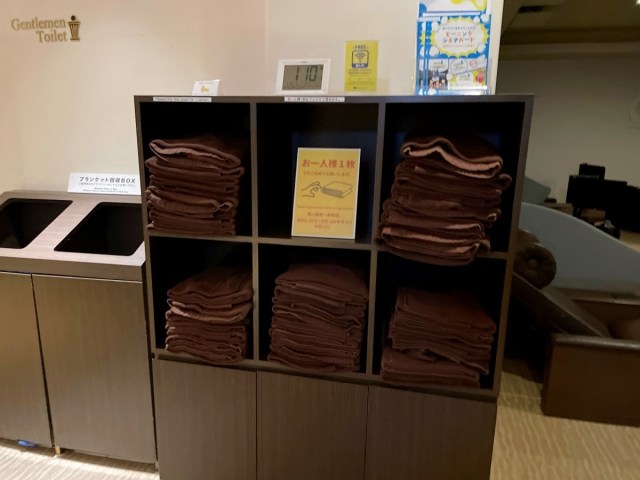
After putting their shoes in a locker, they visited the front desk, where they received towels and loungewear after an explanation of the price.
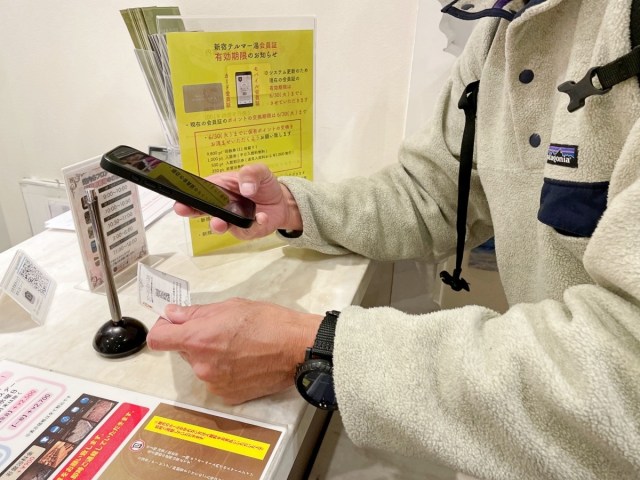
Ahiruneko had done his homework and had read Masanuki’s previous article, so he knew that you can register for a free membership and get a discount of 200 yen (US$1.25), but when it came to Masanuki’s turn, Masanuki started to panic because he didn’t know how to pull up his membership screen.
▼ Was calling Masanuki to join him really the correct decision?
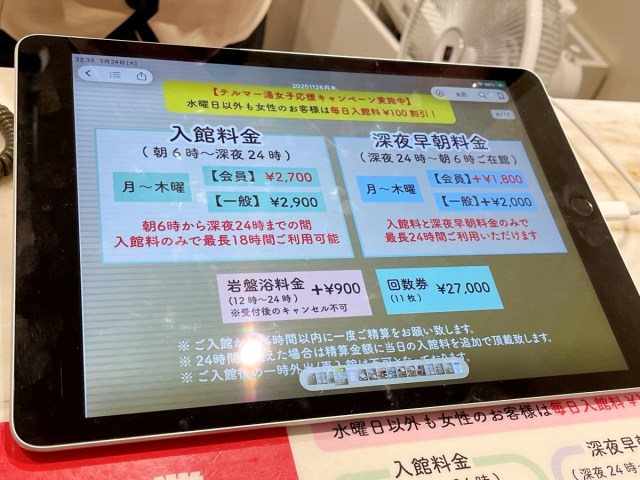
The basic admission fee for members between Monday and Thursday is 2,700 yen, which includes the rental loungewear and towels. If you stay past midnight, an additional late night fee of 1,800 yen is also charged, making the total come to 4,500 yen for an entire 24 hours of usage from entry.
First, enter the locker room on the first floor, where you change into your loungewear, leave your luggage, and then head to the spa area on the second floor.
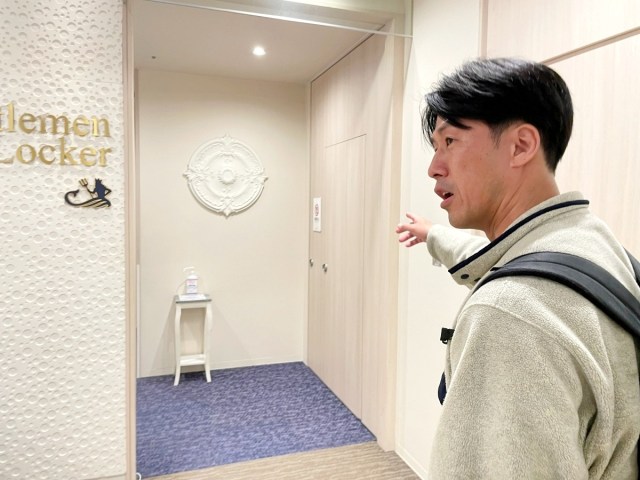
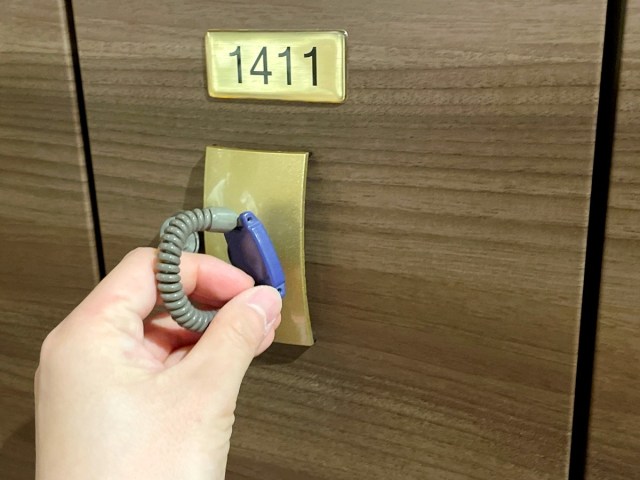
Lockers are assigned by number and are opened using a wristband.
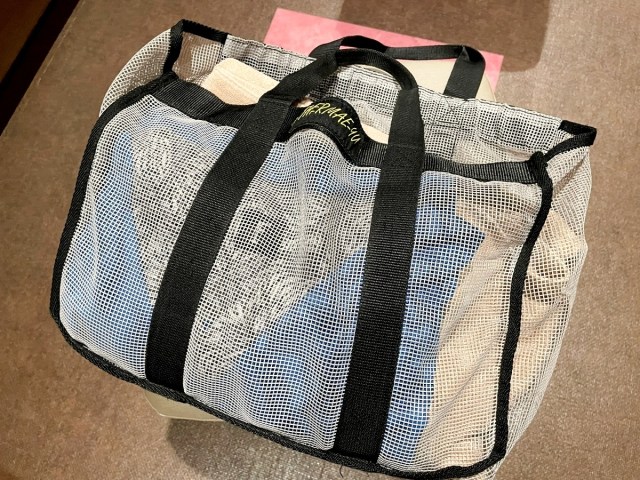
▼ Put your essential items in the provided bag.
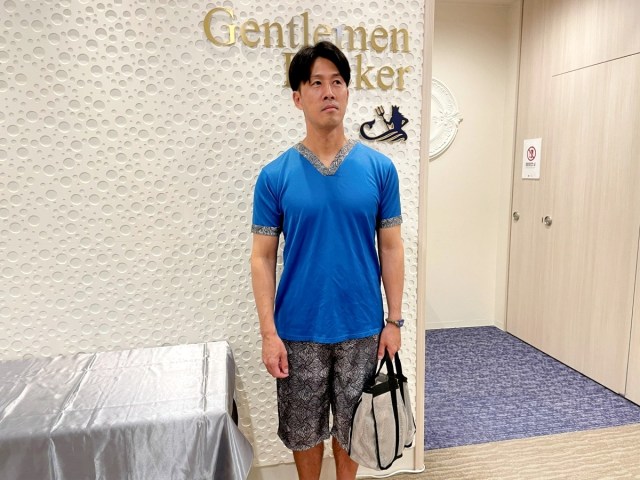
Ahiruneko took a face towel from the changing room and entered the bath area, which turned out to be so spacious that you wouldn’t believe you’re in the middle of Kabukicho.
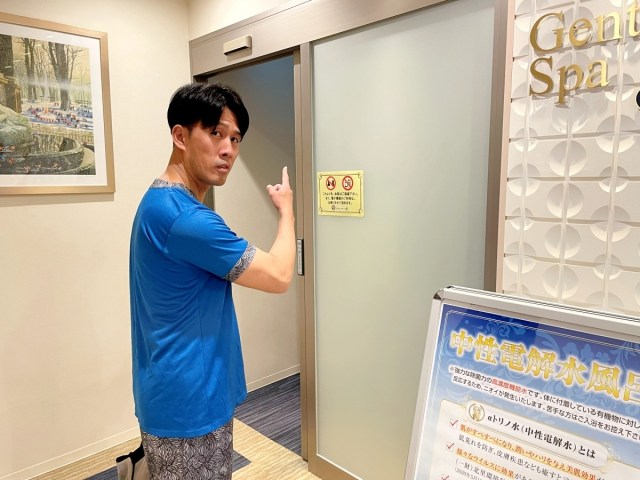
Masanuki recommended the neutral electrolyzed water bath, but it was so hot that Ahiruneko couldn’t stay in it for a long time, so first timers should enter with some caution. This wasn’t a major problem, though, because there’s an impressive variety of baths to choose from, and Ahiruneko enjoyed the high-concentration carbonated bath in particular. The super sentos he had visited in the past were smaller than Thermae-Yu and always packed with people, but here he could stretch his legs with ease.
Having both cleansed themselves, it was time to reward themselves for a day’s hard work with a beer.
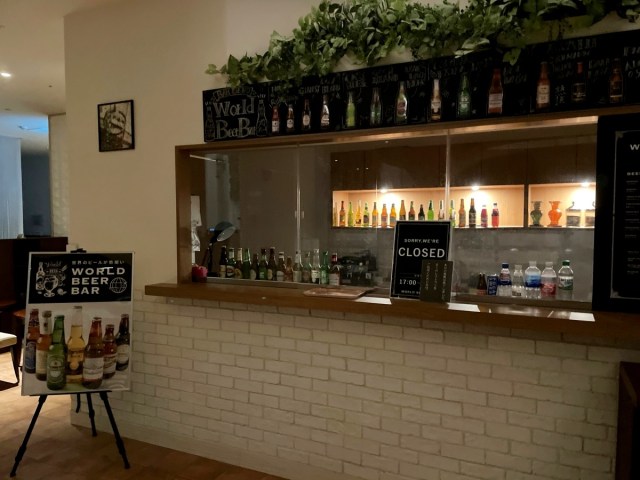
However, the bar on the B2 floor was already closed, having stopped operations for the night at 11:00 p.m..
Fortunately for the two of them, the restaurant on the B1 floor was still open, as it stays open until 5:00 a.m.
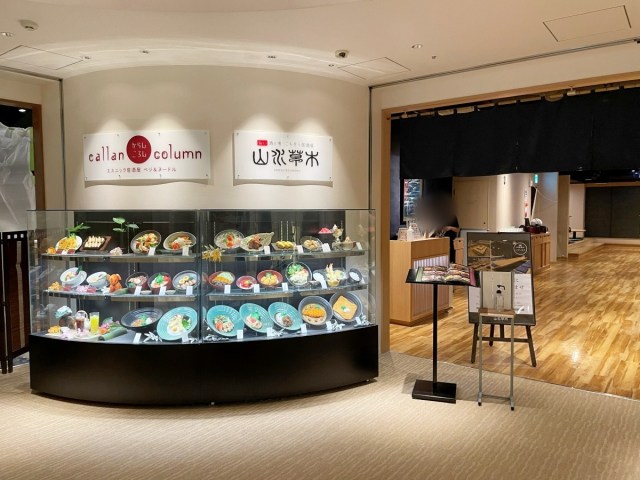
While a medium draft is a bit pricey at 693 yen, Ahiruneko just couldn’t end the day without the refreshing taste of beer.
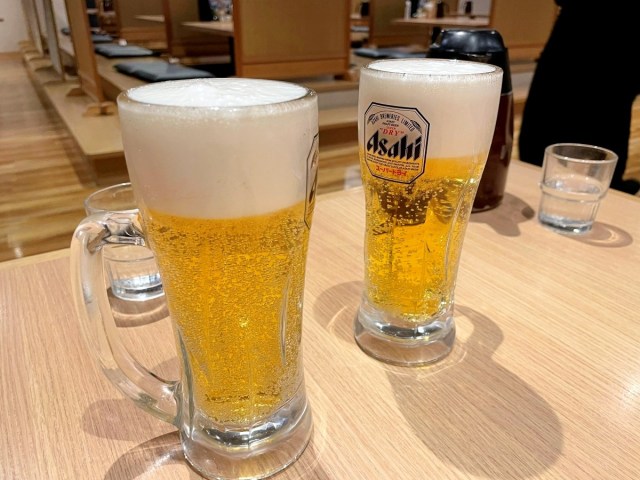
The ordering system uses your wristband for scanning, with your final payment for all charges being made all at once, just before leaving the facility.
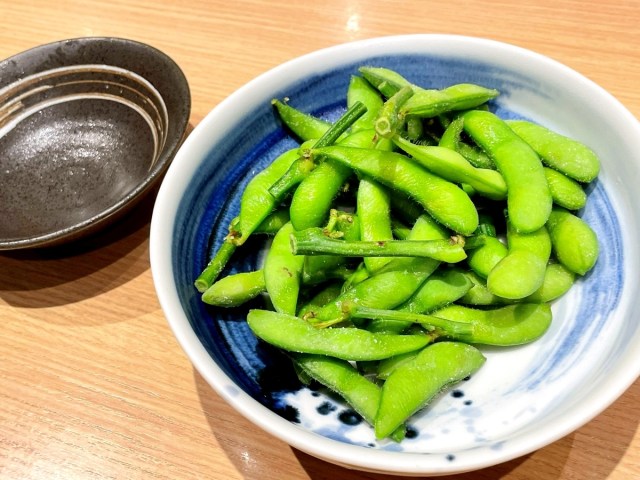
▼ They also got some edamame to munch on.
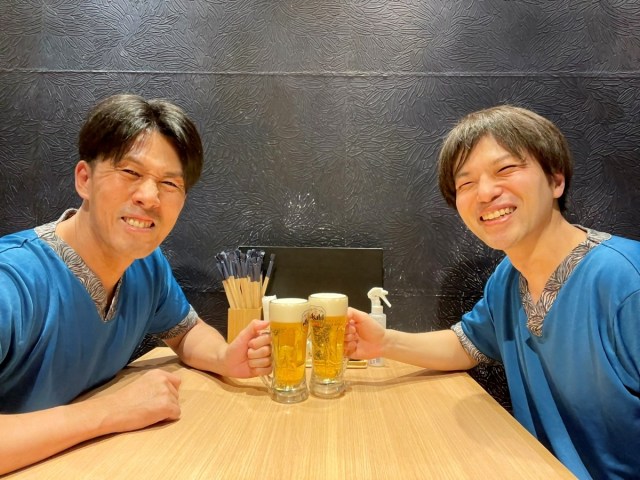
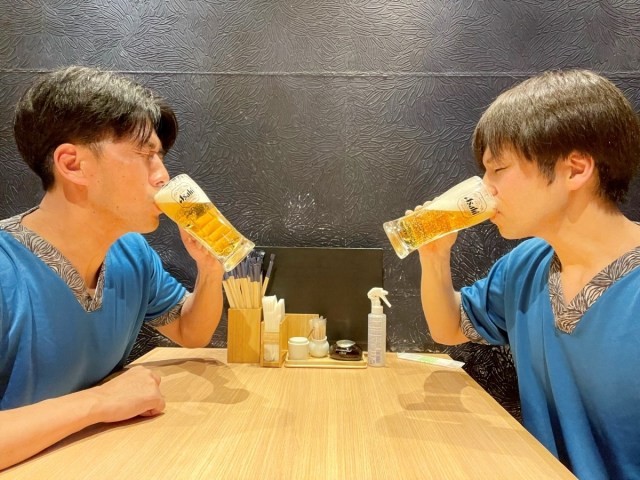
▼ Cheers!
▼ Ah…
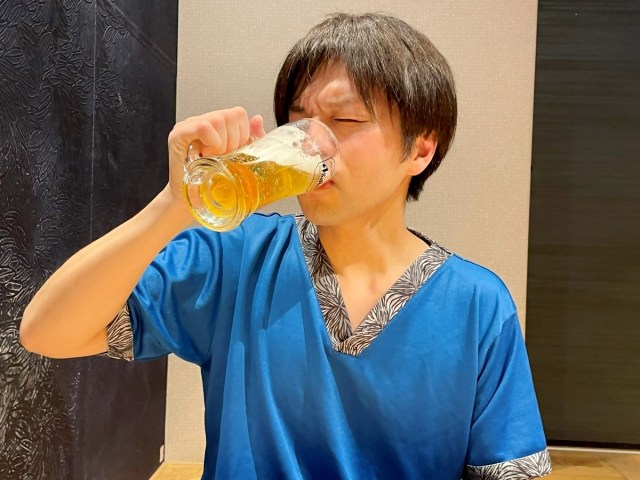
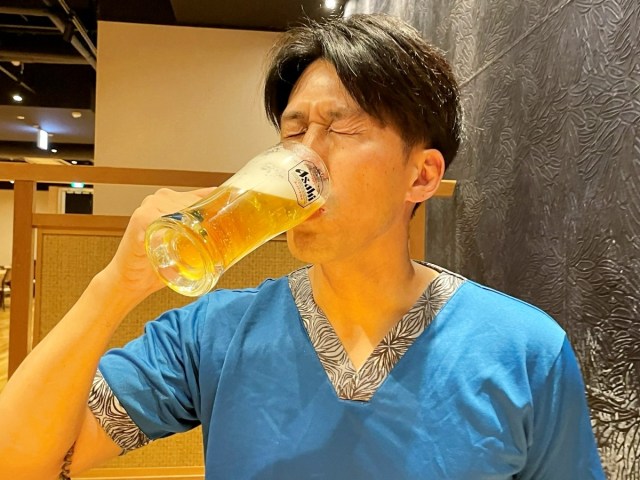
▼ That hits the spot!
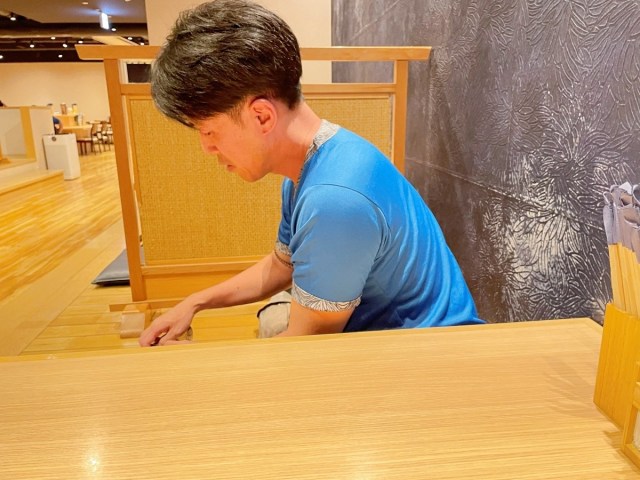
It was then that Masanuki presented Ahiruneko with some essential items for an overnight stay at a super sento.
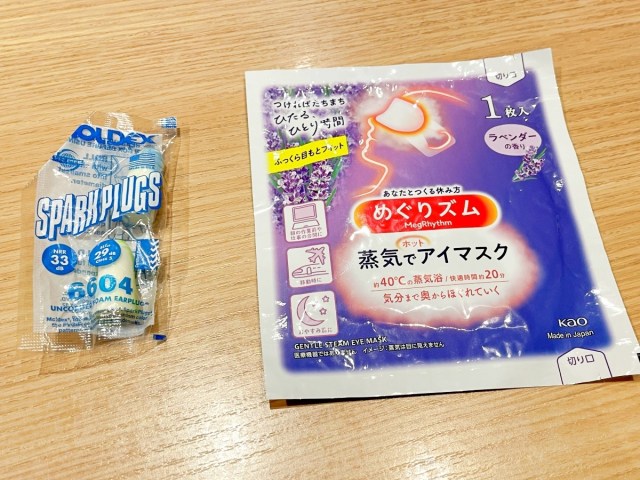
▼ Earplugs and an eye mask. According to battle-hardened veteran Masanuki, the quality of sleep changes completely depending on whether you have these two.
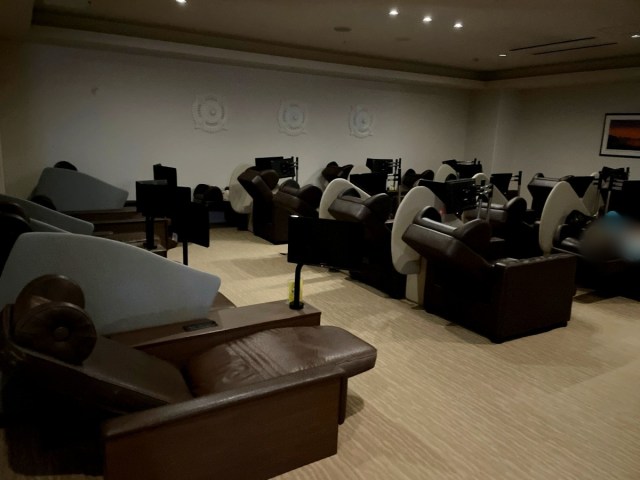
After finishing two beers each, it was finally time to hunt down a spot to sleep for the night. They first headed to the lounge space on the fourth floor. After midnight, the third floor becomes women-only, so be careful not to make an awkward mistake by wandering onto the floor, gentlemen.
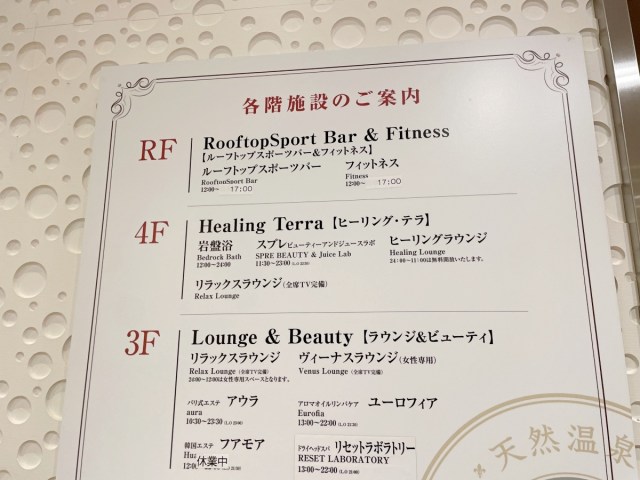
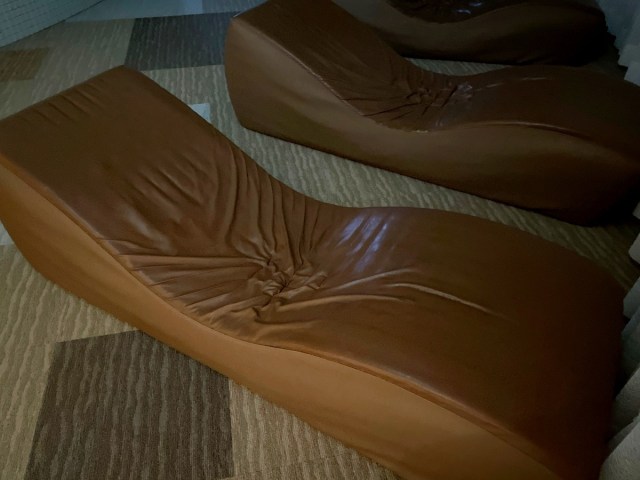
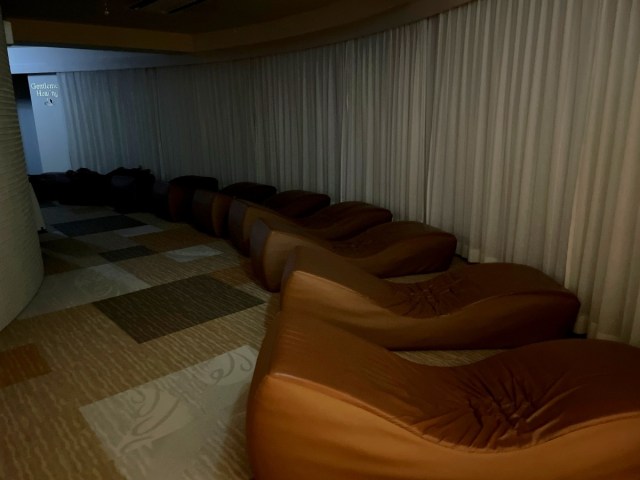
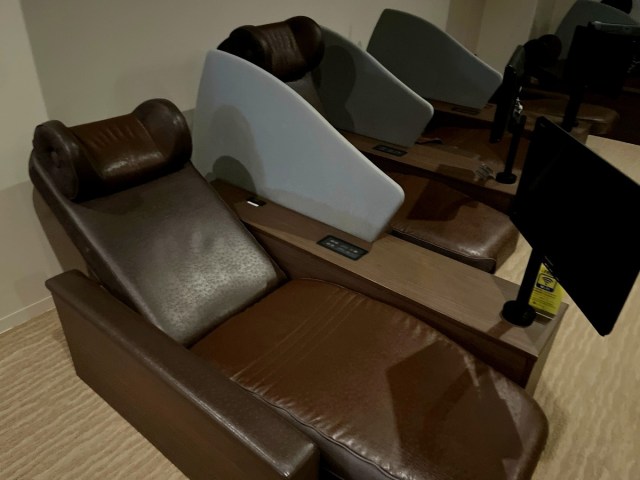
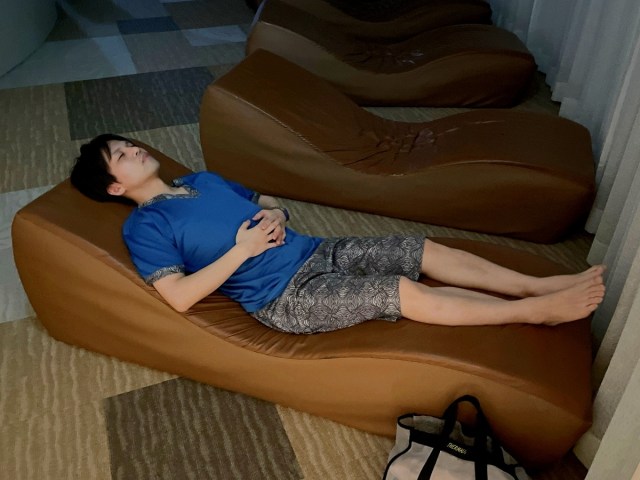
The lounge has three types of chairs you can sleep on.
▼ Wave-shaped bed-like chairs
▼ Reclining chairs
▼ Sofas
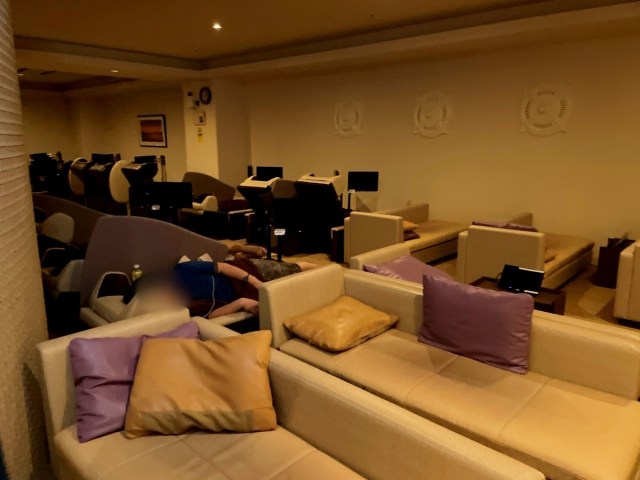
Try out each one to see what suits you, and also get a feel for the surrounding environment, since you can usually hear snoring from all over. The brightness also differs depending on the location.
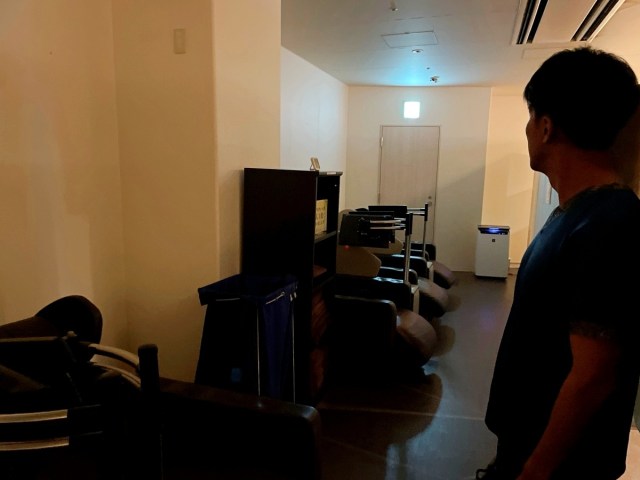
Ahiruneko also went to check out a space called the Ibi King Room, or Snore King Room, located at the back of the first floor locker room.
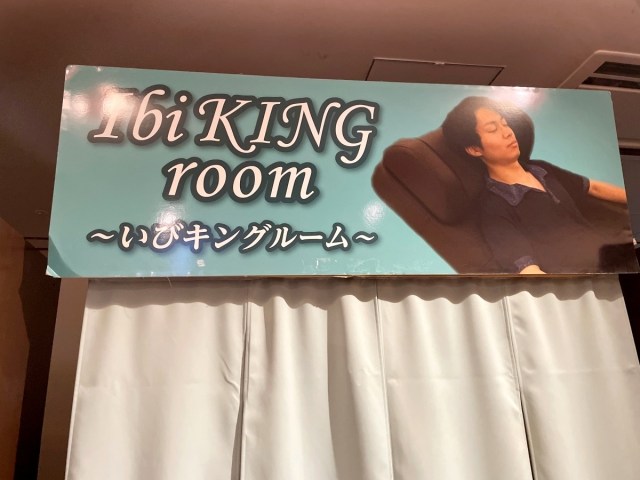
The name makes it sound loud, but when he went in, it was surprisingly empty. Could he possibly have stumbled across a hidden gem? But then again, the room felt a little cold.
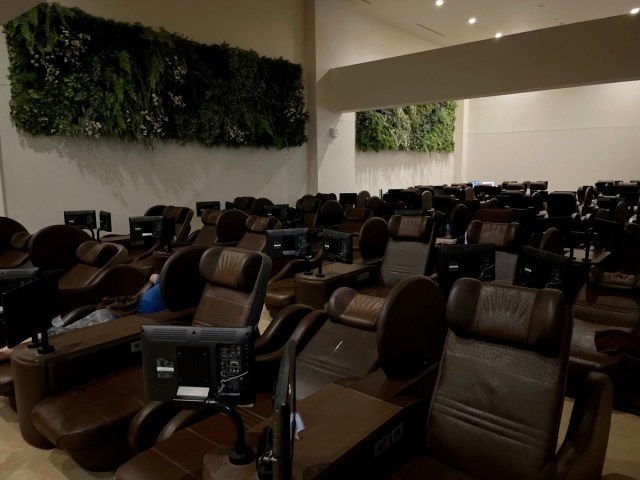
Heading further down to the B2 floor, Ahiruneko came across the largest lounge, which has rows and rows of the same reclining chairs from the fourth floor.
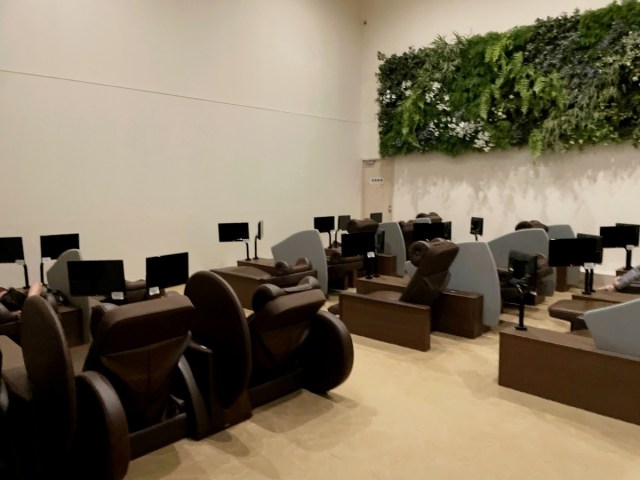
▼ The sofa area also looked dark and promising.
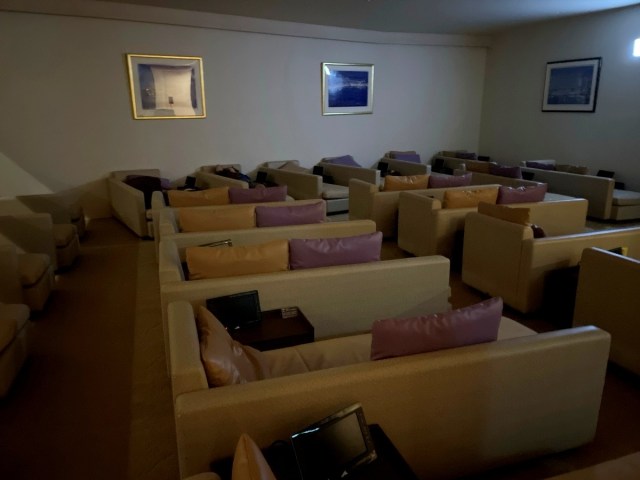
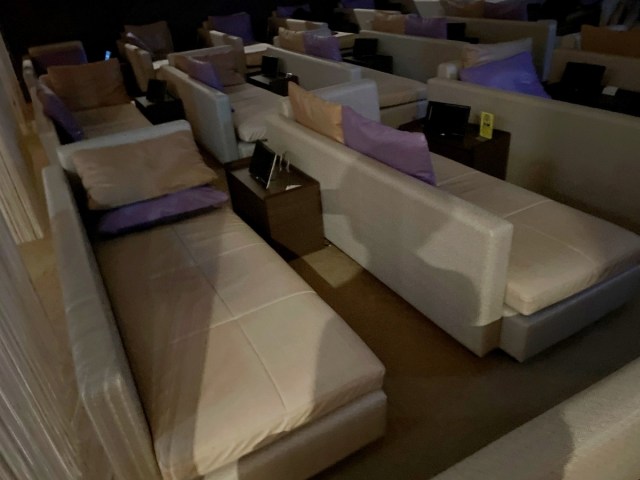
“Shouldn’t we have checked here first?”, Ahiruneko wondered to himself. The next moment, Masanuki made a shocking revelation, as he he, the supposed expert, admitted he hadn’t even known this area was an option for sleeping. Apparently, when Masanuki previously stayed at Thermae-yu, he had completely skipped it, thinking it was just a massage area. “To think there were this many places to sleep…,” Masanuki murmured, standing dazed for a moment.
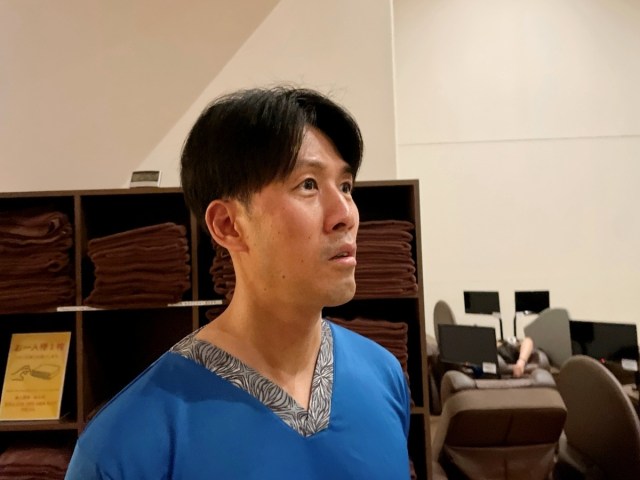
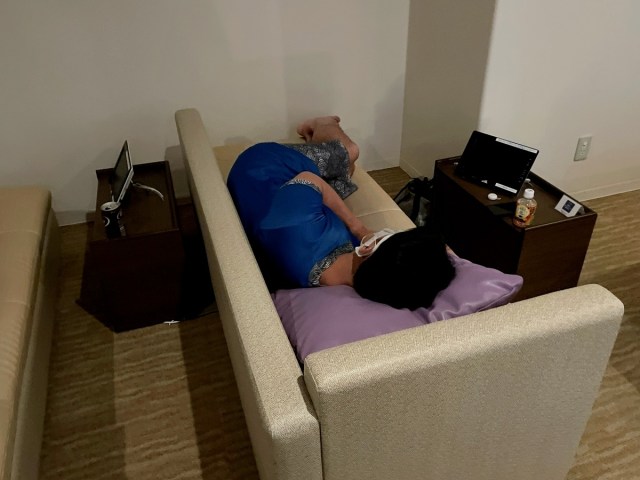
Despite all the areas they checked, Masanuki eventually chose a sofa on the fourth floor as his bed for the night.
Ahiruneko decided to check out the manga shelves on the B2 floor that had piqued his interest.
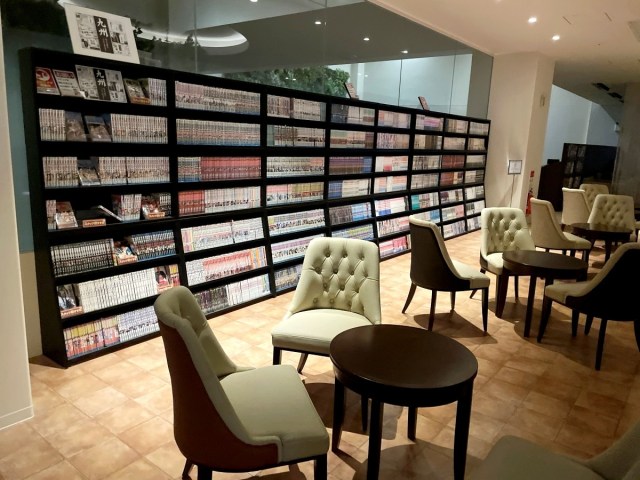
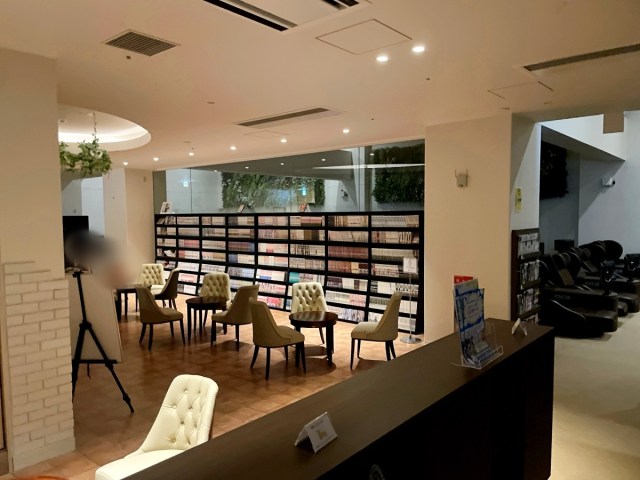
Eventually, Ahiruneko decided on the sofa area next to the shelves to sleep on, as he much prefers being able to lie down on a flat surface to being in a recliner.
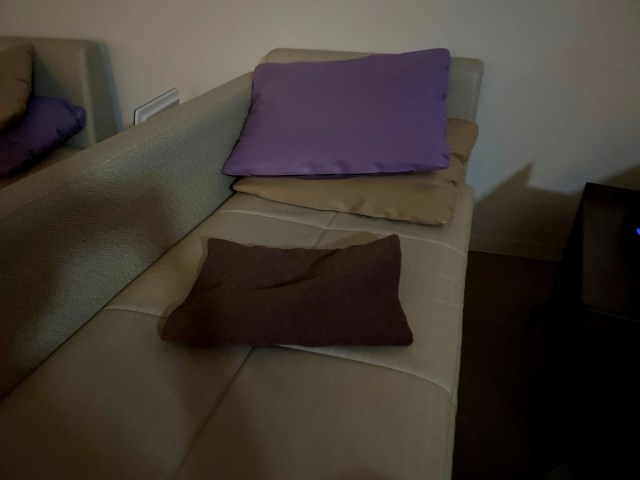
After actually trying to sleep, Ahiruneko found an appreciation for the eye mask: the level of relaxation is completely different when using it. However, the earplugs ended up making him feel a bit uneasy because he couldn’t hear his surroundings, so he ended up taking them out halfway through the night.
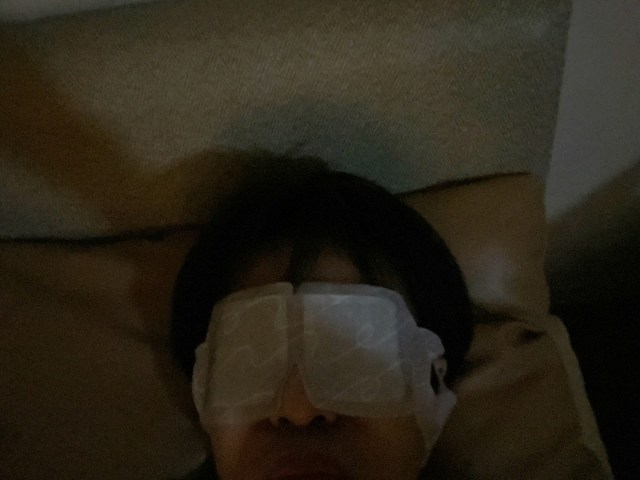
As expected of Kabukicho, even on a weekday night, it was still reasonably crowded, meaning that even with the eye mask on, Ahiruneko could sense people’s presence.
Ultimately, Ahiruneko remained in a state of about 60 percent sleep and 40 percent wakefulness, until he was slowly woken up by someone’s alarm at 5:00 a.m., after which he fell into a complete deep sleep for about 90 minutes more.
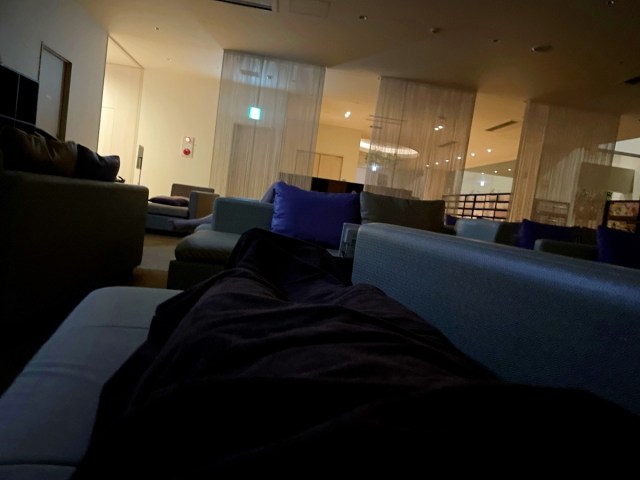
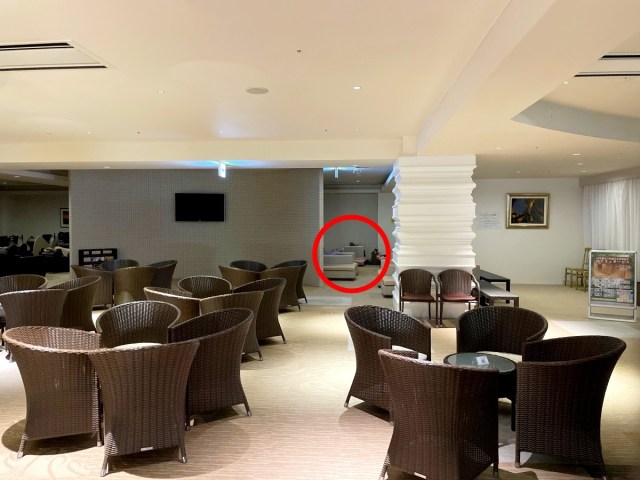
After waking up at 7:00 a.m., Ahiruneko didn’t feel the fatigue of pulling an all-nighter, but he couldn’t help but feel that he lacked the skill to sleep well in a super sento. He went to check on Masanuki on the fourth floor, and he seemed to still be sleeping.
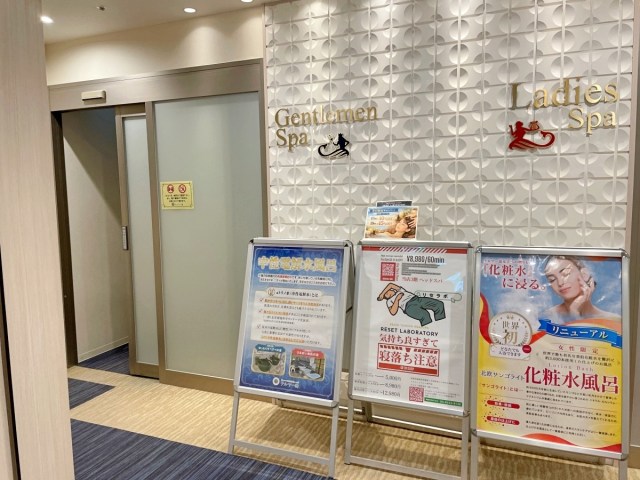
Deciding to make the most of his time at the super sento, Ahiruneko went straight to the second floor to take a morning bath and wake himself up.
The transition from a morning sauna to an open-air bath in the slightly chilly air was so refreshing that he completely forgot he was in the middle of one of the busiest parts of Tokyo.
Afterward, Ahiruneko did some work in the co-working space located in the locker room.
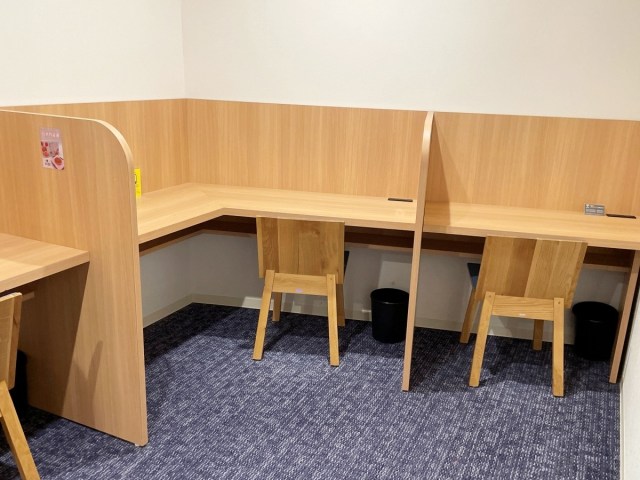
It’s equipped with outlets and free Wi-Fi, but there are only four seats, so you have to be pretty lucky to get one.
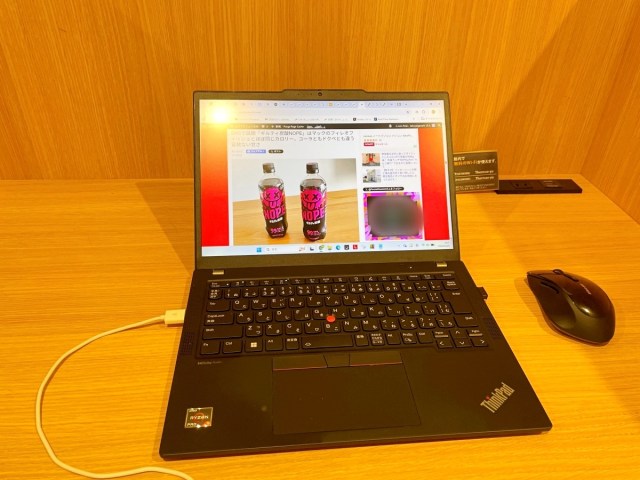
After some time had passed, Ahiruneko received a message on his phone from Masanuki saying that he was out of the bath. They reunited outside the lockers and upon Ahiruneko telling Masanuki that he hadn’t slept much, but had still had a lot of fun, Masanuki wore a confusing expression that seemed to be a mix of relief and satisfaction.
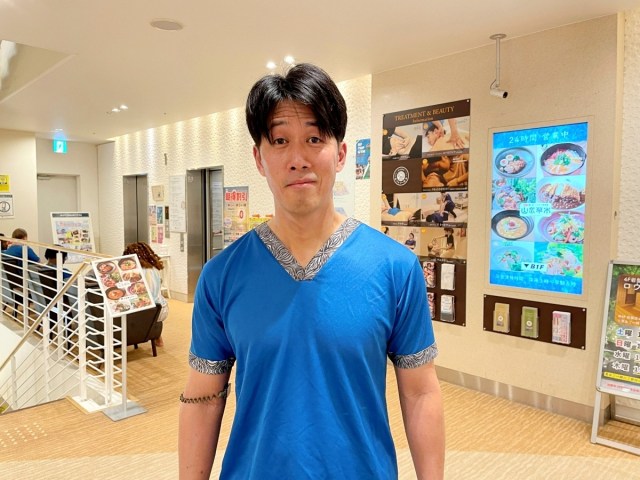
When Ahiruneko got his bill at the front desk, it came to 7,624 yen, 4,500 yen for his overnight stay and and 3,124 yen for the beers and edamame. Ahiruenko and Masanuki had both put their beers on Ahiruneko’s tab, though, so actually their cost per person was about 6,000 yen. Considering that the current market rate for no-frills business hotels in Shinjuku is around 15,000 per night, staying at Thermae-yu turned out to be pretty economical.
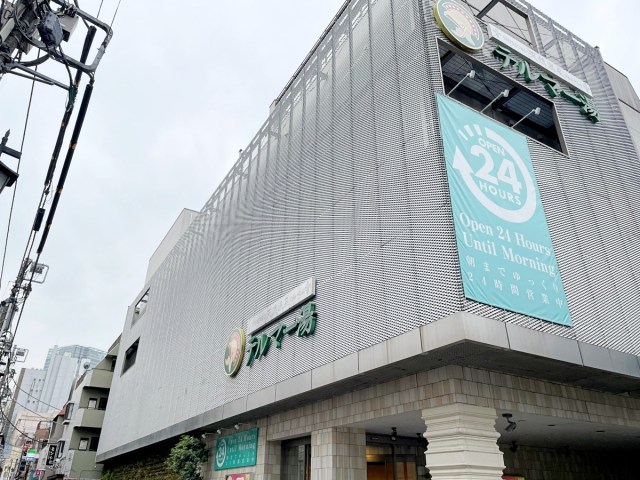
▼ Soon, they met back up again at the office, ready to start their next adventures.
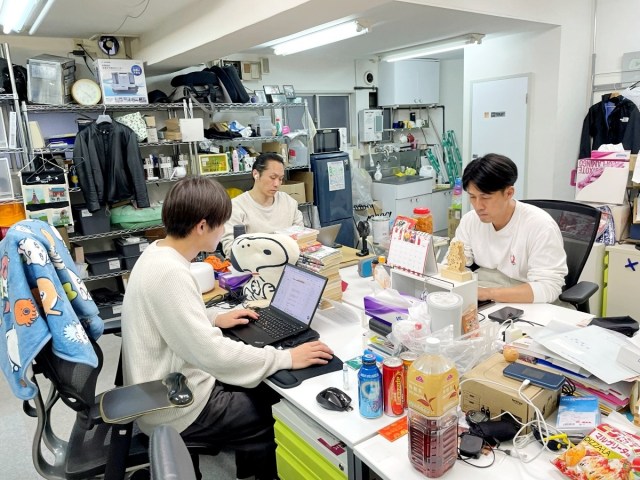
While it lacks the privacy of a hotel, and is difficult to do if you have a family in tow, the morning sauna and refreshing outdoor bath in the crisp air had made any fatigue of sleeping on a sofa disappear. You may be like Ahiruneko and need a little more experience to have a truly satisfying sleep, but there’s no question that super sento like Thermae-Yu are an incredibly affordable way to spend the night in Tokyo.
Location information
Thermae-Yu / テルマー湯
Address: Tokyo-to, Shinjuku-ku, Kabukicho 1-1-2
東京都新宿区歌舞伎町1-1-2
Website
Photos ©SoraNews24
● Want to hear about SoraNews24’s latest articles as soon as they’re published? Follow us on Facebook and Twitter!
]]> https://soranews24.com/2026/04/05/can-a-downtown-tokyo-super-sento-bathhouse-beat-a-hotel-for-a-one-night-stay/feed/ 0 730300 imgi_388_IMG_1047 Green onion baths return to Japanese bathhouse to celebrate Labor Day https://soranews24.com/2025/11/22/green-onion-baths-return-to-japanese-bathhouse-to-celebrate-labor-day/ https://soranews24.com/2025/11/22/green-onion-baths-return-to-japanese-bathhouse-to-celebrate-labor-day/#comments Sat, 22 Nov 2025 13:00:25 +0000 https://soranews24.com/?p=720841 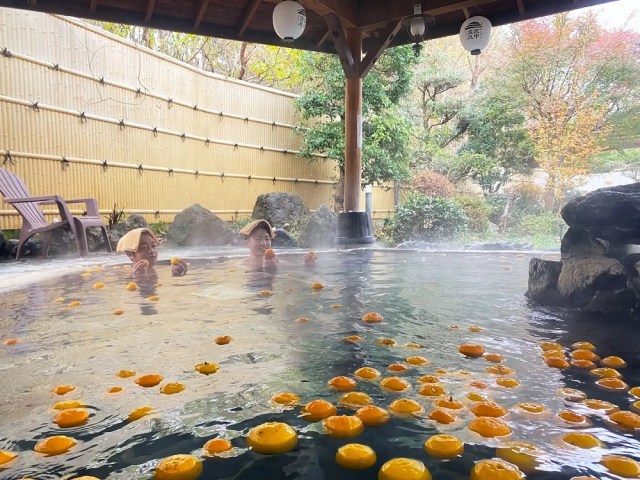
You know, you really have been working hard, so why not treat yourself to a dip in a bath full of negi?
In Japan, there’s a custom of putting foodstuffs into your bathwater. This isn’t an everyday practice, but the occasional addition of fruits or herbs to the bath is said to aid relaxation, beautify the skin, and provide a soothing aroma.
Some of the most common special baths of this type are orange, apple, or yuzu citrus fruit baths, the last of which is pictured above. However, one bathhouse in Saitama Prefecture, Tokyo’s northside neighbor, is mixing things up with a very unorthodox idea: a green onion bath.
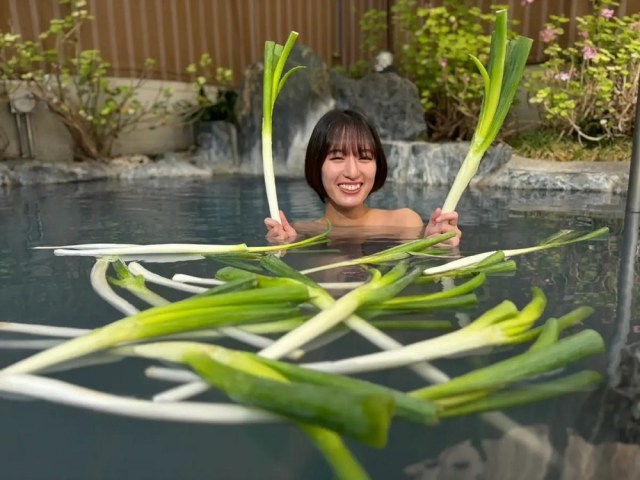
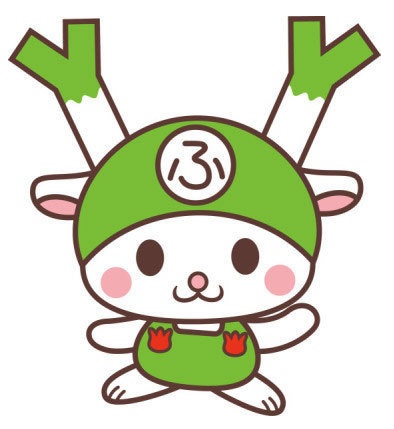
You’ll find this unusual option at Ofuro Cafe Hareniwa no Yu, a bathhouse in the city of Kumagaya. Situated right next to Kumagaya is the town of Fukaya, which is one of Japan’s largest producers of green onions, or negi, as they’re called in Japanese. Fukaya is so proud of its negi that even though the city’s mascot character, Fukka-chan, is of a non-specified species (“sort of like a rabbit, and sort of like a deer” according to Fukka-chan’s official bio), the character clearly has two green onions on its head.
As for why it’s tossing green onions into the bath now, this November 24 is Labor Day in Japan, and negi sounds very close to negirai, meaning appreciation for hard work. As such, Ofuro Cafe Hareniwa no Yu is officially calls its negi bath the “Negirai Bath,” and it’s an annual limited-time affair, in both the men’s and women’s outdoor baths, taking place this year on November 22, 23, and 24.

Oh, and Ofuro Cafe Hareniwa no Yu also has a yuzu bath planned for December 19 to 22, so they’re not turning their back on more established food-in-bath combinations.
Ofuro Cafe Hareniwa no Yu has made no statement regarding how the negi baths will smell, but considering that negi have a noticeable aroma, bathers should probably brace for a certain amount of pungency. On the other hand, since it’s a sure bet that anyone interested in taking a soak in a green onion bath also like eating green onions, on the days of the negi bath packets of negi to take home will also be given to visitors, while supplies last.
Location information
Ofuro Cafe Hareniwa no Yu / おふろcafeハレニワの湯
Address: Saitama-ken, Kumagaya-shi, Kubojima 939
埼玉県熊谷市久保島939
Website
Source: PR Times, Fukaya City
Top image: PR Times
Insert images: PR Times, Fukaya City, PR Times
● Want to hear about SoraNews24’s latest articles as soon as they’re published? Follow us on Facebook and Twitter!
]]> https://soranews24.com/2025/11/22/green-onion-baths-return-to-japanese-bathhouse-to-celebrate-labor-day/feed/ 0 720841 nb 2 New hot spring found in Tokyo as 80-year-old bathhouse makes a happy discovery https://soranews24.com/2025/05/07/new-hot-spring-found-in-tokyo-as-80-year-old-bathhouse-makes-a-happy-discovery/ https://soranews24.com/2025/05/07/new-hot-spring-found-in-tokyo-as-80-year-old-bathhouse-makes-a-happy-discovery/#comments Wed, 07 May 2025 13:00:25 +0000 https://soranews24.com/?p=701231 
There’s a new reason to go to Tenjinyu.
Japan loves a nice, long bath, so it’s cause for celebration when a new hot spring is found, and even more so when it’s discovered in a location that people have easy access to. This time, though, the cause for celebration has an unusual twist to it, as a hot spring has been found in Tokyo…but in a place where people have already been taking baths for several decades.
Tenjinyu opened in Tokyo’s Nakano neighborhood more than 80 years ago and is what’s called a sento in Japanese. Sento are public baths which use well water that’s heated by the facility before being added to the tubs, and so they’re usually considered a lower class of bathhouse than an onsen (hot spring). However, following a recent examination of Tenjinyu’s water quality by Nakano Ward officials, it’s now officially recognized as a hot spring.
▼ A visit to Tenjinyu
Japan actually does have an Onsen Law, which lays out parameters that need to be met for a facility to legally present itself as a hot spring, with the simplest path to certification being if water drawn from the ground exceeds a temperature of 25 degrees Celsius (77 degrees Fahrenheit). However, water that’s below that temperature when drawn can also be certified as hot spring water if it contains a large enough amounts of certain minerals, acids, or ions, and the study of the well water that Tenjinyu uses for its baths was found to be sufficiently abundant in metasilicic acid, which, despite the arguably intimidating name, is said to smooth and beautify the skin, making it exactly the sort of thing bath fans find desirable to soak in.
The official hot spring certification follows a renovation to the building which was completed near the end of 2023, and Tenjinyu has now updated its name to “Nakano Onsen Tenjinyu.”
▼ Tenjinyu’s exterior
▼ The interior, with a mural of Mt. Fuji for bathers to admire as they soak
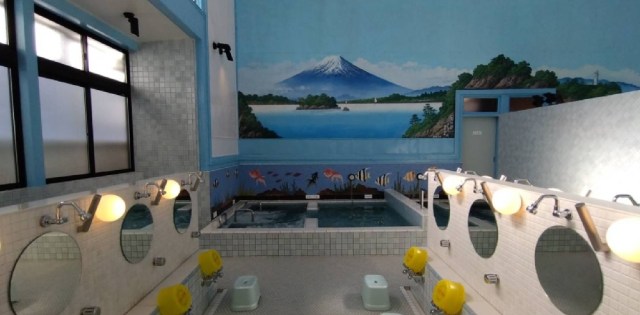
The official onsen certification came in late March, but it’s taken a few weeks for word to spread. Yoshiji Matsumoto, Tenjinyu’s 77-year-old second-generation owner, says he was thrilled when he got the results of the water survey, and it’s not hard to see why.
Though communal bathing has been a part of Japanese culture for hundreds of years, in the modern age there’s a pretty big dichotomy in demand for such facilities. Onsen/hot springs remain extremely popular, and are even enjoying a prolonged upswing in interest from younger age groups, thanks to their image as a relaxing luxury. Sento, on the other hand, have fallen on pretty hard times. Back in the days when Japan’s average standard of living meant most people didn’t have private bathing facilities in their own homes, sento were a necessity, and also arguably a sort of informal community center where local residents would interact with one another. Nowadays, though, it’s extremely rare for even the most basic and spartan studio apartments to not include at least a shower, leading to a severe drop in demand for sento since people can get ordinary hot water at home.
So-called “super sento,” large non-hot spring bathhouses with attached restaurants, massage parlors, beauty salons, and other amenities are doing OK, but many traditional old-school sento now struggle to draw in enough customers to stay in business, and their closures mean that a part of Japanese culture is in danger of disappearing. Tenjinyu’s new hot spring certification gives it a little extra prestige and allure, though, with many comments for the above video coming from people saying they’re now thinking of visiting the place for the first time, and hopefully the expanded interest will keep the bathhouse in business for a second century.
Bathhouse information
Nakano Onsen Tenjinyu / 中野温泉 天神湯
Address: Tokyo-to, Nakano-ku, Nakano 5-10-10
東京都中野区中野5-10-10
Open 3 p.m.-11:30 p.m
Closed Thursdays
Admission 550 yen (towel rental 50 yen)
Website
Source: TV Asahi via Yahoo! Japan News, Tokyo Sento Map, Limo
Top image: Nakano Onsen Tenjinyu
Insert image: Nakano Onsen Tenjinyu
● Want to hear about SoraNews24’s latest articles as soon as they’re published? Follow us on Facebook and Twitter!
]]> https://soranews24.com/2025/05/07/new-hot-spring-found-in-tokyo-as-80-year-old-bathhouse-makes-a-happy-discovery/feed/ 0 701231 SO 2 Kyoto sightseeing tour: The most amazing old bathhouses in the city https://soranews24.com/2022/02/05/kyoto-sightseeing-tour-the-most-amazing-old-bathhouses-in-the-city/ https://soranews24.com/2022/02/05/kyoto-sightseeing-tour-the-most-amazing-old-bathhouses-in-the-city/#comments Fri, 04 Feb 2022 17:30:09 +0000 https://soranews24.com/?p=575692 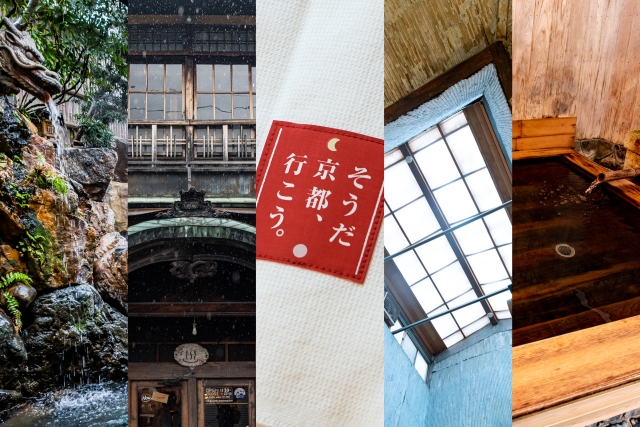
Step back in time as we explore Kyoto’s hidden onsen culture.
There’s so much to see and do in Kyoto that you could spend a lifetime discovering new gems in the historic old capital. One way to methodically tick these hidden gems off your must-see bucket list is by dividing them up into categories like historic sites, restaurants, stores, and bathhouses, and for that last category, Japan Rail has a way to help us out.
Called “Zen to Yu Totonou Kyoto“, which translates to “Kyoto Ready: Zen and Hot Springs“, this is a special self-guided tour campaign that’s only available from 7 January to 13 March. Our Japanese-language reporter Egawa Tasuku was recently invited to try the tour for himself, so let’s join him on his journey through the hot spring section of the deal to find out what it’s all about.
▼ Pamphlet for “Zen to Yu Totonou Kyoto“
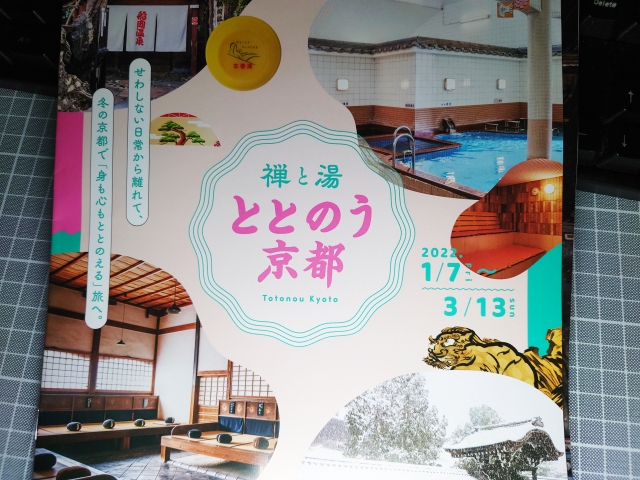
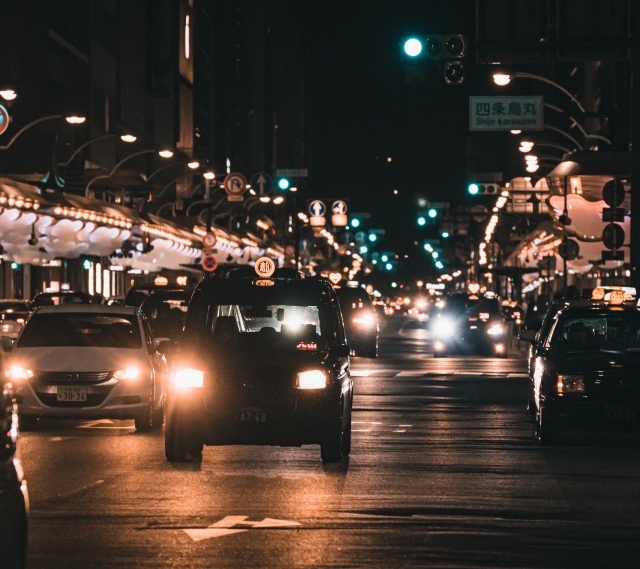
When Egawa arrived in Kyoto for the tour, he was surprised to find that a lot of public baths are in easy walking distance from the busy hub of Kyoto Station, and the city still has over 100 public baths in business — no mean feat in this day and age, when bathhouses are sadly going out of business around the country.
Before he set off to his hotel for the night, Egawa stopped in at the JR Tokai Tours branch, located at the central Shinkansen exit at Kyoto Station to pick up his “Totonou Set”, sold by JR Central for 2,000 yen (US$17.44).
▼ The set includes a gorgeous towel with a label that reads, “Yes, Kyoto, let’s go.“

The Totonou Set is just one of the options in the campaign, and it’s a good deal as it includes bathing tickets for select bathhouses belonging to the Kyoto Prefectural Bath Association, numbered tickets for worshiping at participating temples, and a map summarising all the public baths, temples, and restaurants you can visit as part of the promotion.
▼ Egawa decided to dive into the bathhouse section of the tour first, starting with a visit to Funaoka Onsen.
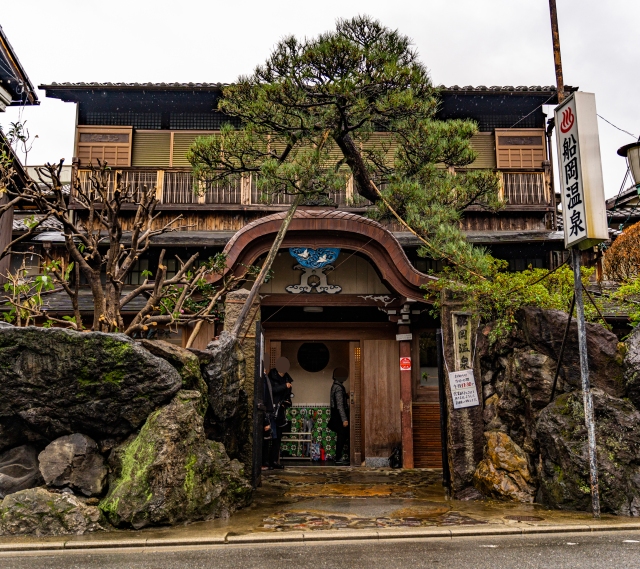
Funaoka Onsen is a little far from Kyoto Station compared to other public baths in the city, but it’s very famous. The bathhouse has 807 reviews and 4.3 stars on Google as of this writing, which is an impressively high rating for a humble public bathhouse in Kyoto.
▼ When the long noren is up at the entrance, this onsen is open for business.
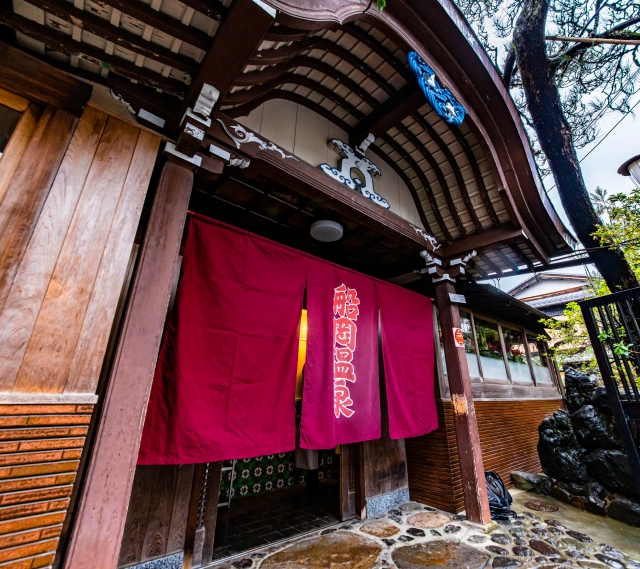
Funaoka Onsen has been designated a Tangible Cultural Property, and though the wooden building itself dates back to 1923, the interior is modern and spacious.
▼ It’s also beautifully light and airy.
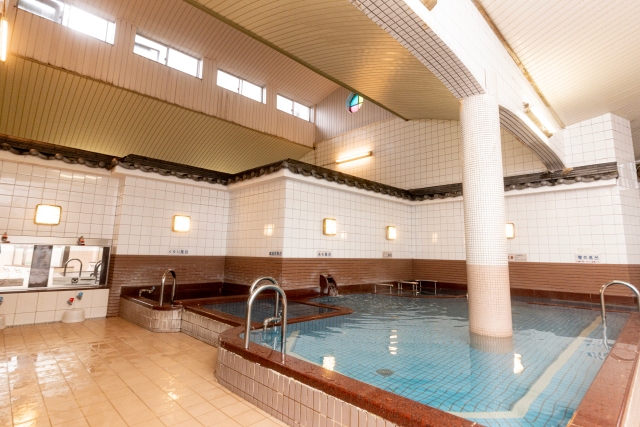
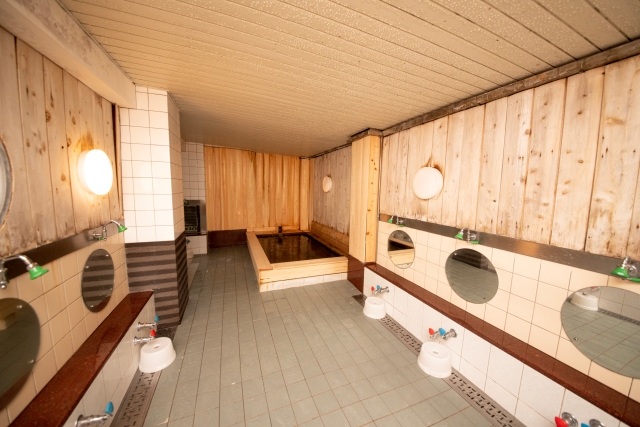
▼ In addition to the main public bath, there’s also a sauna…

▼ …and a spick-and-span washing area, with a cypress bath here as well.
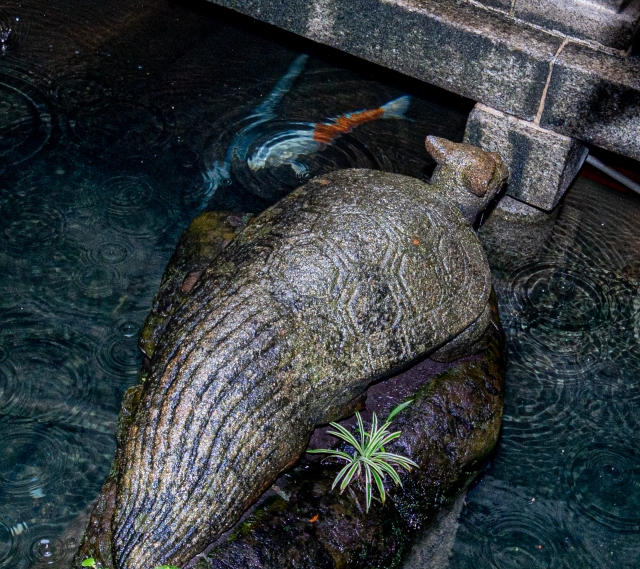
▼ Outside is a beautiful courtyard area, where you can view carp swimming in a tranquil pond.
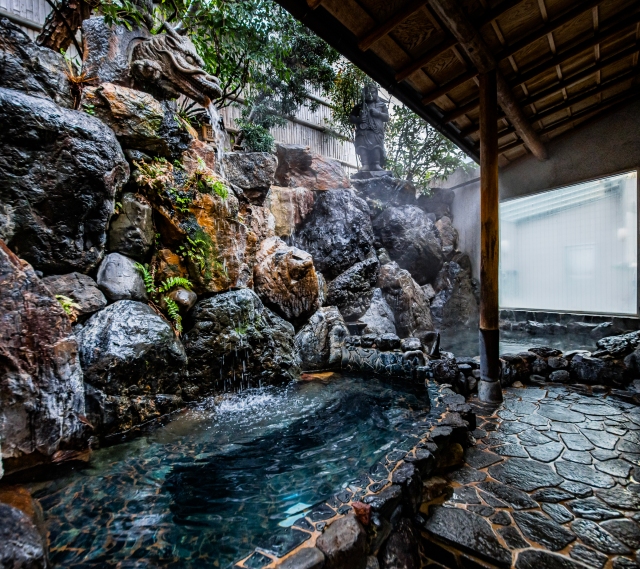
This is where visitors can soak in open-air baths with an amazing atmosphere. Check out the dragon spouting hot water from its mouth!
▼ One of the few places in Japan where you can bathe beneath a spouting dragon.
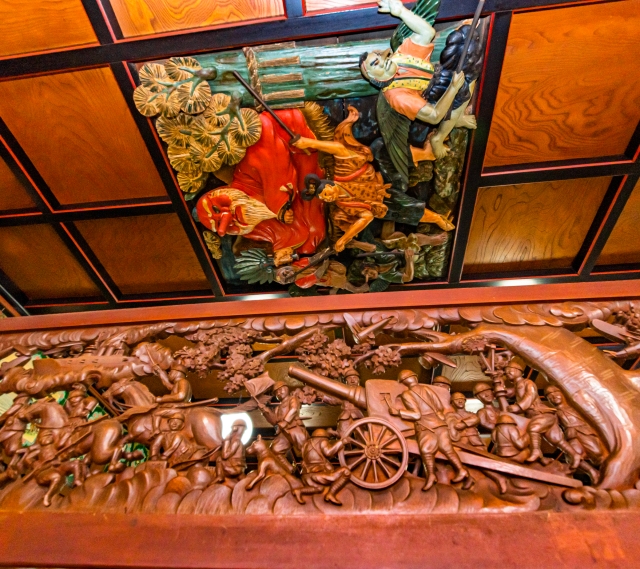
The beauty isn’t solely reserved for the bathing areas — the ceiling of the dressing room is beautifully carved with an image depicting the long-nosed Kurama Tengu, a mythical creature believed to have lived on nearby Mt Kurama.
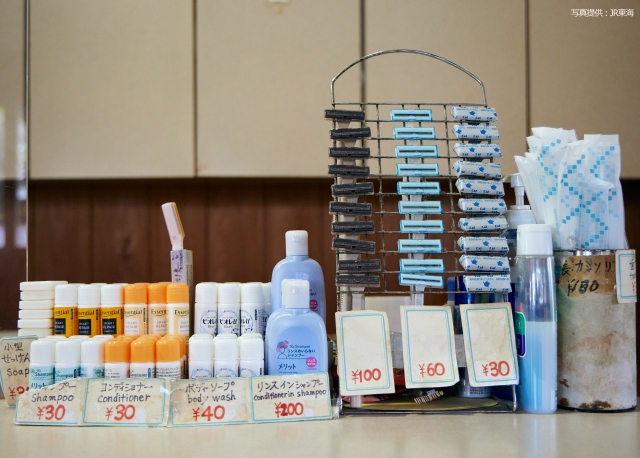
In Tokyo, a visit to a hot spring will set you back around 1,000 yen, but the usage fee for Funaoka Onsen is just 450 yen for adults, 150 yen for elementary school students, and 60 yen for preschoolers and infants, which is a really great deal. Doing the math, if an adult were to visit every day, it would cost just 13,950 yen for 31 days, which is cheaper than a month’s gas bill at Egawa’s place for hot water.
Shampoo and other items are also sold at cheap prices that hark back to a simpler time. With so many bathing accessories available to purchase, you’d be fine to just bring a towel here and pay for the rest of what you need. If Egawa lived in the neighbourhood, he’d bathe here every day.
After his visit to Funaoka Onsen, Egawa had worked up an appetite, so he made his way to Sarasa Nishijin, a cafe about a block away from the bathhouse.
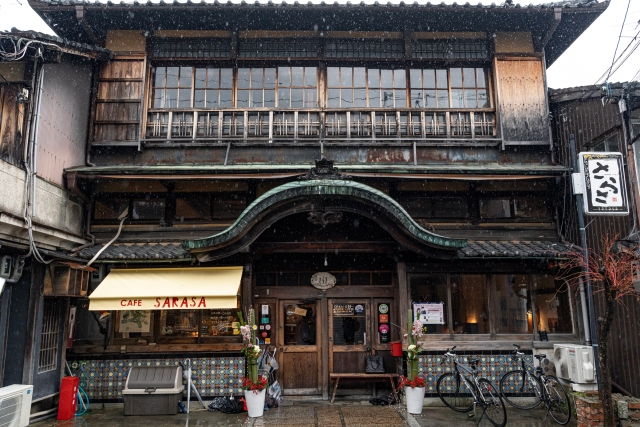
This cafe sits inside what used to be an old public bathhouse called “Fujinomori Onsen“. As the photo below shows, the name of the old onsen can still be seen above the entranceway.
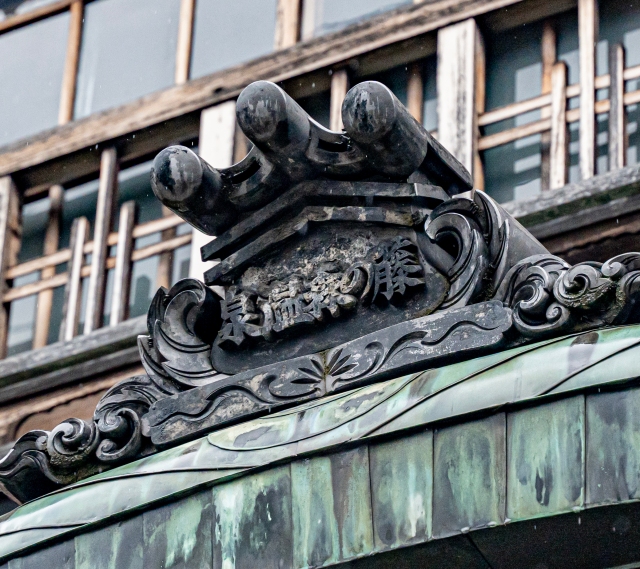
The building’s former life as a public bathhouse lives on in the new cafe, with its original ceiling and tiled walls creating a stunning interior.

▼ Old plumbing features like these hark back to the bathhouse’s heyday.

▼ The ceiling feature is particularly stunning, flooding the space below in natural light that creates a unique ambience.


The cafe’s former life as a bathhouse isn’t its only claim to fame — it’s also appeared in the anime K-On!
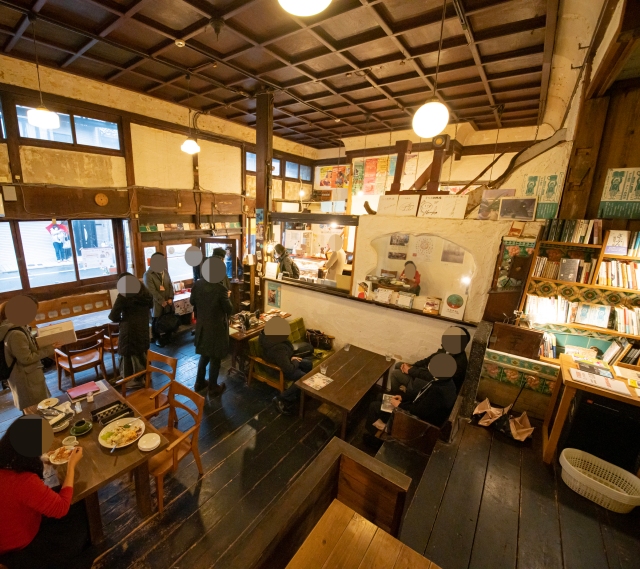
The cafe attracts anime fans, history buffs, bathhouse enthusiasts, and anyone looking for a good feed in the area.
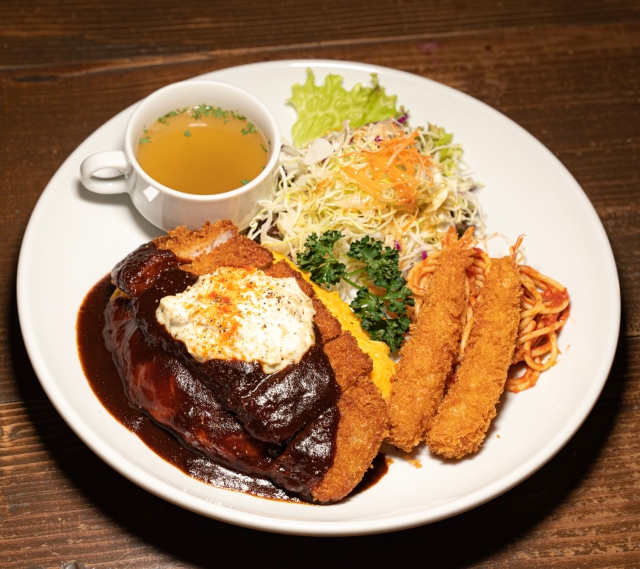
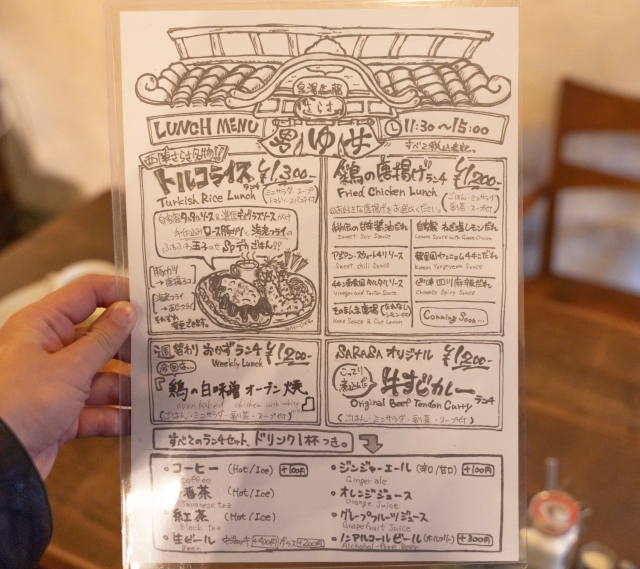
▼ The recommended dish here is “Turkish Rice” (1,300 yen).
▼ How beautiful is this handwritten menu?
Combining a meal at Sarasa Nishijin with a trip to Funaoka Onsen is a wonderfully relaxing way to spend a morning or afternoon, and with big temples like Kinkakuji (the “Golden Pavilion”) and Imamiya Shrine within walking distance, you can easily work all these sites into a day’s itinerary.
With other public baths included in JR’s Totonou Set, Egawa decided to stay a few nights in Kyoto so he could make good use of the deal. After sightseeing during the day, Egawa was able to rest his tired muscles with a trip to an onsen at the end of each day, which made him sleep like a baby at night, recharging him and energising him for the next day of sightseeing.
Egawa loved immersing himself, literally, in the local bathing culture, and now he’s keen to take us on a tour of the “Zen” portion of the trip next. But first…he’s off to have just one more soak at Funaoka Onsen.
Related: Totonou Campaign Site
Photos © SoraNews24
● Want to hear about SoraNews24’s latest articles as soon as they’re published? Follow us on Facebook and Twitter!
]]> https://soranews24.com/2022/02/05/kyoto-sightseeing-tour-the-most-amazing-old-bathhouses-in-the-city/feed/ 0 575692 Kyoto sightseeing tour travel tourist sites best public baths sento onsen photos reviews Zen to Yu campaign JR train 1