death – SoraNews24 —Japan News— https://soranews24.com Bringing you yesterday's news from Japan and Asia, today. Fri, 22 Nov 2024 05:00:22 +0000 en-US hourly 1 https://wordpress.org/?v=7.1.4 https://soranews24.com/wp-content/uploads/sites/3/2020/05/en_rocket_1024.png?w=32 death – SoraNews24 —Japan News— https://soranews24.com 32 32 176746664 Nara man arrested for burying mother in his cemetery plot by himself https://soranews24.com/2024/11/22/nara-man-arrested-for-burying-mother-in-his-cemetery-plot-by-himself/ https://soranews24.com/2024/11/22/nara-man-arrested-for-burying-mother-in-his-cemetery-plot-by-himself/#comments Fri, 22 Nov 2024 05:00:08 +0000 https://soranews24.com/?p=684326 
You don’t have to abandon a body to legally abandon it.
Sadly, cases of people abandoning the remains of loved ones are an ongoing problem in Japan. The reasons can vary widely from those hoping to keep cashing in pension checks to those who simply lack the ability or emotional stability to make the proper arrangements. However, a recent case is testing the boundaries of what it means to “abandon” a deceased body.
At approximately 1:30 p.m. on 18 November, a groundskeeper at the Shitennoji Yamatobetsuin cemetery in Nara City discovered someone’s right wrist protruding from the ground. The Nara Prefectural Police were called in to exhume the body and conduct an autopsy which determined the body belonged to a woman at least 70 years old who likely died earlier the same month. No cause of death was determined but there were no signs of foul play.
The subsequent investigation led to the arrest of 71-year-old Ryuichi Kurata of Suita City in neighboring Osaka Prefecture on charges of abandoning a corpse. Kurata admitted to burying the body and said it was his mother whom he lived with. Kurata was also already leasing the plot where he buried the body.
While it’s clearly not the textbook way to inter a loved one, couldn’t it also be a stretch to say Kurata “abandoned” the body by burying it in a cemetery plot that he had the rights to?
The first issue is that people’s bodies are rarely buried in Japan. Cremation is by far the most common method and the remaining ash and bones are placed in an urn which is then stored in a rather small box-like space under the grave called a kotsutsuboshitsu (“bone urn room”).
▼ Japanese cemeteries kind of look like little cities from a certain angle. Each monument will have the kotsutsuboshitsu either inside it or directly underneath it. That big pile in the middle are jizo statues in honor of miscarried, stillborn, or aborted babies.
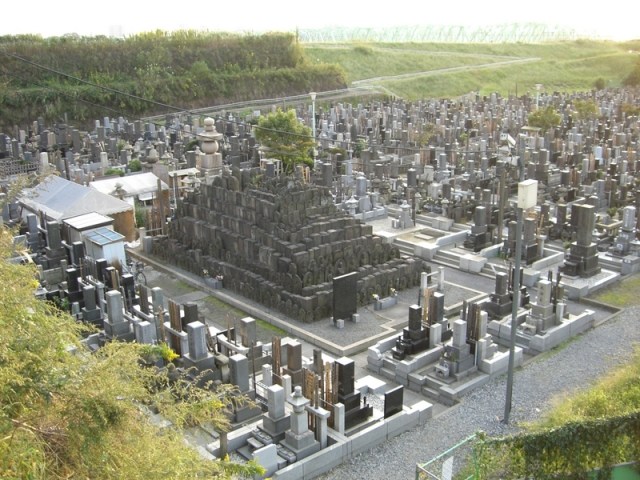 Image: Wikipedia / heiwa4126
One benefit of this style is that it saves a lot of space. Graveyards in Japan are often dense clusters of stone monuments, but it is possible to get some more spacious plots too if desired. It would seem likely that Kurata had leased one of the larger ones and also possibly hadn’t set up a monument yet.
▼ A satellite image of Yamatobetsuin cemetery shows a large number of empty plots that are just bare dirt. A 180 square-centimeter plot there costs 4 million yen up front and 14,000 yen per year in maintenance fees.
Since graves are usually shared among family members, it’s not strange for Kurata to put his mother into a grave that he leased. It’s just extremely strange for him to have buried the whole uncremated body by himself and that puts him on the hook for breach of contract along with a whole range of criminal charges like trespassing, vandalism, and obstruction of business to name a few.
However, the reports say he was arrested for the crime of abandoning a corpse, so to find out if that holds water let’s check the legal definition of it. The crime of abandoning a corpse is referred to in Article 190 of the Penal Code, which states:
“Those who damage, abandon, or take possession of a corpse, bones, hair, or anything placed in a coffin shall be punished by imprisonment for no more than three years.”
The concept of “abandon” here is rather open to interpretation but it just so happens that interpretation was really put to the test recently in the case of a Vietnamese national who was accused of abandoning the bodies of her two newborn twins that died just after birth. She had delivered the twins in her dormitory room and after overcoming the shock of what happened, she wrapped their bodies in towels, placed them in a cardboard box along with a letter of apology and farewell, taped the box shut, and put it on a shelf. The box was discovered two days later after she received a medical examination that revealed her situation to the authorities.
The woman was found guilty of abandoning the bodies despite the fact that she kept them in her home. In general, the concept of “abandonment” includes concealment such as when a murderer buries their victims in their backyard. In the case of the woman, she had placed the bodies in an unmarked cardboard box which is concealment and thus abandonment in the eyes of the law.
However, the case was taken to the Supreme Court which overturned her guilty verdict. Their ruling meant that mere concealment should not constitute abandonment and instead gave it an interpretation of denying someone’s body the proper respect after death and not interring them in accordance with social customs. In the case of the woman, it could not be established that she didn’t intend to give them a proper cremation at a later time and she was found not guilty of abandoning a corpse.
▼ News report of the Supreme Court’s ruling which shows the mother’s supporters cheering on the overturned verdict.
Applying the Supreme Court’s interpretation of abandonment to Kurata’s case, it might be hard to argue that burying a body in a grave is not in accordance with social customs. Much like the case of the Vietnamese woman, it will likely boil down to the very fine details of everything he did from the moment of death to his arrest.
It’s unfortunate that this law has to be applied to many people who appear to be simply too overwhelmed with grief to know what to do, but without a better social support system we may continue to see these things happen.
It should also be noted that as of this writing, the police are still trying to confirm the woman’s body is in fact that of Kurata’s mother. If there happens to be a surprise with that detail… just forget everything I said.
Source: Mainichi Shimbun, Esora Law, E-Gov, Asahi Shimbun
Featured image: Pakutaso 1, 2 (Edited by SoraNews24)
● Want to hear about SoraNews24’s latest articles as soon as they’re published? Follow us on Facebook and Twitter!
]]> https://soranews24.com/2024/11/22/nara-man-arrested-for-burying-mother-in-his-cemetery-plot-by-himself/feed/ 0 684326 Posthumous divorce on the rise in Japan as a way to distance oneself from in-laws https://soranews24.com/2024/09/05/posthumous-divorce-on-the-rise-in-japan-as-a-way-to-distance-oneself-from-in-laws/ https://soranews24.com/2024/09/05/posthumous-divorce-on-the-rise-in-japan-as-a-way-to-distance-oneself-from-in-laws/#comments Thu, 05 Sep 2024 05:00:27 +0000 https://soranews24.com/?p=677358 
Tell your late spouse’s family how you really feel. Tell them with a divorce.
The meddlesome in-law is a classic domestic crisis that goes back as far as the dawn of humanity, according to The Flintstones. And though it’s more of an anecdotal situation that’s difficult to quantify with precision, there are enough anecdotes to suggest in-law animosity is still an issue in many Japanese families, so much so that there’s actually an official process for severing one’s ties with a deceased spouse’s family in Japan.
It’s commonly known as a “posthumous divorce” (shigo rikon), which is a rather misleading name because a deceased spouse is not actually getting divorced. Japan has the same “till death do you part” mentality as most places, so it’s legally impossible to divorce a dead person.
▼ “Look, I know this isn’t the best time, but I’ve been thinking and it’s just not working out between us…”
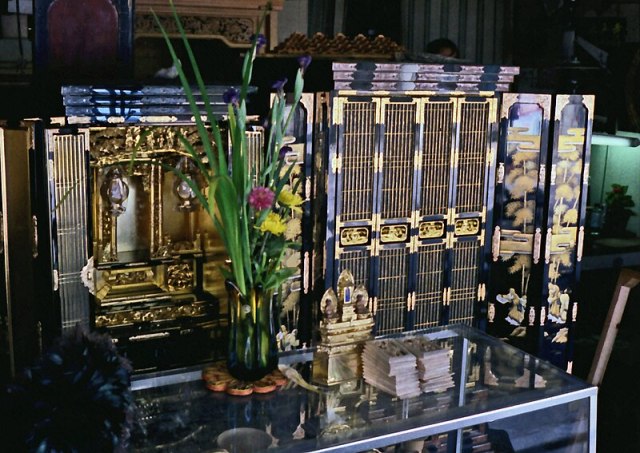 Image: Wikipedia/Enshuritsu 3 percent
Posthumous divorce’s technical but less popular name is a “notification of marital relationship termination” (inzoku kankei shuryo todoke) which means one is officially severing ties with the family of a deceased spouse. What’s particularly strange about it is that it doesn’t really serve any purpose for a vast majority of people aside from a government-approved official statement that someone finds their in-laws unbearable.
Traditionally, there have been certain expectations that Japanese children, first-born sons in particular, that they should take care of their parents when they become too old to do so for themselves. First-borns are also expected to inherit the family home, grave, and other assets passed down through generations.
However, in the case that a first-born passes away, these things usually go to another person in their family’s bloodline rather than the first-born’s spouse, so getting a posthumous divorce rarely affects that situation. There are cases where a first-born might specifically leave these inheritances to their spouse in their will, at which time the person seeking the posthumous divorce would have to arrange a successor in the late spouse’s family first.
Even if the spouse is living with the in-laws at the time of the death, they would no longer have a legal obligation to take care of them. It becomes more of an ethical situation whether or not to continue doing so.
Posthumous divorce also has no effect on the person’s legal relationship with their late spouse. They can still choose to keep the spouse’s surname and are still eligible for all inheritances, pensions, and insurance policies as they were before the posthumous divorce. They can even still have their own remains placed in their spouse’s family grave since their legal relationship to the late spouse is still fully intact.
In addition to all that, a posthumous divorce can be obtained unilaterally and the in-laws will receive no notice of it from the government. Only the spouse of the deceased can file for this too, the late spouse’s family cannot sever ties in this way.
▼ It’s a relatively easy process that just requires filling out a few applications at the nearest city office
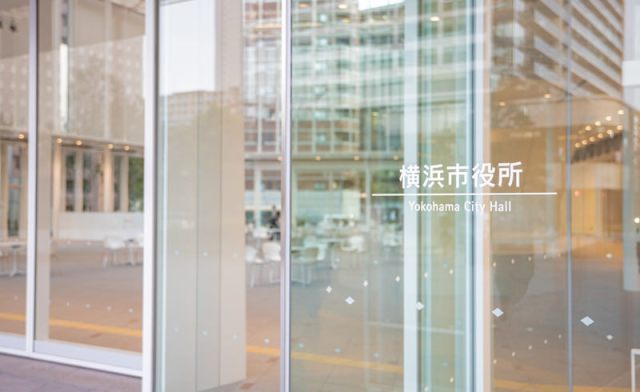 Image: Pakutaso
Since very little is actually accomplished by this, it begs the question not only of why anyone would want to get a posthumous divorce but why the number of posthumous divorces is increasing.
According to data from the Ministry of Justice, the number of annual posthumous divorces averages around 4,000, compared to an average of less than 2,000 during the late ’90s. Many of these cases have the divorce used as a tool when spouses are dragged into inheritance disputes or other problems by order of the deceased’s will. However, there is recently a growing group of people in the same situation as a 53-year-old woman in Tokyo who described the process of legally cutting ties with her in-laws as a “tremendous feeling of liberation.”
She describes her married life as being constantly irked by the slights made by her mother-in-law, but driven by a sense of traditional duty to put up with them for her husband’s sake. However, once her husband passed, her mother-in-law’s behavior continued until she could take no more and filed for “divorce” from her.
While it worked out well for that woman, it should be noted that a posthumous divorce is not a restraining order and doesn’t necessarily mean the in-laws are forced out of your life forever. This is especially true in cases where grandchildren are involved because their legal ties to their grandparents are not affected by this process at all and remain firmly intact. In that way, it seems likely that a posthumous divorce could simply work to amp up acrimony with in-laws rather than end it.
Nevertheless, it is a legal instrument that exists in Japan for those who want to send a firm message to surviving in-laws they can no longer tolerate. After all, it’s a problem that is sure to plague humanity well into the 21st century, according to The Jetsons.
Source: Sozoku Asahi, The Sankei Shimbun, Yahoo! Japan News, e-Stat
Featured image: Pakutaso
● Want to hear about SoraNews24’s latest articles as soon as they’re published? Follow us on Facebook and Twitter!
]]> https://soranews24.com/2024/09/05/posthumous-divorce-on-the-rise-in-japan-as-a-way-to-distance-oneself-from-in-laws/feed/ 0 677358 Osaka man finds stranger eating in his kitchen at night, stranger dies shortly after https://soranews24.com/2021/05/07/osaka-man-finds-stranger-eating-in-his-kitchen-at-night-stranger-dies-shortly-after/ https://soranews24.com/2021/05/07/osaka-man-finds-stranger-eating-in-his-kitchen-at-night-stranger-dies-shortly-after/#comments Fri, 07 May 2021 13:00:57 +0000 https://soranews24.com/?p=541598 
Truth is once again stranger than fiction.
A mystery of the most unusual kind occurred in Sakai City, Osaka Prefecture in the late evening of 5 May.
At approximately 11 p.m. a 60-year-old man got out of bed and went to the kitchen of his house for a glass of water. As he entered the room he was shocked to find a man he had never met before sitting at the table eating foods such a frozen pasta dinner.
 Image: ©SoraNews24
The stranger looked to be in his 30s and was wearing a T-shirt that he had found in the house. When the resident confronted him, the stranger simply said, “I came in the front door.” He then suddenly became erratic and behaved violently while trying to flee.
The resident’s younger brother, who lived next door and heard the commotion, came in and helped to restrain the intruder. Meanwhile, the resident’s father, who lived in the same house, called the 110 police emergency number.
Officers rushed to the scene and arrested the stranger, but when they arrived he had lost consciousness. He was then taken to hospital where he died an hour after.
 Image: Pakutaso
With the intruder now deceased, police have little to work with in piecing together what happened. Based on his personal belongings they believe he lived in Osaka Prefecture, but are still working on identifying him and the cause of his death.
Readers of the news were also left dumbfounded over what could have possibly led to this bizarre sequence of events.
“It’s a series of horrors from beginning to end.”
“He entered without permission, took food and clothes without permission, and even died without permission.”
“A man in his 30s suddenly dying? A man in his 60s living with his father and next to his brother? Frozen pasta? The more I try to make sense of it all, the harder it gets.”
“That house must be cursed.”
“It’s like a ball of horrors tangled together.”
“Sounds like the victims might have choked him to death, but it was self-defense.”
“Is this a COVID-19 thing somehow?”
“Those people in the house were lucky he wasn’t a murderer. They better lock the door from now on.”
“Did he microwave the frozen pasta?”
“What the hell?! Never leave your guard down.”
“I’m suspicious about the people in the house.”
Adding to the confusion, the story as told above was according to a YTV report, but ABC News also reported on the incident with considerably different details. According to them, the intruder was in the process of heating up the pasta when he was discovered and was already not breathing by the time the police arrived. However, ABC News cited no sources, unlike YTV who got its information from the police.
It may take some time before a clearer picture of what happened that night is understood. It’s also quite possible that no one except the intruder knew how he ended up in that kitchen, and the full truth may have died with him.
Source: YTV, ABC News, Hachima Kiko
Top image: Pakutaso
● Want to hear about SoraNews24’s latest articles as soon as they’re published? Follow us on Facebook and Twitter!
]]> https://soranews24.com/2021/05/07/osaka-man-finds-stranger-eating-in-his-kitchen-at-night-stranger-dies-shortly-after/feed/ 0 541598 Death of a Japanese man attacked by bear sparks conversation about what to do when facing off with one https://soranews24.com/2021/04/14/death-of-a-japanese-man-attacked-by-bear-sparks-conversation-about-what-to-do-when-facing-off-with-one/ https://soranews24.com/2021/04/14/death-of-a-japanese-man-attacked-by-bear-sparks-conversation-about-what-to-do-when-facing-off-with-one/#comments Wed, 14 Apr 2021 01:00:23 +0000 https://soranews24.com/?p=539376 
Is there any way to avoid a grisly end?
Close to 11 a.m. on April 10, a resident of Kushiro City in Hokkaido who had traveled to the mountains to pick edible flora with his wife was attacked by a brown bear and died shortly after. Though his wife called emergency services as soon as she heard her husband scream and witnessed him being attacked by a “black, bear-like animal”, he was pronounced dead at the scene. The cause of death appeared to be the crushing of his head and throat.
Though the emergency services who arrived at the scene were unable to locate the animal responsible, this is unfortunately not an especially unexpected occurrence. Experts warn that bears that have just woken up from hibernation are the most likely to encounter humans, as they wander further afield in search of food. Adding to this peril is the fact that brown bear populations are on the rise in Hokkaido, which increases the risk of an encounter.
In the wake of this unfortunate incident, a representative of the Hokkaido Hunting Association expressed his anguish at it happening despite reports of bear sightings in the area and went on to share advice for bear encounters in general.
First, he dismissed the effectiveness of bear bells, small bells that jingle as you walk, and said that their only true purpose was to give their wearers peace of mind. In actuality he says that the bells ring so quietly they tend not to be audible to bears until it’s too late, meaning a better course of action is to walk loudly and speak in strong, clear voices to ensure that a bear doesn’t accidentally stumble upon you.
Of course, he concedes, this doesn’t stop bears from encountering you anyway. And in that instance, the only advice he can really offer is to be willing to fight for your life.
While tools like bear repellents can be useful, it’s unlikely that in the moment you will have the presence of mind or quick reflexes to pull out the safety pin to activate one. It would be better, if the bear looks likely to attack, to pierce its eyes or mouth with something you can manipulate from afar like a long stick or ski pole. At any rate, you should be willing to risk injury if it means you can get out with your life intact—bears are not meant to be trifled with.
There have been reports of a new generation of brown bears in Hokkaido that don’t hibernate, or at least can interrupt their hibernation in order to forage for food. As the odds of surviving an encounter with a brown bear are so low, please heed any warnings in your area, especially if you insist on venturing out to hike or forage for wild flowers this spring.
Source: Daily, LivedoorNews/Tokyo Sport via My Game News Flash
Top image: Pakutaso
● Want to hear about SoraNews24’s latest articles as soon as they’re published? Follow us on Facebook and Twitter!
]]> https://soranews24.com/2021/04/14/death-of-a-japanese-man-attacked-by-bear-sparks-conversation-about-what-to-do-when-facing-off-with-one/feed/ 0 539376 BIBAI19882202_TP_V If you die from the COVID-19 vaccine in Japan, the government will give your family over 44M yen https://soranews24.com/2021/02/21/if-you-die-from-the-covid-19-vaccine-in-japan-the-government-will-give-your-family-over-44m-yen/ https://soranews24.com/2021/02/21/if-you-die-from-the-covid-19-vaccine-in-japan-the-government-will-give-your-family-over-44m-yen/#comments Sun, 21 Feb 2021 13:00:14 +0000 https://soranews24.com/?p=533784 
$420,000? Now that’s putting your money where your mouth is.
Only a few days ago had Japan begun distributing the COVID-19 vaccine. While a little behind other developed countries, they seem to be trying to do it in as organized fashion as possible, staggering vaccinations to medical staff, the elderly, people with health conditions, and everyone else in that order.
It’s not without it’s challenges, however, and one of them remains the Japanese people’s general skittishness when it comes to vaccines. It might seem surprising in a country that’s all too ready to slip on a mask, but the fear of side effects and a general attitude of “It probably won’t happen to me” has kept flu shot rates lingering at a steady 50 percent year after year, despite the fact that in Japan the number of flu deaths in 2018 was about the same as COVID-19 deaths in 2020.
However, some who fear that the prevention might be worse than the disease may be swayed by a recent report that the Ministry of Health, Labour and Welfare will award a lump sum of 44,200,000 yen (US$420,000) to the surviving family of any person who dies as a result of the COVID-19 vaccine and even cover funeral costs up to 209,000 yen ($2,000).
It doesn’t even matter if there was negligence on the part of medical staff or the vaccine producer. In other words, there’s no strings attached. Except, you know, the death part.
▼ Maybe if there’s way to tee up a dead-but-don’t-know-it situation like Bruce Willis did that one time….

This is actually a long standing policy of the ministry which covers any kind of vaccination, not just COVID-19. However, it recently made news when it was brought up by health minister Norihisa Tamura at a budget meeting.
Judging by the comments, a lot of people were unaware of this policy up until now.
“Now that’s some news! Let’s hurry up and die!”
“Wow! It also says you can get an annual five million yen ($47,000) if you’re severely disabled by the vaccine. I like those odds.”
“Maybe this will help more people get the shot.”
“Let the death game begin!”
“Seems simple, but isn’t it difficult to prove that it was in fact the vaccine that caused the death?”
That last comment is a valid concern, but it would seem that in practice the opposite is actually a bigger problem. According to a report by Diamond Online, the ambiguousness of vaccine side effects tends to work in favor of the victims in court. As a result, Japanese pharmaceutical companies have been reluctant to produce vaccines in recent years, because the financial risks outweighs the benefits.
This, combined with the fact that much of the public isn’t even aware of the policy, would suggest that it is probably more intended to coax Japanese companies to produce their own vaccines by reducing their liability. However, Diamond Online also points out that even after accepting the government’s money, victims still have the right to go after the companies in court.
This brings us right back to square one, as evidenced by the lack of any Japanese-made vaccines during this time of peak mass inoculation. Still, like one comment suggests, the new of this policy could at least help bring more people to the vaccination table by showing the the government believes in the safety of it enough to put their money on the line.
If it does, then it’ll ultimately be worth well over a few million yen.
Source: Kyodo, Ministry of Health, Labor and Welfare, Japan Medical Journal, Clinic for Life, Diamond Online, My Game News Flash
Top image: Pakutasu (1, 2, 3) (Edited by SoraNews24)
Insert image: Pakutasu
● Want to hear about SoraNews24’s latest articles as soon as they’re published? Follow us on Facebook and Twitter!
]]> https://soranews24.com/2021/02/21/if-you-die-from-the-covid-19-vaccine-in-japan-the-government-will-give-your-family-over-44m-yen/feed/ 0 533784 Company PET partners with Kyoto temple to offer genuine funeral services for beloved pets https://soranews24.com/2021/01/05/company-pet-partners-with-kyoto-temple-to-offer-genuine-funeral-services-for-beloved-pets/ https://soranews24.com/2021/01/05/company-pet-partners-with-kyoto-temple-to-offer-genuine-funeral-services-for-beloved-pets/#comments Tue, 05 Jan 2021 05:00:10 +0000 https://soranews24.com/?p=527888 
New collaboration services honor your departed pets as full members of the family while also granting you and your remaining family some closure.
Kyoto-based company PET began offering pet funeral services throughout the southern-central Kansai region of Japan late last year. On December 30, it further announced a new partnership with Jomanji (成満寺), a well-established Buddhist temple of the Jodo Shinshu sect in Fukuchiyama City, Kyoto Prefecture.
▼ Jomanji, founded in 1603

While pet cremation services in Japan have diversified in recent years, PET Director Yu Naohara was inspired to create the new temple pet funeral services Annon (お寺のペット葬 安穏), with Annon meaning “peace” or “tranquility,” in light of his own experience of grieving a beloved family pet and not feeling like enough care or attention was put into its funeral.
Annon’s services are distinguishable from other current offerings by three main factors:
- A Buddhist priest will conduct exactly the same services for a departed pet as they would for a human
- A memorial movie honoring the departed pet will be made by a professional videographer
- The funeral service will include genuine, pet-exclusive altar fittings
▼ A sample Annon memorial movie for a dog named Koko
With all of these personalized details, the services are not only meant to serve as a respectful farewell to a beloved member of the family but also to help guide the remaining family members towards peace and closure.
When it comes to the actual funeral, a Buddhist priest will hold the service in the main temple building followed by another ceremony on the grounds during which the pet’s cremated ashes are dedicated to its family in a funerary urn.

▼ Here is the main team leading the partnership. Left: Kosuke Emoto (helps with PET marketing and social media), Center: Akihide Kimoto (Buddhist priest), Right: Yu Naohara (PET Director)

While we’re on the subject of funerals, do check out Tsubasa’s do-it-yourself funeral kits if you’d like to arrange for something slightly different for yourself well ahead of time.
Source: PR Times 1, 2
Images: PR Times
● Want to hear about SoraNews24’s latest articles as soon as they’re published? Follow us on Facebook and Twitter!
]]> https://soranews24.com/2021/01/05/company-pet-partners-with-kyoto-temple-to-offer-genuine-funeral-services-for-beloved-pets/feed/ 0 527888 3 Japanese supermarket’s funeral ad sparks controversy, debate over “blasphemy” https://soranews24.com/2020/10/09/japanese-supermarkets-funeral-ad-sparks-controversy-and-debate/ https://soranews24.com/2020/10/09/japanese-supermarkets-funeral-ad-sparks-controversy-and-debate/#comments Thu, 08 Oct 2020 17:30:46 +0000 https://soranews24.com/?p=518354 
Is Aeon’s award-winning design an economical comfort or a blasphemy against your ancestors?
Japanese society occupies an interesting space where it comes to religion. While many people will assert they aren’t religious, there are aspects of spiritualism that touch everyday life, often deriving from a hybrid of Shinto and Buddhist teachings. This is especially obvious when it comes to honoring the dead. It’s not at all uncommon to find a butsudan (Buddhist shrine) in a Japanese home, where ihai, spirit tablets engraved with the names of deceased family members, are kept.
Since Japan has an aging population, more people require funeral services than ever. The cost of these services (the most expensive in the world) mean that fewer people are willing to pay for all the aspects of a traditional funeral, and many are looking for cost-effective options.
Cue retail giant Aeon’s recent ad for their own funeral services. It won the prestigious Mainichi Design Award and emphasizes the convenience and relatively cheap price of their funeral packages by showing an ihai tablet wrapped in clear wrap atop a foam tray, much like how you might see meat packaged.
毎日広告デザイン賞。イオンのこの広告が選ばれていることが悲しいですね。違和感というか、何かを冒涜しているような気分になりはしまいか。作り手も選び手も途中で踏み止まることはできなかったのだろうか。 pic.twitter.com/RkSww7V3qo
— カレー坊主 (@curry_boz) October 4, 2020
The ad has drawn some less-than-positive attention since earning its award, though. Twitter user @curry_boz, a self-described Buddhist monk, had some choice words for the Mainichi Design board’s decision.
“What a tragedy that this is the recipient of the Mainichi Advertising Design Award. Doesn’t it make you uncomfortable, or even feel like a blasphemy has occurred? Did neither the designer of the ad, nor the judge of the competition, lack the ability to check themselves and stop before this happened?“
His thread continued:
“Regarding the commercialization of funeral services:
The involvement of a funeral parlor is absolutely essential in both preparing for and managing the particulars of a funeral service, what with the administrative procedures that cover such tasks as cremation as well as the transportation from the hospital’s morgue. I won’t deny that, considering the capitalistic economy we live in, a certain level of competition is necessary in order to ensure a high quality of service. That is not the aspect I’m taking issue with.”“Each funeral service has its own individual merit, and it is up to the providers themselves to discern that merit.
However, I really cannot condone the service provider’s personal perspective implied by taking an object of spiritual significance and then displaying it on a foam tray, wrapped in plastic. This action makes a decisive statement on the value of someone’s life.”
Plenty of users were eager to agree with him. Indeed, many announcements of the ad winning the award have already been quote-retweeted by users wondering “What is this world coming to?” or “This makes me uncomfortable.” Some replied to @curry_boz’s statements with:
“I’m in the graphic design industry, but my husband works at a temple. This really isn’t it. The designer must think of the ihai tablet as just a mere ‘object’, I suppose. It makes me sad.”
“The meaning is a bit unclear, with how they’ve packaged up something other than food into a food tray. You can’t eat a funeral service. I think that’s why it makes me uncomfortable. The impact is lost on me.”
“Whether from a Buddhist perspective or even just a religious one, I feel it’s so insulting I can hardly find the words.”
However, not everyone was so incensed. Many of the comments suggested he look at the problems in how Buddhist temples are handling funeral services before condemning Aeon’s advertising:
“Our values may be different, but I don’t really see it like “‘If you don’t register your ihai tablet properly, you just see it as a basic object! Blasphemy!’ After all, it’s not like anything is residing in that tablet. (If it had a Dharma name engraved in it, then yeah, it would be blasphemous.) They’ve just compared Aeon’s funeral services to the side-dishes and groceries Aeon also sells. I think this ad is meant to make you think of funerals, which are considered expensive, as something familiar and close-to-home.”*
[*Dharma names are the names granted to the deceased, which are then written onto their ihai tablet.]
“I completely disagree [with the idea that the ad is blasphemous]. When my grandfather died, monks were constantly begging me for more money. Some people only see funerals as an annoyance that drains their funds and ends with them getting ripped off. Honestly, it’s package ads like these ones that I’d like to see more of.”
“Perhaps people feel it’s asinine that we keep paying the same amount of money to temples for funerals that we did centuries ago. I’ve noticed a lot of monks nowadays live in fancy houses, drive flashy cars and eat out at expensive restaurants…”
The greatest divide seems to come from those who feel strongly about the ihai as a spiritual object and those who feel that temples and monks must adapt to the modern economic climate if they want to stay relevant. Making those adjustments is always going to draw ire from those who consider it untraditional, so this particular argument is bound to live on for a long, long time.
Source: Twitter/@curry_boz via Hachima Kikou
Top image: Pakutaso
● Want to hear about SoraNews24’s latest articles as soon as they’re published? Follow us on Facebook and Twitter
]]> https://soranews24.com/2020/10/09/japanese-supermarkets-funeral-ad-sparks-controversy-and-debate/feed/ 0 518354 KF 31 28-year-old sumo wrestler dies after contracting coronavirus https://soranews24.com/2020/05/13/28-year-old-sumo-wrestler-dies-after-contracting-coronavirus/ https://soranews24.com/2020/05/13/28-year-old-sumo-wrestler-dies-after-contracting-coronavirus/#comments Wed, 13 May 2020 07:10:39 +0000 http://soranews24.com/?p=501089 
“Like the fighter he was, he tenaciously fought against the illness until the very end.”
On 13 May the Japan Sumo Association announced the passing of Shobushi Kanji due to multiple organ failure brought on by COVID-19 triggered pneumonia. He was 28, making him both the youngest confirmed corona-related death in Japan and the first such death of a person in their 20s in the country.
Born Kiyotaka Suetake, he began his sumo career in March of 2007 and fought his way up to the sandanme level with a 147-189 record. Sandanme is the second highest level of wrestlers still considered in training but nearing the rank of respected athletes in the sport.
▼ Wrestlers at this level often performed comedic but athletic exhibition routines known as Shokkiri. In this video Shobushi (on the right) performed such a routine on 9 February, 2020.
However, on 4 April, Shobushi began to develop a fever and sought medical help. Initially, medical centers refused to accept him, but his fever persisted for another four days and after he started coughing up blood Shobushi was rushed to a hospital in Tokyo by ambulance.
An initial test for COVID-19 came back negative, but his symptoms continued to grow worse and on 10 April, a PCR test confirmed that he had the novel coronavirus. He had been in intensive care since 19 April.
Seven other members of Shobushi’s Takadagawa stable were also infected and hospitalized, but later discharged. Shobushi, however, remained in worsening condition. After a long battle, lasting nearly a month and a half, Shobushi finally succumbed to the effects of the disease.
Former yokuzuna and current Japan Sumo Association chairman Hokutoumi Nobuyoshi paid respect to Shobushi’s passing, telling media: “Like the fighter he was, he tenaciously fought against the illness until the very end. I hope he can rest peacefully now.”
Others online were shocked and left wondering how such a young athlete could be killed by COVID-19.
“What?! He was 28?!”
“Too young…”
“I guess his weight was a factor, but he was still probably healthier than most men his weight.”
“I hate to say it, but it was probably because he was obese.”
“Corona has arrived for young people too. Even though he was overweight, he was probably stronger than most guys his age.”
“People like sumo wrestlers and body builders look strong on the outside, but that lifestyle takes a huge toll on their internal organs.”
As of this writing, Japan is currently reporting 16,049 confirmed infections and 678 deaths, including Shobushi Kanji. Although well over half of the deaths have been made up of people over the age of 70, the young Yamanashi-native’s death is a stark reminder that everyone needs to avoid slipping into a false sense of security for the time being.
Source: Jiji Dot Com, Yomiuri Shimbun, Hachima Kiko
Top image: YouTube/MyJetSetLife
● Want to hear about SoraNews24’s latest articles as soon as they’re published? Follow us on Facebook and Twitter!
]]> https://soranews24.com/2020/05/13/28-year-old-sumo-wrestler-dies-after-contracting-coronavirus/feed/ 0 501089 Man who knowingly spread coronavirus to various bars in Aichi dies in hospital https://soranews24.com/2020/03/18/man-who-knowingly-spread-coronavirus-to-various-bars-in-aichi-dies-in-hospital/ https://soranews24.com/2020/03/18/man-who-knowingly-spread-coronavirus-to-various-bars-in-aichi-dies-in-hospital/#comments Wed, 18 Mar 2020 13:00:49 +0000 http://soranews24.com/?p=493412 
A reminder of how serious this disease can be.
Two weeks ago we reported an incident where a man in his 50s who tested positive for COVID-19 defied the hospital’s orders to go directly home. Instead he visited several drinking establishments for the duration of the evening before being committed to a hospital the following day.
That same man succumbed to the coronavirus at about one o’clock in the afternoon on 18 March. It was reported that he had suffered from a serious chronic illness prior to having been infected by the virus from his parents whom he lived with.
As a result of his visits, all of the establishments in Gamagori City needed to be shut down and sterilized and one employee in her 30s was infected. The bar was preparing to sue and the police were investigating obstruction of business charges at the time of the unidentified man’s death.
It’s an unpleasant end to a thoroughly unpleasant affair and many online were left unsure how they should feel about it all.
“Why couldn’t he just die like a man?”
“He was probably going through some difficult emotions, but to hurt others the way he did…”
“He was probably desperate, but even still, this is unacceptable.”
“Good.”
“Even if he was desperate, he’s not far from other mass killers we’ve seen.”
“He was no different from Aum or ISIS. Good riddance.”
“I wonder if it was suicide.”
“I was just starting to forget how frightening the coronavirus is.”
It’s hard to feel sympathy or condemn the man without knowing what was going on in his head at the time, but the fact remains that with his death, justice for what he did will go unserved. The small businesses who chose to seek compensation must now either give up or demand it from his family, including his two elderly parents who are also recovering from the coronavirus.
It’s a murky situation, but also a stark reminder that COVID-19 doesn’t care who you are or what you did: it just infects and sometimes kills indiscriminately. So, take care out there and stay safe.
Source: Buzzap!, Hachima Kiko
Top image: Pakotasu
● Want to hear about SoraNews24’s latest articles as soon as they’re published? Follow us on Facebook and Twitter!
]]> https://soranews24.com/2020/03/18/man-who-knowingly-spread-coronavirus-to-various-bars-in-aichi-dies-in-hospital/feed/ 0 493412 Kenshi Yonezu’s “Paprika” might be a much heavier song than we thought https://soranews24.com/2020/02/17/kenshi-yonezus-paprika-might-be-a-much-heavier-song-than-we-thought/ https://soranews24.com/2020/02/17/kenshi-yonezus-paprika-might-be-a-much-heavier-song-than-we-thought/#comments Sun, 16 Feb 2020 17:30:01 +0000 http://soranews24.com/?p=488695 
Mega-hit kids’ song may very well be an ode to the dead.
Those in Japan, especially parents, should be pretty familiar with the song “Paprika” by now. Kenshi Yonezu’s tie-in song with the 2020 Olympic Games is a catchy and spirited song that kids everywhere can’t help but sing and dance along to.
Last year when we reported the release of the English version of “Paprika,” some readers pointed out that the word “hallelujah” was taken out. The reason why seems fairly obvious as the Olympic song’s goal was to be as inclusive as possible and the religious connotations of the word might get in the way of that aim.
However, it brings up the other question of why the word was used in the first place. Sure, it’s a well-understood celebratory word, but on a casual listen the entire entire song almost seems like a mishmash of random exclamations and descriptions with little cohesiveness.
▼ Just give the English version a listen, as it’s a rather close translation of the Japanese one, and try to make sense of what it all means.
Besides the “hallelujah,” there are a few other subtle things about this song that stick out to me as odd too. Probably the biggest one is the main line of the chorus: “Paprika when the flowers start to bloom.”
In Japanese, “paprika” refers to the capsicum annum group of plants, especially red bell peppers. Although less famous that the fruits, these plants also have pretty white flowers.

So it kind of makes sense, but for blogger Nobuhiko Izumi, the line triggered a completely different memory after hearing his kids sing it a few hundred times.
He wrote that in Japanese the line uses the words “hana ga saitara,” a phrase which means “when/if the flowers bloom” and has the infinitive root “hana ga saku.” “Hana ga Saku” also just happens to be a famous charity song made in the aftermath of the 2011 Tohoku Earthquake.
“Hana ga Saku” features an all-star ensemble singing lyrics by Shunji Iwai, the words of which are written from the perspective of people who died during the earthquake and tsunami. Taking that into consideration, go back and listen to Paprika and tell me that doesn’t sound like someone singing to us from beyond the grave, telling us not to be sad because everything is okay, they are in a better place now, and we will all meet again someday.
It’s also very important to note that a Japanese concept of stereotypical heaven differs from the western one of clouds and pearly gates, and often resembles a warm sunny field of grass and trees.
▼ A place where one could play all day?

It’s little easier to see in some of the details of the Japanese lyrics, but still comes across in the English words. Suddenly, lyrics that I couldn’t really make sense of before have become crystal-clear when considering the song this way. However, that still doesn’t explain what the heck bell peppers or their flowers have to do with anything.
For that, Izumi cites the hanakotoba (the language of flowers), a traditional Japanese lexicon of flower symbolism. In hanakotoba a daffodil means “respect,” a tiger lily means “wealth,” and a paprika (capsicum annum) flower means: “I will never forget you.”
The hints don’t stop there either. In a futile effort to impress my kids, I learned how to play the song on piano and found it quite challenging at first, mainly because it’s written in a rather unusual key.
The first verse is arranged in F sharp minor which is famously described by German composer John Mattheson as “gloomy and lamenting” but the chorus switches into F sharp major which Mattheson describes as a “sigh of relief” and “triumph over obstacles.”
So even though the song is very upbeat and simple sounding upfront, there’s a distinct sense of melancholy transitioning to happiness running underneath it all.
 SoraNews24
Then there are the visual clues. For example, in the two live-action videos I was always struck by a certain dance move the kids did that was very reminiscent of the “Thriller” video. Actually a few times throughout the dance the kids make a gesture in which their hands bend sharply down at the wrist — a common way Japanese people mimic ghosts.
▼ It’s most easy to see right around when they sing “hallelujah”

Also, in an instructional dance video of the song, the move is actually named yurei (“ghost”) and is the first move performed.
As for the animated video in which Yonezu sings the song himself, it almost smacks you right in the face after learning all this — that kid with the red cape is a ghost! Looking carefully you can even see that the red-caped child looks slightly younger than the other two kids, as if they are still alive and had aged eight years beyond the other one.
▼ You can see the animated version here.
By they way, this video was released during Obon, a holiday season in which it is traditionally believed that the spirits of the dead return to the realm of the living.
After hearing Izumi’s revelation, others online speculated further, such as comparing the “Thriller dance” to mimicking a paper crane, or the final line and pose of the song (pointing fingers to the sky) as a reference to the statue in Nagasaki’s Peace Park which commemorated the atomic bombing that took place there.
▼ A photo of the famous “pointing” statue that acts as a memorial to the victims.

However, in interviews and descriptions of the song, Yonezu reportedly said is was just written as random snapshots of his own memories growing up in rural Japan, and that Paprika was chosen as the title simply because it sounded peppy.
Also, people have a tendency to apply supernatural themes of death to otherwise innocuous works of art from My Neighbor Totoro to Sazae-san to Pokémon. It almost seems like human nature, and that might be the case here as well.
But in this case the evidence is especially overwhelming and found all throughout this song’s lyrics, composition, dancing, and even release dates, heavily suggesting that Kenshi Yonezu intentionally added a very deep layer of poignant subtext to this otherwise bouncy kids tune. If that really is the case, then damn… he’s good.
Source: Quora/Nobuhiko Izumi, Hachima Kiko, Ledgernote
Top image: YouTube/米津玄師
Insert images: YouTube/NHK, YouTube/Foorin – Paprika
● Want to hear about SoraNews24’s latest articles as soon as they’re published? Follow us on Facebook and Twitter!
]]> https://soranews24.com/2020/02/17/kenshi-yonezus-paprika-might-be-a-much-heavier-song-than-we-thought/feed/ 0 488695 paprika video top New Osamu Tezuka manga to be released this month, penned by AI https://soranews24.com/2020/02/09/new-osamu-tezuka-manga-to-be-released-this-month-penned-by-ai/ https://soranews24.com/2020/02/09/new-osamu-tezuka-manga-to-be-released-this-month-penned-by-ai/#comments Sat, 08 Feb 2020 23:30:21 +0000 http://soranews24.com/?p=487344 
We will soon see if AI can recreate the magic of the God of Manga.
AI is all the rage these days and performing various functions from catching shoplifters to rating our Pikachu drawings. Also, late last year it was announced that an AI would be tasked with creating a new Osamu Tezuka manga.
For those unaware, Osamu Tezuka is often called called the “God of Manga,” having created many prolific series such as Astro Boy, Kimba the White Lion, and more.
And now, computer memory company Kioxia has announced that this virtual manga is set to be published in the 27 February edition of Morning. Titled Paidon, its AI writer-artist has drawn from all of the deceased manga artist’s works and approximated what he may have written were he alive today.
▼ I’m not sure if this is just a stylistic interpretation, but if it’s really drawn by a robot pencil at his desk, that’s pretty cool.
Paidon follows a man who turns his back on the futuristic society of Tokyo in 2030. However, as a result he ends up homeless and suffering from amnesia and seeks the assistance of a robot bird named Apollo.

The project called Tezuka2020 is meant to be a fun experiment in “what if,” and also showcase the AI power of Kioxia. However, for the latter, Tezuka might not have been the best choice. I mean, I can probably hack together a pretty solid algorithm for his manga Black Jack in a few minutes:
Black Jack Algorithm 1.0
- Insert Black Jack into a situation mirroring a current event
- Select three characters from stock (e.g. Prof. Ochanomizu, guy with candle on head, short guy with huge mustache)
- Initiate 40% chance Black Jack encounters a doctor with conflicting beliefs
- Initiate 30% chance someone runs into the street and gets hit by a truck
- Initiate 1% chance Black Jack will have a sudden and slightly disturbing outburst of violence which will be later removed in the anime version
- End story abruptly, as if the page limit set by the publisher was forgotten.
In other words, the guy was kind of predictable, but I say this with the utmost respect. In entertainment these days, repetition seems to be a lost art, a forgotten science, a gone craft even.
And I can only make that algorithm after having happily read through all the great episodes of Black Jack that he had made. As have many others who cherish the legacy of the God of Manga, which is why news of an AI-crafted Tezuka-manga release left many feeling curious but uneasy.
“I don’t know about this, but I am interested to see what it comes up with.”
“It’s an intriguing experiment, but maybe too soon?”
“I wonder how it will compare to his old works.”
“So who gets paid for this?”
“Why stop there? Get the thing to paint a Picasso too.”
“I think this will just upset fans like the AI Hibari Misora song or CG Nagaharu Yodogawa.”
In 2014, beloved film critic Nagaharu Yodogawa was digitally recreated for a series of commercials for video streaming service Hulu. He died in 1998.
▼ The commercial closely mimics Yodogawa’s mannerisms. The “Hulu, Hulu, Hulu” at the end is copying his signature sign-off of saying “sayonara” three times.
▼ The real Yodogawa for comparison. It’s also interesting how roughly 20 people get shot during this review of The Neverending Story.
Also, last year NHK debuted a new song by the legendary Hibari Misora who passed away in 1989.
While Yodogawa saying he loves movies and Misora singing a tender ballad on NHK are probably safe bets, it’s very dicey to start putting words in the mouths of people who aren’t here to approve of it.
Paidon, however, seems different in that it is quite clearly not Osamu Tezuka’s but very heavily derived from it. That being said, this brings up a whole other issue that one of the comments brought up: in cases like this, where should the copyright lie?
In this case, the owner of of Tezuka Productions and Osamu’s son, Makoto Tezuka, is heavily involved, so rights and royalties shouldn’t be a problem. However, what’s to stop me from feeding all of Akira Toriyama’s works into a big AI blender and publishing whatever comes out as my own? That is, aside from my complete lack of technical know-how, of course.
It’s an interesting question, and one that will probably come more to the forefront as AI continues to enter our daily lives. Perhaps Tezuka2020 can explore it in its new manga?
Source: Kyodo, Hachima Kiko, Kioxia
Top image: YouTube/Kioxia-Jp
Insert image: Kioxia
● Want to hear about SoraNews24’s latest articles as soon as they’re published? Follow us on Facebook and Twitter!
]]> https://soranews24.com/2020/02/09/new-osamu-tezuka-manga-to-be-released-this-month-penned-by-ai/feed/ 0 487344 Ultimate way to treat otaku ashes: Cremation into a pencil? https://soranews24.com/2019/11/26/ultimate-way-to-treat-otaku-ashes-cremation-into-a-pencil/ https://soranews24.com/2019/11/26/ultimate-way-to-treat-otaku-ashes-cremation-into-a-pencil/#comments Mon, 25 Nov 2019 17:30:57 +0000 http://soranews24.com/?p=477104 
Japanese artist explains why turning your ashes into a pencil is a better choice than turning them into a diamond.
Cremation is the norm in Japan, and the ashes of the deceased are usually divided up between two places. A portion is placed in a shared family grave, and the remainder goes into an urn for the surviving relatives’ butsudan, a Buddhist alter traditionally placed in the living room of Japanese homes.
Japanese Twitter user @hiyoko5656, though, would like something a little different. Being a fan of minerals and stones, @hiyoko5656 wanted to have their ashes compressed into a diamond, creating a beautiful, physical reminder of their existence. However, when this forward-thinking parent told their daughter about this wish, the child had an even more unique idea.
https://twitter.com/hiyoko5656/status/1198513206106324994
“I told my daughter I want my ashes made into a diamond, and she said ‘I want mine made into a pencil.’”
Carbon is carbon, so it’s not an impossible request. However, diamonds are forever, as they say, while pencils are, by their very nature, disposable writing instruments. Turning your ashes into a pencil means your descendants either end up with an item they can never use for its intended purpose, lest they destroy your very remains, right?
But it turns out the consumable nature of a pencil is the whole point, @hiyoko5656 goes on to explain.
“I asked my daughter why, and she said ‘If you turn your ashes into a pencil, then get an awesome artist to use that pencil to draw an illustration, you’ll be reincarnated in 2-D form.’
My daughter just might be a genius.”
Sure, using the pencil will use up the carbon, but that’s only something to be sad about if you’re using it to write grocery lists or other memos that you’re going to toss in the trash. On the other hand, using the pencil to create a piece of art, which can be cherished and treasured forever, means that the body of the loved one who’s passed away is transformed into an artistic expression of their life which can then bring joy to others.
▼ Speaking of art, @hiyoko5656’s daughter is an aspiring artist herself, though she primarily works in ink, not pencil.
#ペン画
まだ途中。手袋切ったら厨二手袋になった。描きやすい!
箱の街建設途中経過 pic.twitter.com/LhAAQs9pOg— 銀ねづ 2/27短編集「森のドロップス」発売 (@tPgESigOG950lFX) November 17, 2019
「いっけなーい!遅刻遅刻
︎」
ちょと古い少女マンガ風#らくがき pic.twitter.com/kvS1ai0PDb— 銀ねづ 2/27短編集「森のドロップス」発売 (@tPgESigOG950lFX) November 17, 2019
#Inktober2019 pic.twitter.com/23puUws784
— 銀ねづ 2/27短編集「森のドロップス」発売 (@tPgESigOG950lFX) October 4, 2019
It’s a startlingly novel idea, but as @hiyoko5656 goes on to point out, one that benefits both the person passing away, by having their wishes respected, and the artist, who would, theoretically, earn a commission for the memorial drawing. Especially for anime fans, the possibility of your physical remains spending the hereafter as a an illustration you’re your favorite manga artist or character designer seems like it’d go a long way towards helping your spirit rest in peace.
Source: Twitter/@hiyoko5656 via Hachima Kiko
Top image: Pakutaso
● Want to hear about SoraNews24’s latest articles as soon as they’re published? Follow us on Facebook and Twitter!
]]> https://soranews24.com/2019/11/26/ultimate-way-to-treat-otaku-ashes-cremation-into-a-pencil/feed/ 0 477104 EA 1 46-year-old hikikomori arrested for leaving mother’s dead body inside house for over a year https://soranews24.com/2019/08/31/46-year-old-hikikomori-arrested-for-leaving-mothers-dead-body-inside-house-for-over-a-year/ https://soranews24.com/2019/08/31/46-year-old-hikikomori-arrested-for-leaving-mothers-dead-body-inside-house-for-over-a-year/#comments Sat, 31 Aug 2019 13:00:09 +0000 http://soranews24.com/?p=464265 
“Yikes. This is like right out of a horror movie.”
Hikikomori, people who spend nearly their entire lives in their rooms, is a phenomenon especially prevalent in japan. While it’s difficult to get exact numbers, estimates say that there are at least over one million hikikomori in Japan, bringing with them a wealth of difficulties.
Being taken care of by their parents all day every day brings with it plenty of problems by itself, but there’s also several other complications… such as what they do when their parents pass away. This is a big issue, so much so that a few years ago the Nagoya government released a guide for hikikomori on what to do when their parents die.
Unfortunately, that information doesn’t always reach the intended audience.
Recently, the dead body of Satoe Tanaka, an 83-year-old woman, was found in the house where she and her son Hisataka lived just the two of them in Togane City, Chiba Prefecture. According to police, Hisataka was living as a hikikomori in the house, and his mother’s corpse had been left inside after she originally passed away over a year ago last July.
▼ Just… there are no words.

Police were alerted to the potential problem after city officials had been trying to contact Satoe for almost two years with no response. Details of why they were contacting her have not been released, nor why she didn’t reply for presumably a year before her death, but it could’ve been over simple managerial things such as taxes, insurance, or bills that eventually piled up.
As for the reason why Hisataka left her dead body inside the house for over a year, he had this to say: “I found her dead, and I didn’t know what to do to take care of it, so I left her there.”
Here’s how Japanese netizens reacted online to the disturbing story:
“Yikes. This is like right out of a horror movie.”
“Did he just ignore her body? Did he stare at it? I’m not sure which is worse….”
“And what about the smell? What did he do about that?”
“I feel like we might be hearing more stories like this from now on.”
“All he had to do was call an ambulance. Even a first grader can do that.”
“I mean, he obviously didn’t do anything because he wanted to keep collecting her pension money.”
Unfortunately that last netizen may be correct. Like most hikikomori, Hisataka was unemployed, living off his parent’s pension money. If that were to go away, he would’ve had no other way to continue his lifestyle, so in his twisted mind it wasn’t even a decision.
We saw a similar case to this a little less than a year ago, but here’s to hoping that some way is found to deal with these types of situations besides just releasing guides.
Source: Nippon Televeision network Corporation via My Game News Flash
Top image: Pakutaso
Insert image: Pakutaso
● Want to hear about SoraNews24’s latest articles as soon as they’re published? Follow us on Facebook and Twitter!
]]> https://soranews24.com/2019/08/31/46-year-old-hikikomori-arrested-for-leaving-mothers-dead-body-inside-house-for-over-a-year/feed/ 0 464265 pp816IMGL0998_TP_V “Death day” quiz trending on Japanese Twitter uses data to predict the exact date you will die https://soranews24.com/2018/10/06/death-day-quiz-trending-on-japanese-twitter-uses-data-to-predict-the-exact-date-you-will-die/ https://soranews24.com/2018/10/06/death-day-quiz-trending-on-japanese-twitter-uses-data-to-predict-the-exact-date-you-will-die/#comments Sat, 06 Oct 2018 13:00:48 +0000 http://soranews24.com/?p=428270 
Do you want to know the precise minute of your own death?
We can’t help but be intrigued by death. It’s the reason why there’s a “death cafe” in Thailand, it’s the reason why replicas of horrific death scenes intrigue us, and it’s the reason why a website that claims to use statistics and data to predict your day of death is currently trending on Japanese Twitter.
The website A Real Me has tons of quizzes to take, but one of them has recently been blowing up on Japanese Twitter: When Will I Die? The quiz asks you 20 questions based on your lifestyle, then spits out the exact year, month, and day that it predicts you will die.
▼ I took it, and apparently I will die on February 3rd, 2061.
There’s something unsettling about the exact date and countdown timer….

If you want to find out your own “death day,” you can take the quiz in English here.
The introduction to the quiz in Japanese is quite different than the English one. It’s far more cryptic. Here’s an abridged translation:
“This test is not a game. It is designed using rigorous data on human life expectancy. Do you want to know how much longer you have to live? Then just answer these questions about your lifestyle.”
The test has been exploding recently on Japanese Twitter. Here’s some reactions:
▼ Some were pleasantly surprised by their result:
“I’m going to live longer than I thought.”
https://twitter.com/ruuuke1/status/1048494537058832384
▼ And others started marking their calendars:
“Looks like I’m dying the day after my 77th birthday. I guess that’s good lol.”
#おそらく最も正確な寿命測定器
はかったら77才の誕生日の次の日に死ぬっぽい。なんかいいこと在りそう笑— 蜜柑
(@Mom33hO4AZaYOHi) October 6, 2018
▼ Some treated it like a choose-your-own-adventure game:
“I chose the long-life route!” (Death day is 1/17/2117)
寿命長そうなルート選んだ#おそらく最も正確な寿命測定器 pic.twitter.com/efm8pwFMOv
— 小池の老害 (@koikenogaiji) September 27, 2018
▼ While for others, the algorithm was surprised they weren’t already dead:
“Almost there….” (They have 5 hours to live.)
もうすぐだな・・・#おそらく最も正確な寿命測定器#俺今日死ぬかもしれんに使っていいよ pic.twitter.com/qsQtofKJb5
— ロレンス@狼と香辛料 (@rorensu2236) September 27, 2018
▼ And for at least one person, it was a wake up call to get to work!
“Welp, guess I better get finding those dragon balls.”
測ってみたら、私の死亡予定日時は【2042-02-03】でした!あなたも測ってみませんか? https://t.co/aQ1k42RNuC #おそらく最も正確な寿命測定器
ドラゴンボールを探しに行かないと
— コゲ犬
(@kogeinu) September 28, 2018

At the end of the day, the test is just for fun. It’s impossible to know exactly when anyone will die. Every day, there’s a chance you might get sick, get hit by a bus, or succumb to the many lethal dangers of clipping your nails at night.
But still, if you take the test, don’t be surprised if a certain date on the calendar starts to bring with it a small sense of dread.
Source: A Real Me via Twitter
Top image: Pakutaso, Twitter (Edited by SoraNews24)
Insert image: A Real Me
]]> https://soranews24.com/2018/10/06/death-day-quiz-trending-on-japanese-twitter-uses-data-to-predict-the-exact-date-you-will-die/feed/ 0 428270 death twitter Pokémon’s Professor Oak, Cowboy Bebop’s Jet Black passes away at age 67 https://soranews24.com/2018/08/23/pokemons-professor-oak-cowboy-bebops-jet-black-passes-away-at-age-67/ https://soranews24.com/2018/08/23/pokemons-professor-oak-cowboy-bebops-jet-black-passes-away-at-age-67/#comments Thu, 23 Aug 2018 05:00:02 +0000 http://soranews24.com/?p=423451 The world mourns the passing of another anime legend.
There aren’t many people for whom you can say that an entire nation would recognize their voice. In Japan, veteran voice actor Unsho Ishizuka (石塚運昇) was one of them.
Ishizuka’s production company reported four days after the fact that the Fukui-born actor passed away due to esophageal cancer on August 13. A private wake and service were held, though his family has hinted that they are planning to organize a public event to honor his various accomplishments as well.
▼ Here he is performing “Hyaku-go-ju-ichi [151],” the very first Pokémon anime ending song, live with his characteristic playfulness.
https://twitter.com/dorihu1969/status/1030443239780769792
Ishizuka was best known professionally as the voice of Professor Oak, the narrator, and numerous Pokémon voices in the Pokémon anime, which began airing back in 1997–meaning that Japanese children have now grown up listening to him start them on their quests to become Pokémon trainers for a little over 20 years. His other notable roles include, but are hardly limited to, Jet Black in Cowboy Bebop, Joseph Joestar in JoJo’s Bizarre Adventure: Stardust Crusaders, Van Hohenheim in Fullmetal Alchemist: Brotherhood, Guld Goa Bowman in Macross Plus, and Bunta Fujiwara in Initial D. He had also taken over the role of Mr. Satan/Hercule during Dragon Ball Kai‘s run from original actor and friend Daisuke Gori, who passed away in 2010 at the age of 57.
Soon after the news was announced, Twitter tributes began pouring in from around the world. Here’s a very small sampling of them:
▼ “Mr. Ishizuka was synonymous with the Pokémon anime. My heart is filled with sadness that we’ll never again be able to hear his voice tell a story. I pray that he finds happiness in the next world.”
https://twitter.com/87_hana356/status/1030811021349249024
▼ “Dedicated to Mr. Ishizuka”
https://twitter.com/crystal_Hakuryu/status/1030519623882403840
▼ Another amazing voice actor has passed away. Mr. Ishizuka, I hope you can find happiness beyond.”
また素晴らしい声優さんが亡くなられてしまった。。
石塚運昇さん、
心よりご冥福をお祈りします。 pic.twitter.com/meBQHTECb8— Kali (@ThugKali) August 17, 2018
Damn... Ishizuka's death hasn't sunk in yet. pic.twitter.com/UfusDD6L16
— Raijin 進撃の巨人 (@RaijinSenju) August 18, 2018
Rest in peace, Ishizuka Unshō.
A legendary voice actor who voiced Mr. Satan, Zabuza Momochi, Professor Oak, Joseph Joestar, Kozenigata Heiji, Heihachi Mishima, Kizaru, Van Hohenheim and many others.
You will always be in our thoughts. pic.twitter.com/2cCUF3lMYz
— Raijin 進撃の巨人 (@RaijinSenju) August 19, 2018
▼ OK, that one really hit me right in the feels.
https://twitter.com/amazingmountain/status/1032124193293271040
Japanese net users in general reacted to the news of his passing with a mixture of shock, admiration for his legacy, and musings about the fate of their favorite characters:
“Seriously? I loved his unique voice. May he find happiness in the next world.”
“This is definitely a shock. I’m incredibly sad. He played many of my favorite roles for which I have fond memories.”
“He played police detective Heiji Kozenigata in Gintama’s Hardboiled Arc…”
“What’s going to happen to Inspector Nakamori in Magic Kaito/Detective Conan??”
“It’s too shocking when a voice actor with such a one-of-a-kind voice passes away.”
We choose you, Mr. Ishizuka, to honor today for bringing smiles to people’s faces all around the world for countless years. May you rest in peace.
Source: Oricon News via Otakomu
Featured image: Twitter/@87_hana356
]]> https://soranews24.com/2018/08/23/pokemons-professor-oak-cowboy-bebops-jet-black-passes-away-at-age-67/feed/ 0 423451 legacy Original SoftBank dog Kai-kun passes away at 16 https://soranews24.com/2018/06/30/original-softbank-dog-kai-kun-passes-away-at-16/ https://soranews24.com/2018/06/30/original-softbank-dog-kai-kun-passes-away-at-16/#comments Sat, 30 Jun 2018 01:00:21 +0000 http://soranews24.com/?p=417662 
Let’s take a moment to celebrate the life and times of a very good boy.
On 28 June, SoftBank announced that their beloved long-time spokesdog, Kai-kun, had passed away due to complications of old age. He was 16, according to the announcement.
Although often confused for a Shiba or Akita dog, Kai-kun was actually a Hokkaido dog, also known as an Ainu Dog, a breed named after the northernmost prefecture and its native people respectively. And it was in the small coastal town of Mukawa, Hokkaido that Kai-kun was born in a litter along with his sister Nene and brother Polo.

Kai-kun, who’s name literally means “sea” in Japanese, spent his early years in comfort, enjoying his favorite foods of salmon, sausages and cucumbers. However, it didn’t take long for his bold personality and healthy coat to draw him towards the glitz and glamour of show business.
In 2004, he got his first break in the NHK drama Tenka playing a dog. Later in 2006, Kai-kun landed another role, this time as a dog who fathered eight superhuman warriors in the TBS version of the classic Japanese epic Tale of Eight Dogs, adapted for television.
▼ Kai-kun appears right away and very briefly at the five-second mark, so don’t blink!
However, it was in 2007 that Kai-kun earned the role of his career as the father of the Shirato Family in the long-running series of ads for telecom giant SoftBank. As a member of the eclectic family, alongside his wife played by Kanako Higuchi and children played by Aya Ueto and Dante Carver, he quickly won the hearts of Japanese viewers and became an icon of the smartphone age.
His popularity soared through the turn of the decade, but as with many rises to fame, the small-town Kai-kun had trouble adjusting to the pressures of stardom. In February of 2014, the star caused a stir when during a press conference with noted regional mascot Funasshi, he began acting unruly.
In front of a shocked mass media, Kai-kun brazenly urinated on stage several times and attempted to hump a few people. He had to be removed from the conference about halfway through.
The fallout was immense, with many questioning why a dog of his stature wasn’t properly house trained. Shortly after, Kai-kun announced his retirement in April of that same year, citing old age as the reason.
▼ One of Kai-kun’s last appearances was as the illegitimate father of once-in-a-millennium idol Kanna Hashimoto
However, the role of father of the Shirato Family was passed down to his two sons Kaito-kun and Kaiki-kun who have been successfully carrying the torch alongside guest-stars such as Justin Bieber and Piko Taro.
They say that every dog has its day, but some dogs have everyday, and despite his ups and downs Kai-kun was one such canine. For that we would like to pay our respects and wish him well in that big farm in the sky with lots of room to run around in.
Source: SoftBank, My Game News Flash
Top image: YouTube/TheSEXmachineX
Insert image: SoftBank
]]> https://soranews24.com/2018/06/30/original-softbank-dog-kai-kun-passes-away-at-16/feed/ 0 417662 U.K. authorities issue warning about anime-style video game Doki Doki Literature Club after death https://soranews24.com/2018/06/26/u-k-authorities-issue-warning-about-anime-style-video-game-doki-doki-literature-club-after-death/ https://soranews24.com/2018/06/26/u-k-authorities-issue-warning-about-anime-style-video-game-doki-doki-literature-club-after-death/#comments Tue, 26 Jun 2018 14:00:21 +0000 http://soranews24.com/?p=417312 
Coroner shares concerns that dead 15-year-old “had used an online game called Doki Doki.”
When it was released last September, PC game Doki Doki Literature Club immediately grabbed attention for being a rare example of a Western-developed visual novel, a genre popularized by Japanese publishers that’s sort of a choose-your-own-adventure book in game form. As positive reviews started rolling in, including a glowing one from SoraNews24’s own Scott Wilson, Doki Doki Literature Club began getting even more attention for its mixing of cute anime-style girls and romantic harem elements with a darkly terrifying psychological through-line revealed in an innovative fashion.
Now, though, the game is getting attention of a more negative light, as authorities in the U.K. think Doki Doki Literature Club may be linked to the death of teenager in the town of Sunderland. The local Sunderland Echo reports that schools throughout the city have been issued a warning about the game, which originated from the Manchester coroner’s office, in which a coroner said:
“I believe the information is so concerning that this warrants my writing at this stage to make the local authorities aware of the issue so appropriate information can be disseminated.”
“This has arisen due to the fact I am conducting the inquest into the death of a 15-year-old-boy who died earlier this year. Evidence obtained suggested he had used an online game called Doki Doki [sic].”
While the cause of the boy’s death was not mentioned, the tone implies that he took his own life. Doki Doki Literature Club’s narrative, in which the player sometimes relives the same events under different circumstances, contains multiple character suicides and also scenes of self-harm, and the coroner’s warning suggests a suspicion that the game’s content may have been a contributing factor to the boy’s death.
Since the warning was issued, Sunderland educators have been spreading the word, including Hetton Primary School head teacher Nicola Hill, who said “I wanted to warn parents, especially those who might have older children, about this game. The Internet is a great thing, but it is also a minefield.”
However, fans of the game will be quick to point out Doki Doki Literature Club itself warns players before the game even begins, with a pre-start screen saying “This game is not suitable for children or those who are easily disturbed.”

It immediately follows this with the additional warning “Individuals suffering from anxiety or depression may not have a safe experience playing this game,” and players must click to consent to/confirm with a statement that “By playing Doki Doki Literature Club, you agree that you are at least 13 years of age, and you consent to your exposure of highly disturbing content.” There’s also the fact that on the game’s page on Steam, under “user-defined tags for this product,” the very first is “psychological horror.”
▼ Red circle added for emphasis

With all that taken into account, it’s hard to accuse Doki Doki Literature Club of hiding its darker elements, even if what exactly they are might not be immediately apparent. Moreover, the coroner’s description of it as an “online game,” when it’s actually a digitally distributed single-player offline game, his way of describing the boy as having “used” the game as opposed to “played” it, makes it seem as though the warning might not be coming from someone very familiar with this particular game, or even games in general.
Likewise, the Sunderland Echo’s description of the game as “a psychological horror game with suicide as a main feature” makes it sound like the suicides are discretionary actions instigated by the player, as opposed to events that occur outside of their control and are presented as tragic, undesirable events within the narrative. The Sunderland Echo also mentions “violent scenes such as one of the player’s neck snapping,” but the injury is actually suffered by a non-playable character, further suggesting that the author hasn’t actually played through the game.
That said, the warning doesn’t go so far as to imply that the deceased boy was a happy, well-adjusted young lad who got tricked into playing Doki Doki Literature Club only to be sent into a suicidal depression by the game alone. And it is true that Doki Doki Literature Club deals with suicide, depression, feelings of worthlessness, and warped perceptions of reality all wrapped in a surface-layer coating of pastel-hued youthful romance.
As such, it might be that the coroner and educators are concerned about teens who’re already in a dark place emotionally becoming further affected by the game’s content, and thus want to help parents be better aware of what sort of media their children are consuming so that they can judge its appropriateness. After all, if the Sunderland Echo can describe the game’s cast with “initially the characters are cute female figures, which would appeal to youngsters,” apparently unaware that the art style has its roots in visual novels where the primary goal is getting to have sex with the characters, it stands to reason that some parents would never imagine Doki Doki Literature Club’s true nature.
If you or someone you know is in Japan and having suicidal thoughts, there are people here to help. Click here for more info.
Source: Sunderland Echo via Yuruku Yaru via Jin
Images: Doki Doki Literature Club (captured by SoraNews24)
]]> https://soranews24.com/2018/06/26/u-k-authorities-issue-warning-about-anime-style-video-game-doki-doki-literature-club-after-death/feed/ 0 417312 DD 0 Love blooms after loss: Japanese netizen commemorates grandparents’ romance, gardening skills https://soranews24.com/2018/06/23/love-blooms-after-loss-japanese-netizen-commemorates-grandparents-romance-gardening-skills/ https://soranews24.com/2018/06/23/love-blooms-after-loss-japanese-netizen-commemorates-grandparents-romance-gardening-skills/#comments Fri, 22 Jun 2018 17:30:09 +0000 http://soranews24.com/?p=416835 Twitter user is taking the gorgeous blossom that bloomed after her grandmother’s passing as a token of her grandfather’s deep and abiding love.
Factual or fictitious, humans can’t escape news about death, and try as we might we can’t avoid our own mortality – nor can we avoid the eventual deaths of those we care about. It’s a topic we’re surrounded by and yet are unable to fully comprehend, and when we’re given even the slightest hint to help make sense of our loss, we grab it with both hands. Maybe that’s by using our skills to commemorate our lost loved ones as best we can; maybe we just have to do our best to live a good life in their honor. Sometimes, we get a bittersweet hint of what might lie beyond death, and that can make it easier to swallow.
Twitter user @an_nindo_fu was having an understandably rough time processing her grandmother’s death, but something beautiful came blossoming forth to help her through the process. She took a photograph and shared it with Twitter:
https://twitter.com/an_nindo_fu/status/998410644746522624
“My grandmother passed away. The day after she passed, this cactus flower bloomed… Even though it had never bloomed once before, not in all the 20 years since my late grandfather first planted it.”
The photograph depicts two beautiful cactus flowers in full bloom: delicate, sloping petals in pastel pink, each sporting a forest of powdery peach stamens with one long and elegant stamina sprouting from the center. @an_nindo_fu goes on to explain the flower’s relevance in flower language:
“In flower language, a cactus flower means ‘something momentous’, or ‘a love that smoulders like fire’, or even ‘a love that shall not wither’. My grandmother is deeply beloved even now…”
A user commented to the thread: “Those blossoms are really, breathtakingly beautiful. Condolences for the loss of your grandmother… I really hope she got to meet up with your grandfather on the other side.”
@an_nindo_fu responded with good cheer, saying “He’ll probably be like, ‘I was about to run out of patience waiting for you, darn it!'”
Plenty of other replies echoed this first sentiment, with many more condolences and multiple instances of “This brought tears to my eyes” and “I’m sure they’re together in Heaven now”. It was honestly a little striking how similar so many of the messages were, and how similar again they are to the things we say to people around us who are grieving; how similar, once more, they were to the comments we ourselves receive in troubled times.
Whatever your position in life on death, there’s something comforting about a gardener’s cherished plant finally coming into bloom once his wife has also been laid to rest. In times when it’s hard to know how to comfort someone, or even to comfort yourself, the world presents you with something unexpected – and even poetic – like this and helps the grief to digest. For a similarly touching (but slightly more zany) tale about processing grief, don’t miss the story about one old man’s experience with Pokémon GO at his late wife’s grave.
Featured image: Twitter/@an_nin_dofu
Source: Twitter/@an_nin_dofu
]]> https://soranews24.com/2018/06/23/love-blooms-after-loss-japanese-netizen-commemorates-grandparents-romance-gardening-skills/feed/ 0 416835 screenshot Japan sees huge growth in jobs in the “cleaning up the homes of old people who die alone” field https://soranews24.com/2018/05/17/japan-sees-huge-growth-in-jobs-in-the-cleaning-up-the-homes-of-old-people-who-die-alone-field/ https://soranews24.com/2018/05/17/japan-sees-huge-growth-in-jobs-in-the-cleaning-up-the-homes-of-old-people-who-die-alone-field/#comments Wed, 16 May 2018 16:00:12 +0000 http://soranews24.com/?p=413426 
Demand grows more than 10 times in size in just five years as Japanese family dynamics change.
As time passes, technology advances, and economies evolve, certain industries will shrink. For example, electronics manufacturing used to be a huge part of the Japanese economy, but it’s been in contraction for many years, with Casio’s exit from the digital camera game the most recent example.
But on the other hand, some industries can see huge growth due to socioeconomic trends. So if you’re hunting for a job in Japan, and you want to be part of a rapidly expanding field, you might want to consider a position in tokushu soji, or “special cleaning” industry.
What makes the cleaning special? Well, tokushu soji companies come in and clean the homes of senior citizens who have died alone. Back in the old days, this is something that was almost always handled by surviving relatives, often the deceased’s children, and in fact it used to be far more common than it is today for elderly parents to live with their offspring in multi-generational homes.
Things have changed, though. As families become smaller and more people move farther away from home to seek out academic or professional opportunities, the number of seniors in Japan who live alone has been steadily increasing, from roughly 4.1 million in 2010 to 6.55 million in 2016 (according to statistics from the Ministry of Health, Labor and Welfare). In response, there are now over 5,000 companies offering special cleaning services in Japan, which is 15 times as many as there were just five years ago.
Aside from recycling or otherwise disposing of the deceased’s possessions, special cleaning companies have to clean and disinfect the home. Sometimes a significant amount of time will have passed before someone discovered that the resident had passed away, and in addition to using professional-grade cleaners and pesticides, special cleaning staff often wear protective clothing to prevent the spread of infectious diseases.
While cleaning and waste disposal are the primary services offered, some special cleaning companies have expanded their role to coordinating funeral services. Many also believe that respectful treatment of surviving relatives is part of their duties, and the Special Cleaning Center, and industry group formed in 2013, offers training and certification programs to ensure high-quality service in both the technical and human aspects of the job.
With Japan’s birth rate steadily falling, demand for special cleaning services is likely to continue to grow, as families get smaller and the population gets older. It’s no doubt a difficult job, but it serves a valuable purpose for society, especially when someone passes away and leaves behind six tons of porno mags.
Source: Mainichi Shimbun via Jin
Top image: Pakutaso
Insert image: Pakutaso
]]> https://soranews24.com/2018/05/17/japan-sees-huge-growth-in-jobs-in-the-cleaning-up-the-homes-of-old-people-who-die-alone-field/feed/ 0 413426 TS 1 Morbidly brilliant “Death Cafe” in Thailand makes customers ponder about their mortality https://soranews24.com/2018/03/24/morbidly-brilliant-death-cafe-in-thailand-makes-customers-ponder-about-their-mortality/ https://soranews24.com/2018/03/24/morbidly-brilliant-death-cafe-in-thailand-makes-customers-ponder-about-their-mortality/#comments Sat, 24 Mar 2018 13:00:29 +0000 http://soranews24.com/?p=408803 
Discounts are available for the brave who dare lie in a coffin for three minutes.
There’s a ton of delightful cafes out there for the inquisitive, outfitted with stuff like virtual idol girlfriends or even bloodsucking vampires. But one recently-opened cafe in Thailand takes the cake with a macabre theme that has customers wanting more.
Kid-Mai Death Cafe is located on the busy streets of Bangkok, boldly featuring death in almost every aspect of its stylish establishment.
▼ Death works harder than everyone else it seems.
https://www.instagram.com/p/BgaxH98gixn/
Parts of a replica funeral ceremony is on display, including a coffin, wreaths and skeletons. According to staff, the idea is to have patrons appreciate and contemplate their everyday lives, as they may not have the luxury of waking up the next day.
▼ Which is rather sage advice for the living.
▼ Thought-provoking messages can be found all over the store.
 Yin


Customers can experience a fleeting death by lying down in the decorated coffin with its lid closed for three minutes, and get a 20 baht (US$0.64) discount off their total bill for their efforts.
▼ Because death also saves you money, I guess?
https://www.instagram.com/p/BgY2rTHgwNz/
But what’s a cafe without coffee and drinks? Fortunately, the store has plenty of those available, and all come with exciting names like “Born”, “Elder”, “Painful” and “Death”.
▼ Kid-Mai Death Cafe, a stylish cafe where
painful death tastes better than it sounds.
https://www.instagram.com/p/BgSbedUA9Bx/
Aside from the aforementioned drinks, there’s a series of beverages with gloomy names like “One year left”, “One week left” and perhaps the crowd favorite, “Last day”.
Despite all the grim reminders of death in messages found all over the store, Kid-Mai Death Cafe remains popular with customers looking for an experience of a lifetime. All the establishment needs is to take a page from Japan’s gruesome Tokyo Ghoul anime cafe and offer some grisly snacks with equally deathly names to truly complete the theme.
Restaurant information
Kid-Mai Death Cafe
Address: 1191 Phaholyothin rd. Phayathai Bangkok, Thailand 10400
Open 9 a.m. – 7 p.m.
Closed Sundays and holidays
Source: Facebook/Kid-Mai Death Cafe via The Nation, NextShark
Top image: Instagram/puypuy_si
]]> https://soranews24.com/2018/03/24/morbidly-brilliant-death-cafe-in-thailand-makes-customers-ponder-about-their-mortality/feed/ 0 408803 Topz