fukui prefecture – SoraNews24 —Japan News— https://soranews24.com Bringing you yesterday's news from Japan and Asia, today. Mon, 18 May 2026 17:30:20 +0000 en-US hourly 1 https://wordpress.org/?v=7.1.4 https://soranews24.com/wp-content/uploads/sites/3/2020/05/en_rocket_1024.png?w=32 fukui prefecture – SoraNews24 —Japan News— https://soranews24.com 32 32 176746664 Six towering historical warrior floats will grace Fukui’s Mikuni Festival for three days https://soranews24.com/2026/05/19/six-towering-historical-warrior-floats-will-grace-fukuis-mikuni-festival-for-three-days/ https://soranews24.com/2026/05/19/six-towering-historical-warrior-floats-will-grace-fukuis-mikuni-festival-for-three-days/#comments Mon, 18 May 2026 17:30:16 +0000 https://soranews24.com/?p=733284 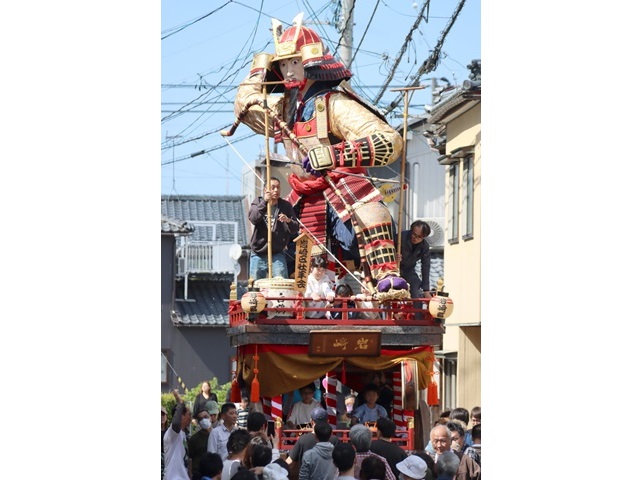
This annual procession is the perfect stop for samurai buffs who enjoy traditional Japanese festivals with a warrior twist.
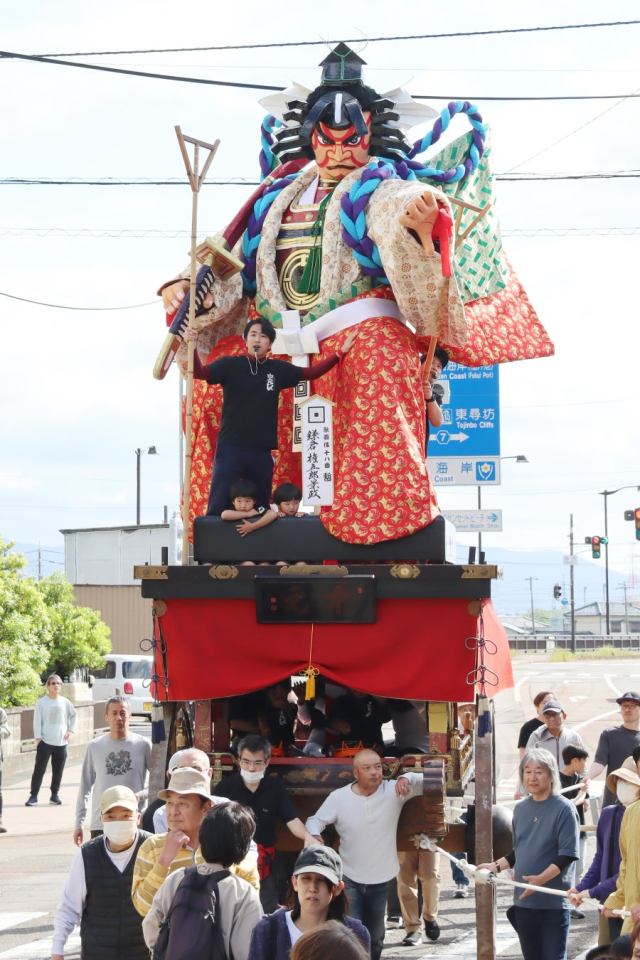
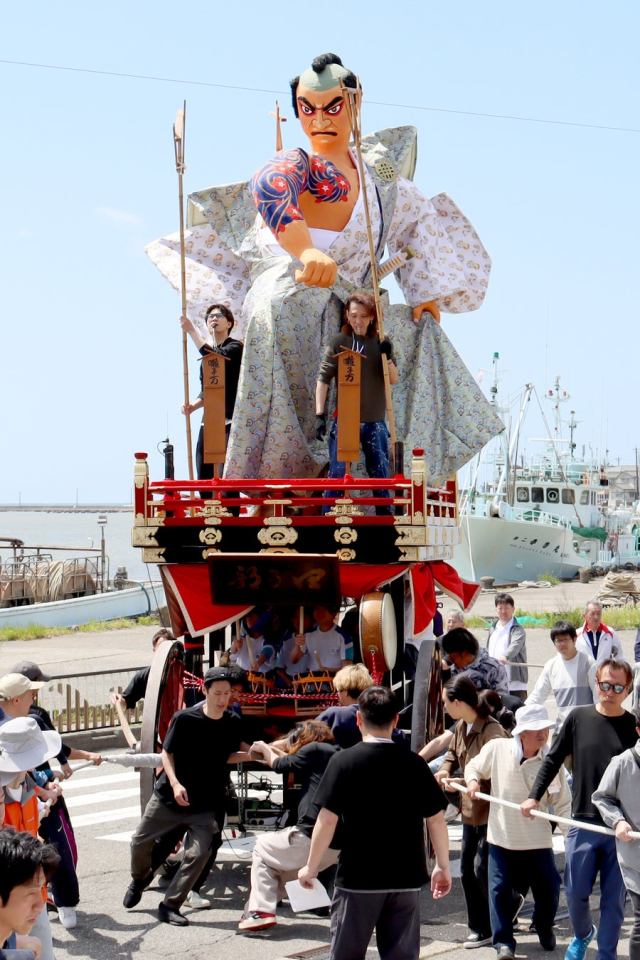
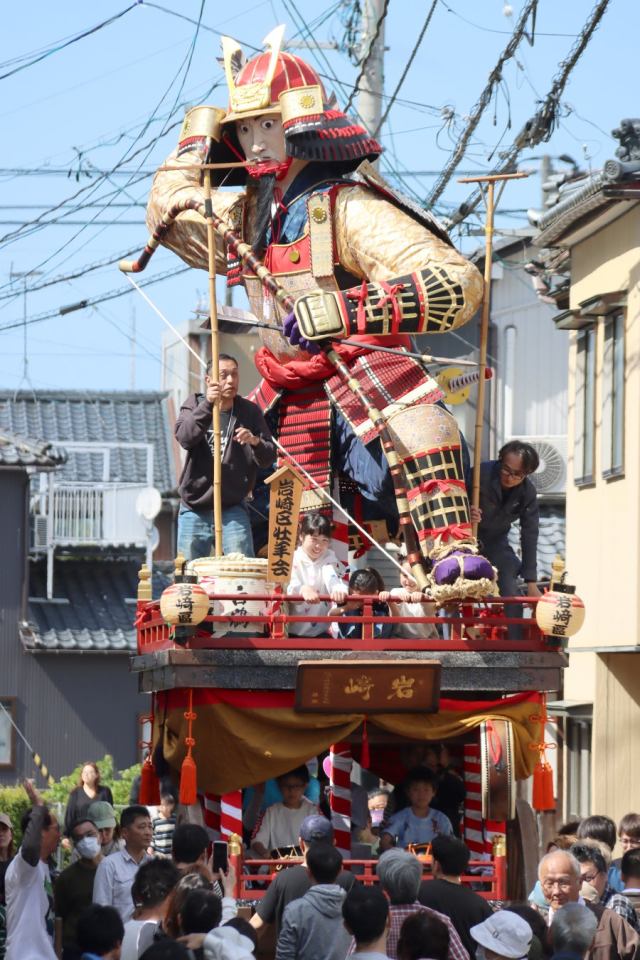
The streets of Sakai, Fukui Prefecture, are about to be packed when the city’s Mikuni Festival kicks off on May 19 for three days. Considered one of the Hokuriku region of Japan’s “three great festivals,” the annual festival spans approximately 300 years of tradition. This year, six newly crafted floats over six meters (6.6 yards) in height that depict historical samurai of legend as well as famous scenes from kabuki plays and historical battles will be paraded around different districts of the city.
▼ Kamakura Gongoro Kagemasa (born 1069), as depicted in the play “Shibaraku,” one of the 18 Best Kabuki Plays
▼ Keiji Maeda (1543-1612)
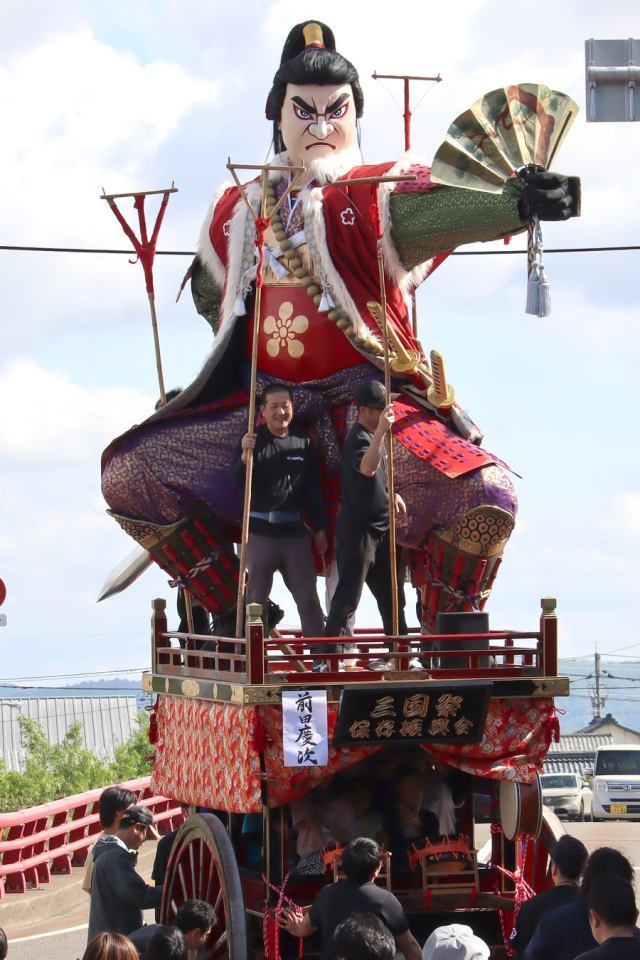
The new floats were first unveiled to the public on 9 May. Festivities will officially begin at 6:30 p.m. on 19 May when the Maeda Keiji float will be showcased in the vicinity of Mikuni Shrine by the harbor. Then, at 1 p.m. on 20 May, all six floats will join in a procession around the city beginning at Mikuni Shrine. On this day, a special mikoshi portable shrine will also leave from the shrine, along with a procession of locals donning warrior-inspired garb.
▼ Magistrate Kinshiro Toyama (1793-1855)
▼ Minamoto no Yoshitsune (1159-1189)
In addition, this year’s festival marks a first as the newly assembled Sakai City Board of Education’s Mikuni Festival General Investigative Committee, comprised of 11 expert individuals from the municipality, will begin conducting a multi-year, comprehensive study of the festival. Their investigation will examine everything from the craftsmanship of the floats and how they’re pulled around, to the various musical accompaniments in different districts of the city. It will also seek to answer overarching questions such as why the floats came to include figures of samurai in the first place and why those are destroyed upon the conclusion of the festival every year. As the first study of its kind to be funded by governmental aid, a formal written report is expected to be published in 2029.
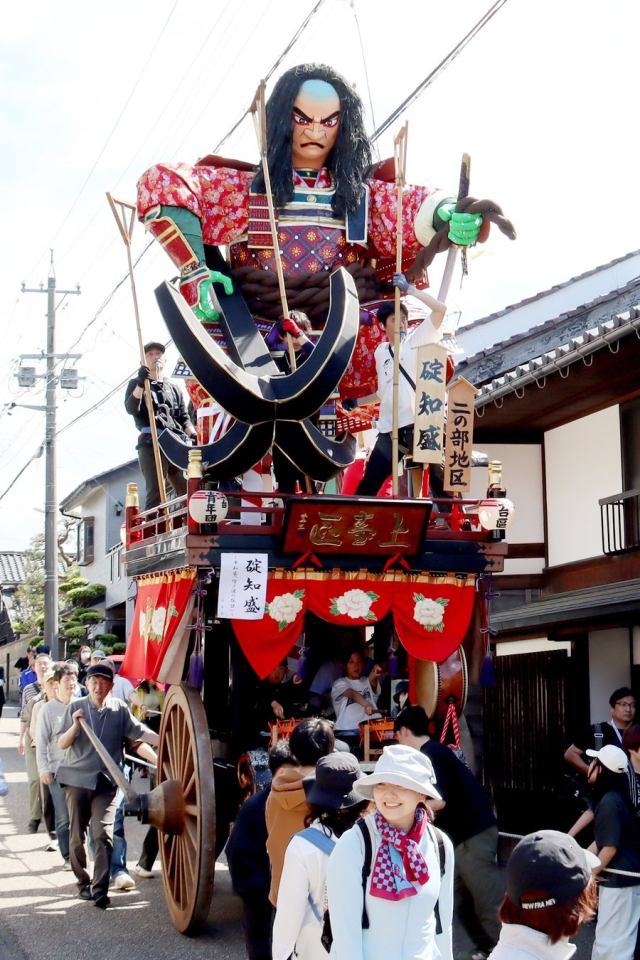
▼ Taira no Tomomori (1152-1185) with the anchor he used to drown himself upon losing the Sea Battle of Dan no Ura (1185)
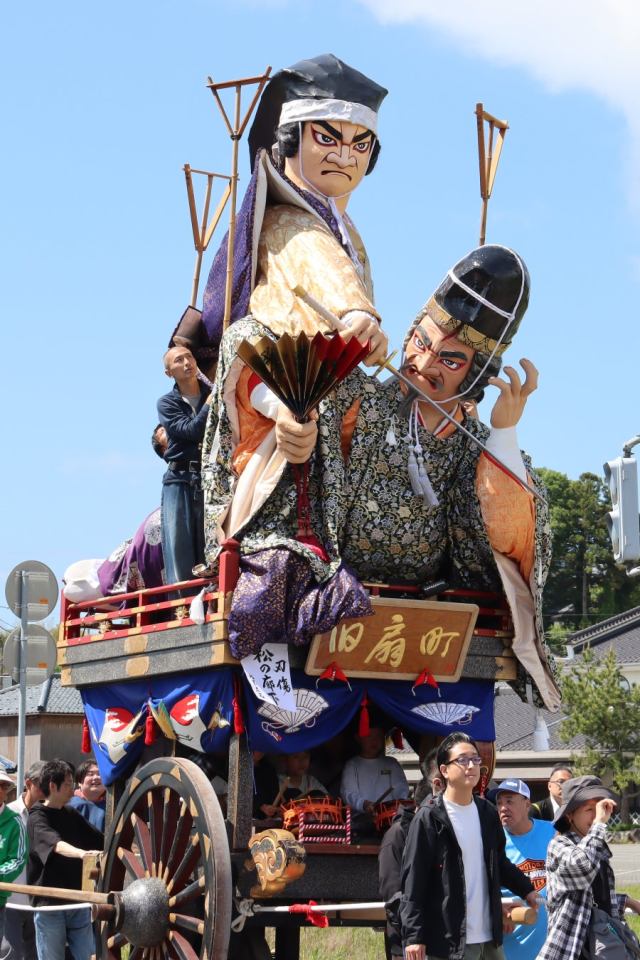
▼ The assault of Naganori Asano (1667-1701) on Yoshinaka Kira (1641-1703) in the Pine Corridor of Edo Castle, the trigger that led to the legend of the 47 Ronin (1703)
Another new feature of this year’s festival is the creation of a special seated viewing area in the Echizen Railway’s Mikuni Station plaza. Between 4:30-6:30 p.m. on 20 May, spectators can view all six floats in succession as they approach the station and circle the intersection. 40 seats are available for purchase for 5,000 yen ($31.55) each in advance or for 6,000 yen on the day of the event. The viewing area will be split into four levels, with the highest one at 1.8 meters for prime viewing. Seats can be reserved by contacting the Mikuni Community Center at mikuni-cc@city.fukui-sakai.lg.jp or (+81) 0776-82-6400.
While you’re in town, you may also want to see what Fukui has to offer in the gastronomic delights department, such as the sasazuke preserved fish that’s popular among the locals.
Source, images: PR Times
● Want to hear about SoraNews24’s latest articles as soon as they’re published? Follow us on Facebook and Twitter!
]]> https://soranews24.com/2026/05/19/six-towering-historical-warrior-floats-will-grace-fukuis-mikuni-festival-for-three-days/feed/ 0 733284 fi The number of tourists was declining in this Japanese city, but Ono is now making its comeback https://soranews24.com/2025/08/24/the-number-of-tourists-was-declining-in-this-japanese-city-but-ono-is-now-making-its-comeback/ https://soranews24.com/2025/08/24/the-number-of-tourists-was-declining-in-this-japanese-city-but-ono-is-now-making-its-comeback/#comments Sat, 23 Aug 2025 23:30:06 +0000 https://soranews24.com/?p=710358 
Bouncing back after a natural disaster, Ono showcases the charm of its floating castle, pristine springs, and soy sauce gelato.
If you know anything about Fukui Prefecture, it’s probably that it has dinosaurs. Fukui’s prehistoric residents are proudly displayed around Fukui Station and throughout the prefecture’s cities. Despite Okinawa’s newest attraction, a dinosaur-themed amusement park called Junglia, if you want to get close to real dinosaur history, Fukui is where you want to be, and the recently completed Hokuriku Shinkansen extension last year has made that even easier than before.
However, a Fukui city called Ono recently sent out a plea for help, stating that they’ve been facing a serious problem. Intrigued, one of our Japanese-language reporters, Tasuku Egawa, set out to find out more.

Arriving back at Fukui Station after almost a year since his last visit, Tasuku was pleased to be reunited with impressive robotic dinosaurs around the station.

Meeting up with Mr. I from the Fukui Shimbun newspaper, who was going to show him around, Tasuku continued on his journey to Ono, which is about 75 minutes from Fukui City by train.
After arriving, he soon spotted the famous Echizen-Ono Castle, known as one of Japan’s picturesque “Castles in the Sky” because it can sometimes appear to float on clouds.

Tasuku: “The castle looks beautiful, so what exactly is the problem?”
Mr. I: “Well, the number of tourists is decreasing…”
Tasuku: “Wait… isn’t that kind of a serious problem?”
The Ono area, which is ordinarily an ideal location for tourists who want to enjoy the idyllic view of Lake Kuzuryu or Hakusan National Park, take a dip in the beloved Hatogayu hot spring, or rush down the many ski slopes in the winter, has recently suffered from a major setback. In March 2025 a massive landslide blocked Route 158, one of the few key roads connecting Ono to Gifu Prefecture, slowing down tourism dramatically.

As of this summer, the repairs are finished, Route 158 is back in business, and Ono is ready to welcome the return of the tourists. So, Tasuku and Mr. I took to the streets to uncover what visitors can expect to discover on their trips to Ono.
Naturally, there’s the aforementioned Ono Castle, which is almost always visible from the city center. Photographers flock to the nearby mountain of Inuyama in the fall and winter, when the ideal cloudy conditions are most likely to occur, to snap some photos of this “Castle in the Sky”.

Making their way through town, Tasuku and Mr. I soon came across the reconstructed residence of Matazaemon Tamura, who was a chief samurai retainer for the region’s feudal lord. Entering the residence, Tasuku was introduced to what a traditional Edo-period samurai residence would have looked like, along with its Japanese garden that uses soil from Ono Castle’s embankments.


As an added bonus, Tasuku also got to see a limited-time seasonal installation of around 2,000 pinwheels, which look perfect for a social media post.

Tasuku also learned that the city is blessed with crystal-clear spring water. The Oshozu Spring is so renowned it’s been selected as one of Japan’s “100 Great Waters”.

Traditionally, drinking water was taken from where the water bubbles up from the source, with an area designated further downstream for washing vegetables which now also doubles as a splashing playground for kids on hot summer afternoons.
With so much walking, and it being so hot, something cooling and refreshing was in order, so Tasuku and Mr. I headed over to Gelateria Cicci on Shichiken Street, a historical shopping street famous for its morning market where venders have been gathering for over 400 years.


Alongside some classic flavors like watermelon and yogurt, there was also the intriguing soy sauce gelato, made from locally produced soy sauce.


▼ The soy sauce is so local, it’s literally across the street, just a few steps away.

Sadly, when Tasuku tried to order the soy sauce gelato. it was sold out, so he settled for a combination of watermelon and plum for 500 yen (US$3.40), which turned out to be delightful.


The area that Tasuku walked around was stunning, filled with beautiful waterways, he really wished he could have explored it more. He had wanted to check out the nearby grave of Yoshikage Asakura, a feudal lord of the region, as well as Hongan-Shozu Itoyo Fish Habitat, a unique spring that is home to a rare species of stickleback.


However, there was a recently-opened attraction waiting for him, calling out to his inner paleontologist for a hands-on experience involving goggles, a chisel, a hammer, and so many rocks that we’ll need to save that story for another time.

For now, though, even if Ono has been in a little trouble with its loss of tourists for a while, thanks to its unique charm and natural beauty, we’re confident that visitors will no doubt soon be finding their way back.
Photos ©SoraNews24
● Want to hear about SoraNews24’s latest articles as soon as they’re published? Follow us on Facebook and Twitter!
]]> https://soranews24.com/2025/08/24/the-number-of-tourists-was-declining-in-this-japanese-city-but-ono-is-now-making-its-comeback/feed/ 0 710358 imgi_204_25_01336 Japan’s robot dinosaur population continues to grow with new addition at Fukui Station https://soranews24.com/2024/10/20/japans-robot-dinosaur-population-continues-to-grow-with-new-addition-at-fukui-station/ https://soranews24.com/2024/10/20/japans-robot-dinosaur-population-continues-to-grow-with-new-addition-at-fukui-station/#comments Sun, 20 Oct 2024 13:00:40 +0000 https://soranews24.com/?p=681432 
Fukui doesn’t just have dinosaurs… but hey, come look at this cool dinosaur!
Ask almost anyone in Japan what they know about Fukui Prefecture, and the first word out of their mouth will most likely be “dinosaurs.” Fossils of several previously undiscovered dinosaur species have been found in Fukui, and while the prefecture has other delights as well, the dinosaur presence remains strong, as seen on our Japanese-language reporter Takusu Egawa’s recent trip there.
Fukui’s popular image may be connected to its past, but there’s never been an easier time to visit the prefecture. Previously, Japan’s Hokuriku region, which includes Fukui, Ishikawa, and Toyama, was inconvenient to access due to a lack of quick travel options. This problem was addressed back in the spring of this year, though, with the latest Hokuriku Shinkansen extension to Tsuruga Station in Fukui, which takes just over three hours from Tokyo. In fact, to encourage more visitors to explore its beauty and traditions, the region is currently running a promotion, the Hokuriku Destination Campaign, with various deals and discounts, and we were invited to visit Fukui by the tourism board.
When Takasu arrived at Ueno Station in Tokyo to catch the bullet train, he looked over the Hokuriku Shinkansen departure board and felt a sense of unfamiliarity. The names Nozomi and Hikari, designating trains on from the familiar Tokaido Shinkansen that connects Tokyo and Osaka, were nowhere in sight, and instead the train he’d be riding had a fresh, new name: Kagayaki, The Kagayaki is a limited express, comparable to the Nozomi, but the Kagayaki only offers reserved seating.

Hopping on board the Kagayaki, his attention was drawn to the headrests in the regular-class car he was in. They moved up and down, which is not something he often sees in standard seating, so he’s now very keen to experience the fancier seats in the higher-class Green Car and GranClass carriages one day. Sitting back and relaxing while reading the onboard magazines, he happened to glance out of the window and spot Mt. Asama, an active volcano in Gunma Prefecture along the way.

The journey of just under three hours flew by, and, before long, he had arrived at Fukui Station in Fukui City. With no need to transfer trains at all, it’s an easy and convenient trip, especially if you happened to have a large amount of luggage with you.

For the first time in his life, he stepped foot into Fukui. He admired the spaciousness and cleanliness of the modern station as he walked towards the ticket gate…

And it wasn’t long until he encountered dinosaurs! Fukui has essentially made dinosaurs their whole identity. A Fukui without dinosaurs simply isn’t Fukui! Looking around the station, he saw many dinosaur statues on display. These statues often go viral on social media in the winter due to Fukui’s heavy snowfall, making the scene look like it’s the advent of a new Ice Age.
A T. rex and triceratops stand in front of the station, alongside Fukuititan—a sauropod discovered in nearby Katsuyama in 2007, and the first to be given a scientific name in Japan.

Though Fukuititan is a great source of pride for residents of Fukui, the latest addition to the many dinosaur monuments in the area is Suchomimus. Fukui has Fossilized teeth from the Spinosauridae, of which Suchomimus is a part, have been found in Fukui Prefecture, which is why the species was chosen for this honor.

Takasu had thought these monuments were simple statues, so he was surprised to learn that some of them are moving robots. Suchomimus just started operating on September 30. With 23 monuments now in place, he couldn’t help but feel that Fukui might one day have more dinosaurs than people. Suchomimus is the last planned addition so far, but given Fukui’s dinosaur fever, there’s no telling when a new one may join the ensemble.

There are dinosaurs even in the rooftop plaza of the station. Two Fukuititans make for a beautiful commemorative photo spot, with an added bonus of the bullet train platform in the background.

Nearby, there’s even Fukuivenator, first discovered in 2007 and named in 2016, which… wait… is that…?

A surprise promotion for Echizen crab?! Echizen crab, a type of snow crab, is known by many to be the king of seafood and is a famous delicacy of the region that can be enjoyed throughout the winter season.
▼ The tag says “Dinosaur Kingdom Fukui”—even the advertisement for seafood is promoting dinosaurs

As fascinating as the dinosaurs were, Takasu knew that there was more to his visit, so he refocused and made his way to Fukubukukan, a local specialty store on the second floor of the Happiring shopping mall next to the station.

While you can still find the standard assortment of products you would expect to find in a store like this, such as dried or canned foods and local alcohols, what was really striking was the buffet inside the store. It’s an unusual addition to this type of store but a very welcome one. It would be perfect for someone just arriving around lunchtime if they wanted to sample local culinary delights.

There were quite a few local residents in the store and the food was being replenished at a decent rate, making for a pleasant experience, and all the food Tasuku tried was fantastic. It’s even possible to have takeout!

With a full stomach, he continued his exploration of the area in and around the station. Both Happiring and the station itself have been designed to incorporate a lot of glass, allowing for a lot of natural light.
▼Happi terrace

The inclusion of plenty of indoor seating around the station was much appreciated.
▼ Sanji no Oyatsu, a delicious dessert store outside the station

Even the outdoor seating has a unique charm, with little dinosaur models, all with a name plaque for identification, to accompany you while you take a little break.
▼ Anyone else getting The Land Before Time vibes?

Next to JR Fukui Station is the station for the local Echizen Railway, and the interesting design from the outside makes for a perfect photo.

Also scattered about were several references to the upcoming 2025 anime adaptation of Chitose Is in the Ramune Bottle, which features various locations around Fukui. So Takasu assumes many fans of the story will be looking to make a pilgrimage to the area in the future.


Fukui also has a dinosaur museum, located about an hour away from Fukuyama Station in the town of Katsuyama. Even if you’ve only got time for a quick visit, though, you can still soak in the dino atmosphere of the Fukui Station area, and if you do have more time, Fukui really does have other attractions too. There’s a crab museum, for one thing. Perhaps you are more interested in crabs as food, and fancy a trip to a fish market or a local conveyor belt sushi restaurant chain. Or would you rather a restaurant that makes amazing pork cutlets. Or you could dip your toes into the occult with the priest murder cliffs, the haunted island or the haunted tunnel. Whatever your interests, Fukui likely has something for you—so swing on by on your next vacation.
Store info
Fukubukukan / 福福館
Address: Fukui-ken, Fukui-shi, Chuo 1-2-1 Happiring 2nd floor
福井県福井市中央1丁目2番1号ハピリン2階
Open: 9 a.m-9 p.m. (food served 11 a.m.-9 p.m., last order at 8 p.m.)
Website
Related: Hokuriku Destination Campaign, Fukui Tourism Website
Photos ©SoraNews24
● Want to hear about SoraNews24’s latest articles as soon as they’re published? Follow us on Facebook and Twitter!
]]> https://soranews24.com/2024/10/20/japans-robot-dinosaur-population-continues-to-grow-with-new-addition-at-fukui-station/feed/ 0 681432 Fukuistation 11 A visit to Japan’s priest murder party cliffs of Tojinbo【Photos】 https://soranews24.com/2024/10/14/a-visit-to-japans-priest-murder-party-cliffs-of-tojinbo%e3%80%90photos%e3%80%91/ https://soranews24.com/2024/10/14/a-visit-to-japans-priest-murder-party-cliffs-of-tojinbo%e3%80%90photos%e3%80%91/#comments Mon, 14 Oct 2024 13:00:01 +0000 https://soranews24.com/?p=681223 
Dramatic coastline has a dramatic reason for sharing its name with a priest from the Heian period.
You’ll find most of Japan’s major cities on or near the southern cost of the country’s main island of Honshu. That’s because the shoreline along the northern coast, which borders the sea of Japan, is decidedly rockier, with fewer gentle bays and more steep cliffs…and the cliffs don’t get much steeper than at Tojinbo in Fukui Prefecture.

Tojinbo has a modest harbor that’s a five-minute bus ride from Mikuniminato Station, with some tourist facilities like restaurants, souvenir shops, and boat tours. As for what those boats take travelers to see, once they leave port it’s not far to the ruggedly beautiful cliffs, where gigantic columnar geological joint formations created by magma combining with sedimentary rock give the scenery an especially dramatic look.

In addition to the cruises, there are also walking paths that wind around the cliffs, which stretch for about a kilometer (0.6 miles) in length. They reach heights of up to 30 meters (98.4 feet) from where it’s a straight drop down into the water, however, so you’ll definitely want to watch your step.

Aside from the striking scenery, there’s an odd linguistic quirk to Tojinbo, which is written in Japanese as 東尋坊. That last kanji character, bo/坊, means “monk” or “priest,” and Tojinbo the place actually gets its name from Tojinbo a Shinto priest who lived in Echizen Province (as northern Fukui Prefecture used to be called) back in the Heian period (794-1185).

Tojinbo, legends say, was not a very popular guy. There are various stories as to how he rubbed people the wrong way, but according to our guide from Japan Railways Group who was showing us around the area, Tojinbo was prone to acts of violence, which is a pretty easy way to earn the ire of your coworkers. Eventually, the other priests of Heisenji Hakusan Shrine decided they’d had enough of Tojinbo’s rage-fueled escapades, and decided to do something about it.
Even before the area took on Tojinbo’s name, the seaside cliffs were a popular sightseeing attraction, and so Tojinbo’s fellow priests proposed going there for a party, so that they could knock back some drinks while admiring the view. This apparently sounded like a swell idea to Tojinbo, who proceeded to get liquored up and was most likely having a great time…right up until the other priests revealed their true reason for organizing the party by grabbing Tojinbo and throwing him off the cliffs into the sea, where he died. Some say his spirit still haunts the shoreline, with folktales holding that when the seas become rough, it’s Tojinbo’s undying rage that’s causing it.
Heisenji Hakusan Shrine, by the way, is a beautiful place in its own right, and of historical significance too, having been founded some 1,300 years ago, so we decided to go check it out.


The deep mossy fields surrounding the main shrine hall have an enchantingly soothing color, and the wooden torii gate’s unique intricate design left a deep impression on us as well.


Though Tojinbo’s home is no longer standing, there’s a marker showing where his personal living quarters used to be…
▼ 東尋坊 = Tojinbo

…and the main hall features some very cool woodworking.


However, we couldn’t help noticing something very unexpected after we’d confirmed where Tojinbo had lived. Since he was lured to a drinking party at the cliffs, we’d just sort of assumed that Heisenji Hakusan Shrine would be very close to the shore, but that wasn’t the case at all. It turns out that the distance from the shrine to the cliffs is 48 kilometers (29.8 miles)! And keep in mind that while we made the trip by car, the priests would have had to walk all the way to the site of their drinking/murder party, which, according to Google Maps, would take 11 hours.

And that’s with modern, paved roads to walk along. Considering they made the trip 1,000 years or so ago, it’s a safe bet that the on-foot journey was even more time-consuming for the priests, probably requiring an overnight stay along the way, which really speaks to just how badly they wanted Tojinbo gone.
Related: Fuku Prefecture official tourism website, Heisenji Hakusan Shrine official website
Photos ©SoraNews24
● Want to hear about SoraNews24’s latest articles as soon as they’re published? Follow us on Facebook and Twitter!
]]> https://soranews24.com/2024/10/14/a-visit-to-japans-priest-murder-party-cliffs-of-tojinbo%e3%80%90photos%e3%80%91/feed/ 0 681223 TJ 3 Hey, Japanese taxi driver! Take us to your favorite restaurant in Tsuruga City! https://soranews24.com/2024/04/15/hey-japanese-taxi-driver-take-us-to-your-favorite-restaurant-in-tsuruga-city/ https://soranews24.com/2024/04/15/hey-japanese-taxi-driver-take-us-to-your-favorite-restaurant-in-tsuruga-city/#comments Mon, 15 Apr 2024 04:00:38 +0000 https://soranews24.com/?p=663013 
We commemorate the new Hokuriku Shinkansen route with a truly local meal.
Japan’s Hokuriku Region–home to some great tourists stops like the town of Kanazawa–has gotten a lot of well-deserved attention recently thanks to the opening of the Hokuriku Shinkansen route, which allows you to reach some areas faster and easier than ever. On a recent trip to Kanazawa, our Japanese-language reporter Seiji Nakazawa decided to take advantage of Hokuriku’s improved accessibility with a quick trip to Tsuruga.
Located in Fukui Prefecture, Tsuruga is only an hour away from Kanazawa on the Shinkansen now. The new Hokuriku route has a lot of tunnels, but the view from Kanazawa to Tsuruga also showcases Hokuriku’s beautiful countryside scenery.

Seiji had never been to Tsuruga before, so he had fun imagining what the new Shinkansen line’s final stop would be like as he passed through the route’s longest tunnel at 19.8 kilometers (12.3 miles). When he got off the bullet train, he saw…

…probably the largest Shinkansen station he’d ever seen.

Is this an airport? he thought.

Tokyo and Osaka are fairly large Shinkansen stations, but they couldn’t compare to the openness of Tsuruga Station.

Seiji saw signs around the station advertising local Fukui delicacies like Echizen Crab, but he wasn’t quite ready to splurge on something so fancy. He was craving something that the average Tsuruga resident would recommend to a friend. And so, in SoraNews24 style, he hailed a taxi and asked the driver for a recommendation.

Seiji: “I want to eat something, but I don’t know anything about Tsuruga. Can you take me to a restaurant you personally like?”
Taxi driver, in a thick Tsuruga accent: “Somewhere I like? I don’t eat anything too fancy, though.”
Seiji: “That’s exactly what I’m looking for!”
Taxi driver: “Alright, I’ll bring to you the place around the corner, then.”
The easygoing taxi driver, who Seiji estimated to be in his 70s, didn’t seem perturbed by his request at all and promptly set off on his way. As he drove, the taxi driver commented on stores in the area.

“I like a specific sauce katsudon (pork cutlet with sauce served over rice) place…oh, and that seafood restaurant is popular with tourists.”
The taxi driver didn’t drive far before arriving at their destination. In fact, he made just one turn after exiting the Tsuruga Station facility. “We’re here!” His restaurant of choice: Europe-ken.

Seiji had actually been to a Europe-ken upon a Fukui-born friend’s recommendation, way back when Seiji was in an indie rock band. He could clearly remember the crunch of the katsu cutlet batter and the delicious texture of the rice.

Seiji had always wanted to visit Europe-ken again, so he chalked it up to destiny that his cab driver had brought him here of all places.
He promptly ordered a katsudon and mini salad set for 990 yen (US$6.50) and added on some miso soup for 220 yen. Katsudon is typically made with pork cutlet, but Europe-gen’s menu had other cutlets like shrimp and chicken.

Seiji’s taxi driver said he only ate katsudon there, though, so Seiji stuck with his recommendation.

Three cutlets nestled on a bed of rice were brought to his table, and Seiji instantly felt a pang of nostalgia. He eagerly took a bite of the familiar meal.


Delicious!


Sauce katsu in Fukui tends to be thinly-cut and crispy, but Europe-gen’s cutlets were thick enough to retain the meat’s original umami flavor. It made for a rich, high-quality meal.

One of Seiji’s favorite parts of the meal is the fact that you’re given a whole kettle of hot green tea to counteract the meal’s richness. It was pretty good tea, too!

The miso was a great addition to the meal as well.

With his stomach full and his heart happy, Seiji concluded his Tsuruga local meal. He noticed a map of Europe-ken branch locations hanging up in the restaurant and realized the restaurant was actually called Tsuruga Europe-ken, and that it’s a spinoff from the Europe-ken chain he’d previously eaten at, started by a former Europe-ken employee with his boss’ blessing.

Seiji was able to walk back to Tsuruga Station in five minutes, so this isn’t a restaurant you need to take a taxi to get to. Yet, if it hadn’t been for his taxi driver’s recommendation, Seiji wouldn’t have had such a memorable meal. It was all worth it in the end.
Restaurant information
Tsuruga Europe-ken / 敦賀ヨーロッパ軒
Address: Fukui-ken, Tsuruga-shi, Kiyomizu-cho 2-19-1
福井県敦賀市清水町2-19-1
Open: 11 a.m.-1 p.m., 4:30 p.m.-8 p.m.
Closed Mondays and Tuesdays, but may vary by month
Photos ©SoraNews24
● Want to hear about SoraNews24’s latest articles as soon as they’re published? Follow us on Facebook and Twitter!
]]> https://soranews24.com/2024/04/15/hey-japanese-taxi-driver-take-us-to-your-favorite-restaurant-in-tsuruga-city/feed/ 0 663013 europa9 We try a can of Space Mackerel, designed for eating on the ISS by high school students https://soranews24.com/2022/05/02/we-try-a-can-of-space-mackerel-designed-for-eating-on-the-iss-by-high-school-students/ https://soranews24.com/2022/05/02/we-try-a-can-of-space-mackerel-designed-for-eating-on-the-iss-by-high-school-students/#comments Mon, 02 May 2022 01:00:07 +0000 https://soranews24.com/?p=585115 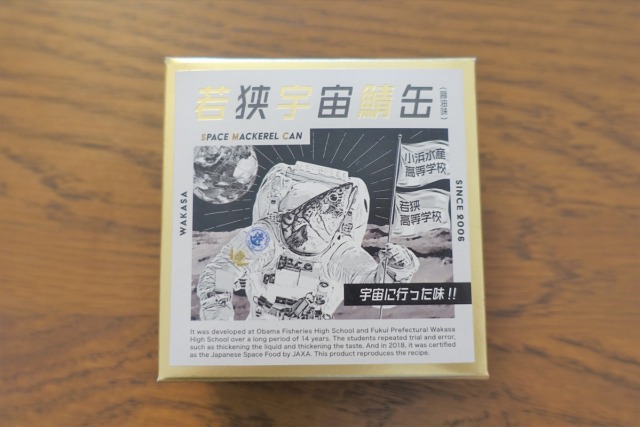
In space, no one can hear you slurp.
Given the many challenges of life in space, a lot of people probably assume the food there focuses so heavily on nutrition, safety, and digestibility in zero gravity, that things like taste and texture are very much an afterthought.
That’s what our writer Haruka Takagi thought until she came across Wakasa Space Mackerel Can in a small fishing town in Fukui Prefecture. Unlike the vacuum-sealed packets of baby-food like pastes she imagined astronauts eating, a can of mackerel dripping in juices seemed far too dangerous for consumption in space.
If just one globule of fish oil floated through the zero-gravity conditions of outer space, its savory goodness could make its way into sensitive equipment and disable the ship’s neutrino thrusters, cloaking device, or whatever it is they use up there.
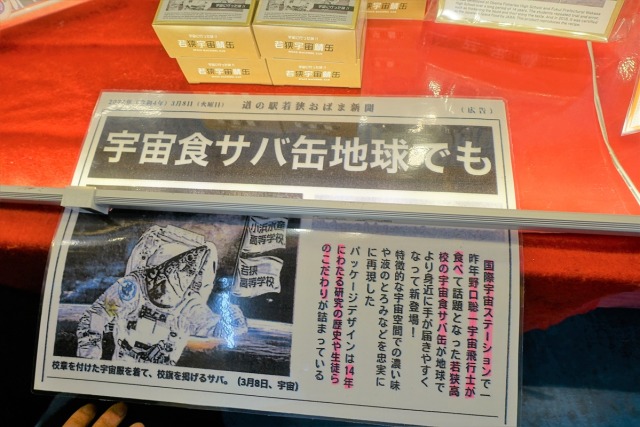
That’s not the case with Wakasa Space Mackerel Can, however, and back in 2020 it was even dined upon by Japanese astronaut Soichi Noguchi during a mission.
▼ Noguchi enjoying a Wakasa Space Mackerel Can aboard the ISS.
Even more impressive than a can of mackerel designed to JAXA specifications for space consumption, was the fact that it was made by the students of Wakasa High School in Fukui Prefecture. It was a project that took 14 years of trail-and-error experimentation passed down through the classes at the school, until they received certification in 2018.
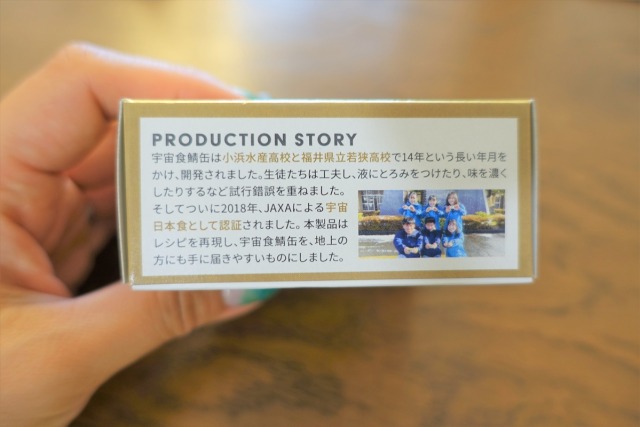
That was all quite amazing, but it was the cute picture of the mackerel in a spacesuit on the moon with the flag of Wakasa High that really sealed the deal for Haruka. So, she paid the understandably steep price of 700 yen (US$5) for a can and took it home to try out.
Normally, when opening a can of fish, you can expect a tiny spurt of oil to pop out, but as we mentioned, even the smallest droplets can put the crew in jeopardy. Luckily, Haruka found that opening a can of Wakasa Space Mackerel was completely dry.
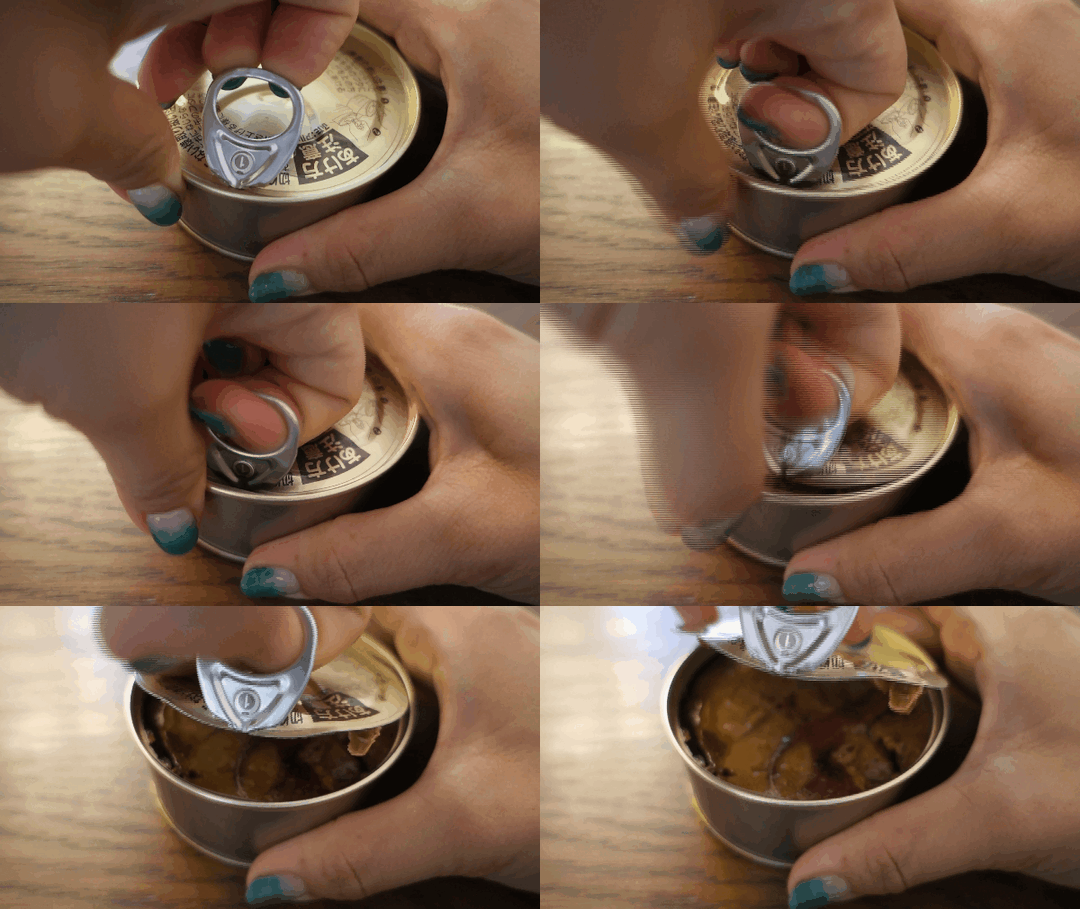
There were no liquids at all in the can!
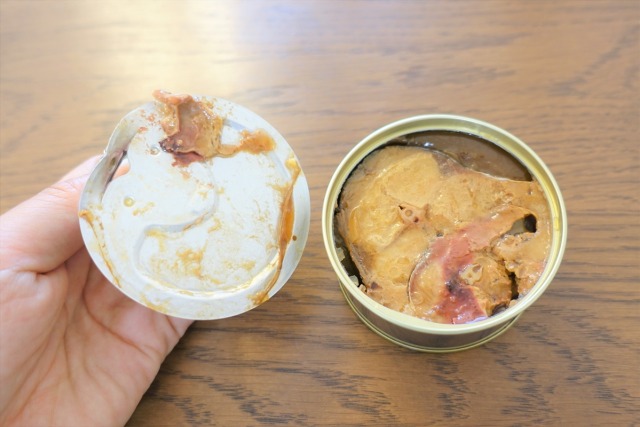
Instead, the sauce had a more gelatinous consistency that was made with the help of a starchy powder from the kudzu plant. Kudzu powder is used in a lot of Asian dishes, especially desserts like mizu manju.
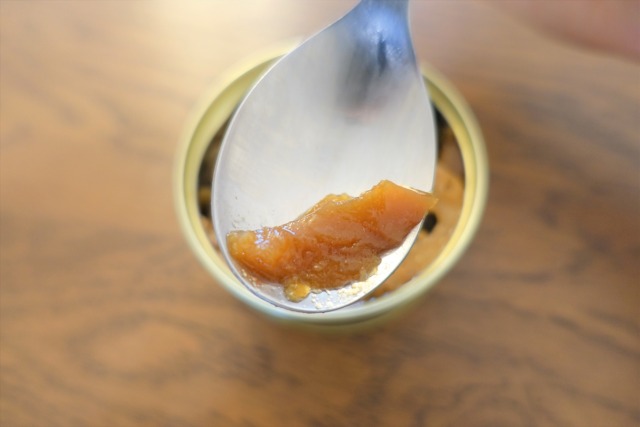
Haruku was able to easily cut right into the fish with a spoon. It had a very delicate and fatty consistency.
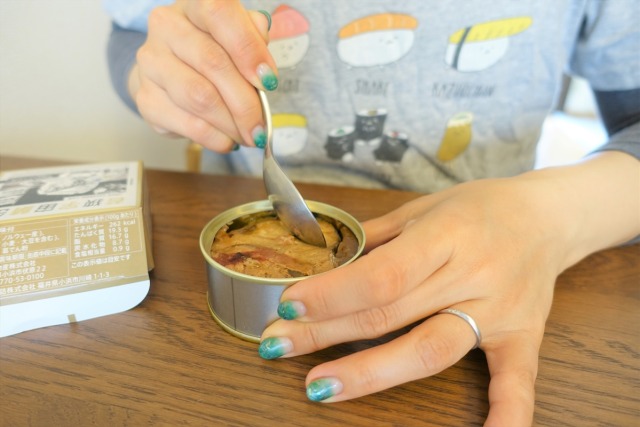
The taste was amazingly good too. The sauce seemed extra rich and sweet and it had a very hearty taste of home cooking, which was the last thing she was expecting from space food.
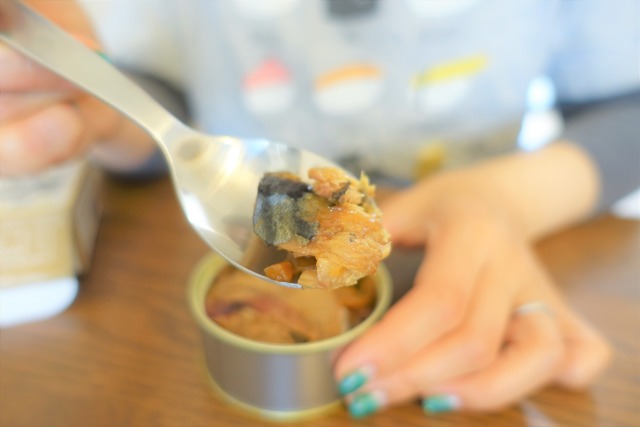
Apparently, it’s been said that in low gravity people’s sense of taste is weakened. That’s why the makers of Wakasa Space Mackerel made sure to jack up the taste in each can through additional sugar in the sauce.
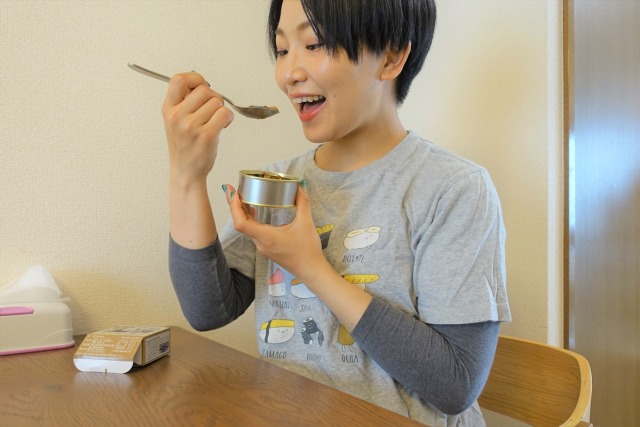
It wasn’t just a literal out-of-this-world experience but a culinary one as well. Haruka felt whisked out of her kitchen chair and onto the outer surface of the ISS, where she was tasked to repair the starboard photovoltaic radiator.

If you’d like to join her out there among the stars, keep an eye out for Wakasa Space Mackerel next time you visit Fukui Prefecture, or order some online from your favorite online Japanese space food retailer.
Photos: ©SoraNews24
● Want to hear about SoraNews24’s latest articles as soon as they’re published? Follow us on Facebook and Twitter!
]]> https://soranews24.com/2022/05/02/we-try-a-can-of-space-mackerel-designed-for-eating-on-the-iss-by-high-school-students/feed/ 0 585115 Data shows Fukui Prefecture may be the best place to live in Japan, but survey results differ https://soranews24.com/2020/01/31/data-shows-fukui-prefecture-may-be-the-best-place-to-live-in-japan-but-survey-results-differ/ https://soranews24.com/2020/01/31/data-shows-fukui-prefecture-may-be-the-best-place-to-live-in-japan-but-survey-results-differ/#comments Thu, 30 Jan 2020 17:30:38 +0000 http://soranews24.com/?p=485795 
A non-profit study sought to determine the best Japanese prefecture to live in, but found interesting discrepancies.
Japan is an awesome place to live, with beautiful countryside scenery, delicious food, affordable healthcare, and plenty of convenience. But where’s the best place to live in Japan? Well, according to data collected by students and professors of the Graduate School of the University of Tokyo, the answer is Fukui Prefecture.
While this coastal prefecture in central Japan does have stunning landscapes, a cool moated government building, and a cat haven temple that is a dream for anyone, those aren’t exactly the things that matter when it comes to being “the best” place to live (except the cats, maybe). The researchers, who have founded a non-profit forum that researches concepts of “human security,” used 90 different indexes like average lifespan, employment, and interpersonal connection to determine the rankings, with the aim of scoping out issues that are holding Japan back.

Project team representative Yukio Takasu, who was once the United Nations Under-Secretary-General for Management, said the research team grouped various kinds of public data into indexes, which they then used to determine the rankings. Factors like average life span and healthy life expectancy were grouped into the “Life” index, while income, graduation rates, and school promotion rates were included in the “Lifestyle” index. The number of cases of bullying and levels of freedom of speech, among other things, made up the “Dignity” index.
Ranking at the top three of the “Life” index were Aichi Prefecture, Shiga Prefecture, and then Tokyo. In “Lifestyle”, Fukui took the top spot, followed by Toyama and Nagano. Finally, for Dignity, Tokyo was number one, with Nara and Shimane placing second and third. In total, Fukui came out on top, followed by Toyama, Nagano, Tokyo, and Ishikawa.
Ranking on the bottom, after averaging out all the factors, was Aomori prefecture in the far northern reaches of Japan. Okinawa, also in the far reaches, but to the south, was second-to-last, and then Miyagi, which was one of the prefectures devastated in the 2011 Great East Japan Earthquake and Tsunami.

The team also did an individual survey, in which respondents were asked to answer questions about their level of “Self-containment,” which included how satisfied they were with life, and their “Interpersonal connections,” whether they felt lonely and had people to talk to about their troubles. In “Self-containment,” the best rated prefectures were Kagoshima, Miyazaki, Nagasaki, Shimane, and Nara. In “Interpersonal connections”, they were Miyazaki, Ishikawa, Osaka, Kagoshima, and Yamagata.
That’s not surprising given that the majority of those prefectures–Kagoshima, Miyazaki, and Nagasaki–are in Kyushu, which was voted as the top place to live in the Japanese countryside. However, what is surprising is that Fukui, which the data ranked as the best place to live, was ranked as the worst in “Interpersonal connections”. Many respondents answered they are “painfully lonely”, and that they have “no one to confide in in times of trouble”.

Though every area of Tokyo is different, the city as a whole did fairly well on average, ranking as the fourth best place to live when all factors were combined. They did especially well on the points of “Dignity,” since there are a large number of lawyers and non-profit organizations in the big city. Additionally, people in the city generally tend to make more money and have more economic power, which generally leads people to have more satisfaction in their lives. However, Tokyo also suffered on “Interpersonal connections,” and has serious problems regarding a lack of childcare and elderly care, which is probably why it dropped down to number four in the overall rankings.
In truth, what was really brought to light by the study was that all of Japan could benefit by offering more support to the marginalized individuals with Japanese society, such as women, children, the elderly, and the disabled. In particular, the research team recommends incorporating more local involvement in the care of the elderly, so that they don’t feel as lonely, as well as initiatives to employ the elderly to keep them from falling into poverty.

Former U.N. Under-Secretary-General Takasu said that the study is essential in working towards the U.N.’s Sustainable Development Goals, one of which, he says, is to strive towards developing a society where no one is left behind, and to do that Japan has a long way to go. “Bullying, gender discrimination, and poverty are some of the problems we still face in Japan,” he says. “I would like to see them resolved in every region.”
If you’re interested in reading more in detail, you can buy the study results in book form. It’s called “SDGs and Japan” (“SDGsと日本”) and should be available wherever books are sold.
Source: Sankei Shimbun via Yahoo! Japan News via Otakomu
Featured image: Pakutaso
Insert images: Pakutaso (1, 2, 3, 4)
● Want to hear about SoraNews24’s latest articles as soon as they’re published? Follow us on Facebook and Twitter!
]]> https://soranews24.com/2020/01/31/data-shows-fukui-prefecture-may-be-the-best-place-to-live-in-japan-but-survey-results-differ/feed/ 0 485795 prefecture ranking1 Japanese man uses sightseeing drones to help tourists get a bird’s-eye view of the surroundings https://soranews24.com/2019/09/02/japanese-man-uses-sightseeing-drones-to-help-tourists-get-a-birds-eye-view-of-the-surroundings/ https://soranews24.com/2019/09/02/japanese-man-uses-sightseeing-drones-to-help-tourists-get-a-birds-eye-view-of-the-surroundings/#comments Mon, 02 Sep 2019 13:00:14 +0000 http://soranews24.com/?p=464230 
Tourism organizations ought to take notes from him.
Aerial drones have come a long way from being regarded as simple helicopter-like machines that can fly, as we have made them invaluable tools in capturing unforgettable memories or delivering goods to consumers by air.
But when Japanese Twitter user @TO_tuffy visited Tojinbo in Fukui Prefecture, he stumbled across yet another useful drone function when he spotted three kids with VR headsets having a great time and a man standing at the side fiddling with a panel.
▼ Drones turn out to be great sightseeing devices, too.
(Translation below)
東尋坊で驚いた商売。
道端で右のおじさんがドローンを操作して東尋坊の景色を撮る→真ん中の3人の親子がお金を払ってVRゴーグルでその景色をリアルタイムで見ているところ。
楽しそうだけど道端でパイプ椅子に座りながらの擬似遊覧飛行とは何ともシュールな絵面である
でも1人500円とか良心的! pic.twitter.com/zgN5v7KZBb
— タフィー (@TO_tuffy) August 26, 2019

“I found an astonishing service in Tojinbo. The man on the right was controlling a drone that captured footage in the air. The parents of those three kids paid money for them to wear VR headsets and view the surroundings in real-time.
It looks kinda fun, but watching them sit on foldable chairs and sightseeing this way just seems surreal to me. It’s only 500 yen (US$4.7) though, so I guess it’s fine.”
Although the entire setup looks like a hastily set up stall by a man looking to earn a quick buck, the service actually has an official webpage and is called the Tojinbo Virtual Sky Drone, charging 500 yen for viewing through the drone’s lens for 15 minutes or 1,000 yen for taking over the controls yourself.
▼ Despite it looking a little shabby, the store attracts plenty of tourists and locals.

But why would anyone want to travel to a place known for its majestic beauty, only to gaze through VR headsets instead of seeing with their own eyes? As it turns out, Tojinbo is famous for its series of cliffs that stretch into the Sea of Japan like outstretched fingers.
▼ And while taking pictures from the ground is great…
https://twitter.com/take156/status/1166213113407893504
▼ …viewing the cliffs in its entirety from a drone lens is far better.

▼ Not to mention you can snap commemorative photos at awesome angles which you simply cannot achieve on the ground.

What a great way to enrich everyone’s sightseeing experience with a simple setup like this. Throw in Internet connectivity and there are a whole lot of things you can do with it like real-time tours without even getting up from the couch.
If all goes well, we may even see more services like this scattered around Japan when spring arrives, taking cherry blossom viewing to the next level.
Source: Fuku Guide via Twitter@TO_tuffy
Featured image: Twitter@TO_tuffy
Insert images: Fuku Guide
● Want to hear about SoraNews24’s latest articles as soon as they’re published? Follow us on Facebook and Twitter!
]]> https://soranews24.com/2019/09/02/japanese-man-uses-sightseeing-drones-to-help-tourists-get-a-birds-eye-view-of-the-surroundings/feed/ 0 464230 KOGAPAS00374_TP_V Prefectural capital building in Japan has a moat, ready for mobs of invaders or zombies https://soranews24.com/2017/09/12/prefectural-capital-building-in-japan-has-a-moat-ready-for-mobs-of-invaders-or-zombies/ https://soranews24.com/2017/09/12/prefectural-capital-building-in-japan-has-a-moat-ready-for-mobs-of-invaders-or-zombies/#comments Tue, 12 Sep 2017 05:30:27 +0000 http://en.rocketnews24.com/?p=388729 
Awesomely-defensible Fukui Prefectural headquarters is built on castle grounds.
Japanese prefectural capital buildings, like governments and city councils around the world, have emergency plans for natural disasters, epidemics or other excrement-hits-the-fan situations that could possibly arise. Perhaps that explains the location of the Fukui Prefectural Government Building (and the police headquarters with its body armour and weaponry next door), in the heart of the city for easy access, still has its very own moat and protective stone walls.
▼ From ground level it doesn’t look anything special…

▼ …but look at it from above, or on a map, and it’s easy to see that the city planner who chose the location definitely made forts as a child.

The city office sits on what was once the site of Fukui Castle until a fire burned down the keep in 1669, and what was left was bombed during World War II. Now, only some ruins remain visible, where samurai lords once held sway over the local population from behind their castle walls.
▼ It also isn’t the only one, as Akita Prefecture officials clearly had the same idea/mistrust of their own citizens.
秋田県庁が話題だけどこれを機に福井県庁の堅固さを知って欲しい pic.twitter.com/fFc9hMwzD7
— kebiisi (@kebiisi) September 4, 2017
▼ “We’re raising taxes and there’s nothing you can do about it! Mwa ha ha ha…”

Anyone living in Japan will have come to terms with the fact that this is not the country to be in when the zombocalypse inevitably happens, what with its high population density, limited storage space and near total lack of firearms. But with a defensible stronghold like the Fukui Prefectural Government Building, we may have a chance. Fukui might be a bit out of the way for many, but knowing Japan, even with half of the population feasting on the brains and living flesh of the other half, the trains will still be running on time.
Source: Kinisoku
Featured image: Wikipedia/Jjp 233
Insert images: Google Maps Street View, Microsoft Maps, Wikipedia/663highland


]]> https://soranews24.com/2017/09/12/prefectural-capital-building-in-japan-has-a-moat-ready-for-mobs-of-invaders-or-zombies/feed/ 0 388729 rsz_fukui_prefectural_office_sky Creepy abandoned Japanese amusement park is open and waiting to devour your soul 【Pics】 https://soranews24.com/2015/07/01/creepy-abandoned-japanese-amusement-park-is-open-and-waiting-to-devour-your-soul-%e3%80%90pics%e3%80%91/ https://soranews24.com/2015/07/01/creepy-abandoned-japanese-amusement-park-is-open-and-waiting-to-devour-your-soul-%e3%80%90pics%e3%80%91/#comments Wed, 01 Jul 2015 11:30:21 +0000 http://en.rocketnews24.com/?p=249140 
We’ve seen pictures of creepy abandoned places in Japan before, but what about creepy abandoned places that are still open for business?
Wonderland is an amusement park in Fukui Prefecture that by all accounts should not exist. There’re no cars in the overgrown parking lot, locks on all the condemned buildings, and all the signs are rusted and discolored. And yet, they’re still open, pretending as if nothing is wrong.
Oh and did we mention they’re hiring?
When we first heard about Wonderland, it sounded like a joke. All the characters looked like bad Disney knockoffs, and the amount of sugar-coated cuteness on their website is enough to make you puke.
Still, we decided to check the place out. All the kids and happy young couples they advertised on their website look like they’re having fun, so maybe it’s not so bad. The website it said that they were open every day all year round, so we just hopped on a train on a random Thursday to see it for ourselves.
This is the sight that greeted us:
▼ Oh. Uh. I guess we’re the only ones here….

▼ Is, uh, is Wonder-Bear supposed to have his face slashed through?
▼ So, that’s not blood on that sign, is it?

▼ “I’ll be your friend forever… and ever… and ever….”

Needless to say we were a bit freaked out, so we pulled up the phone number on the Wonderland website and gave them a call. Thankfully somebody actually picked up, and we told them we were standing right outside the park about ready to pee ourselves.
They told us that they were closed on Thursdays, but open every other day after 1:00 p.m. We asked if that meant they weren’t a barren gateway to Hell but actually an amusement park, and they said yes. The Segway rides, mini golf, and go carts were open, but everything else was closed. We were free to walk around and explore but were not allowed in any of the buildings.
Unfortunately we had happened to come on a Thursday, so we were only able to walk around the park and take pictures of what we saw. This is the record of our Wonderland journey:
▼ Maybe this peeling, painted-over map can help us?

▼ Some say the statues are actually children who dared wander into Wonderland on any day but Thursday.

▼ No matter where you’re standing, his eyes are always looking right at you.

▼ If you listen closely, you can still hear the children’s screams, echoing for eternity.

▼ “The things I’ve seen… the things I’ve seen….”

▼ Do you like the sound of rusty chains swinging in the wind?

▼ One of the many signs covering the buildings and games, warning us not to enter for “noncompliance with building codes.”

▼ Some of the buildings house former prizes for games, never having known the love of a child, rotting away in resentful isolation.

▼ The entrance to a haunted house is a lot less scary when you’re already inside one.

▼ The Donald Centipede

▼ Too late for Jurassic Park original, too early for Jurassic World, right on time to make you wish you’d stayed home.

▼ The mini golf field. Anyone brave enough to walk through all that to get here on an “open” day should at least get a free hole-in-one ice cream coupon.

▼ The Segway riding area. Don’t ask why the ground is stained red.

▼ Through the silence you can hear a voice….

▼ “Come play with us,” it beckons.

▼ “We’ve been waiting for so, so long.”

▼ “You’ll have so much fun.”

▼ “You’ll never want to leave, ever.”

▼ “We love Wonderland….”

Well we somehow managed to escape Wonderland’s terrifying grasp on our psyche, and on our way home we asked some people who lived nearby if they knew anything about the park. They all thought it had been closed for years, after having some sort of accident. They haven’t seen anyone go inside in forever.
We didn’t bother calling Wonderland again, but when we got back we did check their website again. It says that they’re hiring, specifically looking for someone new to manage the place. It doesn’t specifically say you have to be a vengeful undead spirit to be hired, but we can only assume it would look good on your resume.
Just in case you find yourself in Fukui Prefecture and want to check this place out for yourself, here’s the information below. Just remember: we assume no responsibility if you are absorbed into the park’s demonic consciousness during the visit.
Park information
Wonderland / ワンダーランド
Address: Fukui-ken, Sakai-shi, Mikunicho Kado 7
福井県坂井市三国町加戸7
Open 1 p.m.-???
Closed Thursdays (apparently)
Website
Images: ©RocketNews24
]]> https://soranews24.com/2015/07/01/creepy-abandoned-japanese-amusement-park-is-open-and-waiting-to-devour-your-soul-%e3%80%90pics%e3%80%91/feed/ 0 249140 wonder1 wonder23 wonder4 wonder2 wonder5 wonder7 wonder8 wonder9 wonder10 wonder11 wonder6 wonder12 wonder13 wonder14 wonder15 wonder16 wonder17 wonder18 wonder19 wonder20 wonder21 wonder24 wonder50 Buddhist monks cultivate cat haven at Fukui Prefecture’s “Kitty Temple” https://soranews24.com/2015/01/12/buddhist-monks-cultivate-cat-haven-at-fukui-prefectures-kitty-temple/ https://soranews24.com/2015/01/12/buddhist-monks-cultivate-cat-haven-at-fukui-prefectures-kitty-temple/#comments Sun, 11 Jan 2015 20:30:17 +0000 http://en.rocketnews24.com/?p=208907 
Here’s a familiar saying: “In Ancient Egypt, cats were worshipped as gods; they have never forgotten this.” Certainly in Japan, cats are still given a huge amount of respect, with entire islands of moggies being given free roam to peacefully exist in their own little kitty ecosystem. Of course, things aren’t perfect, and stray and abandoned cats are a sad reality in Japan as much as they are in many other countries. But today we’re here to appreciate the happy cats of Gotanjo temple in Fukui Prefecture, who are lovingly tended to by Buddhist monks and fawned over by the adoring tourists who come to visit. You can even get a special kitty cat fortune and see what’s in store for the coming year!
Gotanjo Temple is so well-known for its plethora of feline residents, it’s now unofficially been dubbed “Kitty Temple” by visitors and local residents. The monks feed and care for the cats, who spend their days either lounging around on top of the omikuji (fortune) stands or trotting after the monks hoping for a tidbit.
猫寺こと御誕生寺に来ています٩(。•ω•。)و pic.twitter.com/mQcD2LG254
— あきぴら (@akipira) November 11, 2014
▲ “Here I am at Gotanjo Temple, aka Kitty Temple!”
待機番の時は遠くにいけないのでついここに。今は食事中。@御誕生寺 pic.twitter.com/vFTXhbQG4K
— 田舎の元外科医 (@inakashoge) October 25, 2014
▲ “Pussycat feeding time at Gotanjo Temple!”
雪の中、福井の猫寺行ってきた!
意外にたくさんにゃんこさんがいた。
寒そうだが、なかなか元気だった。 pic.twitter.com/6s7IWYZo6V— ぜんまい! (@8040zenmai) January 1, 2015
▲ “At Gotanjo Temple, in the snow! There’s many more moggies than I was expecting! They look a little chilly but still energetic!”
If you’d like to see the kitties in action, here’s an adorable video shot at the temple, where you can see the cheeky cats begging tourists for treats, snoozing on benches, and sniffing at the camera!
The sign on the omikuji stand invites patrons to reach around the snoozing cat to grab their fortune.
https://twitter.com/MY_0000_/status/548753099121119232
▲ “So many kitties at Gotanjo Temple!”
猫寺のおみくじ pic.twitter.com/gMGUbGbebl
— ねず菜 (@nezu_na) January 7, 2015
The fortunes themselves are kitty-themed!
https://twitter.com/LPtair74cult/status/539013884242190337
▲ “My omikuji fortune from Gotanjo Temple! I got this tiny kitty with it!
If you’re in need of some extra special good luck for the coming year, or if you simply love to look at hordes of fluffy, contented kitties, then be sure to add a visit to Kitty Temple to your travel itinerary next time you come to Japan!
Source: Togech.jp
Image: Twitter (MY_0000_)
]]> https://soranews24.com/2015/01/12/buddhist-monks-cultivate-cat-haven-at-fukui-prefectures-kitty-temple/feed/ 1 208907