Japan tourism – SoraNews24 —Japan News— https://soranews24.com Bringing you yesterday's news from Japan and Asia, today. Thu, 17 Sep 2026 05:00:34 +0000 en-US hourly 1 https://wordpress.org/?v=7.1.4 https://soranews24.com/wp-content/uploads/sites/3/2020/05/en_rocket_1024.png?w=32 Japan tourism – SoraNews24 —Japan News— https://soranews24.com 32 32 176746664 Get more room in your luggage with new clothing compression machines at Haneda and Narita airports https://soranews24.com/2026/09/17/get-more-room-in-your-luggage-with-new-clothing-compression-machines-at-haneda-and-narita-airports/ https://soranews24.com/2026/09/17/get-more-room-in-your-luggage-with-new-clothing-compression-machines-at-haneda-and-narita-airports/#comments Thu, 17 Sep 2026 05:00:26 +0000 https://soranews24.com/?p=745222 
Forget packing hacks, Pocket Tips is the fastest and easiest way to create more room in your suitcase.
When you’re travelling to Japan, every inch of space in your suitcase is precious, because after buying up all the unique Japan-only products you come across here, you might find yourself wondering if you should start discarding your clothes just to make room for your souvenirs.
Even with all the packing hacks out there, it can still be near-impossible to try and fit everything into your luggage, but now Japan has come up with a solution to free up more space, and it’s called “Pocket Tips”. This new service uses an automatic compression machine to shrink clothing and create more space inside your suitcase.
▼ The machine is about the same size as an ATM.
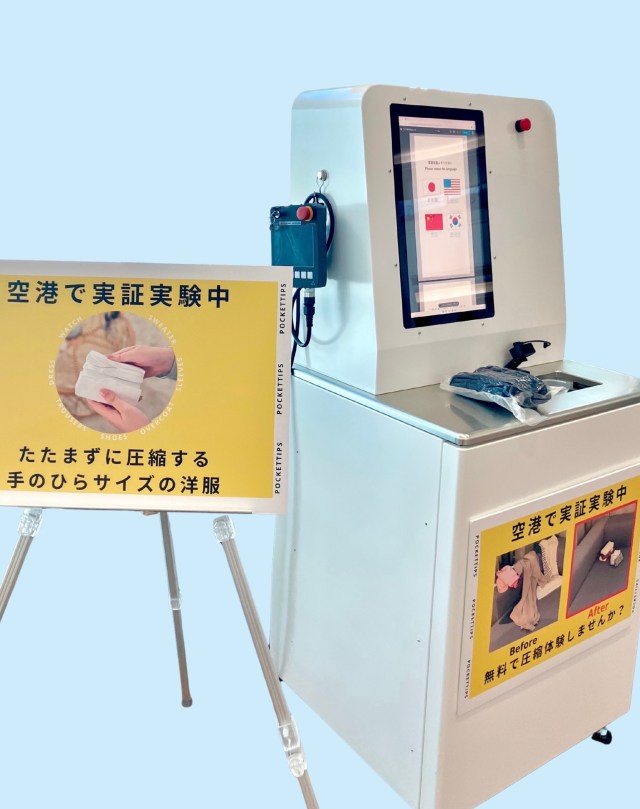
Developed with support from Haneda, Narita, Kumamoto, and Naha airports, the machine has already been trialled at these locations, and the companies are now working towards full-scale implementation at the four airports.
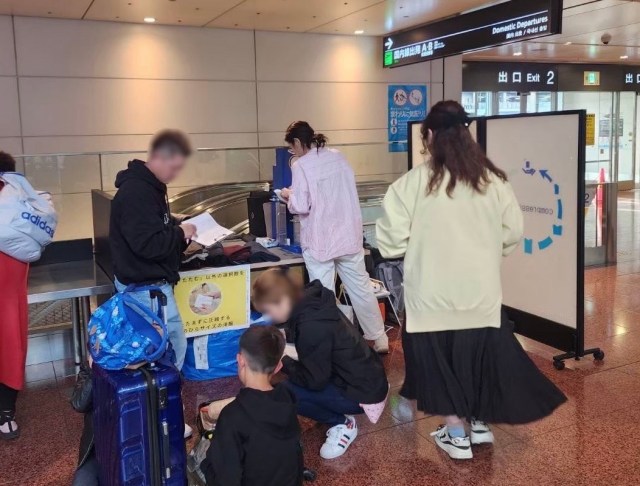
The Pocket Tips machine has been praised for its ease of use – simply fold your clothes into the mould, then place it in the machine and press the button. In just around a minute, your clothes will be reduced to as little as one-seventh of their original bulk, becoming a compact little cube that packs easily into your suitcase.

The process doesn’t require plastic compression bags, and it can even be used on bulky items like towels.
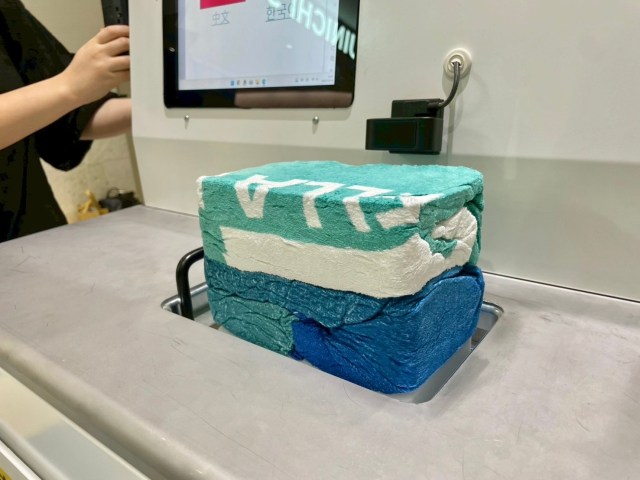
The compressed clothes can be returned to their original shape by washing them or leaving them spread out for around 15 minutes.
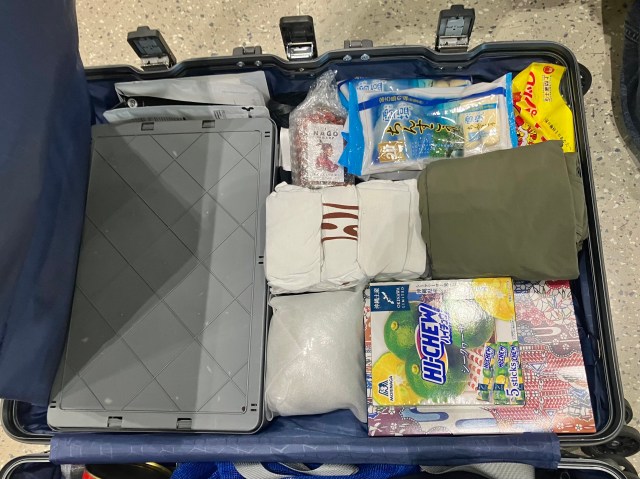
▼ A 3L-size (roughly XXXL) T-shirt after compression

The compression service gives travellers a significant amount of extra room for souvenirs, which is exactly what they’ve been wanting. During the trial period, out of 400 people surveyed, about 70 percent said they had previously given up buying additional souvenirs because they didn’t have enough space in their luggage. After using the service, around 89 percent of participants said they would like to use it again.
▼ One happy customer
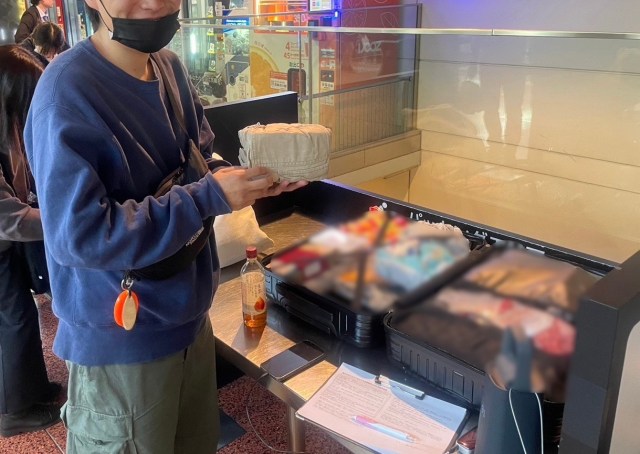
Though previous trials have mainly focused on travellers preparing to fly out of Japan, giving them room for last-minute purchases at the airport, the service is now being eyed for use in both directions, allowing travellers to compress their clothes upon arrival as well as before departure.
▼ Travellers lining up to use the machine during one of the trials
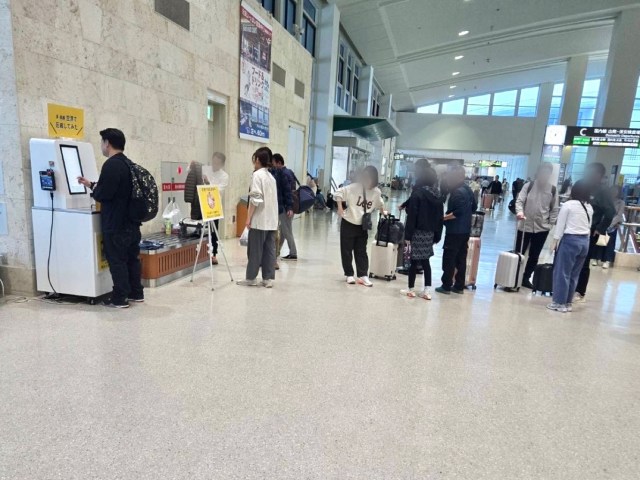
The machine has been developed by SJOY, a Tokyo-based apparel company that also develops clothing-compression technology, and terminal.0 HANEDA, a research and development facility operated by Japan Airport Terminal Co., Ltd., which manages Haneda Airport’s passenger terminals.

While an official launch date is yet to be announced, 2027 has been reported as the target for full-scale implementation. The companies are currently working to determine where the machines should be installed, how they should be operated and how safety considerations should be handled before full-scale implementation takes place. SJOY also says it’s considering future applications at places like hotels and in the apparel industry.
With so many travellers crying out for more room in their luggage, a service like this would be particularly helpful in hotels, and it couldn’t come at a better time, as Japan is welcoming more tourists than ever to its shores.
Source, images: Press release
● Want to hear about SoraNews24’s latest articles as soon as they’re published? Follow us on Facebook and Twitter!
]]> https://soranews24.com/2026/09/17/get-more-room-in-your-luggage-with-new-clothing-compression-machines-at-haneda-and-narita-airports/feed/ 0 745222 Pocket Tips clothing compression machine Japan trip suitcase packing luggage bags travel Haneda Airport Narita international Naha Kumamoto souvenirs shopping tourist news 2 Foreign tourists in Japan eat far more rice than previously thought, according to new data https://soranews24.com/2026/07/30/foreign-tourists-in-japan-eat-far-more-rice-than-previously-thought-according-to-new-data/ https://soranews24.com/2026/07/30/foreign-tourists-in-japan-eat-far-more-rice-than-previously-thought-according-to-new-data/#comments Wed, 29 Jul 2026 15:00:48 +0000 https://soranews24.com/?p=740659 
The average overseas visitor now consumes more rice in a day than a Japanese local.
On 27 July, Japan’s Ministry of Agriculture, Forestry and Fisheries (MAFF) released its fiscal 2025 data on rice consumption by foreign visitors to Japan, and the results revealed that foreign tourists are eating significantly more rice than anticipated.
According to the data, collected through questionnaires completed by visitors from 14 countries and regions, MAFF now estimates that overseas visitors consume an average of 570 grams (20 ounces) of cooked rice per day during their stay in Japan, which is roughly the equivalent of four standard bowls of rice.
▼ This is a significant increase from its previous estimate of around 350 grams, or about 2.5 bowls, per person per day.
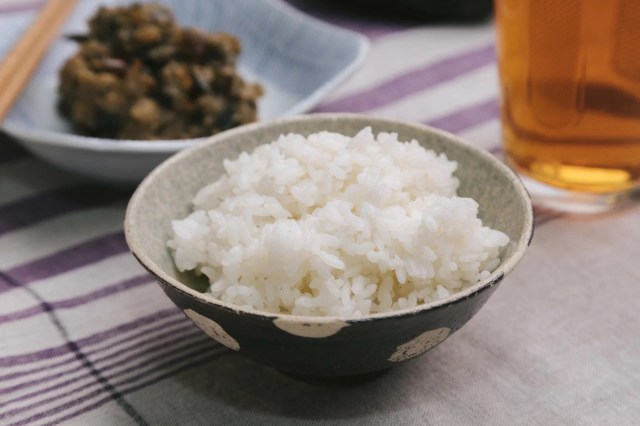
Topping the list for rice consumption was Vietnam, at 718 grams, followed by Indonesia (714 grams), the Philippines (695 grams), and Thailand (629 grams). Visitors from the U.S. consumed an average of 565 grams, while those from China consumed 546 grams. The lowest average among the surveyed groups was Hong Kong, whose visitors still consumed 468 grams.

To put these figures into perspective, the average person in Japan is said to consume roughly 330–340 grams of cooked rice a day. That means the average foreign visitor eats around 70 percent more rice for each day of their stay than the average Japanese resident.
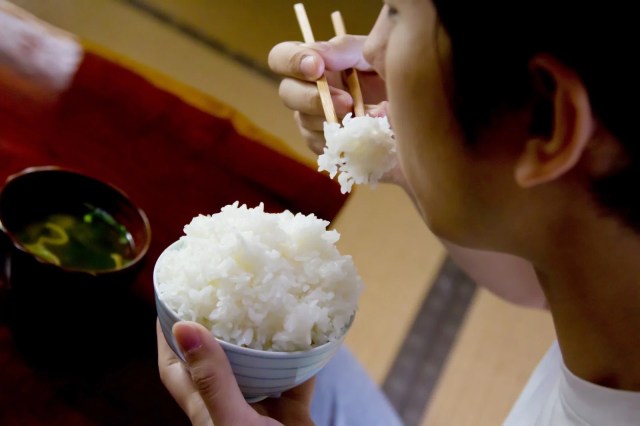
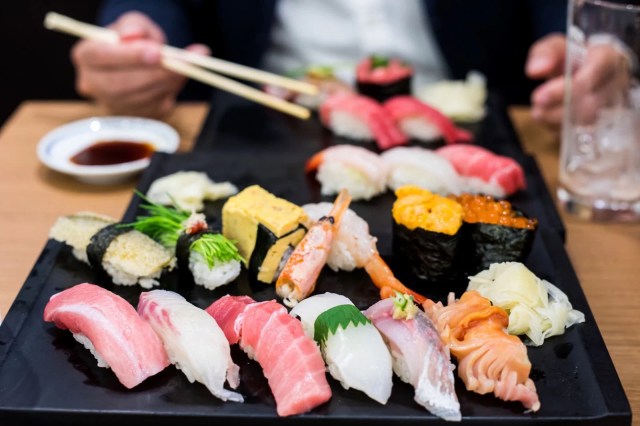
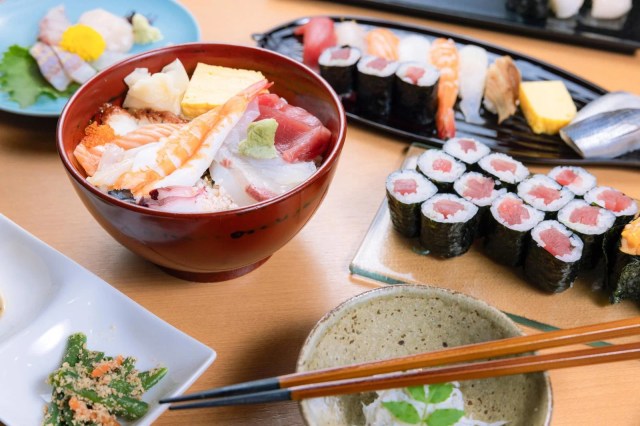
MAFF says the higher figures are linked not only to meals at sushi restaurants but also to the popularity of onigiri rice balls, with many tourists enjoying rice multiple times throughout the day.
Japanese locals, on the other hand, are more likely to add other carbohydrate sources to their daily diets, largely in the form of bread and noodles, in addition to their everyday rice consumption.
▼ Of course, burgers are now part of the diet too.

By the ministry’s latest calculations, foreign visitors are estimated to have consumed approximately 82,000 tonnes of polished rice, equivalent to 91,000 tonnes of brown rice, between July 2025 and June 2026. This is a substantial upward revision from the previous estimate of 61,000 tonnes in March of this year.
The updated estimate comes in the wake of Japan’s 2024 rice shortage, dubbed the “Reiwa Rice Riots”, when soaring prices and empty shelves caused concern across the country. While poor harvests linked to extreme heat were a major factor, record numbers of foreign visitors that year also raised questions about whether tourism demand had been underestimated.
Following the shortage, the government decided to look into foreign visitor consumption, as it was something that hadn’t previously been considered. By including the rice-eating habits of visitors, these latest figures now provide a more comprehensive account from which to properly assess supply and demand and better prepare the industry for possible changes.
Whether this leads to increased rice production remains to be seen, as factors such as small farm sizes, an ageing, dwindling workforce, and longstanding policies designed to control rice production still have a strong hold on the industry.
However, the government has expressed a willingness to move away from some of the older supply-control measures to effectively meet modern demands. With inbound tourism now being taken into consideration, here’s hoping future forecasts better reflect the reality of the situation so measures can be put in place to deal with any potential shortages ahead of time and prevent a recurrence of the Reiwa Rice Riots.
Source: Ministry of Agriculture, Forestry and Fisheries via Yahoo! News Japan/Kyodo
Top image: Pakutaso
Insert images: Pakutaso (1, 2, 3, 4, 5, 6)
● Want to hear about SoraNews24’s latest articles as soon as they’re published? Follow us on Facebook and Twitter!
]]> https://soranews24.com/2026/07/30/foreign-tourists-in-japan-eat-far-more-rice-than-previously-thought-according-to-new-data/feed/ 0 740659 Foreign tourists eat rice in Japan food forecast international visitors consumption Reiwa riots shortage supply demand government tourism boom sushi onigiri travel news 1 Don’t let the rain get you down! Here are Japan’s top 10 most beautiful rainy day travel spots https://soranews24.com/2022/06/01/dont-let-the-rain-get-you-down-here-are-japans-top-10-most-beautiful-rainy-day-travel-spots/ https://soranews24.com/2022/06/01/dont-let-the-rain-get-you-down-here-are-japans-top-10-most-beautiful-rainy-day-travel-spots/#comments Tue, 31 May 2022 17:30:49 +0000 https://soranews24.com/?p=589893 
Beautiful landscapes, charming towns, peaceful gardens…you’ll find it all on this list!
For a lot of places in the northern hemisphere, June means the start of summer–swimming, camping, barbecues, and all that fun stuff. But in Japan, June can be less fun, because it’s when the rainy season begins. A chance of rain on almost any day for several weeks in a row makes it hard to do outdoor activities, and it can also kill your motivation to travel. But if travel is what you’re after this June, don’t worry! There are plenty of beautiful places to visit even in the rain.
In fact, Japanese travel provider Jalan just released a ranking for “Charming Places with Superb Views even on Rainy Days”, which was determined by a survey done among Jalan’s users. The ranking includes a variety of places that provide a great experience regardless of the weather, including both natural landscapes and urban tourist attractions, and they all look great on Instagram!
9 (tie). Shiroyone Senmaida Rice Terraces (Ishikawa Prefecture)

What could be more picturesque in the rain than layers upon layers of rice terraces set against the ocean? Plus, if you manage to catch the rain stopping at sunset, the reflection of the sun sinking behind the Japan Sea off the freshly filled paddies is sure to be to die for.
9 (tie). Bijin Bayashi Forest (Niigata Prefecture)

This hilly forest, made up of a dense growth of 100-year-old beech trees, is considered Japan’s most beautiful forest. It’s especially beautiful in the rain, as the water makes the many trunks and leaves of its trees sparkle. There’s a pond in the forest that also beautifully reflects the trees around it. The sound of the rain in the leaves and on the pond and the cries of the birds making this forest their habitat is sure to offer a chance for a spiritual reset.
8. Cape Togenkyo (Miyazaki Prefecture)

With 2,000,000 hydrangea bushes of several different colors spread out over an area four times the size of Tokyo Dome, Cape Togenkyo offers a beautiful garden view set against the backdrop of sparkling blue water. The colors pop even on a drizzly day, so it’s well worth visiting even in the rainy season.
7. Harunire Terrace, Karuizawa Hoshino (Nagano Prefecture)

The line of shops along the street of Haruine Terrace in the resort town of Karuizawa is covered with over 100 colorful umbrellas that will brighten up any rainy day, and at night, they’re lit up to give the space a magical ambiance. This year, rainbow bubbles also appear periodically throughout the day, making the space even more mystical, especially in the rain.
6. Oirase Gorge (Aomori Prefecture)

There’s no better time to visit the northern prefecture of Aomori than in the summer, when its milder temperatures offer a delightful reprieve from the sweltering heat of the more southern parts of Japan. Oirase Gorge, where the clear waters of the Oirase River wind through untouched forests and moss-covered rocks, offers some of the coolest temperatures and the most stunning natural views and was rightfully voted as one of the top places to visit in Japan before you die. Naturally, in the rain, the moss becomes even more vibrant. This is the kind of place that makes you just want to take in the fresh, natural air.
5. Sanzen-in Temple (Kyoto)

On the more urban side of things is Sanzen-in Temple and its two quiet gardens, Yuseien and Shuhekien. Yuseien might be the main attraction on a rainy day, as it’s filled with moss plants that look gorgeous in the rain and lined with cypress and cedar trees that glitter with raindrops. Its path also winds around a pond which offers a peaceful receptacle for the rain. On the other hand, Shuhekien is meant to be admired from the temple’s reception hall, where you can enjoy the view while still staying dry. Either way, both gardens offer a rainy day retreat.
4. Hakone Tozan Railway Hydrangea Train (Kanagawa Prefecture)

You may already know Hakone as a popular tourist spot in Japan for its high concentration of hot springs and up-close view of Mt. Fuji, but from the end of June to the beginning of July, square in the middle of the rainy season, it’s also known for the beautiful hydrangeas that grow on the mountainside around the Hakone Tozan Railway, which connects major train lines to the sights in Hakone. During this time, the small railway is dubbed the Hydrangea Train since it winds through beautiful blooming flowers of many different colors. During the period the flowers are in bloom, they’re also lit up, making them a spectacular view as you enjoy a leisurely train ride out of the rain to one of Japan’s most popular destinations.
3. Higashi Chaya District, Kanazawa (Ishikawa Prefecture)

Kanazawa is a popular destination for Japanese history tourists, but it has a few other things to offer, too. The Higashi Chaya district, for example, is full of shops selling things such as gold-leaf ice cream and traditional artisanal goods. The row of shops in the district is made up of traditional wooden styles and the pedestrian path is paved with stone, and in the rain, the streets glitter with the reflections of the streetlights, giving the place a very whimsical, old-world atmosphere.
2. Takachiho Gorge (Miyazaki Prefecture)

The second natural landscape of Miyazaki to make the list, Takachiho Gorge is a seven-kilometer-long (4.3 mile-long) river ravine filled with geometric rock formations and sparkling emerald waters that has been voted as one of the best places to see autumn leaves. You can rent a boat and row down the river to see the beauty of this natural wonder, which will sparkle in the rain. There are even tour boats with resident kappa on them on rainy days!
1. Yakushima Island (Kagoshima Prefecture)

Rounding out this list of beautiful rainy day travel spots is one of Japan’s most beautiful natural landscapes: Yakushima Island. Often considered to be the inspiration for the setting of the famous Ghibli anime Princess Mononoke, this World Natural Heritage Site is full of wild nature, including the moss-covered Shiratani Unsui Gorge. Huge old cedar and hemlock trees mark this forest as an ancient place that will undoubtedly be beautiful in the rain–which it gets a lot of. Just be careful, however, as heavy rainfall may cause the waters in the gorge to rise and pose a danger to hikers and tourists.
Each of these destinations is amazingly beautiful and supremely Instagrammable, even in the rain, so if you’re feeling a bit stir-crazy this rainy season, consider taking a small vacation to one of these spots. As a bonus for traveling in the rain, you might find them less crowded than usual!
And do you know what else is great for rainy days? Hot springs! Check out 2020’s list of the most popular hot springs for more rainy season travel ideas.
Source, images: PR Times
● Want to hear about SoraNews24’s latest articles as soon as they’re published? Follow us on Facebook and Twitter!
]]> https://soranews24.com/2022/06/01/dont-let-the-rain-get-you-down-here-are-japans-top-10-most-beautiful-rainy-day-travel-spots/feed/ 0 589893 sub2-main Kyoto sightseeing live stream for Chinese viewers becomes controversial, sparks ire in locals https://soranews24.com/2020/11/13/kyoto-sightseeing-live-stream-for-chinese-viewers-becomes-controversial-sparks-ire-in-locals/ https://soranews24.com/2020/11/13/kyoto-sightseeing-live-stream-for-chinese-viewers-becomes-controversial-sparks-ire-in-locals/#comments Fri, 13 Nov 2020 05:00:18 +0000 https://soranews24.com/?p=522335 
Does Kyoto actually need to advertise to future travelers?
With coronavirus still a threat around the world, tourism in Japan is at an all-time low. One of the hardest hit cities is Kyoto, which relies heavily on the industry for the economic prosperity of both the city and its residents. With fewer foreign tourists than ever, the streets of Kyoto have become empty and many businesses have suffered, so the city has attempted a number of promotions to try to preemptively reignite its tourism industry.
One of those campaigns is a collaboration between JR West and Chinese e-commerce company Alibaba, which held a virtual tourism event for Chinese viewers in the form of a live-streamed tour of Arashiyama, one of Kyoto’s most popular sightseeing spots. The video featured Japanese resident and Chinese native Tokyo Archie, an influencer with over one million Chinese followers who posts content on sightseeing spots and eateries in Japan. It was live-streamed on Alibaba’s video service, Taobao Live, on November 9.
▼ Nearby Arashiyama’s Nonomiya Shrine

The virtual tour, which lasted two hours, started with an introduction of the Sagano Scenic Railway, then proceeded to visit several sightseeing spots around Arashiyama, and even included a ride in a rickshaw. At one point over 100,000 viewers tuned into the livestream, likely making it a very successful project.
The idea was to instill interest in Kyoto, to inspire travelers to visit again once travel restrictions have been lifted. According to an Alibaba representative, Kyoto was selected because Japan always ranks top among desirable travel destinations for Chinese travelers, who do, in fact, make up much of Japan’s tourist numbers–and who are the biggest spenders.
▼ The Togetsukyo Bridge, which connects Arashiyama to the rest of Kyoto

But Japanese netizens were frankly stunned that JR East would host such an event. Many complained that Kyoto had already been suffering from overtourism before the pandemic, making the city and its sighsteeing spots too crowded with “rude” international travelers. No one wants to go back to those days of overstuffed buses and fully booked hotels, so many were scathingly critical of the event.
“Are you kidding me? Just as Kyoto was starting to get back to its beautiful self…Just please stop.”
“No…Kyoto, you really haven’t learned your lesson, have you?”
“They really don’t learn. If you rely on China the same thing will happen as before.”
“Why are they relying so much on international travelers? They never learn. If you’re going to do something like this, why not offer it domestically?”
“Just stop it! [Tourists] ruin the city and are annoying!”
“I just get depressed when I think about all those crowds coming back again. This plan hasn’t considered the residents at all.”
“You idiots can’t see past the short-term profits. The only people who think we need inbound tourism is you.”
“This is the last chance for Japanese people to go to Kyoto.”
▼ The famous bamboo forests of Arashiyama are also considered a “victim” of international tourists, who’ve carved their names into the trunks of the bamboo trees.

It’s important to note that, though a good portion of the crowds in Kyoto do come from China, the overtourism problem is a result of too many international tourists in general, as well as an overabundance of Japanese school groups, who are significant contributors to the overcrowding of the city as well. If you’ve been to Kyoto in the last few years, you’ll understand why was it voted by international travelers as the top big city in the world to visit for 2020…but you’ll also understand why some say the city really doesn’t need to promote itself any more than it already has.
Source: Kyoto Shimbun via Hachima Kiko
Top image: Pakutaso
Insert images: Pakutaso (1, 2, 3)
● Want to hear about SoraNews24’s latest articles as soon as they’re published? Follow us on Facebook and Twitter!
]]> https://soranews24.com/2020/11/13/kyoto-sightseeing-live-stream-for-chinese-viewers-becomes-controversial-sparks-ire-in-locals/feed/ 0 522335 arashiyama3 Japanese government to subsidize domestic travel this summer to boost the ailing tourism industry https://soranews24.com/2020/05/28/japanese-government-to-subsidize-domestic-travel-this-summer-to-boost-the-ailing-tourism-industry/ https://soranews24.com/2020/05/28/japanese-government-to-subsidize-domestic-travel-this-summer-to-boost-the-ailing-tourism-industry/#comments Thu, 28 May 2020 01:00:03 +0000 http://soranews24.com/?p=503043 
The government is hoping grants and coupons will help encourage people to travel again.
Since the beginning of the pandemic and the social distancing recommendations, the tourism and hospitality industry in Japan has been in trouble. To be safe, people have generally avoided traveling to popular tourists spots like Kyoto, and with major attractions closed, popular events cancelled, and even some scenic outdoor hiking spots barred off, local hotels, restaurants, and souvenir shops are suffering from the lack of customers.
▼ Kyoto’s famous Kiyomizuderu Temple, normally thronged with tourists, is as empty during the day now as it is in this picture, which was taken after closing hours on a normal day.

Luckily, things seems to be looking much better for the country. Prime Minister Abe lifted the state of emergency for the whole country on May 25, and the jishuku, or stay-at-home, recommendations will also be gradually lifted over the next two months, so perhaps there will be a chance for the industry to recover. Once things are back up and running, the government also plans to implement the Go To Campaign to help boost the tourism industry by subsidizing the cost of domestic travel.
Enacted on May 25, the Go To Campaign will be implemented at the end of July. This 1.7 trillion yen ($15.8 billion) policy is intended to incentivize travel by providing grants to cover half the cost of a hotel stay (up to 20,000 yen per night), coupons for souvenir shops, restaurant meal tickets with “premium” add-ons, discounts for event tickets, and more.
▼ Hopefully hot spring resort areas like Ginzan Onsen in Yamagata will be revitalized by this initiative.

The end of July puts it at just the right time for summer vacation, when, in a normal year, kids are off school and many families travel, if not for leisure then to return to their rural home towns and visit their families. With many people having lost their jobs or a significant portion of their income, hopefully these measures will help families have the ability to travel while also helping restore local economies and small businesses.
Most of all, though, we hope that the virus continues to decline in the country, and that by the end of July it will be safe for everyone to travel. Fingers crossed!
Source: Livedoor News via Goldentimes
Top image: Pakutaso
Insert images: Pakutaso (1, 2)
● Want to hear about SoraNews24’s latest articles as soon as they’re published? Follow us on Facebook and Twitter!
]]> https://soranews24.com/2020/05/28/japanese-government-to-subsidize-domestic-travel-this-summer-to-boost-the-ailing-tourism-industry/feed/ 1 503043 government travel boost3 The top 10 Castles in Japan to visit in 2019, as ranked by TripAdvisor users https://soranews24.com/2019/08/31/the-top-10-castles-in-japan-to-visit-in-2019-as-ranked-by-tripadvisor-users/ https://soranews24.com/2019/08/31/the-top-10-castles-in-japan-to-visit-in-2019-as-ranked-by-tripadvisor-users/#comments Fri, 30 Aug 2019 15:00:18 +0000 http://soranews24.com/?p=463568 
It’s time to plan your sightseeing campaign across Japan!
When you think castles, you might be more inclined to think of the European kind, made of stone and fortified for defense as well as outfitted to be a luxurious home for the wealthy and royal. But Japan has its own castles, which are equally ancient and equally impressive, and which have played their own roles in the undulating history of the country.
Japan’s castles are wonderful spots to sightsee no matter part of the country you’re in, but if you’re on a limited budget or only have a short time to go on vacation, how do you know which ones to check out? That’s where this list comes in handy. Check out the top 10 castles in Japan, as ranked by ratings from TripAdvisor users.
10. Shuri Castle, Okinawa
A post shared by Kouji Oshiro / Digital Artist (@kouji.oshiro.art)
Shuri Castle was the former residence of the Ryukyu Kingdom’s royalty. Though the current version was rebuilt in 1992, its history goes back almost 700 years. The beautiful, vibrant colors and countless artifacts also make this a great date spot as well as a must-see UNESCO World Heritage site in Japan, and of course it is one of the most iconic landmarks of Okinawa.
9. Bitchu Matsuyama Castle, Okayama Prefecture
This castle is probably lesser known than most of the famous sites on this list, but it’s well worth visiting because it’s the oldest surviving castle in Japan. It’s also the highest, situated on top of a mountain overlooking the town of Bitchu. That makes visiting this castle somewhat of an adventure, because it’s so high up that visitors have to hike 20 minutes to get there. From a nearby mountaintop, the castle looks like it’s floating in the clouds on overcast days, which makes like a real life Castle in the Sky.
8. The East Gardens of the Imperial Palace, Tokyo
Located smack in the middle of Tokyo, this is the former site of Edo Castle, where the Tokugawa shoguns and the Emperor Meiji resided during their reigns. Though there are no castle buildings remaining on this spot today, the beautiful gardens of the Imperial Palace are still encircled by the walls and moats of the original fortification. Plus, visitors can enjoy lush lawns and an ornate Japanese garden, perfect for an afternoon stroll or a family picnic.
7. Uwajima Castle, Ehime Prefecture
This small but interesting castle is one of the oldest in Japan, standing intact since the beginning of the Edo period in the 17th century. It has three floors and is situated on top of a hill, so be prepared for a bit of climbing if you go! Inside is a collection of samurai armor and swords, so it makes for a pretty cool stop for history and samurai buffs.
6. Inuyama Castle, Aichi Prefecture
Built in the 16th century, Inuyama Castle also stands among Uwajima and Bitchu Matsuyama as one of the oldest standing castles in the country. It is located on top of a small hill, and a further climb up four flights of steep stairs will reward visitors with beautiful panoramic views of the city of Inuyama and of the Kiso River that it stands beside.
5. Matsue Castle, Shimane Prefecture
Matsue Castle, another of the only 12 original castles still standing in Japan, is unique on this list in that its exterior walls are painted black. That, coupled with its steep moat, gives it the imposing impression of a sturdy stronghold. Visitors can gaze upon a collection of weapons and artifacts from the Edo Period inside the castle, and boat tours of the moat are also available in good weather.
4. Matsuyama Castle, Ehime Prefecture
Ehime’s actually a pretty cool place to visit, especially since two of the top ten castles are there! Matsuyama Castle is another intact castle, originally built in the early 17th century, though the current three-story tower was built in the early 1800s. The castle is one of the biggest and most complex in Japan, and is a great example of feudal castles the Edo and Tokugawa Periods. It’s also on top of a mountain and surrounded by cherry blossoms, which makes the chairlift, ropeway, or 15-minute hike up absolutely beautiful. At the base of the mountain, there are also remains of the lords’ quarters, which haven been remade into a really beautiful garden called Ninomaru Garden. For history buffs, this is absolutely a must-see castle in Japan!
3. Kumamoto Castle, Kumamoto Prefecture
This castle sits on impressive grounds that contain multiple buildings and hundreds of cherry blossom trees, so it’s certainly a sight worth seeing. Most of the 17th century buildings have been reconstructed over the years, and the interior may be modern, but the castle has a great museum exhibition on the history and construction of the original castle. There is also a reconstruction of the daimyo’s palace on the grounds, with beautiful painted sliding doors and opulent interiors befitting a lord’s residence. Unfortunately, since the 2016 earthquake in Kumamoto, the castle was severely damaged and is not yet open to the public, but you can still observe its imposing architecture from afar.
2. Matsumoto Castle, Nagano Prefecture
https://www.instagram.com/p/B1ZuEAkATwh/?utm_source=ig_web_copy_link
One of the only castles on this list not built on a hill or a mountain, Matsumoto Castle is one of the most splendid castles in Japan. It stands mostly intact since its original construction in the 17th century, and has a large, six-story main keep that’s worth climbing to see the built-in fortifications, as well as the view of the city of Matsumoto. The outside of the castle also hosts a lovely garden, which in spring becomes a very popular cherry blossom viewing spot.
1. Himeji Castle, Hyogo Prefecture
https://www.instagram.com/p/B1tPkGYJwzV/?utm_source=ig_web_copy_link
Ranking at number one for the fourth year in a row is the truly impressive Himeji Castle in western Japan. This stunning, almost all-white castle is considered one of the most beautiful in Japan, and is both a national treasure and a World Heritage site. It also is almost entirely composed of its original 16th century construction, though it has been extensively renovated, which makes this castle a historical gem. It contains over eighty buildings, including the quarters of a princess and an impressive six-story main keep, which is mostly unfurnished except for explanations of architectural features. Of course, the grounds of this castle are also dotted with cherry blossom trees, making this a very popular spot in spring.
Some entries on this list cross over with the list of ten best castles as rated by experts and castle fans that we shared earlier this year, but there are some differences, so it’s interesting to see how certain castles are rated over others. Honestly, though, all of the castles in Japan are worth visiting; it just comes down to what you want to see the most!
Source: TripAdvisor via Japaaan
Top Image: Pakutaso
Reference: JapanGuide.com
● Want to hear about SoraNews24’s latest articles as soon as they’re published? Follow us on Facebook and Twitter!
]]> https://soranews24.com/2019/08/31/the-top-10-castles-in-japan-to-visit-in-2019-as-ranked-by-tripadvisor-users/feed/ 0 463568 kumamoto castle We visit the Suntory Yamazaki Distillery, the newly-renovated, boozy paradise https://soranews24.com/2016/02/02/we-visit-the-suntory-yamazaki-distillery-the-newly-renovated-boozy-paradise/ https://soranews24.com/2016/02/02/we-visit-the-suntory-yamazaki-distillery-the-newly-renovated-boozy-paradise/#comments Mon, 01 Feb 2016 20:30:14 +0000 http://en.rocketnews24.com/?p=298274 
The whisky distiller, famous for upstaging Scottish standbys to be crowned “Best Whisky in the World” in 2014, recently renovated their open-to-the-public facilities. We figured it was as good an excuse as any for a tour and tasting!
As a whisky brand, Suntory’s “Yamazaki” needs no introduction. The name has been around since 1923, when the distillery opened as Japan’s first commercial whisky distillery (Nikka’s first distillery wouldn’t be established for another decade or so). Yamazaki has long been associated with quality, but the brand’s already prestigious pedigree got a major boost in 2014 when the Yamazaki Single Malt Sherry Cask 2013 was named “Best Whisky in the World” by the The Whisky Bible.

Perhaps in anticipation of an increase in whisky tourists from around the world following this honor, Suntory recently renovated the Whisky Museum attached to the distillery — an area that’s open to the public for educational tours and tastings. Obviously, we decided we ought to go check it out.
The newly renovated facilities unsurprisingly include a tasting counter, but the area will now also feature a new exhibition explaining the history of Yamazaki and the birth of the famous Yamazaki Single Malt, as well as a new collection of bottles that from over the years that form a Yamazaki whisky timeline. As the Yamazaki brand has grown exponentially in prominence, would-be guests will find that the mega-popular distillery tour is booked out months in advance. But, on our recent trip to the facilities, we found the Whisky Museum exhibition deeply informative enough to interest both whisky beginners and hardcore enthusiasts alike, and you may be able just walk right in! Reservations are encouraged, however, according to Yamazaki’s website.


If you’re one of the lucky few that manages to bag a reservation for the distillery tour, you’ll be able to enjoy a free tasting lineup at the end of the tour, but the museum’s tasting trays, running 100-300 yen (about US$0.85–2.50) per sampling snifter, certainly aren’t a bad deal, either. We felt pretty sophisticated smelling and tasting a variety of whiskys and bantering about their flavor profiles using all the fancy new words we’d learned from touring the building. Sadly, we all forgot our monocles, but it didn’t make the whisky taste any less impressive.
The tasting menu, featuring an impressive array of Yamazaki labels

The distillery, located — go figure — near Yamazaki Station, is convenient to anyone visiting Osaka, at a 25-minute train ride from JR Osaka Station. If you’re in the area, why not drop by for a sophisticated tipple and some in-depth whisky learnin’?


Center information
Yamazaki Whiskey Museum / 山崎ウイスキー館
Address: 5 Chome-2-1 Yamazaki, Shimamoto-chō, Mishima-gun, Ōsaka-fu 618-0001
Open 10:00 a.m.-4:45 p.m. (Last entry at 4:30 p.m.)
Facilities are closed over the New Year’s holiday period.
English website
Photos © RocketNews24
]]> https://soranews24.com/2016/02/02/we-visit-the-suntory-yamazaki-distillery-the-newly-renovated-boozy-paradise/feed/ 0 298274 yamazaki yamazaki2 yamazaki1 yamazaki3 yamazaki5 yamazaki9 yamazaki4 yamazaki6 yamazaki7 yamazaki8 The top 10 drinking districts in Tokyo, as recommended by Japanese locals https://soranews24.com/2015/09/10/top-10-drinking-districts-in-tokyo-as-recommended-by-japanese-locals/ https://soranews24.com/2015/09/10/top-10-drinking-districts-in-tokyo-as-recommended-by-japanese-locals/#comments Wed, 09 Sep 2015 19:00:33 +0000 http://en.rocketnews24.com/?p=263584 
The number of foreign visitors visiting Japan has increased recently, and with Tokyo set to host the 2020 Olympic Games that trend is likely to continue. Now is the perfect opportunity for the city to show off its offerings as a must-see destination.
In an effort to appeal to and satisfy more tourists, a recent survey of Japanese Tokyoites ranked the top 10 drinking districts that they think tourists to Japan should visit to see and experience the “real” Tokyo.
When showing visitors around to the usual ordinary sightseeing spots, it can get a little boring. One of the best things about traveling is to see and experience the authentic side of a city where the locals let their hair down and you can see the true heart of a place.
Home to some great beer, sake and whiskey, Japan has lively nightlife and arguably the best way to see how the locals really are in their own habitat is to visit neighbourhood bars and local drinking holes. A survey was recently compiled asking single male employees aged 20-30 which drinking districts they would they take foreign visitors to in order to see a more interesting side of Tokyo. Proving that Tokyo nightlife is more than Roppongi and typical touristy restaurants, some of the recommendations are definitely places you’re not going to read about in a travel guide book.
Here are the top 10 drinking alleys as ranked by Tokyoites.

10. Beneath the train tracks of Koenji Station

Many of Tokyo’s restaurants and bars can often be found either near or under the local station train tracks and Koenji is no exception. Located on the JR Chuo Line on the west side of Tokyo, Koenji is home to many cheap bars and eats. “Cheap. Delicious. Interesting.” Sounds pretty good to us!
9. Ebisu Yokocho (Ebisu Alley)
Ebisu is not necessarily an area that many foreigners would visit on a trip to Tokyo, but to skip this neighbourhood would be a shame. Just a few stops away from Shibuya, Ebisu is home to numerous trendy waterholes including the Yebisu Beer Museum. There is no shortage of bars and restaurants at Ebisu Yokocho, and since nearby Ebisu Station is located on the central Yamanote train line, it’s easy to get to even if you don’t feel like paying for a taxi.
7 (tie). Ningyocho Amazake Yokocho (Ningyocho Sweet Sake Alley) and Kichijoji Harmonica Yokocho (Kichijoji Harmonica Alley)
Kichijoji is a trendy and hip suburb full of really cool cafes and interesting stores oft frequented by university students. When they come alive at night, the narrow, bar-packed alleys—located just across the street from the station’s north exit—allow you to experience a different side to this fashionable area of Tokyo.
If sake is more your thing, Ningyocho is famous for its sweet sake (rice wine with little to no alcohol content) with many bars and shops offering this unique Japanese beverage which even the kids can enjoy. The area also has a traditional downtown vibe taking you back in time. According to one local, “This district is very Japanese, and will seem very unique to foreigners.”
6. Shibuya Nonbei Yokocho (Shibuya drinking alley)
No trip to Japan’s capital is complete without spending some time in Shibuya, where you can indulge in shopping, people-watching and drinking. Crowded, colourful, and crazy, Shibuya’s most notorious drinking alley has been given the nickname Nonbei Yokocho or “Drunkards’ Alley”. Here you’ll find several side streets of tiny bars and restaurants, making it an ideal spot for bar-hopping.
5. Asakusa Hoppi Dori (Asakusa Hoppy Street)

Asakusa is a very popular tourist spot in its own right and a must-include on any Tokyo itinerary. Its most famous sights include the Kaminari Mon gate, Sensoji Temple, and Nakamise shopping arcade. However, not so many people are familiar with Asakusa’s nightlife. Complete your sightseeing trail by stopping by for a drink or two at a local bar to soak in the atmosphere of old-town Tokyo.
4. The underground tracks between Shinbashi and Yurakucho Stations
This is where hordes of hardworking Japanese salarymen flock to after work to partake in “nommunication” (a portmanteau of “nomu” – the Japanese verb “to drink,” and the English word communication) with their colleagues. The bars here will be packed with men in business suits. A few words from Japanese tipsters:
“This is where you go to really understand the holy ground of the Japanese salaryman.”
“Here you can come to understand the more traditional common Japanese atmosphere.”
“There are so many kinds of venues here including rare and unusual places all to varying degrees of cleanliness.”
The ‘holy ground’ of the Japanese salaryman? We might need a drink before heading in…
3. Shinjuku Omoide Yokocho (Shinjuku Memory Lane)

A gritty drinking district found in Shinjuku, it may be better known by its unsavoury nickname of “Piss Alley.”
“Dirty is good,” said one commenter. “[This place] has a unique history and is only full of great bars and shops.”
Memories, whether for good, bad, or messy, will definitely be made here, by the sound of it.
2. Tsukishima Monja Street
If you like okonomiyaki, then you might want to want to try monjayaki. And the best place in Tokyo to get it as at Tsukishima. For those not familiar with monjayaki, it’s like a giant cabbage pancake with various toppings poured over a hot plate. It is a much runnier version of okonomiyaki and looks pretty much a big hot gooey mess of deliciousness. Along Tsukishima’s Monja Alley you’ll find a whole street dedicated to monjayaki restaurants. We bet it smells amazing.

1. Shinjuku Golden Gai
Most people familiar with the Tokyo night scene will have heard of Shinjuku’s Golden Gai. This is a series of narrow alleyways on the east side of Shinjuku Station packed with a couple of hundred tiny bars, most only seating a handful of people at a time. Glitz and glamour it is not, but if you want to know where ordinary people of Tokyo go to drink after a hard day at work, this is the place.
What Tokyoites had to say about the Golden Gai:
“It has a unique atmosphere and gives you a real taste of the common people.”
“There’s an air of the Showa era (the reign of Emperor Showa between 1926-1989) so you get a feeling of the good old times in Japan.”
“There are many interesting venues.”
“It’s the old-fashioned Shinjuku back in the day.”
And once you’ve made your way through the above list, you might want to check out Tateishi Nonbe Yokocho and Sangenjaya Delta Chitai which were ranked just out of the top ten.
On your next visit to Tokyo, don’t be afraid to get a few drinks into you and strike up a conversation with some locals at some of the drinking spots recommended by locals. Tokyo has plenty to offer and is the perfect drinking and culinary playground for those wanting to explore its hidden narrow alleyways that are packed with interesting bars.
Source: Web R25
Photos © RocketNews24
]]> https://soranews24.com/2015/09/10/top-10-drinking-districts-in-tokyo-as-recommended-by-japanese-locals/feed/ 0 263584 beer Tokyo beer bar Asakusa Shinjuku monjayaki We say goodbye to our Japan Wish winner and look back on her time in Japan【Video】 https://soranews24.com/2015/08/11/we-say-goodbye-to-our-japan-wish-winner-and-look-back-on-her-time-in-japan%e3%80%90video%e3%80%91/ https://soranews24.com/2015/08/11/we-say-goodbye-to-our-japan-wish-winner-and-look-back-on-her-time-in-japan%e3%80%90video%e3%80%91/#comments Mon, 10 Aug 2015 17:30:13 +0000 http://en.rocketnews24.com/?p=258195 
Ashley is now safely back in the US after her exciting adventure here in Japan, so it’s time for a wrap-up post!
Our Japan Wish competition winner’s time with us was a whirlwind of fun, food, and typhoons as her dream of coming to Japan became a reality. Go ahead and watch the video below for a glimpse at just some of the amazing things Japan has to offer for a visitor, as well as to see Ashley’s emotional goodbye.
From her arrival to the very last day, Ashley was enthusiastic and willing to give anything a try. Many laughs were had, and it was a pleasure to watch her discover Japan and its culture with such obvious delight.
Some of the experiences, such as trying super-salty and greasy ramen and experiencing the horrendous Tokyo rush hour, weren’t something she would want to do ever again, but they still gave an interesting insight into everyday life in Japan’s largest city.

The highlight was probably day we made Ashley’s dream of seeing the Gion Matsuri come true. Despite a raging typhoon, the festival went on as it has for a thousand years before, displaying the determination and teamwork Japanese people are capable of. It was, in her own words, “bomb diggity”. Ashley’s stylish festival outfit also proved a hit with other festivalgoers, so we felt like we were walking around with a celebrity the whole time!

Also in Kyoto, Ashley had the opportunity to get dressed up as a maiko, and she looked absolutely beautiful. As soon as the gorgeous kimono was on her, gone was the usual boisterous, smiling Ashley, and in her place was a graceful and refined yamato nadeshiko.

After spending time in both Tokyo and Kyoto, there were tears shed when we said sayonara, but she’s vowed to come back to Japan again as soon as possible, which is evidence in and of itself that the trip was a huge success.

We here at RocketNews24 would like to thank Ashley for being such a good sport; we couldn’t have asked for a better winner. We’d also like to say a big thank you to all the places that allowed us to film at them so we could bring you this series of articles. We hope you’ve enjoyed following Ashley along on her journey!
Photos © RocketNews24
]]> https://soranews24.com/2015/08/11/we-say-goodbye-to-our-japan-wish-winner-and-look-back-on-her-time-in-japan%e3%80%90video%e3%80%91/feed/ 0 258195 Screen Shot 2015-08-10 at 16.04.34 wish05 wish02 wish04 wish01 wish03 Why is Japan such an unpopular tourist destination? https://soranews24.com/2015/01/16/why-is-japan-such-an-unpopular-tourist-destination/ https://soranews24.com/2015/01/16/why-is-japan-such-an-unpopular-tourist-destination/#comments Fri, 16 Jan 2015 01:00:04 +0000 http://en.rocketnews24.com/?p=210075 
You would think that a country like Japan, rich as it is in both traditional culture and technical innovation, as well as plenty of weird and wacky things you’ll never see elsewhere, would be a huge hit with tourists. But as it turns out, Japan is actually not such a popular destination for people traveling abroad. Join us after the jump to find out why.
Tourism from abroad brings in around 900 billion yen per year for Japan. To put it in perspective, France makes around 5 trillion, the UK 3 trillion, Germany 3.7 trillion, and America 11 trillion yen from tourism. It might look like just a matter of zeroes on paper, but that’s a significant difference.
▼Two Asian countries feature in this top 10 ranking of the most popular tourist destinations, and neither of them is Japan.

▼Even compared to other Asian countries it doesn’t measure up well. Japan attracts fewer foreign tourists than Malaysia, South Korea, and Singapore.

So just why is this beautiful country which has so much to offer such an unpopular holiday destination?
Publicity problems
Firstly, Japan needs more and better quality advertising. With the world now connected by the internet you can easily communicate with people half-way around the globe as though they’re right there with you in your room, and people are becoming more interested in other cultures. Japan needs to be able to self-promote, and articulate to the wider world exactly why people should come and visit.
China has size on its side, Thailand has its resorts and backpacker culture, Cambodia has its historical ruins; people visiting Asia for the first time have so much choice on where to go, so proper promotion is extremely important for a country hoping to stand out on a platter already crowded with delicacies. And right now, Japan just isn’t getting itself out there enough.
But what about cool Japan, the government drive to get more foreigners interested in Japan?
There have been attempts to come up with advertising campaigns, certainly, but they’ve fallen woefully short. Celebrities have huge star attraction here, but the PR gurus don’t seem to have caught on that using Japanese stars to advertise Japan just doesn’t work, since people outside of the country often have no clue who they are unless they already interested in Japan, hence these ads are essentially preaching to the choir. Japanese boy band Arashi’s tourism advert, a part of the government’s official Visit Japan campaign, seems more like a music video aimed at teenage girls; not exactly the demographic with the money to spend on flights, hotels and sightseeing.
▼NYA! This video shows off a little of Japan and a lot of squeaky-clean Japanese boys frolicking in meadows and seas and doing strange cat poses. (Seriously, Japan, what is this?)
Are Japan’s woeful tourism figures all the fault of the Japan Tourism Agency? Not quite.
Skytree-high costs
The top reasons people from Europe and the USA don’t come to Japan is that it’s both too far and too expensive. Since the island is pretty much tethered where it is there’s not much that can be done about the former, but surely there could be some workarounds regarding the latter. Accommodation and transport are very expensive and on top of that are the costs of food, souvenirs and so on, so with a high-valued yen people are bound to look to cheaper options such as Asia, where even the poorest of student travelers can survive.
Lost in translation
Then there’s the fact that it’s not very easy to go on holiday here without knowing the language, because of the comparatively low level of English of most native Japanese folks. Even in the midst of Tokyo you can find yourself stuck due to language issues, and once you get out of the city there are still many supposed sightseeing spots that don’t have any English signs. Japanese also isn’t like languages which use the Roman alphabet, so travellers can’t simply type a written word into their dictionary or translation app (though hopefully one day soon they’ll be able to scan them), so the average not-overly-adventurous traveler is severely limited when they find they can’t even read restaurant menus or the names written on signs at train stations. Japanese people also tend to be quite shy and reserved, even if they do have a smattering of English, unlike other countries where people will go out of their way to try to communicate with you even if they don’t speak a word of your language.

Japanese-only convenience
Japan is often said to be an incredibly convenient place, epitomized by the ubiquitous conbini, and this is true if you are actually living there. Unfortunately, it can still be very inconvenient for travelers and people staying short-term.
Firstly, actually getting into the city can be a bit of a pain since its busiest international airport, Narita, is located quite far out of central Tokyo. Then, when you want to pay for your train or bus ticket you might find yourself in a bit of a bind since Japan is still a mostly cash society and there are many places that do not accept credit cards. On top of that, ATMs that accept foreign cards are few and far between and are often closed outside of regular business hours; something we’ve noted before as a particular irk of living in Japan. And forget hopping online to check your route or research places to visit as, despite Japan’s reputation as a technologically advanced country, there are still very few places with wi-fi, free or otherwise. You also can’t buy cheap mobile phones with disposable SIM cards, making keeping in touch with other members of your group difficult.
All in all these factors all contribute to the reality that people aren’t going to be inclined to come and visit unless they already have an interest in Japan.
▼”I’ve been waiting for visitors for so long my legs have fallen asleep.”

But all is not lost!
The number of foreign visitors to Japan has been increasing recently, and during the New Year period department stores reportedly saw three times more foreigners coming to their start-of-year sales than the previous year. More places including shrines are stepping up their game and starting to provide wi-fi access, and Tokyo Metro has launched a free wi-fi service aimed at tourists across 143 of their stations. Furthermore, a bank on the road leading to the Grand Shrine at Ise has begun offering a foreign currency exchange service since many people were saying that it was inconvenient not to have any exchange services nearby. These are all signs that Japanese companies are starting to think more about catering to people visiting from overseas. The growth in tourists can also be attributed to the recent weakening of the yen brought about by Abenomics, making things cheaper for Americans and Europeans, and department stores are publicizing the fact that duty-free shopping is available for foreign visitors.
And of course with Tokyo hosting the Olympics in 2020, the country is going to experience a definite surge in foreign visitors. The questions now are whether or not Japan will be ready for them, and if the Games will have a lasting effect on the tourism industry in the future.
Source: Naver Matome
Top image: Japan Tourism Agency, Image 1: “Tokawa sta” by Filler from Wikipedia, Image 2: Japan Tourism Agency
Charts: Wikipedia

]]> https://soranews24.com/2015/01/16/why-is-japan-such-an-unpopular-tourist-destination/feed/ 1 210075 54a72a4f2b8d4 54a72a4f2b8d4 スクリーンショット 2015-01-15 13.30.51 スクリーンショット 2015-01-15 13.29.11 Exif_JPEG_PICTURE スクリーンショット 2015-01-15 13.37.47 Sit back and enjoy the journey: Japan’s Top 10 local train rides https://soranews24.com/2014/11/07/sit-back-and-enjoy-the-journey-japans-top-10-local-train-rides/ https://soranews24.com/2014/11/07/sit-back-and-enjoy-the-journey-japans-top-10-local-train-rides/#comments Thu, 06 Nov 2014 22:00:32 +0000 http://en.rocketnews24.com/?p=194260 
Nowadays with discount airlines, hybrid cars and night buses, it’s easy to get where you want to go quickly and cheaply. Of course, in Japan trains are probably the most utilized mode of transportation. Some train companies around Japan, however, have really taken to heart the idea that “Life is a journey, not a destination,” as there are many train lines which are designed as sightseeing trains, or just happen to pass through beautiful scenery and let you enjoy the journey – the beautiful forests, the stunning seaside, sometimes even the trains themselves are part of the experience.
Recently Rakuten Travel announced its top 10 list for the best local trains around the country. Let’s take a look at what these train lines have to offer after the jump.
1st Gonō Line (Aomori to Akita)
I can totally understand why this line won. Apart from passing through Shirakami-Sanchi, a UNESCO World Heritage designated forest, and running along the coastline of the Sea of Japan, you get to experience northern Honshu’s unique and ancient Tsugaru culture. On the train you can listen to a shamisen performance and the conductor makes announcements in the almost incomprehensible (even to Japanese people), but very charming Tsugaru dialect.

2nd Ōigawa Railway (Shizuoka)
Although there are others in the country, this is the only SL (steam locomotive) to make it on this list. Riding on an SL you get the old-school steam, noise, smell and ever-so-iconic whistle, in addition to the stunning scenery of tea fields, rivers and of course, the southern Japanese Alps. All of the elements work together in perfect harmony to create an unforgettable experience.

3rd Senmō Main Line (Hokkaido)
This local train makes all the stops, except that stops are often inside national forests like the Kushiro-shitsugen National Park and the Abashiri Quasi-National Park, not to mention the ride along a thin piece of land cutting between the Sea of Okhotsk and Lake Tofutsu. In the winter, you can even watch huge chunks of ice float around in the freezing ocean! You can also stop at one of the country’s most beautiful train stations along the way.

4th Aizu Railway (Fukushima)
This train is probably the most easily accessible from Tokyo, yet you wouldn’t know it from the ride. There is a special observation car with roomy seats so you can gaze at the unspoiled nature and forget all about the concrete jungle of Tokyo.

5th Tadami Line (Fukushima- Niigata)
Another Fukushima special, as the train cuts through otherwise inaccessible snow-covered land in the winter, you can really get to know the locals – that is, if you can understand their unique Tohoku dialect.

6th Sanriku Railway (Iwate)
Running along the coast, you get a spectacular view of the Pacific Ocean, while sitting comfortably in the tatami seats. The train will also stop for a few minutes longer in well-known scenic spots so you can take it all in.

7th Sagano Scenic Railway (Kyoto)
Owning up to its location in the historic and cultural capital, this one-of-a-kind diesel train has cars made of wood and even has some window-less, open-air cars so you can get that nostalgic feeling and the wind in your hair.

8th Himi Line (Toyama)
Toyama has mountains and valleys galore and this train ride gives sightseers a front-row seat. You can see Tateyama, Toyama’s most famous mountain, as well as ride along the northern Japanese coast. The view of the ocean is supposedly beautiful even in the rain.

9th South Aso Railway (Kumamoto)
Although it doesn’t take you to the Aso volcano (there’s another line for that), this line runs along the south through unspoiled terrain. The reason it’s on this list, however, is the train itself, which has no glass in the windows and very rustic feel to it.

10th Nagaragawa Railway (Gifu)
Closing out the list we have a train that runs along the crystal clear Nagaragawa River, but is also the main life-line for many locals. That’s not to say that it’s not a tourist attraction however, as there is plenty of tourist information on the train and at every station.

Train fanatics, families, and people who just want to relax and enjoy the journey of life (or just a journey through a forest) should check out one of these unique train experiences. But Japan offers plenty of other similarly eccentric and enjoyable train rides, so the next time you board any local, countryside train, don’t think so much about where you’re going, take a look out the window and enjoy the journey!
Sources: NariNari, Rakuten Travel
Top Image: Wikipedia
Inset Images: Rakuten Travel
]]> https://soranews24.com/2014/11/07/sit-back-and-enjoy-the-journey-japans-top-10-local-train-rides/feed/ 0 194260 himi 01_A 02_A 03_A 04_C 05_A 06_A 07_C 08_B 09_D 10_A The country that sent the most foreign visitors to Japan in 2013 was… https://soranews24.com/2014/05/18/the-country-that-sent-the-most-foreign-visitors-to-japan-in-2013-was/ https://soranews24.com/2014/05/18/the-country-that-sent-the-most-foreign-visitors-to-japan-in-2013-was/#comments Sun, 18 May 2014 01:00:51 +0000 http://en.rocketnews24.com/?p=149253 
In 2013, a grand total of 10,363,904 foreign tourists visited Japan! That number surpasses the goal of the Visit Japan Campaign, which began in 2003 with a goal to increase the number of overseas visitors to 10 million.
The Japanese language version of popular travel planning and information website TripAdvisor was quite excited by this news, and recently produced their own visual graphic detailing some fun facts about foreign tourists in the Land of the Rising Sun during 2013. Can you guess which country most of the visitors came from, or which country had the highest percentage jump in visitors? How about the most popular tourist destinations for foreigners traveling in Japan? Find out all that and more after the jump.
TripAdvisor drew on statistics provided by the Japan Tourism Agency (JTA), the Japan National Tourism Organization (JNTO), the Ministry of Land, Infrastructure, Transport and Tourism, and numbers from their own website to design the visual graphic. You can view it by scrolling down to the bottom of this page, but first here are all of the highlights in English!
Countries Ranking (2013)

1. South Korea: 2,456,165 visitors
2. Taiwan: 2,210,821 visitors
3. People’s Republic of China: 1,314,432 visitors
4. United States of America: 799,280 visitors
5. Hong Kong: 745,881 visitors
Countries with the Highest Percentage Increase in Visits (2013)

1. Thailand: 74%
2. Hong Kong: 54.9%
3. Vietnam: 53.1%
4. Taiwan: 50.8%
5. Malaysia: 35.6%
The reason for such a large increase in tourists from Thailand? Relaxed visa policies have made it easier to come!
Most Popular Places for Foreign Tourists to Visit (2013)

1. Peace Memorial Museum, Hiroshima
2. Fushimi Inari-Taisha, Kyoto
3. Todaiji, Nara
4. Itsukushima Shrine (Miyajima), Hiroshima
5. Kinkakuji, Kyoto
Most Popular Hotels among Foreign Tourists (2013)

1. Park Hyatt Tokyo, Shinjuku Ward, Tokyo
2. Kyoto Cuisine and Ryokan Shiraume, Kyoto
3. Hotel Mume, Kyoto
4. Family Inn Saiko, Toshima Ward, Tokyo
5. Four Seasons Hotel at Marunouchi, Chiyoda Ward, Tokyo
Probability of Returning to Japan (2013)

I’ll definitely come back: 57.8%
I’d like to come back: 34.9%
I might come back: 4.3%
I don’t want to come back: 3%
Finally, the graphic ends with the message, “Let’s aim for 20 million foreign visitors in 2o20!” 20 million people is a lofty goal, but with the 2020 Olympics scheduled for Tokyo, anything is possible!

Sources/Top image: TripAdvisor via NicoNico News and VIPPERnaore
Insert images: Wikipedia 1, 2, 3, 4, Park Hyatt Tokyo


]]> https://soranews24.com/2014/05/18/the-country-that-sent-the-most-foreign-visitors-to-japan-in-2013-was/feed/ 1 149253 tourism2 tourism2 4 5 6 7 8 tourism