Michelin – SoraNews24 —Japan News— https://soranews24.com Bringing you yesterday's news from Japan and Asia, today. Wed, 15 Jul 2026 03:00:30 +0000 en-US hourly 1 https://wordpress.org/?v=7.1.4 https://soranews24.com/wp-content/uploads/sites/3/2020/05/en_rocket_1024.png?w=32 Michelin – SoraNews24 —Japan News— https://soranews24.com 32 32 176746664 Japan now has a takoyaki sandwich…created by a Michelin-listed restaurant https://soranews24.com/2026/07/15/japan-now-has-a-takoyaki-sandwichcreated-by-a-michelin-listed-restaurant/ https://soranews24.com/2026/07/15/japan-now-has-a-takoyaki-sandwichcreated-by-a-michelin-listed-restaurant/#comments Wed, 15 Jul 2026 03:00:22 +0000 https://soranews24.com/?p=738402 
Osaka’s popular street food gets a new life in sandwich form.
Takoyaki is one of Osaka’s most famous specialties, instantly recognisable to foodies as piping hot octopus-filled balls topped with sauce, mayonnaise and bonito flakes.
However, the other day while browsing through gourmet food options online, we came across something that made us do a double-take.
▼ A takoyaki sandwich
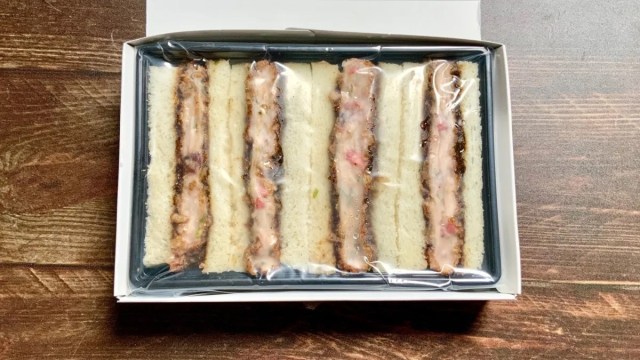
This was one of the most unusual sandwiches we’d ever seen, and what made it even more surprising was the fact that it was being sold by the Michelin-listed restaurant, Kushikatsu Bon.
▼ 串かつ凡 = Kushikatsu Bon
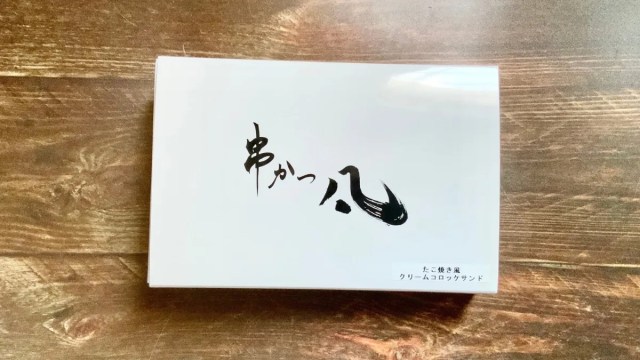
With such esteemed credentials behind it, we figured the restaurant must know its way around a takoyaki, so we placed an order for the sandwich, and it arrived frozen a few days later. Following the instructions to leave it to thaw at room temperature for around three hours, before warming it briefly in the microwave for best results, we were soon ready to get a first taste of this unusual offering.
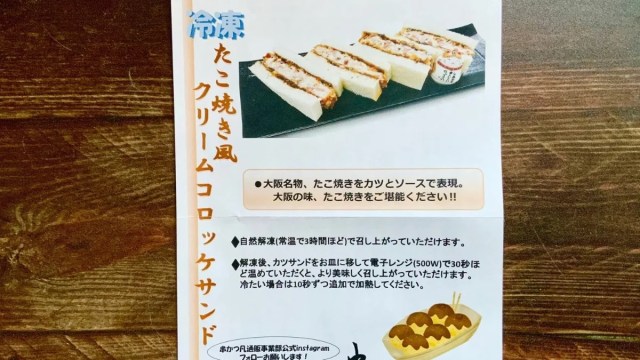
The treat goes by the official name, “Takoyaki-style Cream Croquette Sandwich”, and when we lifted one up for closer look, the filling kind of looked like a cream croquette, but at the same time there was something distinctly takoyaki-like about it.
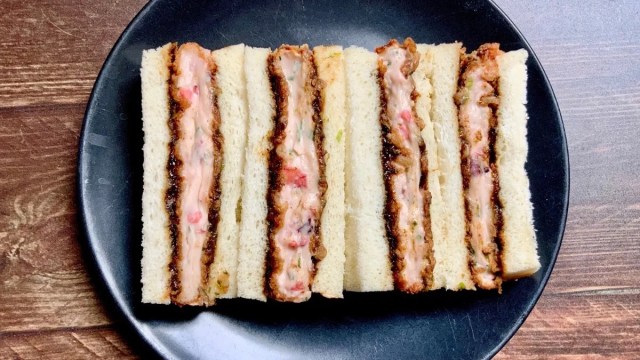
▼ The breadcrumb coating appeared to contain crunchy tempura bits, helping to recreate the crispy-texture look of a takoyaki.
While it looked unusual, the real surprise came in the tasting, as the rich, creamy filling had the unmistakable chewy texture of octopus inside it. It also contained spring onions and pickled ginger, all brought together with the savoury flavour of takoyaki sauce, making it taste identical to an octopus ball.
The contrast between the look of the sandwich, which sort of resembled a katsu sando (meat cutlet sandwich), and the taste, aroma and texture, which was distinctly takoyaki, made for a wonderfully confusing experience that played tricks on our mind as we ate it.
▼ Despite being so unusual, everything came together in a refined, well-balanced way, which is what you’d expect from a Michelin-listed restaurant.

It was a delicious new take on takoyaki and a great way to get a taste of Osaka without even leaving the house. Available from Kushikatsu Bon’s official Rakuten store for 1,250 yen (US$7.69) plus postage, it’s good value for money too, given the high-quality, delicious flavours in every mouthful.
In fact, it’s so good we’d say it’s the best thing since takoyaki bread, which had the audacity to pair a sweet Danish with octopus balls.
Photos ©SoraNews24
● Want to hear about SoraNews24’s latest articles as soon as they’re published? Follow us on Facebook and Twitter!
]]> https://soranews24.com/2026/07/15/japan-now-has-a-takoyaki-sandwichcreated-by-a-michelin-listed-restaurant/feed/ 0 738402 Japan unusual street food takoyaki sandwich Osaka Michelin Star katsu sando octopus restaurant Kushikatsu Bon news 5 These nine Osaka restaurants are the newest to receive Michelin guide recommendations https://soranews24.com/2025/01/16/these-nine-osaka-restaurants-are-the-newest-to-receive-michelin-guide-recommendations/ https://soranews24.com/2025/01/16/these-nine-osaka-restaurants-are-the-newest-to-receive-michelin-guide-recommendations/#comments Thu, 16 Jan 2025 03:00:39 +0000 https://soranews24.com/?p=688483 
Nine new restaurants make the list in west Japan’s biggest foodie town.
We’ve still got a few months to go until the full release of the 2025 Michelin Kyoto/Osaka restaurant guide, but the fine-dining organization has given us something to whet our appetites with ahead of time by revealing the names of 18 restaurants, nine in each of the cities, which will be making their first appearance in the guide’s 2025 edition, as recipients of either Michelin stars or the organization’s Bib Gourmand Award.
We recently took a look at the Kyoto list, so today let’s move on to the next course: Osaka!
1. Sushi Enishi (Michelin Guide webpage)

There’s more than one sushi restaurant on the Osaka list, but the first we’re looking at is Sushi Enishi, which has won rave reviews for the quality of its seasonal seafood, the temperature at which the sushi is served, and the pleasant tartness of the citrus accent flavors it employs.
2. Sushidokoro Shin (webpage)

Speaking of sushi restaurant accent flavors, Sushidokoro Shin has a very unique approach in that it uses different batches of sushi rice, with different amounts of vinegar mixed into the grains, for different types of fish. The restaurant also serves a selection of small plates to accompany its nigiri-style sushi.
3. Sugimachi (webpage)

Sugimachi prides itself on its relaxed atmosphere and its comprehensive search across Japan for the highest-quality ingredients. Their specialties are hot pot and takikomigohan, in which rice is cooked in a pot with various other ingredients and seasonings.
4. Kitashinchi Gyosai Masashi (webpage)

Kitashinchi Gyosai Masashi’s extensive à la carte menu features a mix of traditional Japanese and Western-fusion dishes, such as grilled celery with nuta (miso vinegar), bite-sized pork cutlet, and crab cream croquettes, with something to please a wide range of palates.
5. Kyomachibori Nakamura (webpage)

Kyomachibori Nakamura serves multi-course meals centered on tonkatsu, or deep-fried pork cutlet. Meals consists of filet, shoulder, thigh, and pork loin cuts, featuring a variety of famous breeds of Japanese pork.
6. Rooots Nakanoshima (webpage)

This originally minded restaurant combines Italian, French, and Japanese culinary concepts to make one-of-a-kind dishes, but their simpler offerings, like the potato gnocchi, are not to be missed either.
7. Kirari (webpage)

If the seared sashimi and other grilled foods at this counter-seating restaurant seem especially mouthwatering, it’s probably because they use Kishu Binchotan, the Wakayama Prefecture-sourced charcoal that many chefs feel is the highest-quality charcoal in the entire world.
8. Nishitemma Ichigaya (webpage)

Nishitemma Ichigaya (whose fare is also pictured at the very start of this article) is proud of carrying on traditions, with its kombu kelp soups and classic vegetable dishes, but it’s also not afraid of mixing things up by adding a French twist to some of its recipes.
9. Atelier Hanada by Morimoto (webpage)

And finally, we come to Atelier Hanada by Morimoto, which is neither a French nor a Japanese restaurant, but a Chinese one. As you might guess from their name, though, Atelier Hanada by Morimoto has an artistic take on things, leading to dishes such as foie gras marinated in Shaoxing wine with takuan pickles or shrimp in chili sauce with lime leaf.
With their gourmet cuisine and elegant atmospheres, it should go without saying that these aren’t going to be particularly budget-friendly options, but if you’re looking to splurge on a special meal while you’re in Osaka, these nine all sound like viable candidates. And if you’re looking for a taste of Michelin-recommended dining in Osaka that won’t cost you very much, well, we know a place for that too.
Source, images: PR Times
● Want to hear about SoraNews24’s latest articles as soon as they’re published? Follow us on Facebook and Twitter!
]]> https://soranews24.com/2025/01/16/these-nine-osaka-restaurants-are-the-newest-to-receive-michelin-guide-recommendations/feed/ 0 688483 MO 1 These nine Kyoto restaurants are the newest to receive Michelin guide recommendations https://soranews24.com/2025/01/15/these-nine-kyoto-restaurants-are-the-newest-to-receive-michelin-guide-recommendations/ https://soranews24.com/2025/01/15/these-nine-kyoto-restaurants-are-the-newest-to-receive-michelin-guide-recommendations/#comments Wed, 15 Jan 2025 03:00:34 +0000 https://soranews24.com/?p=688468 
Guide won’t be released in full until later this year, but here are nine Kyoto spots to add to your to-eat itinerary right now.
Kyoto and Osaka are two of Japan’s most popular travel destinations, and both cities are filled with amazing places to see, fun activities to do, and delicious things to eat. That third category is sounding even more appealing now that the 2025 Michelin Guide Kyoto/Osaka, which won’t be published in full until this spring, has revealed 18 new entries for the two cities, all restaurants which will be receiving either Michelin stars or Bib Gourmand Awards. So without further ado, let’s take an appetizer-sized sneak peek at the nine restaurants of the Kyoto set.
1. Chiso Aida (Michelin Guide webpage)

This is a restaurant where you can enjoy old-fashioned but elegant Kyoto cuisine, such as simmered bamboo shoots in spring, fresh eggplant in summer, conger eel with matsutake mushrooms in autumn, and steamed whitefish with turnip in winter. The refined flavors will show how these came to be representative dishes of Kyoto.
2. Nakamitsu (webpage)

With a focus on locally sourced ingredients, Nakamitsu draws out the flavors of each season through authentic recipes that its chefs breathe new life into.
3. Sokkon Fujimoto (webpage)

At Sokkon Fujimoto you can induge all five of your senses with kaiseki multi-course meals. Even the revolving menu incorporates aspects of traditional culture with nods to events that took place during the era of the Kyoto imperial court.
4. Saryo Tesshin (webpage)

At this inventive soba restaurant, you can dine on unique buckwheat noodles while gazing upon a beautiful eight-meter (26-foot) wide gold-leaf painting. The house specialty Daigo Soba, with a broth made with both bonito stock and Parmigiano Reggiano, is something you won’t find anywhere else.
5, Kiyamachi Ran (webpage)

A sushi restaurant with an old-school atmopshere, Kiyamachi is now in its third generation of ownership. Don’t forget to try their tsukemono nigiri, nigiri-style hand-pressed sushi where the rice is topped by pickles.
6. Zucchero (webpage)

The only non-Japanese restaurant in the Kyoto group, Zucchero is an Italian restaurant with a seafood focus, and in fact the owners also run a fresh fish wholesale business. The recipes, for things like carpaccio, fried fish, and tomato stew, may not be ornate, but the quality of the ingredients and the joy of the flavors have earned it a spot in the guide.
7. Miyagawacho Tensho (webpage)

Shifting back to Japanese food, Miyagawacho Tensho is a tempura specialist, with both traditional offerings such as tempura shrimp and whitefish as well as scallops and caviar.
8. Takehisa (webpage)

Takehisa wants to let the natural charms of its ingredients shine, so it utilizes cooking methods to unleash their latent deliciousness. This also means a lot of care is given in selecting seasonally appropriate ingredients, leading to dishes such as honey-simmered green plum and stewed herring.
9. Tokuo (webpage)

Tokuo’s aim is to cook up creative Japanese dishes that its customers will never tire of. Counterbalancing novelty and deliciousness isn’t always easy, but the restaurant has done a fine enough job of it to earn the Michelin guide’s recommendation.
With that, let’s take a break to pause and digest, and we’ll be back soon for a look at the nine new Osaka entries!
Source: PR Times
Top image: Pakutaso
Insert images: PR Times
● Want to hear about SoraNews24’s latest articles as soon as they’re published? Follow us on Facebook and Twitter!
]]> https://soranews24.com/2025/01/15/these-nine-kyoto-restaurants-are-the-newest-to-receive-michelin-guide-recommendations/feed/ 0 688468 MG 2 No need to wait in line for Michelin-starred ramen – Tokyo restaurant starts reservation system https://soranews24.com/2023/11/04/no-need-to-wait-in-line-for-michelin-starred-ramen-tokyo-restaurant-starts-reservation-system/ https://soranews24.com/2023/11/04/no-need-to-wait-in-line-for-michelin-starred-ramen-tokyo-restaurant-starts-reservation-system/#comments Sat, 04 Nov 2023 05:00:42 +0000 https://soranews24.com/?p=640748 
Ginza restaurant will let you skip waiting in line if you plan ahead…and pay a fee.
The general rule of thumb with ramen restaurants in Japan is the longer the line of customers outside, the better the ramen. So if you find yourself walking past Ginza Hachigou and see there isn’t anyone standing around and waiting to get in, you might assume their food’s not very good.
However, Hachigou’s fans would strongly disagree with you, and those fans include the world-class evaluators of the Michelin restaurant guide for Tokyo, who have given Hachigou a star two years in a row, in 2022 and 2023.
So why no line outside? Because you can now make reservations to eat at Hachigou.
▼ Hachigou as you’re likely to see it, with no line out front

Conventional reservation systems, where you reserve a seat a day or more in advance, are rare for ramen restaurants in Japan. Part of that likely has to do with the casual atmosphere of most ramen restaurants, as well as the fact that many of them are run by a small employee crew, often with customers buying meal tickets from a vending machine since there’s no cashier/greeter on the staff. About the closest thing to a ramen restaurant reservation system you’ll find are seiri-ken, strips of paper that some ramen restaurants hand out when they know they’re going to be full that give you time block to come back and line up at later in the same day.
Of course, there are only so many seiri-ken to go around, so snagging one often requires getting to the restaurant before it opens, and even then you won’t know what time block you’ll be able to eat in until you have the ticket in your hand. In other words, at popular ramen restaurants, the seiri-ken system usually involves waiting in at least one line, then, assuming you got in that first line early enough (i.e. spent enough time waiting in line), you’ll get a ticket to come back and wait in line again, which may or may not be for a time when you’d usually want to be eating. So Ginza Hachigou (which, as its name implies, is located in downtown Tokyo’s Ginza neighborhood) introducing a conventional reservation system, where you can pick a date and time from the comfort of your home and then just show up at the restaurant when it’s time to eat, is a big time-saver.
▼ Ginza Hachigou’s ramen
銀座 八五です。
当店は月曜日を不定休としておりますが、明日16日は営業日となります。
是非、お食事にお越しください。
皆様のご来店、心よりお待ちしております。 pic.twitter.com/hx9KGJY1kb— 銀座 八五 (@ginza_hachigou) October 15, 2023
As for what makes Ginza Hachigou’s ramen special, prior to entering the ramen field owner Koji Matsumura was the head chef at the luxurious ANA Crowne Plaza hotel in Kyoto, where he worked for 36 years preparing high-end French cuisine. Wanting to provide delicious meals to a wider clientele, he’s now opened three ramen restaurants in Tokyo. Ginza Hachigou’s defining characteristic is its broth made with uncured ham for a salty, savory flavor.
Reservations can be made through reservation website TableCheck here, with reservations for the following week opening at 9 a.m. every Saturday (the restaurant is closed on Sundays and Mondays) and a maximum size of six people per party. Selectable seating times are 12:30, 1, 1:30, 2, and 2:30 p.m. As for why there are no dinner reservations, like some other top-tier ramen restaurants, Ginza Hachigou stays open until they run out of ingredients for the day, and it’s such a regular occurrence that it’s best to think of it as a lunch-only place (the Ginza Hachigou website doesn’t even list an official closing time).
Two other things to remember when making a reservation: First, you only have your seat for 30 minutes, so don’t plan on lingering for too long over your noodles. Second, there’s a 500-yen (US$3.35) service fee charged per person (not per party), which is not applicable to the price of the food you order. That effectively raised the price for the least expensive bowl of Ginza Hachigou ramen from 1,200 yen to 1,700, which is pretty steep for ramen, but, on the other hand, still rather affordable for a Michelin-starred meal.
Ginza Hachigou isn’t going reservations-only, though. The reason you can’t make a reservation for noon is because from 11 a.m. to 12:30 p.m. seating is still for walk-up/line-up customers, with roughly 30 bowls of ramen exclusively for them each day. So if you balk at the idea of a reservation service fee, or if you’ve come to appreciate the time waiting in line as part of the complete ramen dining experience, that option is still open.
Restaurant information
Ginza Hachigou / 銀座 八五
Address: Tokyo-to, Chuo-ku, Ginza 3-14-2
東京都中央区銀座3丁目14-2
第一はなぶさビル1階
Open from 11 a.m. until broth runs out
Website
Source, images: PR Times
● Want to hear about SoraNews24’s latest articles as soon as they’re published? Follow us on Facebook and Twitter!
]]> https://soranews24.com/2023/11/04/no-need-to-wait-in-line-for-michelin-starred-ramen-tokyo-restaurant-starts-reservation-system/feed/ 0 640748 RR 1 7-Eleven releases collaboration snack from Michelin-starred ramen restaurant and Baby Star Ramen https://soranews24.com/2023/09/06/7-eleven-releases-collaboration-snack-from-michelin-starred-ramen-restaurant-and-baby-star-ramen/ https://soranews24.com/2023/09/06/7-eleven-releases-collaboration-snack-from-michelin-starred-ramen-restaurant-and-baby-star-ramen/#comments Tue, 05 Sep 2023 17:30:20 +0000 https://soranews24.com/?p=635257 
This new collaborative product offers a cheap and convenient way to experience the flavor of world-class ramen.
The world’s first Michelin-starred ramen restaurant, Japanese Soba Noodles Tsuta, has teamed up with crunchy snack brand Baby Star Ramen to offer a new take on the popular treat. The flavor is based on Tsuta’s standard “salt soba” menu item and is said to hit you with a wave of truffle fragrance as soon as you crack open the bag.
▼ Japanese Soba Noodles Tsuta x Baby Star Ramen

Unlike the regular Baby Star Ramen snack, which consists of short thin pirces of individual fried noodles, these ones are noted as being dodekai (“super huge”), as they’re thick, wavy, and promising plenty of umami flavor with each bite.

In addition to Japanese Soba Noodles Tsuta, two other popular ramen restaurants have teamed up with Baby Star Ramen for their own collaborative products in the same thick and wavy style. Chuka Soba Tomita is offering a version with rich tonkatsu seafood flavor while Ramen Iida Shoten has stuck to the classics with a soy sauce ramen flavor. All three snacks went on sale at the end of August at Japanese 7-Elevem locations nationwide for 168 yen (US$1.15) each.
▼ Chuka Soba Tomita’s package on the left and Ramen Iida Shoten’s on the right

We might suggest pairing these new snacks with the instant ramen released by Japanese Soba Noodles Tsuta a few years ago for the ultimate in top-tier starving-college-student food.
Source, images: PR Times
● Want to hear about SoraNews24’s latest articles as soon as they’re published? Follow us on Facebook and Twitter!
]]> https://soranews24.com/2023/09/06/7-eleven-releases-collaboration-snack-from-michelin-starred-ramen-restaurant-and-baby-star-ramen/feed/ 0 635257 1 Watching a one-star certified master udon craftsman at work…at a famous Japanese noodle chain https://soranews24.com/2019/06/21/watching-a-one-star-certified-master-udon-craftsman-at-work-at-a-famous-japanese-noodle-chain/ https://soranews24.com/2019/06/21/watching-a-one-star-certified-master-udon-craftsman-at-work-at-a-famous-japanese-noodle-chain/#comments Fri, 21 Jun 2019 01:00:49 +0000 http://soranews24.com/?p=455764 
We spend some time with an expert noodle chef and find out what it takes to become one-star certified.
Marugame Seimen is a Japanese restaurant chain well known for serving up fresh udon noodle dishes at low prices. So it was a surprise for us to hear that a handful of chefs working at the franchise are actually respected noodle craftsmen with stars under their belt.
Eager to find out more, our noodle-loving reporter Ahiruneko headed out to one of the branches where a noodle craftsmen was in charge. The level of the chef’s skill is different depending on which Marugame Seimen location you visit, and here at the Kanda Ogawamachi branch in Tokyo’s Chiyoda Ward, there’s a one-starred chef at the helm.
▼ Marugame Seimen has their own star rating system for their chefs, and with only four one-starred chefs in all of Tokyo, this visit was an extremely rare treat.

Inside, the area is set up like a food court, with Marugame’s distinctive Japanese-style tiled roof adding some traditional appeal to the proceedings.

For the regular passer-by, this outlet doesn’t appear to be different from any other branch of the famous noodle chain, which has 786 locations in Japan and 204 stores across 12 countries. However, for foodies-in-the-know, this branch is special because of this man behind the counter, cooking up the udon noodles.


He may not be a famous celebrity chef, but in Ahiruneko’s mind he has every right to be, as this noodle-making expert has completed hours of training and gained years of experience in order to become one of the best udon chefs in the country.
▼ Every movement from pot to bowl plays out like a professional dance.
According to reports, the way to identify a Marugame one-starred chef is by their uniform. While most chefs are decked out in an all-white uniform, artisan chefs with a star rating wear blue hats, blue aprons, and a white-and-blue top.

Once the chef had served up Ahiruneko’s order, our reporter took his tray of food back to one of the tables and gave it a good once-over. This bowl of Bukkake Udon—chilled udon noodles, served with a cold soy-based broth–contained glossy noodles, perfectly placed in an enticing heap in the centre of the bowl.

Ahiruneko had tried a lot of noodles from Marugame Seimen over the years, so he was eager to find out if this bowl of udon would taste any different to all the others he’d tried. He gathered up a heap of noodles with his chopsticks and took a giant slurp…

▼ And was blissfully transported to noodle heaven.

Unlike the udon he’d tried at other branches, the udon served here were the perfect texture, retaining a slight chewiness while being supple and moist at the same time. This helped to lift the overall flavour of the dish to a whole other level, and it was clear that there was a certain level of skill required to produce such a good tasting bowl of noodles.

After his meal, Ahiruneko was able to talk to the chef to discuss his cooking techniques and try to glean some industry secrets out of him. The first question Ahiruneko asked was what it takes to become one-star certified with the company, to which the chef answered:
“To be a one-starred chef, you have to pass an examination with the company. I can’t talk about the details, but essentially you have to be able to make delicious udon. In other words, your noodle-making techniques and knowledge are paramount to determining whether you pass or fail.
Getting the right weights and using the right movements are important, but being able to make udon according to the book is essential. I finally became one-star certified in February this year.”

It’s a difficult test that not many are able to pass, and the chef Ahiruneko spoke to had even failed the test three times before passing. Still, once you pass, the certification lets everyone know that you’ve become a professional in the world of udon, due to the amount of knowledge and skills it entails.
▼ Every stage of the udon-making process needs to be mastered, from rolling out the dough after mixing…

▼ To cutting…

▼ Cooking…


▼ Cooling…

▼ And serving.

The chef at this branch of Marugame Seimen cooks up roughly 1,000 bowls of udon every day, and his experience comes through in the perfect balance of flavours in each bowl.

There are currently four one-star chefs working at the following Marugame Seimen locations: Ikebukuro’s Sunshine City Alta (two chefs), Shibuya Metro Plaza (one chef), and Kanda Ogawamachi (one chef).

So next time you’re looking to step into one of the famous noodles chain’s stores for a taste of udon, you might want to make a beeline for one of these three Tokyo branches. You’ll be impressed not only by the taste of the noodles, but the level of skill attained by the chefs there too.
Restaurant information
Marugame Seimen Kanda Ogawamachi branch / 丸亀製麺神田小川町店
Address: Tokyo-to, Chiyoda-ku, Kanda Ogawamachi 3−3−6
東京都千代田区神田小川町3−3−6
Open 11 a.m.-10 p.m. (Mon-Fri, last order 9:30 p.m.) 11 a.m.-8 p.m. (weekends and public holidays, last order 7:30 p.m.)
Website
Photos © SoraNews24
● Want to hear about SoraNews24’s latest articles as soon as they’re published? Follow us on Facebook and Twitter!
]]> https://soranews24.com/2019/06/21/watching-a-one-star-certified-master-udon-craftsman-at-work-at-a-famous-japanese-noodle-chain/feed/ 0 455764 Best udon noodles ramen soba tokyo Michelin star chef rare unique Japanese food Japan marugame chef ranking best top travel tourist sites restaurants reviews 7 A visit to the back-alley Tokyo ramen restaurant listed in the Michelin dining guide https://soranews24.com/2018/12/16/a-visit-to-the-back-alley-tokyo-ramen-restaurant-listed-in-the-michelin-dining-guide/ https://soranews24.com/2018/12/16/a-visit-to-the-back-alley-tokyo-ramen-restaurant-listed-in-the-michelin-dining-guide/#comments Sat, 15 Dec 2018 23:30:12 +0000 http://soranews24.com/?p=435149 
Amazing ramen that’s well worth stepping off the main road for.
With a publication as big and prestigious as the Michelin dining guide, you might think its evaluators only look at a city’s most famous or heavily marketed restaurants. Recently, though, Michelin’s Tokyo edition guided us to a hidden, backstreet eatery we don’t think we’d ever have found on our own.
Called Burari, the ramen restaurant is located not far from Nippori Station, one of the sleepiest stops on Tokyo’s Yamanote loop line. It’s not the kind of place you’re likely to stumble across unless you’re looking for it, because the entrance is at the end of a long, narrow dead-end alley, with a tanuki statue standing out front.


Burari has been featured twice in the Michelin Tokyo guide, first in 2015 and again the following year. While it doesn’t have a Michelin star, it was selected to be part of the guide’s Bib Gourmand listing, which salutes the evaluators’ recommended dining options that are both delicious and reasonably priced.

Like at many ramen joints, Burari asks customers to purchase a meal ticket from a vending machine before taking a seat. We opted for the house specialty torisayu (chicken stock) ramen and spruced it up with an additional egg topping, which came to 930 yen (US$8.25).

Once inside, we handed our ticket to the cook, sat down at the counter, and admired the restaurant’s Michelin plaques while we waited for our food. About five minutes later, we had a bowl of piping hot ramen in front of us, with steam rising from the milky-looking broth.


It turned out to be as flavorful as it looked, with the rich chicken broth washing over our taste buds as we sipped a spoonful. But as strong as the flavor was, there was still something refreshing about it. Maybe it’s because chicken broth is lighter than the pork stock of the more common tonkotsu ramen, but in any case, Burari’s torisayu broth never saturated our tongue, allowing us to enjoy it from start to finish.

It’s a similar story with the chashu-style roasted chicken, which is delicious without feeling heavy or overly seasoned. Also perfectly balanced is the texture of the broad, wavy noodles. They’re neither too firm nor too soft, but right in that magical sweet spot in the middle.

Adding the soft-boiled egg turned out to be a good call too. Breaking it open with our chopsticks let the yolk mix with the broth, and they complemented each other wonderfully. And though they may not get top billing, the standard toppings of white onion and yamakurage (dried stem lettuce) lent a sophisticated air, and a bit of satisfying crunch, to the meal.

We’re not sure what exactly has kept Michelin from giving a full-fledged star to these noodles (like it did to the ones at Tokyo ramen restaurants Tsuta and Nakiryu), but Burari is a definite star in our book.
Restaurant informaton
Burari / ぶらり
東京都荒川区東日暮里5-52-5
Open 11:30 a.m.-2:30 p.m., 5 p.m.-11:30 p.m. (weekdays), 11:30 a.m.-10 p.m. (Saturday)
Closed Sundays
Photos ©SoraNews24
]]> https://soranews24.com/2018/12/16/a-visit-to-the-back-alley-tokyo-ramen-restaurant-listed-in-the-michelin-dining-guide/feed/ 0 435149 MR 1 Mr. Sato gorges on Michelin-quality dim sum for his birthday, eats like a king for cheap https://soranews24.com/2018/11/25/mr-sato-gorges-on-michelin-quality-dim-sum-for-his-birthday-eats-like-a-king-for-cheap/ https://soranews24.com/2018/11/25/mr-sato-gorges-on-michelin-quality-dim-sum-for-his-birthday-eats-like-a-king-for-cheap/#comments Sun, 25 Nov 2018 05:00:07 +0000 http://soranews24.com/?p=432703 
Warning: This article will make you hungry.
There are plenty of Michelin Star restaurants in Tokyo, including the only two Michelin-rated ramen restaurants in the world. On any given day, our reporter Mr. Sato would choose to eat at either of those places, but as much as he loves ramen, he wanted to treat himself on his birthday by trying a Michelin star restaurant that just opened in April this year.
The restaurant is Hong Kong-based TimHoWan, and its international branches have received one Michelin star each for their superb dim sum. Just because it’s delicious doesn’t mean it’s expensive, either; TimHoWan is considered one of the most affordable Michelin restaurants in the world.
Mr. Sato knew that the recently opened TimHoWan in the Yurakucho area of central Tokyo was popular, but when he arrived at around 11:40 a.m., he wasn’t expecting the line to extend around the corner of the restaurant.

Fully intending to treat himself to a really high quality meal, he got in line anyway, but soon learned that he would be waiting for a while when the staff told him that it usually takes about an hour and a half to get in. That was after twenty minutes of waiting; he still had an hour left to wait! He began to feel a mild panic because he needed to pee and wanted to smoke, but he suffered through it. He had to celebrate his birthday in style!

The line may have been long, but it moved pretty quickly. Groups of people seemed to leave the restaurant every eight to ten minutes or so, and every time they did, the line moved forward, so Mr. Sato didn’t feel too upset about his long wait.
Once he got closer to the entrance, the staff brought him a menu and an order card. The menu was filled with delicious-looking dumplings and Cantonese-style dim sum. Each order came with three to five pieces, and were pretty reasonable at 480 to 580 Japanese yen (US$4.15 or $5.25), a plate.

After filling in his order card, he was finally able to go inside! A glance at his watch upon entering told him that he had waited for an hour and 20 minutes. First things first: he had to go pee.
That done and feeling relieved, Mr. Sato returned to his seat. Since he’d already ordered, all that was left to do was to wait for his food. The first dish that arrived was baked chashu bao (580 yen), meat buns with pork inside. It looks like Japanese melon bread, and even the texture was like melon bread when he bit into it.

But it sure didn’t taste like melon bread. Inside the crunchy crust was an absolutely delicious, savory chashu pork filling. Since it came in a set of three, it was a bit much for one person. Mr. Sato thinks that it may be best to order this dish for a group instead of an individual.

Next came Steamed Shrimp Dumplings (580 yen). The skin was puffy and slightly translucent, and just by looking at them Mr. Sato knew that they would be delicious.

They were! The tender shrimp filling inside was so good that fans of shrimp will faint from the pleasure of eating it.

Mr. Sato had to have some vegetables with his meal, so next came boiled greens topped with a special soy sauce. This, too, was a bit much for one person to eat, so Mr. Sato recommends you only order this if you are part of a group.

After that came the dish that Mr. Sato most highly recommends from TimHoWan: their radish cakes (480 yen). He’s never had a more delicious version of it!

Seriously, it just melts in your mouth. Mr. Sato wondered, “Is that what real, authentic radish cake tastes like? This soft and melt-in-your mouth-y?” He thought that 480 yen was too cheap for this exquisite dish.

The next dish was a spring roll of Chinese yellow chives. The skin was made of rice flour, and the whole thing was boiled after being rolled. The texture was amazingly smooth, and the tender shrimp inside were once again amazing.

As the last non-dessert dish of his smorgasbord, Mr. Sato received chicken and ginger steamed rice (580 yen). The aromatic ginger, tender chicken, and fragrant jasmine rice all blended well together, and even though Mr. Sato was pretty full by this point, he ate it all. He thought it would probably also be delicious with green tea poured over it like Japanese ochazuke.

Mr. Sato should’ve stopped there, but he couldn’t leave without having the fried milk dumplings he’d ordered for dessert (480 yen). They’re a super sweet deep-fried snack of crunchy dough with a milky filling. They came to Mr. Sato fresh out of the fryer, and they were hot! He almost burned his mouth eating them.

His stomach bursting at the seams with the most food he’s eaten in a while, Mr. Sato wondered if perhaps he’d overdone it. It was his birthday, but he did worry a bit about the bill…it was over 5,000 yen ($44)!

Yeah, he’d definitely ordered and eaten too much. For one person, three plates at 1,500 yen total would probably have been enough, and it would have been a good deal, too.
But this 5,000 yen’s worth of dim sum was well worth it! The flavor was definitely Michelin-quality, and that radish cake…you have to eat it at least once in your life! Just be prepared to line up for it.
Restaurant information
TimHoWan / 添好運
Address: Tokyo-to, Chiyoda-ku, Yurakucho 1-2-2, Hibiya Chanter Annex Building 1st floor
東京都千代田区有楽町1-2-2 日比谷シャンテ 別館1F
Open 11 a.m.-11 p.m.
Website
Images © SoraNews24
]]> https://soranews24.com/2018/11/25/mr-sato-gorges-on-michelin-quality-dim-sum-for-his-birthday-eats-like-a-king-for-cheap/feed/ 0 432703 timohowan Reserve a spot at Michelin award-winning Waranokura for an unforgettable udon experience https://soranews24.com/2018/05/06/reserve-a-spot-at-michelin-award-winning-waranokura-for-an-unforgettable-udon-experience/ https://soranews24.com/2018/05/06/reserve-a-spot-at-michelin-award-winning-waranokura-for-an-unforgettable-udon-experience/#comments Sun, 06 May 2018 13:00:34 +0000 http://soranews24.com/?p=412518 
Our Japanese reporter investigates the Michelin-recommended udon restaurant and nabs one of their precious thirty meals per day.
Fukuoka sports a whole smorgasbord of tasty local delicacies: spicy pollock roe (mentaiko), offal hot pot (motsu nabe) and of course ramen. Udon noodles, the thick, floury noodles in a mild dashi and soy sauce broth, have also seen a surge in popularity in Fukuoka in recent years, with restaurants serving both springy and squishy varieties of the noodles.

Our Fukuoka-based reporter Masanuki travelled to an udon restaurant called Waranokura Joan (‘Waranokura’ means ‘A Warehouse of Straw’ – evocative!) The restaurant has been officially recognized as a worthy restaurant in the Michelin guide’s ‘Bib Gourmand’ category, and he couldn’t wait to eat his fill of udon from one of their super-limited set meals. Here’s his report on these internationally-acclaimed noodle soups.
● The journey
First, he had to get there. Waranokura Joan is a little way off the beaten path, in that it takes about forty minutes of driving from Fukuoka City’s cosmopolitan Hakata neighborhood to reach. It’s nestled in the verdant forests of Nakagawamachi and makes for a scenic drive or bicycle ride. What’s more, Nakanoshima Park is just a stone’s throw away – a perfect place to spot fireflies by the stream, if you feel like making your excursion into a day trip.

Our reporter did his homework before heading out and checked Waranokura’s website, where he was very impressed by its dramatic opening monologue.
“We nurture countless lives with the blessings of the Earth, and also the universe.”
Wow, what a tagline. With presentation like that, it’s no wonder the Michelin reviewers came away impressed. This is not your average noodle shop.

The restaurant is even further disguised by an old cafe that stands in front of it, the Sanyaso Kobo Shiki Tawaraya. If you cross the small river nearby, you’ve made it… Unless you don’t have a reservation, in which case you may want to jump in the river anyway out of frustration. The restaurant requires reservations, so don’t make the mistake of driving forty minutes without having called ahead and secured a table.

● Now, for the top-level udon experience
Waranokura is a calm, tranquil restaurant with just six counter seats (hence the need for a reservation). Masanuki commented that it was “really exciting, like a secret hideout”. When it came to his order, he didn’t hesitate for a second – he was here for the Bib Gourmand-certified “Joan Special” (1, 000 yen [US$9.20]). He also ordered two of the “Lady of the House’s Handmade Miso Roasted Riceballs” (250 yen). Both come heavily recommended for first-time diners!
▼ Everything on this menu is varying kinds of hot udon, cold udon or sides.

The Joan Special comes with udon noodles (warm or cold) and a set of tofu dumplings, deep-fried burdock root, and pickled eggs.
When Masanuki requested the set with warm noodles the staff produced an appetiser of plain cold udon, saying “We have a feeling you’ll really like this.” This could have unnerved him, had that simple bowl of noodles not looked so darn delicious…

He took a bite.

It’s just a bowl of udon noodles, but the flavor! The cold noodles had a stiff, crunchy feel and you could really taste the wheat flour that went into making them. Masanuki was already ready to rank this place as one of the best without eating even one morsel of the food he’d actually ordered.

When the Joan Special made its grand entrance, he was taken aback by the artistic presentation and powerful, fragrant aroma of the broth. The only thing that could outshine such a great first impression was his first taste of the meal.

The warm udon in this set provided a totally different sensation, chewy and thick and flavorful, with the homemade dashi broth complementing the noodles perfectly. Mixed with kelp, bonito and dried mushroom, the mild flavors of the broth are really something super special.

The deep-fried burdock is similarly delicious. While it tastes great dunked into the udon broth itself, our reporter recommends just enjoying it on the side with a bit of salt.

The tofu dumplings are boiled atop the other ingredients, which lends it the essence of all the food cooked beneath it without the need for sugar or artificial flavouring.

And the rice balls? Phenomenal. Miso is lovingly hand-painted onto a ball of mixed grain and rice before grilling, and the end result really feels like a delicacy from an ancient Japanese fairy tale.

It goes so great with pickles, you won’t want to leave it off your order.

Speaking of pickles, by this point you can tell the pickled eggs were amazing too, right? Of course they were, and Masanuki’s respect for the chef grew even deeper. Is there nothing this man can’t do?
The couple who run the restaurant are friendly and will chat to you about the specifics of your meal, which helps to appreciate each bite to the fullest. Waranokura Joan is well worth the trip even if you’re coming from far away – if this has got your mood on for udon, grab a reservation and hike out there!
Restaurant information
Waranokura Joan / わらの蔵 恕庵
Address: Fukuoka-ken, Chikushi-gun, Nakagawamachi, Ichinose 478-2
福岡県筑紫郡那珂川町市ノ瀬478-2
Open 11:30 a.m.-3:30 p.m (30 meals per day, reservation required)
Closed Tuesdays and Wednesdays
Website
Images ©SoraNews24
]]> https://soranews24.com/2018/05/06/reserve-a-spot-at-michelin-award-winning-waranokura-for-an-unforgettable-udon-experience/feed/ 0 412518 Mister Donut teams up with Michelin-listed ramen restaurant for surprising new noodle range https://soranews24.com/2017/04/17/mister-donut-teams-up-with-michelin-listed-ramen-restaurant-for-surprising-new-noodle-range/ https://soranews24.com/2017/04/17/mister-donut-teams-up-with-michelin-listed-ramen-restaurant-for-surprising-new-noodle-range/#comments Mon, 17 Apr 2017 03:00:05 +0000 http://en.rocketnews24.com/?p=372874 
The well-known doughnut chain is now the place to go for Michelin-quality ramen.
When we think of Mister Donut, noodles is not something that instantly comes to mind. However, the popular doughnut chain actually has a number of outlets in Japan that offer a special yum-cha menu, complete with dumplings, fried rice, steamed buns, and, yes – ramen.
https://www.instagram.com/p/BO8stqkAmEX/
To help promote these non-doughnut menu offerings, Mister Donut has just announced a surprising collaboration that nobody saw coming: a tie-up with Soranoiro, a ramen restaurant so esteemed within the gourmet community that it’s earned itself “Bib Gourmand” status in the latest Michelin Guide.
While it’s not as prestigious as a star award, Bib Gourmand recipients in the guide are recognised for offering high-quality meals under 5,000 yen (US$44). Receiving recognition in this affordable category is still a high honour that puts Soranoiro head and shoulders above thousands of other ramen restaurants in town, so this surprising new collaboration has piqued the interest of ramen lovers everywhere.
The two new noodle dishes coming to Mister Donut are being called “Veggie Suzukazemen” or “Veggie Coool Breeze Noodles“. Taking inspiration from Soranoiro’s signature “Veggie Soba” range, this style of ramen is filled with the goodness of vegetables, designed to support a healthy body, and is said to be perfect for eating during the warmer seasons, as the noodles are served refreshingly cold.
The Veggie Suzukazemen (572 yen [US$5.28]) promises to be a colourful serving, containing flat, chewy noodles kneaded with paprika to give them a vivid hue, and five kinds of vegetables, including cabbage, zucchini, young corn, and two types of paprika. The fresh flavour of the ingredients is finished off beautifully with a sweet carrot soup. Served with a dollop of red yuzukoshō paste on the side, this spicy condiment made from chili peppers, yuzu citrus peel and salt adds a tasty hit to the dish.

Next up, we have the “Tomato Soy Milk Veggie Suzukazemen” (464 yen), which features the same type of flat paprika noodles, this time served with a topping of semi-dried tomatoes. These noodles come with a dipping soup made from soy milk and tomato, which is said to perfectly balance the sweetly acidic flavours.

On sale from 26 April to the end of August, these two dishes will be available at Mister Donut outlets offering the yum-cha menu. For a list of participating outlets, check out this page here.
Given that Tokyo’s Michellin-starred ramen restaurants Tsuta and Nakiryu were also in the Bib Gourmand category before winning their Michelin stars, there’s every chance that Soranoiro could follow suit, so be sure to stop by for a taste of their unique Mister Donut specials while you can!
Images: PR Times
]]> https://soranews24.com/2017/04/17/mister-donut-teams-up-with-michelin-listed-ramen-restaurant-for-surprising-new-noodle-range/feed/ 0 372874 main Tokyo’s biggest ramen secret? This restaurant just might be the next Michelin star winner https://soranews24.com/2017/02/27/tokyos-biggest-ramen-secret-this-restaurant-just-might-be-the-next-michelin-star-winner/ https://soranews24.com/2017/02/27/tokyos-biggest-ramen-secret-this-restaurant-just-might-be-the-next-michelin-star-winner/#comments Mon, 27 Feb 2017 06:00:39 +0000 http://en.rocketnews24.com/?p=367026 
It doesn’t have a star yet, but our research points to this Shinjuku restaurant getting the honor soon.
Ramen has come a long way from its humble beginnings. After decades of being seen by the international dining community as essentially livestock feed for college students who’re too lazy to do any actual cooking, Japan’s most popular noodle variety is finally getting the global respect that eluded it for decades.
In 2015, the famed Michelin dining guide’s Tokyo edition awarded its first star ever to a ramen restaurant, called Tsuta. In 2016, Nakiryu became the second ramen eatery to have the honor bestowed upon it. So now the question becomes, what’s going to be the next Tokyo ramen restaurant to receive a Michelin star?
We think we’ve found it. Located near the Nishi Waseda subway station in Tokyo’s Shinjuku Ward, you’ll find a ramen restaurant called Yamaguchi.

For the last three years running, Yamaguchi has been given “Bib Gourmand” status by Michelin. While it’s not as prestigious as being given a star, the Bib Gourmand awards recognize high-quality yet affordably priced dining experiences (for the Tokyo guide, Bib Gourmand recipients’ fare must be under 5,000 yen [US$44]). That alone is enough to suggest that Yamaguchi serves delicious ramen, but what makes us think the restaurant is really something special is that Tsuta and Nakiryu were also Bib Gourmand restaurants before receiving their Michelin stars.
So we hopped on the Fukutoshin subway line and headed to Nishi Waseda to try Yamaguchi’s ramen for ourselves. After a five-minute walk from the station, we arrive at the restaurant, stepped inside, took a seat, and ordered the house specialy: kamo soba, or ramen with duck.
It took about five minutes for our order to arrive, but when it did, it was one of the prettiest-looking bowls of ramen we’d ever seen.

Priced at 830 yen (US$7.40), the kamo soba is just a bit on the pricy side for ramen. It does have some pretty gourmet ingredients, though, since it’s broth is made with Aizu Jigamo, a highly prized breed of Japanese duck.

We started by taking a sip of the shimmering broth, which rewarded our taste buds with plenty of flavor. In spite of the pleasant richenss, though, there was hardly any greasiness.

Next, we tried a mouthful of noodles, which were pleasantly chewy and retained some of their wheat flavor, which still stood out after mixing with the taste of the broth.

The juicy cha shu pork might have been the star of the show…

…were it not for the barbecued duck, which is smooth, tender, and completely satisfying.
Finally, Yamaguchi’s kamo soba comes with a few strips of menma bamboo shoots.

Honestly, we couldn’t find a single thing to complain about, and so we won’t be surprised at all if Yamaguchi soon joins Tsuta and Nakiryu in the fraternity of Michelin-starred ramen restaurants. In the meantime, though, you’ve still got a chance to eat at Yamaguchi before it becomes world-famous, but we wouldn’t wait too long if you want those foodie bragging rights.
Restaurant information
Ramen Yamaguchi / らぁ麺やまぐち
Address: Tokyo-to, Shinjuku-ku, Nishi Waseda 2-11-13
東京都新宿区西早稲田2-11-13
Open 11:30 a.m.-3 p.m., 5:30 p.m.-9 p.m. (weekdays), 11;30 a.m.-9 p.m. (weekends and holidays)
Closed Mondays
Photos ©RocketNews24
]]> https://soranews24.com/2017/02/27/tokyos-biggest-ramen-secret-this-restaurant-just-might-be-the-next-michelin-star-winner/feed/ 0 367026 ry-1 ry-0 ry-1 ry-2 ry-3 ry-4 ry-5 ry-6 ry-7 Second ramen restaurant in Tokyo receives Michelin star for 2017 https://soranews24.com/2016/12/01/second-ramen-restaurant-in-tokyo-receives-michelin-star-for-2017/ https://soranews24.com/2016/12/01/second-ramen-restaurant-in-tokyo-receives-michelin-star-for-2017/#comments Thu, 01 Dec 2016 04:00:22 +0000 http://en.rocketnews24.com/?p=356490 
Now there are two Michelin-starred ramen restaurants in the capital, and we lined up to try the signature dish from the latest award-winning eatery.
Last December, Tsuta made international headlines after it became the world’s first-ever ramen restaurant to be awarded a prestigious Michelin star. The acclaimed Michelin dining guide announces its star-winning recipients every year, and on 29 November, it was announced that another ramen restaurant in the Japanese capital would be joining the ranks of the noodle elite, with Nakiryu receiving a star in the guide for 2017.

Tsuta once again received a star this year, and after having tasted their noodles last year, it was now time to head to Nakiryu, located in the same neighbourhood, to see just what type of hearty broth-based dishes could receive such a high honour. The first hurdle to completing our task, however, came before we even reached the front door.

It had only been a day since the Michelin Guide results were announced, and already there was a queue of about 20 people waiting to get in, and this was an hour before the restaurant’s scheduled 11:30 a.m. opening time.

The line didn’t end outside the restaurant either; it grew so much it had to be broken in two, with another queue of people waiting on the other side of the road. By the time the restaurant opened its doors, 50 people were lined up, waiting to fill their bellies with hot noodles.

Thankfully, the time it takes to devour a bowl of noodles is a lot quicker than feasting on a ten-course meal, so it didn’t take too long before our Japanese-language reporter was inside, making his selection from the ticket machine.
▼ It’s not every day you get to use one of these to place an order at a Michelin-starred restaurant.

Nakiryu is renowned for its Dandan noodles, a spicy dish that originates from Chinese Sichuan cuisine, which is filled with minced pork, scallions and a spicy sauce containing chilli oil. As the most popular dish on the menu, this was the one our reporter was eager to try, and after ordering it from the machine, it took just 15 minutes for the food to arrive at his table.
It looked absolutely glorious. The simple ingredients were clearly visible, with the mound of noodles sitting perfectly in the middle of the dish, topped with a serving of scallions and minced meat. What was most striking, however, was the colour of the broth. Dandan noodles usually come served in a reddish-coloured sauce or broth, but these were like nothing he’d ever seen before, with a creamy, orange colour that was glossy and enticing.

Taking a sip of the broth, our reporter was immediately blown away by the exquisite flavours. The soup was thick, yet mild, and after it had passed down the back of the throat, it left a remarkable mixture of deliciously sour and salty flavours on the tongue. How they managed to pack such a flavour punch with a mellow broth like this was truly astounding.

The noodles themselves were also superb. Made by hand, these wheat noodles had a nice bite to them, providing a wonderful, chewy texture to the dish. They mopped up the soup perfectly, creating a gorgeous mix of wheat-and-broth flavours in the mouth.

Rounding everything out with a remarkable balance of flavours and textures were the scallions, minced pork and slivers of nuts, which gave a crunchy accent to the meal. These Dandan noodles truly had everything: a wonderful depth of flavour, deliciously tantalising sour and salty overtones, and a satisfying balance of textures that made it a spectacular dish.

The secret to a truly great ramen is the broth, and this was one of the best our reporter had ever tasted. By the end of the meal, every morsel and every drop of liquid was gone, which was a surprising first for our reporter, who had never before finished all the broth of a spicy Dandan noodle dish. Even after finishing the meal, there was no heavy fullness in his stomach, which is the sign of a quality ramen dish.

At 800 yen (US$6.99), this was an absolute bargain for a meal at a Michelin-starred restaurant. This is definitely a place worth visiting, but if you don’t want to wait in line for a taste of their famous Dandan noodles, it might not be long before Nakiryu releases a takeaway version of the dish at convenience stores, like fellow Michelin-starred ramen restaurant Tsuta did last year!
Restaurant Information
Nakiryu / 鳴龍(なきりゅう)
Address: Tokyo-to, Toshima-ku, Minamiotsuka 2-34-4
東京都豊島区南大塚2-34-4
Hours: 11:30 a.m. – 3:00 p.m. (lunch); 6:00 p.m. – 9:00 p.m. (dinner Wed – Sun)
Closed Tuesdays
Twitter
Photos © RocketNews24
]]> https://soranews24.com/2016/12/01/second-ramen-restaurant-in-tokyo-receives-michelin-star-for-2017/feed/ 0 356490 1 1 11 2 8 10 9 1 3 4 5 6 7 We try a dish from Japan’s Michelin-starred ramen restaurant…at the convenience store! https://soranews24.com/2016/05/31/we-try-a-dish-from-japans-michelin-starred-ramen-restaurant-at-the-convenience-store/ https://soranews24.com/2016/05/31/we-try-a-dish-from-japans-michelin-starred-ramen-restaurant-at-the-convenience-store/#comments Tue, 31 May 2016 01:00:58 +0000 http://en.rocketnews24.com/?p=323094 
Convenience stores in Japan really do have everything, including a meal from the world’s only Michelin-starred ramen restaurant.
Since it was awarded a Michelin star last December, Tokyo’s Tsuta ramen restaurant has become one of the hottest destinations for foodies, particularly of the noodle-loving variety. If you’re not able to stop by the restaurant at 8 a.m., to pick up a ticket for a seat at a later time block during the day*,* there’s another destination that can satisfy your culinary cravings: the local Circle K or Sunkus convenience store.

As promised earlier this month, on May 24 the convenience store chains released a ready-made version of Tsuta’s their popular Chilled Soy Sauce Ramen for just 498 yen (US$4.50), which is an absolute bargain for a meal created by such a highly regarded establishment. Having visited Tsuta previously, we picked up a pack of the new pre-made ramen to see if the quality was really up to scratch.
▼ Upon opening the pack, we found three main components to the meal: sauce, toppings, and a nice serving of noodles.

Tsuta has overseen the entire production of dish, and the high quality is immediately evident just by looking at the noodles, which are made in-house using whole-wheat flour, giving the dough an attractive speckling of small brown grains.

After adding the sauce, we toped off the dish with the included ingredients: bamboo shoots, spring onions, shredded leek, roasted pork, and half a soy-and-mirin marinated soft-boiled egg.

The toppings taste fresh and the textures are excellent, especially for the crisp, shredded leeks. The refreshing, cold noodles are perfect for the upcoming summer season.

The chewy texture of the noodles is pleasant, but what’s really impressive is the soy broth, which contains delicious chicken bouillon with seafood extracts, bringing out a wonderfully sharp flavour. The addition of truffle oil rounds out the flavours beautifully without being overpowering.

Although cold, the flavoursome broth tasted just like the version we enjoyed at Tsuta restaurant when we visited earlier this year. The high quality ingredients and attention to detail in replicating the dish for the convenience store market is truly impressive, and if you’re after a tasty, refreshing meal to grab-and-go, this is definitely one of the best choices you can make at the convenience store.

Images ©RocketNews24
]]> https://soranews24.com/2016/05/31/we-try-a-dish-from-japans-michelin-starred-ramen-restaurant-at-the-convenience-store/feed/ 0 323094 1 2 3 6 4 7 5 8 World’s only Michelin-starred ramen is getting an instant noodle convenience store version https://soranews24.com/2016/05/19/worlds-only-michelin-starred-ramen-is-getting-an-instant-noodle-convenience-store-version/ https://soranews24.com/2016/05/19/worlds-only-michelin-starred-ramen-is-getting-an-instant-noodle-convenience-store-version/#comments Thu, 19 May 2016 14:00:18 +0000 http://en.rocketnews24.com/?p=321422 
Famous Tokyo restaurant teams up with Circle K and Sunkus chains.
Most people would say that the pages of the Michelin dining guide and the shelves of a convenience store represent the two opposite endpoints of the scale of culinary quality. But Japan is always eager to find delicious food wherever it can, which brings us to this tie-up between Circle K, its sister chain Sunkus, and Tokyo ramen restaurant Tsuta.
Tsuta attracted attention from around the world last December when it became the first ramen restaurant ever to be awarded a Michelin star. While its delicious ramen already was a hit with those in the know, Tsuta’s newfound fame means that if you want to eat in the Sugamo-district restaurant, you’ll need to be prepared to wait multiple hours for a seat.

If you don’t think you can hold out that long, though, there’s another way to enjoy some Tsuta ramen coming next week when Circle K and Sunkus stores start selling a Tsuta-designed instant ramen. Meant to be eaten cold to ward off the steamy heat of early summer in Japan, the 498-yen (US$4.60) Tsuta instant ramen uses thin noodles and a soy-based broth enhanced with chicken bullion, fish stock, and flavorings that mimic the truffle extract found in Tsuta’s restaurant ramen.

The Tsuta instant ramen will be available at Circle K and Sunkus stores across Japan, with the exception of branches in Kyushu. On the other hand, only locations in Kanto (the eastern part of the country that includes Tokyo, Kanagawa, and Chiba) will be selling Tsuta’s second convenience store dish: the Makanai Niku Meshi.

Inspired by makanai, simple arranged dishes restaurant workers often make for themselves by combining whatever ingredients they’ve got on hand, the 360-yen Makanai Niku Meshi uses a white truffle extract sauce to flavor its rice and chunks of chashu pork, which are cooked together for a synergy of flavors. The relatively small portion should make it great for a quick snack or to enjoy as a side dish to the Tsuta ramen.
Both items go on sale May 24, and will be available until June 20. While the instant ramen probably won’t taste quite as good as the dish that made Tsuta world-famous, it’s much less of a time-commitment, and its lengthy shelf life ought to make it a great souvenir for any ramen-loving friends or relatives in travelers’ home countries.
Follow Casey on Twitter for more reasons you really don’t need to cook tonight.
Source: Entabe
Top image: Circle K Sunkus (edited by RocketNews24)
Insert images: Circle K Sunkus
]]> https://soranews24.com/2016/05/19/worlds-only-michelin-starred-ramen-is-getting-an-instant-noodle-convenience-store-version/feed/ 0 321422 TR 2 TR 0 TR 1 TR 2 TR 3 Tokyo’s Michelin star-winning ramen restaurant is closing its sister eatery, might be moving too https://soranews24.com/2015/12/18/tokyos-michelin-star-winning-ramen-restaurant-is-closing-its-sister-eatery-might-be-moving-too/ https://soranews24.com/2015/12/18/tokyos-michelin-star-winning-ramen-restaurant-is-closing-its-sister-eatery-might-be-moving-too/#comments Fri, 18 Dec 2015 11:30:01 +0000 http://en.rocketnews24.com/?p=289474 It turns out that Tokyo’s Michelin star-winning ramen eatery has a sister restaurant, but not for long.
There are literally hundreds of ramen restaurants in Tokyo, but none of them are getting more attention than Tsuta these days. At the start of the month, it was announced that Tsuta had become the first ramen restaurant ever to be granted a star from the internationally respected Michelin dining guide, and after trying its ramen for ourselves, we definitely think they got the call right.
Since receiving the prestigious honor, the crowds flocking to Tsuta have been becoming bigger and bigger. But what many people weren’t aware of is that Tsuta also has a sister restaurant, called Tsuta no Ha, which is located in the same section of Tokyo, Sugamo, as its award-winning culinary sibling.
Like Tsuta, Tsuta no Ha specializes in ramen, and has won high marks from the writers of online Japanese customer reviews, typically a group that’s not overly generous with its praise.
But it takes more than just satisfied customers to keep a restaurant going. Yuki Onishi, the ownr of both Tsuta and Tsuta no Ha, has announced that he will be shutting down Tsuta no Ha before the month is over.
In a post on the restaurant’s blog, Onishi mentions that he doesn’t have enough people on staff to keep Tsuta no Ha going. The larger factor, though, is complaints he’s been getting from his neighbors in the community.
See, while foodies may have recently marked Sugamo on their maps as the place where they can enjoy the world’s best ramen, the neighborhood is actually an enclave for Tokyo’s elderly residents. Walk along its streets, and you’ll find an inordinate number of pharmacies and clothing shops stocked with fashions that aren’t so much “Forever 21” as they are “No Longer 60.” Even the signage is senior-centric, with many shops advertising their wares in extra-large print to accommodate their clientele’s failing eyesight.
Onishi says that hardly a day goes by without some sort of complaint regarding the crowds his restaurants bring, and as such he’s decided to close down Tsuta no Ha. What’s more, he says he’s considering moving his entire restaurant group out of Sugamo.
We can’t say we entirely blame him. A more prominent Tokyo location seems a better fit for his ramen’s newly boosted fame, and sleepy Sugamo, while on the Yamanote Line that circles downtown Tokyo, isn’t a part of the city that gets a lot of foot traffic from the under-retirement age crowd.
Tsuta no Ha will be shutting down on December 27.
Restaurant information
Tsuta no Ha / 蔦の葉
Address: Tokyo-to, Toshima-ku, Sugamo 4-24-6, Fuji Building 1st floor
東京都豊島区巣鴨4-24-6 富士ビル 1F
Open 11:30 a.m.-3 p.m., 6 p.m.-9 p.m. Tuesday-Friday
11 a.m.-3 p.m. Saturday-Sunday
Closed Monday
Website (Tabelog)
Sources: Kai-You, Tsuta official blog
]]> https://soranews24.com/2015/12/18/tokyos-michelin-star-winning-ramen-restaurant-is-closing-its-sister-eatery-might-be-moving-too/feed/ 0 289474 We pig out on tonkatsu at Marugo, the Michelin-approved breaded pork palace【Taste Test】 https://soranews24.com/2015/12/14/we-pig-out-on-tonkatsu-at-marugo-the-michelin-approved-breaded-pork-palace%e3%80%90taste-test%e3%80%91/ https://soranews24.com/2015/12/14/we-pig-out-on-tonkatsu-at-marugo-the-michelin-approved-breaded-pork-palace%e3%80%90taste-test%e3%80%91/#comments Mon, 14 Dec 2015 01:00:22 +0000 http://en.rocketnews24.com/?p=288145 
Our reporters made pigs of themselves at Marugo, a pork cutlet restaurant featured in the 2016 Tokyo Michelin Guide.
It’s not just fancy traditional Japanese eateries that are gaining international recognition these days. Just last week we brought you our review of Japan’s first Michelin-starred ramen restaurant, and today we’d like to share our Japanese reporters’ visit to Marugo, a tonkatsu (breaded pork cutlet) restaurant that’s newly featured in the 2016 Tokyo Michelin guide. That’s some pedigree pork!
Despite the fact that long lines are often to be expected outside of eateries of special note like Marugo, our reporters, K Nagahashi and Go Hatori, try as they might, just couldn’t quite make it there until well after 12:30. Luckily for them, the pork gods must have been smiling, since there were only a few people in line before them and they didn’t have to spend too much time salivating outside of the shop. After waiting a paltry 15 minutes, they were ushered inside to sample the juicy delights within.
▼ Our reporter Go Hatori was a PIGture of excitement as he prepared to wrap his chops around some of Tokyo’s finest breaded pork.

Upon taking their seats in the cosy atmosphere amongst fellow diners who included suited-up businessmen, little old lady gourmands and a foreign family with kids in tow, our reporters deliberated over the menu. Eventually, they settled on a “special” pork loin cutlet (1,850 yen/US$15) and one “special” pork fillet cutlet (2,100 yen/US$17). Apparently in Marugo-lingo, “special” means a thicker cut of pork than usual. However, after a tense 10 minutes in salivatory anticipation, our reporters were a little disgruntled to find that they still hadn’t been served. Apparently, Marugo’s “special” extra thick pork pieces require extra time to be cooked to perfection compared to other establishments’ flimsy paper-thin pork cutlets, so patience is needed when dining at Marugo.
▼ That coating’s so crisp we can almost hear the crunch!

▼ “It’s the tastiest tonkatsu I’ve tasted”, claimed K Nagahashi, and he wasn’t telling porkies.

After 20 minutes, our reporters were finally served—with picture-perfect pork wrapped in a crispy coating cooked to a golden-brown hue. As promised, the pork slices were exceptionally thick, and the crispy coating was by far the crunchiest our reporters had ever munched. After the initial crunch, the soft, tender pork meat then followed to explode upon the tongue in a shower of salty juice. Our reporter Go states that the pork itself was truly meaty and flavourful without too much fat, providing a clean, refined taste. Satisfied with the porky product, our reporters then drizzled over copious quantities of tangy tonkatsu sauce and set to work cleaning their plates.
▼ Sometimes tonkatsu can be quite fatty, but Marugo’s pork had just the right amount

▼ Look at that tender pink perfection!

So, what was the overall verdict? Well, our reporters couldn’t stop raving about pork for hours after returning to the office, (in fact, they’d gone totally hog-wild) so we’re going to say with confidence that Marugo is surely a must-visit location for those seeking out some of the very best pork cutlets to be found in Tokyo.
Restaurant information:
Name: Marugo
Location: 1-8-14 Sotokanda, Chiyoda-ku, Tokyo
Lunch: 11:30-15:00, Dinner 17:00-21:00
Closed: Mondays, and the first and third Tuesday of every month.
店名 丸五(まるご)
住所 東京都千代田区外神田1-8-14
時間 ランチ11:30~15:00 / ディナー17:00~21:00
休日 月曜日、第1・第3火曜日
All photos © RocketNews24
]]> https://soranews24.com/2015/12/14/we-pig-out-on-tonkatsu-at-marugo-the-michelin-approved-breaded-pork-palace%e3%80%90taste-test%e3%80%91/feed/ 0 288145 How good is the world’s first Michelin-ranked ramen restaurant? We find out! 【Taste test】 https://soranews24.com/2015/12/08/how-good-is-the-worlds-first-michelin-ranked-ramen-restaurant-we-find-out-%e3%80%90taste-test%e3%80%91/ https://soranews24.com/2015/12/08/how-good-is-the-worlds-first-michelin-ranked-ramen-restaurant-we-find-out-%e3%80%90taste-test%e3%80%91/#comments Mon, 07 Dec 2015 23:30:02 +0000 http://en.rocketnews24.com/?p=286288 
Come quickly! We’re tasting the (ramen) stars!
Our hearts were aflutter and our stomachs a-rumbling when we heard the Michelin dining guide had just awarded its first star ever to a ramen restaurant. We’re sure the world-famous French publication’s food critics know a tasty meal when they find one, but we like to think of ourselves as pretty well-versed in ramen culture, too. And seeing as how Tsuta, the restaurant that received the prestigious award, is reasonably close to RocketNews24 headquarters in downtown Tokyo, we decided to pay it a visit and try its most popular menu item.
Tsuta is just a three-minute walk from Sugamo Station, which is two stops away from Ikebukuro on the Yamanote train line that loops around the city center. While some ramen restaurants stay open until the wee hours of the morning, Tsuta keeps respectable, and short, business hours. The restaurant opens at 11 a.m., and closes at either 4 in the afternoon or when they run out of ingredients, whichever comes first.
▼ Tsuta’s exterior

In Tokyo, you’ll often find a line outside of restaurants that have earned critical acclaim, mass media recognition, or just a reputation for delicious food. Seeing as how Tsuta can now check all three of those boxes, we figured we should get there early, and arrived at approximately 90 minutes before the restaurant opened.
There was already a line of 16 people waiting. At 9:30 in the morning. For lunch.
Since Tsuta only has seating for nine customers at a time, we couldn’t get in on the first wave, but around 11:30 a spot opened up. As with many inexpensive restaurants in Japan, you buy a meal ticket from a vending machine first, and we hit the button for Tsuta’s biggest seller, the 950-yen (US$7.90) aji tama shoyu soba, ramen with soy broth and the extra topping of a hard-boiled egg.

▼ The button for soy broth ramen with hard-boiled egg has the text 味玉醤油そば

We handed off our ticket to the staff, took a seat at the counter, and five minutes later our Michelin meal was in front of us.
Floating atop the unclouded soy broth, along with the boiled egg, were green onions,, menma (fermented bamboo shoots), and a slice of chashu pork.

Ramen connoisseurs will tell you you’re supposed to begin your tasting with a spoonful of broth, which is what we did. Tsuta’s is rich and aromatic, with notes of fish stock harmonizing beautifully with the black truffle oil the restaurant adds.

Tsuta’s noodles, which the staff makes in-house, are also unique in that they’re made with whole-wheat flour. Look closely and you can spot small brownish grains. The noodles have a pleasantly firm texture, and their wheaty taste complements the soy broth extremely well.


The toppings didn’t disappoint either. The boiled egg’s flavor was just the right intensity, and the thick-cut menma was satisfyingly firm.

Finally, the chashu, served with a dollop of black truffle sauce, was as delicious as it was elegant.
▼ With ramen this good, no way were we leaving anything left in the bowl.

Ramen makes for a quick meal, and Tsuta’s take on the dish is no exception. We were back out on the street about 30 minutes later, at just about noon. As we made our way back to the station, we did a quick count of the line and saw that it had expanded to about 100 people.
▼ In the rain, no less.

Long line or not, there’s no denying that Tsuta makes excellent ramen, and at less than 1,000 yen, it’s by far the most affordable, accessible Michelin meal you’ll find in Tokyo. So come early, and don’t worry, as long as you bring your smartphone, we’ll keep you company while you’re waiting.
Update: After our visit, Ramen Adventures also took a trip to Tsuta, and found a new seating system in place. The restaurant starts handing out seating tickets at at 8 a.m., which instruct you to come back and wait for a seat to open up at one of six time blocks: 11 a.m., noon, or 1, 2, 3, or 3:30 in the afternoon. Showing up early is still highly recommended, as the restaurant has at times run out of seating tickets before it even opens for the day.
Restaurant information
Tsuta / 蔦
Address: Tokyo-to, Toshima-ku, Sugamo 1-14-1, Plateau-Saka 1st floor
東京都豊島区巣鴨1-14-1 Plateau-Saka 1F
Open 11 a.m.-4 p.m. (approximately)
Closed Tuesday and Wednesday
Photos © RocketNews24
]]> https://soranews24.com/2015/12/08/how-good-is-the-worlds-first-michelin-ranked-ramen-restaurant-we-find-out-%e3%80%90taste-test%e3%80%91/feed/ 0 286288 MR 1 MR 12 MR 7 MR 8 MR 3 MR 4 MR 10 MR 9 MR 5 MR 11 MR 6 This Tokyo ramen restaurant is the first to ever receive a Michelin dining guide star https://soranews24.com/2015/12/02/this-tokyo-ramen-restaurant-is-the-first-to-ever-receive-a-michelin-dining-guide-star/ https://soranews24.com/2015/12/02/this-tokyo-ramen-restaurant-is-the-first-to-ever-receive-a-michelin-dining-guide-star/#comments Wed, 02 Dec 2015 01:00:42 +0000 http://en.rocketnews24.com/?p=285688 
Is this the best ramen in the world? The Michelin Guide’s evaluators seem to think so.
For some time now, Tokyo has had more Michelin-starred restaurants than any other city on the planet. And while you’d be right in guessing that many of them are sushi restaurants, there are also Italian, French, and fusion eateries in Tokyo that can proudly boast a star from the French-based dining guide.
But Tokyo, and for that matter the world, has never had a Michelin-starred ramen restaurant until now. The 2016 Michelin Tokyo guide was just released on December 1, and among Tokyo’s 217 starred restaurants you’ll find Tsuta, an unassuming looking ramen restaurant in the Sugamo neighborhood which was awarded one star.

While there’s a certain stylish minimalism to the building’s facade, Tsuta (which means “ivy” in Japanese) definitely didn’t get the prestigious award for emanating an aura of luxury. The restaurant has seating for only nine customers at a time along an L-shaped counter, and customers prepurchase their meals by buying a ticket out of a vending machine.


But these simple surroundings belie the high-class ingredients that go into Tsuta’s ramen.
The restaurant’s signature dish is its shoyu soba, or soy-broth ramen. The soy is aged for two years in cedar vats in Wakayama Prefecture, and the noodles are made in-house by Tsuta’s staff from 100-percent Japan-sourced wheat.

Despite these traditional Japanese elements, the ingredient list has some modern and international components too, as the soy-broth ramen also contains red wine and Italian black truffle oil.

While the soy is the most popular type of ramen broth at Tsuta, the restaurant also serves shio soba, ramen with a salty broth, made with a mix of Okinawan sea salt and another variety of salt from Inner Mongolia. Italian white truffle oil is also substituted for the black oil used in the soy broth.

And finally, if you’re in the mood to double down on carbs, there’s also Tsuta’s niku meshi, a bowl of white rice topped with chashu pork with a red wine sauce.
Gourmet as these offerings may be, Tsuta isn’t significantly more expensive than any other Tokyo ramen restaurant. Prices for soy-broth ramen range from 950 to 1,250 yen (US$7.90 to $10.40), with the salt-broth variety going for between 850 and 1,250 yen. The niku meshi, which is a side-order portion, is just 250 yen.
The presence of several non-traditional ingredients may have ramen purists worried, or perhaps even scoffing that Michelin’s judges simply don’t know what good Japanese ramen is supposed to taste like. But even before the French guide bestowed the honor on Tsuta, it was already one of the highest-ranked restaurants on website Tabelog, Japan’s equivalent to Yelp which has a user base that’s far from generous with its praise. As such, it’s probably a safe bet that Tsuta’s ramen will please the palate of even experienced ramen fans, and also that its newly acquired fame will have diners from around the world lining up for a taste.
Restaurant information
Tsuta / 蔦
Address: Tokyo-to, Toshima-ku, Sugamo 1-14-1, Plateau-Saka 1st floor
東京都豊島区巣鴨1-14-1 Plateau-Saka 1F
Open 11 a.m.-4 p.m. (approximately)
Closed Tuesday and Wednesday
Website (Tabelog)
Sources: Yahoo! News Japan, The Economic Times
Top image: Tabelog
Insert images: Tabelog (1, 2, 3, 4, 5)
]]> https://soranews24.com/2015/12/02/this-tokyo-ramen-restaurant-is-the-first-to-ever-receive-a-michelin-dining-guide-star/feed/ 0 285688 MR 4 MR 4 MR 1 MR 2 MR 3 MR 4 MR 5 MR 6 MR 7 Michelin-listed ramen restaurant will turn you into a tiger with a single bite https://soranews24.com/2015/10/15/michelin-listed-ramen-restaurant-will-turn-you-into-a-tiger-with-a-single-bite/ https://soranews24.com/2015/10/15/michelin-listed-ramen-restaurant-will-turn-you-into-a-tiger-with-a-single-bite/#comments Wed, 14 Oct 2015 20:30:33 +0000 http://en.rocketnews24.com/?p=273383 
It wasn’t so long ago that you’d hear expats and travelers in Japan express shock over the concept of sitting down in a restaurant and paying good money for a bowl of ramen. Seriously, aren’t those the cheap, instant noodles that college students, bachelors, and other people too lazy to cook survive off of?
Things are very different today, though. Ramen is currently the hottest segment of Japanese cuisine in the international dining community, with restaurants dedicated to it opening up in cities across the U.S. The humble noodles’ stock has risen so high that this ramen restaurant in Hokkaido is listed in the esteemed Michelin guide, so we decided to see if it was deserving of the honor.
Hokkaido is considered by ramen aficionados to be one of the best places to sample the dish, and the island is full of restaurants serving it. Even in that crowded culinary landscape, though, Nanabe stands out.

Popular with tourists and locals alike, Nanabe is located in Sapporo, the largest city on the island. It’s about a 15-minute walk from Heiwa Station, but since the restaurant only has a small parking lot we still recommend making the stroll from the train stop.

While many independent ramen restaurants are closed on set days of the week, Nanabe is open all the time. Our Japanese-language reporter Nagahashi stopped by on a weekday morning, just a few minutes after the restaurant opened at 11 a.m. He got a seat right away, but he was glad he came early because 10 minutes later there was a line of hungry customers stretching out the door.
Nagahashi asked the staff for their recommendation, and was told that the tori sayu shio ramen, featuring a salty chicken stock, was one of the most popular items on the menu. The reasonable price of 750 yen (US$6.30) sealed the deal, and after a 10-minute wait our reporter had s steaming bowl of tori sayu shio ramen in front of him.
While some ramen restaurants pile on an almost obscene amount of toppings, Nanabe keeps things simple and elegant. Aside from the noodles and broth, the tori sayu shio ramen comes with green onions, menma (fermented bamboo shoots), and sliced pork.

In the orthodox style, you’re supposed to begin a ramen tasting with the broth, so that’s where Nagahashi started. He filled his spoon, took a sip, and was amazed at how smooth and refreshing the salty flavor was. As it soaked into his taste buds, Nagahashi described the flavor as “transcendent.”

Moving onto the noodles, our reporter noticed that they weren’t as super-thick as Hokkaido ramen has a reputation as being. Still, they weren’t as thin as Kyushu-style ramen. Grabbing a mouthful with his chopsticks, he found their texture to be as smooth as the broth’s flavor, and a perfect compliment to the chicken stock.

But Nagahashi saved his highest praise for the menma. Specifically, Nanabe uses hosaki menma, which have thinner fibers than ordinary bamboo shoots. This helps them soak up even more of the outstanding broth.

Just how delicious was the menma? “With a single bite, it turned me into a tiger!” says Nagahashi. We’re not sure exactly what he meant by that, but we’re pretty sure that’s his way of saying it’s good.
Restaurant information
Nanabe / 菜々兵衛
Address: Hokkaido, Sapporo-shi, Shiraishi-ku, Sanjo 4-3-21
北海道札幌市白石区川下3条4丁目3-21
Open weekdays 11 a.m.-9 p.m., weekends and holidays 11 a.m.-3 p.m.
]]> https://soranews24.com/2015/10/15/michelin-listed-ramen-restaurant-will-turn-you-into-a-tiger-with-a-single-bite/feed/ 0 273383 HR 1 HR 8 HR 2 HR 3 HR 4 HR 5 HR 6