oranges – SoraNews24 —Japan News— https://soranews24.com Bringing you yesterday's news from Japan and Asia, today. Mon, 19 May 2025 03:00:35 +0000 en-US hourly 1 https://wordpress.org/?v=7.1.4 https://soranews24.com/wp-content/uploads/sites/3/2020/05/en_rocket_1024.png?w=32 oranges – SoraNews24 —Japan News— https://soranews24.com 32 32 176746664 Orange rice and orange curry from Ehime is even orangier than expected https://soranews24.com/2025/05/19/orange-rice-and-orange-curry-from-ehime-is-even-orangier-than-expected/ https://soranews24.com/2025/05/19/orange-rice-and-orange-curry-from-ehime-is-even-orangier-than-expected/#comments Mon, 19 May 2025 03:00:21 +0000 https://soranews24.com/?p=702285 
“Oh My God!!”
One of the interesting things about Japan is its highly segmented culture of regional food. For example, Kyoto boasts the best matcha, the Seto Inland Sea has your back for lemons, and you’re going to get your best milk and melons from Hokkaido. But it’s the level of pride that goes into these foods that really sets Japan apart, such as Aomori Prefecture’s scallops being so tasty they made an ice cream flavor out of them.
For another example of this, let’s join our writer Kouhey in the rural western prefecture of Ehime, where the sweet, seedless mandarin oranges known as mikan are said to be best. He was there visiting the famous Dogo Onsen and came across the Jyugomangoku souvenir shop, which had some rather surprising items.

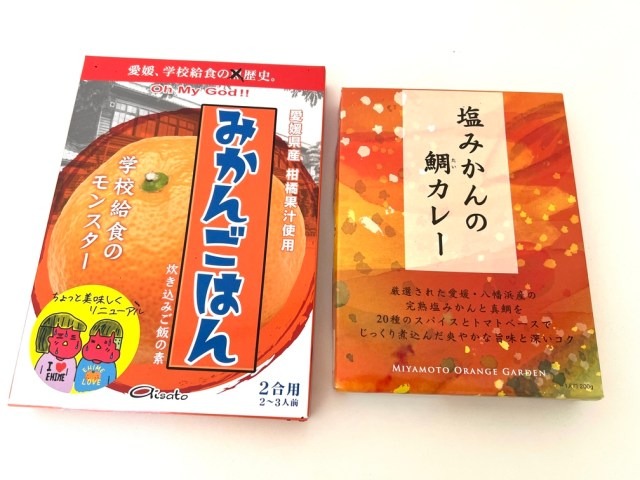
The first was Mikan Gohan (Orange Rice) in a box labeled “Oh My God!!” and “School Lunch Monster,” which really stood out in the otherwise calm atmosphere of the shop. Kouhey checked online and found that Ehime had a unique custom of eating oranges with rice. It was even done in school lunches there, hence the nickname on the box.
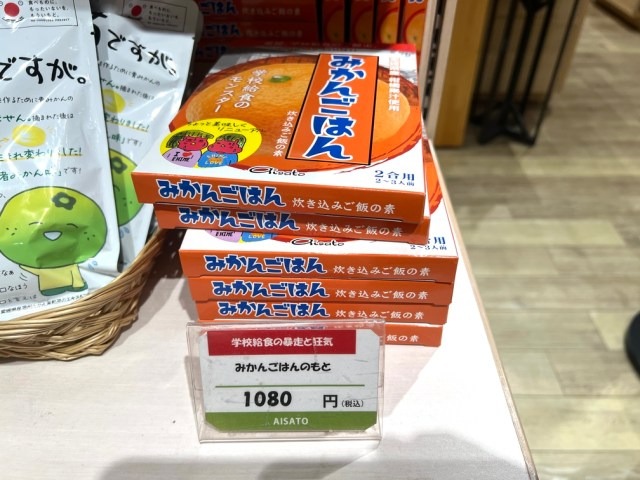
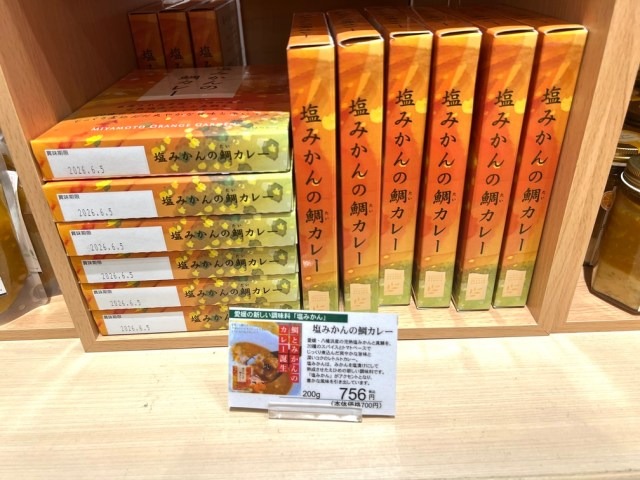
Nearby was another box that, while more tastefully designed, contained a far more shocking food: Salted Mikan Sea Bream Curry. That was too many incongruent foods for Kouhey’s brain to process at once, and he knew he had to buy these things despite their combined total being 1,836 yen (US$13).
When Kouhey returned home, he got to work making these orange meals.
The Mikan Gohan was rather straightforward. One pack works with two cups of rice, and all he had to do was pour the contents into a rice cooker along with the rice and let the machine do the rest.
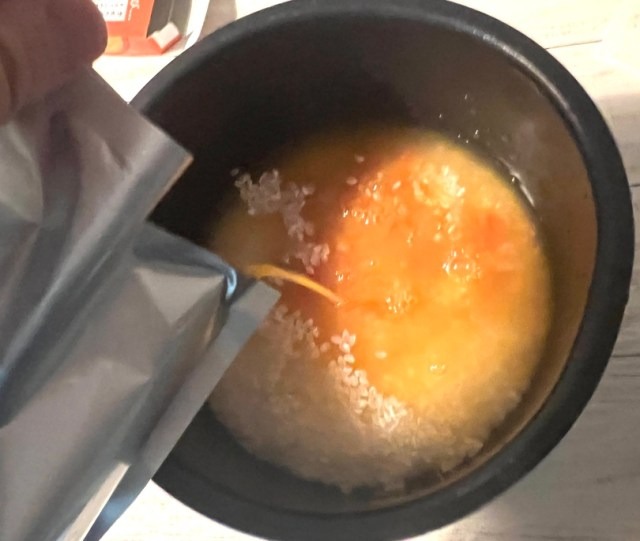
After three minutes, he opened the cooker and was taken aback by just how orange the rice had become.
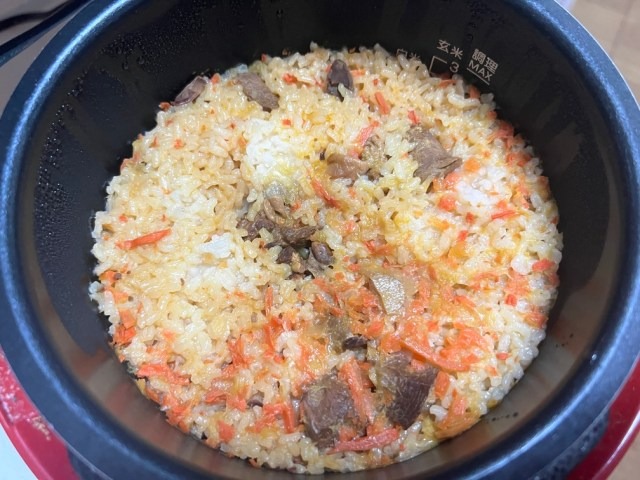
As he scooped some into a bowl, the distinct scent of mikan oranges wafted towards him.

Upon taking a bite, he was surprised how mild it was despite the in-your-face packaging. The taste of mikan was clearly present, but it was just enough to remain in harmony with the sweetness of the rice and had an interestingly refreshing aftertaste.
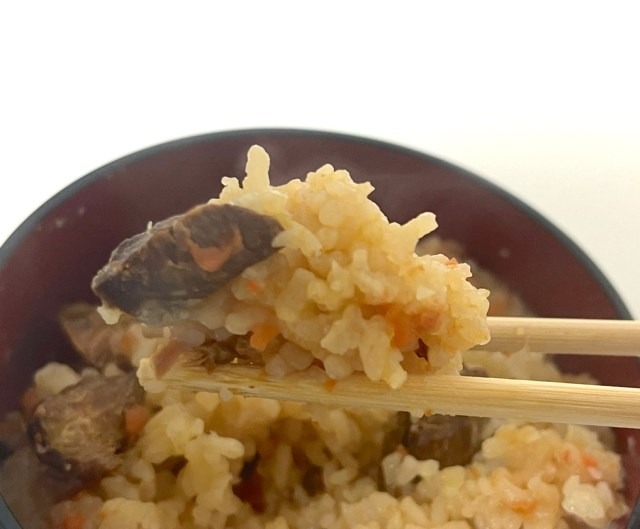
As he ate, Kouhey was also preparing the Salted Mikan Sea Bream Curry. It was a simple retort pouch curry that just needed to sit in boiling water for a few minutes.

He poured the vibrantly orange curry over some more of his Mikan Gohan for some orange curry and orange rice.
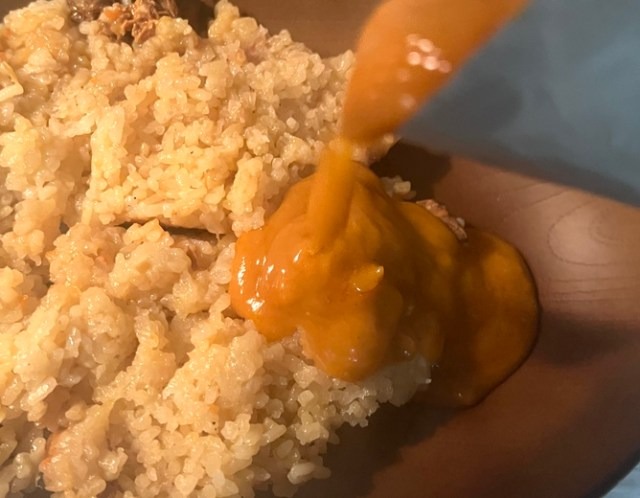
First, he sampled some of the curry by itself and was blown away by the strength of the tangy mikan flavor in it. It was unlike any curry he’d ever had and a completely unexpected taste.
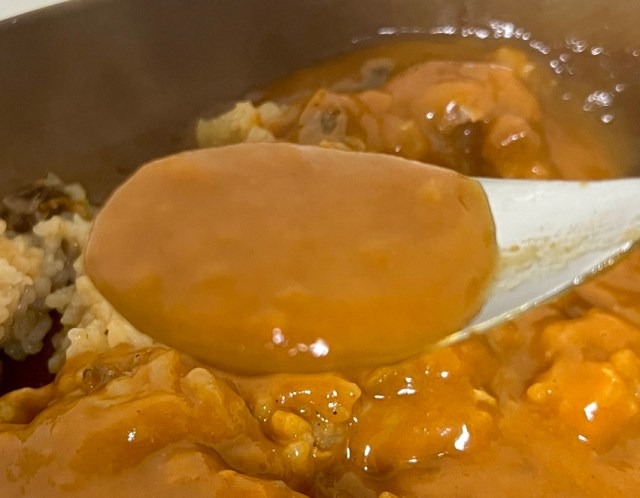
The two foods went surprisingly well together. The brisk aftertaste of the rice mingled extremely well with the bold flavor of the curry.

If there was one complaint, it would have been that he couldn’t taste the salt or sea bream in the Salted Mikan Sea Bream Curry. The fish was hardly detectable under all the orange flavor, but the entire meal was still quite delicious.
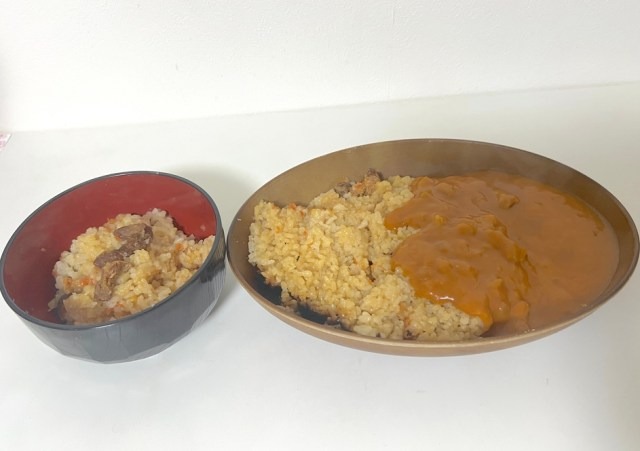
Considering their price, it’s certainly not something Kouhey would eat on a regular basis, but as a memorable meal from his trip, it couldn’t be beat. If you ever head out to Ehime, be sure to try this one-of-a-kind food.
Photos © SoraNews24
● Want to hear about SoraNews24’s latest articles as soon as they’re published? Follow us on Facebook and Twitter!
]]> https://soranews24.com/2025/05/19/orange-rice-and-orange-curry-from-ehime-is-even-orangier-than-expected/feed/ 0 702285 Orange Juice Crisis ’24 – Japan’s OJ supplies drying up https://soranews24.com/2024/05/02/orange-juice-crisis-24-japans-oj-supplies-drying-up/ https://soranews24.com/2024/05/02/orange-juice-crisis-24-japans-oj-supplies-drying-up/#comments Wed, 01 May 2024 17:30:58 +0000 https://soranews24.com/?p=665953 
Multiple factors making orange juice hard to sell/buy in Japan.
Despite Japan’s well-deserved reputation a wonderland of delicious pleasures for the palate, the country isn’t immune to food/beverage crises. We’re only two years out from the potato shortage of 2022, when some fast food chains in Japan had to restrict French fry sales or replace their spuds with something else entirely, and who can forget the dark, dry days of Butter Crisis ’14 or Pizza Potato Crisis ’17?
Now Japan looks to be facing another shortage of something ordinarily available just about anywhere: orange juice.
In early April, Megmilk Snow Brand, the Japanese distributor for Dole juices, suspended sales of its Dole Orange 100% juice in 450-mililiter and one-liter cartons, leaving the less-then-half-pint 200-militer pack as the only remaining option. Then, on April 25, Morinaga Milk, Sunkist’s Japanese distributor, announced that it will be suspending sales of 200-mililter cartons of Sunkist 100% Orange once its current ingredient supply runs out.
So what’s causing this OJ shortage? Japan imports about 90 percent of its orange juice, with much of it made from fruit grown in Brazil, which suffered significant rain damage and a citrus disease outbreak in 2023. At the same time that supply is taking a hit, though, demand is rising in the post-pandemic world economy, leading to higher prices. Unfortunately, this is coinciding with the yen cratering in value versus foreign currencies. According to statistics released by the Japanese government’s Ministry of Finance in March, the in-yen price for importing orange juice has jumped 69 percent from a year ago, and has doubled since 2019, making it difficult for Japanese companies to import it in the current business climate.
When faced with high import-associated costs for a popular product, the simple solution would seem to be to just produce it domestically. That’s easier said than done, though. Japan’s small size and mountainous geography mean that farmable land isn’t so easy to come by, especially when other crops like rice, which is heavily subsidized, usually take precedence. What’s more, what citrus farming Japan does have is primarily focused on mikan (mandarin oranges), which are a popular staple food but not really well-suited for making juice, as mikan juice tends to be very syrupy compared to orange juice.
Around the same time as Japan’s orange juice distributors were announcing sales suspensions, the Japan Agricultural Cooperatives organization of regional co-ops revived its Nokyo Kajitsu brand of 100-percent fruit juices, which had been dormant for the last 14 years.
▼ Nokyo Kajitsu

However, both of the Nokyo Kajitsu varieties, which went on sale in April, use mikan juice, not orange juice, and so OJ fans in Japan may be in for tough, thirsty days ahead.
Source: Japan Agricultural News (1, 2) via Otakomu
Top image: Pakutaso
Insert images: Kyodo Milk Industry
● Want to hear about SoraNews24’s latest articles as soon as they’re published? Follow us on Facebook and Twitter!
]]> https://soranews24.com/2024/05/02/orange-juice-crisis-24-japans-oj-supplies-drying-up/feed/ 0 665953 OI 1 Can our gourmet writers tell which fruit jelly is luxuriously six times more expensive? https://soranews24.com/2023/07/08/can-our-gourmet-writers-tell-which-orange-jelly-is-luxuriously-six-times-more-expensive/ https://soranews24.com/2023/07/08/can-our-gourmet-writers-tell-which-orange-jelly-is-luxuriously-six-times-more-expensive/#comments Sat, 08 Jul 2023 05:00:46 +0000 https://soranews24.com/?p=629053 
Everyone’s jelly about this job.
It’s time once again to put our writers’ mouths where their money is with another edition of Gourmet Writers’ Rating Check. This is where each of our writers who are skilled in reviewing food must blindly taste two different items and determine which one is the high-class culinary creation.
Since we’re in the grips of a sweltering summer, when appetites are at their lowest, this episode will feature the light snack of mikan (“Japanese mandarin”) jelly. It’s a cool, sweet treat that always goes down smooth.
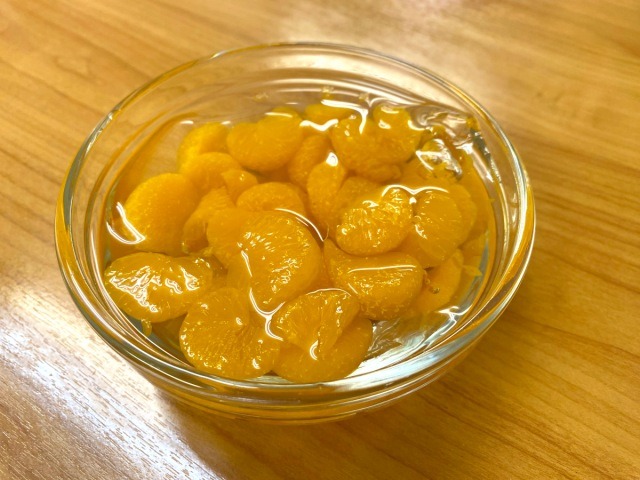
However, most people would assume that all jelly is more or less the same. It’s essentially just some gelatin embedded with pieces of fruit. The subtle changes in taste and texture will surely be a challenge for our team to detect, but they’re willing to put their reputations on the line to try.
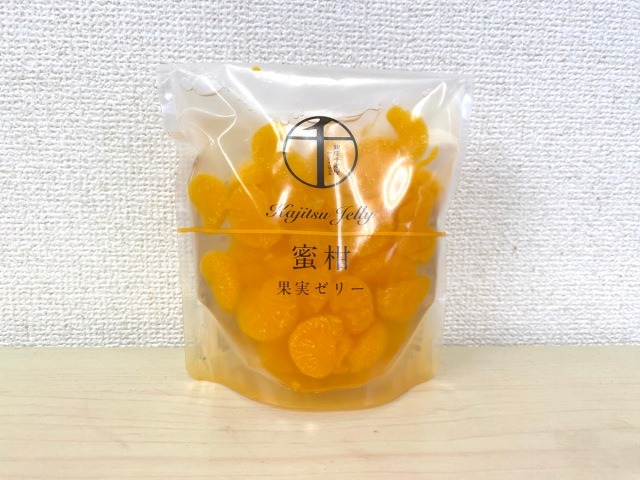
Our first item is Mikan Jelly from Ginza Sembikiya, a ritzy fruit boutique where single watermelons and mangoes can be bought for upwards of US$100. This single pack of jelly costs 810 yen ($5.60) and is made with satsuma mandarins, which are considered one of the sweetest citrus fruits in the world, suspended in the most expertly crafted gelatin.
In the other corner is a cup of Dossari Mikan made at the Tarami factory in Konagai, Nagasaki. It’s made with an uncertain cultivar of mandarin imported from China and sells for 138 yen ($0.96) a cup or nearly one-sixth the price of Ginza Sembikiya’s Mikan Jelly.
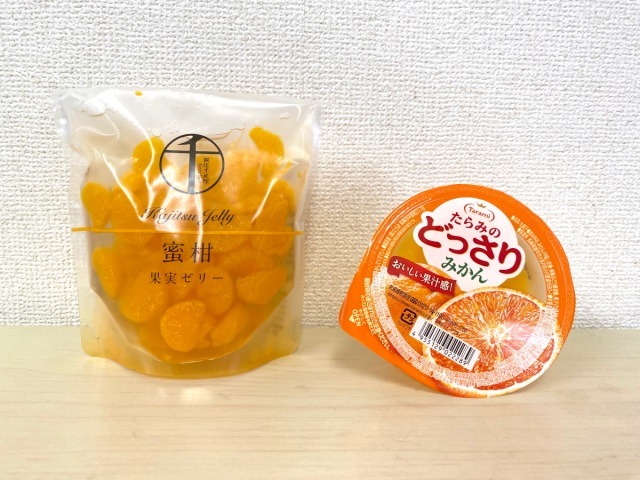
It’s a fairly large price gap, but how different can two jellies really be? Let’s find out by hearing what our writers have to say! Each jelly was assigned a letter “A” and “B” but we won’t know which is which until the big reveal at the end.
▼ P.K. Sanjun: “B”

P.K.: “I don’t think anyone can figure this one out. Honestly, both A and B feel like jellies I’ve always eaten. They both taste like regular mikan jelly… Well, I guess B is a little sweeter.
This time it’s just a hunch, but if there was one hint it’d be that the fruit in A was a little firmer than usual, maybe? I really have no idea this time.”
▼ Go Hatori: “B”

Go: “Yes, yes, yes, I think I know. A is like the mandarins I always eat. They have a wild feeling like a troubled youth growing up on the mean streets, and I like that.
But B is a well-bred mandarin with a proper upbringing to be a sweet little man, isn’t he? The jelly in A also felt cheaper. A seems like the popular jelly but B has a very pompous air. I’m actually surprised how confident I am about this.”
▼ Ahiruneko: “A”

Ahiruneko: “Huh, this is difficult. Ummm, most brands of jelly are good. A and B certainly have different tastes…different but B felt more like canned oranges, right?
Even when it comes from Sembikiya, jelly is a very ordinary food so nothing about it jumps out. When I ate A I didn’t feel anything amazing about it, but after eating B, I thought that A had a better quality.”
▼ Masanuki Sunakoma: “B”

Masanuki: “I used to eat a lot of canned food when I was a student, but I still don’t have a clue. Well, I guess B felt cooler and more delicious and the Sembikiya package seemed easier to chill.
They taste almost the same, but gun to head, I would say B was a little more elegant in how it melted in my mouth. The mikan seemed exactly the same, though. I just don’t want to be in the bottom of the rankings anymore so I hope I get it.”
▼ Yuuichiro Wasai: “B”

Yuuichiro: “I can’t find any point to tell the difference by. Even after eating both, I really can’t tell them apart… Thinking about it more isn’t going to help either, so I’ll just choose B. I think the mandarins were a little firmer.
I mean, it’s Ginza Sembikiya, so there should be a difference in the mandarins, right? I really can’t tell anything from the jelly part so let’s go with B based on the texture of the fruit.”
▼ Mr. Sato: “B”

Mr. Sato: “I cannot lose this one. It’s my one chance to get ahead of Yoshio in the ranking! Ugh, but it’s hard… It’s hard but I think it’s B?
B had a more delicate jelly and the mandarin didn’t feel coarse. Then again, when I ate A, I began to wonder if it was the expensive one. It’s a big question mark, but… I’ll go with B this time.”
▼ Yoshio: “A”

Yoshio: “My kids love jelly, but I don’t eat it. Still, A is really good. I didn’t know jelly could be this good! Like, isn’t this stuff easy to make? Anyway, A was subtly sweet, right? I was a little impressed by it.
On the other hand, B had a kind of random sweetness to it. The sweetness of B just felt strong, like it was simply soaked in syrup.”
And when all the juice had settled, both Ahiruneko and Yoshio voted for A, while the other five writers sided with B. Yoshio and Go were by far the most confident votes, but ended up on opposite sides of the fence. Meanwhile, Yoshio and Mr. Sato were both locked in a nail-bitingly close battle to stay out of last place.
The writers gathered in the office to hear that the most expensive jelly was…

▼ B!!! B is the jelly from Ginza Sembikiya!!!

And with that, Mr. Sato has pulled himself out of last place one more time. Meanwhile, P.K. has further extended his dominance on the competition, but Go’s remarkably astute assessment of the jellies shows that he might be a force in the future after getting some more wins under his belt.
Here are the updated rankings with some final remarks.
▼ P.K.: 29 wins / 7 losses (80.5-percent correct rate): “This one was a total hunch!”

▼ Go: 21 wins / 11 losses (65.6-percent correct rate): “B felt like it grew up in the rich part of town.”
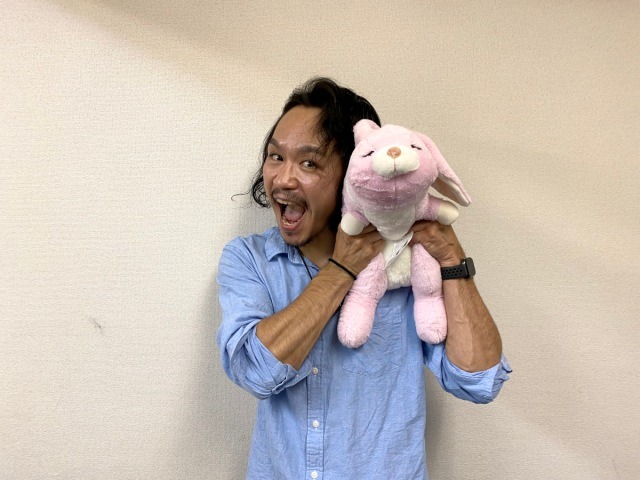
▼ Ahiruneko: 20 wins / 11 losses (64.5-percent correct rate): “When it comes to jelly, there’s no need to feel blown away, even if it’s from Sembikiya.”

▼ Yuuichiro: 18 wins / 10 losses (64.2-percent correct rate): “The texture of the fruit made it B for me.”
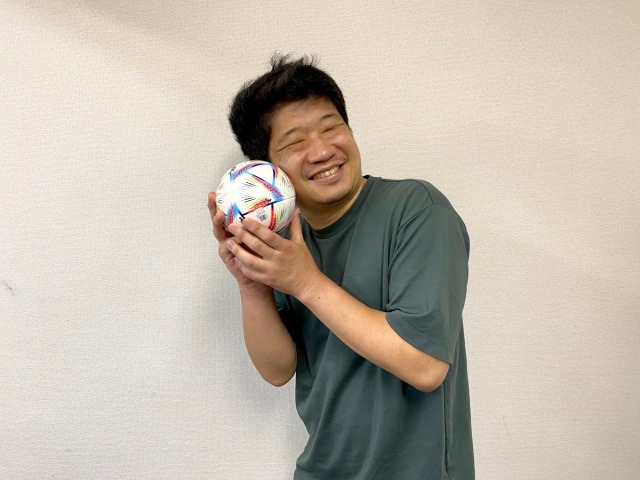
▼ Masanuki: 21 wins / 14 losses (60-percent correct rate): “B melted in my mouth a little more elegantly.”

▼ Mr. Sato: 16 wins / 14 losses (53.3-percent correct rate): “B’s jelly was more delicate.”

▼ Yoshio: 15 wins / 15 losses (50-percent correct rate): “I was impressed by A. I didn’t know jelly could be that good…”

It looks like Yoshio made the cardinal error of choosing based on his personal preference. In Gourmet Writers’ Rating Check, however, one must know that taste is subjective and look beyond that to identify true quality. We’ll see if he learned his lesson and can climb back up in the rankings next time!
Photos ©SoraNews24
● Want to hear about SoraNews24’s latest articles as soon as they’re published? Follow us on Facebook and Twitter!
]]> https://soranews24.com/2023/07/08/can-our-gourmet-writers-tell-which-orange-jelly-is-luxuriously-six-times-more-expensive/feed/ 0 629053 The cool way to peel a mandarin, according to a Japanese grandma https://soranews24.com/2022/12/14/the-cool-way-to-peel-a-mandarin-according-to-a-japanese-grandma/ https://soranews24.com/2022/12/14/the-cool-way-to-peel-a-mandarin-according-to-a-japanese-grandma/#comments Wed, 14 Dec 2022 03:00:51 +0000 https://soranews24.com/?p=610337 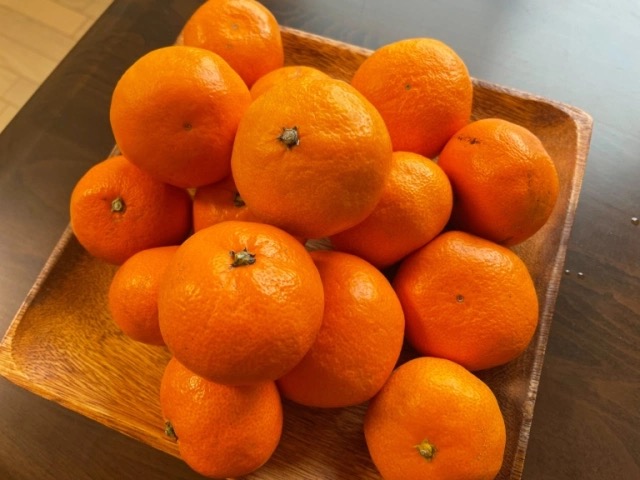
Become a mikan master with this neat hack, endorsed by the Japanese government.
How do you peel a mikan? It’s a question you may have never thought to ask before, but here in Japan it’s something that’ll come to mind during winter, when people up and down the country peel the sweet citrus with neat precision.
Usually, the main course of action is to peel the mikan in segments from the bottom outwards, leaving the peel intact at the bottom so it branches out like the petals of a lotus flower.
▼ Peels usually look like this once the mandarin’s been eaten.

However, Japan’s Ministry of Agriculture, Forestry and Fisheries (MAFF) recently suggested a new way to peel a mikan that caught the attention of a lot of people in Japan. MAFF shared the “mamechishiki” (“bean of knowledge“), as tidbits of trivia are known in Japan, in a tweet that was both heartwarming and surprising, saying:
“My grandmother used to do this a long time ago, and I remember watching it when I was little as if it was magic. When I try it myself now, it’s surprisingly easy to do… Am I doing it right, Grandma?”
12月3日は #みかんの日
ベルト状に房を並べる みかんの皮のむき方。
祖母が昔よくやってくれて、小さな頃はまるで魔法みたいだなって眺めてたのを覚えています。今、自分でやってみると、意外と簡単にできるんだな・・・おばあちゃん、これで合ってますか? pic.twitter.com/5inKWEtNCe— 農林水産省 (@MAFF_JAPAN) December 3, 2022
As the accompanying image shows, the way of peeling a mikan here looks very different to the method we’re used to seeing. Instead of the fruit sitting whole, surrounded by peel, the top and bottom of the peel is removed first, allowing the middle section to unfurl like a belt. It’s arguably a better way of peeling a mandarin, as it cuts out the additional step of tearing individual segments of the fruit away after it’s been peeled, and many online agreed, saying:
“What a clever method!”
“Wow, this is so cool!”
“I tried it and now I’m never going back!”
“Eating it this way is so much fun!”
“Definitely going to peel mikan like this from now on!”
So the next time you go to peel a mikan, why not give this method a try? And once you’re done eating the fruit, don’t throw those peels away — grandma has a whole other myriad of uses for them as chimpi, which is another eye-opener!
Source: Twitter/@MAFF_JAPAN via Net Lab
Photos © SoraNews24
● Want to hear about SoraNews24’s latest articles as soon as they’re published? Follow us on Facebook and Twitter!
]]> https://soranews24.com/2022/12/14/the-cool-way-to-peel-a-mandarin-according-to-a-japanese-grandma/feed/ 0 610337 Mikan mandarin Japanese grandma satsuma fruit how to peel news hack copy Mandarin orange peels aren’t trash, they’re treasure! Three chimpi tips to reuse your mikan skins https://soranews24.com/2022/02/14/mandarin-orange-peels-arent-trash-theyre-treasure-three-chimpi-tips-to-reuse-your-mikan-skins/ https://soranews24.com/2022/02/14/mandarin-orange-peels-arent-trash-theyre-treasure-three-chimpi-tips-to-reuse-your-mikan-skins/#comments Sun, 13 Feb 2022 17:30:19 +0000 https://soranews24.com/?p=576957 
Japanese granny, of course, knew things we didn’t.
Winter is the season for mikan (mandarin oranges) in Japan, so our Japanese-language Yuki Shirai wasn’t at all surprised when she stopped by her grandma’s house and saw she had a bunch of the citrus fruits in her kitchen. What did surprise her, though, was that Granny also had several mikan peels laid out on her porch.
“Aren’t you going to put these in the trash?” Yuki asked, but her grandma had some wisdom to impart: you can use mikan peels for all sorts of things once you’re done eating the fruit! As a matter of fact, dried mikan peel even gets its own special name in Japanese, chimpi, and Yuki made it her mission to try three ways to use it.
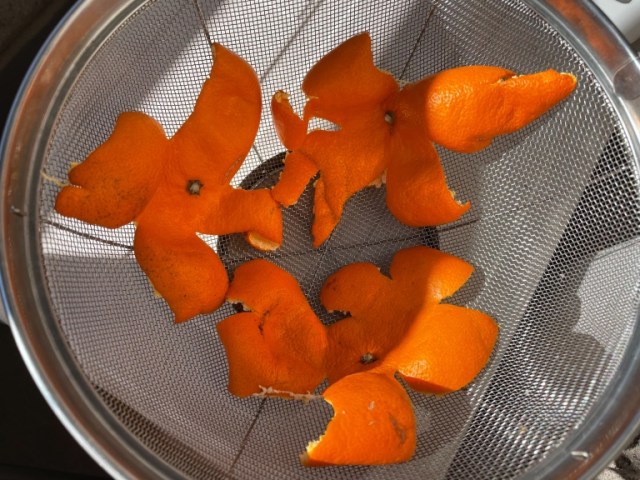
First, though, Yuki had to make herself some chimpi. The delicious process involved eating some mikan, putting their skins in a colander in the sunlight, and waiting. Because of the especially cold weather Japan has been having recently, it took two weeks for the peels to thoroughly dry, but she knew they were ready when she gave the colander a gentle shake and heard the skins make a soft rustling noise.
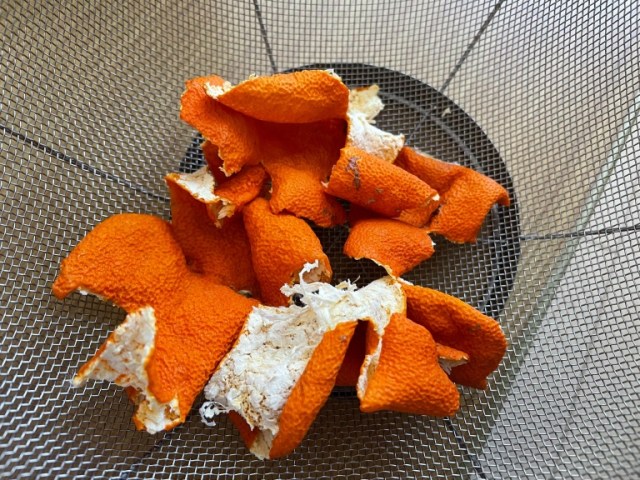
So how can you use dried mikan peels? One option is to use them to clean your kitchen. Just grab a piece in your fingertips and start wiping down your stove, letting the natural cleaning properties of the inner side of the skin clear way grease and oil.
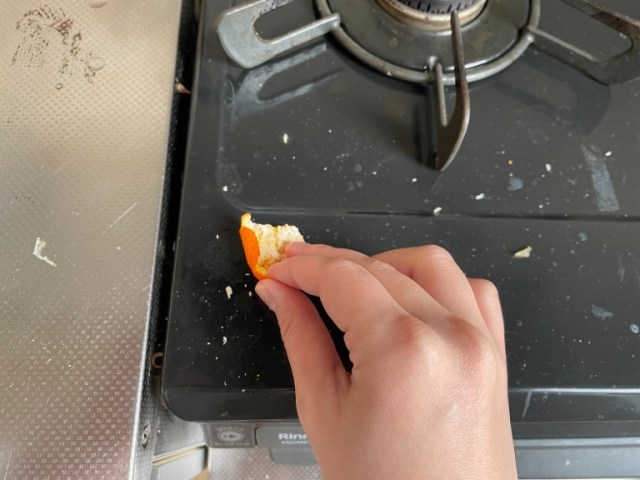
▼ The bottom left corner, where Yuki used the mikan peel, is now grime-free!

To Yuki’s surprise, the peel didn’t crumble or tear as she used it, and even though it didn’t entirely remove the most stubborn spots of grime, it softened it up enough that a second scrub with a cleaning cloth did the job.
Having worked up a thirst cleaning, it was time to test the second use for Yuki’s mikan peels by making some chimpicha, or chimpi tea.

For this, you’ll need one and half dried mikan peels. Start by putting them in food processor (or you could grind them by hand). Pour the powder into a teacup, add hot water, and you’re all set!
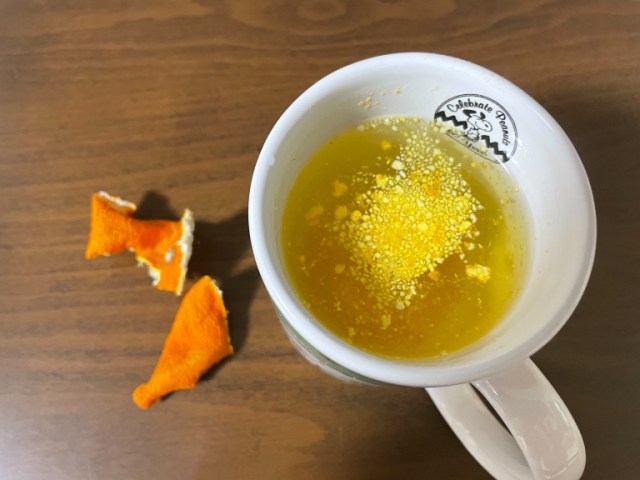
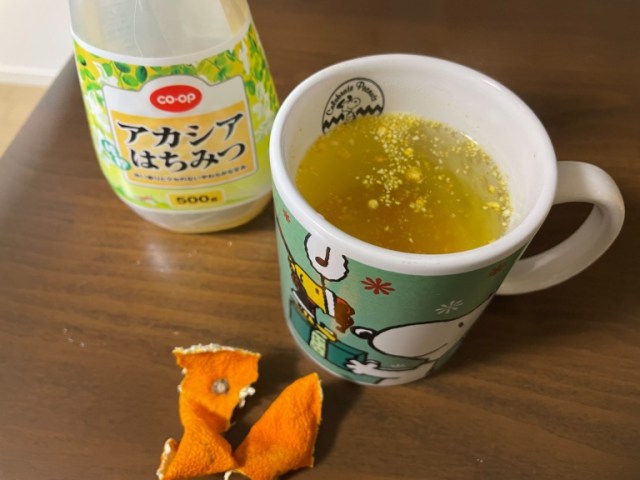
Technically, chimpicha isn’t tea, because it doesn’t use tea leaves. It is, however, a delicious and relaxing drink, and one that’s supposedly good for you too, since mikan peel is said to help fortify the body against chills and aid in digestion. The only possible negative Yuki could find is that some people might find the unique bitter notes in the taste of mikan peel to be a little unpleasant, in which case she recommends stirring in a bit of honey to balance the flavor profile out with a little sweetness.
Now thoroughly relaxed, Yuki was ready to hit the sack, but following Japanese customs, she needed to hop in the bath before she hopped into bed. This brings us to the third use for mikan peels she tried, the chimpiyu, or chimpi bath.
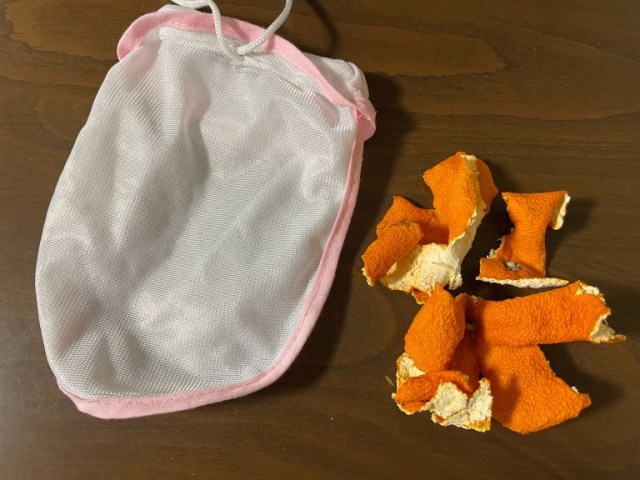
All you need for this is dried peels (Yuki used two mikan’s worth) and a laundry net, or some other sort of mesh pouch. Put the peels in the pouch, the pouch into your bathtub of hot water, and you’re done.
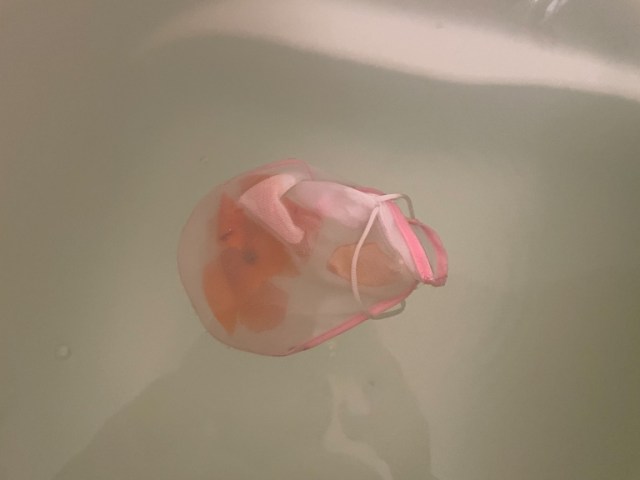
Yuki had been looking forward to a luxuriously citrus-scented bath, but unfortunately it didn’t smell all that different from a bathtub without any mikan peels in it. Considering how fantastically fragrant her cup of chimpicha had been, she wondered if maybe she should have used a bigger quantity of peels for her bath. Still, mikan peels contain limone, an essential oil component, that’s supposed to be beautify the skin, so she was still getting benefits from the special bath, even if her nose wasn’t aware of the difference.
Peak mikan season is going to last a few more weeks in Japan, and the large variety of mandarins grown in the country mean you can usually find at least one type no matter when you go to the supermarket, so Yuki can now look forward to putting her peels to use all year long.
Reference: Kurashi no Market
Photos © SoraNews24
● Want to hear about SoraNews24’s latest articles as soon as they’re published? Follow us on Facebook and Twitter!
]]> https://soranews24.com/2022/02/14/mandarin-orange-peels-arent-trash-theyre-treasure-three-chimpi-tips-to-reuse-your-mikan-skins/feed/ 0 576957 MP 1 Japan’s gorilla poo oranges are now in season, and being given away for free! https://soranews24.com/2022/01/02/japans-gorilla-poo-oranges-are-now-in-season-and-being-given-away-for-free/ https://soranews24.com/2022/01/02/japans-gorilla-poo-oranges-are-now-in-season-and-being-given-away-for-free/#comments Sat, 01 Jan 2022 16:00:57 +0000 https://soranews24.com/?p=571441 
”Miraculous” fruit is an auspicious way to start the new year, growers say.
Japan’s favorite winter fruit is the mandarin orange, or mikan, as it’s called in Japanese. They’re especially popular at New Year’s, when you’ll see them atop stacks of kagami mochi, a traditional New Year’s home decoration, and in bowls placed strategically in the center of living room kotatsu, so that you’ll have a supply of snacks to munch on without having to pull yourself away from the cozy heated-underside table.
Mikan are grown across Japan, with different regions suited to different varieties of the fruit, and in the town of Inuyama, Aichi Prefecture, their claim to citrus fame are gorilla poop mikan.
ゴリラのう○ちから、芽を出して、大きな木になり、無事に実った、 #奇跡のみかん !本日摘み取り式をおこないました!
縁起物としてお正月の三ヶ日に数量限定でお配りします♪
(田中)https://t.co/NPRxgNqvTm pic.twitter.com/K0TDFeDQVt— 日本モンキーセンター(公式)@クラウドファンディング挑戦中! (@j_monkeycentre) December 28, 2021
Though it’s an accurate description, the growers of the gorilla poop mikan, the Japan Monkey Center, have the marketing savvy to dub them “Miracle Mikan” (Kiseki no Mikan in Japanese). Still, the research center/zoo is quite open about the fruits’ fecal foundations.
It all started about 20 years ago with Hanako, a female western lowland gorilla who was living at the Japan Monkey Center. Hanako was particularly fastidious about keeping her living space tidy, and so after she dropped some primate poo she’d often pick it up and toss it into the dirt outside of her enclosure. The center’s groundskeepers were pretty diligent about picking up the droppings, but there was at least one time they missed a spot, because a mikan tree sapling sprouted from the ground right where Hanako would fling her poo, and the specific type of mikan tree it was, hassaku, was the same kind as the mikan they’d been giving to Hanako, which she’d eat seeds and all.
The center decided to let the tree that had sprouted from the seed mixed in with Hanako’s poop grow, and in 2007 it started bearing fruit. It’s now some six meters (19.7 feet) tall, and what’s more, a few years after fruit started showing up on Hanako’s tree another mikan sapling sprouted inside the enclosure of Hanako’s mate, Taro, for the same reason, so now the Japan Monkey Center has two gorilla poop mikan trees.
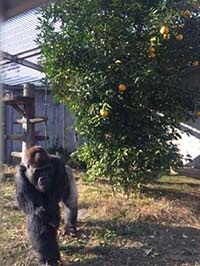
The harvesting of the Miracle Mikan has become an annual year-end event at the center, as has handing them out as good luck charms to guests of the facility at the start of the new year. As for why gorilla poop oranges should be lucky, the Japan Monkey Center estimates the odds of Hanako’s tree sprouting the way it did were extremely low, and it might also have something to do with the Japanese words for “feces” (fun) and “good luck” (un) sounding very similar to one another, which can lead to some rather unique superstitions.
For 2022, from January 1 to 3 Miracle Mikan will be given to the first 30 visitors each day to the Africa Center inside the Japan Monkey Center. The 2021 harvest, however, was a bumper crop of roughly 600 pieces of fruit, so if the remaining 500 gorilla poo oranges are going to be given to the gorillas, there might be more “miracles” to come in the future.
Related: Japan Monkey Center
Sources: Asahi Shimbun Digital via Livedoor News via Jin, Japan Money Center
Top image: Pakutaso (1, 2) (edited by SoraNews24)
Insert image: Japan Monkey Center
● Want to hear about SoraNews24’s latest articles as soon as they’re published? Follow us on Facebook and Twitter!
]]> https://soranews24.com/2022/01/02/japans-gorilla-poo-oranges-are-now-in-season-and-being-given-away-for-free/feed/ 0 571441 KM 2 Love Live! character with controversial skirt to continue as orange spokesperson, petitioner says https://soranews24.com/2020/02/24/love-live-character-with-controversial-skirt-to-continue-as-orange-spokesperson-petitioner-says/ https://soranews24.com/2020/02/24/love-live-character-with-controversial-skirt-to-continue-as-orange-spokesperson-petitioner-says/#comments Mon, 24 Feb 2020 13:00:17 +0000 http://soranews24.com/?p=489989 Change.org petition organizer says agricultural group has pledged their continued support to the anime schoolgirl idol.
Regional produce marketing isn’t usually a hotbed of controversy, but a rare exception occurred this month surrounding a partnership between Shizuoka Prefecture agricultural cooperative JA (Japan Agriculture) Nansun and Love Live!, the smash-hit idol schoolgirl anime franchise. As part of a cross-promotion, Chika Takami, a character from Love Live! Sunshine!!, which is set in Shizuoka, appeared in advertisements posing with locally grown Nishiura Mikan mandarin oranges.
▼ Chika’s voice actress, Anju Inami, and the promotional illustration
【沼津】JAなんすん様より熱いオファーを頂き、本日、高海千歌が『西浦みかん大使』に就任致しました!!
千歌ちゃんに代わって高海千歌役・伊波杏樹が、ららぽーと沼津にて行われた大使就任式に出席しました。
これからも沼津のみかんを、地元の元気を世界に伝えていきます!!#lovelive pic.twitter.com/gcqbnyHriR
— ラブライブ!シリーズ公式 (@LoveLive_staff) February 12, 2020

However, some people took issue with the way in which Chika’s skirt is drawn. While some see the dark lines in the skirt’s middle section as innocent contours adding some visual dimension to a piece of flat artwork, some others saw it as deliberately clinging to the character’s figure in order to accentuate her crotch. Such negative attention caused the LaLaport shopping center in Numazu, the city where Chika and her in-anime friends live, to take down its Love! Live!!/JA Nansun banners on February 16, just four days after they’d been put up in the complex.
ラブライブ!サンシャイン!!と西浦みかん、並びに西浦みかん大使を応援しております。 pic.twitter.com/G0jCgi3PsT
— 綺羅星 (@kirakilovelive) February 15, 2020
In response, supporters of the character/franchise created a Change.org petition, asking that the artwork be reinstated. The petition organizer has now posted an update saying that he has been contacted by JA Nansun, who assure him that Chika will continue to be their spokescharacter.
According to the organizer, JA Nansun’s statement says “We appreciate the support of the many people who have signed the petition, which has been a great encouragement to everyone involved with the project…We intend to continue having Chika Takami as an ambassador for Nishiura Mikan, and to continue moving forward with various active promotions with Love Live! Sunshine!!”
( ³ω³)ファッ#西浦みかん pic.twitter.com/ow21UBQOrc
— こしあん:さゆりす
(W.S.) さゆ……大好き……
(@tikakiti_mikan2) February 15, 2020


It’s worth noting that even after the Love Live! banners/posters were taken down at LaLaport, they could still be found at some local grocery stores and JA markets, and also that the quotes from the JA response shared by the petition organizer make no mention of whether or not the ongoing partnership with Chika will continue to use the same artwork, or a new illustration with an less contoured skirt.
Source: Change.org via Jin
● Want to hear about SoraNews24’s latest articles as soon as they’re published? Follow us on Facebook and Twitter!
]]> https://soranews24.com/2020/02/24/love-live-character-with-controversial-skirt-to-continue-as-orange-spokesperson-petitioner-says/feed/ 0 489989 Japanese citrus farmers deal with crop-stealing wild boars by killing them, selling their meat https://soranews24.com/2016/10/18/japanese-citrus-farmers-deal-with-crop-stealing-wild-boars-by-catching-them-selling-their-meat/ https://soranews24.com/2016/10/18/japanese-citrus-farmers-deal-with-crop-stealing-wild-boars-by-catching-them-selling-their-meat/#comments Tue, 18 Oct 2016 05:00:36 +0000 http://en.rocketnews24.com/?p=350786 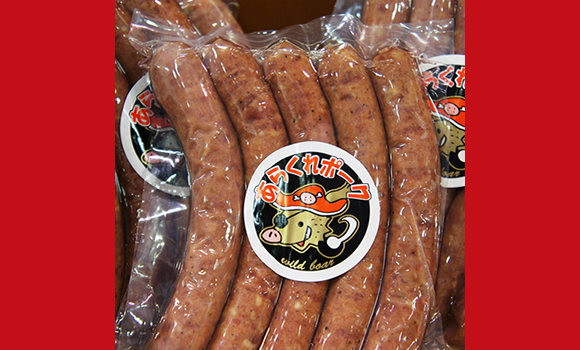
When life hands you lemons, make lemonade. When it hands you wild boars, make sausages.
The island of Omishima, part of Japan’s Ehime Prefecture and located in the Seto Inland Sea, has a lot of great food to offer. Delicious sea bream comes from the surrounding waters, and the island is also home to some of Japan’s best orange orchards.
Omishima also produces pork, which is sort of unexpected considering that no one raises pigs on the island. So where does the meat come from? From wild boars that are culled by the citrus farmers.
See, wild boars aren’t necessarily known for their table manners, nor for their consciousness in paying for goods they help themselves to. Nevertheless, the animals seem to love those tasty Omishima oranges, and so they periodically force their way onto citrus farms to eat their fill, damaging the farms in the process. In order to protect the crops, sometimes the boars have to be killed, but rather than letting the sacrificed life go to waste, the three members of Omishima’s Boar-Use Squad had a better idea.
▼ We’re assuming those clenched fists are just a sign of energetic solidarity, and not a subtle declaration that they punch the boars to death.
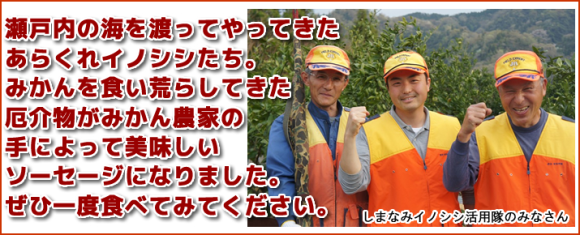
Thanks to the trio’s clever thinking, the culled animals are used to make sausages and bologna, under the brand Arakure Pork. 1,730 yen (US$16.80) gets you a 150-gram (5.3-ounce) pack of sausages, while 300 grams of bologna sells for 3,350 yen.
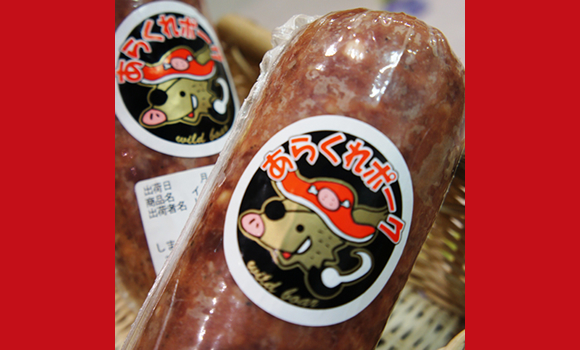
Ads for the meat feature testimonials praising its flavor, which is said to be enhanced by the boars’ diet of citrus fruit and fallen acorns, a phenomena reminiscent of the citrus-enhanced sea bream that also comes from Ehime. And because any thorough marketing plan in Japan contains a bit of cuteness, the logo for Arakure Pork features a manga boar with a pirate hat, eye patch, and hook hand as a nod to the region’s pirate-rich history.

If you’re looking to try some Arakure Pork for yourself, domestic orders for the sausages can be placed here, and the bologna is available here.
Source: Jin
Images: Guru Navi (edited by RocketNews24)
]]> https://soranews24.com/2016/10/18/japanese-citrus-farmers-deal-with-crop-stealing-wild-boars-by-catching-them-selling-their-meat/feed/ 0 350786 wb-0 wb-1 wb-3 wb-2 Ensure your fruit never rolls away with pentagon oranges https://soranews24.com/2014/02/02/ensure-your-fruit-never-rolls-away-with-pentagon-oranges/ https://soranews24.com/2014/02/02/ensure-your-fruit-never-rolls-away-with-pentagon-oranges/#comments Sat, 01 Feb 2014 21:00:52 +0000 http://en.rocketnews24.com/?p=121049 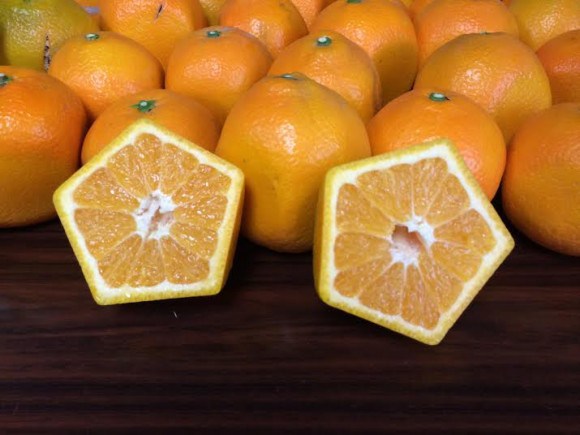
From creepy pears in the shape of a baby to heart-shaped lemons and watermelons, Japan has the market cornered on unusually shaped fruit. Now we’ve come across a five-sided orange produced in Ehime Prefecture. What’s more, these pointed fruits are supposed to help you pass your school exams!
The pentagon-shaped iyokan, a Japanese citrus fruit similar to an orange or mandarin, were grown by the Hizuchi Tachibana 4H Club. Not only do they have a unique shape, the fruits have a cute play-on-words name, as goukaku iiyokan can mean “pentagon iyokan citrus” and “to have a good feeling about passing” depending on the Chinese characters used. It seems the oranges were created as a good luck charm for students gearing up to take their exams.
▼ Pentagon oranges and their happy inventors.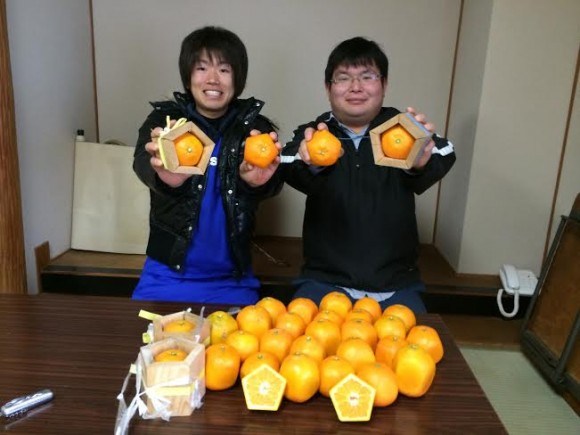
The idea was conceived five years ago and it took a full three years for a successful crop of pentagon oranges to be produced. Farmers must carefully encase each fruit in a mold, which presses up against the fruit as it grows to form the pointed sides.
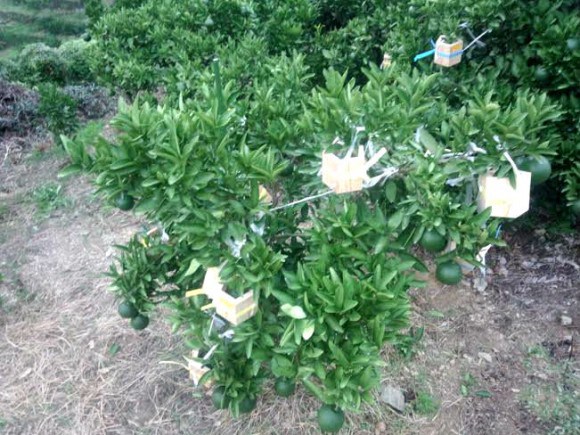

Packed with vitamin C, good for cold prevention and equipped with a clever good luck name, these pentagon oranges are sure to be an exam season staple in the coming years.
]]> https://soranews24.com/2014/02/02/ensure-your-fruit-never-rolls-away-with-pentagon-oranges/feed/ 1 121049 Ensure your fruit never rolls away with pentagon oranges2 Ensure your fruit never rolls away with pentagon oranges Ensure your fruit never rolls away with pentagon oranges5 Ensure your fruit never rolls away with pentagon oranges4