scammer – SoraNews24 —Japan News— https://soranews24.com Bringing you yesterday's news from Japan and Asia, today. Mon, 02 Oct 2023 15:00:14 +0000 en-US hourly 1 https://wordpress.org/?v=7.1.4 https://soranews24.com/wp-content/uploads/sites/3/2020/05/en_rocket_1024.png?w=32 scammer – SoraNews24 —Japan News— https://soranews24.com 32 32 176746664 Fake monks scam foreign tourists out of their cash in Tokyo https://soranews24.com/2023/10/03/fake-monk-scams-foreign-tourists-out-of-their-cash-in-tokyo/ https://soranews24.com/2023/10/03/fake-monk-scams-foreign-tourists-out-of-their-cash-in-tokyo/#comments Mon, 02 Oct 2023 15:00:09 +0000 https://soranews24.com/?p=637703 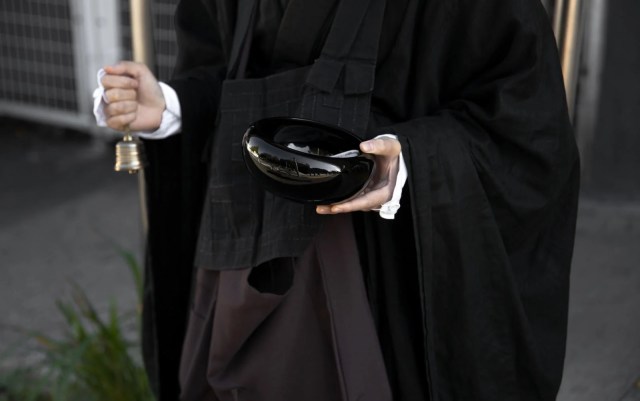
A reminder to be careful while sightseeing at famous tourist spots in Japan.
Japan has a reputation for being a safe place to travel to, but that doesn’t mean you shouldn’t keep your wits about you while visiting the country’s top tourist spots. One such spot where you should be particularly careful is Ueno Toshogu Shrine in Taito Ward, Tokyo, where there have been recent reports of fake monks scamming tourists out of their money.
▼ Ueno Toshogu Shrine is located within Ueno Park, one of the country’s most popular hanami viewing spots during sakura season.
Fake monks have actually been appearing at this particular shrine since as far back as 2016, and in 2017, a Chinese national posing as a fake monk was arrested in relation to the scam. With tourists now back in increasingly high numbers, the fake monks have returned to the shrine grounds as well, and similarly to previous years, they are selling prayer beads and amulets, under the guise that the money paid for them will act as a donation to help repair the shrine.
One recent news reporter witnessed a tourist being scammed out of their money at the shrine, as the monk, dressed in an orange robe, approached them and gave them the amulet. Thinking it to be a gift, the tourist thanked the monk, who then insisted they needed to pay for it, with the price being 10,000 yen (US$66.95).
After the transaction had been made, the reporter approached the tourist to ask them what had just happened. The tourist showed the reporter the amulet and explained that he’d bought it from the monk. The reporter then informed them that it was a scam, and the tourist appeared stunned, having fully believed the monk was associated with the shrine.
According to the news report, there wasn’t just one fake monk at the shrine when they visited, but several, with two women in navy blue robes also approaching tourists as well. Upon speaking to one of the women, she told the reporter she was from Thailand, but refused to answer any more questions, instead heading to the public restroom at Ueno Station where she later emerged wearing civilian clothes.
The fake monks are believed to work in groups, with some acting as executioners who approach the tourists and others acting as lookouts. Ueno Toshogu Shrine says it is aware of the problem but it is difficult to file a damage report as they are targeting foreign tourists and not the shrine directly. However, staff members are patrolling the grounds and asking people to be careful.
So if you or anyone you know is travelling to Japan, be sure to let them know about the scam so they don’t fall victim to it. Monks or other staff at temples and shrines in Japan will never approach visitors to sell products, so if you are approached by someone it’s important to refuse the item first to avoid being in a situation where you feel obliged to pay for it. And it’s not just at Ueno Toshogu Shrine that you have to be careful — there have been reports of fake monks at tourists sites in Kyoto and other areas around Tokyo.
Source: FNN via Hachima Kikou
Featured image: Pakutaso
● Want to hear about SoraNews24’s latest articles as soon as they’re published? Follow us on Facebook and Twitter!
]]> https://soranews24.com/2023/10/03/fake-monk-scams-foreign-tourists-out-of-their-cash-in-tokyo/feed/ 0 637703 Fake monk tourist scam Tokyo Japan sites temple news travel tips copy Fake monk tourist scam Tokyo Japan sites temple news travel tips We get a surprise offer from “Yusaku Maezawaa,” with an extra “a” for “a whole lot of money” https://soranews24.com/2020/09/14/we-get-a-surprise-offer-from-yusaku-maezawaa-with-an-extra-a-for-a-whole-lot-of-money/ https://soranews24.com/2020/09/14/we-get-a-surprise-offer-from-yusaku-maezawaa-with-an-extra-a-for-a-whole-lot-of-money/#comments Mon, 14 Sep 2020 04:00:28 +0000 https://soranews24.com/?p=515372 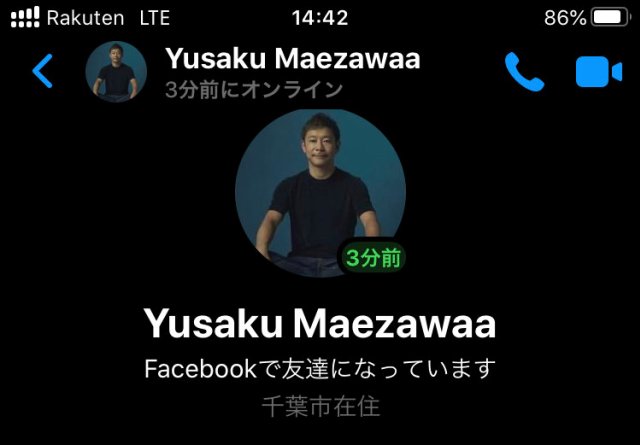
But don’t worry it’s “not in a real scam.”
Yusaku Maezawa is a Japanese name that probably needs no introduction. The ostentatious billionaire founder of clothing site ZOZOTOWN and future moon tourist has now taken up the self-proclaimed role of “Uncle Cash Giveaway” in which he randomly hands out 100,000 yen (US$943) to ten people every day.
As a result, he has amassed over 10 million Twitter followers and a number of copycat accounts eager to prey on those hoping for a quick cash payout. So, it wasn’t totally out of the blue that Mr. Sato was sent a friend request on Facebook by someone calling themselves Yusaku Maezawaa.

The extra A was disconcerting, but that was definitely Uncle Cash Giveaway in the the picture, and Mr. Sato would be remiss not to at least explore this potential fiscal opportunity. So, he accepted the friend request and within moments was sent the following message:
“Congratulations!. You are the lucky one person in 500. This is your serial number: [12-digit number] First registering the reference number, using the screenshot, please send the certificate of registration like in the example below. (Please register correctly)
Registration in my website [URL]“

The Japanese used was slightly off…not wrong, but not quite right either. Still, Mr. Sato decided to roll with it and replied “Thank you! Yusaku!”
He quickly received a response:
“Please register in order to receive a gift item out of me. Complete registration and the prize will be sent.”
The Japanese was getting a little stranger, but still not technically incorrect. One thing for sure was that it was lacking the verve Mr. Sato would expect from the real Yusaku Maezawa in such a situation. He decided to continue making certain this was all on the up and up.
Mr. Sato: “Seriously!? For real!? Eh? Is this real? Are you kidding me?”
Mr. Maezawaa: “This is not in a real scam.”

“Ah-hah!” thought Mr. Sato. The real Yusaku Maezawa would never say such a thing, mainly because it didn’t make sense. He knew if he pressed him long enough, this charlatan would crack, but now that he had the upper hand our fearless reporter decided to enter the shady link to see what traps it contained.
Upon clicking the link, he entered a crudely-constructed multilingual page offering a greeting card when you click the button. It was a cunning gambit, knowing that no one can resist the allure of an online greeting card. There are few pleasures in life quite like it.

Mr. Sato clicked to continue and was led to another page with tiled wallpaper of animated GIF fireworks. Clearly whoever designed this site had a passion for graphic design and made our aged reporter a little teary-eyed, thinking back to the early days of the Internet when it was just used for looking up game FAQs and getting pop-up ads. The only thing missing was an access counter.

The page made several amazing claims like “You win $50,000 cash present,” “this gift is free,” and “explain the meaning of the billion-yen otoshidama.” Finally, it warned Mr. Sato that “This gift!! Only for the 500 fastest people to register their names.”
Mr. Sato scrolled down and tapped the “Register now” button.

Suddenly a message appeared: “Your favorite books, magazines and comics for free! Please start reading right away!”

“This is it?!” thought Mr. Sato, “This was the goal of all this? To lead me to an illegal download site of copyrighted material?”
It was certainly not in keeping with the morals of Yusaku Maezawa with one A, and in all honesty a really excessively convoluted method of luring people to a free manga website. There may have been more to it, but Mr. Sato’s colleague and seasoned scam-diver Go Hatori advised against it because signing up would be knowingly engaging in criminal piracy.
Still, we saw enough to know unequivocally that this wasn’t the real Yusaku Maezawa. After all, the real Maezawa can spell his name and has a verified blue check on Twitter, and that’s a mark you can trust…except for that one time a bunch of them got hacked and scammed tens of thousands of dollars from people.
You can mostly trust it.
Photos ©SoraNews24
● Want to hear about SoraNews24’s latest articles as soon as they’re published? Follow us on Facebook and Twitter!